
You've finished the walk-around. The tanks are topped. The route looks manageable. Then the weather briefing adds one phrase that changes everything: possible icing.
That's the point where ice protection stops being a checkbox in the equipment list and becomes a decision-making tool. For pilots, it affects whether the flight should launch at all. For buyers and sellers, it affects what an aircraft can do in practice, how it should be valued, and how much risk comes with ownership. A clean-wing airplane with the right system, used correctly, can widen your practical dispatch envelope. The wrong system, a neglected system, or a misunderstood one can do the opposite.
A lot of pilots know the acronyms and can identify boots, heated props, or fluid panels on a preflight. Fewer have a clear, practical framework for judging what those systems mean in marginal weather and in an aircraft transaction. That's where the value is.
The Moment of Truth on the Ramp
The decision often happens before engine start.
You're standing next to a piston single or light twin on a cold morning. The tops might be clear. The freezing level might be close to your planned altitude. A layer on departure or arrival could put you in visible moisture where the airplane will have to prove what it can do. At that moment, the question isn't whether the aircraft has some kind of ice protection. The question is whether the system installed, the system's actual condition, and your operating plan all line up.
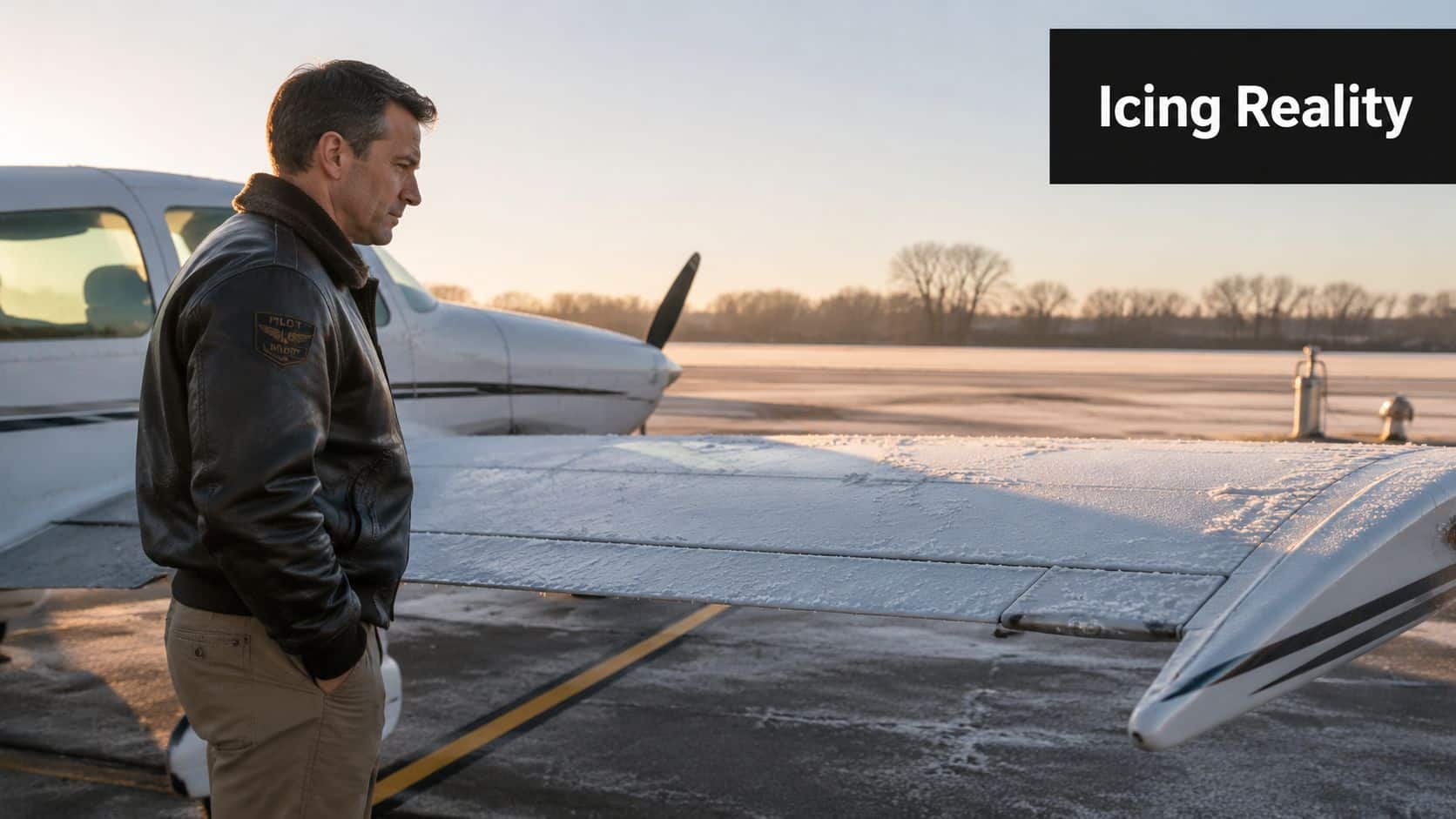
A careful pilot treats icing risk the same way a careful owner treats mechanical risk. You don't assume. You verify. If you're already disciplined about routine inspection flow, the habits in a detailed Cessna 172 pre-flight checklist transfer well here, because icing equipment only helps if it's present, serviceable, and understood before takeoff.
Why this decision carries so much weight
Structural icing is one of those threats that changes the airplane while you're flying it. The wing shape changes. Drag rises. Stall behavior changes. Climb performance erodes. Tailplane concerns can enter the picture. None of that waits for you to get fully settled into the flight.
That's why ice protection has been embedded in aircraft safety thinking for a long time. The regulatory history goes back to 1938, and by 1953 the rules required an approved ice protection system and, for pneumatic boots, at least two independent sources of power. The same FAA snapshot cited in the regulatory review noted that about 97% of U.S.-manufactured Part 25 airplanes delivered used thermal anti-ice systems, which shows how dominant heated anti-ice became for larger aircraft in that market, according to the ASU-linked FAA regulatory history review.
Practical rule: If the weather requires you to “trust” a system you haven't recently inspected, tested, and understood, you're already behind the airplane.
What the ramp decision really asks
On the ramp, most real go or no-go calls come down to a short list:
- Mission honesty: Is this a must-go trip, or are you letting schedule pressure rewrite your standards?
- System reality: Is the installed equipment intended to prevent ice, shed ice, or just protect a few components?
- Aircraft condition: Are the boots supple, the fluid available, the electrical loads manageable, and the logs current?
- Exit options: If accumulation starts, do you have a fast out through altitude, route change, or diversion?
A lot of bad icing decisions start with a subtle mismatch between what the pilot wants the aircraft to be and what it is in reality. That mismatch matters just as much in a purchase as it does in a departure briefing.
De-Icing vs Anti-Icing The Core Concepts
Pilots sometimes blur these terms together. That leads to bad timing and bad expectations.
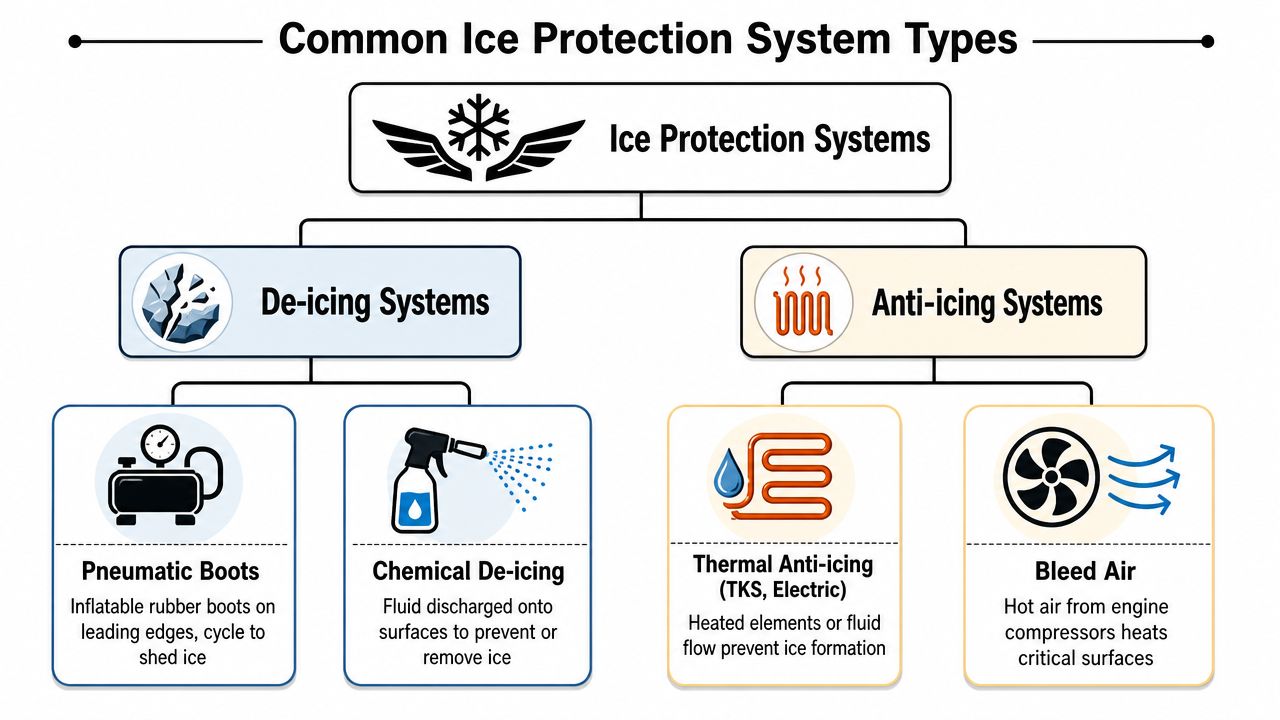
De-icing and anti-icing are not interchangeable. They reflect two different ways of dealing with the same hazard. According to Skybrary's overview of aircraft ice protection systems, aircraft ice protection systems are grouped into de-icing and anti-icing designs. De-icing systems remove ice after it forms, while anti-icing systems continuously deliver heat or fluid to prevent ice from forming. Skybrary also notes that anti-icing is generally more energy-intensive, but it avoids the aerodynamic penalties that come with letting ice accumulate in the first place.
The mental model that helps in flight
Think of de-icing as controlled removal. Ice forms first. Then the system breaks it off, melts it, or dislodges it.
Think of anti-icing as active prevention. The system is trying to keep the surface from becoming contaminated in the first place.
That sounds simple, but it changes how you use the equipment:
- De-icing systems accept some accumulation as part of normal operation.
- Anti-icing systems usually need to be turned on early enough to stay ahead of the ice.
- Pilot timing matters more than many POH summaries make it seem.
De-icing vs Anti-icing at a glance
| Attribute | De-Icing Systems | Anti-Icing Systems |
|---|---|---|
| Basic function | Removes ice after it forms | Prevents ice from forming |
| Typical example | Pneumatic boots | Heated surfaces or fluid-based protection |
| Operating philosophy | Cycle after accumulation begins | Run continuously before or during exposure |
| Aerodynamic effect | Allows some temporary contamination before shedding | Avoids the penalties of ice buildup |
| Energy demand | Generally lower than continuous anti-icing | Generally more energy-intensive |
| Pilot trap | Waiting too long, or expecting perfectly clean surfaces at all times | Turning it on too late, or overestimating duration capability |
What works and what doesn't
What works is matching the system philosophy to the conditions.
If you're flying an aircraft with de-icing equipment, you should expect visible evidence of the system's cycle. If you're flying anti-ice, the goal is to keep the surface from reaching that stage. Problems start when pilots expect anti-ice results from de-icing hardware, or de-icing endurance from an anti-ice setup with limited power or fluid.
A pilot who doesn't understand the timing logic of the installed system usually activates it either too late or for too long.
That misunderstanding also shows up in the used-aircraft market. A seller may advertise “ice protection,” but a buyer has to ask the more useful question: what kind of protection, on which surfaces, under what limitations, and for how long?
A Closer Look at Common System Types
Most owners and buyers will encounter a handful of common configurations. Some are straightforward and rugged. Others deliver better surface protection but add maintenance and integration complexity.
Pneumatic boots
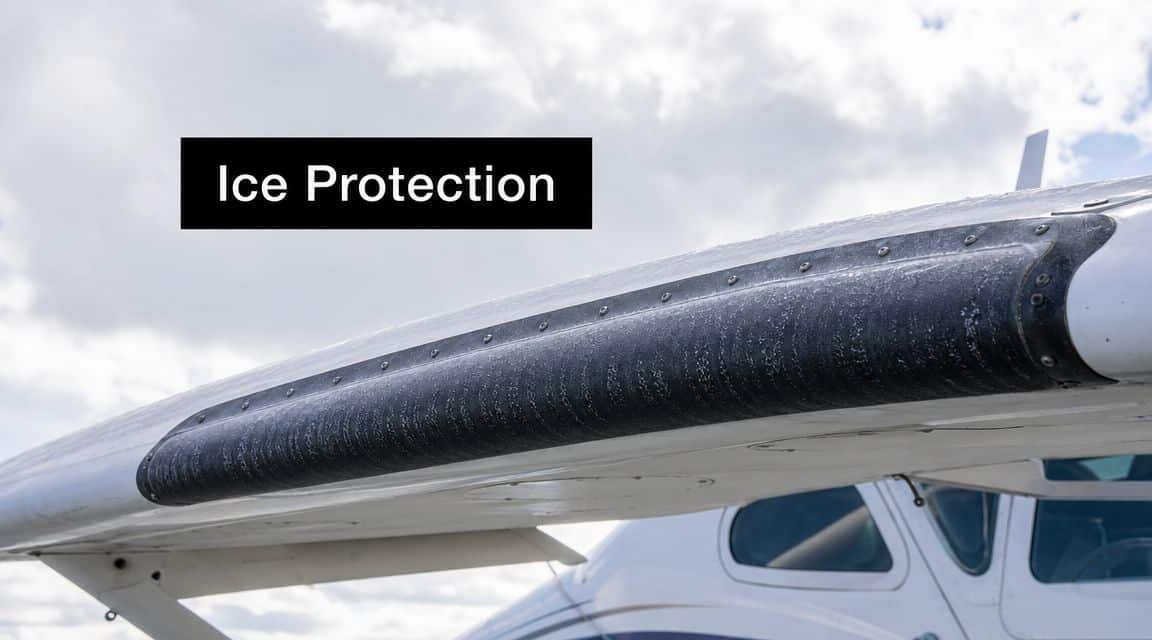
Pneumatic boots are the classic de-icing example. They sit on the leading edges as rubber assemblies and inflate in segments to crack and shed accumulated ice. In service, their appeal is easy to understand. They're visible, conceptually simple, and common enough that many mechanics and pilots know what they're looking at.
Boots also force a practical mindset. They don't promise a perfectly clean leading edge at all times. They promise a controlled method for removing buildup. As an owner or buyer, that means condition matters a lot. Age, cracking, patch quality, bonding, inflation sequencing, and deflation performance all matter more than a shiny listing description.
Fluid-based systems
Fluid-based systems are popular because they can protect multiple surfaces and can be intuitive for pilots to monitor. The trade is dependence on fluid quantity, pump condition, panel cleanliness, and delivery uniformity. A fluid-based system that isn't flowing evenly can create false confidence, which is often more dangerous than having no dispatch expectation at all.
These systems can be excellent for the right mission, especially if the pilot treats fluid as range-limiting equipment rather than an afterthought. In a buying context, reservoir condition, pump operation, line health, and evidence of regular functional checks deserve close attention.
Thermal systems
Thermal protection shows up in different forms, from electrically heated props and windshields to hot-air systems on turbine aircraft. The appeal is obvious. If you can keep a surface warm enough, you can stop ice from getting a foothold there.
The cost is integration. Thermal systems ask more from the aircraft's electrical or bleed-air architecture. That affects maintenance, troubleshooting, and, in some designs, operating margins. If you want a useful parallel in airframe manufacturing, the same push toward tight integration can also be seen in aerospace 3D printing applications, where designers chase weight, packaging, and performance gains by building more function into fewer parts.
Rotorcraft and advanced electro-thermal layouts
Helicopter and tiltrotor applications show how refined ice protection design can get. A published electro-thermal concept for a rotor blade used a parting strip and 8 de-icing zones in its primary architecture, with heating extending to about 24.5% of chord on the pressure side and 14.5% to 24.5% on the suction side. A backup architecture reduced that to 4 regions. The design process balanced zone power density against guidance and then checked blade temperatures against material limits, as described in the AIAA rotor blade ice protection study.
That example matters beyond rotorcraft. It shows that good ice protection isn't just about “more heat.” Engineers are constantly trading protection coverage against structure, materials, and available power.
The best system on paper can still be the wrong system if it overloads the aircraft's energy budget, complicates maintenance, or protects fewer surfaces than the mission demands.
Operational Best Practices and Limitations
Owning or renting an aircraft with ice protection systems doesn't remove the need for conservative judgment. It raises the standard for judgment.
A pilot has two jobs here. First, confirm the system is airworthy and usable before launch. Second, avoid turning installed equipment into a psychological permission slip.
What to verify before you launch
A proper icing-related preflight goes beyond “it's installed.”
- For boots: Look for cracks, hardening, loose edges, poor patches, contamination, and signs the system won't inflate and deflate cleanly.
- For fluid systems: Verify fluid quantity, look for leaks, and confirm the airplane isn't carrying old assumptions about usable endurance with an almost-empty reservoir.
- For electrical heat: Check annunciators, load planning, and any known squawks involving prop heat, windshield heat, or related circuit protection.
- For paperwork: Match what the equipment appears to be with what the POH, supplements, and logs say it is.
FIKI isn't a hunting license
Many pilots frequently drift into trouble. If an aircraft is certified for flight into known icing, that still doesn't mean the smart move is to launch into widespread icing with weak outs, narrow fuel margins, or rising terrain. Certification defines an approved capability envelope. It doesn't erase weather judgment.
The best operators I know treat ice protection systems as time-buying tools. They use them to maintain control, preserve options, and leave the conditions. They don't use them to prove toughness.
Turn the system on according to the approved procedure, monitor performance honestly, and stay mentally prepared to exit icing conditions immediately.
Power, range, and electrical tradeoffs
Modern aircraft design is paying more attention to the energy cost of ice protection. That matters to pilots because every watt or bleed-air demand has consequences elsewhere in the airplane. The Clean Aviation InSPIRe project reported about 70% lower power consumption versus conventional anti-ice techniques and 25% energy savings versus a de-icing system with a parting strip, according to Clean Aviation's InSPIRe project update. That same update notes the broader market is projected at USD 16.73 billion in 2025 and USD 24.97 billion by 2033 at a 5.13% CAGR.
For pilots and owners, the practical lesson isn't market size. It's that newer aircraft will keep forcing tradeoffs between icing protection, range, emissions, and electrical architecture. Low-power systems sound attractive, but they still have to be integrated, certified, inspected, and operated correctly.
How Ice Protection Impacts Buying an Airplane
If you're trying to buy an airplane the safe way, ice protection belongs near the top of the evaluation list. Not because every buyer needs it, but because too many buyers pay for capability they won't use, or fail to pay attention to a limitation that will shape every winter trip they take.
A clean buying process starts with mission honesty. If your real-world flying is local daytime VFR in dry climates, a complex icing package may add maintenance burden without adding much value to your life. If your mission includes frequent travel across seasons, layers, and changing fronts, the absence of capable and well-documented protection may become the limiting factor that makes the aircraft less useful than its speed or payload figures suggest.
The buyer's checklist
Don't start with the sales language. Start with proof.
- Certification status: Is the aircraft approved for the icing mission you think you're buying for, or does it merely have some protective equipment installed?
- Component condition: Boots, panels, pumps, heated elements, wiring, timers, and switches all need individual scrutiny.
- Logbook clarity: Look for recurring write-ups, deferred discrepancies, patch repairs, or vague entries that hide repeated system problems.
- Supportability: Ask how easy it is to source replacement components, approved repairs, and knowledgeable maintenance for that exact installation.
A buyer comparing common training and personal-use aircraft should also think about whether the platform itself matches the weather mission. Even a basic comparison such as Piper Cherokee vs Cessna 172 can help frame the larger point that mission suitability begins with the airplane, not just its options list.
What a pre-buy should include
A proper pre-buy on an aircraft with icing equipment should include functional thinking, not just visual inspection.
Ask the inspecting mechanic to answer practical questions:
- Does the system operate as designed, not just “appear installed”?
- Are there signs of deterioration that will likely turn into immediate ownership expense?
- Are the aircraft supplements, placards, and operating limitations consistent with the installed hardware?
- Is there evidence the previous owner exercised the system regularly and maintained it as mission-critical equipment?
This walk-through gives a useful visual context for what buyers often miss in aircraft evaluation:
Value is tied to believable capability
The market usually rewards believable utility more than theoretical utility. An aircraft with ice protection systems that are complete, documented, and clearly maintained tells a buyer something important about the whole ownership picture. It suggests the owner understood systems, respected maintenance, and preserved mission capability.
The opposite is also true. A neglected icing system is rarely an isolated defect. It often hints at deferred decisions elsewhere.
Selling Your Aircraft with Ice Protection
Sellers make a common mistake. They list “boots” or “TKS” or “known ice” as if the phrase alone closes the deal.
Serious buyers want a tighter story. They want to know what's installed, what works, what's documented, and what limitations apply. If you're selling an aircraft with ice protection systems, your job is to remove uncertainty before the pre-buy starts.
What helps the listing stand out
Lead with documentation, not adjectives.
- Logbook continuity: Show inspections, repairs, fluid-system service, timer work, electrical troubleshooting, and any component replacement in a way a buyer can follow.
- Clear equipment description: Identify which surfaces are protected and how the system operates.
- Operational transparency: If the system has quirks, delayed warm-up behavior, or a maintenance item a buyer should budget for, disclose it early.
- Presentation quality: Clean boots, clean panels, legible placards, and organized supplements all shape confidence before the engine ever starts.
Why documentation changes the conversation
A well-presented ice protection installation signals disciplined ownership. That matters because buyers don't view these systems as cosmetic. They view them as safety equipment, dispatch equipment, and future-cost equipment all at once.
Good records don't just support value. They shorten negotiations because the buyer spends less time guessing.
The best listings make the buyer's next step easy. They connect hardware condition, paperwork, and realistic mission capability in one consistent picture. When that happens, the system becomes a selling point instead of a question mark.
Training for Icing Encounters at DuBois Aviation
Equipment helps. Training decides whether the equipment gets used well.
Most icing mistakes don't come from not recognizing a boot or a heated prop switch. They come from poor timing, weak weather interpretation, and reluctance to change the plan early. That's why recurrent training matters, especially for instrument pilots and pilots moving into more capable aircraft.
A strong program teaches more than definitions. It teaches freezing-level interpretation, route planning with exits, aircraft-specific procedures, and the discipline to abandon a flight that no longer fits the airplane. For pilots building those habits, structured instrument flying training is one of the best places to sharpen judgment before winter weather forces the lesson in the air.
What better training looks like
It should include:
- Scenario-based decisions: Departure, climb, cruise, and approach choices when visible moisture and freezing temperatures overlap.
- Aircraft-specific procedures: Knowing your exact system, checklist, activation timing, and limitations.
- Exit planning: Practicing the decision to divert, descend, climb, or turn around before the situation gets busy.
- Respect for margins: Treating icing equipment as a tool for safety, not a reason to push the envelope.
The pilot who handles icing best usually isn't the bravest one. It's the one who recognized the trap first, used the system correctly, and left early.
DuBois Aviation helps pilots build that kind of judgment with personalized airplane and helicopter instruction, simulator-supported scenario training, and practical proficiency work at Chino Airport. If you're looking for thoughtful flight training, recurrent practice, or help building safer all-weather decision-making, explore DuBois Aviation.