
You’re probably in one of three places right now.
You want to start flight training in the Inland Empire. You already have a certificate and you need a dependable place to rent. Or you’ve gone one step further and started thinking, “Maybe I should just buy my own airplane and stop dealing with scheduling.”
That’s a normal progression. I hear it all the time from local pilots.
Southern California is a great place to fly, but it punishes lazy decision-making. Airspace is busy. Weather planning matters. Airport choice matters. The kind of training environment you pick matters even more. If you choose the wrong setup, you don’t just waste money. You slow your progress and make flying more frustrating than it needs to be.
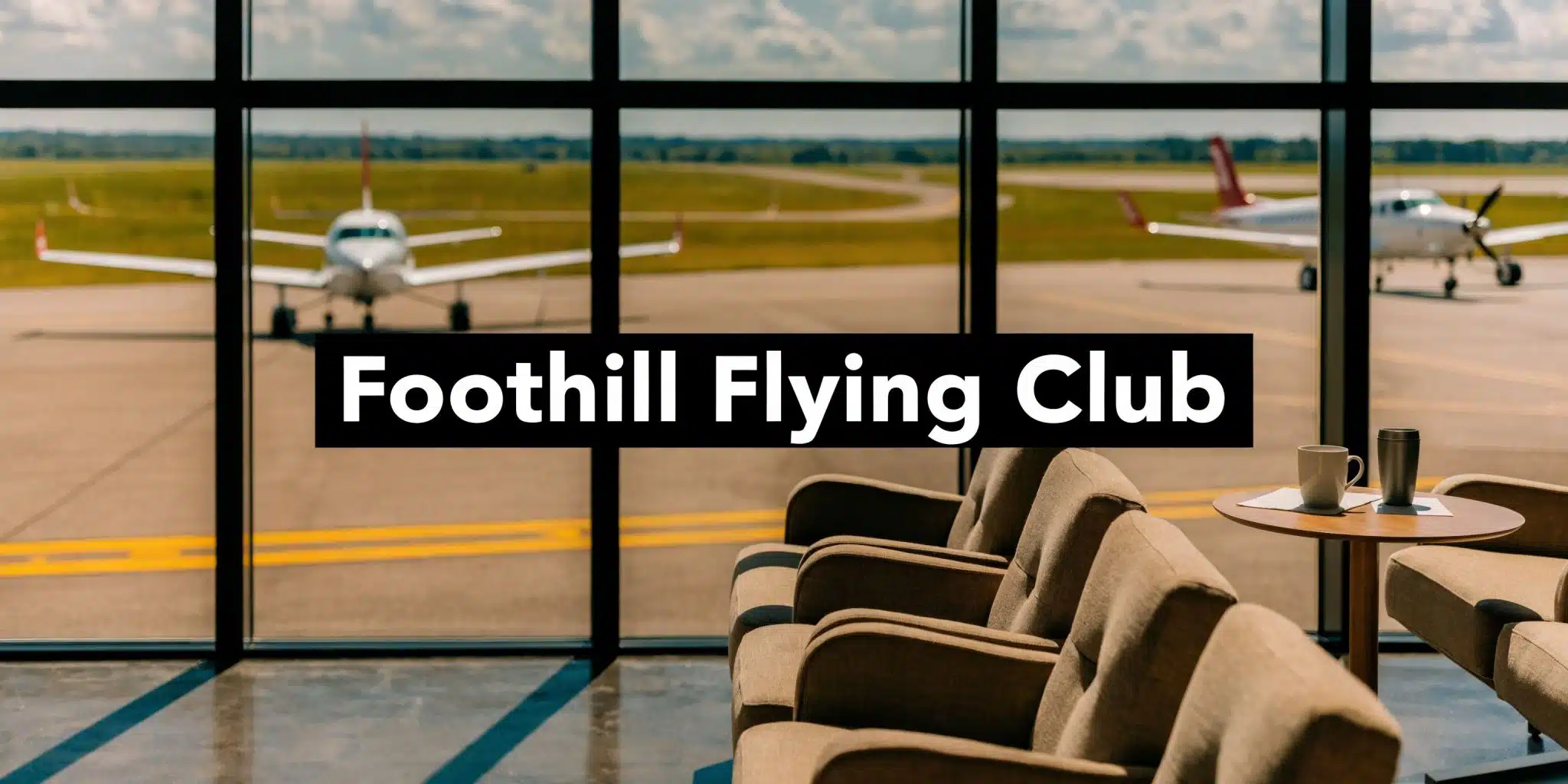
Foothill Flying Club is one of the better-known names in this part of the region, especially if Cable Airport appeals to you. It has a pilot-friendly setup, a club atmosphere, and a fleet that meets common training and rental needs. It also sits in a location that a lot of pilots enjoy, both for the airport environment and for the view.
But joining a club is only one path. The other two are straightforward. Rent from a structured flight school, or buy your own airplane. Each option makes sense for a different kind of pilot.
If you’re serious, don’t ask “Which one is best?” Ask which one fits the way you’ll fly. That’s the only question that matters.
Your Path to the Skies in Southern California
You get your medical, book an intro flight, start studying, and then a key decision shows up fast. Where will you fly from, train, and keep flying once the early excitement wears off?
For pilots in the Inland Empire, that choice has more impact than people expect. Pick the wrong setup and you spend months working around scheduling friction, weak aircraft availability, or a training environment that does not match your goals. Pick the right one and flying becomes a habit instead of a hassle.
The three paths are straightforward. The consequences are not.
- Rent from a flight school: Best for pilots who want a structured training process, steady instructor access, and fewer moving parts.
- Join a flying club: Best for pilots who want a community, more flexibility, and a place to keep flying after the checkride.
- Buy an airplane: Best for pilots with a defined mission, enough capital, and the patience to manage maintenance, downtime, and fixed costs.
That last option deserves more attention than it usually gets. Serious pilots in Southern California often jump too quickly from “I want better access” to “I should own.” Sometimes that is the right move. Often it is not. If you are still building hours, still refining your mission, or still figuring out how often you will really fly, a well-run club is usually the smarter middle ground.
Foothill Flying Club fits right in the middle of that decision. It appeals to student pilots who want a friendlier long-term home than a pure rental counter, and to certificated pilots who want access without taking on the full burden of ownership.
You should also compare it against other local options instead of treating it as the default answer. If you want the club model, Foothill is one contender. DuBois Aviation is another strong local alternative worth a hard look, especially if your priorities are different on airport location, instruction style, or day-to-day fit.
Be practical here. A scenic airport and a welcoming lounge are nice. Owning your own airplane sounds great too. The best choice is the one that matches your budget, your schedule, and the kind of flying you will do over the next year, not the version you talk yourself into on day one.
Understanding the Flying Club Model at Foothill
You finish a lesson, earn the certificate, and then hit the next question. Do you keep renting from a flight school, join a club, or start hunting for an airplane to buy? For a lot of Southern California pilots, the club route is the smartest answer for the next phase. It gives you access and continuity without the fixed costs, maintenance calls, and downtime that come with ownership.
At Foothill, the model is straightforward. You are not buying an airplane. You are buying access to a shared fleet, a home airport routine, and a pilot community that can keep you flying consistently after training instead of drifting into occasional, expensive rentals.
That middle ground matters more than people admit. Buying too early is a common mistake. If you are still building time, still figuring out your real mission, or still unsure how often you will fly in a normal month, a club usually beats ownership on practicality.
What the club model gets right
The strongest clubs make flying easier to keep in your life. Same airport. Same scheduling habits. Familiar instructors and members. Less friction means more flying.
Foothill benefits from that structure at Cable Airport. The operation is set up for regular use, with online scheduling, electronic dispatch, and a member environment that feels built for pilots who want to show up and fly rather than wrestle with paperwork and logistics.

That sounds small. It is not. The clubs people use are the ones that remove enough hassle to make a weekday flight feel realistic.
What that means in practice
If you fly before work, after work, or on irregular days, access matters. If booking an airplane takes too many texts, too much waiting, or too much guesswork, your flying pace drops fast. A decent club fixes that.
Foothill also puts real emphasis on the member side of the experience. There is a lounge, a place to brief, and a setting at Cable that feels social in the right way. That is useful for students who want a longer-term aviation home and for rated pilots who do not want flying to feel like a sterile transaction.
My advice is simple. Do not judge a club by hourly rate alone. Ask how scheduling works on a Tuesday afternoon. Ask how dispatch works when you are in a hurry. Ask how checkouts are handled, how often planes are down for maintenance, and whether members get the airplanes they want on weekends.
Where Foothill fits, and where it does not
Foothill makes sense for three kinds of pilots. Students who want continuity after the checkride. Renters who are tired of the one-off flight school feel. Private pilots who want regular access without stepping into ownership too soon.
It is a weaker fit for pilots who need heavy structure, airline-style training pace, or a broader mix of aircraft and programs. If that is your priority, compare carefully. Club culture can be a strength or a limitation depending on how you learn and what you plan to do next.
That is also why you should not look at Foothill in isolation. DuBois Aviation is a strong local alternative, and the right choice may come down to airport convenience, instructor fit, and whether you prefer the Piper or Cessna training experience. If you are weighing those aircraft types, this guide to the handling and mission differences between the Piper Cherokee and Cessna 172 is a useful starting point.
A club should reduce complexity, not add to it. If Foothill’s setup matches your schedule and the fleet fits your mission, it can be a very good middle path between basic renting and full ownership. If not, keep comparing. In this part of Southern California, you have options, and serious pilots should treat that as an advantage.
The Fleet and Full Cost Breakdown
Saturday morning is a key test. You want an airplane that fits the mission, a rate that still makes sense after dues and checkout costs, and enough fleet depth that you are not stuck waiting for the one useful aircraft to come back. That is how you should judge Foothill.
Foothill’s published lineup suggests a club aimed at practical flying, not novelty. You get a standard trainer, a Piper option for pilots who prefer that platform, and an Arrow for complex time and advanced training. This selection addresses the needs of many students, newer private pilots, and renters who want a step up from basic school-only access.
What each airplane is best for
The Cessna 172K is the easy recommendation for pilots who want a conventional primary trainer. It is familiar, forgiving, and widely understood by instructors. If your goal is efficient private pilot training, this is the aircraft in the fleet that makes the most sense to start with.
The Piper Cherokee 180C is the better fit for pilots who like lower-wing sightlines, steadier cabin feel, and a more traveling-oriented personality. It is also useful if you are trying to choose between the two common training paths in this area. If you want help sorting that out, this comparison of the Piper Cherokee and Cessna 172 for training and real-world missions is worth reading.
The Piper Arrow II gives the club staying power. Without a complex aircraft, pilots often outgrow a club quickly. With one, instrument students, commercial-track pilots, and members building more capable cross-country habits have a reason to stay.
The published hourly rates
Here is the public fleet snapshot.
| Aircraft | Engine HP | Typical Use | Hourly Rate (Wet) |
|---|---|---|---|
| 1964 Piper Cherokee 180C (N7990W) | 180 HP | Cross-country rental, primary training for Piper-preferring pilots | $155 |
| 1968 Cessna 172K (N79028) | Not publicly listed in verified data | Primary training, general rental | $145 |
| 1974 Piper Arrow II (N32773) | Not publicly listed in verified data | Complex and advanced training | $175 |
Those rates are useful. They are not your budget.
What the public data does not tell you
A common mistake is to compare only hourly rates and stop there. Club flying rarely works that way.
The public information on Foothill gives you aircraft and wet rates, but it does not spell out initiation fees, monthly dues, instructor charges, insurance details, checkout requirements, or schedule-related costs. Those items determine whether the club is a good value for your kind of flying.
Ask for direct answers to these questions before you join:
- Membership costs: Get initiation, monthly dues, and any recurring fees in writing.
- Instructor billing: Confirm instructor rates, whether they vary by aircraft, and how easy it is to book dual.
- Insurance expectations: Ask what the club policy covers and whether renter’s insurance is still a smart idea.
- Checkouts and minimums: Verify model checkouts, recent-experience rules, and overnight or daily minimum policies.
- Scheduling policies: Ask how weather cancellations, maintenance conflicts, late returns, and no-shows are handled.
My advice is simple. If the club cannot explain total expected cost in one clear conversation and one follow-up email, keep shopping.
My read on the fleet
This is a sensible three-airplane spread for a local club. The 172 supports straightforward training. The Cherokee gives members a second useful path instead of forcing everyone into one airframe. The Arrow keeps ambitious pilots from leaving as soon as they need complex time.
Still, serious pilots should be honest about limits. Three published aircraft can work well if your schedule is flexible and your mission is mostly local training, weekend flying, and occasional cross-country trips. It is a thinner setup if you need frequent access, fast training pace, or more than one advanced option.
That is where the buy versus join question starts to matter. If you fly enough to care about dispatch reliability, exact equipment fit, and guaranteed availability, club math can start looking less favorable than it did at first glance. And if Foothill’s fleet or scheduling setup feels narrow, compare it against local alternatives such as DuBois Aviation before you commit.
Club vs Flight School vs Ownership A Comparison
Saturday opens up, the weather is good, and you want to fly. The question is not whether Foothill is good. It is whether joining a club is smarter for you than renting from a school or buying your own airplane.
Use a simple filter. If you want lower monthly exposure than ownership and more continuity than occasional rental flying, a club is usually the right middle ground. Foothill fits the pilot who plans to keep flying after training, can live with shared scheduling, and wants familiar aircraft instead of whatever happens to be on the line that day. If you are comparing local club options, look at how each group handles paperwork, onboarding, and member communication. Even a basic club registration form builder tells you something about how organized a club is behind the scenes.
Pick a flight school if your priority is pace and structure. A school gives you a tighter training system, steadier instructor access, and fewer membership variables to sort through. That is usually the better choice for a zero-time student, a career-track pilot, or anyone who wants a defined path from lesson one. If that sounds like you, start with this guide on how to choose a flight school.
Buy an airplane only if you already know your mission, your likely annual hours, and your tolerance for maintenance calls, surprise invoices, and downtime. Ownership gives you control. It also punishes vague thinking. Before you get serious about a 172 purchase, review a real Cessna 172N weight and balance sheet and ask yourself a blunt question: do you want to fly, or do you also want to manage an airplane?
My advice is direct. Join Foothill if you want a practical step up from school rental flying without jumping into full ownership. Choose a flight school if efficient training matters more than club culture. Buy only after your flying habits are established. And if Foothill feels a little tight for your schedule or mission, compare it head-to-head with DuBois Aviation Flyers Club and DuBois Aviation training options before you commit. Around Southern California, that comparison usually makes the decision much clearer.