
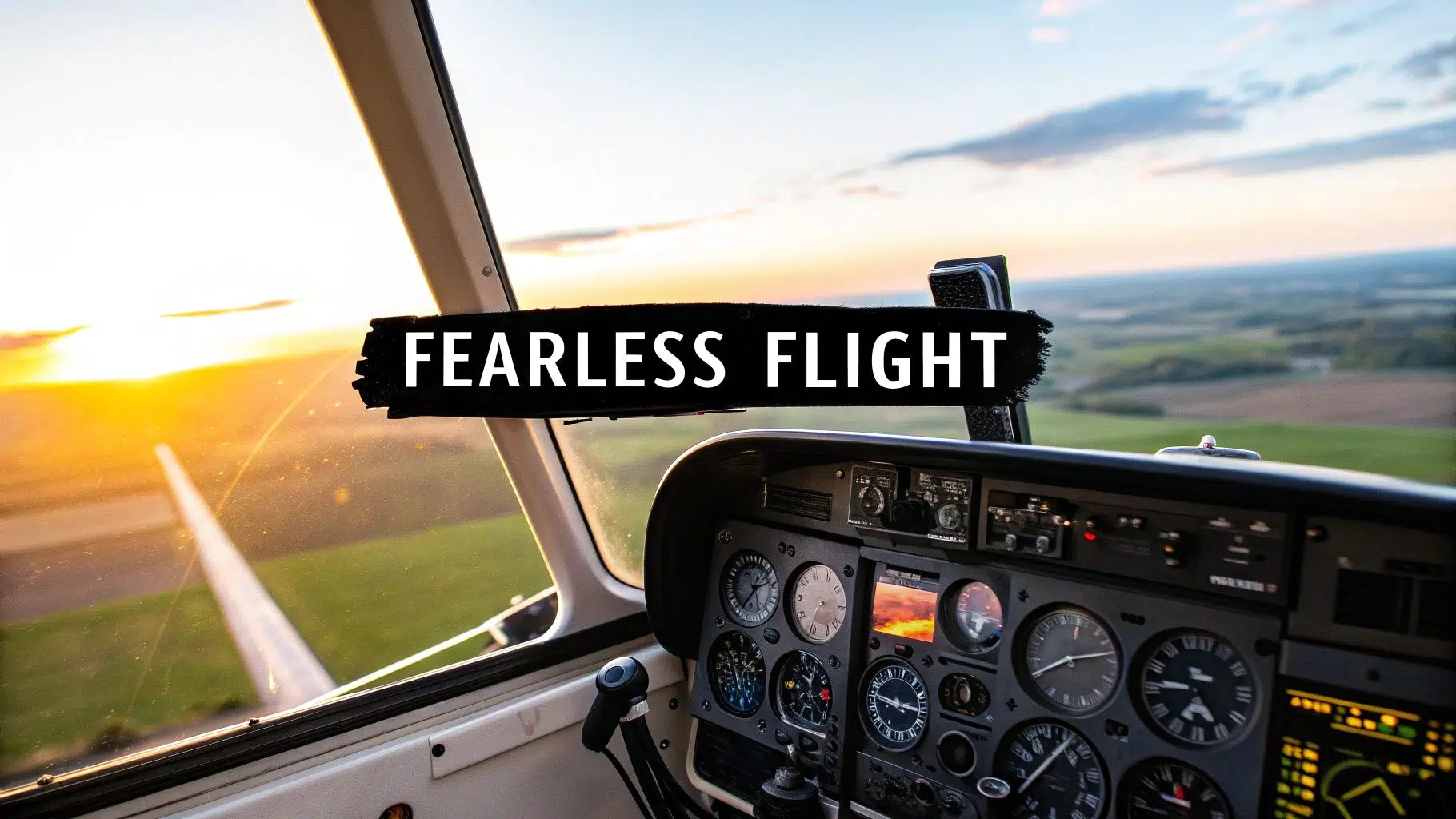
Let's be honest. The dream of becoming an airline or helicopter pilot and the reality of taking the controls can feel worlds apart. That initial rush of excitement can quickly get tangled up with a knot of anxiety you never saw coming. It's a common, unspoken hurdle for many students pursuing a career in aviation, whether in fixed-wing airplanes or helicopters.
This isn't your typical passenger's fear of flying. It’s the weight of responsibility, the pressure to be perfect, and that very real feeling of being thousands of feet up with everything depending on you.
Two practical options worth comparing
These are specific products pilots commonly compare for this type of flying. Confirm compatibility with your aircraft and instructor before ordering.
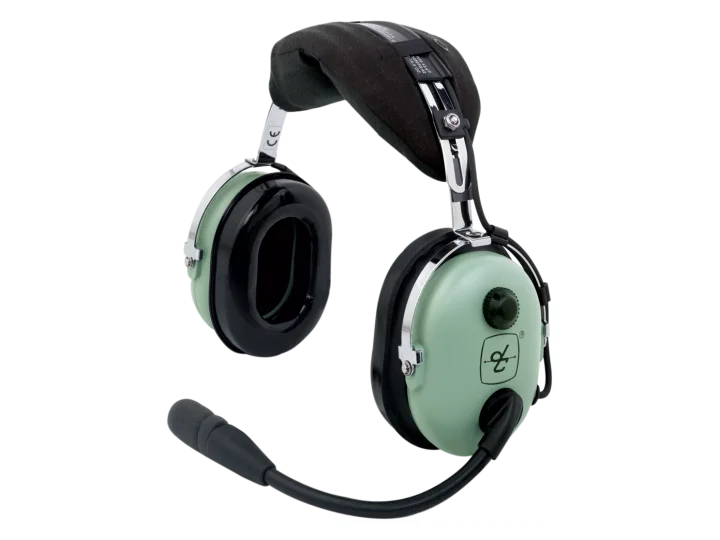 Student headsetDavid Clark H10-13.4 Aviation HeadsetCheck current availability on Amazon (paid link)
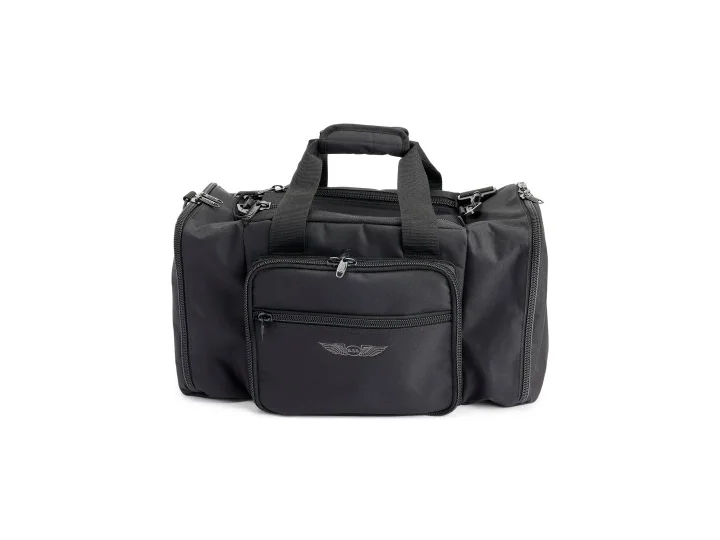 OrganizationASA Flight BagCheck current availability on Amazon (paid link)
Confronting Anxiety in the Cockpit
If you're feeling this, the most important thing to know is that you're not broken, and your career isn't over before it started. These feelings are a completely normal human response to a high-stakes training environment.
I've seen countless students work through this. Many of the most confident commercial pilots I know today started out with that same pit in their stomach. Acknowledging the fear, rather than fighting it, is your first real step toward command.
You Are Not Alone in This
The fear of flying, often called aviophobia, is far more common than you might think. Research shows that a staggering 30% to 40% of people feel some degree of flight-related anxiety. You can discover more insights about the prevalence of aviophobia and see just how many people share these feelings.
For a student pilot aiming for a professional career, this anxiety hits differently. It’s not about a bumpy ride; it’s about performance, precision, and the weight of every single decision you make. The good news is that this specific type of fear is something you can absolutely manage and conquer through your flight training.
This guide provides a structured approach, summarizing the key strategies to help you navigate this challenge effectively.
Core Strategies for Managing Pilot Anxiety
| Strategy Area | Focus for Student Pilots | Key Outcome |
|---|---|---|
| Psychological Preparation | Understanding the root of your anxiety and reframing negative thought patterns. | Shifting from a fear-based mindset to a confidence-based one. |
| Physical Regulation | Mastering breathing and relaxation techniques to control your body's stress response. | Maintaining calm and clear-headedness during high-pressure situations. |
| Gradual Exposure | Using simulators and structured flight lessons to build comfort and competence step-by-step. | Systematically desensitizing yourself to the flight environment and reinforcing skills. |
| Knowledge and Training | Deepening your understanding of aircraft systems, safety protocols, and aerodynamics. | Replacing the "fear of the unknown" with solid, fact-based confidence. |
By focusing on these areas, you can turn anxiety from a roadblock into a manageable part of your career training.
A Path Forward for Aspiring Aviators
Instead of letting fear ground your dreams, think of it as just another subject in your syllabus. You learn about meteorology, navigation, and aerodynamics—now it’s time to learn about managing your own psychology.
This journey is about more than just getting through your next flight. It's about building a foundation for your entire aviation career.
- Build Your Knowledge: The more you truly understand how your aircraft works—from its redundant safety systems to the principles of lift—the less room there is for irrational fear.
- Master Your Mindset: We’ll get into proven techniques that pilots use to stay cool under pressure. This is about building a mental toolkit you can rely on.
- Trust the Process: Flight training is specifically designed to build confidence. Each lesson layers a new skill, systematically turning what was once terrifying into something routine and controlled.
Learning to manage these feelings now will do more than just help you earn your wings. It will make you a more resilient, decisive pilot, fully prepared for anything from navigating a tricky crosswind to handling the complex process to buy or sell airplanes and helicopters later in your career.
Your first takeoff toward a long and rewarding career begins right here, by facing this head-on.
Building Confidence with Aviation Safety Facts
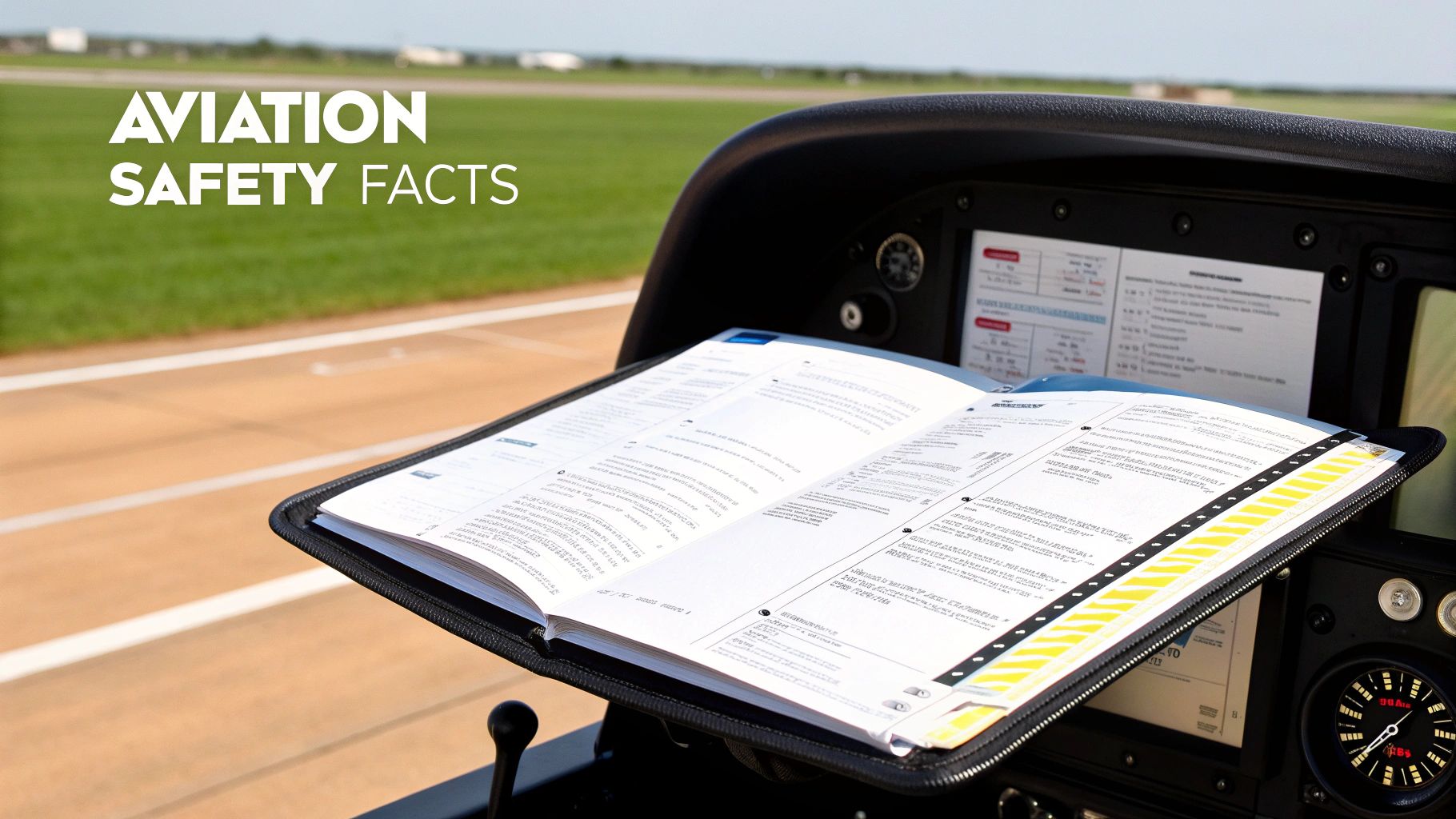
One of the best weapons against flight anxiety is pure, unadulterated knowledge. For a student pilot, getting a firm grasp on the statistical reality of aviation isn’t just comforting—it’s a professional requirement. It’s all about replacing those nagging, irrational fears with a foundation of cold, hard facts.
When you feel that jolt of anxiety, your mind isn't really open to vague assurances like "it'll be fine." It needs something solid to chew on, something concrete to push back against the endless "what if" scenarios. This is where a logical, fact-first approach truly starts to work.
Reframing Risk with Real Data
Most people have a skewed perception of risk. We tend to see flying as a high-stakes gamble while completely overlooking the dangers of things we do every day. The most obvious comparison is hopping in a car.
In 2019, for example, airlines around the globe safely carried over 4.5 billion people on about 45 million flights. In that same year, there were more than 36,000 fatalities from motor vehicle crashes in the U.S. alone.
Here’s another way to look at it: statistically, you’d have to fly every single day for over 19,000 years to be involved in a fatal accident. These aren't just numbers; they’re a powerful dose of perspective. You can dig even deeper and learn more about the compelling statistics of flight safety.
This data-driven mindset is exactly what we work to build during flight training for aspiring airline and helicopter pilots. The whole point is not just to teach you how to fly the aircraft, but to instill a deep, fact-based confidence in the machine and the massive systems supporting it.
Understanding the Layers of Safety
Whether you’re training in an airplane or a helicopter, you're learning to operate a machine engineered with layer after layer of safety and redundancy, all governed by incredibly strict protocols. Modern aircraft are anything but fragile. They’re built to handle conditions far more extreme than anything they'll encounter on a typical flight.
These safety measures are built into every aspect of aviation.
- System Redundancy: Think of it as a "plan B" for everything. Critical components, from navigation instruments to hydraulic systems, have multiple backups. A single point of failure rarely puts the aircraft in jeopardy.
- Rigorous Maintenance: Every single aircraft follows a strict, legally mandated maintenance schedule. Technicians inspect, service, and document every part of the machine far more often and thoroughly than you would your car.
- Air Traffic Control (ATC): You’re never truly alone up there. A global network of highly trained professionals is constantly managing the airspace, ensuring safe separation between aircraft and providing critical guidance from takeoff to touchdown.
These elements don't work in isolation; they create an environment that is overwhelmingly safe. The comprehensive knowledge you’ll gain from a quality ground school program is designed to hammer these facts home, turning abstract safety concepts into tangible confidence. This is where you truly start replacing fear with facts.
By learning the why behind every checklist item and every single procedure, you are actively dismantling fear. You go from being a passenger along for the ride to a knowledgeable commander of the situation.
This mental shift is everything. As you get further into your flight training, you'll see firsthand how all these safety layers work together. Every pre-flight inspection, every radio call, and every maneuver reinforces the reality that flying is a highly controlled, procedure-driven activity—not a roll of the dice. Your training is the ultimate tool for arming yourself with competence and the undeniable proof of aviation's safety.
Taming Your Inner Voice: Mindset Is Everything in the Cockpit
Knowing the statistics on aviation safety is one thing, but that logical knowledge often crumbles when you're faced with the visceral feeling of anxiety. Fear doesn’t listen to reason. The real fight isn’t with the aircraft; it’s with the "what if" scenarios running wild in your own head.
For any student pilot, learning to master your mindset is just as critical as learning to land. Anxiety is a feedback loop. A stray thought about a stall or an engine failure kicks off a physical reaction—your heart pounds, your breathing gets shallow—and that physical feeling just feeds the original fear. The trick is to step in and break that cycle before it takes over.
Rewiring Your Brain: From "What If" to "What's Next"
This is where a technique called cognitive reframing comes in, and it's a game-changer. It’s about catching that anxious thought in its tracks and deliberately replacing it with a calm, procedural thought rooted in your training. You’re not trying to pretend the fear isn’t there; you’re meeting it head-on with your professional knowledge.
Let's say you're a helicopter student practicing autorotations. It's an intense maneuver, and it's easy for your mind to jump to, "What if I mess this up and we lose control?"
A pilot's reframed thought looks like this: "My instructor is sitting right next to me. This machine was built to do this. I know the procedure by heart: lower the collective, keep the rotor RPM in the green, and start the flare at the right altitude. This is just a training exercise, and it’s making me a better pilot."
This mental shift does more than just calm you down for a moment. Over time, it actually retrains your brain to default to competence instead of catastrophe. That's a core skill you'll rely on for your entire career as an airline pilot.
Using Your Body to Calm Your Mind
You can also tackle the physical side of anxiety directly. When you feel that tension building, a few simple, conscious breaths can cut off that fight-or-flight response at the knees.
- Box Breathing: This is a classic for a reason—it works. Breathe in for a four-count, hold your breath for four, breathe out for four, and hold again for four. Do that just a few times, and you’ll feel your heart rate slow down, giving you the mental space you need to focus on a complex approach or a difficult maneuver.
- Visualization: Don't wait until you're in the aircraft to start flying. Before a lesson, sit down for a few minutes and run through the entire flight in your head. See yourself doing a perfect pre-flight inspection, feel the smooth takeoff, imagine executing every maneuver flawlessly, and picture that perfect, textbook landing. This isn't just wishful thinking; it’s a powerful form of mental practice that builds confidence and muscle memory before the engine even starts.
These aren't just little tricks to help you scrape by. They are foundational skills for building true mental resilience. Whether your goal is to fly commercial jets or master helicopter operations, your ability to control your internal state is every bit as important as your ability to control the aircraft. The mental tools you sharpen today will serve you for decades, from your very first solo flight to someday navigating the process of buying or selling aircraft.
Your Training Is Your Best Weapon Against Fear
Think of your flight training as more than just learning to operate an aircraft. It’s your secret weapon against fear—a real-world, hands-on program designed to dismantle anxiety piece by piece. For students aiming for a career as an airline or helicopter pilot, this process is a form of gradual exposure therapy, carefully structured to build your confidence from the ground up. Every single lesson is designed to methodically desensitize you to the things that make you nervous, slowly replacing that knot in your stomach with genuine skill.
It all starts before you even see the plane. In ground school, you start to demystify the machine. The aircraft goes from being this complex, intimidating object to a system you actually understand. This knowledge is your first line of defense against all those "what if" scenarios that fuel anxiety. You’re learning the physics of flight, the redundant safety systems, and the principles that keep you safely in the sky.
From the Simulator to the Sky
The flight simulator is your next stop, and it’s a game-changer for student pilot training. It’s a completely safe space where you can face your worst-case scenarios head-on without any real risk. Want to practice engine failure procedures? You can do it ten times in a row until the response is second nature. This builds an incredible psychological buffer. By handling it successfully in the sim, the fear of it happening for real starts to lose its power.
Then, you take that experience to the air on discovery flights with a seasoned instructor. This deliberate, step-by-step progression is the foundation of how you conquer the fear of flying as a student pilot.
When you feel that anxiety creeping in, it helps to have a simple mental framework to fall back on.
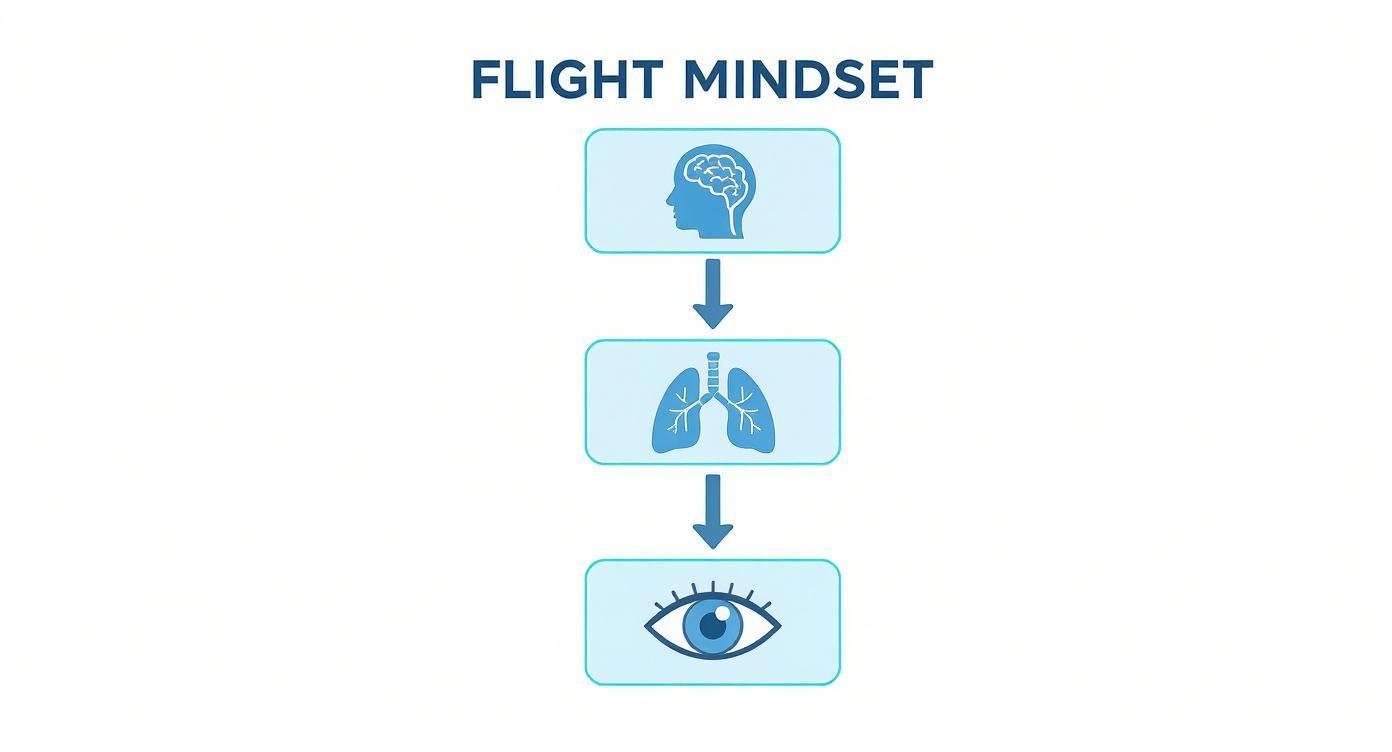
This process is a constant cycle: catch the negative thought, control your physical reaction, and then actively refocus on the task at hand.
Building Real Confidence, One Flight at a Time
Every lesson builds on the one before it. You’re never just thrown into the deep end. Whether it’s your first time practicing basic maneuvers in a Cessna or learning to hover in a Robinson helicopter, the progress is incremental and intentional.
Confidence in aviation is built from a long chain of successful experiences. Every smooth takeoff, every well-executed maneuver, and every perfect landing adds another link to that chain, making it stronger than any fear.
Your training is actively rewiring your brain. You’ll find yourself shifting from worrying about what could go wrong to focusing on your next checklist item. This is why knowing your aircraft inside and out is so critical. Mastering routine tasks builds a deep-seated trust in both the machine and your own abilities. For instance, our guide on pre-flight checks for a Cessna 172 highlights how these meticulous procedures create a foundation of safety before the engine even turns over.
By the time you’re ready for your first solo flight, you won't be flying on bravery alone. You’ll be flying on a solid foundation of proven skills and hundreds of correct decisions you’ve made along the way. Your training doesn't just teach you how to fly; it teaches you how to be a calm, competent commander of your aircraft—and your own mind.
Buying or Selling Airplanes and Helicopters
As your flight training progresses, you might start thinking about the next steps in your career. For many pilots, this involves buying their first aircraft to build hours or start a business. For others, it could mean selling an aircraft to upgrade. This process can bring its own set of anxieties, but knowledge and professional guidance are the best remedies.
The key to a confident transaction is a deep understanding of the aircraft. When you know its history, maintenance records, and current condition inside and out, you replace fear of the unknown with solid, fact-based confidence. This knowledge is one of the most powerful tools for building trust, whether you are the buyer or the seller.
How to Navigate the Aircraft Market
Whether you're in the market for an airplane or a helicopter, buying or selling is a serious undertaking. This isn’t just about the money; it’s about safety and peace of mind. Taking a structured, methodical approach can transform what feels like a monumental task into the next exciting chapter of your life in the air.
It's natural to feel some nerves. A recent survey from The Points Guy found that 51% of people feel nervous when they fly, and 65% admitted that recent safety incidents made them even more anxious. You can read the full research about flight anxiety trends on The Points Guy. This really underscores how vital it is for pilots—not just passengers—to have tangible proof that their aircraft is safe.
Trust in your aircraft is built on a foundation of knowledge. When you can trace its history through meticulous logbooks and a thorough inspection, you replace anxiety with a deep, fact-based confidence.
The Smart Buyer's Checklist
For any pilot looking to build hours and experience, that first aircraft is a critical career tool. Here’s how you can approach the purchase with a calm, professional mindset.
-
Find a Broker You Trust: Don't just work with anyone. Find a broker who takes the time to understand what you need the aircraft for, whether it's flight training or cross-country trips. They should be transparent and provide clear, verifiable information from the get-go.
-
Become a Logbook Detective: An aircraft's logbooks are its autobiography. You need to learn how to read them. Look for a consistent service history, records of major repairs, and—critically—compliance with all Airworthiness Directives (ADs). Gaps in the logs or sloppy, incomplete entries are major red flags.
-
Never, Ever Skip the Pre-Buy: This is the one thing you can't compromise on. You need to hire your own trusted and independent A&P (Airframe & Powerplant) mechanic to conduct a detailed pre-purchase inspection. This is your single best defense against discovering expensive problems the seller might not have mentioned.
Thinking of Selling? Here’s How to Prepare
If you ever find yourself on the other side of the deal, your greatest asset is transparency. Getting an airplane or helicopter ready for sale is all about organizing your documentation and presenting the aircraft honestly and professionally.
A clean, well-documented machine doesn't just sell faster. It gives the new owner the confidence they need to take to the skies safely. Being proactive and organized ensures the whole process is smooth and builds trust for everyone involved.
Common Questions from Student Pilots
Stepping into the world of aviation is a huge thrill, but it’s completely normal to have a few questions buzzing around your head—especially if you're wrestling with some flight anxiety. Let's tackle some of the most common concerns I hear from student pilots aiming for a career in the cockpit.
Is It Normal for a Student Pilot to Be Afraid of Flying?
Absolutely. Not only is it normal, it's pretty much expected. Think about it: you're learning a complex skill that takes you thousands of feet into the air. It would be strange not to feel a little nervous. I've known plenty of seasoned airline captains and helicopter pilots who will tell you they had butterflies during their first few lessons.
The goal isn't to eliminate that feeling entirely. It’s about transforming it. It's about learning to acknowledge that nervous energy and channel it into sharp focus and precise control. Professional pilots do this every day. By focusing on the facts, using breathing techniques, and—most importantly—trusting the rock-solid flight training you’re receiving, you learn to manage it. Your instructor has been through this with countless students and is your best ally.
Your anxiety doesn't mean you're in the wrong profession. It means you're human. The goal is to transform that nervous energy into heightened focus and precision in the cockpit.
Many students discover that the structured path to becoming a pilot is the best antidote to their anxiety. Each step, from ground school to your first solo, is designed to build your skills and confidence brick by brick. For a closer look at that process, our guide on how to get a pilot's license walks you through the entire journey, showing you how competence naturally overcomes fear.
Can My Fear of Flying Stop Me from Getting a Pilot License?
It really doesn't have to. While the FAA medical certificate application does inquire about mental health, a case of manageable flight nerves is not a disqualifying condition. What matters is that your anxiety never compromises your ability to safely control the aircraft.
If you're dealing with a more significant fear, seeking help from a therapist specializing in phobias can make a world of difference. Your Aviation Medical Examiner (AME) is a great resource and can often point you in the right direction. I can't tell you how many pilots have walked this exact path, working through their initial fears to become confident and highly competent aviators.
Are Helicopters Scarier to Fly for Anxious Students?
That’s a tough one because it really comes down to the person. Some students feel a huge confidence boost from the unique control a helicopter offers. The ability to hover in place or take off vertically gives them a profound sense of command that they don't get from a fixed-wing plane.
On the other hand, some find the mechanics of rotary-wing flight a bit more daunting at first. The truth is, both airplane and helicopter flight training programs are built on the same principle: starting slow and building skills incrementally in a safe, controlled way. Whether you're in a plane or a chopper, starting in a simulator with a patient instructor is the perfect way to ease into it. The best choice is the one that aligns with your passion and career goals.
At DuBois Aviation, we get it. We know the hurdles student pilots face. Our flight training programs are designed to provide the one-on-one support you need to build not just your skills, but your confidence for a career as an airline or helicopter pilot. Ready to start? Visit us at https://duboisaviation.com.


