

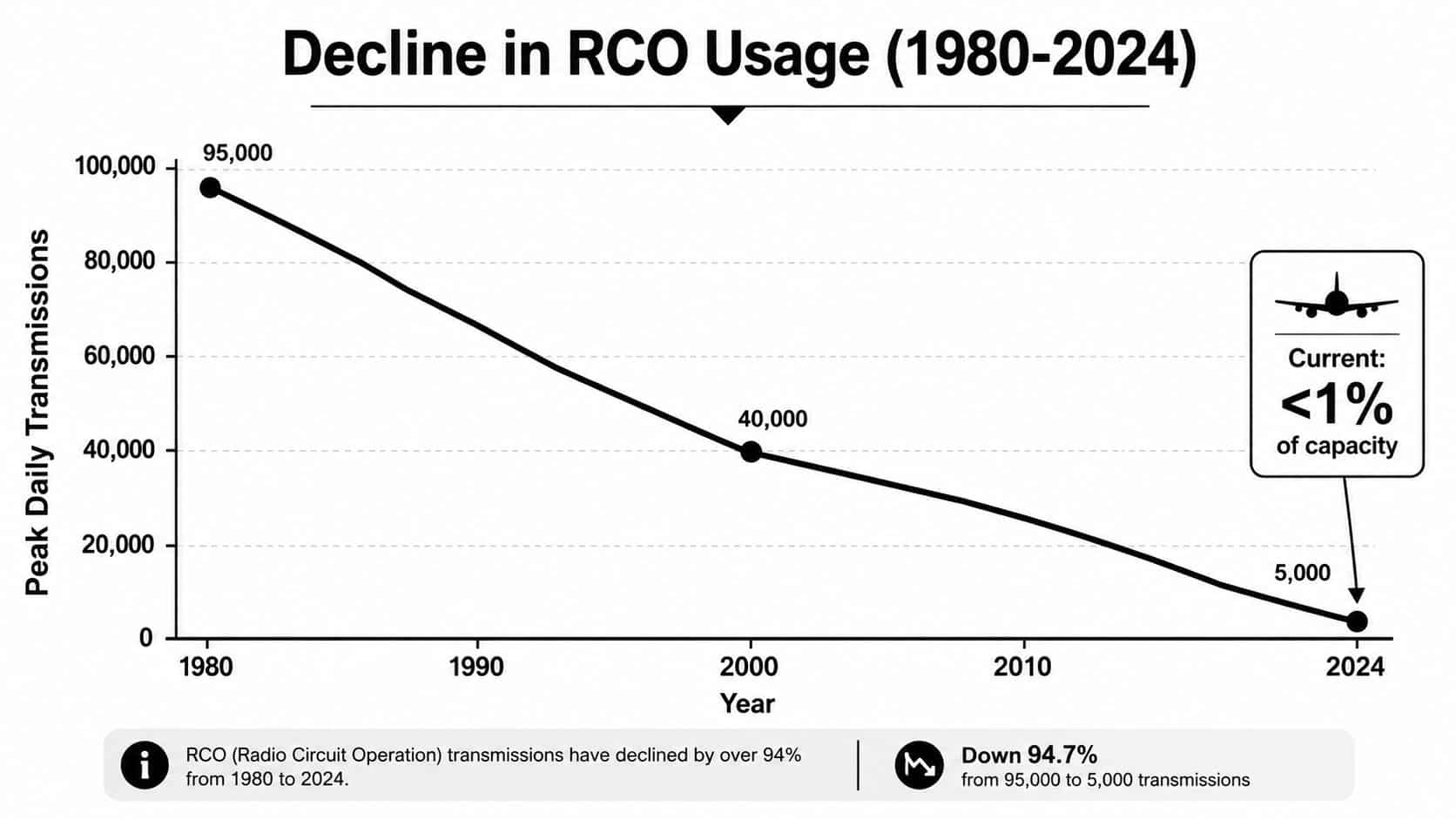
Pilots once sent 22,000 service requests a day through the old flight-service network in the mid-1980s. Today, the FAA says that same system handles fewer than 300 requests a day, a drop of more than 98% FAA RCO reduction notice. That's the reason the FAA is shutting down RCOs, not because pilots suddenly stopped needing information, but because the agency is retiring a voice relay layer that modern briefing tools have largely replaced.
For GA pilots, that sounds abstract until you're at a busy towered airport like Chino, trying to stay ahead of a departure, a weather change, or a flight-plan issue with a student in the right seat. Then the change gets practical fast. You lose one more backup path, and the checklist discipline around briefing, filing, and closing plans matters more, not less.
Table of Contents
- Why the FAA Is Retiring the RCO Network
- What Remote Communications Outlets Do
- The Shutdown Timeline and What Gets Removed
- Operational Impacts for GA Pilots and Flight Schools
- Communication Alternatives Pilots Can Use Now
- How DuBois Aviation Is Updating Training for the RCO Transition
- Your Pre-Shutdown Action Checklist
Why the FAA Is Retiring the RCO Network
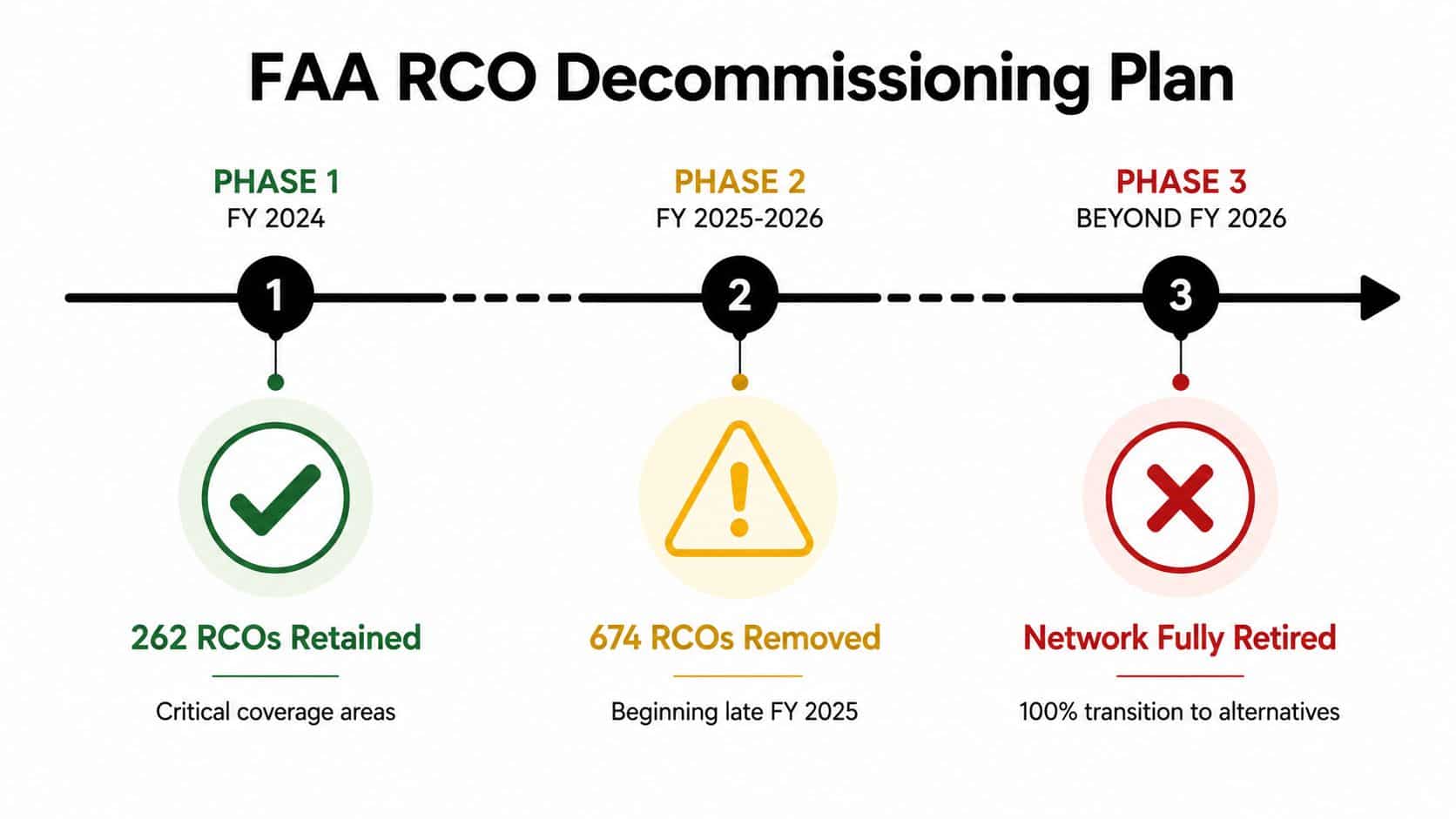
The FAA's move to phase out the remote communications outlet network is the end point of a long shift away from analog flight-service access. The agency first planned to decommission 504 RCOs and 170 VHF omnidirectional range voice outlets across the conterminous U.S., Hawaii, and Puerto Rico, then revised the plan to keep 262 RCOs in place until technology allows further cuts FAA RCO reduction notice. Even with that revision, the FAA still says 674 RCO locations will be decommissioned beginning in late fiscal year 2026 FAA system operations notice.
That is a major infrastructure reduction, and the agency ties it to modernization and cost control. The FAA estimates about $4.8 million in savings from retiring legacy infrastructure, and it points to a steep falloff in use, from 22,000 daily requests in the mid-1980s to fewer than 300 today FAA system operations notice. For most pilots, the practical reality is simple. The FAA is spending money to maintain a network that routine cockpit workflows no longer depend on very often.
Why the pushback mattered
AOPA and EAA did not argue that the system was thriving, they argued that the remaining use still mattered in actual operations. The FAA's final plan reflects that pressure, since it no longer tries to remove the entire continental network at once FAA 2025 notice summary. Pilots should pay attention to that, because it shows the agency heard the concern that some low-altitude work and weak-coverage areas still rely on these paths.
Practical rule: if a communication method still gets used in the places with the weakest coverage, it usually fails last and matters longest.
The shutdown is historical because it ends an analog-era service layer, not just a hardware refresh. Flight Service itself has also shrunk from a much larger staffing model to just two facilities and fewer than 200 specialists, according to the FAA's 2025 notice FAA 2025 notice summary. That is the core story behind the headline. The infrastructure and the staffing both moved with the same modernization wave.
What Remote Communications Outlets Do
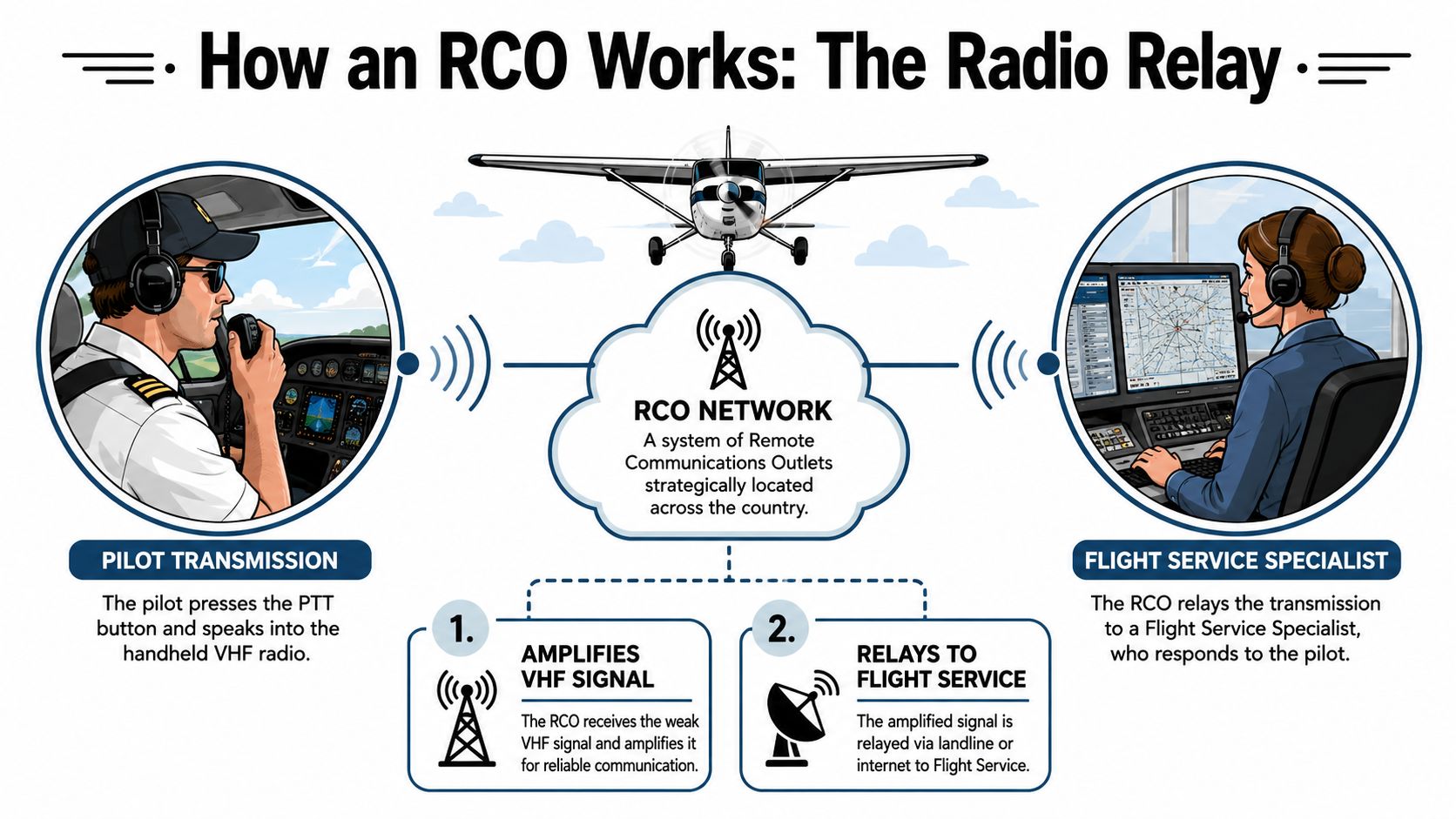
An RCO is a radio relay for Flight Service. You transmit on a local frequency, the outlet carries the message farther than your cockpit radio would by itself, and a Flight Service specialist answers from the other end. If you have ever used a handheld radio in terrain, at low altitude, or in a weak-signal area and wished the transmission had more reach, that is the role the outlet was built to fill.
Where it sat in the chain
RCOs sat between the aircraft and Flight Service. VOR voice outlets and dedicated Flight Service frequencies served similar ends, but the operational question for pilots was always the same, can I reach someone who can help me with weather, a plan, or a report when I need it. That mattered most in places where direct VHF contact was not reliable or where terrain made radio work stubborn.
A practical mental model helps. The pilot speaks, the outlet relays, the specialist responds, and the pilot gets the information needed to continue safely. That is why a lot of older training still treats the outlet like a lifeline, not because it was fancy, but because it was dependable in places where cell service and internet were not part of the cockpit equation.
For the frequencies and service setup that still exists behind the old terminology, this Flight Service frequency reference is useful context for students who are learning what still works on the radio. The important part is understanding the difference between the tool and the task. You were not talking to “the tower,” you were reaching Flight Service through a relay designed to extend coverage.
What pilots used it for
The tasks were practical and routine. Open a VFR flight plan. Close it on arrival. Ask for a weather update en route. Send a pilot report. Handle a Flight Service question when a direct call was not convenient or possible. Those are ordinary jobs, but they become painful when the backup path disappears.
A cockpit that depends on one method for every communication task is a cockpit one failure away from delay.
For a towered airport like Chino, the issue is procedure, not nostalgia. Flight schools still need students to know where the relay fit in the radio sequence, what to expect when the path goes away, and which frequency or checklist step replaces the old habit. The FAA's move does not make those tasks vanish. It changes the route to get them done, and pilots who still think in terms of “I'll call the RCO if I need it” need a new habit pattern.
The Shutdown Timeline and What Gets Removed
The FAA's revised plan is narrower than the first version, but it still removes a lot of infrastructure. After public comments and Safety Panel review, the agency decided to retain 262 RCOs temporarily and decommission 674 RCO locations beginning in late fiscal year 2026. Alaska and frequencies reserved for emergency or military use are excluded from the action.
What the dates mean in the cockpit
The operational cutoff matters more than the policy language. The FAA says it will issue NOTAMs as each frequency is taken out of service, and its FAQ says chart supplements, sectionals, enroute charts, and NOTAMs will reflect the changes. Leidos is expected to stop monitoring identified frequencies by September 3, 2026.
That is the kind of change pilots often miss until they key the mic in the air. If your normal habit is to assume a backup call will work everywhere, that habit needs to change before you launch, not after the frequency is already dark.
How to check your area
Start with the chart products you already use. Check the chart supplement for your home field, then verify the sectional and enroute chart notes, then read the current NOTAMs for the frequencies you plan to use. If your route crosses terrain, coastlines, or sparse coverage areas, do not assume an old habit still works just because it worked last season.
Pilot habit worth keeping: confirm radio access the same way you confirm runway length, weather, and fuel, before engine start, not after takeoff.
For pilots who fly around major SoCal traffic flows, that matters in a very practical way. One day the local backup path is there, the next it is not, and the airplane does not care that you were expecting a different answer.
Operational Impacts for GA Pilots and Flight Schools
The operational impact shows up in the small tasks pilots handle every day. At a towered airport like Chino, a student or CFI may still be managing taxi instructions, departure clearance, and busy radio work, but the old RCO call also served as a practical fallback for flight-service tasks when coverage got thin. Once that path disappears, the crew has to build a different habit before the airplane ever moves.
What changes for flight plan handling
Pilots have used RCOs to open and close flight plans, get weather, coordinate transborder updates, and contact Flight Service in low-coverage areas. That is the significant loss here, and it affects workflow more than it affects theory. If the usual fallback was to key the mic and reach Flight Service from a remote area, that option no longer belongs in the routine.
A busy training field makes the change easier to feel. Instructors already spend time teaching students how to keep clear heads during departure calls, taxi instructions, and radio congestion, and now flight-plan handling has to be folded into that same discipline. A student should know ahead of time whether the update will happen by phone, app, or datalink, because leaving that question until taxi-out invites delay and distraction.
Why busy training environments need a different habit
Flight schools should treat the RCO shutdown as a workflow change, not a background note. Before solo cross-country flights, students need a clear plan for briefings and flight-plan changes, because assuming an in-air voice relay exists can create a problem at exactly the wrong time. That matters most when weather is marginal, terrain is close, or the airplane is already demanding attention.
For schools and instructors thinking about continuity, network redundancy solutions offer a useful way to frame the issue. Aviation is not an IT department, but the planning logic is similar. Do not build a student process around one communications path if that path may be gone when the flight needs it.
When the backup goes away, the primary procedure has to become the habit, not the fallback.
Busy training airports expose weak radio habits fast. That is why the change lands hardest on students, instructors, and dispatchers who are already managing multiple aircraft, multiple missions, and a crowded radio at the same time.
Communication Alternatives Pilots Can Use Now
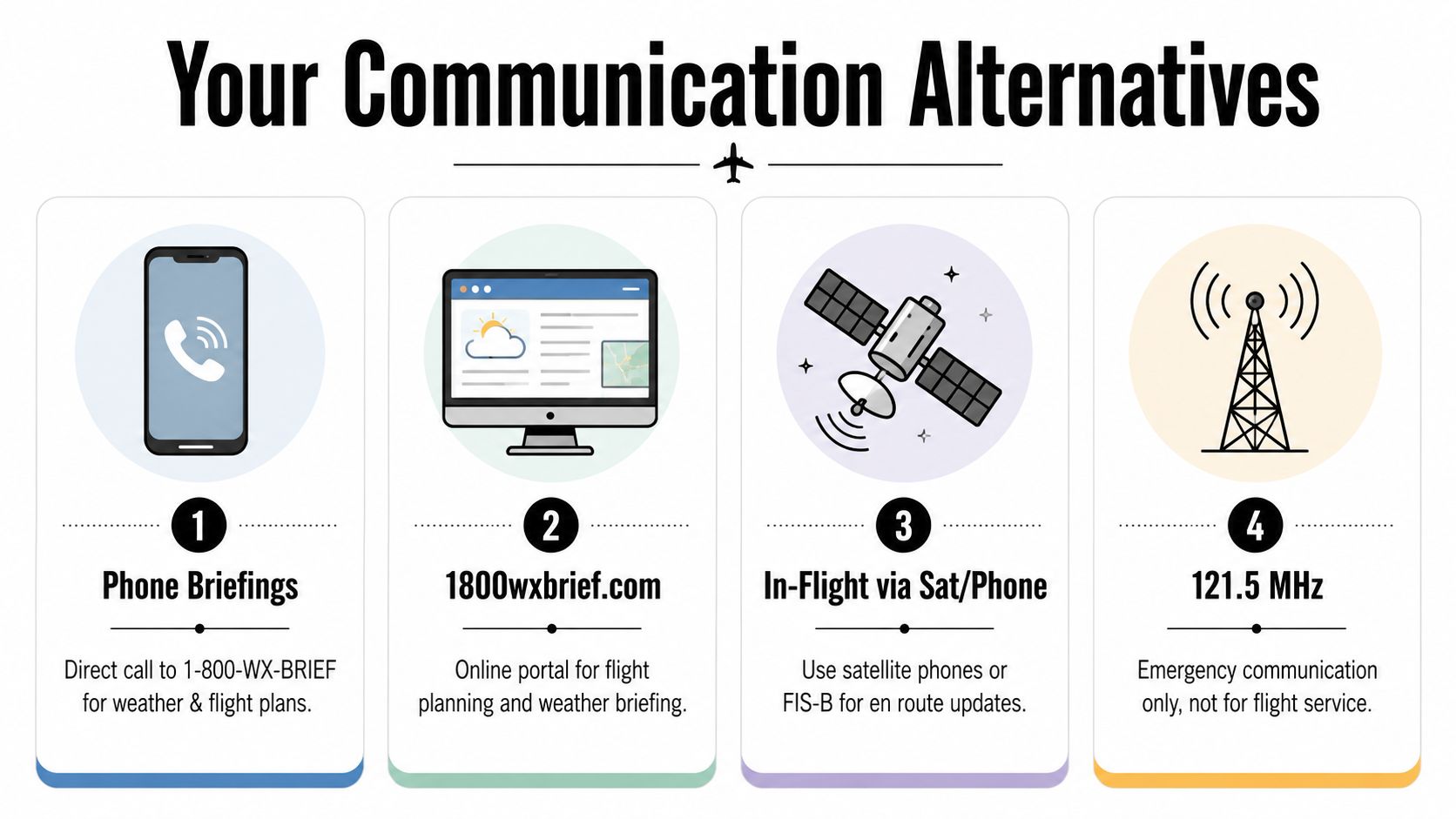
Pilots still have workable options, but each one fits a different job, and none of them behaves like an RCO. The right choice depends on whether you are on the ground or airborne, whether you need a briefing, a clearance, or a flight plan change, and how much cockpit workload you already have. A phone call handles some tasks cleanly. A cockpit datalink tool handles others better. CTAF and UNICOM still matter at non-towered fields, but they do not replace Flight Service.
Match the tool to the job
If you are on the ground and need a briefing or need to handle a flight plan, the Leidos FSS phone line 1-800-WX-BRIEF is the cleanest direct option DuBois Aviation flight plan guide. If you prefer a digital workflow, tools like ForeFlight and Garmin Pilot are built for filing, briefing, and route management without relying on an airborne voice relay. That fits the way a lot of modern general aviation already works, especially at training airports where students need the process to be predictable and fast.
For en route weather, ADS-B In weather and FIS-B are often the better answer than trying to chase an old voice outlet. They give you current information in the cockpit, which is usually more useful than making a voice request and waiting for a reply. Satellite devices or in-cockpit phone solutions can help in special cases, but they need to be set up ahead of time, not improvised when the flight is already underway.
Keep the radio basics separate
At uncontrolled fields, CTAF and UNICOM still do what they have always done, they coordinate traffic and local ground services. They do not replace Flight Service. And 121.5 MHz stays an emergency frequency, not a routine flight-service channel, so do not confuse “available” with “appropriate” pilot communication alternatives.
The practical rule is simple. Use the fastest method that still gives you the right answer, and do not make the radio do a job another system already handles better. For a broader comparison of backup methods and resilience planning, this alternatives page is a reasonable reference point.
How DuBois Aviation Is Updating Training for the RCO Transition
A school at a busy, towered airport cannot treat this as a theory lesson and stop there. Students who train at a place like Chino are already working with three runways, multiple instrument approaches, and the normal radio pressure that comes with real traffic flows. The RCO shutdown adds another layer of cockpit planning, and that has to be taught on purpose.
Radio work now includes fallback planning
Private and instrument students should be briefed on which tasks used to lean on RCOs and how those tasks will be handled without them. That means practicing the routine of getting weather, filing, and closing plans before the flight, instead of assuming an airborne relay will be there if the day gets messy. It also means student pilots need to know when a phone call is the right answer and when cockpit datalink or an EFB is the right answer.
The FAA has said these changes will show up in chart products and NOTAMs, so the training habit should match that reality. If a student can brief the change from the chart stack and the app before engine start, they are far less likely to get overloaded later.
Why simulators help
A simulator session is the right place to rehearse the communication loss. Students can practice a route that used to depend on an RCO, then run through the same flight using phone briefing, EFB filing, and proper in-air radio discipline. The goal is not to simulate the FAA's infrastructure, it is to train the pilot's response when the old path is gone.
Younger aviation students do not need the jargon, they need to know the training culture is adapting to current operations. The same is true for career-track students. If an Airline Career Program candidate can handle modern briefing tools and a structured flight-plan workflow on a normal day, that candidate is better prepared for the way flying works now.
Instructor's note: teach the procedure once on the ground, then make the student use it under workload in the airplane or sim.
That is the right move for any school that wants its graduates to be comfortable in current airspace, not just current aircraft.
Your Pre-Shutdown Action Checklist
Treat the RCO shutdown like a checklist item, not a surprise. Before your next lesson, cross-country, or solo signoff, verify your chart supplement, sectional, enroute chart, and NOTAMs for any RCO or VHF voice outlet you still expect to use. Then update your EFB and planning flow so they match current FAA status, not memory from last year's airport brief.
What to do before your next cross-country
- Verify current frequencies: Check the outlet status for your home airport, your common training routes, and any mountain or low-coverage segments you fly often.
- Practice the phone workflow: Make a real call to Flight Service using 1-800-WX-BRIEF before you need it in a hurry. If you want a step-by-step refresher, use this flight plan filing guide and rehearse the same sequence you would use before a real departure.
- Check your equipment assumptions: Know what your aircraft can do with ADS-B In, datalink weather, and cockpit briefing tools, and know what those tools cannot replace.
- Brief the student or crew: Say out loud how flight plans will be opened, updated, and closed if the old radio path is gone, especially at towered airports like Chino where radio flow and ground timing matter.
- Update personal minimums: If your normal backup communication path is gone, do not keep the same launch decision standard.
Instructors should add the same items to lesson plans and solo endorsements. A student who has trained to depend on one relay can get behind fast when that relay is missing, especially when the workload rises after taxi or in a busy pattern. Build the briefing and filing routine so the loss of an RCO does not change the safety margin, and make sure students can handle the procedure without fumbling for a script.
One practical habit helps here. Put the phone call, the flight plan filing step, and the radio readback into the normal preflight flow so it feels routine before the engine starts, not like a rescue plan after a frequency disappears.