
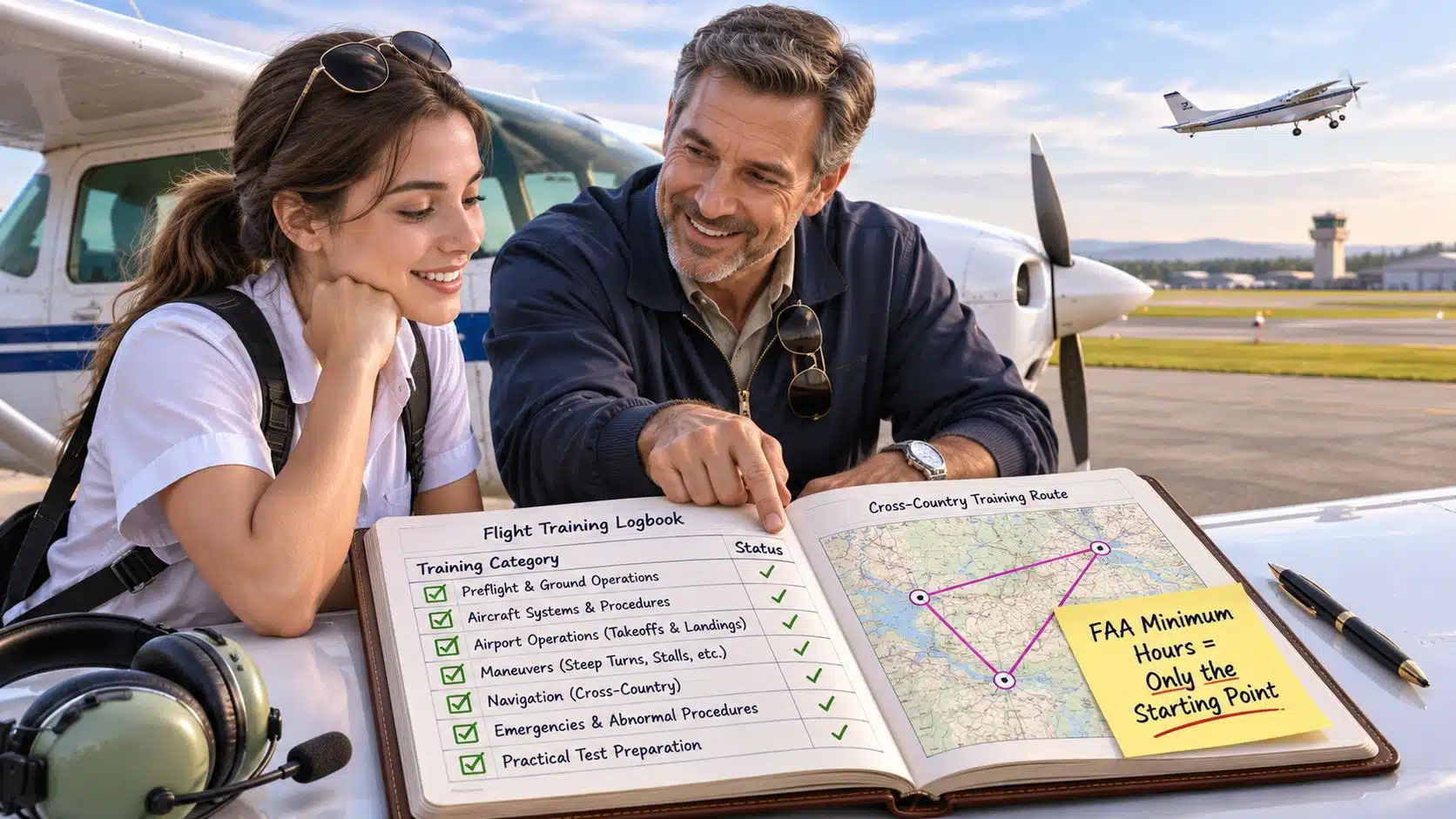
The FAA minimum for an airplane private pilot certificate is 40 hours of logged flight time under 14 CFR 61.109, and at least 20 of those hours must be flight training with an authorized instructor while at least 10 hours must be solo flight. That's the requirement in one sentence. It's also the most misread number in flight training.
Forty hours is where the regulation starts. It's rarely where a logbook ends. The rule doesn't just count total time, it counts categories: solo cross-country distance, night landings, and a block of test preparation that has to sit inside a fixed two-month window. A logbook can show 40 hours and still fail that audit.
This is a walkthrough of what the rule requires, what a logbook usually shows, and how to plan the difference.
Two practical options worth comparing
These are specific products pilots commonly compare for this type of flying. Confirm compatibility with your aircraft and instructor before ordering.
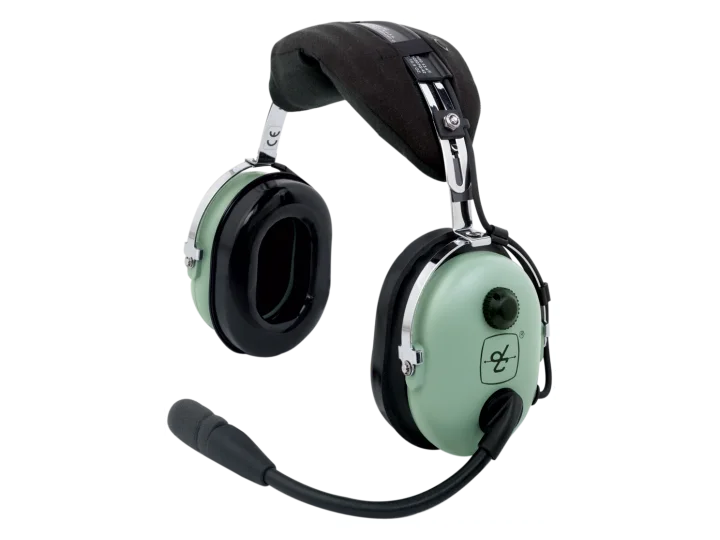 Student headsetDavid Clark H10-13.4 Aviation HeadsetCheck current availability on Amazon (paid link)
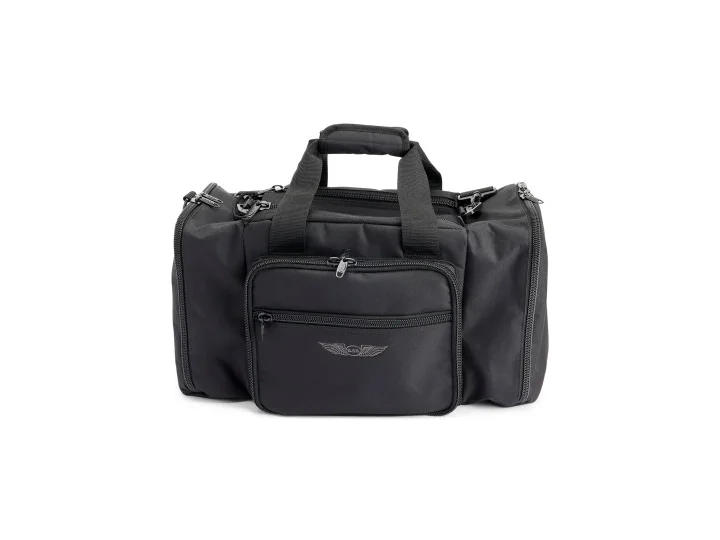 OrganizationASA Flight BagCheck current availability on Amazon (paid link)
Table of Contents
- FAA Minimum Hours for a Private Pilot Certificate
- What Solo and Cross-Country Hours Must Include
- Approved Course Options and the 35-Hour Exception
- Why Most Private Pilot License Hours Exceed 40
- How Instrument and Commercial Ratings Add Hours
- Plan Your Private Pilot Hours Before You Book
- Private Pilot License Hours FAQs
FAA Minimum Hours for a Private Pilot Certificate
The regulation is precise about the split. Under 14 CFR 61.109, an applicant for an airplane private pilot certificate needs at least 40 hours of logged flight time, including at least 20 hours of flight training with an authorized instructor and 10 hours of solo flight training, as published in the electronic Code of Federal Regulations. That leaves up to 10 hours that can come from additional instructor time, additional solo time, or other qualifying flight time.
The same 40-hour baseline applies to single-engine and multiengine airplane ratings. The categories underneath it differ slightly by pathway, and the table below follows the single-engine airplane route most students take.
| Requirement | Minimum | What it covers |
|---|---|---|
| Total logged flight time | 40 hours | Full logged time toward the certificate |
| Flight training with an authorized instructor | 20 hours | Dual instruction from an authorized instructor |
| Solo flight training | 10 hours | Solo time, including solo cross-country flying |
| Solo cross-country | 5 hours | One flight of at least 150 nautical miles with full-stop landings at three points |
| Cross-country instruction | 3 hours | Dual cross-country flying with an instructor |
| Night training | 3 hours | Includes a night cross-country over 100 nautical miles, 10 takeoffs and 10 full-stop landings |
| Practical test preparation | 3 hours | Flight training within the preceding 2 calendar months before the practical test |
Why the Categories Matter as Much as the Total
Read that table as seven separate boxes, not one. A student can log 42 hours of total time and still be short on solo cross-country distance or on night landings, and an examiner or a designated pilot examiner will find it during the logbook review.
Practical rule: Track seven boxes, not one number. Forty hours with no night cross-country logged is not 40 hours toward the certificate.
The three hours of practical test preparation are the box students lose most often, because they expire. Those hours must fall within the preceding 2 calendar months before the practical test. Train slowly at the end and the calendar, not the skill, decides when the checkride can happen.
Where to Confirm the Current Rule
The current text sits on the eCFR, and it preserves a long-standing U.S. baseline that appears in earlier editions of the Code of Federal Regulations, including the 2003 version. Rules do get amended, so read the version currently in force before you build a budget or a timeline around it. Print the section, highlight each category, and keep it with the training folder.
40 hours is the total you must log. The categories are what the examiner checks.
What Solo and Cross-Country Hours Must Include
Ten solo hours sounds like ten laps around the pattern. The regulation is more demanding than that. Of the required 10 solo hours for a single-engine private certificate, at least 5 must be solo cross-country, according to the federal regulation text on GovInfo, and one of those flights has to total at least 150 nautical miles, with full-stop landings at three points and one segment longer than 50 nautical miles straight-line distance.
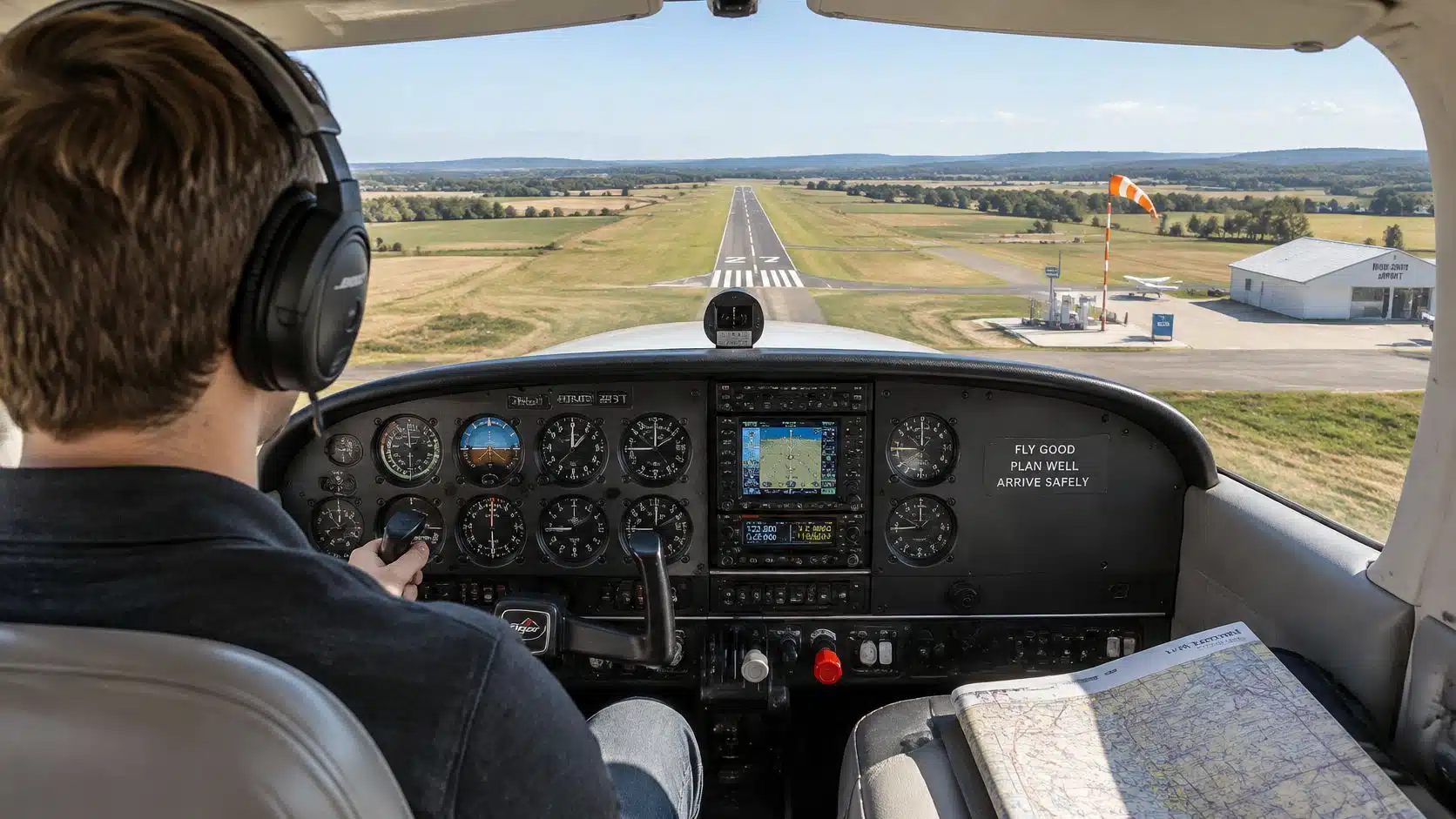
The same section requires three full-stop takeoffs and landings at an airport with an operating control tower. That detail catches students who train at a quiet, untowered field and never venture into controlled airspace until late in training.
Why the Rules Push Students Beyond the Local Airport
Local solo flying is the parking lot. A solo cross-country is the road trip: route planning, fuel math, weather checks at each stop, diversion decisions, and radio calls to facilities you may never have spoken to before. The regulation deliberately builds in that exposure because those are the skills a private pilot uses after the certificate is issued.
The practical consequence is that a student training in low-complexity local airspace may need extra dual instruction before those flights, especially when moving into towered or busier airspace. That's additional time the 40-hour total doesn't advertise. The student pilot cross-country requirements guide breaks down how those flights are typically sequenced, from the first short hop to the long solo.
A Preflight Checklist for the Long Solo Cross-Country
- Choose checkpoints along the route, and write them down rather than relying on the moving map.
- Calculate fuel with reserve, then compare it against the aircraft's usable fuel for the planned legs.
- Check weather and notices for every airport on the route, not just the departure and destination.
- Pick a diversion airport and state the decision point out loud before departure, so the choice is made calmly rather than in the air.
- Share the plan with someone on the ground, including the route and the expected return time.
- Confirm the radio calls for each controlled airport on the route, and write the frequencies on the planning sheet.
What Actually Decides Readiness for Solo
An instructor's endorsement and judgment govern when a student flies solo cross-country, and no hour count substitutes for that. Before a student is cleared for solo, DuBois Aviation runs stage-check flights to review flying skills, procedures and decision-making. Completing a stage check does not replace the required instructor training and endorsements.
Progress should be judged on demonstrated performance: accurate navigation, stable energy management, radio discipline, and sound diversion decisions. A student with 10 logged solo hours who wanders off course and freezes at the first reroute isn't ready. A student with 8 solo hours who plans well and adapts cleanly probably is.
Approved Course Options and the 35-Hour Exception
There's a shorter legal path, and it comes with conditions. The baseline under 14 CFR 61.109 is 40 hours of logged flight time, including at least 20 hours with an authorized instructor, 10 hours of solo, and at least 3 hours of cross-country flight training in a single-engine airplane, as the Part 61 subpart E text sets out. The 40-hour figure is a regulatory minimum, not a prediction of how long every student will need.
A limited exception allows an applicant who completes an approved private pilot course to qualify with 35 hours, unless the Administrator approves fewer hours. That's a real reduction on paper.
Confirm Which Part Governs the Course
Here's where readers get confused, and it's worth being blunt about it. Course approvals are organized under different parts of the regulation, and the part that governs a school's certificate determines which minimum attaches to the student. The eCFR entry for this section describes an approved Part 142 private pilot course, while structured flight school syllabi are commonly approved under Part 141. Before enrolling, ask which part the school's approval sits under and read 14 CFR 61.109 yourself to see which hour requirement applies to that course. A comparison of Part 61 and Part 141 training helps frame the structural differences.
Questions worth asking any provider before paying a deposit:
- Is the course approved, and under which part?
- Which hour requirement applies to a student in this course?
- How is each required category tracked, separately from total time?
- Are solo cross-country and night hours logged as distinct line items?
- What completion hours have recent students in this course recorded?
Assume nothing about cost or lesson count from the headline number. A shorter program follows a fixed training outline and standard stage checks, and it still has to demonstrate every skill to the same standard on the practical test.
A 35-hour route is shorter, but it lands at the same airport. The destination is a pilot who can fly to standard, not a pilot who found a smaller number.
The 35 hours are a minimum, not a forecast. Students in approved courses routinely fly past that figure to reach proficiency, and that's normal rather than a sign of failure.
Why Most Private Pilot License Hours Exceed 40
Here's the part that changes how you budget. The 40-hour figure establishes eligibility, not readiness, and the FAA's own FAQ material reports that the average applicant completing the requirements logs approximately 75 hours. Completion averages compared by pathway land near 72 hours for Part 61 students and 78 hours for Part 141 students.
Read that second number twice. The structured syllabus with the lower regulatory floor doesn't guarantee a shorter personal total. Training frequency, weather, aircraft availability and examiner scheduling move the total more than the regulation does.
What Actually Adds the Hours
| Cause | Why it adds hours | What to track |
|---|---|---|
| Weather cancellations | Low ceilings, wind or low visibility cancel lessons | Count cancelled lessons and rebook within the same week |
| Repeated maneuvers | Stalls, landings or navigation skills need more practice | Note the maneuver and the standard missed on each lesson |
| Aircraft availability | Lessons slip when the aircraft is already booked | Schedule a backup aircraft for key lessons |
| Examiner scheduling | Checkride waits extend the calendar and can add review flights | Ask the instructor about readiness before requesting a checkride |
| Practical test preparation window | Three hours of flight training must fall within the two calendar months before the test | Plan a final block of flight training before booking the checkride |
A Worked Example of the Gap
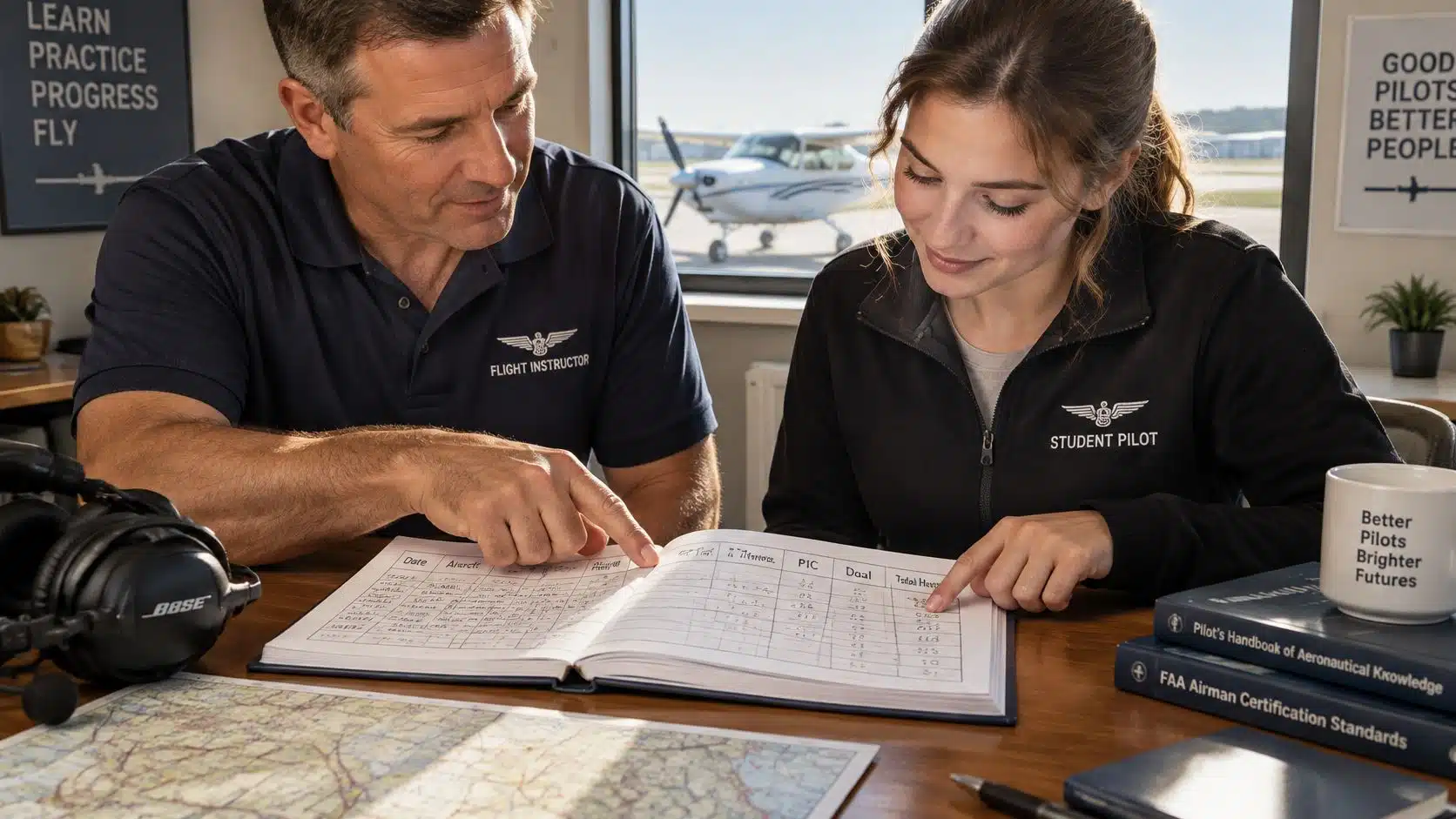
Say a student reaches exactly 40 logged hours. Three lessons were cancelled for weather. Two stall lessons had to be repeated because the recovery wasn't consistent. The night requirement was skipped in favor of pattern work on a clear evening. Nothing went wrong, and the student still isn't ready: the categories are short and the skills need polish.
Frequency Is a Planning Variable, Not a Detail
Calendar time depends on how often lessons happen, and so does total hours. A student flying three lessons a week who loses two weeks to weather often needs a review lesson before the next flight, and that review is time the hour total never shows. DuBois Aviation's planning guide puts two lessons per week at six months or less for a private pilot license, and three lessons per week at about four months, with the same conditions attached.
The honest answer to "how many hours" is a range. Legal minimum on one end, dual instruction, solo, repeated lessons, weather and examiner readiness on the other.
Training progress at DuBois Aviation depends on preparation, proficiency, weather, aircraft availability, and examiner scheduling, and DuBois Aviation does not guarantee completion dates for the private pilot license. That's not a hedge, it's how flight training works everywhere.
A Four-Item Budget Checklist
- Set a weekly lesson target before the first hour, and protect it in your calendar.
- Compare lessons completed to the plan each month, so slippage shows up early.
- Keep a backup aircraft option so a single booked airframe doesn't stall progress.
- Plan a final block of training before booking the checkride, covering the two-month preparation window.
The common mistake is budgeting for the minimum. Budget a range, and treat every category table as the checklist.
How Instrument and Commercial Ratings Add Hours
The private certificate is the first entry, not the last one. Each later rating carries its own baseline, and each one draws on time you can start logging now.
| Certificate or rating | Baseline hours | Key requirements |
|---|---|---|
| Private pilot, airplane single-engine | 40 total hours | 20 dual, 10 solo, 3 cross-country, 3 night (14 CFR 61.109) |
| Instrument rating, airplane | 50 PIC cross-country and 40 instrument hours | 15 instrument hours from an instructor, IFR flight plan, 3 hours within 2 calendar months (14 CFR 61.65) |
| Commercial pilot, airplane single-engine | 250 total hours | 100 PIC, 50 PIC in airplanes, 50 PIC cross-country including 10 in airplanes (14 CFR 61.129) |
The instrument requirements come from 14 CFR 61.65. The applicant logs 50 hours of pilot-in-command cross-country time, including at least 10 hours in an airplane, plus 40 hours of actual or simulated instrument time. At least 15 of those instrument hours must come from an authorized instructor holding an instrument-airplane rating.
Then there's a familiar shape: 3 hours of instrument training in an appropriate airplane within the 2 calendar months before the practical test, plus cross-country procedures that include an IFR flight plan and an instructor-led airplane cross-country flight. Same window, same trap. Lose track of the calendar and the checkride moves.
The Commercial Threshold and What It Really Requires
For a single-engine commercial certificate, 14 CFR 61.129 sets a baseline of 250 hours of total flight time, unless a regulatory exception applies. Inside that total sit at least 100 hours in powered aircraft, 50 hours in airplanes, and 100 hours of pilot-in-command time. The pilot-in-command total must include at least 50 hours in airplanes and 50 hours of cross-country flight, of which at least 10 hours are in airplanes.
The 250-hour threshold is a certification requirement. It doesn't produce commercial-level judgment on its own, and the training, aeronautical experience and practical test still have to be completed.
Structure the Logbook Early
Private certificate entries carry forward. What changes is the categorization, and that's where planning pays off. A student who intends to add an instrument rating right after the private checkride should log instrument time from the start and track cross-country pilot-in-command time as its own column.
Treat the hours as a ledger you build once and read many times. The instrument rating hours breakdown shows how those categories stack up before the checkride. Baseline figures shift with regulatory amendments, so verify the current text on eCFR before enrolling in any advanced course.
Plan Your Private Pilot Hours Before You Book
The plan is short enough to start this week. Confirm the current minimums on eCFR first, then copy the category table into whatever logbook tracker you use and treat each row as its own goal. Schedule at a frequency you can keep, set a budget range rather than a single hour target, and ask an instructor which categories are behind at every few lessons.
- Verify the rule. Read 14 CFR 61.109 as currently published.
- Build a seven-row tracker. Total, dual, solo, solo cross-country, cross-country instruction, night, and test prep.
- Pick a frequency and defend it. Two or three lessons a week is a different training program than one.
- Budget a range. Separate legal minimum, dual instruction, solo, and repeat lessons in the numbers.
- Ask a direct question. "Which category am I furthest behind on?" gets a useful answer.
- Fly before you commit. A discovery flight lets you sit with an instructor, see how lessons work, and ask questions before choosing a training path.
Student pilots can check the flight schedule to view availability and see when they are next scheduled, which makes the frequency decision concrete instead of theoretical. Course availability and training information requests go through the school directly, and a school tour answers more in twenty minutes than a week of reading.
No school can promise a completion date, and any that does is guessing on your behalf. Instructor judgment governs solo and checkride readiness, and the logbook, not the headline number, decides when you're ready.
Private Pilot License Hours FAQs
Is 40 hours enough to earn a private pilot certificate?
It's the legal minimum for eligibility. Most students log more, because consistent proficiency and checkride readiness drive the total rather than the hour count alone.
Do all 40 hours have to be dual instruction?
No. The rule requires 20 hours with an authorized instructor and 10 hours of solo training, and up to 10 remaining hours can come from additional instructor time, solo time or other qualifying flight time.
Does an approved course reduce the hour requirement?
An approved course can qualify with 35 hours, unless the Administrator approves fewer. Confirm the course approval and which part governs it, and expect to demonstrate the same skills regardless.
What is the practical test preparation rule?
At least 3 hours of flight training must fall within the two calendar months before the practical test. Miss the window and those hours have to be rebuilt.
Where do I confirm the current rule?
Check 14 CFR 61.109 on eCFR and the FAA's published guidance, and note the effective date of the version you're reading. Requirements can change.
DuBois Aviation trains private pilot students one-on-one at Chino Airport, working from the same category-by-category approach described here: solo, cross-country navigation across Southern California, then checkride preparation once the standards are met. If you want to see how the schedule and the aircraft fleet fit a weekly lesson plan, visit DuBois Aviation and ask about private pilot course availability.


