
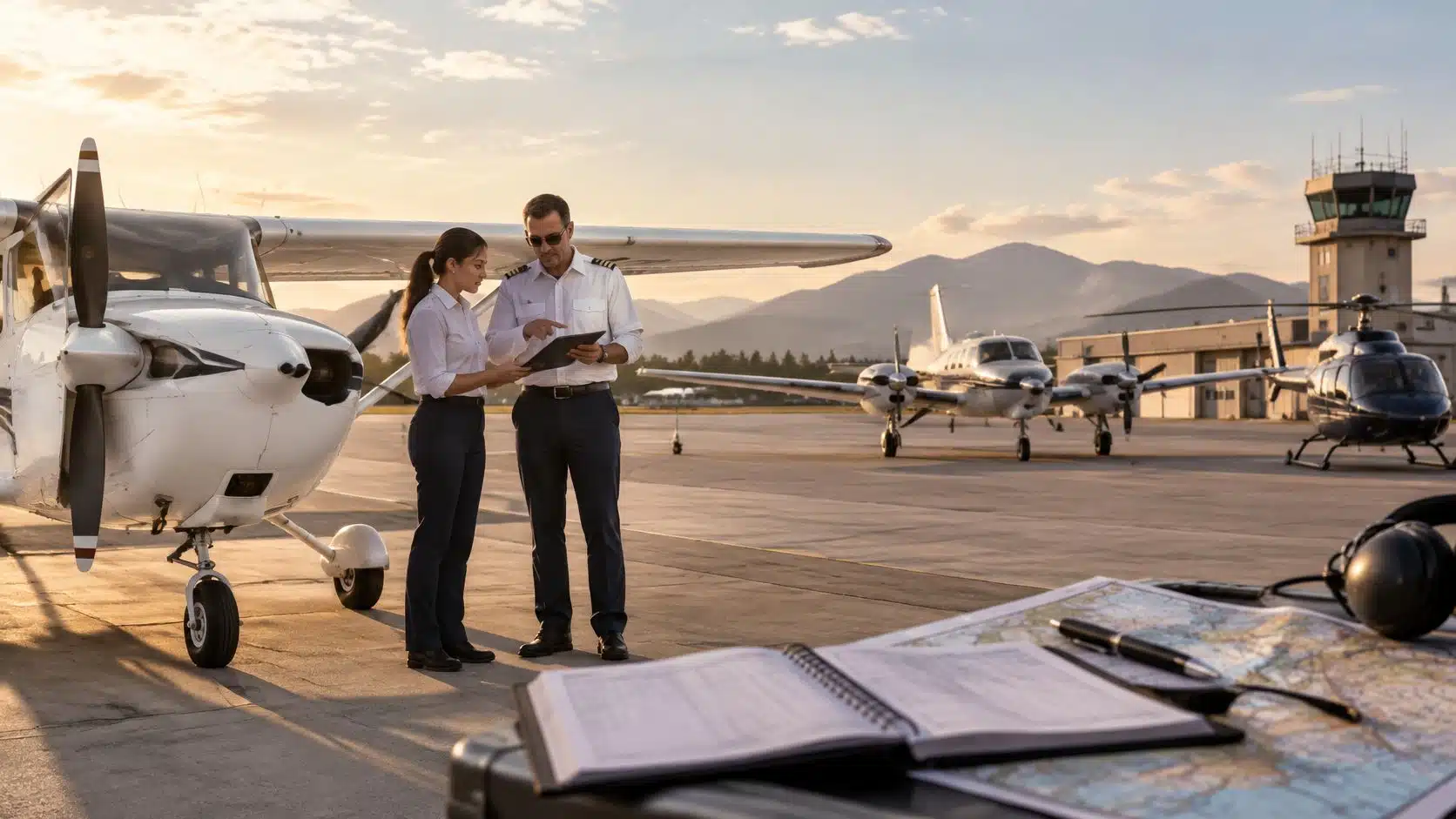
What does an inexpensive hourly rate really mean if a student needs extra review flights or waits weeks for a checkride? Pilot license training is a progression of certificates and ratings, usually beginning with private pilot training, followed by additional qualifications that match the pilot's goals. The useful planning target isn't the minimum flight time. It's the total preparation, flying, scheduling and expense needed to reach a practical test with consistent skills.
A sound plan connects the intended flying mission to a sustainable lesson schedule, a realistic budget and a clear standard for readiness.
Table of Contents
- Pilot License Pathways Compared at a Glance
- How Private Pilot Training Works Step by Step
- Realistic Hours, Timelines and Budget Planning
- Instrument Rating Requirements and Training Focus
- Commercial and Flight Instructor Career Steps
- Checkride Readiness and Delay Costs
- Choose Your Training Path and Next Step
- Frequently Asked Questions
- Is a medical certificate needed before a first solo?
- Does meeting the minimum flight time mean training is complete?
- Can simulator time count toward an instrument rating?
- Is an instrument rating required before a commercial certificate?
- How can I check the amendment date for a Part 61 rule in the eCFR?
Two practical options worth comparing
These are specific products pilots commonly compare for this type of flying. Confirm compatibility with your aircraft and instructor before ordering.
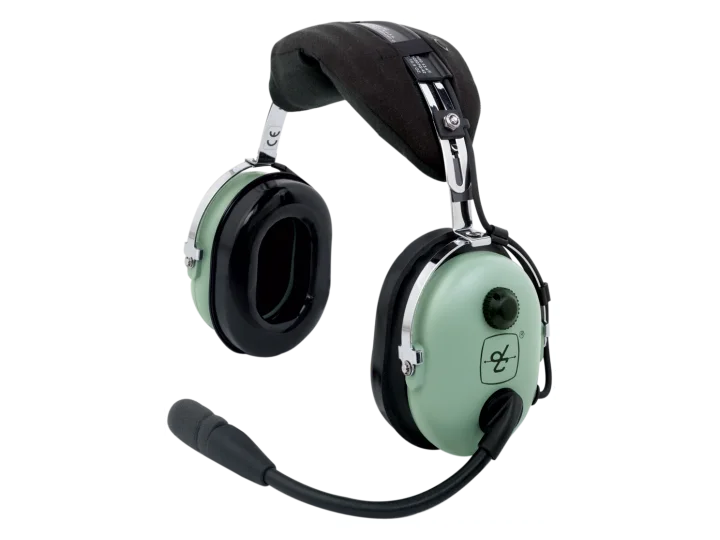 Student headsetDavid Clark H10-13.4 Aviation HeadsetCheck current availability on Amazon (paid link)
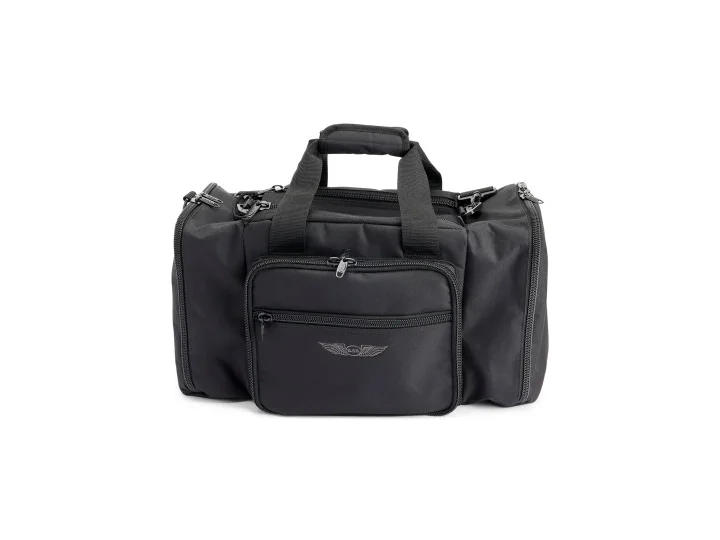 OrganizationASA Flight BagCheck current availability on Amazon (paid link)
Pilot License Pathways Compared at a Glance
Pilot license training builds qualifications in stages rather than producing a single license that covers every aircraft and operation. For the conventional airplane pathway, the private pilot certificate establishes the foundation before instrument, commercial and instructor training.
The FAA's private-pilot experience regulation sets the airplane single-engine baseline at 40 flight hours, including 20 hours with an authorized instructor and 10 hours of solo flight training. Those are eligibility minimums, not a forecast of an individual student's completion time.
Pilot certificates and ratings with FAA baseline requirements
| Certificate or rating | Purpose | FAA requirement | Prerequisite |
|---|---|---|---|
| Private pilot, airplane | Personal flying and carrying passengers, subject to private-pilot limitations | Part 61 private-pilot experience and practical-test requirements | Student certification for solo, applicable medical eligibility, knowledge and practical tests |
| Private pilot, helicopter | Personal rotorcraft flying | Part 61 private-pilot baseline plus helicopter-specific experience | Student certification for initial solo, applicable medical eligibility and required tests |
| Instrument rating, airplane | Operations under instrument flight rules | Required cross-country and instrument experience under the instrument-rating rule | Private pilot certificate or concurrent qualifying application |
| Commercial pilot, airplane | Qualification for permitted compensated flying | Commercial aeronautical experience and testing requirements | Private pilot certificate and required experience |
| Multi-engine rating | Operating aircraft in the multi-engine class | Applicable additional-class training, proficiency and practical-test requirements | Appropriate pilot certificate; existing qualifications determine the add-on pathway |
| Flight instructor, CFI | Teaching within the instructor's authorized privileges | Instructor eligibility, training, endorsements and testing requirements | Appropriate commercial or airline transport certificate and applicable ratings |
The FAA requirement column describes a regulatory floor, not a completion estimate. Additional ratings also don't grant unlimited privileges: aircraft category, class, operating rules and the pilot's existing qualifications still matter.
Match the pathway to the mission
- Recreational flyers: Private training develops the aircraft control, navigation and judgment needed for personal flying.
- Pilots seeking IFR capability: Instrument training adds a different operating discipline, including clearance management and procedure flying.
- Career-track students: Commercial and instructor qualifications belong in a longer plan that includes experience building and employer requirements.
A rating adds privileges to a pilot certificate; a certificate changes the level of pilot qualification. A helicopter add-on also shouldn't be treated as interchangeable with an airplane class rating. The training plan must account for the aircraft involved and the applicant's existing experience.
DuBois Aviation's Part 61 and Part 141 flight-training comparison helps explain how training structure affects planning without confusing program minimums with individual readiness.
How Private Pilot Training Works Step by Step
Private pilot training develops through connected stages: students fly, study, practice skills, and apply them to increasingly demanding flights. At Chino Airport, radio work begins in a towered-airport environment.
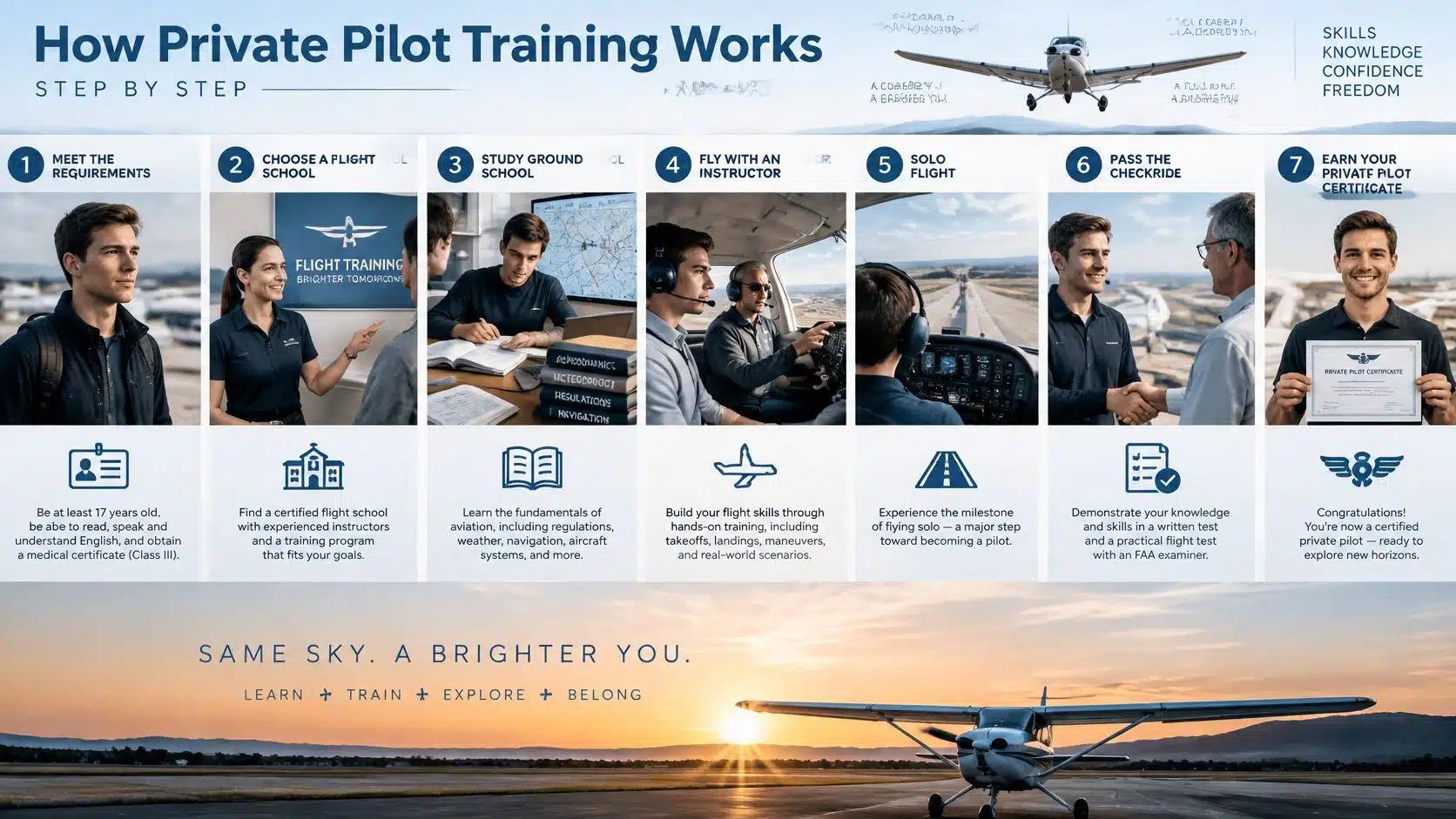
Build the foundation before solo
Fly and study together.
Early lessons introduce aircraft control, traffic patterns, checklists, and radio procedures. Ground study explains why those actions matter, so students can apply the principles in the airplane rather than memorize them only for a test.Prepare for solo through demonstrated skills.
Before a student is cleared to fly alone, the instructor needs to see consistent aircraft control, sound procedures, and good decisions when conditions change. DuBois Aviation runs stage-check flights before solo to review flying skills, procedures, and decision-making. A stage check supports the instructor's readiness decision; it does not replace required training or endorsements.Common mistake: Setting a solo date before landings and procedures are consistent. Correcting weak spots first makes solo preparation more useful.
Solo the aircraft within the authorized limits.
Local and traffic-pattern flights let students practice without an instructor sharing the workload. Each solo flight must stay within the instructor's authorization and restrictions. Read them carefully before departure, and ask questions if anything is unclear.
Expand the mission and prepare for testing
Learn route planning and cross-country flying.
Students practice choosing a route, checking fuel and weather, and making a backup plan if conditions change. The training sequence at DuBois Aviation progresses from solo to learning to plan and fly across Southern California.Add night and instrument training deliberately.
Night lessons teach students to interpret different visual cues, while introductory instrument work builds familiarity with controlling the airplane by reference to instruments. These lessons have distinct purposes. Introductory instrument practice does not qualify a private student to fly independently in clouds.Use stage checks to identify what needs work.
A useful review pinpoints specific skills to strengthen, such as approach stability, checklist use, radio timing, or decision-making. Completing a stage check does not by itself satisfy required instructor training or endorsements.Prepare for the practical test as a complete flight.
Checkride preparation brings together flight planning, maneuvers, ground knowledge, and sound judgment. Schedule the checkride once the student meets the practical test standards. Practicing each maneuver in isolation is less useful than being able to explain the decisions that connect the flight.
Practical rule: Be ready to explain why you are taking an action, perform it consistently, and recognize when changing conditions call for a different plan.
Before solo, review student-certificate documentation, medical eligibility, and required endorsements with the instructor. If you have questions about medical eligibility, an aviation medical examiner can help clarify them early.
Realistic Hours, Timelines and Budget Planning
The most important budgeting distinction is the gap between minimum eligibility and likely completion time. The FAA's training-hours guidance contrasts the 40-hour private-pilot minimum with approximately 75 hours for the average applicant without a hearing impairment, notes that most students require roughly 60 to 75 hours, and explains that approved programs may have a 35-hour minimum.
Those published figures support different planning decisions. The minimum describes the earliest regulatory possibility; the broader completion figures provide a more useful starting point for a personal budget.
Private airplane training hours and timeline planning figures
| Scenario | Planning figure | What it means |
|---|---|---|
| FAA minimum, private airplane | Regulatory minimum | A floor, not an individual completion estimate |
| Approved pilot school minimum | Reduced minimum under an approved program | Approval doesn't guarantee faster completion |
| FAA average, private airplane | Published average completion experience | A more realistic reference than minimum-hour advertising |
| Typical range at approved schools | Published FAA completion range | Useful for comparing budget assumptions |
Build the budget from separate line items
A practical estimate uses:
- Aircraft time: Expected flight hours multiplied by the selected aircraft's current rental rate.
- Flight instruction: Expected instructor time multiplied by the instructor rate, keeping solo flying separate.
- Ground instruction: Briefings, debriefings, knowledge preparation and flight-planning instruction.
- Other expenses: Materials, equipment, medical evaluation, knowledge testing and examiner fees.
- Contingency: Additional training needed when proficiency or scheduling changes the original plan.
Multiplying all flight hours by a combined aircraft-and-instructor rate can overstate solo instruction costs while understating ground instruction. A written estimate should show both categories clearly.
DuBois Aviation's planning guide allows two lessons per week to take six months or less, while three lessons per week can take about four months. These are planning guides, not promised completion dates. Preparation, proficiency, weather, aircraft availability and examiner scheduling affect progress, and DuBois Aviation doesn't guarantee private-pilot completion dates.
Budget for a schedule that can actually be maintained, not an ambitious schedule that repeatedly collapses around work or family commitments.
Consistent lessons reduce the need to rebuild familiar procedures after long gaps. Before setting a spending limit, students should obtain current aircraft and instructor rates and confirm realistic booking availability. The private-pilot training cost guide provides a useful starting point for organizing those questions.
Instrument Rating Requirements and Training Focus
For an instrument-airplane rating, 14 CFR 61.65 requires 40 hours of actual or simulated instrument time, including 15 hours with an authorized instrument instructor, plus 50 hours of pilot-in-command cross-country time, including 10 hours in an airplane. The same rule calls for three hours of qualifying instrument preparation within the preceding 60 days and permits approved simulator or training-device credit subject to applicable conditions and limits, including a 20-hour limit for qualifying device credit.
The important word is qualifying. Device type, approval, instructor involvement and the specific regulatory provision determine what can be credited; a generic simulator session isn't automatically loggable toward the rating.
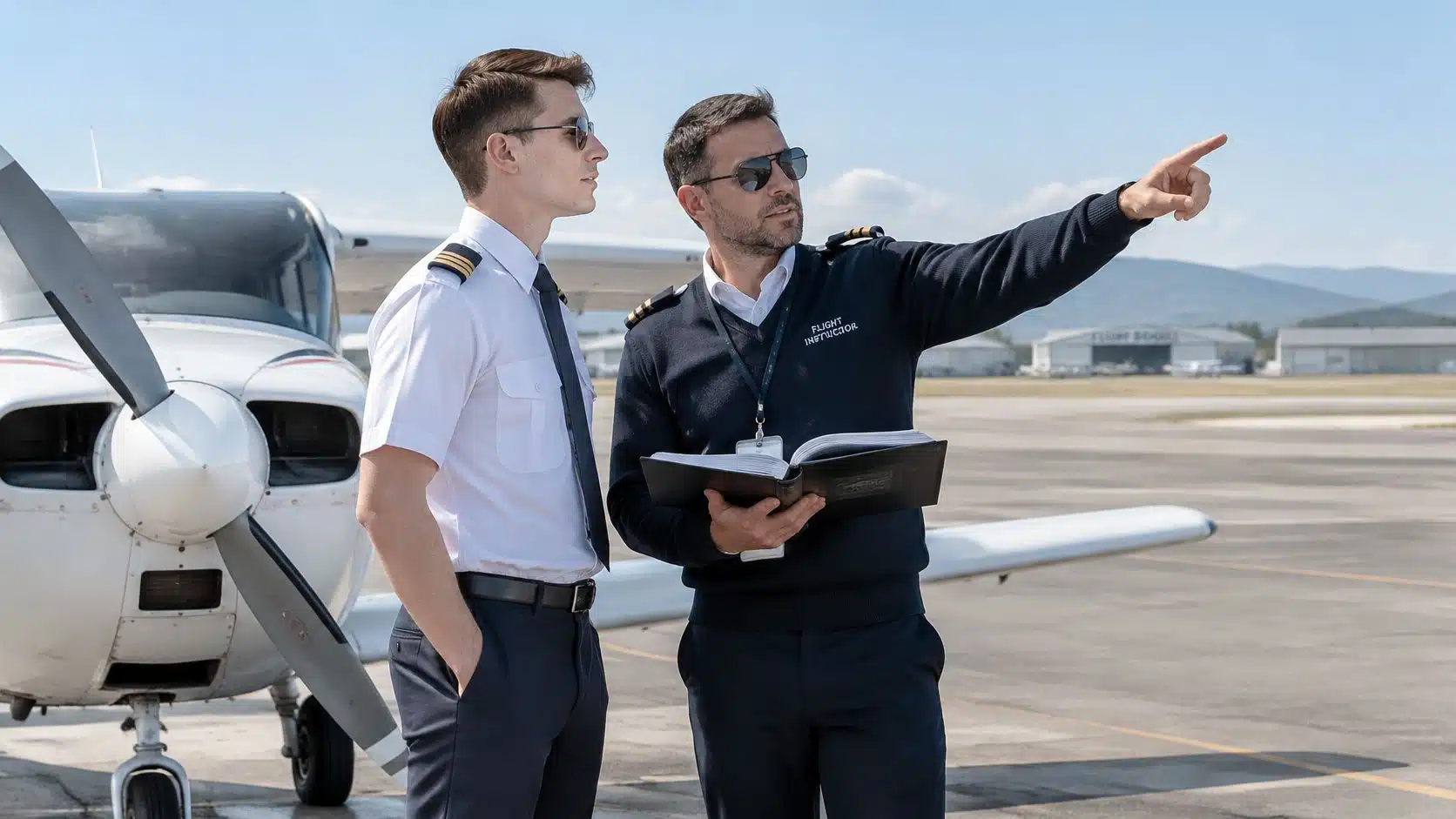
Instrument instruction connects aircraft control with communication and procedural judgment.
Use a procedure-focused lesson checklist
- Approach briefings: Identify the navigation source, course, altitude restrictions and missed-approach plan before workload rises.
- Holding patterns: Practice entry decisions, timing or distance management, and wind correction.
- Interception and tracking: Confirm that the selected navigation source matches the clearance and intended procedure.
- Unusual-attitude recovery: Recognize misleading sensations and apply the appropriate instrument-based recovery.
- Missed approaches: Treat the missed approach as a planned procedure rather than an unexpected failure.
- Partial-panel procedures: Practice managing degraded information without abandoning aircraft control.
Aircraft lessons introduce actual radio timing, traffic, weather decisions and cockpit interruptions. A towered airport such as Chino provides a concrete setting for learning how a clearance change affects navigation setup and workload.
Approved devices serve a different purpose: the instructor can pause, reset and repeat an approach or failure scenario without spending another aircraft flight repositioning. The objective is better performance in the airplane, not just accumulating device time.
Separate earning the rating from staying proficient
The FAA's Instrument Rating Airplane Airman Certification Standards organize evaluation around knowledge, risk management and flight skills. Instrument currency under Part 61 is a separate recency obligation, and pilots should confirm the current rule before planning flight privileges.
Currency alone also doesn't establish readiness for every weather situation or aircraft. A sensible proficiency session challenges briefing habits, automation management and decisions to discontinue an approach.
The following video can accompany a discussion of instrument-training goals with an instructor.
Commercial and Flight Instructor Career Steps
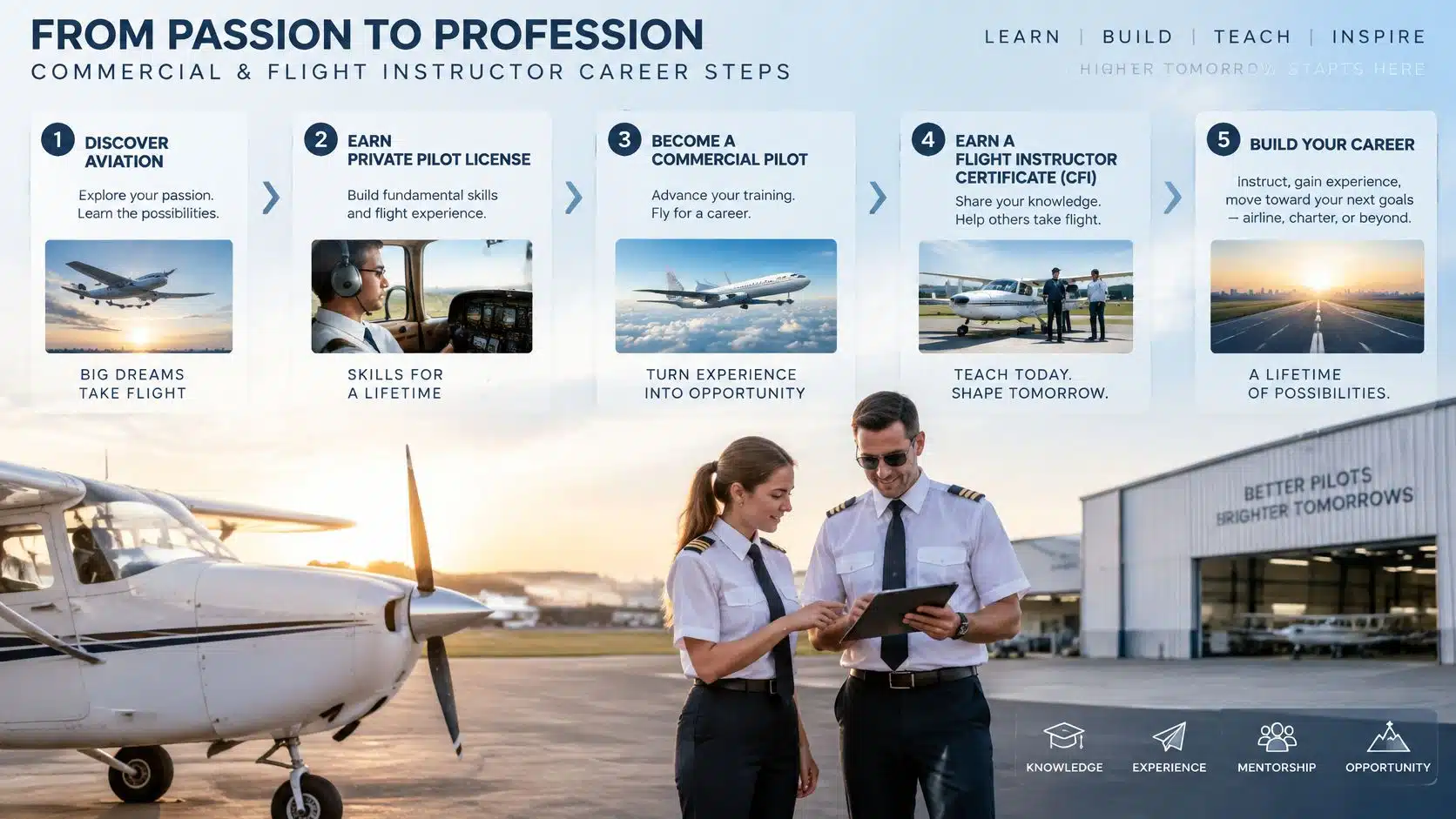
The standard Part 61 commercial-pilot pathway requires 250 total flight hours, according to the FAA's commercial-pilot guidance. Reaching that threshold is one budget milestone; preparing for instructor qualifications and building experience toward a specific job are later ones.
Map the checkride against experience building
A career budget works like a series of connected stages. First, plan for training through the commercial checkride. Then set aside separate time and money for any instructor qualifications and the experience-building work required for the jobs you intend to pursue. The commercial certificate qualifies a pilot for certain compensated flying under applicable operating rules, while each job may have its own experience standards.
For example, an airline-oriented student can place the commercial checkride at the end of the certification phase, then budget separately for instructor training and the time spent gaining experience. The FAA guidance notes that airlines may set experience standards of 1,000, 2,000 or more hours. Those figures are employer standards cited by the FAA, not a promise of employment or a single fixed path.
Choose instructor qualifications for the work
CFI generally refers to flight-instructor qualification, CFII to instrument-instructor privileges, and MEI to multi-engine instructor qualification. These ratings cover different privileges. Before choosing a course, review the prerequisites for the specific rating, including existing certificates, ratings, endorsements, experience and testing requirements.
Instructing, towing, charter and other commercial operations each depend on the pilot's qualifications and the operating rules for the work. Research current employer requirements separately from training costs. The commercial pilot requirements and training timeline can help organize the certification phase, while your broader budget should account for the steps that follow it.
Checkride Readiness and Delay Costs
A four-week examiner wait can cost more than the lessons that finished the syllabus. Lessons stop. The appointment stays uncertain. On return, landings, emergency procedures, and ground explanations need another pass before the instructor can reassess readiness. Those hours are billed again, even when the original plan looked complete.
Use the rate already in the training budget, not a new price sheet. Two lessons a week for four weeks is eight sessions. If each session is about one hour of aircraft time plus instruction, that pause adds eight dual hours. At a combined aircraft-and-instructor rate of $250, the gap is about $2,000 on top of a plan that already looked finished. Stretch the same pause to three lessons a week and the added block is closer to twelve hours, about $3,000 at that same rate. The hourly figure on the rate sheet never moved. The calendar did.
The FAA's General Aviation Safety Fact Sheet summarizes a 2025 Government Accountability Office review reporting that pilot certifications increased about 10% from 2017 through 2024, while student enrollment rose 67%; interviewed stakeholders said long designated-pilot-examiner waits increased training cost and duration. Demand rose faster than certificates. The queue is part of the budget.
Readiness requires more than completed hours
Hours logged are like miles driven on a road trip. They show distance, not whether you can still handle the next mountain pass after a month parked. A student organizing study topics can use the readiness checklist from ClassLecture as a general review aid. It does not replace the instructor's assessment of whether the practical test standards are met.
DuBois Aviation's checkride checkout reviews flight and ground preparation before the FAA practical test. It is separate from the examiner's checkride and is not a promise of passing.
Account for the waiting period
A useful school comparison asks about:
- Examiner coordination: How practical-test availability enters the training schedule.
- Aircraft reliability: What happens when the planned checkride aircraft becomes unavailable.
- Instructor continuity: How feedback transfers if another instructor must help.
- Delay preparation: What proficiency work continues while the student waits.
Ask how a delay plan fits the proposed schedule before the first block of time is paid. A cheap hour that has to be flown twice is not the cheap path to the practical test.
Choose Your Training Path and Next Step
How many lessons a week can you protect, and what should those lessons let you do? Weekend trips with friends run on a different clock from instrument travel or paid flying. Preparation, proficiency, weather, aircraft availability, and examiner scheduling move the finish line. A completion date is not something a training plan can lock in advance.
Price the pathway against that real pace, not against a single hourly rate. Missed weeks add review flights, so the budget grows even when the original plan looked finished.
| Flying goal | Pathway | Pace to plan around |
|---|---|---|
| Recreational airplane flying | Private Pilot – Airplane | Two lessons a week can take six months or less. Three lessons a week can take about four months. Plan a budget of around $20,000. |
| Instrument travel | Instrument Rating – Airplane | After private pilot skills are in place. The same weather, proficiency, and scheduling limits still set the pace. |
| Paid flying | Commercial Pilot – Airplane | Later in the sequence: fly and study, then build navigation and cross-country skill before a practical test. |
| Teaching | Flight Instructor Training | After the certificates that teaching requires. Lesson frequency still has to survive work and family gaps. |
| A second engine | Multi-Engine Training | For pilots adding that aircraft, with progress tied to aircraft availability and proficiency. |
| Rotorcraft | Helicopter Training | Its own category, from early lessons through advanced work, on the same scheduling constraints. |
| A mission that does not match the rows above | Other | Name the mission first so prerequisites and sequence stay clear. |
A pilot who already holds a certificate may not need another one. Learning a different aircraft, returning after a long break, or preparing for unfamiliar terrain can justify focused instruction with no new rating attached.
Gaps work like traffic on a commute. Two lessons a week only stays near six months or less if that rhythm holds. Drop several weeks, and you repeat landings and procedures before new work moves. Three lessons a week can sit near four months only while that pace continues.
To arrange a tour, ask about training, or schedule a discovery flight where you meet an instructor, review the plan, and fly from Chino Airport with guidance the whole way, call DuBois Aviation at (909) 597-6292.
Frequently Asked Questions
Is a medical certificate needed before a first solo?
For an airplane student pilot, the required student pilot certificate and medical qualification must be in place before solo authorization. The medical requirements can differ by aircraft category and operating privileges, so identify the qualification that applies to your training before planning a solo.
Does meeting the minimum flight time mean training is complete?
No. Minimum flight time is an eligibility threshold, not a sign that you are ready for a checkride. Your instructor must confirm that you have completed the required training and can perform to the applicable standards. Budget for additional practice if needed.
Can simulator time count toward an instrument rating?
Yes. Qualifying time in an approved training device can count toward instrument rating requirements when the applicable instruction and logging conditions are met. Check the device's authorization and the credit limit that applies before counting those hours toward eligibility.
Is an instrument rating required before a commercial certificate?
No. An instrument rating is not a prerequisite for a commercial certificate, but it is required for certain commercial airplane operations and privileges. Plan the rating around the type of flying you intend to do, since a commercial certificate alone does not authorize every kind of professional flight.
How can I check the amendment date for a Part 61 rule in the eCFR?
Open the relevant section of Part 61 in the electronic Code of Federal Regulations and check its amendment history and displayed date. Compare the section's current text with the rule you need to apply, since an older copy may not reflect the latest amendment.
DuBois Aviation provides one-on-one airplane and helicopter instruction at Chino Airport, from a first discovery flight through advanced ratings. To discuss your training goal or arrange a discovery flight, visit DuBois Aviation.


