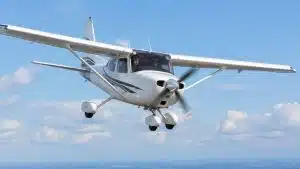
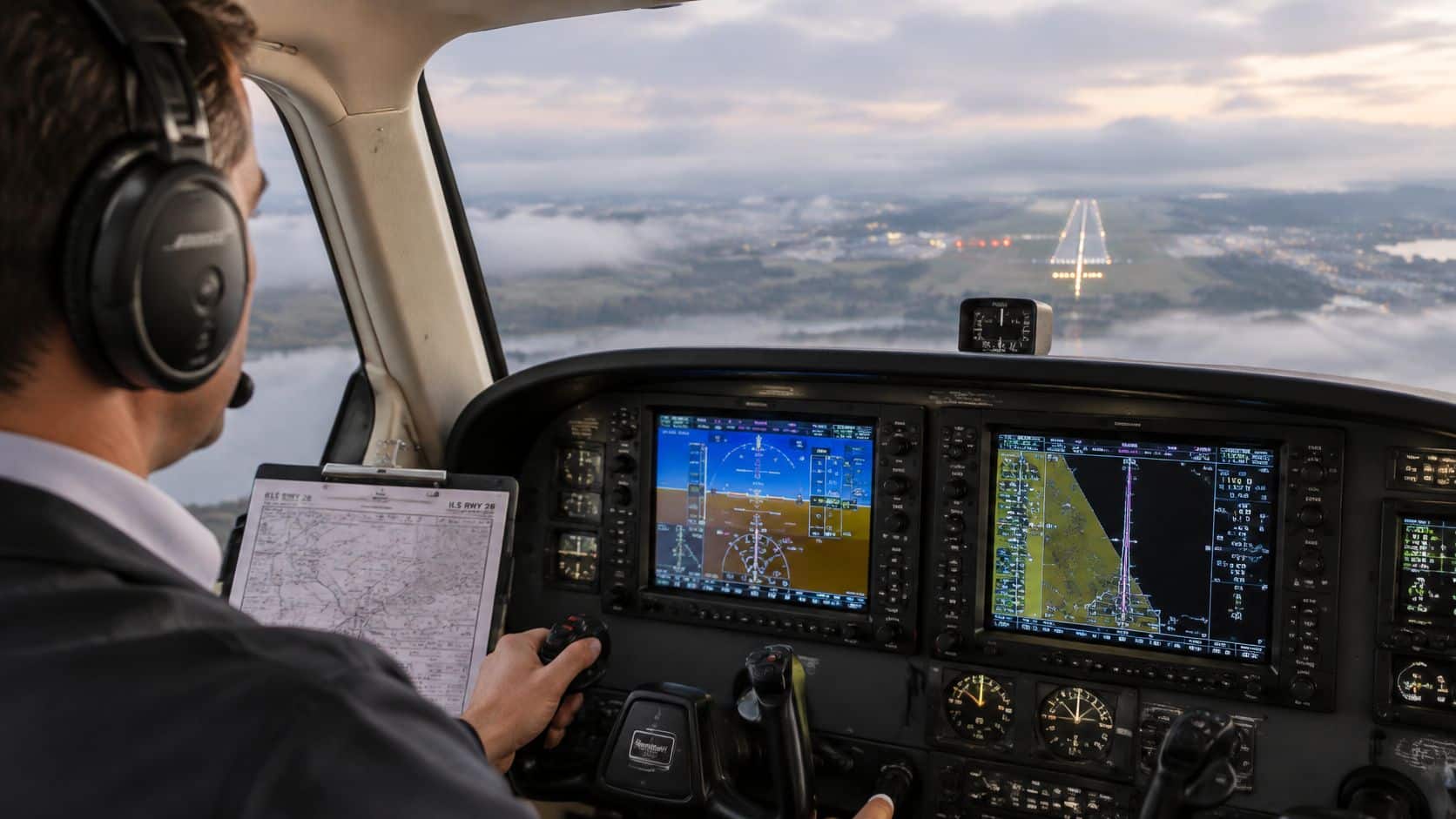
Are pilots training to land from an instrument approach, or to decide correctly at minimums whether landing is still an option? That decision is the core skill. Instrument approach training teaches a pilot to fly a published procedure by reference to instruments to decision altitude (DA) or minimum descent altitude (MDA), then land only with the required visual references or fly the published missed approach. Learning where to descend matters. Knowing when to stop matters more.
Table of Contents
- Approach Types You Need to Train and Their Minimums
- Briefing the Approach Before You Fly It
- Decision Altitude, MDA and the Missed Approach
- Circling Approaches and the Missed Approach Path
- How Training Moves from Simulator to Aircraft
- Common Errors and How to Correct Them
- Keeping Instrument Currency and Proficiency
- Plan Your Instrument Training at Chino
Approach Types You Need to Train and Their Minimums
Instrument approach training means flying published procedures from the initial approach fix through the final segment to DA or MDA under instrument conditions, and making a clear decision there. The answer isn't to master one favorite procedure. Training has to show breadth across approach types, because the decision rule changes with guidance.
Two practical options worth comparing
These are specific products pilots commonly compare for this type of flying. Confirm compatibility with your aircraft and instructor before ordering.
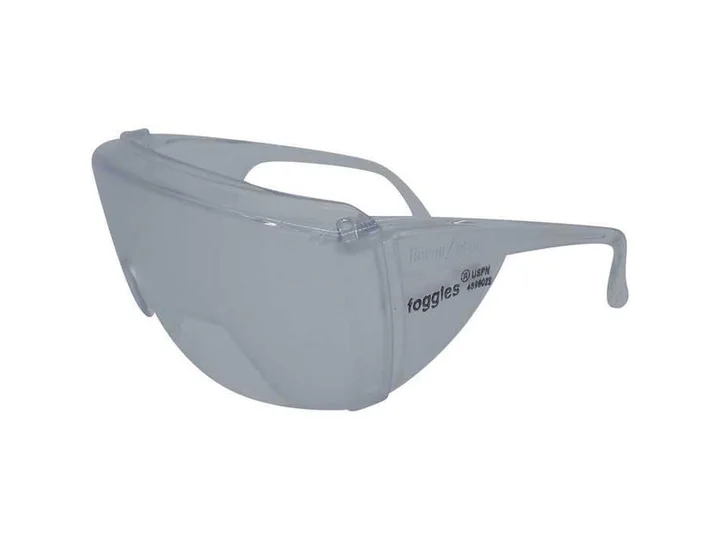 Instrument trainingFoggles Aviation IFR Training GlassesCheck current availability on Amazon (paid link)
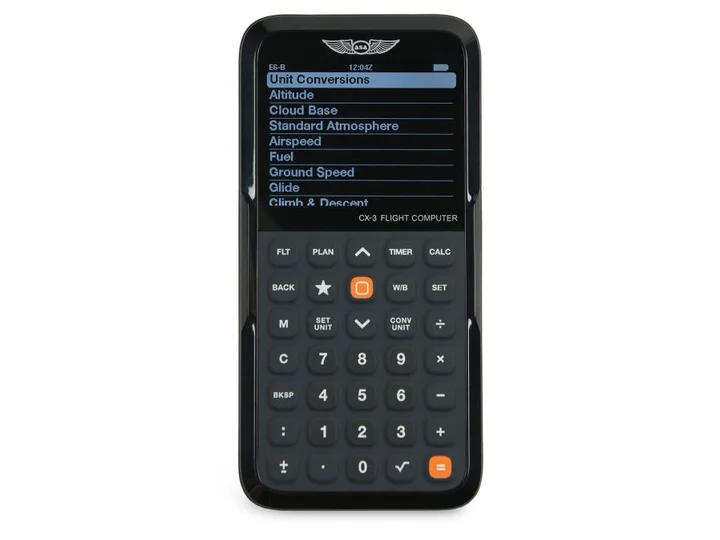 Flight planningASA CX-3 Flight ComputerCheck current availability on Amazon (paid link)
| Approach type | Guidance | Decision point | Minimum |
|---|---|---|---|
| ILS | Lateral and vertical | DA | Decision altitude/height |
| LPV | Lateral and vertical (WAAS) | DA | Decision altitude |
| LNAV/VNAV | Lateral and vertical (barometric) | DA | Decision altitude |
| RNAV (GPS) LNAV | Lateral only | MDA | Minimum descent altitude |
| VOR or VOR/DME | Lateral only | MDA | Minimum descent altitude |
| Localizer (LOC) | Lateral only | MDA | Minimum descent altitude |
| Circling | None; visual maneuver | MDA | Circling minimums |
The FAA instrument-rating practical test standards require one precision approach and two nonprecision approaches, with at least two different types of navigation aids represented among the nonprecision approaches. Precision examples include ILS, GLS, and MLS. Nonprecision examples include VOR, VOR/DME, localizer, LDA, and RNAV procedures.
Types, not navigation systems
In February 2022, the FAA clarified that the rule requires three different types of approaches, not three different navigation systems, reversing interpretations from 2008 and 2012. Two procedures can therefore use the same underlying navigation source and still count as different types, provided the approaches themselves differ and meet the standards.
A pilot preparing for a glideslope procedure should first understand what an ILS approach provides and how it differs from lateral-only guidance. Approaches with vertical guidance end at a DA, while lateral-only approaches end at an MDA, so the pilot's decision rule changes with the approach type.
Briefing the Approach Before You Fly It
A briefing turns a chart into a sequence of actions before workload peaks. It should be short, repeatable, and spoken in the same order every time. If a student can't state the minimum and the first missed-approach steps without looking back at the plate, the briefing isn't finished.
A repeatable briefing routine
- Confirm the clearance: Read it back and match the approach, transition, and runway to the chart and avionics. A common slip is loading a similar procedure for the wrong runway. The fix is simple comparison before descent begins.
- Name the approach type: State ILS, LPV, RNAV LNAV, VOR, or localizer and whether vertical guidance is available. That tells the pilot whether the ending is DA or MDA. Skipping this step leads to level flight at a point where an immediate decision was required, or a missed approach started at the wrong place.
- Trace the fixes and minimum: Identify the initial approach fix, final approach fix, missed-approach point, and DA or MDA with its exact altitude. Say the altitude aloud. Students who only glance at the minima box often use the wrong line for their guidance or category.
- Set the avionics early: Select the navigation source, activate the correct leg, and program the missed-approach path before the final approach fix. Waiting until final to fix a source selection compresses the scan precisely when tracking needs attention.
- Say the missed approach out loud: State the altitude, heading, and frequency or next fix. The common failure is leaving the altitude preselect set for descent. Then the aircraft levels low while the pilot is still trying to remember the climb instructions.
- Set stabilized gates: Brief where the aircraft will be configured, at what speed, and at what altitude a final stability check occurs. If the gate isn't met, the answer is a missed approach, not larger corrections closer to the ground.
Briefing test: Before the final approach fix, the pilot should be able to say the minimum, the visual requirement, and the first two missed-approach actions from memory.
Don't brief the destination alone
The briefing also needs the alternate airport and fuel plan. Fuel determines how many options remain after a missed approach, a hold, or a diversion. A pilot who knows the alternate, the fuel required to reach it, and the weather there can go missed early without treating it as a surprise.
That's the habit to build. Brief the approach, brief the exit, and brief where the flight goes if the landing doesn't happen. Every later decision becomes faster because the hard choices were made while workload was still low.
Decision Altitude, MDA and the Missed Approach
At minimums, the rule is direct: see the required visual references and be in a position to land, or go missed. There's no bonus allowance for descending a little farther to look. DA and MDA differ in how the pilot reaches that decision, not in how optional it feels.
DA is an immediate decision point
A DA applies to precision approaches and approaches with vertical guidance. The aircraft descends on a defined vertical path, and at DA the pilot decides immediately. If the required visual references aren't there, the missed approach begins. Continuing below DA while hoping the runway appears removes the protection built into the procedure.
An MDA works differently. On a nonprecision procedure such as LNAV, VOR, localizer, or circling, the pilot descends to MDA and may level there until the missed-approach point. The pilot may not go below MDA unless the required visual references are established and the aircraft can continue to a landing.
The FAA Instrument Procedures Handbook states that the published missed-approach path assumes the pilot begins at DA, or for a nonprecision procedure no lower than MDA at the missed-approach point. Descending early or below MDA while searching defeats the obstacle-clearance assumptions behind the chart.
A worked LNAV example
Say an RNAV (GPS) LNAV approach has an MDA of 900 feet. The student crosses the final approach fix configured, descends promptly to 900 feet, and levels. Runway lights aren't in sight as the missed-approach point arrives.
The correct sequence is power, pitch for climb, cleanup on schedule, then the published heading and climb to the missed-approach altitude. The pilot doesn't dip to 850 feet for one more look. That small dip is where procedure discipline turns into terrain risk.
At minimums, see the runway environment or go missed.
Why students delay
Delay usually comes from expectation. The pilot heard another aircraft land, the reported ceiling sounded adequate, or the approach has gone well until the last seconds. None of those facts changes the chart. Training should therefore grade the decision at minimums as strictly as tracking. A smooth approach followed by a late missed approach isn't a near success. It's a failed decision point, and the debrief should say so plainly.
Circling Approaches and the Missed Approach Path
A circling approach is a visual maneuver flown after the instrument portion when the final course doesn't align the aircraft for a straight-in landing on the intended runway. It's still an instrument procedure until the pilot has visual contact and can maneuver safely. Students who treat breakout as the end of discipline usually descend too early.
Fly the instrument part first
Complete the published approach to the circling MDA for the aircraft category. Establish visual contact with the runway environment, then maneuver inside the protected area at or above that MDA. Category-specific minimums and protected-area details are printed on the approach chart, so they belong in the briefing before final.
Say a student flies a localizer approach toward one runway but must land on the opposite direction. The aircraft breaks out while positioned for a base leg. The pilot keeps the runway in sight, stays at or above circling MDA, and descends only when landing is assured.
Errors that end circling
- Descending while lining up: The aircraft drops below circling MDA before it's positioned to land.
- Widening the pattern: The turn carries it outside the protected area.
- Losing the runway: Visual contact disappears in a turn or in haze.
If visual contact is lost, the pilot flies the published missed approach for the procedure being flown. The DA and MDA decision discipline still applies. Circling doesn't create permission to search below minimums, improvise a lower pattern, or invent a climb path back into the clouds.
How Training Moves from Simulator to Aircraft
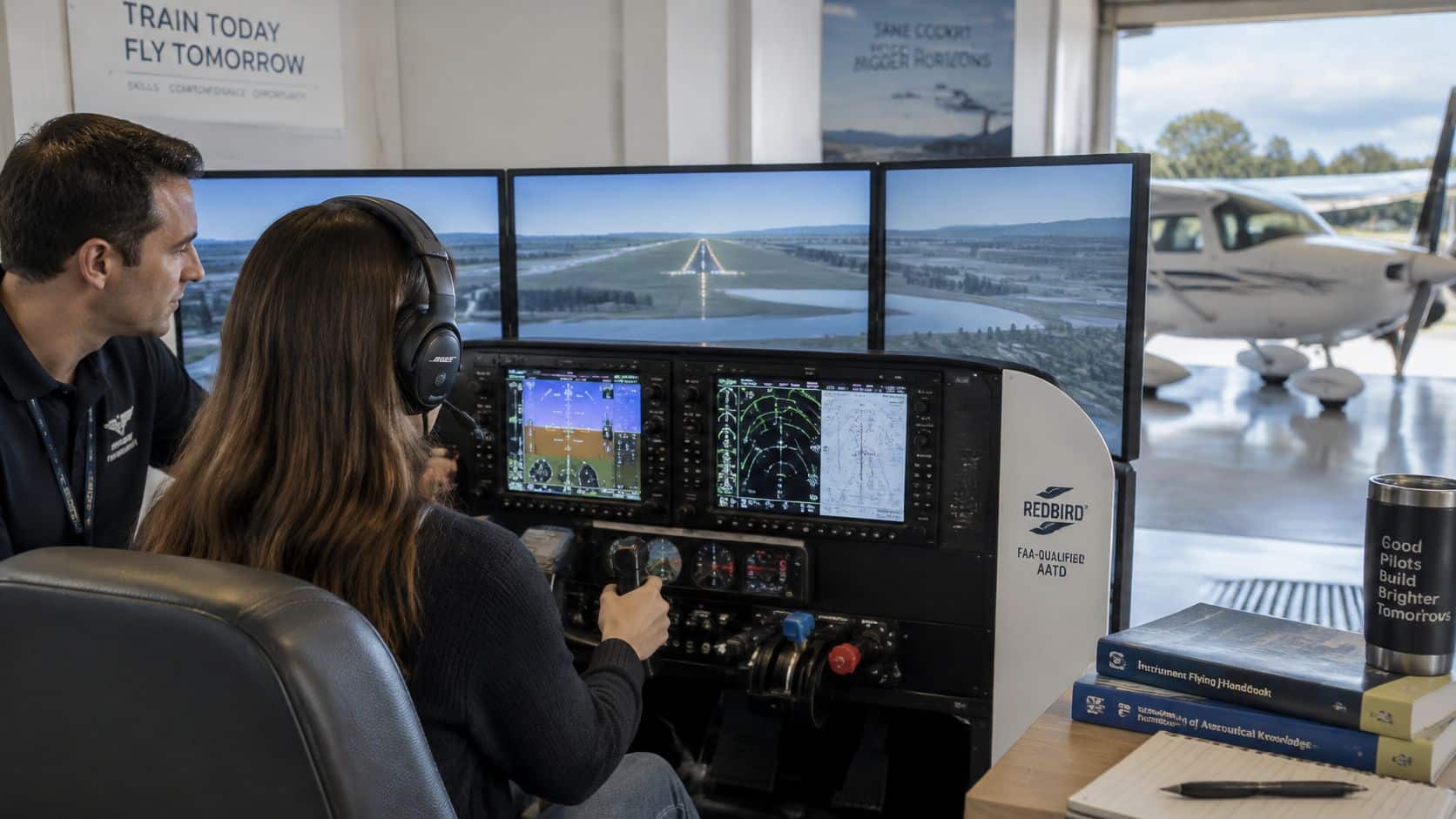
A typical lesson starts away from the airplane. The student loads an approach in a training device, briefs it, flies the intercept, and misses at minimums. Only after that sequence is orderly does the same procedure move to the aircraft, where traffic, weather, and real radio timing test whether it holds.
Learn the procedure under low pressure
The FAA Aviation Instructor's Handbook chapter on risk management and advanced instruction recommends demonstrating and teaching an approach in a simulated flight environment, then transitioning to the aircraft after the learner becomes proficient. That order separates avionics learning, instrument cross-check, communications, configuration changes, and flight-path control instead of forcing the student to learn all of them at once.
Simulator work follows a useful order:
- Clearance interpretation: Copy, read back, and load what ATC assigned.
- Approach briefing: Say fixes, minimums, and missed-approach steps aloud.
- Automation modes: Verify lateral and vertical modes instead of assuming capture.
- Missed-approach programming: Set the path before final, not after minimums.
- A failure on approach: Practice deciding early when guidance or an instrument fails.
- Stabilized gates: Call speed, configuration, and descent rate at set points.
The instructor can pause after a poor intercept, reset to the same fix, and repeat the missed approach three times in one session. Weather and aircraft availability don't limit those repetitions. A pilot comparing ground-based practice options can review DuBois Aviation instrument simulator training as part of a broader training plan.
Transfer the skill to a real cockpit
Aircraft sessions then test scan discipline, trim and power changes, radio timing, turbulence, and traffic awareness. At DuBois Aviation, all flight instruction and ground school is one-on-one with qualified instructors using Jeppesen Learning Materials, which keeps chart study tied to individual performance.
Logging needs the same care. When logging simulator or flight-training-device time, pilots should record the device's FAA identification or serial number. That detail is easy to miss and hard to reconstruct months later when currency or training credit is questioned.
Common Errors and How to Correct Them
The most useful debrief starts with the error that put the aircraft high at the final approach fix, because that single planning failure often creates the unstable descent, the needle chasing, and the late missed approach that follow. Precision errors deserve correction. Decision errors deserve priority.
| Error | Likely cause | Correction |
|---|---|---|
| Late descent and high at the final approach fix | Descent planned too late | Set descent gates early and call them during the briefing |
| Descending below MDA to find the runway | Expecting the runway to appear | Go missed unless the visual references are established |
| Chasing the glideslope or course needle | Overcorrection and weak instrument scan | Make small corrections and cross-check the attitude and altitude |
| Calling the missed approach late | Hoping for visual contact at minimums | Decide at DA or MDA and fly the missed-approach path |
| Forgetting the missed-approach path | Briefing gap or workload | Say the missed-approach altitude, heading and frequency before the final approach fix |
Practice the full ending
Students shouldn't stop an exercise once established on final course. Fly to the minimum, make the call, and either continue visually or execute the miss. Otherwise the most important part gets the fewest repetitions. A practice missed approach begun at a set altitude also teaches the climb sequence when it isn't tied to disappointment at not landing.
Students often gain more from rehearsing early go-arounds, rejected approaches, and diversion decisions than from repeating approaches that always end in a landing.
A short-correction drill on a localizer helps needle chasing. The student makes a small heading or pitch change, returns to attitude and altitude, waits for the effect, then corrects again only if needed. Large inputs create a cycle the pilot then chases all the way down final.
Rank errors in this order during review: decision errors first, stability errors second, precision errors third. A pilot who was slightly off course but went missed on time made the safer flight. A pilot who tracked beautifully and descended below MDA without visual references didn't.
Keeping Instrument Currency and Proficiency
To act as pilot in command under IFR, a pilot must complete within the preceding six calendar months six instrument approaches, holding procedures, and intercepting and tracking courses using navigation systems. Currency is therefore not just six approaches. Holds and course work count too.
| Method | What counts | Logging or deadline |
|---|---|---|
| Actual instrument conditions in an aircraft | Six approaches, holding and course tracking | Log the instrument time and tasks |
| Simulated instrument conditions in an aircraft | Same tasks under a view-limiting device with a safety pilot | Log the safety pilot and the tasks |
| FAA-approved simulator, flight training device or aviation training device | Same tasks in an approved device | Record the device FAA identifier or serial number |
| Allowed combination of methods | Tasks split across allowed methods | Log each method separately |
| Grace period | Additional six calendar months to regain currency | Instrument proficiency check if still unmet |
The FAA Instrument Flying Handbook supports the 14 CFR 61.57 framework of six instrument approaches, holding procedures, and intercepting and tracking courses within six calendar months. If those tasks aren't completed, an additional six-month grace period applies. If they remain unmet after that period, the pilot must complete an instrument proficiency check.
A practical currency plan
Renters and career-track pilots should spread approaches across at least two types, not repeat the easiest GPS procedure six times. A useful plan pairs an ILS or LPV with an LNAV, VOR, or localizer procedure, then adds holding and course tracking in the same cycle.
Set a reminder well before the six-month deadline and keep a log entry that identifies tasks and any device used. Pilots reviewing the details can compare their records against DuBois Aviation's IFR currency requirements guide. Regulations and FAA guidance can change, so current regulatory text should be checked before relying on a deadline.
Legal currency is the floor. Proficiency is whether the pilot can brief cleanly, stabilize early, and go missed without delay in actual conditions. Those are different standards, and treating them as identical leaves a gap.
Plan Your Instrument Training at Chino
Where you start depends on what's already solid. A pilot new to IFR work needs a syllabus that builds approach variety from the beginning. A rated pilot whose skills have narrowed to one GPS procedure needs targeted review before adding more flight time.
Three concrete steps
- Audit current approach experience. List the approach types already flown and mark what's missing, especially a lateral-only procedure, a circling maneuver, or a full missed approach flown without prompting.
- Book a discovery flight. You sit with an instructor, see how a lesson runs from briefing to debrief, and ask how instrument approach training would be sequenced. DuBois Aviation offers one-on-one instruction at Chino Airport for airplane and helicopter training, from the first discovery flight through advanced ratings. The flight follows a simple plan: meet your instructor, review the plan for the flight, and fly from Chino Airport with guidance the whole way. That first meeting is also the right time to ask about course availability and to talk through recent experience. A current pilot may learn that a few proficiency sessions should come before formal rating work. A new student may need foundational attitude instrument flying before full approaches begin.
- Choose the rating path. On the enrollment form, select Instrument Rating – Airplane when that plan fits the pilot's goals. The form also lists Private Pilot, Commercial Pilot, Flight Instructor Training, Multi-Engine Training, Helicopter Training, and Other.
Approach types and currency rules come from FAA sources and can change. Confirm current requirements with an instructor before planning training or exercising IFR privileges. Every approach you fly in training should end at a named minimum with a decision already made: continue, or go missed. Build each session around that decision point and the missed approach that follows it, and the procedure stops being a maneuver you survive and becomes one you command.
DuBois Aviation offers one-on-one instrument training at Chino Airport, with simulator and aircraft practice built around briefings, minimums, missed approaches, and honest proficiency checks. To ask about course availability or request training information, visit DuBois Aviation.