
An airplane private pilot certificate is legally possible after 40 logged flight hours under the FAA's Part 61 minimums, and the calendar time you should plan for depends more on how often you fly than on the regulation itself. Expect about four months at three lessons a week, six months or less at two lessons a week, and a year or longer when training is irregular.
That answer is less tidy than most flight-school pages make it sound. The 40 hours is a floor, not a finish line. It's the smallest number of hours the FAA will accept in your logbook, and it says nothing about whether you can hold an altitude, plan a diversion, or handle a go-around on a gusty afternoon at a towered field.
Here's the part that surprises new students most: the certificate isn't a course that ends when the clock runs out. It's a set of demonstrations you have to be ready to fly, and the calendar stretches until readiness arrives. The question of how long it takes to become a pilot splits into a flight-hour answer and a months answer, and planning gets much easier once you keep the two separate.
Two practical options worth comparing
These are specific products pilots commonly compare for this type of flying. Confirm compatibility with your aircraft and instructor before ordering.
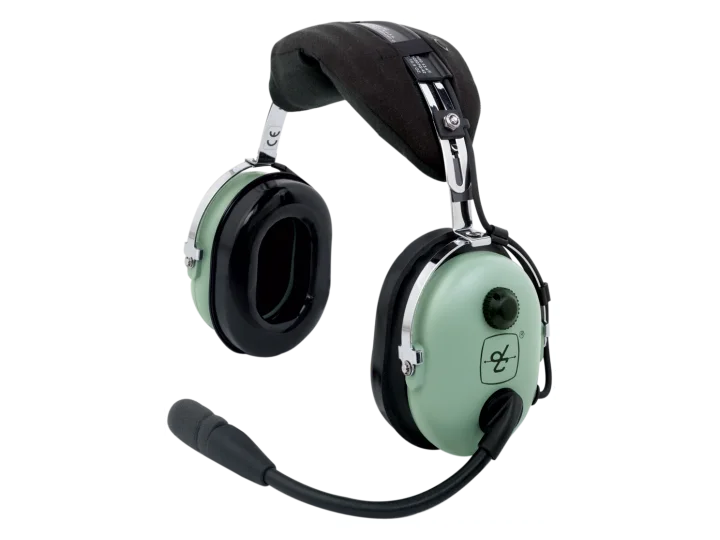 Student headsetDavid Clark H10-13.4 Aviation HeadsetCheck current availability on Amazon (paid link)
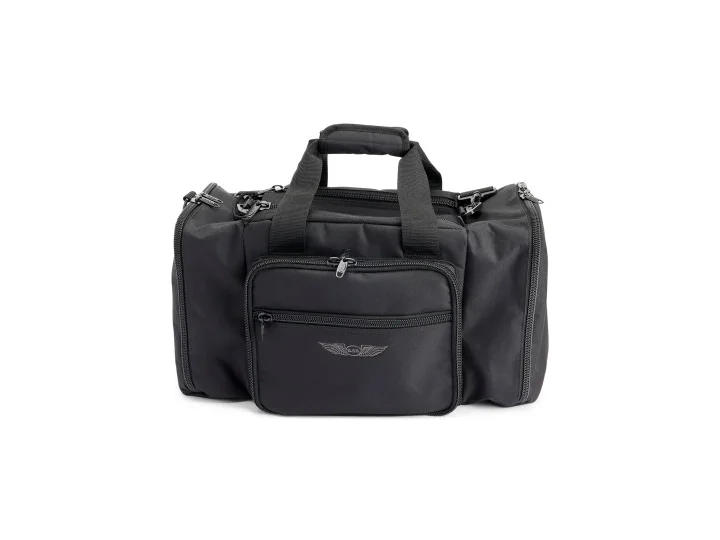 OrganizationASA Flight BagCheck current availability on Amazon (paid link)
Table of Contents
- How Long Does It Take to Become a Private Pilot
- Flight Hours Required for a Private Certificate
- Medical and Student Certificate Before First Solo
- What Slows Progress Past the 40-Hour Minimum
- Commercial, Instructor and Airline Timelines Compared
- How Long Does It Take to Become a Pilot on Your Schedule
- Book a Discovery Flight to Set Your Start Date
- Frequently Asked Questions About Pilot Training Timelines
How Long Does It Take to Become a Private Pilot
Two numbers decide your timeline: how many hours you'll need to log, and how many weeks pass between those hours. The FAA governs the first. Your schedule governs the second, and the second is what usually moves the finish date.
The FAA's summary of hourly requirements for pilot certificates sets the airplane private certificate at a minimum of 40 logged flight hours, including sets of instructor time, solo time, and cross-country, night and instrument experience inside that total. The same FAA guidance is explicit that 40 hours is a regulatory minimum rather than a typical completion point. Students often need additional flight time to show proficiency consistently, complete the practical test, and work around weather, aircraft availability, maintenance and their own learning pace. The agency describes elapsed time as ranging from several months for frequent training to a year or longer for students who fly intermittently.
Frequency does more work than talent does. Fly twice a week and each lesson starts where the last one ended. Fly once every three weeks and the first twenty minutes of each lesson go to recovering skills you already paid to learn. That recovery time is real dual instruction, billed like any other lesson, and it teaches nothing new.
A reasonable planning table, built from how lessons accumulate rather than from the regulation:
| Training pattern | Lesson frequency | Typical calendar time |
|---|---|---|
| Frequent training | Three lessons per week | About four months |
| Steady training | Two lessons per week | Six months or less |
| Intermittent training | Irregular, weekends only | A year or longer |
Those figures are planning estimates used by DuBois Aviation, not promised completion dates. They assume an average learner with reasonable continuity, not a student who flies hard for three weeks and then disappears for a month.
What flight frequency actually buys you
Every lesson has three parts: the briefing, the flight, and the debrief where your instructor names what worked and what needs repetition. When lessons are close together, the debrief from Tuesday is still fresh on Thursday, and the correction carries into the next flight. When they're a month apart, the instructor spends the briefing re-teaching.
The frequency rule: a lesson repeated because of lost proficiency costs the same as a new lesson and moves you nowhere.
None of this means you must fly three times a week to certify. It means you should pick a frequency you can hold for months, not weeks, and plan the calendar from that number. Progress also depends on preparation, proficiency, weather, aircraft availability and examiner scheduling, and no school can guarantee a completion date around those variables.
Flight Hours Required for a Private Certificate
The 40 hours isn't a single number to chase. It's six categories you log separately, and the practical test only gets scheduled when each one is satisfied.
| Requirement | Minimum hours | What it covers |
|---|---|---|
| Total flight time | 40 | Regulatory floor, not typical completion |
| Flight training from an authorized instructor | 20 | Dual instruction in required areas |
| Solo flight training | 10 | Solo flight in required areas of operation |
| Cross-country | 3 | Required cross-country experience |
| Night flight | 3 | Required night experience |
| Instrument training | 3 | Training solely by reference to instruments |
The FAA's legal interpretation of the Part 61 hour requirements confirms the 40-hour floor along with the 20 hours of instruction and the 10 hours of solo flight, and notes that cross-country, night and instrument-reference experience sit inside the total. The hours left over after those categories are met aren't wasted. They can be extra dual instruction, solo practice, or other qualifying flight time, which is why most students finish above the minimum.
Why the minimum is a logging rule, not a skill test
A student who logs exactly 40 hours with every category at its floor has zero margin. One rained-out lesson, one maneuver that needs a second pass, one day when the winds shut down the cross-country, and the logbook has to grow. That margin isn't a sign of weak flying. It's what proficiency looks like when you build it in a real airplane on real days.
Think of it as a checkbook. Reach the minimum in each category and you've met the requirement on paper. Demonstrate the maneuvers, navigation, emergency procedures and decision-making to an examiner and you've met the standard in the air. Those are different tests, and only the second one earns the certificate.
Track six columns from lesson one: total time, dual received, solo, cross-country, night, and instrument. A running total alone hides a missing category until checkride week.
Endorsements and the paperwork that comes due
Before the practical test, your instructor has to confirm that you received the prescribed ground and flight training and that you're competent to fly it. Those endorsements come from your training record, not from a weekend of cramming. The FAA's advisory circular on pilot certificates and endorsements spells out which endorsements apply, though that document belongs beside your checkride preparation rather than in your first week.
Hour requirements can change, so confirm the current text of Part 61 on the FAA site before you set a budget or promise yourself a date. For a deeper look at category-by-category hour planning, the school's guide to private pilot license hours breaks the totals down the way an instructor tracks them.
Medical and Student Certificate Before First Solo
Solo flight is a required milestone, and it can't legally happen until the paperwork exists. Two documents matter most: the Student Pilot Certificate and an FAA medical certificate.
The FAA student pilot certificate page sets the minimum age for airplane students at 16 and requires the applicant to read, speak and understand English. It also lists the four channels that can issue the certificate: an FAA Flight Standards District Office, an FAA-designated pilot examiner, an airman certification representative at a Part 141 school, or a certificated flight instructor.
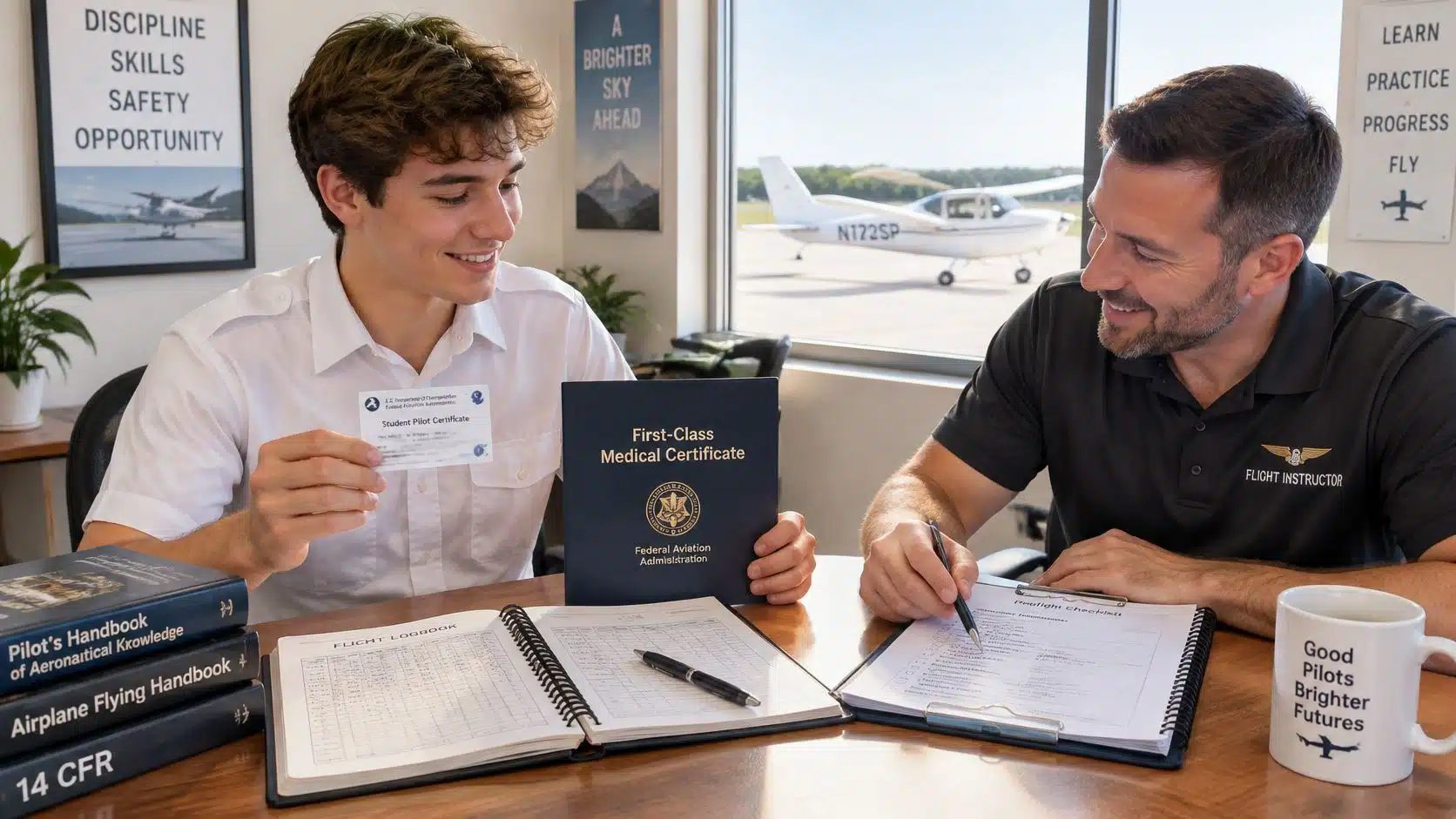
Handling both items early is the simplest way to protect the calendar you planned. Work through them in this order:
- Confirm your eligibility. At least 16 years old for airplane solo, able to read, speak and understand English.
- Apply for the Student Pilot Certificate. Use whichever issuing channel fits your training, and don't leave it until the week you want to solo.
- Book an Aviation Medical Examiner. Before your first solo in an airplane or helicopter you generally need at least a third-class medical, and a higher class also satisfies the requirement.
- Bring both documents to your solo review. Your instructor needs to see the certificate and medical before signing you off.
The FAA's guidance on medical certificates for student pilots also recommends getting the medical done before beginning flight training, which is the detail worth taking seriously. A condition that blocks certification is far cheaper to discover before the first lesson than after six months of dual instruction.
The class of medical tracks your goal. First class is generally associated with airline transport privileges, second class with commercial operations, and third class with student, recreational and private pilots. None of them changes how many hours you need to train, but each removes a potential delay before solo and before later career decisions.
Timing habit: start the certificate application and medical booking within your first two weeks of lessons. Neither takes long, and both can stall a solo that's otherwise ready.
For the application details and common snags, the school's walkthrough of student pilot certificate requirements covers the process step by step.
What Slows Progress Past the 40-Hour Minimum
Passing 40 logged hours feels like the finish. It isn't the finish of training, and it isn't even the finish of the requirements, because the checkride asks you to fly to a standard in front of an examiner.
The FAA's advisory circular on pilot certificates and endorsements is direct about this. Practical-test preparation has to cover defined experience and proficiency areas, including at least 3 hours of airplane training solely by reference to instruments, plus endorsements confirming that you received the prescribed ground and flight training and are competent to take the practical test. What the examiner evaluates is maneuvers, navigation, emergency procedures and aeronautical decision-making, not a total in a logbook.
| Factor | Effect on timeline | Practical fix |
|---|---|---|
| Weather and visibility | Cancels or shifts lessons | Schedule backup days each week |
| Aircraft availability | Delays lessons on a busy aircraft | Book a second aircraft or time slot |
| Examiner scheduling | Adds waiting time before the checkride | Request an examiner once standards are met |
| Gaps between lessons | Adds repeat lessons to recover skills | Fly at least twice a week where possible |
| Practical test proficiency | Adds lessons after 40 hours | Use stage checks to find weak maneuvers early |
Weather is the one students underestimate. A week of low ceilings and gusty winds can wipe out three scheduled lessons, and the recovery isn't free. Say a student loses a week to weather, then needs two landing sessions to get the feel back. That's two extra lessons and roughly a week of calendar time, and the same pattern repeats across a year of training.
Where stage checks help, and what they don't replace
Many schools run stage-check flights before solo and before the checkride. An instructor who isn't your primary CFI flies with you, reviews procedures and decision-making, and names the weak spots while there's still time to fix them. A stage check doesn't replace the required instructor training and endorsements, and it isn't an extra certificate. It's a review, and reviews catch problems early, when fixing them costs two lessons instead of ten.
No-guarantee reality: progress at DuBois Aviation depends on preparation, proficiency, weather, aircraft availability and examiner scheduling, and the school doesn't guarantee completion dates for the private pilot license. Any school that does is guessing on your behalf.
The date follows readiness, not the calendar
Book the examiner when your instructor says the standards are consistently met, not when a four-month plan says it's time. Students who lock a checkride date early, before the maneuvers are stable, tend to reschedule or repeat the ride, and the second attempt costs more than the waiting did.
Commercial, Instructor and Airline Timelines Compared
Three separate milestones get blurred in most timelines, and separating them fixes most of the confusion. A private certificate is for personal flying. A commercial certificate lets you fly for compensation. Airline eligibility is set by the hiring airline's experience standards, not by a certificate alone.
The FAA's overview of the commercial pilot certificate puts the ordinary Part 61 route at 250 total hours, with an FAA-approved Part 141 program able to qualify an applicant at 190 hours when the structured course requirements are complete. That's at least 210 hours beyond the private minimum before you even count instrument, multi-engine, instructor and airline-specific work.

The difference between the two commercial routes is structure, not a shortcut. An intensive, sequential program reaches hour milestones faster because lessons stack without gaps. Part-time training takes longer on the calendar but can be easier to finance and easier to fit around a job. Neither route changes the skills you have to demonstrate.
| Certificate or rating | FAA minimum hours | Notes |
|---|---|---|
| Private pilot (Part 61) | 40 | Recreational flying; not a qualification to fly passengers for pay |
| Instrument rating (Part 61) | 50 hours cross-country PIC | Also requires 40 hours of instrument training |
| Commercial pilot (Part 61) | 250 | Part 141 program can qualify at 190 hours |
| Flight instructor (CFI) | No separate hour total | Requires a commercial or higher certificate and an instrument rating; confirm current rules in 14 CFR Part 61 |
| Airline Transport Pilot | 1,500 total | Standard route; some alternatives reduce the threshold |
The instructor row deserves a caution. The FAA sets eligibility conditions for a flight instructor certificate rather than a standalone hour target, and those conditions sit in 14 CFR Part 61. Read the current regulation with your instructor instead of trusting a number from a blog, including this one.
Why the 1,500-hour airline benchmark isn't a schedule
The FAA's pilot certification and qualification rule requires an Airline Transport Pilot applicant to hold at least 1,500 total pilot flight hours, along with a commercial certificate, an instrument rating and passage of the knowledge and practical tests. That number is a benchmark, not a calendar. Ground training, medical certification, checkrides and the employment-based hours you build after the commercial certificate all sit inside the timeline.
The U.S. Bureau of Labor Statistics occupational outlook for airline and commercial pilots lays out the usual sequence: student pilot certificate, private certificate, instrument rating, commercial certificate, multi-engine rating, and finally the ATP. It also reports that airline pilots typically need a bachelor's degree, while commercial pilots generally enter through postsecondary nondegree training. The same outlook projects about 16,400 annual openings for airline and commercial pilots from 2025 through 2035, which is a projection rather than a hiring promise.
Career candidates should plan each rating as its own timeline: private for personal flying, then the instrument rating, then the commercial certificate with multi-engine experience, then instructor certificates that let you build hours while teaching. Airlines set their own experience requirements and generally don't hire at the 250-hour commercial minimum, so the hour totals in the table are starting points, not hiring thresholds. The commercial pilot requirements and timeline guide walks through that progression rating by rating.
How Long Does It Take to Become a Pilot on Your Schedule
Turn the estimates into a plan before you call a school. Five steps, in order:
- Name the target. A private certificate for personal flying has one timeline; a career track ending at an airline cockpit has a much longer one. Decide which question you're asking.
- Choose a weekly frequency you can sustain for months. Two lessons a week is a common working-adult rhythm. Three is the fast lane. One a week stretches the calendar, and one a month stretches it further.
- Count categories, then add margin. Check the six required categories and add extra allowance to the ones you expect to run long, usually cross-country and instrument work.
- Schedule the non-flight milestones early. The student certificate and a third-class medical belong in your first couple of weeks, not the week before solo.
- Build a buffer and review it. Weather, aircraft availability and examiner scheduling are predictable friction. Reserve slack for them and sit down with your instructor every few weeks to compare the plan against the logbook.
A worked example for a busy schedule
Suppose an adult with a full-time job and family commitments can reliably fly two Saturday lessons a month. That's roughly 24 lessons a year, and the realistic planning assumption is a year or longer, not the four-month row. The better move is to plan around that, budget for it, and avoid the trap of comparing progress to a student flying three times a week.
An instructor should review the plan with you, because readiness decides when the checkride happens, not the date you wrote down in month four. Regulations and hour requirements change, so check current FAA guidance before committing to a schedule or a budget.
Book a Discovery Flight to Set Your Start Date
A discovery flight is the lowest-risk way to start. It lets you sit with an instructor, see how lessons work, and ask questions before choosing a training path. DuBois Aviation offers one-on-one instruction at Chino Airport for airplane and helicopter training, from a first discovery flight through advanced ratings, so the timeline you've planned can be matched to a specific program rather than to a generic brochure.
The enrollment form lists the training options plainly: Private Pilot – Airplane, Instrument Rating – Airplane, Commercial Pilot – Airplane, Flight Instructor Training, Multi-Engine Training, Helicopter Training, and Other. Pick the one that matches your target from the planning steps, and you'll know which sections of this timeline apply to you.
Three questions worth bringing to that first visit:
- What lesson frequency does the schedule support? Ask how many slots per week are realistically available for the aircraft you'll train in.
- How are aircraft booked, and what happens when weather cancels? The answer tells you how much calendar slack you need.
- How is readiness judged before a checkride? You want a described process, not a promised date.
Course availability and training information are worth asking about directly before you commit to a start date. The reader decides when to begin. The instructor decides when the standards are met.
Frequently Asked Questions About Pilot Training Timelines
Does ground school or home study count toward flight hours?
No. Ground training prepares you for the knowledge test and builds the aeronautical knowledge the practical test assumes, but it isn't logged flight time in an aircraft. Keep the two tracks separate in your planning, because a strong knowledge test doesn't shorten the hours you need in the air.
Can I train in a helicopter instead of an airplane?
Yes, and the track is separate rather than interchangeable. Helicopter training uses different aircraft, different maneuvers and its own hour requirements in the regulations, so a helicopter timeline shouldn't be estimated from airplane figures. Confirm the current helicopter minimums in 14 CFR Part 61 before you plan.
How much does weather really matter in Southern California?
More than the sunshine suggests. Marine layer mornings, gusty Santa Ana winds and summer convective build-ups all cancel lessons, and training at a busy towered field adds radio and traffic workload that takes time to master. Booking a standing backup slot each week is the practical protection.
What should I bring to my first lesson?
A logbook, your student certificate application status, your medical certificate or appointment confirmation, a headset if you own one, and a written list of questions. The logbook matters most, because training records start with lesson one and endorsements depend on them later.
How do I know when I'm ready for the checkride?
Your instructor judges readiness against the practical test standards, and the endorsements in your record confirm the training happened. Consistent performance across maneuvers, navigation and emergency scenarios is the signal. A single good flight isn't.
DuBois Aviation trains airplane and helicopter students at Chino Airport (KCNO), with one-on-one instruction, a maintained fleet and seven-day scheduling that lets you hold the lesson frequency your timeline depends on. If you're ready to turn these estimates into an actual start date, visit DuBois Aviation to ask about course availability, request training information or schedule a discovery flight. Bring your target, your weekly frequency and your questions, and the first planning conversation gets a lot shorter.