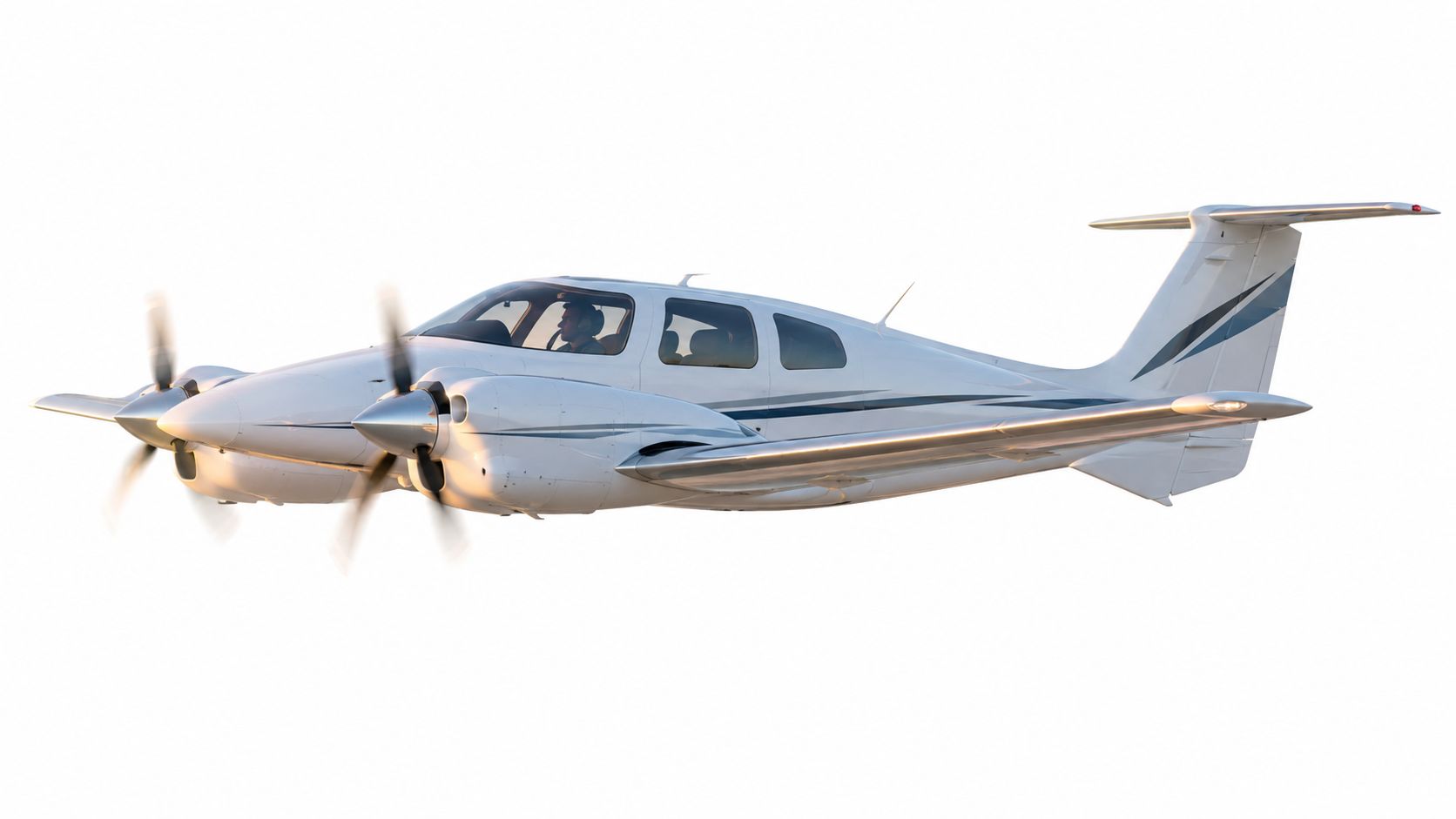
A multi-engine rating is not a quick checkbox add-on, and that's where a lot of pilot advice goes off the rails. The true test isn't whether a pilot can log a few hours in a twin, it's whether that pilot can manage asymmetric thrust, stay ahead of the airplane after an engine failure, and make good decisions under pressure. That's why the rating matters for private, commercial, and career-track pilots, and why proficiency matters more than chasing a neat number on a logbook page.
Table of Contents
- Understanding the Multi-Engine Rating
- FAA Eligibility and Certification Requirements
- Core Flight Exercises and Asymmetric Thrust Training
- Choosing the Right Training Aircraft
- Timeline and the Proficiency Factor
- Career Value and Real-World Application
- Frequently Asked Questions
Two practical options worth comparing
These are specific products pilots commonly compare for this type of flying. Confirm compatibility with your aircraft and instructor before ordering.
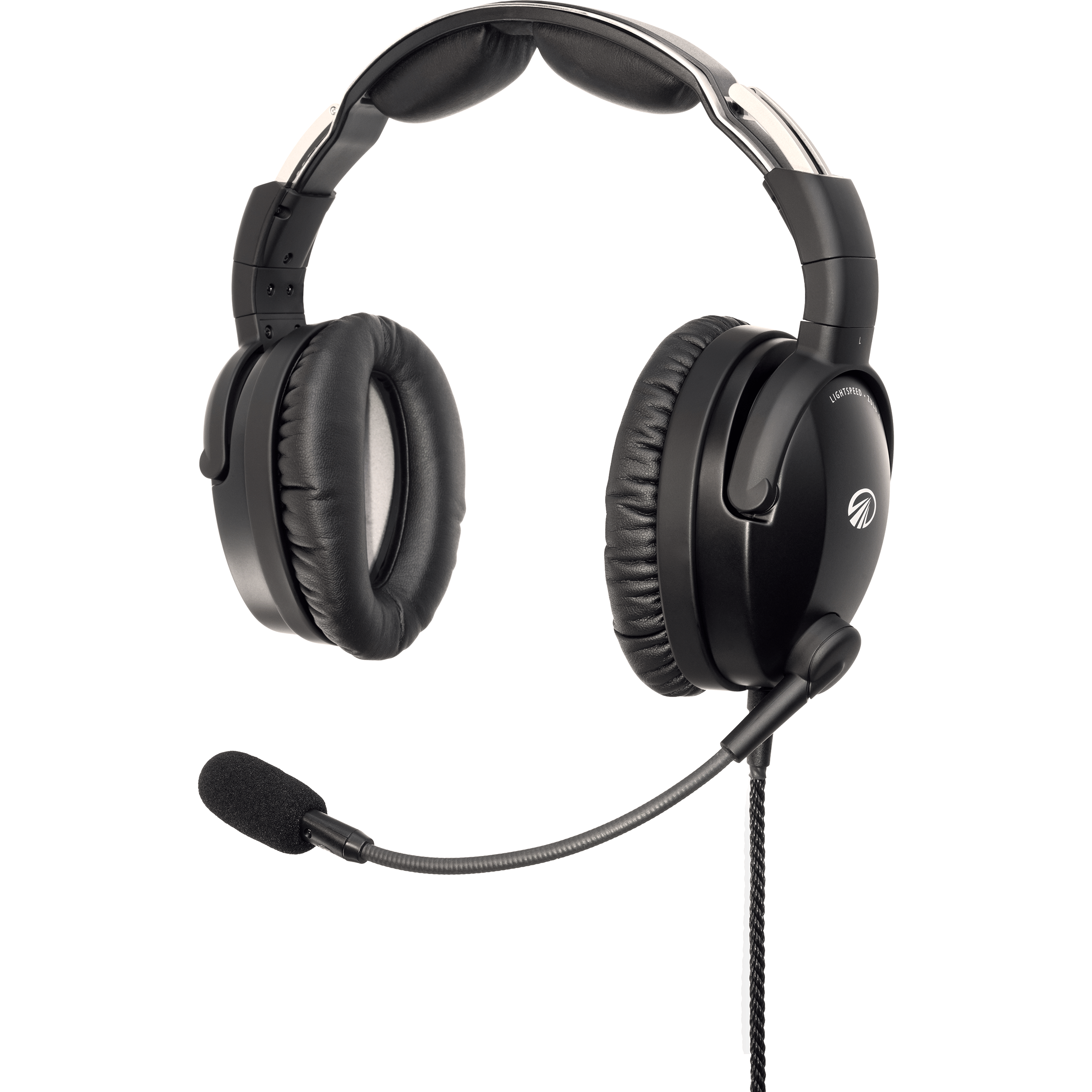 Premium ANR headsetLightspeed Zulu 4 ANR Aviation Headset - Dual GA PlugCheck current availability on Amazon (paid link)
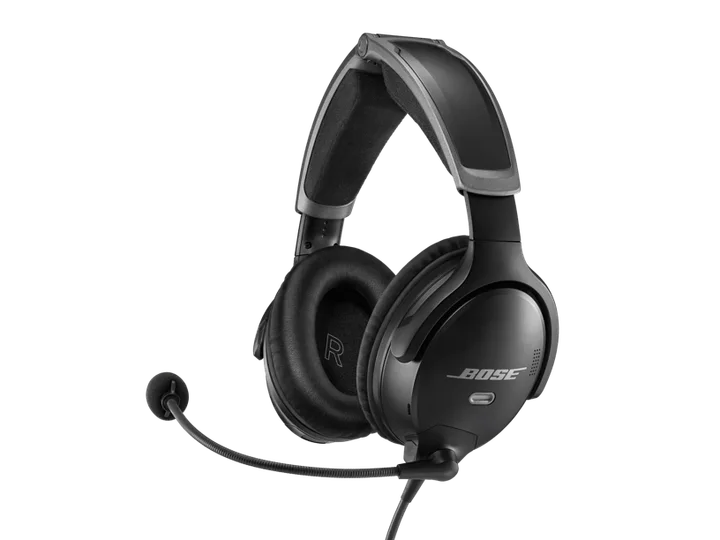 Premium headsetBose A30 Bluetooth Aviation Headset - Dual PlugCheck current availability on Amazon (paid link)
Understanding the Multi-Engine Rating
A multi-engine rating adds privileges to an existing pilot certificate; it doesn't start a brand-new license. For a private or commercial pilot, the rating authorizes flight in an airplane with more than one engine, but the key difference is what happens when one engine stops producing power. In a single-engine airplane, the pilot manages one thrust source. In a twin, the pilot has to understand how the airplane behaves when thrust becomes unbalanced.
Why the airplane changes so much
The hard part is asymmetric thrust. When one engine quits, the remaining engine keeps pushing from one side, and that creates yaw, roll, and a performance penalty that can be severe. In many light twins, an engine failure can cut climb performance by 80 percent or more according to AOPA's multiengine training overview. That's why twin flying is never just “single-engine flying with an extra motor.”
Practical rule: A pilot who can keep a twin coordinated, trimmed, and properly configured after an engine failure is showing the core skill employers and instructors care about.
The rating's value is also practical, not theoretical. It gives a pilot the chance to operate a more complex airplane, but the rating alone doesn't guarantee judgment, tempo, or good engine-out habits. For pilots who want to see how that complexity scales upward in larger aircraft, the private jet operational insights by Approved Jets page is a useful context piece for understanding why multiengine thinking keeps mattering as aircraft become more capable.
What success actually looks like
Success in multiengine training isn't just “passing the checkride.” It's being able to identify the failed engine, secure it correctly, maintain control, and fly a safe approach without chasing the airplane. That's the true threshold, and it's why the rating should be treated as a safety milestone, not a logbook trophy.
FAA Eligibility and Certification Requirements
The FAA treats multiengine privileges differently depending on whether a pilot is applying for an add-on rating or for an initial certificate. For already-rated private and commercial pilots, the multiengine add-on is proficiency-based, not built around a fixed national minimum flight-hour requirement. For initial private, commercial, and ATP eligibility, the FAA does set specific experience gates in Part 61.
Private, commercial, and ATP pathways
For a private pilot applying for an airplane multiengine class rating, the FAA requires at least 40 hours of flight time, including 20 hours of flight training from an authorized instructor and 10 hours of solo flight training. The training must include 3 hours of cross-country flight training in a multiengine airplane, 3 hours of night training in a multiengine airplane with at least one cross-country flight over 100 nautical miles and 10 takeoffs and 10 full-stop landings, plus 3 hours of instrument training in a multiengine airplane, according to 14 CFR 61.109.
For a commercial pilot applying for an airplane multiengine class rating, the FAA requires at least 250 hours of total flight time as a pilot, including 100 hours in powered aircraft, 100 hours of pilot-in-command time, 20 hours of training on commercial pilot areas of operation, and specific multiengine items such as 10 hours of instrument training, with 5 of those hours in a multiengine airplane, plus a 2-hour daytime cross-country and a 2-hour nighttime cross-country of more than 100 nautical miles each, as listed in 14 CFR 61.129.
For ATP applicants seeking an airplane category multiengine class rating, the FAA requires 1,500 hours total time as a pilot and 200 hours of cross-country time, which shows how much more experience is expected at the airline level under Part 61 Subpart G.
What the practical test is tied to
The FAA's Airman Certification Standards for the Commercial Pilot Airplane certificate cover multiengine land and sea classes, so the checkride is tied to published tasks, risk-management elements, and proficiency standards, not a vague oral-plus-flight event. The practical test has to match the exact class rating sought, which is why preparation has to be specific and disciplined, as outlined in the FAA's Commercial Pilot Airman Certification Standards.
For pilots comparing school options, the training path at DuBois Aviation's multi-engine rating requirements page is a direct way to see how a training syllabus connects with the FAA framework.
The part that often gets misunderstood
An add-on rating isn't about meeting a universal hour count. It's about showing the examiner that the pilot can manage a twin safely in normal and abnormal operations, with the same discipline required by the regulations and the ACS.
Core Flight Exercises and Asymmetric Thrust Training
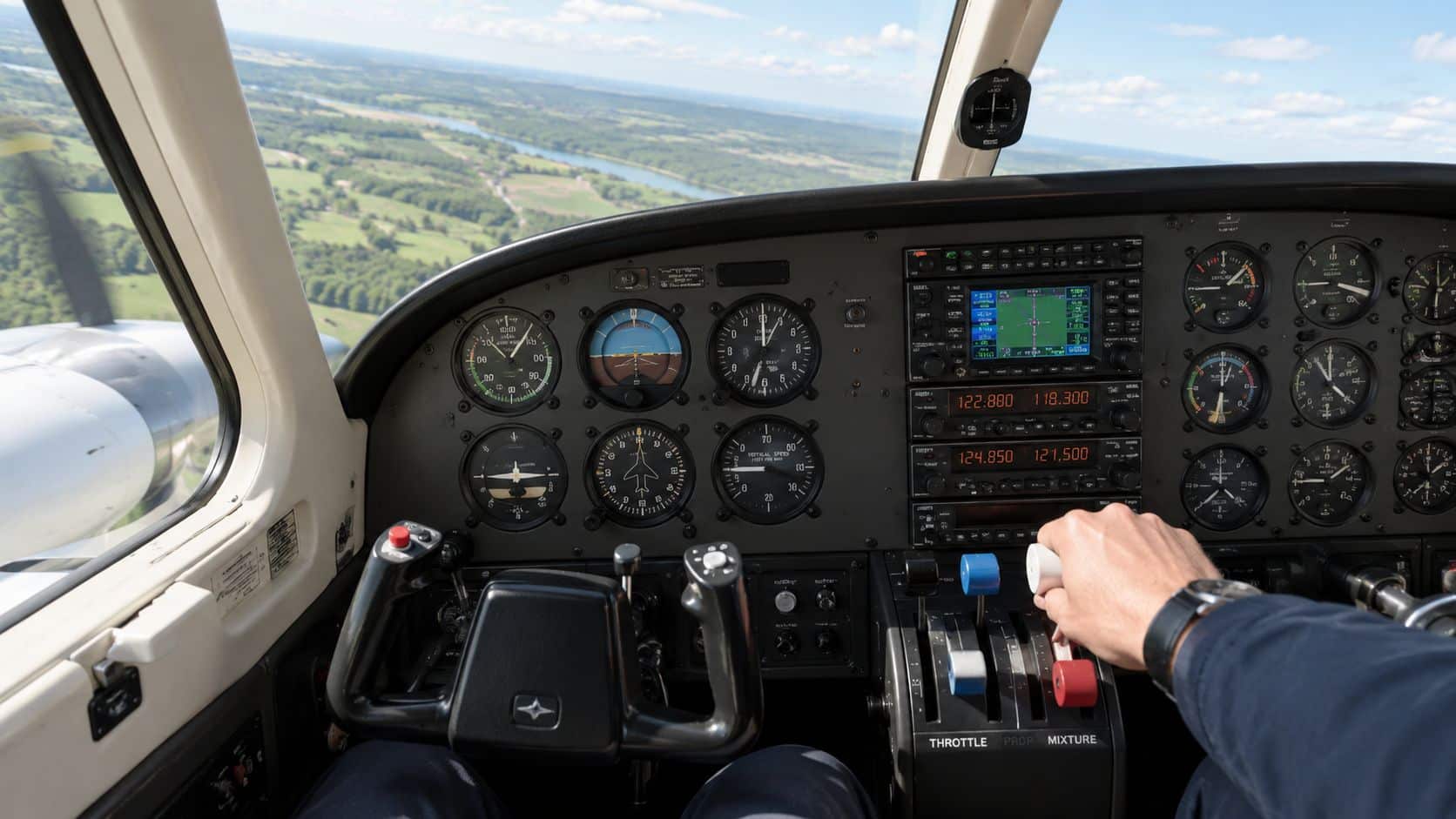
A multiengine lesson can feel normal at first, until the instructor pulls one engine back and the airplane starts telling a different story. The nose wants to yaw toward the dead side, the rudder comes alive, and the pilot suddenly has to think in terms of control first, configuration second, and speed awareness always. That's the cockpit reality behind the rating.
What engine-out work really teaches
The most important skill is recognizing that an engine failure in a light twin is not just a power reduction, it's a handling problem. The pilot has to identify the failed engine, verify the correct side, and then act without hesitation. That means dealing with feathering, emergency decision-making, and the discipline to stay coordinated instead of overcontrolling.
Training also centers on VMC, the minimum control speed in a multiengine airplane. At the edge of that envelope, the airplane may still be flying, but the pilot can lose directional control if the wrong inputs are made or if speed decays too far. That's why instructors keep emphasizing airspeed management, rudder pressure, and proper pitch attitude during simulated failures.
Flight-school standard: The safe response to asymmetric thrust is not panic and not guesswork, it's a practiced sequence that keeps the airplane controllable while the pilot works the problem.
The performance penalty is why many training programs spend a large share of time on engine-out procedures instead of just normal twin operations. Globally, the United Kingdom's CAA requires at least 7 hours of theoretical instruction, 2.5 hours of dual flight in normal multi-engine operations, and 3.5 hours of dual flight in engine-failure and asymmetric-flight techniques before a skill test for a multiengine piston rating, a split described in AOPA's multiengine training coverage.
How that feels in the airplane
A student usually notices three things fast. The rudder workload goes up, the airplane feels less forgiving if speed decays, and checklist discipline matters more because each step has a visible aerodynamic consequence. That's why multiengine training isn't about memorizing words, it's about connecting each action to the way the airplane behaves.
At DuBois Aviation's multi-engine rating course, that is the kind of practical focus that matters, engine-out handling, aircraft systems, and the judgment needed to turn a simulated emergency into a controlled outcome.
Choosing the Right Training Aircraft
Not every twin teaches the same lesson. Some airplanes feel more forgiving in normal flight but can hide sloppy technique, while others make handling changes obvious enough that a student learns faster and with better discipline. The best training airplane is the one that gives a student clear feedback and consistent system behavior.
What a light twin should teach well
A useful trainer should expose the pilot to the core skills that transfer across twins, not just make the rating convenient. That means a student should be able to practice:
- Engine-out recognition: The airplane should make the yaw and control response clear enough that the pilot learns to identify the failed side quickly.
- Feathering discipline: Propeller management should be intuitive enough for the student to see how drag changes the airplane's performance.
- Single-engine planning: The aircraft should reward conservative speeds, good configuration control, and stable approach setup.
- System awareness: Fuel, electrical, and gear systems should be understandable enough that students learn how a twin is managed.
A conventional light twin can be a strong trainer because it keeps the pilot engaged with the basics. That matters more than loading the cockpit with automation that hides mistakes until later.
Why the airframe matters for skill building
The airplane itself shapes how a pilot learns. A twin with straightforward systems helps students connect the procedure to the performance result. A more complex aircraft can be useful later, but a training environment should make the fundamentals obvious first. That's especially important for pilots who are still building confidence with throttle coordination, rudder pressure, and emergency checklists.
For pilots comparing airplane options, the Piper Aztec rental page gives one example of how a twin can fit into a broader training and rental environment. The useful question isn't which airplane looks more impressive. It's which one helps the pilot build repeatable control habits that still hold up when something goes wrong.
The best multiengine trainer is the one that teaches judgment and handling together, not one without the other.
Timeline and the Proficiency Factor
The fastest path to a multi-engine rating is not the one with the fewest logged hours. It is the one that builds dependable control when one engine is no longer producing thrust. The FAA add-on path is proficiency-based, so the time required depends on whether the pilot can manage asymmetric thrust, maintain aircraft control, and make sound emergency decisions under pressure.
Why the clock does not tell the full story
Training guidance emphasizes demonstrated ability rather than a fixed national flight-time minimum. Industry summaries commonly place the add-on at about 7 to 15 hours of flight time, according to Pilot Institute's multiengine explanation. That range describes a common training experience, not a promise. A pilot may meet the standard quickly, while another may need more practice to coordinate rudder, power, configuration, and checklist actions during an engine-out exercise.
A pilot with recent single-engine flying, a reliable instrument scan, and calm emergency habits often progresses faster than someone returning after a long break. Lesson spacing also changes the result. Frequent training keeps control responses and decision-making patterns available, while long gaps require time to rebuild them.
The rating is short only on paper if the pilot treats it as a logbook transaction. Employers and instructors can distinguish between memorizing an engine-failure checklist and understanding what the airplane is doing as thrust becomes uneven. Proficiency means recognizing the yaw, correcting it promptly, protecting airspeed, and choosing a response that fits the situation.
What changes the timeline
Four factors usually affect progress more than raw talent:
- Recent flying: Regular pilots tend to stay sharper with radio work, trim, and cockpit workload.
- Emergency familiarity: Students who handle abnormal procedures calmly generally need fewer repetitions before the practical test.
- Lesson spacing: Consistent lessons preserve motor memory. Irregular scheduling creates more review.
- Prior knowledge: Strong single-engine aerodynamics and instrument habits shorten the learning curve.
Training truth: A pilot who already flies accurately may finish sooner, but only repeated, correct responses make the rating useful in real operations.
For another explanation of why the FAA does not set a fixed flight-hour minimum for this add-on, Summit Flight Academy's requirements guide describes the process as proficiency-based rather than time-based. Aviatize's glossary entry provides the same broader context for the rating. The practical goal is not to accumulate hours until the checkride arrives. It is to show mastery that makes both the test and an unexpected engine problem manageable.
Career Value and Real-World Application
A lot of pilots assume the rating itself is the thing employers want. It isn't. The rating opens the door, but the employer still wants evidence that the pilot can use it well, especially when the airplane stops behaving normally. That's where competency-based thinking is starting to matter more than logbook totals.
Why experience and rating are not the same
The multi-engine rating is not the same as meaningful multi-engine experience. The rating shows that a pilot has met the standard to operate a twin, but it doesn't automatically prove sound judgment in a high-workload environment. Recent aviation discussion is shifting toward competency-based training rather than logbook totals, and that creates a gap many pilots miss, as discussed in The Daily Preflight's multiengine experience episode.
That gap matters because employers and advanced training programs still care about the pilot's ability to manage asymmetric thrust, make a safe decision after an engine failure, and repeat good technique in scenario-based flying. In other words, the interview question isn't just, “Does the logbook say multiengine?” It's, “Can this pilot handle the airplane when the easy part ends?”
How to make training count
Pilots who want the rating to support a career path should treat every lesson as a judgment exercise, not just a procedural one. That means briefing the emergency flow, flying the profile precisely, and being able to explain why each action was taken. A pilot who can talk through a simulated failure with calm detail usually sounds more credible than one who only says the airplane “felt fine.”
A busy, towered airport can help with that development because it forces real communication, sequencing, and workload management. Chino Airport gives pilots that kind of environment, which is useful for building cockpit habits that carry into commercial and advanced training. The point is not to collect tower time for its own sake, it's to learn how to stay organized while the pace stays high.
For career-track aviators, multiengine training is most valuable when it proves repeatable proficiency, not just when it adds a line to a resume.
Frequently Asked Questions
Is a written exam required for the multiengine add-on?
For the add-on rating, the FAA process centers on proficiency and practical testing rather than a separate written knowledge test. The applicant must show an instructor and examiner that they can operate the aircraft safely and meet the practical test standard.
How many hours does a typical pilot need?
There is no FAA minimum flight-time requirement for the add-on rating itself. As covered in the timeline section, the amount of instruction varies with prior experience, consistency, and how quickly the pilot develops reliable asymmetric-thrust control. A logbook total can suggest preparation, but it cannot replace demonstrated skill.
Does the rating automatically make a pilot more employable?
No. The rating helps qualify a pilot for further opportunities, while employers look for demonstrated proficiency. They want to see sound engine-out judgment, accurate aircraft control, disciplined checklist use, and calm decisions under pressure. The certificate opens the conversation. Performance gives it value.
What is the hardest part of multiengine training?
Engine-out work usually demands the most attention because several tasks arrive together. The pilot must control yaw, protect airspeed, identify the correct engine, configure the aircraft, and complete the required procedures. It is like keeping a bicycle balanced while adjusting its direction and checking a map. Delayed control inputs can quickly create a larger problem.
Is accelerated training realistic?
A concentrated course can work for a pilot with strong fundamentals, a flexible schedule, and consistent preparation. Speed alone does not demonstrate readiness. If emergency procedures remain mechanical or control becomes inconsistent, additional practice is the safer choice. Proficiency should determine the finish date.
DuBois Aviation offers multiengine training covering aircraft systems, performance planning, and engine-out procedures at Chino Airport. Pilots can review the program details and ask about course availability through DuBois Aviation.