

What if the biggest mistake in training for commercial pilot isn't choosing the wrong maneuver, but choosing a program that can't keep a student flying consistently? A commercial pilot certificate is a major milestone, but it isn't the same as being ready for an airline cockpit. The right path depends on the student's logbook, schedule, finances, proficiency, and career target. Part 61 can provide flexibility, while Part 141 can offer a structured syllabus and a lower regulatory hour minimum. The checkride then tests whether those hours have become professional judgment, not just accumulated time.
Table of Contents
- What Commercial Pilot Training Actually Requires
- Choosing Between Part 61 and Part 141 Programs
- Understanding FAA Hour and Maneuver Requirements
- Preparing for the Written Exam and Checkride
- Building a Pilot Career After Commercial Certification
- Planning Your Training Schedule and Budget
What Commercial Pilot Training Actually Requires
What must a private pilot demonstrate before a commercial certificate becomes a realistic career step? Commercial pilot training raises the standard for precision, planning, risk management, and aircraft control. The certificate adds privileges, but it does not qualify a pilot for every paid flying job or an airline position. The FAA's commercial pilot certificate guidance distinguishes certificate eligibility from the much higher experience standards commonly set by airlines.
Two practical options worth comparing
These are specific products pilots commonly compare for this type of flying. Confirm compatibility with your aircraft and instructor before ordering.
 Premium ANR headsetLightspeed Zulu 4 ANR Aviation Headset - Dual GA PlugCheck current availability on Amazon (paid link)
 Premium headsetBose A30 Bluetooth Aviation Headset - Dual PlugCheck current availability on Amazon (paid link)
Under Part 61, the baseline aeronautical experience requirement for an airplane commercial pilot certificate is 250 total flight hours. An approved Part 141 course can reduce that minimum to 190 hours, a difference of 60 hours that may change the training plan and budget. These figures establish eligibility for the certificate, not automatic hireability. The FAA notes that airlines commonly require 1,000 to 2,000 hours or more before hiring, so the commercial certificate generally serves as an intermediate professional credential.
Certificate eligibility versus career readiness
A student needs to answer two separate questions:
- Can the student meet the FAA requirements for the certificate?
- Can the student demonstrate the experience and qualifications an employer expects?
The first involves logged experience, required training, knowledge testing, and the practical test. The second may involve additional ratings, instructor qualifications, medical eligibility, company standards, interviews, and substantially more flight time.
That distinction affects both scheduling and budgeting. Planning only for the commercial checkride can leave a student without a clear way to build experience afterward. Flight instruction is one possible route, but earning a flight instructor certificate and securing an instructor position are separate outcomes.
Training consistency also matters. A flexible schedule, such as the scheduling options available through DuBois Aviation at Chino Airport, can help students avoid long gaps caused by work, school, weather, or aircraft availability. The right arrangement depends on whether the student can protect regular training blocks or needs lessons planned around changing commitments.
Why the commercial certificate still matters
The certificate applies a higher standard to every flight. A pilot must manage energy, airspeed, altitude, configuration, and aircraft limitations consistently, while explaining the reasoning behind each decision. During the checkride, the evaluator is looking for sound preparation, risk recognition, timely corrections, and controlled aircraft handling. Smooth maneuver execution matters, but judgment matters just as much.
Start with a logbook review and a career conversation rather than a promise of a fixed number of lessons. Existing time may satisfy some requirements while leaving gaps in pilot-in-command experience, cross-country experience, night operations, or commercial training. A careful review shows which hours count and which skills require more work. The commercial pilot license requirements offer a practical starting point for organizing that review.
Choosing Between Part 61 and Part 141 Programs
Which training structure fits your actual life, budget, and learning pace? Part 61 and Part 141 are different ways to organize commercial pilot training, not different standards of pilot quality. Part 61 gives instructors more room to adapt lessons. Part 141 uses an approved syllabus with defined stages and progress checks. The lower Part 141 minimum can reduce the required training time, but only if you can attend consistently and meet each standard as you progress.
| Consideration | Part 61 | Part 141 |
|---|---|---|
| Training structure | Lesson planning adjusted to the student's needs and availability | Approved curriculum with defined stages and progress checks |
| Minimum commercial aeronautical experience | 250 hours under applicable Part 61 requirements, according to FAA guidance | 190 hours under an approved Part 141 commercial course structure, as described in FAA Appendix D |
| Scheduling fit | Works well with changing work, school, or family commitments | Works well when the student can protect regular training blocks |
| Progress oversight | Instructor and student track regulatory and proficiency gaps | Stage checks and syllabus milestones provide formal oversight |
| Cost planning | More adaptable, but the final training time can be less predictable | More structured, though extra lessons may still be needed if proficiency lags |
When Part 61 makes practical sense
Part 61 often fits a working professional, college student, parent, or renter whose availability changes from week to week. The instructor can address the next priority instead of forcing every student through an identical sequence. That matters when lessons must move around weather, aircraft availability, work, or family obligations.
Flexibility still requires a plan. A recurring schedule, written training goals, and regular instructor feedback prevent lessons from becoming disconnected practice sessions. Long gaps can require review, and flying without a clear progress plan can leave regulatory or proficiency gaps unresolved.
DuBois Aviation's flexible scheduling at Chino Airport can help address those bottlenecks. Students who cannot protect the same training block every week may have more practical room to continue training without abandoning their other commitments. Ask how far ahead lessons can be scheduled, how aircraft availability is handled, and whether the same instructor can maintain continuity.
When Part 141 earns its structure
Part 141 can suit a career-track student who can commit to a formal syllabus and wants progress measured through defined stages. The 190-hour minimum is a regulatory course minimum, not a promise that every student will complete training at that point. The pilot must still demonstrate the required knowledge and practical competence, and additional training may be needed when performance is inconsistent.
Practical rule: Choose Part 141 for its structure, not only because its published minimum is lower. Choose Part 61 for its flexibility, then add enough schedule discipline to keep training from drifting.
Before enrolling, compare the full operating plan rather than the headline hour minimum. Ask how often aircraft are available, whether instructors maintain continuity, how stage checks work, what ground training is included, and how the school responds when more practice is needed. This Part 61 versus Part 141 flight training comparison can help organize those questions before you commit.
Understanding FAA Hour and Maneuver Requirements
Why do the hour requirements matter beyond the total in your logbook? Each category supports a different pilot responsibility, and the correct total does not guarantee that the required experience is complete. Under 14 CFR 61.129, an airplane single-engine commercial applicant training under Part 61 must meet a specific aeronautical-experience structure.
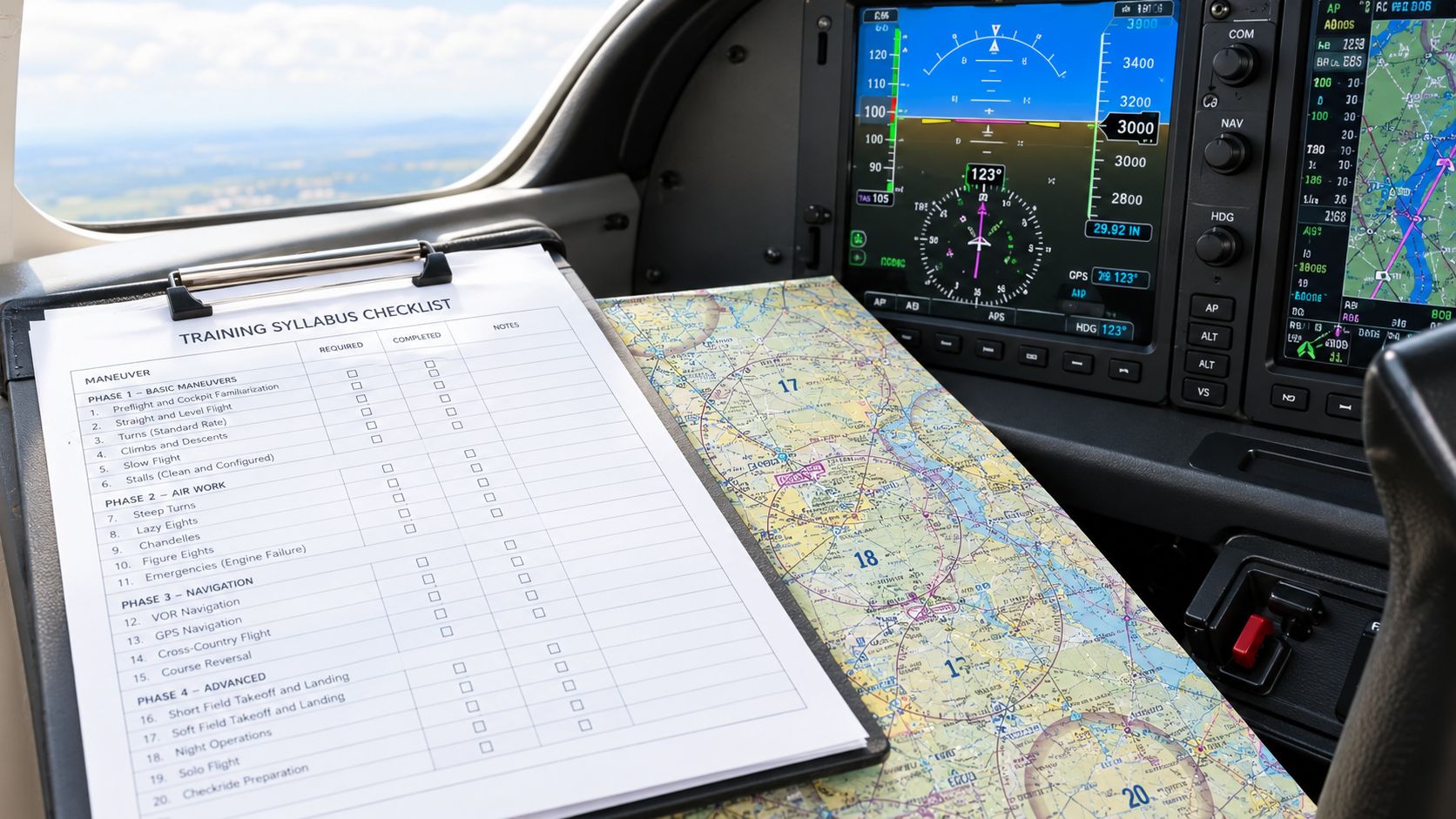
What the required time is meant to develop
The Part 61 framework includes:
- 250 total flight hours, establishing the overall experience baseline.
- 100 hours in powered aircraft, providing substantial experience in aircraft relevant to the certificate.
- 100 hours of pilot-in-command time, building responsibility for flight planning, decisions, aircraft operation, and safety.
- 50 hours of cross-country time, developing route planning, fuel decisions, weather evaluation, diversion judgment, and unfamiliar-airport operations.
- 20 hours of commercial maneuver training, focusing on the precision tasks evaluated during the practical test.
- 10 hours of solo training, requiring the applicant to manage flights without continuous instructor input.
These categories are performance tools, not bookkeeping targets. Cross-country experience should improve route-change planning, workload management, and diversion decisions. Pilot-in-command time should show independent judgment rather than passive time in the left seat. Commercial maneuver training should connect aircraft control with energy management, airspeed discipline, configuration planning, and risk recognition.
Part 141 follows a different structure. Its approved commercial course can reach a lower total-time floor by combining earlier private and instrument training with a defined block of commercial-level flight training and ground instruction. The syllabus and stage checks provide formal progress points, as described in the Part 141 Appendix D commercial course requirements. That structure can reduce duplication, but it does not remove the need to demonstrate proficiency.
Turning hours into checkride readiness
Meeting every hour category still leaves a practical question: can you perform the commercial tasks without excessive prompting? An instructor should review the logbook, then assess whether the pilot can plan, execute, explain, and correct each task independently.
A useful training review asks:
- Was the flight planned correctly?
- Was the maneuver flown to an appropriate standard?
- Did the pilot identify and correct deviations without being led through them?
Schedule targeted lessons for any weak category instead of treating all remaining hours as interchangeable. At DuBois Aviation at Chino Airport, flexible scheduling can help when a student needs extra maneuver practice, a logbook correction, or a focused lesson after a training gap. Confirm aircraft availability and instructor continuity before committing to a timeline.
The commercial pilot requirements and training timeline helps connect required experience with the remaining training stages. Review the logbook well before booking the checkride. Finding a missing experience item late can disrupt the budget, aircraft bookings, and the sequence of lessons.
Preparing for the Written Exam and Checkride
The knowledge test and practical test should be treated as linked milestones. The written exam confirms that the applicant understands the rules, systems, performance concepts, weather considerations, and operational decisions that support the flight. The checkride then asks the applicant to apply that knowledge while managing the aircraft and explaining the reasoning behind each action.
FAA guidance requires the knowledge test to be passed before the practical test when the certificate or rating requires one. The Commercial Airplane ACS connects that knowledge-test requirement with the practical-test process under 14 CFR 61.39. Waiting until the final days to study can therefore create a preventable scheduling problem.
A disciplined preparation sequence
A practical preparation plan looks like this:
- Review the regulations early. Identify the operating rules, limitations, endorsements, required documents, and experience requirements that apply to the certificate.
- Study from the aircraft outward. Connect systems and performance knowledge to the specific airplane being flown, including weight, balance, speeds, limitations, and emergency procedures.
- Use scenario questions. Practice explaining what changes when weather deteriorates, a passenger becomes a distraction, fuel planning changes, or the aircraft develops a malfunction.
- Fly with a clear standard. Each commercial maneuver should include a briefing, entry plan, configuration plan, tolerances, correction strategy, and completion point.
- Schedule a mock oral and practical evaluation. The purpose isn't to surprise the student. It is to identify weak areas while there is still time to correct them.
The FAA's commercial airplane practical-test preparation checklist includes several planning details that students often underestimate. These include a third-class-or-higher medical certificate, completion of the knowledge test, 20 hours of commercial dual instruction, 10 hours of simulated instrument time, 10 hours of complex, turbine, or technically advanced airplane time, and specified day, night, solo, and cross-country experience. The checklist also includes a 300 nautical mile solo cross-country, a daytime cross-country and night cross-country each covering more than 100 nautical miles, 5 hours of night visual flight, and 10 night visual landings at a towered airport, as listed in the FAA commercial airplane practical-test preparation checklist.
What examiners want to see
The checkride isn't a performance where every correction must be invisible. A commercial applicant can make a small deviation. The important question is whether the pilot notices it, understands its cause, makes a timely correction, and keeps the flight safe.
The oral portion deserves equal attention. Students should be able to explain why a maneuver is planned a certain way, what risks are present, how aircraft loading affects performance, and what action is appropriate when conditions change. Memorized answers without operational understanding tend to break down as soon as the examiner changes the scenario.
Building a Pilot Career After Commercial Certification
The commercial certificate opens the next stage of development, but it doesn't finish the career plan. Many pilots use the certificate as a platform for instructor qualifications, additional aircraft categories or classes, and systematic experience building. Others pursue aerial work or other professional operations that have their own employer, insurance, regulatory, and proficiency expectations.
A common progression
A career-oriented sequence may include:
- Commercial single-engine training, which establishes the professional certificate and maneuver standard.
- CFI training, which develops the ability to teach, demonstrate, critique, and manage a student's risk.
- CFII training, which adds instrument instruction and requires the instructor to explain instrument procedures clearly.
- MEI training, which develops multi-engine instructional competence for pilots whose career plan includes twin-engine operations.
- Experience building and applications, where the pilot maintains proficiency, documents qualifications accurately, and evaluates employer requirements individually.
CFI, CFII, and MEI aren't merely extra badges for a résumé. Teaching forces a pilot to verbalize aircraft control, anticipate errors, and recognize risk before a student acts on an incorrect decision. That process can strengthen judgment, but the certificate itself doesn't promise employment or a specific income level.
Why accumulated experience changes the options
The labor market provides a reason to view commercial training as a pipeline rather than a single event. The U.S. Bureau of Labor Statistics projection cited by Pilot Institute's commercial pilot requirements overview expects airline and commercial pilot employment to grow 7% from 2025 to 2035, with an average of about 16,400 openings per year during that period. Those are projections, not guarantees for an individual applicant, and they don't remove the need to meet employer standards.
The same source notes that the move from the commercial certificate's 190 to 250-hour training framework to airline hiring levels of well over 1,000 hours is a substantial professional step. A student should therefore decide early whether instruction, multi-engine training, or another form of commercial flying fits the intended route.
A pilot building a professional résumé should also present non-flying experience accurately. Communication, customer service, safety responsibilities, and operational discipline can matter in aviation hiring. For applicants considering cabin-crew roles alongside cockpit positions, a practical flight attendant resume resource from StoryCV can help clarify how aviation-related experience is organized for a different application path.
A certificate shows that a pilot met a standard on a particular evaluation. A career develops when the pilot keeps meeting standards across different aircraft, instructors, passengers, weather conditions, and operational demands.
Planning Your Training Schedule and Budget
A training budget should account for more than aircraft rental. Instructor time, ground preparation, testing, examiner costs, required experience, and the possibility of additional proficiency training all affect the final plan. A school that quotes only a minimum-hour scenario may leave a student unprepared for the actual cost of reaching checkride readiness.

Build continuity before chasing acceleration
The most useful schedule is one the student can sustain. Flexible seven-day availability can help a school place lessons around work and weather, while an instructor who builds a personalized plan can preserve continuity when an aircraft or instructor becomes unavailable. Industry coverage identifies aircraft availability, instructor shortages, and infrastructure constraints as important training bottlenecks, and one 2026 forecast reports that some U.S. flight schools face wait times of up to six months while output grows about 4% annually, as described by Avi-Go's industry coverage.
Students should ask practical questions before committing:
- Aircraft access: How are maintenance interruptions and scheduling conflicts handled?
- Instructor continuity: Who covers a lesson when the primary instructor is unavailable?
- Airport environment: Will training include tower communications, busy traffic patterns, and instrument procedures?
- Budget assumptions: Which costs are included, and which remain separate?
- Progress reviews: How often will the school compare the logbook with the training plan?
Financing deserves the same direct attention. A recent market report notes that limited access to conventional education financing in several markets has increased reliance on private loans, restricting enrollment and making accessible payment options a meaningful training consideration, according to the commercial pilot training market report. Students should compare repayment obligations with a realistic schedule and avoid assuming that a commercial certificate immediately produces paid flying work.
At Chino Airport, training from a towered Class D environment with multiple runways and instrument approaches can expose students to operational communication and airspace decisions from the start. DuBois Aviation offers one-on-one airplane and helicopter instruction, a multi-aircraft fleet, simulator support, and flexible seven-day scheduling for students working toward private, instrument, commercial, multi-engine, and instructor qualifications.
Students ready to choose between Part 61 and Part 141 can visit DuBois Aviation to ask about course availability, schedule a school visit at Chino Airport, and request a training plan based on their logbook, career goal, and budget. A focused conversation with an instructor can identify the remaining experience, checkride preparation, and aircraft access needed to move forward steadily.


