
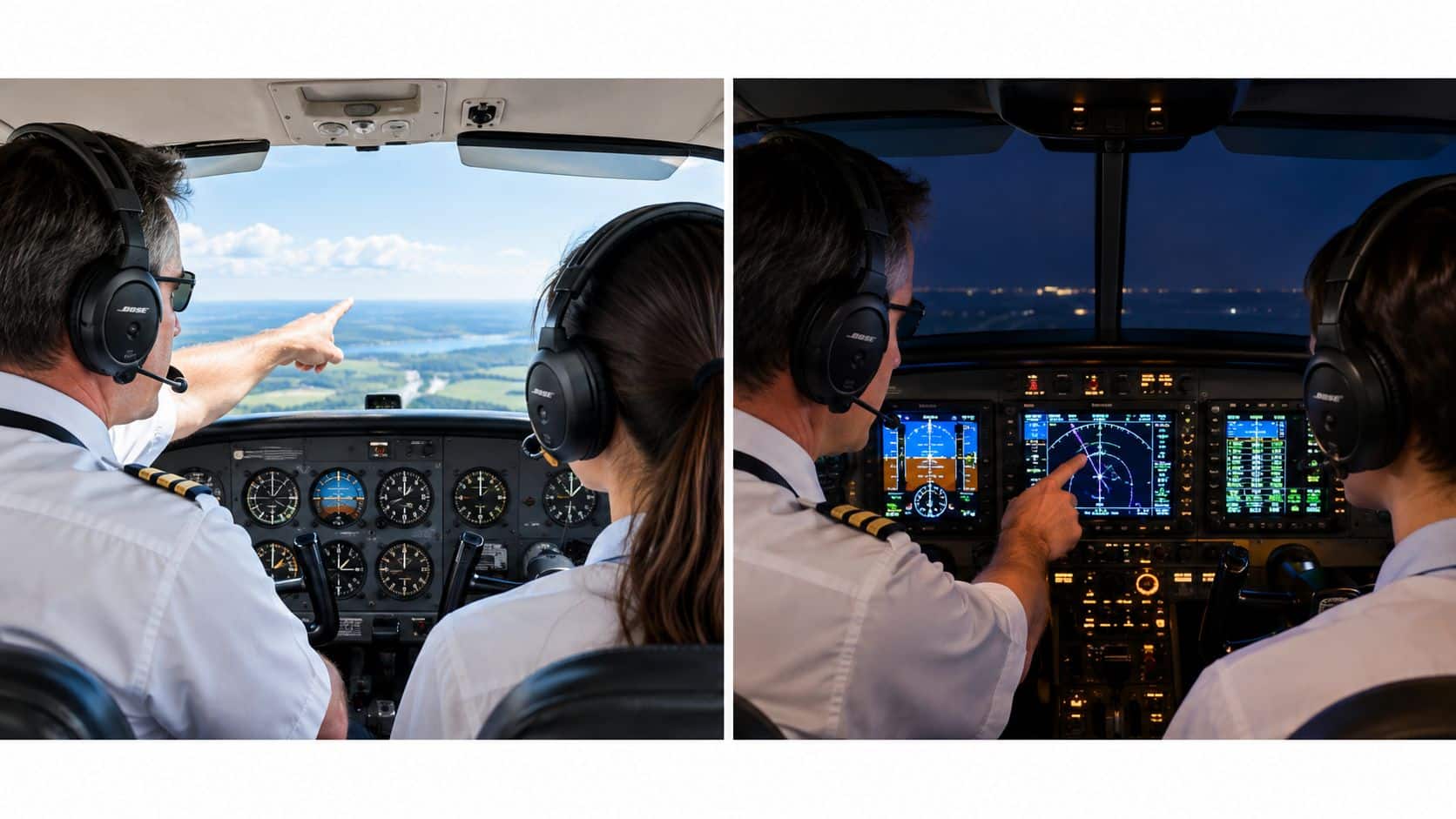
A CFI teaches VFR fundamentals and general pilot training, while a CFII adds authority to teach instrument training, including approaches and instrument proficiency checks. The CFII path requires instrument privileges and its own practical test standard.
Which rating makes more sense after commercial training, the one with the broader student pool or the one that lets an instructor teach in the instrument system? That question exposes the weakness in treating CFI vs CFII as a simple pay comparison. The practical choice depends on the students an instructor will teach, the ratings already held, local demand, and the training environment.
The FAA separates these credentials by teaching scope. A basic flight instructor can teach within the authorized aircraft category and class, while the instrument instructor path creates a distinct lane for IFR training and instrument rating tasks. The FAA Flight Instructor Instrument practical test standard treats that path as its own evaluated standard.
This guide is for private-pilot students planning ahead, commercial pilots preparing for an instructor career, current CFIs deciding on the next add-on, renters building proficiency, and career-track aviators comparing training options. The important questions are not only what each rating allows, but also what each checkride demands, which prerequisites apply, how training time varies, and where each credential fits in a working flight school.
Table of Contents
- Introduction Answering CFI vs CFII in Plain Language
- What Each Instructor Rating Lets You Teach
- Prerequisites Knowledge Tests and Checkride Differences
- Training Time Cost and What Drives Both
- Career Implications and When Each Rating Pays Off
- Recommended Training Paths at DuBois Aviation in Chino
- How to Choose Between CFI and CFII for Your Goals
Introduction Answering CFI vs CFII in Plain Language
Which students do you want to teach, VFR pilots building their first skills or instrument students working through approaches and IFR procedures? That is the practical question behind CFI vs CFII. The choice is less about which certificate sounds more valuable and more about the training population you expect to serve at a busy towered school such as DuBois Aviation at Chino Airport.
A CFI provides flight instruction within the ratings and limitations on the instructor certificate. The work can include VFR fundamentals, aircraft control, maneuver practice, traffic-pattern operations, navigation, emergency procedures, and the broader progression toward private and commercial pilot objectives, provided the instructor is qualified for the aircraft and task.
A CFII adds instrument-instruction authority. A CFII teaches instrument procedures, approaches, IFR decision-making, instrument-rating tasks, and instrument proficiency checks. The instrument instructor path is a separate qualification, not a label for a CFI who has gained more experience.
The regulatory distinction affects what an instructor may endorse and teach. Under 14 CFR 61.195(c), the instructor must hold an instrument rating appropriate to the aircraft used for required instrument training. A CFI can be highly capable in VFR instruction yet still lack the authority to provide every lesson needed for an instrument rating.
| Criterion | CFI Airplane | CFII Airplane Add-On |
|---|---|---|
| Primary scope | VFR fundamentals and broad airplane instruction | Instrument and IFR instruction |
| Typical student mission | Private, commercial, maneuver, and general pilot training | Instrument rating, approaches, IFR procedures, and proficiency |
| Credential structure | Initial flight instructor path | Instrument instructor rating added to the instructor certificate |
| Knowledge testing | FOI and Flight Instructor Airplane tests are typically part of the path | FII knowledge test is typically associated with the add-on |
| Practical test | Broad instructor evaluation | Separate, instrument-focused practical test |
| Career value | Broader student volume | More specialized instrument teaching authority |
At Chino, the better fit depends on the students filling the schedule. A CFI may spend more time with first-time private pilots and commercial candidates. A CFII may work with pilots entering the instrument phase, practicing approaches, or preparing for advanced cross-country flying. DuBois Aviation's training paths can therefore frame the decision around the population you want to teach, not a generic claim that one rating always pays more.
What Each Instructor Rating Lets You Teach
What kind of students do you want to teach at Chino Airport, primary pilots building their first skills or instrument pilots learning to operate in the IFR system? That question gives the CFI versus CFII decision more practical value than comparing which rating might pay more.
The CFI is the instructional foundation for airplane training. A CFI teaches safe aircraft operation, flight principles, basic maneuvers, risk management, and the habits students need for later certificates and ratings. The privileges still depend on the category, class, ratings, and limitations listed on the instructor's certificates.
A CFI's lessons may cover aircraft control, takeoffs and landings, traffic-pattern operations, navigation, emergency procedures, and commercial-level maneuvers when the instructor's credentials match the airplane and the student's objective. Ground instruction supports those flights. The CFI also evaluates performance and provides endorsements within the authorized scope.
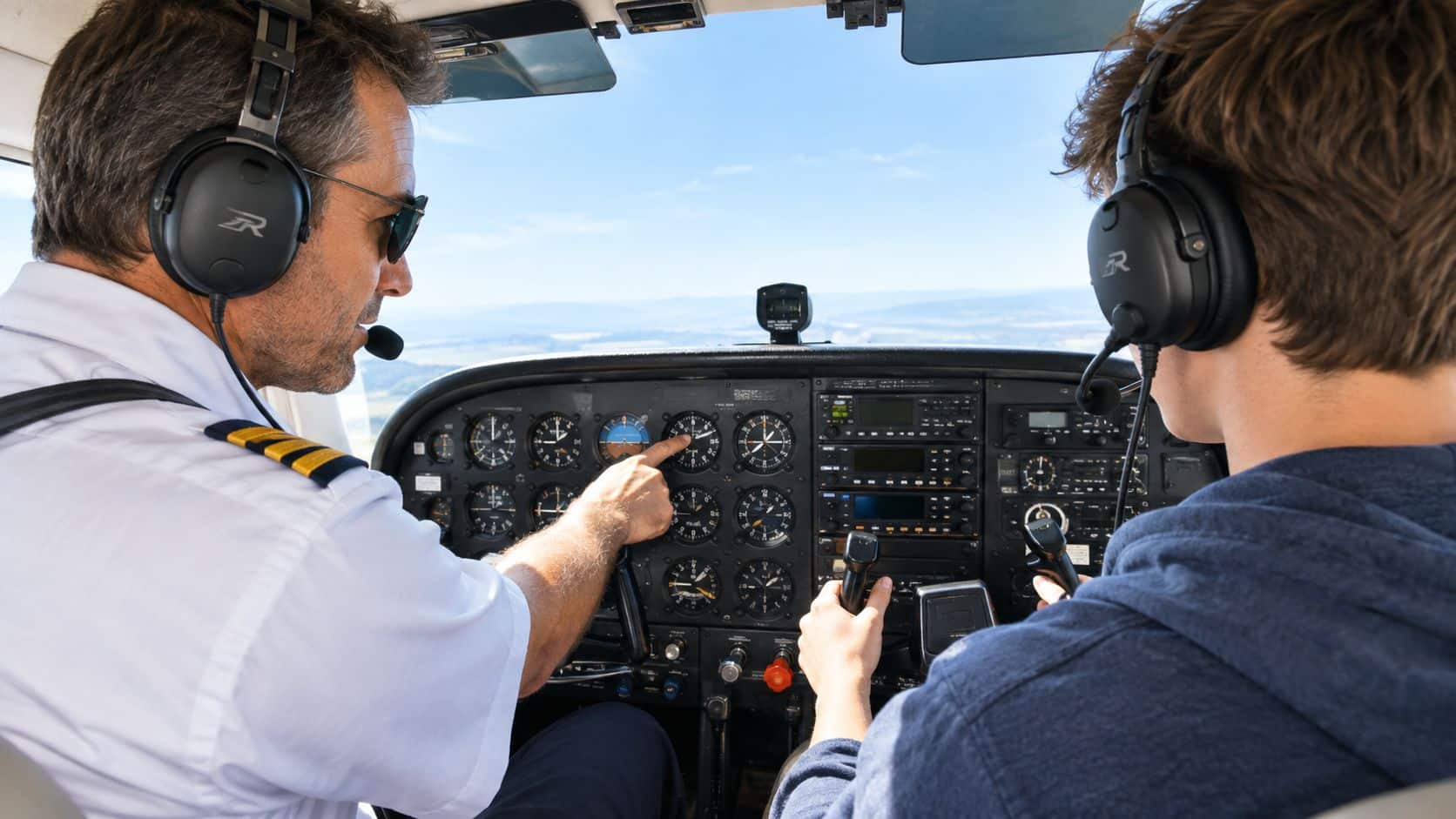
This broader explanation of what a flight instructor does shows why the job involves more than demonstrating maneuvers. A CFI explains procedures, supervises practice, identifies errors, manages workload, and helps students make sound decisions.
The CFII adds a different teaching mission
The CFII brings instruction into the instrument system. A CFII teaches instrument scan, IFR clearances, navigation, holding, procedure briefings, instrument approaches, missed approaches, and decision-making when outside visual references are unavailable. Lessons also connect weather, aircraft equipment, route structure, workload, and personal minimums.
The practical dividing line: A CFI teaches pilots to fly the airplane broadly. A CFII teaches the instrument procedures and instrument-training tasks that require instrument instructor authority.
A hood alone does not define the lesson. A pilot may practice certain instrument-reference skills with a CFI under applicable limitations, but that does not authorize the CFI to provide every element of the dedicated instrument training required for an instrument rating. The FAA's instrument-airplane training material explains why the instructor's instrument qualification matters to logged training.
A CFII may also conduct instrument proficiency checks when properly authorized and qualified for the aircraft and task. That makes the rating relevant to pilots earning an instrument rating, preparing for commercial or ATP goals, or maintaining competence in IFR operations.
At Chino, DuBois Aviation's training paths can help frame the choice around the student population you want on your schedule. A CFI may teach more first-time private pilots and commercial candidates. A CFII may spend more time with pilots practicing approaches, completing instrument training, or preparing for advanced cross-country flying. The right rating is the one that matches the lessons you intend to teach.
Prerequisites Knowledge Tests and Checkride Differences
Are you choosing the rating that fits your own goals, or the students you expect to teach? The initial CFI and CFII paths share a teaching foundation, but they lead to different evaluations and different lesson schedules. The CFI route establishes the instructor certificate and tests broad instructional knowledge, communication, risk management, and airplane teaching ability. The CFII add-on focuses on teaching instrument procedures to the applicable standard.
Eligibility begins with 14 CFR 61.183, including the pilot certificate and ratings required for the instructor rating sought. A CFII applicant must already meet the underlying instructor requirements and hold the appropriate pilot and instrument privileges for the category and class being taught. Before training starts, confirm the current endorsements, knowledge-test status, aeronautical experience, and practical-test requirements in the applicable FAA regulations and testing publications.
Knowledge tests and practical standards
The initial airplane CFI path typically includes the Fundamentals of Instructing, or FOI, knowledge test, and the Flight Instructor Airplane, or FIA, knowledge test. Together, they assess the transition from competent pilot to instructor. Preparation covers lesson planning, communication, risk management, learning principles, and the technical subjects an airplane instructor must explain and demonstrate.
The CFII add-on is commonly associated with the Flight Instructor Instrument, or FII, knowledge test. Its practical test has a narrower subject area, but the teaching standard remains demanding. The applicant must explain instrument procedures, brief approaches, identify errors, and adjust instruction while managing the flight. Current FAA testing publications should be reviewed with the training provider rather than relying on an old checklist or informal summary.
For the airplane CFII practical test, a current description identifies at least three approach procedures, including two nonprecision approaches and one precision approach. The point is not to complete approaches. The applicant must teach the procedure clearly, apply sound instructional judgment, correct mistakes, and maintain awareness of aircraft control and workload.
| Criterion | CFI Airplane | CFII Airplane Add-On |
|---|---|---|
| Starting point | Applicant pursuing the initial airplane instructor credential | Applicant adding instrument instructor privileges |
| Knowledge tests | FOI and Flight Instructor Airplane are typically required | FII is commonly the relevant add-on knowledge test |
| Main teaching scope | Broad airplane and VFR instruction | IFR procedures and instrument instruction |
| Practical evaluation | Broad flight-instructor tasks and airplane teaching | Dedicated instrument-instructor practical standard |
| Approach emphasis | Presented as appropriate to the practical test and lesson | At least three approach procedures are identified in the current description, two nonprecision and one precision |
| Instrument privilege | Not created by the basic CFI alone | Instrument authority is tied to the appropriate rating and aircraft |
The distinction resembles learning to teach general driving before teaching a specialist skill. A capable instrument pilot still has to show that another pilot can understand, practice, and safely repeat the procedure. Review the wider framework of key instructor qualifications when comparing pilot ability with readiness to teach, evaluate, and endorse students.
The student's instrument-hour requirement
An applicant for an instrument-airplane rating must log 40 hours of actual or simulated instrument time, including 15 hours received from an authorized instructor who holds an instrument-airplane rating, according to FAA instrument-rating guidance. This makes the CFII distinction operational, not merely administrative. The required instructor-led instrument training must come from someone with the appropriate qualification.
At Chino Airport, the local instrument environment can make this difference visible in the weekly schedule. A CFI path may place you with private and commercial students building broad airplane skills. A CFII path may place you beside pilots briefing approaches, practicing procedures, and preparing for IFR cross-country operations. Choose based on the student population you want to teach, not only on the certificate title.
Before enrolling, verify:
- Current regulation: Confirm the applicable language in 14 CFR Part 61.
- Testing standard: Check the current FAA ACS or PTS document for the exact rating.
- Certificate ratings: Match the instructor and pilot ratings to the aircraft category and class.
- Endorsements: Confirm that required endorsements and aeronautical experience are documented.
- Examiner expectations: Ask which practical-test standard and aircraft configuration will apply.
Candidates moving from commercial training into instructor preparation can review the commercial pilot to CFI transition before selecting a sequence. At DuBois Aviation, that sequence can be discussed in relation to whether you plan to teach foundational flight training, instrument students, or both.
Training Time Cost and What Drives Both
How much time should you reserve for CFI or CFII training, and what determines the final cost? CFII is generally a shorter add-on because the candidate already has a flight instructor foundation and can focus on instrument instruction. Industry planning ranges vary by proficiency and scheduling, so a calendar estimate should guide planning rather than serve as a promise.
The schedule can change quickly when instrument proficiency, lesson planning, or checkride readiness is inconsistent. A pilot who flies instrument procedures comfortably but struggles to explain them may need more ground preparation. Another candidate may understand the regulations but require more right-seat practice, approach-briefing work, or teaching rehearsals. In both cases, the student population you intend to teach affects the preparation that deserves the most attention.
What creates the bill
Training cost comes from the work required to become ready, not from the rating name alone. Common cost drivers include:
- Aircraft time: Rental and fuel charges vary with the aircraft and operating conditions.
- Instructor time: Ground briefings, lesson critiques, and flight instruction all contribute.
- Simulator use: An approved or suitable training device can support procedure practice within the school's training plan.
- Materials: Knowledge-test preparation, lesson-plan development, and reference materials require preparation time.
- Testing logistics: Examiner fees, aircraft scheduling, and extra preparation flights can affect the final total.
A lower estimate is not automatically the less expensive path if it leaves gaps that require remedial flights later. A candidate who arrives with strong instrument proficiency, organized lesson plans, and current knowledge may need fewer training events.
Planning around Southern California schedules
Students balancing work, family, and flying should plan backward from the intended checkride window while leaving room for changes. A practical schedule identifies available training days, ground-study blocks, simulator opportunities, and a backup period for weather or aircraft scheduling.
Four mistakes appear often:
- Treating the checkride as the first teaching rehearsal. Right-seat teaching requires practice before the practical test.
- Studying only pilot procedures. A CFII must explain why a procedure works, identify errors, and adjust instruction to the student.
- Ignoring instrument proficiency. Candidates who rarely fly or brief approaches may spend training time rebuilding habits.
- Budgeting only for flight hours. Ground instruction, testing, materials, and scheduling constraints also affect the total.
At DuBois Aviation in Chino, a busy towered-airport setting can expose communication and workload weaknesses earlier than a quiet training area. That may make training more demanding, while giving you useful practice with real-world instrument and airspace tasks. If you want to teach primary students, your preparation may center on repeatable explanations and basic flight coaching. If you want to teach IFR students, approach briefings, procedure management, and right-seat workload deserve more deliberate practice.
Career Implications and When Each Rating Pays Off
Which students do you want to teach each day? That question gives CFI vs CFII more useful career context than a simple pay comparison. CFI work usually reaches the wider student population because nearly every pilot starts with primary and VFR instruction. CFII work serves a narrower group, including pilots progressing into instrument operations or maintaining instrument proficiency.
A school centered on ab initio private-pilot training may need a steady supply of general CFI instructors. The initial CFI certificate can therefore provide the broader teaching base. A school with regular instrument traffic, simulator sessions, advanced cross-country training, or career-track students may have more work for instructors who can teach the IFR phase.

Match the rating to the student pipeline
Consider a school where most students are beginning private-pilot training. The CFI teaches aircraft control, traffic patterns, navigation, communication, and basic aeronautical decision-making. Those students may later continue into instrument training, but the immediate instructor demand remains broad.
A different school may operate at a busy towered airport and support students through private, instrument, commercial, and career-track programs. There, a CFII can teach the transition from VFR to IFR, explain approaches, provide instrument proficiency training, and help students continue through an advanced syllabus.
The long-term value of a rating depends on the school's student pipeline, not a generic pay comparison.
Instrument training also creates a distinct student population. Under FAA instrument-airplane rating guidance, an instrument applicant must log 40 hours of actual or simulated instrument time, including 15 hours from an authorized instrument-rated instructor. That requirement supports demand for instructors with the appropriate instrument privileges, but it does not promise a particular job, schedule, or amount of flight time.
Chino and the broader career picture
At Chino Airport, the towered Class D environment, multiple runways, and instrument approaches can expose instructors to the communication, sequencing, and procedural workload of a busy training operation. For a school serving pilots who want instrument competence and career progression, those conditions can make CFII skills especially relevant.
DuBois Aviation in Chino can therefore represent two different training paths for a career-track instructor. The CFI path fits work with primary students who need repeatable explanations, aircraft-control coaching, and steady foundational practice. The CFII path fits students preparing for instrument operations, where approach briefings, procedure management, and right-seat workload become central teaching tasks.
CFII may also support later instruction connected with airline, charter, or corporate operations, where instrument competence forms part of advanced pilot training. It remains an expansion of instructional authority, not an employment guarantee. Hiring depends on the school's fleet, student demand, instructor qualifications, availability, and operational needs.
Recommended Training Paths at DuBois Aviation in Chino
Which students do you expect to teach first, primary students building basic habits or pilots preparing for instrument operations? That question gives the training sequence practical meaning at DuBois Aviation in Chino. A common career-track progression is:
- Private pilot training: Build aircraft control, navigation, communication, and safety habits.
- Instrument rating: Develop IFR skills and complete the required instrument instruction.
- Commercial pilot training: Refine maneuvers, judgment, and professional operating standards.
- Initial CFI: Learn to teach the airplane syllabus from the right seat.
- CFII add-on: Extend instruction to instrument procedures and instrument-rating tasks.
This order is a planning model, not a universal FAA requirement. The right sequence depends on the certificates and ratings already held, current instrument proficiency, study capacity, and the student population a new instructor expects to serve.
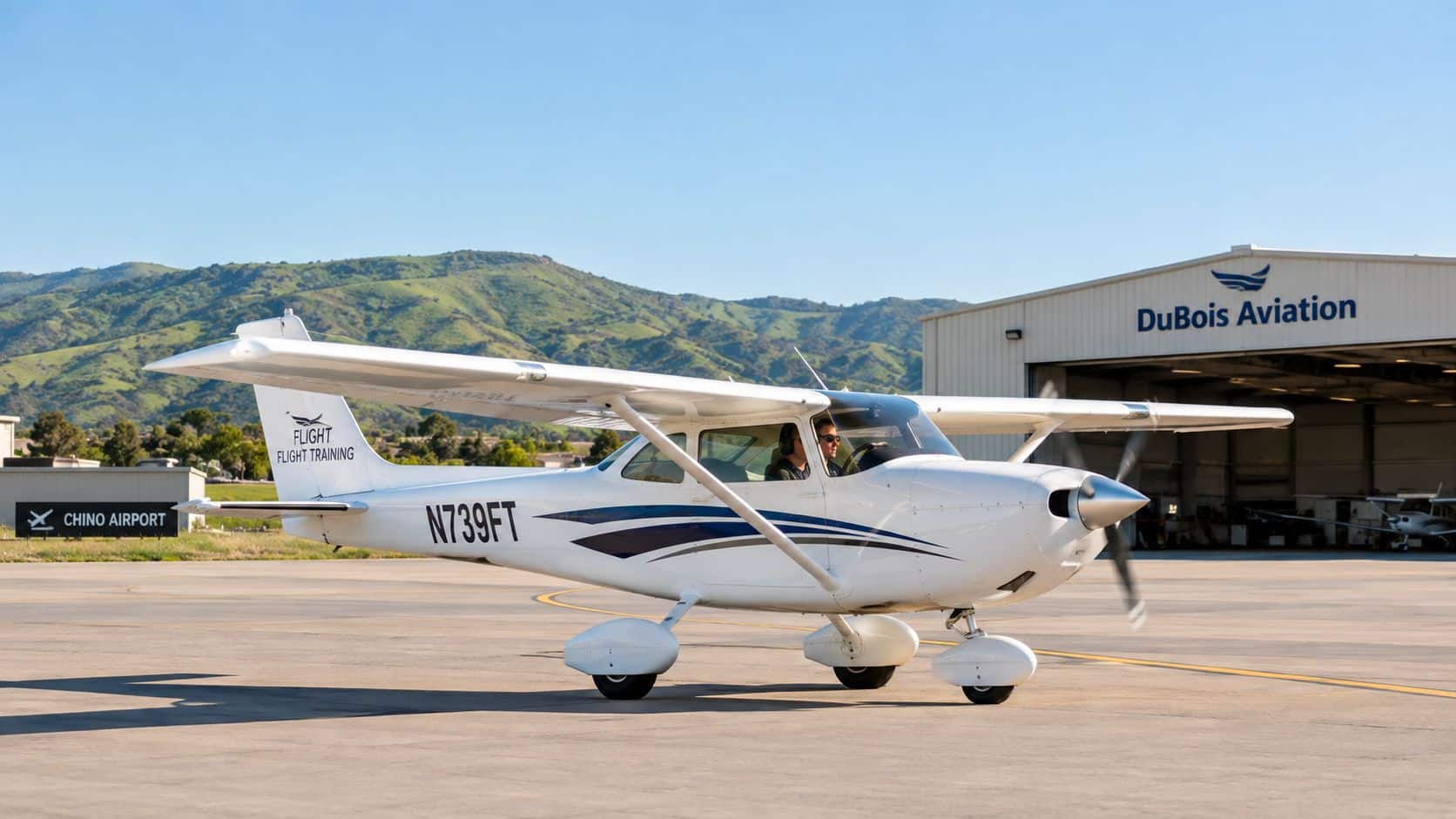
Choosing the timing of CFII
Adding CFII soon after initial CFI training can fit a candidate whose instrument rating is current, lesson-planning habits are developing well, and school demand includes instrument students. Closely scheduled training can preserve right-seat teaching momentum.
Initial CFI experience first may suit another candidate. Teaching VFR students exposes weak lesson plans, unclear explanations, rushed demonstrations, and incomplete critiques while the instructional scope is still manageable. Later, those lessons support better instrument teaching, where procedure briefings, workload management, and precise sequencing leave less room for confusion.
DuBois Aviation's training model includes one-on-one instruction, Jeppesen learning materials, an in-house simulator, and seven-day scheduling. Chino Airport offers a towered Class D environment with three runways and multiple approaches. The fleet includes single-engine airplanes, a multi-engine Piper Apache, and helicopters for other training paths.
The CFI, CFII, and MEI course gives candidates a way to review instructor-rating options alongside an individualized training plan. Students can also discuss broader flight training, accelerated scheduling, fleet access, and course availability with the school.
Regulation matters when choosing the CFII path. Under 14 CFR 61.195(c), an instructor needs the appropriate instrument rating for the aircraft to teach instrument training for an instrument rating, a type rating not limited to VFR, or the instrument training required for commercial and ATP certificates. Multiengine airplane instrument instruction also requires the additional pilot-certificate qualifications specified there.
How to Choose Between CFI and CFII for Your Goals
Use the student pipeline as the decision filter.
- Choose initial CFI first when the goal is broad airplane instruction, primary-student volume, or a foundation in teaching maneuvers and VFR procedures.
- Add CFII next when the target school serves instrument students, simulator users, or airline-track pilots, and the candidate already has the required instrument privileges.
- Consider both in a connected plan when instrument proficiency, schedule, and study capacity support continuous preparation.
- Delay CFII when the candidate needs to strengthen instrument skills or when local demand is overwhelmingly primary-training focused.
Before committing, verify the current Part 61 eligibility language, knowledge tests, endorsements, and practical-test standard. Regulations and FAA testing materials can change, so candidates should check the effective documents that apply to the planned test date rather than relying on an old checklist.
Prospective students in Southern California can request course availability, compare a separate CFI and CFII sequence with a combined plan, and schedule a school tour through the DuBois Aviation enrollment information.
Frequently asked questions
Is CFII a separate pilot certificate?
No. CFII describes instrument instructor privileges associated with a flight instructor certificate. The authority depends on the ratings and limitations held.
Can a CFI teach an instrument rating course?
A basic CFI doesn't automatically have authority to provide the dedicated instrument training required for an instrument rating. The instructor needs the appropriate instrument rating on the instructor certificate and must meet the applicable aircraft qualifications.
Does CFII replace the initial CFI?
No. CFII addresses instrument instruction. It doesn't replace the broader preparation and teaching scope associated with the initial CFI path.
Is CFII useful for a pilot who isn't pursuing airlines?
Yes. CFII can support instrument-rating students, instrument proficiency work, and pilots who want structured IFR training. Its value still depends on the school and student population.
Should a pilot train for CFI and CFII at the same time?
A combined plan can suit a candidate with strong prerequisites, current instrument proficiency, and enough schedule flexibility. Separate blocks may work better when the candidate wants to manage timing, budget, or early teaching experience independently.
DuBois Aviation offers one-on-one airplane and helicopter instruction, instrument training, CFI, CFII, and MEI preparation, simulator support, aircraft rental, and flexible scheduling at Chino Airport. Visit DuBois Aviation to request training information, ask about current course availability, or schedule a school tour focused on the instructor path that matches the students you want to teach.


