So, you're thinking about becoming a pilot? It’s a common dream, one that often starts with a simple question: "What does it really take to get in the cockpit?"
The short answer is that it's a journey built on dedication, a structured training process, and a significant investment of both your time and money. But it’s not an impossible mountain to climb. Think of it as a detailed flight plan, with clear waypoints you’ll need to hit—like medical checks, specific licenses, and a certain number of flight hours—all leading to the final destination: earning your wings.
Your Pre-Flight Briefing On Becoming A Pilot
Making the decision to become a pilot is a big one, whether you’re dreaming of scenic weekend flights or a career at 30,000 feet. The path is demanding, no doubt about it, but the rewards are incredible. You gain a sense of freedom, adventure, and a perspective on the world that few get to experience.
Two practical options worth comparing
These are specific products pilots commonly compare for this type of flying. Confirm compatibility with your aircraft and instructor before ordering.
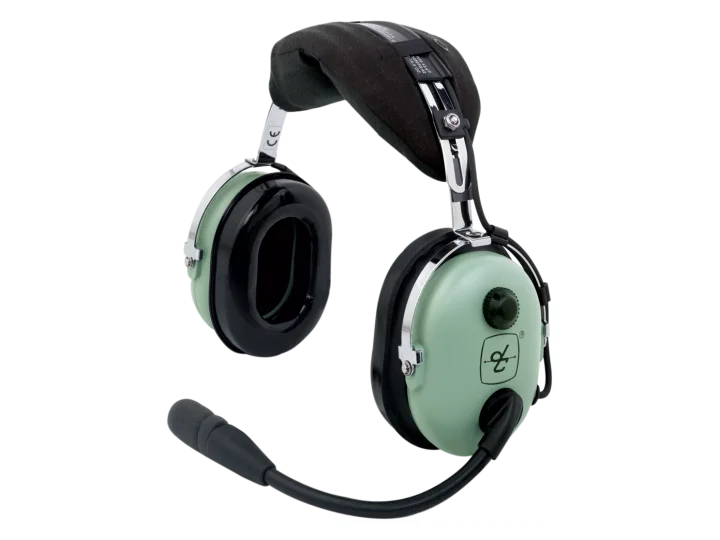 Student headsetDavid Clark H10-13.4 Aviation HeadsetCheck current availability on Amazon (paid link)
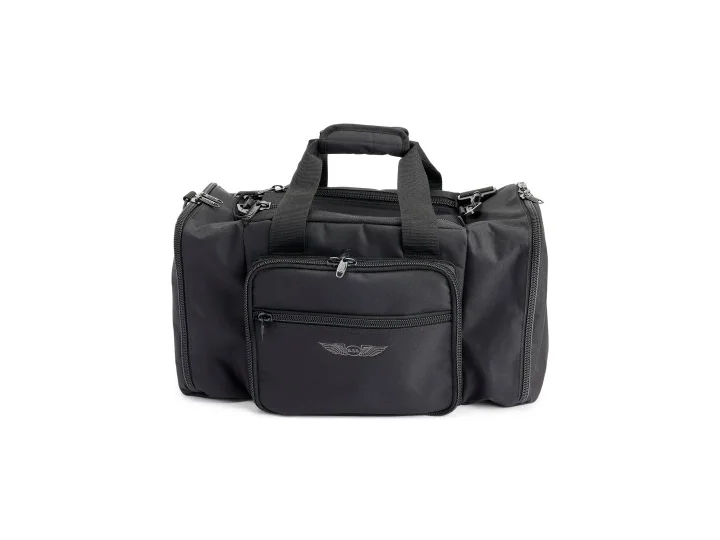 OrganizationASA Flight BagCheck current availability on Amazon (paid link)
At its heart, the process boils down to a few key pillars. You'll need to meet some basic standards, earn a series of licenses and ratings, and log enough flight time to become truly proficient. This roadmap is designed to take you from a curious student to a confident, safe aviator.
The Core Components Of Your Flight Training
I like to compare pilot training to building a house. You can't put up the walls and a roof without first pouring a solid foundation. In aviation, that foundation is made up of three essential parts:
- Eligibility and Medical Fitness: This is the starting line. You have to meet the age, language, and medical requirements before you can even begin.
- Licenses and Ratings: You’ll start with a Private Pilot License and then add more advanced ratings, each one unlocking new privileges and capabilities.
- Flight Hours and Experience: This is where the real learning happens. Logging hours in the air is how you build skill, confidence, and meet the minimums set by regulators.
This step-by-step progression is there for a reason. It ensures every pilot has mastered the fundamentals before moving on, which is what keeps our skies safe. It’s a journey of constant learning where each accomplishment builds directly on the one before it.
Before we dive deeper, here’s a quick overview of the essential requirements you'll encounter on your path to becoming a pilot.
Key Requirements to Become a Pilot at a Glance
| Requirement Category | Key Details | Why It's Important |
|---|---|---|
| Eligibility & Medical | Meet age minimums (e.g., 17 for PPL), be proficient in English, and pass an FAA medical exam. | Establishes a baseline for safety, ensuring you are physically and mentally fit to fly and can communicate effectively. |
| Certificates & Ratings | Progress through licenses like Private Pilot (PPL), Instrument Rating (IR), and Commercial Pilot (CPL). | Each certificate grants specific privileges, from flying for fun to flying for hire, building your skills incrementally. |
| Flight Hours | Accumulate a set number of flight hours for each certificate, including solo and cross-country time. | This is how you gain practical experience, develop decision-making skills, and achieve true proficiency beyond the textbook. |
This table lays out the fundamental building blocks of your training. Each one is a critical waypoint on your journey to becoming a safe and competent pilot.
For those considering a professional career, the outlook is exceptionally strong. The long-term demand for new pilots reflects a fundamental shortage in aviation talent that will persist for years.
Industry experts from around the globe are projecting a need for roughly 300,000 new pilots by 2034 to keep up with the growth in commercial aviation. This isn't just a small trend; the market for pilot training was valued at $7.4 billion in 2024 and is expected to balloon to $14.3 billion by 2030. You can explore more data on surging flight training demand and future pilot needs to see the full scope of the opportunity.
For some, the dream doesn't stop at just flying—it extends to owning the aircraft. While this guide is focused on the training process, it’s good to know that your path as an aviator could one day lead to purchasing your first plane or helicopter. Knowing how to buy an airplane the safe way—from pre-buy inspections to the total cost of ownership—is a vital skill for anyone who sees ownership in their future.
Charting Your Course Through Pilot Certificates and Ratings
Becoming a pilot isn't like flipping a switch; it's more like climbing a ladder. Each certificate and rating you earn is a new rung, granting you more privileges and demanding a higher level of skill. Think of it as your aviation education—each step builds on the last, taking you from basic know-how to true command of an aircraft.
The journey for almost every pilot starts with the Private Pilot License (PPL). This is the foundation of your flying life, the moment you officially transition from passenger to pilot-in-command. Earning your PPL allows you to fly single-engine airplanes in good weather (what we call Visual Flight Rules, or VFR) and even take friends and family along for the ride. You just can't get paid for it.
From Private Pilot to Paid Professional
Once you have your PPL in hand, the next logical move, especially for aspiring career pilots, is the Instrument Rating (IR). If your PPL gives you freedom on sunny days, your Instrument Rating gives you capability when the weather gets less cooperative. You’ll learn to fly the plane solely by referencing your cockpit instruments, allowing you to navigate safely through clouds and low visibility. It’s an essential skill for any professional pilot.
After securing your Instrument Rating, the next major milestone is the Commercial Pilot License (CPL). This is the certificate that officially allows you to fly for hire. While the FAA minimum for a PPL is 40 hours, most people take closer to 75 hours. To get your CPL, you’ll need at least 250 hours of flight time, proving you have a much deeper understanding of the aircraft and can consistently exercise sound judgment.
This chart breaks down the typical path an aspiring pilot follows, from meeting the initial requirements to earning licenses and building flight hours.
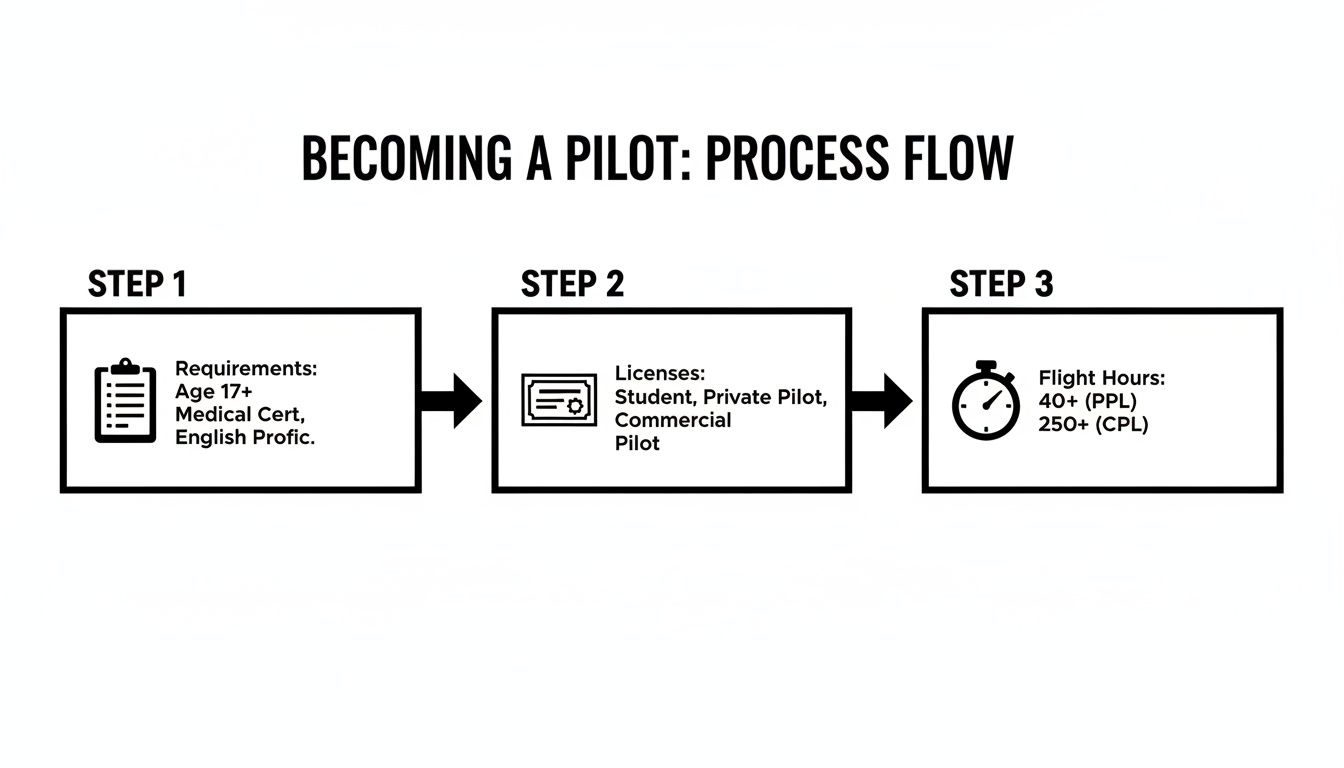
As you can see, the path is a structured progression. Each step is designed to build a solid foundation for the next level of skill and responsibility.
Advanced Qualifications for Career Aviators
Beyond the CPL, pilots can add specialized ratings to their license to open up more career doors. Think of these as endorsements that make you a more versatile and attractive hire.
- Multi-Engine Rating (ME): This one is a big deal. It’s critical for most professional flying jobs, as it qualifies you to fly aircraft with more than one engine—which includes the vast majority of corporate, cargo, and airline planes.
- Certified Flight Instructor (CFI): Becoming a CFI is one of the most popular ways pilots build the flight hours needed for an airline career. You get paid to fly while teaching the next generation of pilots, which is a fantastic way to sharpen your own skills.
The pinnacle of pilot certification is the Airline Transport Pilot (ATP) certificate. This is the PhD of the aviation world. It requires a minimum of 1,500 flight hours and passing a rigorous set of written and practical exams. An ATP certificate is a non-negotiable requirement to fly for a major airline.
Each of these steps represents a significant achievement, and you can dive deeper into what’s involved in our guide on pilot certification levels.
The Four Pillars: What You Really Need to Become a Pilot
Earning your pilot certificates is the "what," but your success really hinges on the "how"—the practical groundwork you lay before you even touch the controls. Think of your training journey like building a house. Before you can put up the walls (your flight skills), you need a solid foundation.
Without this foundation, even the most ambitious training plan can stall. Let’s walk through the four essential pillars that will support your entire path to the cockpit, so you know exactly what it takes to get started.
Pillar 1: Passing Your FAA Medical Exam
Before you can fly an aircraft by yourself (solo), you need to get an FAA Medical Certificate. This isn't just a one-and-done checkup; it's a recurring requirement to ensure you're physically and mentally fit to be a pilot. You'll visit a certified Aviation Medical Examiner (AME) who will check your vision, hearing, heart health, and overall well-being.
There are three main types of medical certificates, each unlocking different flying privileges:
- Third-Class Medical: This is your starting point. It's required for student and private pilots, making it the essential first step for recreational flying. It's also the most straightforward to obtain.
- Second-Class Medical: If you plan to fly for hire—think commercial operations like aerial tours, banner towing, or charter flights—you'll need this certificate.
- First-Class Medical: The gold standard. This is the most stringent medical and is mandatory for anyone aspiring to become an airline transport pilot flying for major carriers.
Don't fall for the myth that you need perfect, 20/20 vision and superhuman health. Many common conditions, like needing glasses or contacts, are completely fine. The best advice? Schedule a consultation with an AME before you invest in flight training. It’s the smartest way to identify and address any potential hurdles right from the start.
Pillar 2: Meeting Age and Legal Requirements
The FAA has clear age milestones for pilots. While you can start taking lessons at any age (seriously, we’ve seen it all!), there are specific minimums for getting licensed. You must be at least 16 years old to fly solo and 17 years old to earn your Private Pilot License. For those aiming for the airlines, the minimum age for an Airline Transport Pilot (ATP) certificate is 23.
Citizenship is another important piece of the puzzle. Most major U.S. airlines require their pilots to be U.S. citizens. However, you don't need to be a citizen to train here. Non-U.S. citizens can absolutely earn their pilot certificates in the United States after getting authorization from the Transportation Security Administration (TSA). This is done through a straightforward background check via the Flight Training Security Program (FTSP).
Pillar 3: Planning Your Financial Investment
Let's be upfront: flight training is a significant financial commitment. The total cost depends entirely on your goals, the type of aircraft you learn in, and how often you can fly. A recreational pilot's journey will naturally be less expensive than the path to an airline career, which involves earning multiple ratings and logging hundreds of flight hours.
This investment is happening within a booming industry. The demand for qualified pilots has driven major growth, with the pilot training market valued at $11.54 billion in 2025 and projected to hit $12.31 billion in 2026. Experts forecast it will grow to $15.86 billion by 2030. If you're interested in the numbers, you can learn about pilot training market forecasts on GlobeNewswire.com to see the trends for yourself.
To give you a clearer picture of what to expect, we've broken down the potential costs and timelines for the most common certificates and ratings.
Estimated Pilot Training Costs and Timelines
This table provides a comparative look at the potential costs and completion timelines for various pilot certificates and ratings, helping you budget your training journey.
| Certificate/Rating | Estimated Cost Range | Typical Full-Time Timeline | Typical Part-Time Timeline |
|---|---|---|---|
| Private Pilot License | $15,000 – $20,000 | 3-4 months | 6-9 months |
| Instrument Rating | $12,000 – $15,000 | 2-3 months | 4-6 months |
| Commercial Pilot License | $25,000 – $30,000+ | 3-4 months | 6-9 months |
| Multi-Engine Rating | $5,000 – $8,000 | 1-2 weeks | 1-2 months |
| Certified Flight Instructor (CFI) | $8,000 – $12,000 | 1-2 months | 3-4 months |
These are estimates and can vary based on individual progress, aircraft choice, and training frequency. The Commercial Pilot cost often includes time-building to reach the required flight hours.
Pillar 4: Committing the Necessary Time
The final, and perhaps most crucial, pillar is your time. Consistency is the secret sauce to efficient, cost-effective training. Think of it like learning a musical instrument—practicing for 30 minutes three times a week is far more effective than one long, three-hour session every two weeks.
Flying regularly, ideally two or three times a week, keeps the knowledge fresh and your muscle memory sharp. This rhythm prevents you from spending valuable lesson time re-learning what you covered last time.
A full-time student aiming for a professional career can often go from zero to a Commercial Pilot in about a year. A part-time student balancing training with a job or school might take 18 to 24 months for the same certifications. The more consistently you can fly, the smoother and faster your progress will be.
Choosing Your Cockpit: Fixed-Wing vs. Helicopter Training
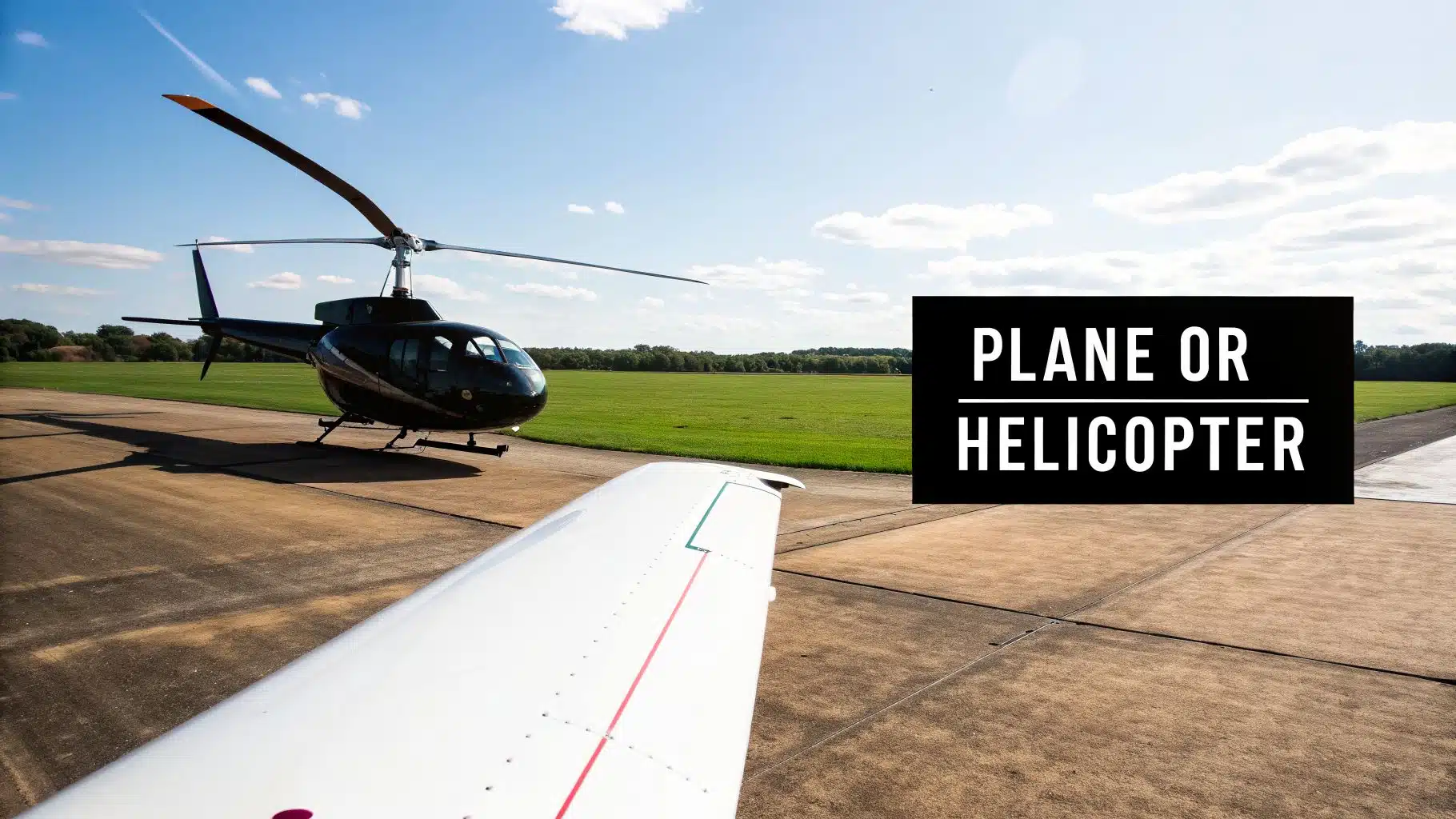
One of the first big questions every new pilot faces is: do I want to fly airplanes or helicopters? Your answer will shape your entire aviation journey, from the skills you'll learn to the career paths that open up. Think of it like deciding between a race car and a heavy-duty off-road truck—both are amazing machines, but they get you to very different places in very different ways.
An airplane (or "fixed-wing" aircraft) is all about forward motion. Its engine propels it through the air, forcing air to flow over the wings, which in turn creates lift. Helicopters, however, create lift by spinning a set of rotor blades on top. This fundamental difference in physics is what makes flying them feel like two completely separate worlds.
Understanding the Different Flight Dynamics
Flying a fixed-wing plane like a Cessna or Piper is a fantastic lesson in energy and aerodynamics. You’re managing the aircraft across three axes—pitch, roll, and yaw—with a yoke (or stick) and rudder pedals. The controls feel fairly intuitive, and once you’re trimmed out at cruising altitude, the plane can be incredibly stable.
Helicopter training, on the other hand, is an exercise in continuous, fine-tuned control. The pilot is constantly managing the collective (for up and down), the cyclic (for forward, back, and side-to-side), and the anti-torque pedals (to keep the fuselage from spinning). There's a reason pilots say learning to hover a helicopter is one of the hardest things in aviation—it’s a bit like balancing on a yoga ball while juggling.
For many pilots, the dream doesn't stop at just flying; it's about owning their own aircraft. Whether you're picturing a sleek airplane or a versatile helicopter in your hangar, knowing the market is key. The path to ownership involves matching the machine to your mission, navigating pre-buy inspections, and understanding the true cost of operation.
Buying an aircraft isn't like buying a car. You really have to learn how to buy an airplane the safe way, which involves in-depth research and expert help to make a smart investment. The same is true for helicopters, though their mechanical complexity often means higher maintenance costs.
Comparing Career Paths and Training Costs
Your choice of cockpit has a huge impact on your career options and what you’ll spend on training. Fixed-wing training is the classic route if your goal is the airlines. That career is highly structured, involving a clear path of building flight time toward the 1,500-hour ATP certificate and moving from regional carriers to the majors.
Helicopter careers are incredibly diverse and specialized. These pilots get to do jobs that airplanes simply can't touch:
- Emergency Medical Services (EMS): Flying critically ill patients from accident scenes or between hospitals.
- Search and Rescue (SAR): Performing life-saving missions in rugged mountains, over open water, and in disaster areas.
- Aerial Tourism: Giving passengers breathtaking views of city skylines, canyons, and other natural wonders.
- Utility and Construction: Helping with power line maintenance, heavy-lift operations, and aerial surveying.
Of course, this amazing versatility comes with a higher price tag. Helicopter training is significantly more expensive per hour because of higher fuel consumption, more complex mechanics, and steeper insurance rates. A private pilot certificate in a helicopter can easily cost two to three times more than the airplane equivalent.
Here at DuBois Aviation, our fleet includes both Robinson and Enstrom helicopters, giving students a firsthand feel for these differences. The absolute best way to know which type of flying is right for you is to take a discovery flight in each. You'll quickly discover which cockpit truly speaks to you before you commit to a full training program.
Gaining Your Strategic Advantage at the Right Flight School
Knowing what it takes to become a pilot is one thing, but choosing the right partner to get you there is a whole different ballgame. Your flight school isn’t just a place to log hours—it’s where you’ll build the foundation for your entire flying career. The right school gives you a genuine advantage that goes far beyond just having access to an airplane.
Think of it like joining a race team. You don't just need a fast car; you need seasoned coaches, a reliable pit crew, and a track that pushes you to be better. In aviation, that means finding a school with a proven curriculum, skilled instructors, and an environment that prepares you for real-world flying from your very first day.
More Than Just a Runway
The airport you train at has a massive impact on your skills and confidence. Learning at a quiet, uncontrolled field is fine, but training at a busy, towered airport like Chino Airport (KCNO) is like learning to drive in city traffic instead of an empty parking lot. It forces you to get comfortable with complex airspace and professional radio communication right from the start.
That constant exposure to Air Traffic Control (ATC) and a mix of other aircraft builds a kind of muscle memory that you just can't get from a book. When pilots trained in this environment face busy airspace later on, it's just another day at the office. This experience is a key part of becoming a pilot who is calm, cool, and collected under pressure.
The Power of a Strong Support System
A flight school is only as good as its support structure. One of the biggest, and most overlooked, advantages is having an in-house maintenance team. This means the aircraft aren't just safe—they're consistently available. You'll avoid the frustrating delays and cancellations that can completely throw off your training schedule.
A diverse and well-maintained fleet is also critical. A school that offers everything from basic trainers like the Cessna 150 to complex, multi-engine aircraft like the Piper Apache gives you a clear path forward. You can move seamlessly from one certificate to the next without having to change schools or get used to a whole new system.
The ultimate goal for many aspiring pilots is a seat at the airlines, and the industry is hiring. Major U.S. carriers have projected aggressive recruitment targets for 2026 and beyond, with some discussing near-record hiring levels.
For instance, American Airlines is targeting around 1,500 pilot hires, and United Airlines is looking at hiring nearly 2,500 pilots. With a wave of mandatory retirements on the horizon—the National Air Carrier Association estimates over 16,000 pilot retirements in the next five years—the opportunities for well-trained pilots are better than ever. You can see a full breakdown in this 2026 airline pilot hiring outlook.
From Student to Professional
The best flight schools don't just hand you a license; they show you a clear pathway to a career. A structured Airline Career Program, led by instructors who have been there themselves, provides a direct route from zero hours to the right seat of an airliner. These programs are designed to build the specific skills and flight time that airlines are actively looking for.
Choosing where to train is one of the most important decisions you'll make. To help you weigh your options, we put together a detailed guide on how to choose a flight school. It gives you a practical checklist to make sure you find a partner that truly fits your goals and sets you up for success from day one.
Beyond the Checkride: How to Buy Your First Aircraft Safely
Passing your checkride is an incredible feeling. But for many pilots, that new license isn't the finish line—it's the key that unlocks the ultimate dream of aircraft ownership. Suddenly, you have the freedom to fly wherever you want, whenever you want, in a machine that's truly yours.
This next step, however, involves a completely different kind of expertise. Buying an airplane or helicopter is less about stick-and-rudder skills and more about careful planning, deep research, and serious due diligence. It's an exciting journey, but you have to approach it with the same discipline you'd use for a pre-flight checklist to avoid some very expensive missteps.
Define Your Mission Before You Shop
Before you even think about browsing listings, you have to get brutally honest with yourself and define your mission. What are you actually going to do with this aircraft? Your answer here will shape every single decision you make, from the models you consider to the budget you can afford.
Ask yourself the hard questions:
- Typical Flights: Are you planning on fun, local $100-hamburger runs, or are you dreaming of loading up the family for long cross-country trips?
- Passenger Load: How many seats do you really need? There's a world of difference between a nimble two-seater and a six-place family hauler.
- Performance Needs: Will you be flying out of short, grass strips, or sticking to long, paved runways at major airports?
With a clear mission profile, you can start to filter the massive market down to a manageable list of aircraft that genuinely fit your life. It's easy to get distracted by a sleek, fast plane, but if your primary mission is sightseeing, a slower, more stable aircraft will probably serve you better—and be a lot cheaper to operate.
Understanding the Total Cost of Ownership
The sticker price is just the tip of the iceberg. This is probably the biggest trap first-time buyers fall into: they completely underestimate the total cost of ownership. Your budget needs to go way beyond the initial purchase.
A safe and successful purchase hinges on a comprehensive budget. Beyond the sale price, you must account for insurance, hangar or tie-down fees, routine maintenance, fuel, and a reserve fund for unexpected repairs or mandatory airworthiness directives.
These ongoing expenses are the reality of aircraft ownership. Insurance rates can swing wildly based on the aircraft model and your flight hours. Likewise, the maintenance for a complex helicopter will be orders of magnitude higher than for a simple fixed-wing trainer. To get a handle on what you're walking into, you need to understand the market. You can explore a detailed guide that explains how to buy an airplane the safe way to make sure you've covered all your financial bases.
The All-Important Pre-Buy Inspection
Let me say this as clearly as possible: never, ever skip a thorough pre-buy inspection. And it absolutely must be done by a trusted, independent mechanic who knows that specific make and model inside and out. This is, without a doubt, the single most important step in protecting yourself.
A pre-buy is not an annual inspection. It's a deep, forensic dive into the airframe, engine, avionics, and—critically—the logbooks. A good mechanic will find the hidden issues that could easily cost you tens of thousands of dollars later. They'll verify the maintenance history is complete, check for compliance with all Airworthiness Directives, and give you an unvarnished report on the aircraft's true condition.
Think of it this way: the cost of a pre-buy inspection isn't an expense; it's the cheapest insurance you'll ever buy.
Common Questions on the Path to Becoming a Pilot
Starting the journey to become a pilot always kicks up a lot of questions. It's completely normal. From college degrees to financing and medical fitness, getting straight answers is the first real step toward the cockpit. Let's tackle some of the most common questions we hear from aspiring pilots just like you.
Do I Need a College Degree to Become an Airline Pilot?
This is a big one, and the answer has changed a lot recently. While a college degree used to be a major checkmark for the big airlines, today’s pilot shortage has shifted the focus. Now, it's all about flight hours, advanced ratings, and a solid training record. Airlines are looking for proven stick-and-rudder skills and experience first and foremost.
Does a degree still help? Sure. It can be a tie-breaker between two pilots with similar qualifications. But here’s the bottom line: it is no longer the strict barrier it once was. The fastest, most direct route to an airline job is through dedicated, high-quality flight training that gets you the experience you need.
How Can I Realistically Finance My Pilot Training?
Let's be honest: flight training is a significant investment. But it’s an achievable one with the right strategy. Very few people pay for it all in one lump sum. Instead, they get creative.
Here are a few of the most common ways students fund their dream:
- Personal Savings: Some students work and save up a nest egg before they even take their first flight.
- Aviation-Specific Loans: Specialized lenders like AOPA Finance understand the unique costs of training and offer products designed for student pilots.
- Working While Training: It’s incredibly common for students to hold down a job and train part-time, fitting lessons in on evenings and weekends.
- Pay-As-You-Go: The best flight schools let you pay for each lesson as you complete it. This keeps you in control of your finances and prevents you from taking on a mountain of debt before you even start.
Am I Disqualified If I Don't Have Perfect Vision?
Absolutely not. This is probably one of the biggest myths in aviation. The FAA’s medical standards are far more practical than people realize. They fully permit the use of corrective lenses (glasses or contacts). As long as your vision can be corrected to the required 20/20 standard, you're good to go.
Many other medical issues can also be managed through a Special Issuance (SI) medical certificate. The most important thing you can do is book a consultation with an FAA-designated Aviation Medical Examiner (AME) before you invest heavily in training. An AME will give you a clear, official assessment and explain any steps you might need to take.
For many, the ultimate expression of a pilot's freedom is owning their own aircraft. Whether you're interested in buying or selling an airplane or helicopter, the process requires careful navigation. Understanding how to buy an airplane the safe way, from pre-buy inspections to total cost of ownership, is a critical skill for any pilot considering ownership.
How Long Does It Take to Get an Airline Job from Zero Experience?
The timeline really boils down to how much time you can dedicate. A motivated, full-time student can realistically earn all their licenses and ratings—from Private Pilot to Commercial and Flight Instructor—in about 12 to 18 months.
Once you have your instructor certificates, the next phase is building flight time to meet the 1,500 hours required for the Airline Transport Pilot (ATP) certificate. The most common way to do this is by working as a flight instructor. That chapter of your journey typically takes another 1.5 to 2 years. All in, you’re looking at a realistic timeline of 3 to 4 years from your first lesson to your first airline job.
Ready to take the first step and find out what it takes to become a pilot? At DuBois Aviation, we offer personalized flight training for airplanes and helicopters, guided by experienced instructors in a real-world airport environment. Start your journey today by visiting https://duboisaviation.com.