When people talk about becoming a pilot, they often use "commercial pilot" and "airline pilot" as if they're the same thing. While they're related, they represent very different stages and career paths in the aviation world.
Let's clear up the confusion.
Two practical options worth comparing
These are specific products pilots commonly compare for this type of flying. Confirm compatibility with your aircraft and instructor before ordering.
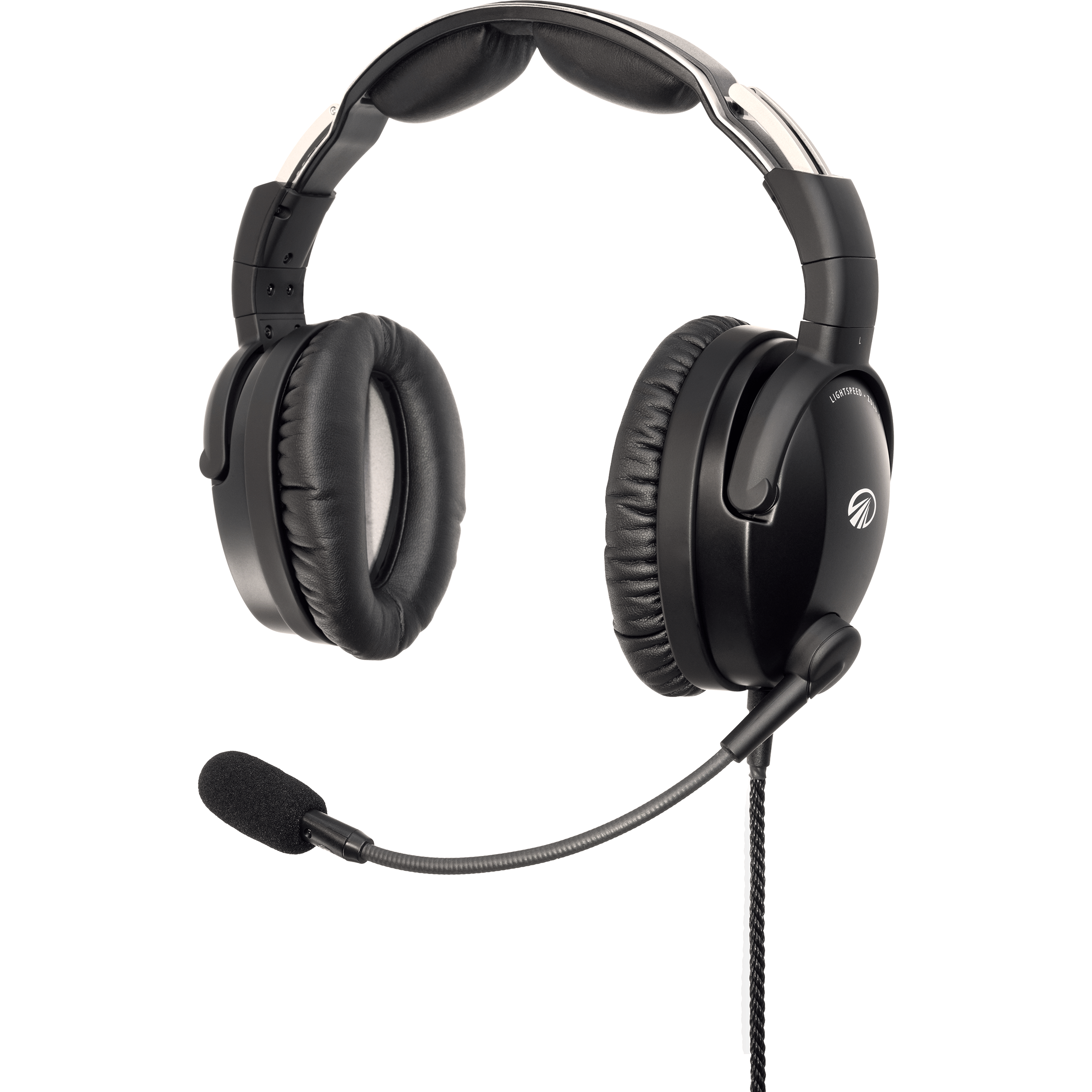 Premium ANR headsetLightspeed Zulu 4 ANR Aviation Headset - Dual GA PlugCheck current availability on Amazon (paid link)
 Premium headsetBose A30 Bluetooth Aviation Headset - Dual PlugCheck current availability on Amazon (paid link)
Understanding The Pilot Career Distinction
Think of "commercial pilot" as a broad professional title, like being a "doctor." An airline pilot, on the other hand, is a specialist within that field, much like a "neurosurgeon" is a specific type of doctor. The real difference comes down to the license you hold and the job you do.
The first major step in any professional flying career is earning a Commercial Pilot License (CPL). This is the foundational certificate that legally allows you to get paid for flying an aircraft. It’s a huge achievement, but it doesn't mean you can walk into an interview at Delta or United just yet. You can learn more about the CPL journey in our guide on how to become a commercial pilot.
With a CPL, a whole world of non-airline flying jobs opens up. Many pilots build fascinating and fulfilling careers in roles like:
- Charter Pilot: Flying private jets for individuals or small groups on their schedule.
- Aerial Photographer or Surveyor: Operating specialized aircraft for mapping, surveying, or photography missions.
- Flight Instructor: The classic path for building hours by training new student pilots.
- Corporate Pilot: Flying executives and staff for a single company.
An airline pilot is a commercial pilot who has taken the next, more demanding step: earning an Airline Transport Pilot (ATP) certificate. This is the highest level of pilot certification issued by the FAA. It requires far more experience—typically 1,500 flight hours—and a much deeper understanding of complex aircraft systems and airline operations.
The ATP certificate is the non-negotiable ticket to fly for a scheduled passenger or cargo airline.
In short: The CPL gets you into the world of professional flying. The ATP certificate is the specific key that unlocks the cockpit door at an airline.
Pilot Career Snapshot
To put it all in perspective, here’s a quick breakdown of the core differences between a general commercial pilot and a dedicated airline pilot. This table simplifies the key distinctions at a glance.
| Characteristic | Commercial Pilot (General) | Airline Pilot (Specialized) |
|---|---|---|
| Primary License | Commercial Pilot License (CPL) | Airline Transport Pilot (ATP) Certificate |
| Minimum Hours | Approx. 250 flight hours for CPL | Approx. 1,500 flight hours for ATP |
| Job Scope | Diverse roles (charter, instruction, corporate) | Scheduled passenger or cargo transport for an airline |
| Career Path | Varied and often entrepreneurial | Highly structured and based on seniority |
Ultimately, every airline pilot starts as a commercial pilot, but not every commercial pilot chooses the airline path. The right choice depends entirely on your personal and professional goals.
Navigating Pilot Training and Certification
Every professional pilot's journey from the ground up follows a very structured path. Whether your dream is to fly for a major airline or to tackle specialized commercial missions, you'll start on the exact same runway. The first big milestone is earning your Private Pilot License (PPL), which is the foundational ticket that lets you fly solo and for fun.
From there, you’ll need an Instrument Rating (IR). This isn't optional for a pro career; it's the training that allows you to fly safely through clouds and poor weather, relying entirely on your cockpit instruments. Once you have those two under your belt, the next goal is the Commercial Pilot License (CPL), which requires at least 250 flight hours. This is the license that officially allows you to get paid for flying.
The Great Divergence After the CPL
This is where the path splits. Holding a fresh CPL opens the door to many commercial jobs right away—think aerial photography, pipeline patrols, or flying local air tours. For these roles, the CPL is your primary ticket to start working and gaining real-world experience.
But if you’re aiming for the airlines, the CPL is just a checkpoint on a much longer journey. The ultimate goal for an aspiring airline pilot is the Airline Transport Pilot (ATP) certificate.
The ATP certificate is the highest level of pilot certification in the United States and is a mandatory requirement to fly for a scheduled airline. The primary hurdle to obtaining it is the FAA-mandated 1,500 hours of total flight time.
This visual shows how all airline pilots begin their journey as commercial pilots before advancing.
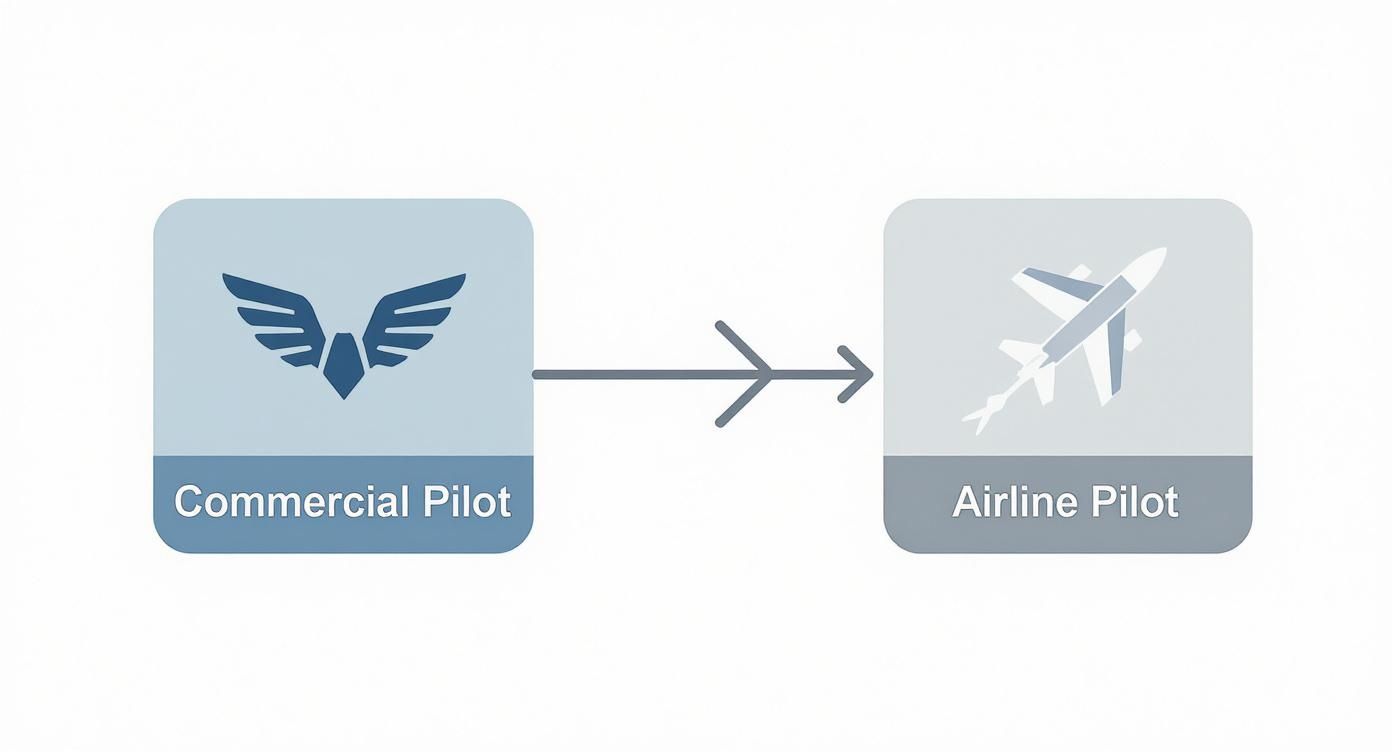
As you can see, becoming an airline pilot is a specialization that builds directly on the commercial pilot foundation.
So, how do you get from the 250 hours required for a CPL to the 1,500 hours needed for an ATP? You have to build flight time. The most well-trodden path is becoming a Certified Flight Instructor (CFI), which lets you teach new pilots while logging hours yourself. Other common hour-building gigs include:
- Banner towing
- Flying skydivers
- Aerial survey flights
This "time-building" phase is a crucial part of a pilot's career development. For a deeper dive into this process, you can explore the specifics of how to become an airline pilot in our dedicated guide. Ultimately, deciding whether to build a career with a CPL or push forward for the ATP is the fundamental difference between these two career tracks.
Comparing the Daily Life of a Pilot

This is where the rubber really meets the runway. The day-to-day grind—or adventure—is what truly separates these two career paths. An airline pilot's life is built on a foundation of structure and predictability, whereas a commercial pilot's world is often defined by its sheer variety and the need to be flexible.
For an airline pilot, the workday is a well-oiled machine that kicks into gear long before the wheels leave the ground. It begins with a meticulous pre-flight briefing, huddling with the first officer and flight attendants to go over weather reports, flight plans, and critical safety procedures. Their schedules are often set weeks, sometimes months, in advance, laying out exactly which cities they'll be flying to and how many nights they’ll be living out of a suitcase.
The essence of an airline pilot’s job is consistency. It’s about following Standard Operating Procedures (SOPs) to the letter, flying familiar routes in the same type of aircraft, and ensuring a safe, predictable journey for hundreds of people at a time.
This highly structured environment might see a pilot fly three or four legs in a single day. The day often wraps up with a planned overnight layover in another city before they reset and do it all again.
The Dynamic World of Commercial Aviation
On the other side of the hangar, a general commercial pilot might tell you there's no such thing as a "typical" day. Their schedule is a direct response to client demands, a shifting weather forecast, or the specific needs of whatever niche they work in. This career demands a ton of autonomy and a more entrepreneurial, "roll with the punches" mindset.
One morning could be spent conducting an aerial photography mission over a new construction site. By the afternoon, they might get a call for an on-demand charter, flying a team of executives to a last-minute meeting three states away. The job board is incredibly diverse.
Other common gigs include:
- Flight Instruction: Spending hours in the traffic pattern, patiently guiding student pilots.
- Pipeline Patrol: Flying low and slow over remote terrain, scanning for infrastructure issues.
- Helicopter Tours: Giving tourists a bird's-eye view of local landmarks.
For a pilot in the charter world, the phone can ring at any moment with a new assignment. While that brings an undeniable level of excitement and kills any chance of monotony, it can also make scheduling a personal life a real challenge. The crew is usually much smaller—sometimes it’s just the pilot—and you're interacting directly with the client, not a massive airline operations center.
In the end, it boils down to what you want your life to look like. The airline pilot finds satisfaction in precision and a well-defined structure. The general commercial pilot, on the other hand, thrives in a fast-paced environment where no two days are ever the same.
Pilot Salary and Earning Potential
When it comes to your paycheck, the worlds of airline and commercial flying couldn't be more different. Both paths can lead to a great living, but the airline career is built on a highly structured, almost predictable ladder of seniority and pay raises. This often leads to some of the biggest paychecks in the entire aviation industry.
On the other hand, a commercial pilot's income is much more fluid. Your earnings are directly tied to the specific job you're doing, who you're working for, and the current market demand for your skills.
How Airline Pilots Get Paid
For an airline pilot, pay is all about the union contract. These agreements lay out a very clear pay scale, usually based on an hourly rate for your flight time, with a guaranteed minimum number of hours each month. It’s a transparent system where your pay is influenced by a few key things:
- Seniority: This is everything at an airline. The longer you’re there, the more you make and the better your schedule gets.
- Aircraft Type: Flying a massive Boeing 777 on international routes pays a lot more than flying a smaller regional jet. Bigger plane, bigger paycheck.
- Rank: Captains earn significantly more than First Officers. It's the ultimate goal for most.
This structure means a first-year regional pilot might start out with a fairly modest salary. But as they gain experience and move up to a major airline, their earning potential skyrockets.
How Commercial Pilots Get Paid
For commercial pilots flying outside the major airline system, pay structures are all over the map. A corporate pilot for a Fortune 500 company might enjoy a handsome annual salary. A charter pilot, however, could have a base salary supplemented by a per-flight or per-day rate.
Then you have flight instructors, who are typically paid by the hour. Their income can swing wildly depending on student schedules and whether the weather cooperates for flying.
The biggest difference comes down to predictability versus variability. Airline pilots are on a clear, upward financial track defined by seniority. Commercial pilots have more diverse income streams, where success often depends on their hustle, niche expertise, and the health of their specific market sector.
The earning potential in the airline world is massive right now. As of 2025, the median annual wage for airline pilots in the U.S. is around $226,600. It's easily one of the most lucrative careers in aviation.
Sure, a new first officer might start between $60,000 and $90,000, but that’s just the beginning. Senior captains at major airlines can pull in salaries well over $400,000 a year, with some top-tier veterans exceeding $700,000.
Compare that to the median salary for commercial pilots, which sits around $122,670, and you can see the powerful financial pull of an airline career. For a deeper dive, you can explore detailed industry reports that break down pilot salary trends and their influencing factors.
Ultimately, it’s a financial trade-off. The airline career often means a slower start but leads to a much higher long-term income. A general commercial pilot career can get you into a paying cockpit faster, but your income ceiling is often lower and less certain—unless you get into owning your own aircraft or starting a business.
Career Progression and Industry Outlook
When you're weighing a future as a commercial vs. airline pilot, the long-term career trajectory is one of the biggest differentiators. The airline world is highly structured and linear, almost like a ladder you climb rung by rung. In contrast, the broader commercial field is more like an open map, offering a varied and often entrepreneurial journey.
For an airline pilot, career progression is a predictable climb based almost entirely on seniority. You’ll almost certainly start as a First Officer at a regional airline, flying smaller jets on shorter routes. After a few years, you'll upgrade to Captain. The big leap is getting hired by a major airline like American, United, or Delta—a move that brings a significant jump in pay, bigger aircraft, and international routes.
You can get a deeper look into this structured journey in our detailed guide on the airline pilot career path.
Diverse Commercial Pilot Trajectories
On the other hand, a commercial pilot's career can shoot off in countless directions. There's no single "right" path. After earning your CPL, you might find a niche you love and build a reputation there for decades.
This career demands more self-direction but pays off with incredible variety. Some of the pathways include:
- Corporate Aviation: Flying business jets for a company's executive team, often on demanding schedules to interesting destinations.
- Specialized Operations: Becoming a subject matter expert in roles like aerial firefighting, agricultural spraying, or emergency medical services (EMS).
- Business Ownership: Many commercial pilots eventually launch their own operations, like a flight school, a charter service, or an aerial tour company. This path offers ultimate autonomy and puts you in direct control of your career and financial success.
Industry Demand and Job Security
The good news is that the outlook for pilots is strong across the board. Projections show a steady 4% employment growth for pilots between 2024 and 2034. That translates to roughly 18,200 job openings each year.
This demand isn't just from growth; it's largely driven by a wave of retiring pilots creating vacancies. This consistent turnover provides a solid degree of job security for anyone entering the field today. For a granular look at the numbers, you can explore the full report from the Bureau of Labor Statistics.
Ultimately, both career tracks offer lasting and fulfilling opportunities, but they cater to very different personalities and professional ambitions.
A Guide to Buying Your First Aircraft
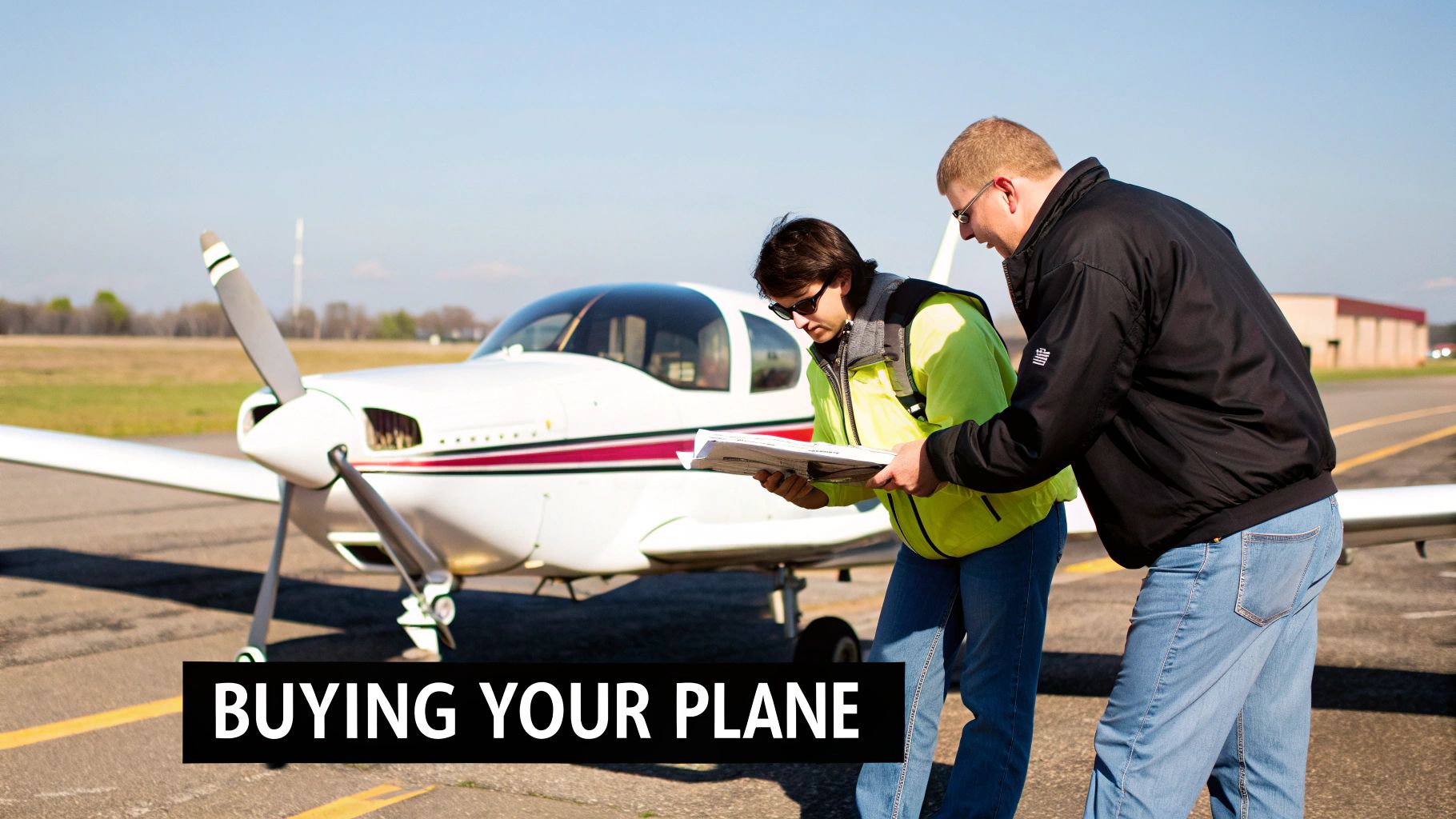
For a commercial pilot with an entrepreneurial streak, owning your own airplane or helicopter can feel like the ultimate career move. It's more than just a passion project; it's a business asset that opens up entirely new possibilities. From offering flight instruction to running your own charter service, ownership gives you a level of freedom and control that you just don't get as an airline pilot.
But let's be clear: buying an aircraft is a major undertaking, and it’s littered with potential traps for the unprepared. You absolutely have to approach it with a solid, well-thought-out strategy to do it the safe way.
It all starts with defining your mission. What, exactly, will this aircraft be doing? Is it going to be the main training bird for a flight school? Or maybe a versatile workhorse for on-demand charter flights? Perhaps you need something specialized for aerial survey or photography work. Your answer to that question drives every other decision, from the type of aircraft you choose to setting a realistic budget for the purchase and all the ongoing operational costs.
The Critical Pre-Purchase Inspection
After you've found a promising candidate, the next step is the single most critical part of the entire process: the pre-purchase inspection. We call it a "pre-buy" in the industry, and it is absolutely essential.
This isn't a job for the seller's mechanic, and it's not a casual look-over from a buddy who knows a thing or two about planes. You need to hire your own independent, trusted Airframe and Powerplant (A&P) mechanic—ideally, someone who has deep, hands-on experience with the specific make and model you're considering.
A thorough pre-buy is non-negotiable. It is your best defense against discovering hidden, costly issues like corrosion, undocumented damage history, or components nearing their expensive overhaul limits. The cost of a detailed inspection is a tiny fraction of what a major surprise repair could cost down the line.
Your A&P won't just look at the aircraft itself; they'll also dig deep into its paper trail, which is every bit as important as the physical condition.
Verifying the Paperwork
An aircraft's true value—and its airworthiness—is written in its maintenance logs. These documents tell the complete story of the aircraft's life, and you need to review them with a fine-tooth comb.
Here’s what you and your mechanic should be looking for:
- Complete Logbooks: Every logbook, from the day the aircraft rolled off the factory floor, must be present. Missing logs are a massive red flag.
- Airworthiness Directives (ADs): You must verify that all mandatory FAA safety directives have been completed and, crucially, properly documented.
- Damage History: Scour the records for any mention of repairs from accidents or incidents. If you find any, you need proof that the repairs were done correctly and meet all FAA standards.
Finally, always run a title search. This confirms that the seller legally owns the aircraft and that there are no hidden liens against it. Once all these boxes are checked, you can confidently move forward with the final sale and FAA registration, securing a powerful asset for your future in commercial aviation.
Frequently Asked Questions About Pilot Careers
When you're weighing the differences between a commercial vs. airline pilot, a lot of questions pop up. Let's tackle some of the most common ones we hear from aspiring pilots to help you get a clearer picture of your future in the cockpit.
Can a Commercial Pilot Become an Airline Pilot Later?
Yes, and that's exactly how it works. Think of the Commercial Pilot License as a mandatory stepping stone on the path to becoming an airline pilot. In fact, most pilots start their careers in commercial aviation roles—like flight instructing or flying for charter companies—to build up the 1,500 flight hours the FAA requires for an Airline Transport Pilot certificate.
This isn't just about logging time. Airlines value this experience immensely because it proves you have the practical skills and sharp decision-making needed for real-world operations.
Which Career Path Offers a Better Work-Life Balance?
This is a classic "it depends" scenario, and it really comes down to what you value most. The life of an airline pilot is highly structured, with schedules often set months in advance. The trade-off is that you'll spend a good number of nights on layovers, away from home.
A commercial pilot flying local aerial tours, on the other hand, might be home every single night. The catch? Their schedule can be unpredictable, swinging with the weather, client bookings, or the season. Corporate and charter pilots often land somewhere in the middle, facing periods of being on-call followed by chunks of days off.
What Is the Very First Step to Start a Pilot Career?
Your first real move is to book a discovery flight at a quality flight school. It's a low-commitment way to get in the cockpit with an instructor, take the controls, and see if flying is truly for you before you invest serious time and money.
If that flight sparks a fire, the next official step is getting an FAA medical certificate from an Aviation Medical Examiner. You'll need this certificate in hand before you can legally fly solo, which is a key milestone on your journey to earning a Private Pilot License—the foundation for every other rating you'll ever get.
Ready to see if a pilot career is your true calling? At DuBois Aviation, we specialize in guiding new pilots from that first discovery flight all the way to their professional ratings. Explore our flight training programs today.