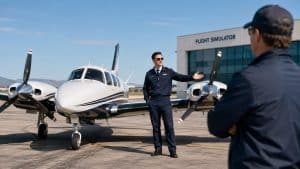

Earning your wings to fly professionally isn't a single leap; it's a well-defined progression for any dedicated student. The journey starts with a Private Pilot License, builds with an Instrument Rating, and culminates in the Commercial Pilot License, which finally lets you fly for hire. For those aiming for a career as an airline pilot or a specialized helicopter pilot, this path demands serious dedication, a lot of time in the cockpit, and passing a series of tough written and practical exams.
Your Flight Plan to an Airline or Helicopter Career
Two practical options worth comparing
These are specific products pilots commonly compare for this type of flying. Confirm compatibility with your aircraft and instructor before ordering.
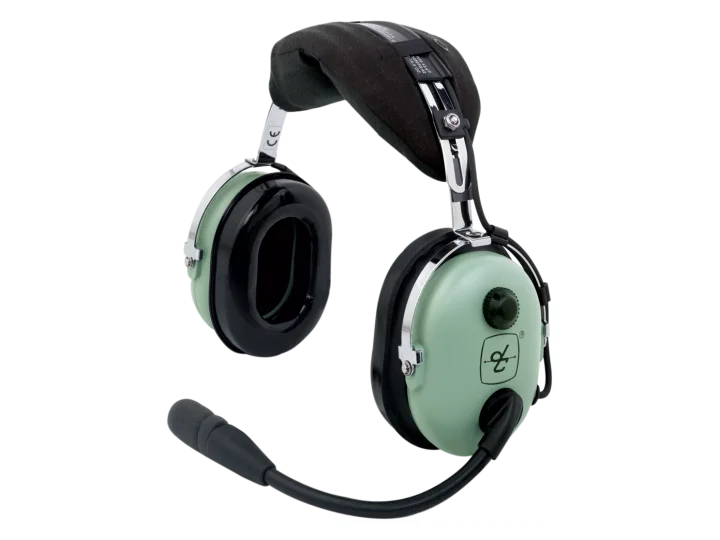 Student headsetDavid Clark H10-13.4 Aviation HeadsetCheck current availability on Amazon (paid link)
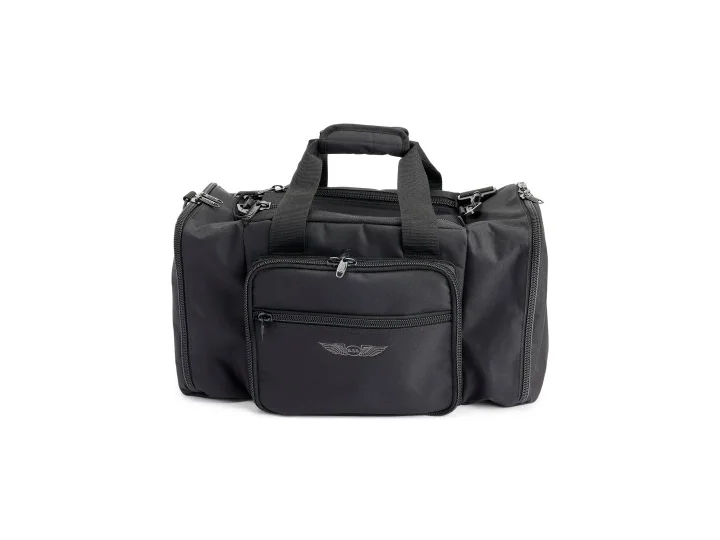 OrganizationASA Flight BagCheck current availability on Amazon (paid link)
So, you're a student dreaming of a career in the cockpit. That's the first step on what is truly an incredible journey. Whether you see yourself flying for a major airline or piloting a helicopter on a specialized mission, the path from student to professional is built on a solid foundation of training, discipline, and, most importantly, passion. This guide is your roadmap, breaking down exactly how to become a commercial pilot for both airplanes and helicopters, with a focus on flight training for students.
We’re going to cover everything—from the first licenses you'll need and how to plan financially, all the way to the strategic career moves that will set you up for long-term success. This is about more than just logging hours; it's about building a profession in a dynamic industry that's always on the move.
The timing couldn't be better. The demand for skilled aviators is climbing, creating real opportunities for anyone starting their training right now. The global pilot training market, recently valued at $9.37 billion, is projected to climb to an incredible $24.86 billion by 2032. This isn't just a random number; it reflects booming air travel demand and a critical need to replace a whole generation of retiring pilots. You can dig deeper into these pilot training market statistics to see just how strong the industry's future looks.
Airplane vs Helicopter Training Paths for Students
While both paths lead to a commercial license, the flight training, job markets, and day-to-day realities are worlds apart. Deciding which aircraft to focus on is one of the first and most critical decisions a student pilot will make, as it will shape your entire career. One of the first things to nail down is where you'll train; our guide on how to choose a flight school can point you in the right direction.
To give you a clearer picture, let's look at a side-by-side comparison.
Pilot Career Path Snapshot Airplane vs Helicopter
| Aspect | Commercial Airplane Pilot (Airline Focus) | Commercial Helicopter Pilot |
|---|---|---|
| Primary Career Goal | The traditional path for students often leads to regional, then major, airlines. | A huge variety of roles in EMS, tourism, law enforcement, and utility work. |
| Core Training Focus | Mastery of cross-country navigation, instrument flight rules (IFR), and multi-engine operations. | Precision skills like hovering, autorotations, and confined area landings. |
| Typical Entry-Level Job | Usually a Certified Flight Instructor (CFI) to build flight hours toward the 1,500-hour ATP requirement for airlines. | Often starts as a tour pilot, agricultural pilot, or in electronic news gathering (ENG). |
| Aircraft Progression | Students move from single-engine trainers to multi-engine aircraft and, eventually, jetliners. | Students will likely progress from piston trainers (like the R22) to larger, more powerful turbine helicopters. |
This table really highlights how different the two worlds are. An airline pilot's career is often a linear progression, while a helicopter pilot's career can branch into dozens of specialized, hands-on industries.
Articles for Students Looking to Buy or Sell Airplanes and Helicopters
Some student pilots consider owning an aircraft to build hours more efficiently. For people looking to buy or sell airplanes and helicopters, it's a massive investment that needs to be approached carefully. A safe purchase is about much more than finding a good price; it involves a meticulous, well-planned process.
The single most important step in any aircraft purchase is a comprehensive pre-buy inspection. Don't skip this. Have an independent, trusted mechanic conduct it—it can save you from disastrously expensive repairs and ensure the aircraft is truly airworthy.
This process involves clearly defining your mission, setting a realistic budget that accounts for insurance and hangar fees, and understanding all the critical legal and maintenance paperwork. We'll dive into exactly How to Buy an airplane the safe way later in this guide, making sure your investment is a sound one.
Earning Your First Set of Wings as a Student Pilot

Before you can dream of a career as an airline or helicopter pilot, you have to nail the fundamentals. This is where your journey truly begins, transforming you from an aviation enthusiast into a genuine aviator. And it all kicks off not in a cockpit, but in a doctor’s office.
First, Secure Your Aviation Medical Certificate
Your very first move as a student, before you spend a single dollar on flight lessons, should be getting an Aviation Medical Certificate. This isn't just a suggestion; it's a hard requirement. An FAA-certified Aviation Medical Examiner (AME) will give you a physical to make sure you're medically fit to fly.
Getting this out of the way early is a critical strategic move. Can you imagine investing thousands of dollars and months of your life into flight training, only to find out you have a disqualifying medical condition? Getting your medical certificate upfront confirms you’re good to go and prevents a world of potential heartbreak and wasted money.
While you'll eventually need a First-Class medical for a career as an airline pilot, a Third-Class certificate is all a student needs to start private pilot training.
Master the Basics with a Private Pilot License
With your medical certificate secured, you can officially start training for your Private Pilot License (PPL). This is the bedrock certification for every pilot, whether you're learning to fly airplanes or helicopters. A PPL lets you fly for fun, take passengers up with you (though not for hire), and act as Pilot in Command (PIC).
Your PPL training is broken down into two parts that you'll work on simultaneously:
- Ground School: This is where you hit the books and learn the theory. You’ll dig into aerodynamics, FAA regulations, weather, and navigation. It’s the "why" behind what you do in the air.
- Flight Training: This is the fun part—applying what you’ve learned in the aircraft. You’ll master takeoffs, landings, emergency procedures, and get a real feel for controlling the machine.
The FAA mandates a minimum of 40 flight hours for an airplane PPL, but let’s be realistic. Most students actually need between 55 and 70 hours to feel truly confident and proficient. Helicopter flight training requirements are similar, also starting with a 40-hour minimum.
Your PPL checkride is the big finale. It's an oral exam on the ground with an FAA examiner, followed immediately by a practical flight test where you prove your skills. Passing this is what earns you your first set of wings.
What to Expect During PPL Flight Training
Your time in the sky will be a mix of dual instruction with a Certified Flight Instructor (CFI) and, eventually, solo flights. You'll progress from basic maneuvers to more complex skills like cross-country navigation, which involves planning and flying a trip to another airport and back. This is the moment it all clicks—when you're up there alone, making your own decisions and truly feeling like a pilot.
If you’re aiming for an airline pilot career, this is the phase where you build the core habits and discipline that will serve you for the rest of your life as a professional. Every single lesson is another brick in the foundation of your commercial pilot career.
Thinking Ahead: Articles on Aircraft Ownership
It doesn't take long for the bug to bite. Even as a student pilot, you might start dreaming about owning your own aircraft. It's an incredible goal, but buying an airplane or helicopter is a massive financial commitment that extends far beyond the sticker price.
Our articles can guide people looking to buy or sell airplanes and helicopters. Get a handle on the recurring costs like insurance, hangar or tie-down fees, and regular maintenance. But the single most important part of the process is the pre-purchase inspection. Never, ever buy an aircraft without having a trusted, independent mechanic perform a thorough inspection. It's the only way to How to Buy an airplane the safe way. We’ll dive deeper into this topic later on, with a full checklist to help you make a smart, safe purchase.
The Next Leg of the Journey: Going Pro
You’ve got your Private Pilot License (PPL) in hand. That’s a massive achievement, and it proves you have the fundamental skills to command an aircraft. But now the real work begins. The next phase is all about the leap from flying as a hobby to flying as a career. It’s about building the experience and razor-sharp skills that separate a private pilot from a professional aviator who gets paid to sit in the cockpit.
This is where you'll build the bridge between flying for fun and flying for hire. It's constructed with hundreds of flight hours, a deep understanding of advanced aerodynamics, and the ability to fly with absolute precision.
First, Master the Clouds: Your Instrument Rating
Right after earning your PPL, your first major hurdle is the Instrument Rating (IR). For any student with airline ambitions, this isn't optional—it's essential. For helicopter pilots, it provides a massive professional advantage.
The IR is what allows you to fly without looking outside, navigating safely through clouds and low visibility purely by reference to your cockpit instruments. This flight training is tough. It teaches you to trust your gauges over your own senses, which can be disorienting and counterintuitive at first. Whether you're in a helicopter or an airplane, you'll master precision approaches, holding patterns, and navigating complex airspace under Instrument Flight Rules (IFR).
The Instrument Rating is more than just a piece of paper. It's a fundamental change in how you think and fly. It builds a new level of confidence, sharpens your decision-making, and frankly, makes you a much safer and more capable pilot.
The Push for Your Commercial Pilot License
With your Instrument Rating secured, the next objective comes into full view: the Commercial Pilot License (CPL). This is the ticket that legally allows you to be compensated for your skills as a pilot. Getting there means logging significant flight time and mastering a new set of advanced maneuvers that demand absolute precision.
The path to a CPL is a blend of structured training and pure hour-building. The specific flight time requirements vary by country, but in the U.S., the FAA requires a minimum of 250 total flight hours for an airplane CPL. Other authorities might require anywhere from 190 to 250 hours. For a broader look at the industry, you can see some pilot training market trends on Fortune Business Insights.
Building Hours with Purpose
That time between your PPL and your CPL isn't just about watching the flight hour meter tick up. Every flight needs a mission. This is when you truly perfect your "stick and rudder" skills and learn to fly the aircraft to its limits with finesse.
- For airplane pilots, you'll be perfecting maneuvers like lazy eights, chandelles, and steep spirals. These aren't just for show; they teach you an intuitive feel for the aircraft's energy state.
- For helicopter pilots, the focus is on job-specific skills. You'll spend dozens of hours practicing autorotations (the art of landing safely without engine power), pinnacle landings on tiny, elevated spots, and operating in tight, confined areas.
Want a complete list of the aeronautical experience and knowledge requirements? We've laid it all out in our detailed guide on commercial pilot license requirements.
When your CPL checkride finally comes, be prepared for a whole new level of scrutiny. The FAA examiner isn't just checking if you can perform a maneuver. They're evaluating your judgment, your decision-making under pressure, and your overall professionalism. They need to be certain you're ready to be in command when paying passengers or valuable cargo are on board.
Thinking Ahead: Investing in Your Career
As you rack up the hours, it's also a good time to think about your long-term career. Some pilots find that buying their own aircraft can be a cost-effective way to build time. For people looking to buy or sell airplanes and helicopters, this can be a strategic move.
If that's a path you're considering, you need to understand the market. Learning How to Buy an airplane the safe way is a crucial skill. It goes far beyond the sticker price and involves rigorous pre-purchase inspections, scrutinizing maintenance logs, and navigating the complexities of financing and insurance. It’s valuable knowledge for any pilot serious about their future in aviation.
Building Hours and Landing Your First Job
Getting your Commercial Pilot License (CPL) is a huge milestone. It’s the ticket that says you’re skilled enough to get paid to fly. But here’s the reality for a student pilot: your CPL is the starting line, not the finish line. To land a career as an airline pilot, you need experience, and that means one thing—building flight hours.
For any student dreaming of flying for the airlines, the magic number is 1,500 flight hours. That’s the minimum requirement in the U.S. for the Airline Transport Pilot (ATP) certificate. Fresh off your CPL checkride, you'll likely have around 250 hours, so that 1,500 can feel like a mountain to climb. The key is to find a job that pays you to fly and log hours consistently.
The Most Common Path for an Airline Pilot Career: Becoming a CFI
For fixed-wing pilots aiming for an airline pilot career, the tried-and-true method for bridging that gap is becoming a Certified Flight Instructor (CFI). It’s probably the most effective way to build hours. You’re not just flying; you’re teaching, which means you're constantly logging valuable pilot-in-command time while getting paid for it.
The best part? It makes you a better pilot. There's nothing quite like having to explain complex aerodynamics or emergency procedures to a brand-new student to solidify your own understanding. It forces you to master every concept you’ve learned, sharpening your skills for the demanding environment of an airline cockpit. For a closer look at this critical stage, our guide on the complete airline pilot career path goes into much more detail.
This infographic lays out the typical progression you'll follow on your way to becoming a professional pilot.
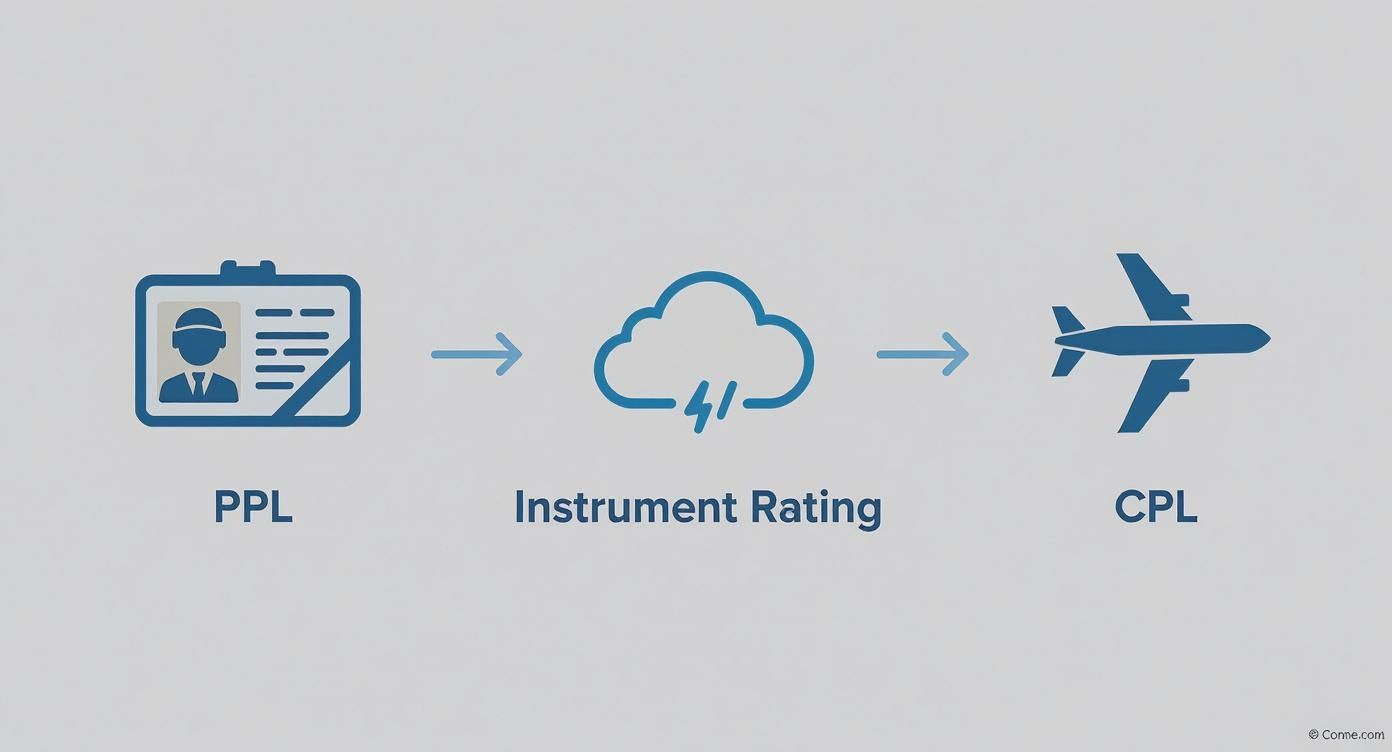
As you can see, each license is a crucial building block, getting you one step closer to flying for a living.
Building Time in a Helicopter
The journey for helicopter pilots looks a little different, but it’s just as exciting. While getting your CFI rating is definitely an option, the helicopter world opens up a wider variety of entry-level jobs right out of the gate. These roles throw you into diverse, hands-on environments where you can build time quickly.
Some of the most common first jobs for new commercial helicopter pilots include:
- Aerial Tours: Flying tourists over scenic landscapes is a fantastic way to rack up hours fast.
- Agricultural Operations: Think crop dusting and spraying. This kind of work demands incredible precision and low-level flying skills.
- News Gathering: Electronic News Gathering (ENG) pilots get a front-row seat to breaking news, often flying in congested urban airspace.
These jobs provide the kind of real-world experience that’s invaluable when you’re ready to move up to more advanced roles in Emergency Medical Services (EMS) or utility work.
How to Stand Out From the Crowd
As you’re building your hours, don't forget to focus on making yourself a top-tier candidate. It’s no secret there’s a major commercial pilot shortage. Boeing's latest outlook predicts a global need for 674,000 new pilots over the next two decades, with 123,000 of those needed in North America alone. This massive demand is fueled by a wave of retirements and a rebound in travel.
While demand is high, the best jobs still go to the most qualified pilots. Use this time not just to accumulate hours, but to accumulate valuable experience and specialized ratings.
Think about earning advanced type ratings for specific aircraft—especially turbine helicopters or multi-engine airplanes. These can make your resume jump to the top of the pile. And don't underestimate the power of networking. Go to industry events, talk to people, and maintain a professional attitude. The goal isn't just to hit a number in your logbook; it's to arrive there as a skilled, well-rounded, and highly employable aviator.
Articles for People Looking to Buy or Sell Airplanes and Helicopters
For a lot of pilots, especially those building hours for a commercial career, owning an aircraft feels like the ultimate goal. For people looking to buy or sell airplanes and helicopters, it can be a smart move to control your flight training destiny. Whether you're eyeing a Cessna to build cross-country time or a Robinson helicopter for a new tour business, this is a major investment that needs to be handled with care. This article on How to Buy an airplane the safe way will guide you.
Making a good buy can put your career on the fast track and bring an incredible amount of satisfaction. A bad one? It can turn into a money pit that drains your finances and your passion for flying. Let's walk through how to do it right.
First Things First: What's the Mission?
Before you even glance at Trade-A-Plane, you have to answer the most important question: what are you going to do with this aircraft? Is it for flying the family to the coast on weekends? Will it be your workhorse for instrument training in actual IFR conditions? Or is it for a specific commercial gig?
The answer to that question drives every other decision. It dictates the model, the performance you need, and the avionics it must have.
Once you know the mission, you can build a realistic budget. And I don’t just mean the sticker price. The true cost is the Total Cost of Ownership (TCO), which is where many first-time buyers get into trouble.
- Insurance: This can vary wildly depending on the aircraft, your total hours, and your ratings.
- Hangar/Tie-Down: You have to park it somewhere. A hangar offers the best protection but comes at a premium price.
- Annual Inspection: Every year, your plane needs a mandatory, top-to-bottom inspection. This can easily run into thousands of dollars, especially if issues are found.
- Routine Maintenance: Think oil changes, new tires, spark plugs… the regular upkeep that keeps things running smoothly.
- Fuel: This is your biggest variable cost. The more you fly, the more you'll spend.
- Engine Overhaul Fund: This is a big one. Engines have a limited life (TBO, or Time Between Overhaul), and a new one costs a small fortune. Smart owners start saving for it from day one.
Getting a handle on these numbers upfront is the only way to avoid a nasty financial shock later on.
The Make-or-Break Step: The Pre-Purchase Inspection
If you remember nothing else, remember this: never, ever buy an aircraft without a comprehensive pre-purchase inspection. This needs to be done by a qualified, independent A&P mechanic—ideally one who knows that specific make and model inside and out. This is non-negotiable.
A pre-purchase inspection is not the same as an annual. It’s an incredibly detailed investigation, specifically designed to uncover hidden problems, unrecorded damage, or looming big-ticket repairs. The seller’s mechanic is the wrong person for this job; you need someone who is 100% on your side.
Your mechanic will go through the maintenance logbooks with a fine-tooth comb, looking for a complete history of repairs and compliance with all airworthiness directives. They'll physically inspect the airframe for any hint of corrosion or damage and use tools like a borescope to see the health of the engine's cylinders from the inside.
A thorough pre-buy inspection is your single best defense against buying a lemon. It provides the peace of mind you need to move forward or the critical information that tells you to walk away. The table below outlines some of the key areas a good inspection will cover.
Aircraft Pre-Purchase Inspection Checklist
| Inspection Area | Key Focus Points | Why It's Critical |
|---|---|---|
| Logbooks & Records | Completeness, damage history, AD compliance, major alterations. | The aircraft's entire life story is in these books. Gaps or sloppy entries are a major red flag. |
| Airframe | Corrosion (especially in hidden areas), cracks, skin damage, control surface integrity. | Structural issues can be incredibly expensive to fix, if not impossible, and pose a direct safety risk. |
| Engine | Compression checks, borescope inspection, oil analysis, leak detection. | The engine is the heart of the aircraft. An early sign of trouble can save you from a $20,000+ overhaul bill. |
| Avionics & Electrical | Functionality of all radios, navigation equipment, lights, and circuit breakers. | Avionics are costly to repair or replace. You need to know that what's in the panel actually works as advertised. |
| Propeller | Nicks, cracks, corrosion, and logbook for any overhaul history. | A damaged prop is a serious safety hazard and can lead to catastrophic engine failure. |
Ultimately, this inspection gives you the leverage to negotiate a fair price or the confidence to know you're making a sound investment in your aviation future.
Closing the Deal: Paperwork and Protection
Once the inspection gives you the green light and you've agreed on a price, it's time to handle the paperwork. This is a bit more involved than buying a car.
First, you'll need a title search. This service confirms the person selling the aircraft is the legal owner and, more importantly, that there are no outstanding liens on it. You definitely don’t want to accidentally buy someone else’s loan.
Finally, always use an aviation escrow service to handle the money. An escrow agent is a neutral third party that holds your payment in a secure account. They won't release the funds to the seller until all the conditions are met—like a clean title being transferred and all the proper FAA paperwork being signed. It’s the safest way to protect both yourself and the seller, ensuring the deal closes without a hitch.
Answering Top Questions from Student Pilots
Deciding to become a professional pilot is a huge step, and you probably have a million questions running through your head. That's completely normal for a student pilot. Let's tackle some of the most common ones we hear from people just starting their flight training, so you can get a clearer picture of the road ahead.
What’s the Real Price Tag on Flight Training?
Let's get straight to the point: flight training is a major financial commitment. The final cost depends on the school, your location, and whether you're learning to fly airplanes or helicopters.
If you’re aiming for an airline pilot career in the U.S., a realistic budget to get from zero experience to a Commercial Pilot License (CPL) with all the necessary ratings (multi-engine, instrument) is typically between $70,000 and $100,000. That number covers your flight hours, instructor time, ground school, books, and exam fees.
Helicopter flight training, on the other hand, costs quite a bit more because the aircraft are more expensive to operate. Students can expect to invest anywhere from $100,000 to over $200,000 for a commercial helicopter license. Don't let the numbers scare you off—look into financing options like aviation-specific loans, scholarships, and even airline cadet programs to help make it happen.
How Long Will It All Take?
This one is almost entirely up to you and how much time you can dedicate to your flight training. If you can treat it like a full-time job, a student could earn their CPL in about 12 to 18 months.
But for aspiring airline pilots, the journey doesn't stop there. The big leagues in the U.S. require an Airline Transport Pilot (ATP) certificate, which means you need to log 1,500 flight hours. Most new commercial pilots build this time by working as a Certified Flight Instructor (CFI). This hour-building phase usually takes another one to three years.
Bottom line: A realistic timeline from your very first lesson to your first day at a regional airline is roughly three to five years if you stay focused. It's definitely a marathon, not a sprint.
Airplane vs. Helicopter: What’s the Difference in Flight Training?
While you'll earn similar licenses (PPL, CPL, IR) for both, the flight training and career paths for airplanes and helicopters are worlds apart. You're mastering skills for two very different types of flying.
- Helicopter flight training is all about precision and specialized maneuvers. You’ll spend a ton of time on skills like autorotations (landing without an engine!), pinnacle approaches, and operating in tight, confined spaces. The controls require a unique touch, and the career options are incredibly diverse—think emergency medical services (EMS), law enforcement, and tourism.
- Airplane flight training is more focused on cross-country navigation and flying by instruments, preparing you to operate within the national airspace system. For many students, the career goal is a clear progression from a regional airline to a major carrier.
Can I Fly if I Have a Medical Condition or Wear Glasses?
This is a huge source of anxiety for many student pilots, but the answer is usually better than you think.
Wearing glasses is perfectly fine, as long as your vision can be corrected to 20/20. As for other medical conditions, the FAA has clear guidelines for most common issues. Things like well-managed asthma or hypertension can often be approved with what’s called a Special Issuance medical certificate.
The most important thing is to be 100% honest with your Aviation Medical Examiner (AME). We can't stress this enough: schedule a consultation with an AME before you start spending money on flight training. Get a professional opinion early and put your mind at ease.
Should I Buy My Own Plane to Train?
The dream of owning your own aircraft is a powerful one. For students looking to buy or sell airplanes and helicopters, having your own plane means you can build hours on your schedule.
But ownership is a serious commitment that goes way beyond the initial purchase. Learning How to Buy an airplane the safe way means doing a deep dive into maintenance logs, getting a thorough pre-purchase inspection from a mechanic you trust, and understanding the ongoing costs—insurance, hangar space, and annual inspections add up fast. It's a big step, but for the right person, it can be an amazing part of the journey.
Ready to start your own flight training journey? At DuBois Aviation, we provide personalized, one-on-one instruction for both airplane and helicopter students. Learn more about our programs at https://duboisaviation.com.