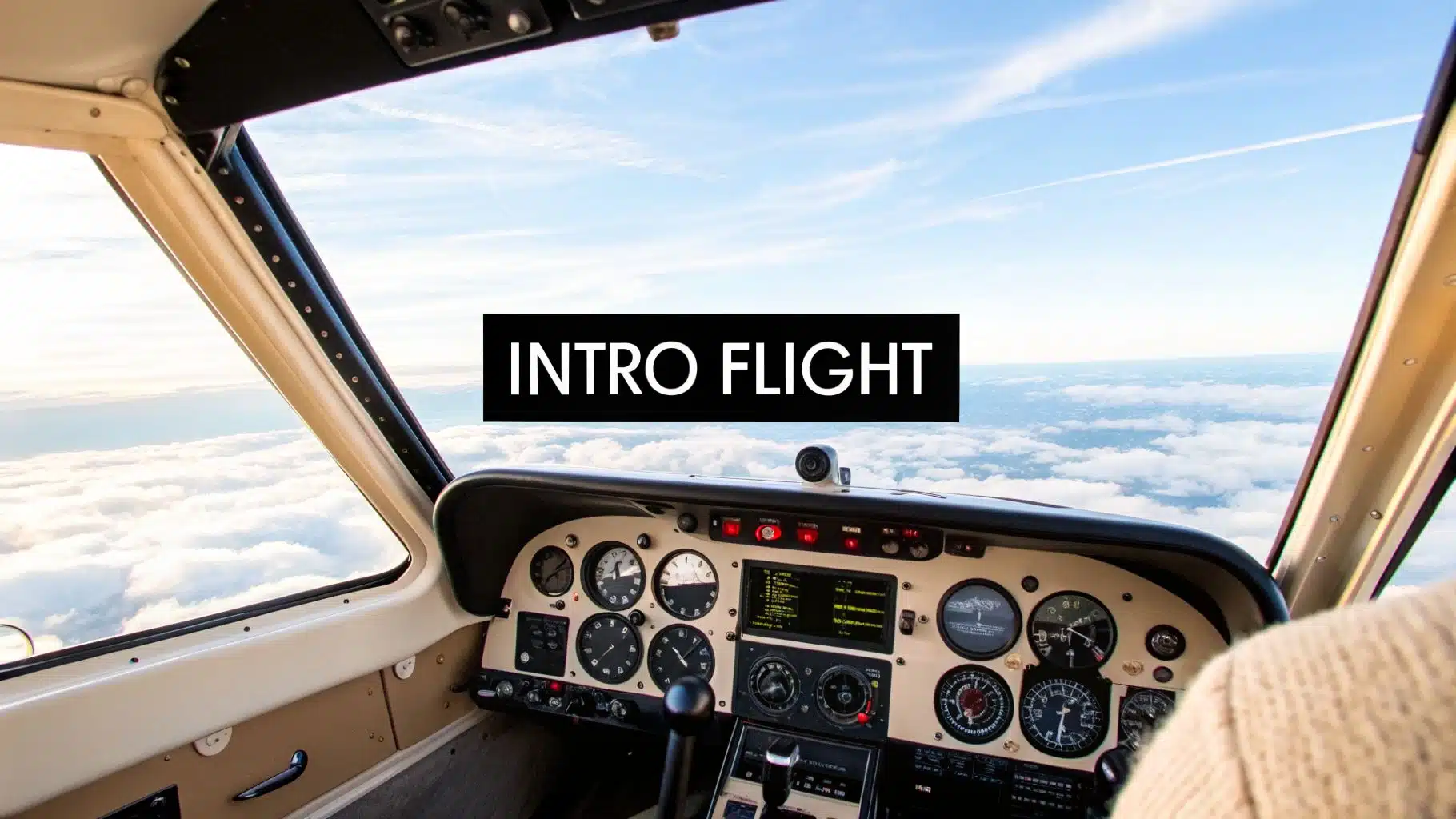
So, what exactly is an introductory flight lesson? You might have heard it called a "discovery flight," and that’s a perfect name for it. This isn't just another scenic tour where you're a passive passenger. It's a real, hands-on flight lesson where you actually get to fly the airplane, all under the watchful eye of a Certified Flight Instructor (CFI).
Think of it as the ultimate test drive for a new passion or even a new career.
Your First Step Into the World of Aviation
For countless pilots, that first step into the cockpit for an introductory flight was the moment a lifelong dream took wing. In a flight training market valued at an incredible USD 10.61 billion in 2025 and expected to climb to USD 24.86 billion by 2032, these first flights are the front door for aspiring aviators. In fact, introductory flights make up about 50% of the market share for initial training, which shows just how vital they are. You can explore more about these market trends and see how they're shaping the future of aviation.
This single experience serves two huge purposes. On one hand, it's a breathtaking adventure that gives you a view of the world you’ve never seen before. On the other hand, and this is key for anyone serious about learning to fly, it officially counts as your very first hour logged toward a Private Pilot License. Here at DuBois Aviation, our mission is to turn any pre-flight jitters into pure excitement by showing you just how safe, educational, and unforgettable this experience is designed to be.
More Than Just a Flight
From the minute you walk through our doors, you’ll realize this is a structured, professional lesson, not just a casual joyride. We break the entire experience down into clear, manageable phases to give you a complete picture of what flight training is really like.
We've found that breaking it down this way helps demystify the process, making it feel far less intimidating and much more accessible. This table lays out exactly what to expect.
The Three Phases of Your Introductory Flight
This table breaks down the typical phases of your first flight lesson, so you know exactly what to anticipate from start to finish.
| Phase | What Happens | Your Role |
|---|---|---|
| Pre-Flight Briefing | Your instructor explains the airplane's controls, what the key instruments mean, and guides you through the pre-flight safety inspection. | Ask questions! You'll get to walk around the aircraft and learn what makes it fly, soaking in the fundamentals on the ground. |
| The Flight | Once you're airborne, it's your turn. You'll take the controls and learn basic maneuvers like gentle turns, climbs, descents, and flying straight and level. | This is the fun part! You'll be actively flying the airplane, feeling how it responds to your inputs and experiencing the freedom of flight. |
| Post-Flight Debrief | After you've safely landed, you and your instructor will talk through the flight. You'll review what you did, what you learned, and discuss next steps. | This is your chance to ask any lingering questions and get genuine feedback. You'll leave with a clear understanding of your performance. |
This structured approach makes the whole thing feel manageable and, honestly, a lot of fun.
For many people, that first flight is the spark. It ignites a curiosity that goes way beyond simply learning to fly and often gets them thinking about the future—from earning advanced ratings to even considering aircraft ownership down the road.
That might seem like a distant dream right now, but it's a seed that often gets planted on this very first flight. Many pilots who start this way eventually find themselves researching how to buy or sell airplanes and helicopters. The methodical, detail-oriented approach needed to learn how to buy an airplane the safe way is the exact same mindset you’ll begin to develop in your very first lesson.
So, What's Your First Flight Actually Like?
Your first real taste of aviation begins the moment you shake hands with your Certified Flight Instructor (CFI) here at DuBois Aviation. Forget what you've seen in movies—this isn't about jumping into a plane and hitting a big red button. It’s a structured, hands-on introduction to what it truly means to be a pilot, and it all starts on the ground with a critical ritual every aviator masters: the pre-flight "walk-around."
You and your instructor will walk around the aircraft together, physically touching and checking everything from the control surfaces to the fuel levels. This isn't just busywork; it's your first lesson in the kind of deliberate awareness that defines a great pilot. Think of it as a pilot's handshake with their aircraft, a mutual understanding that you're both ready to fly. If you want a head start, we've broken down the process in our guide to pre-flight checks on a Cessna 172.
From the Tarmac to the Clouds
With the walk-around complete, you’ll climb into the pilot's seat. Your CFI will walk you through the engine start-up, and you'll feel the aircraft come alive. Next, you'll learn to taxi, steering the plane on the ground not with a wheel, but with your feet on the rudder pedals. It’s a strange but cool sensation. Making your way to the runway at a busy airport like Chino (KCNO) means you're immediately immersed in the real deal, listening to the crisp, professional chatter of air traffic control.
Then comes the moment of truth: takeoff. While your instructor will handle the initial climb to get you safely airborne, it won't be long before you hear those four magic words: "You have the controls."
Just like that, you are flying the airplane.
Most people are surprised by how intuitive it feels. The aircraft responds instantly to your touch—a little pressure on the yoke rolls you into a gentle turn, a slight pull brings the nose toward the sky. It feels less like operating a machine and more like a natural extension of yourself.
This whole experience is designed to be a clear, confidence-building journey, from the briefing on the ground to the flight itself and the chat you'll have afterward.
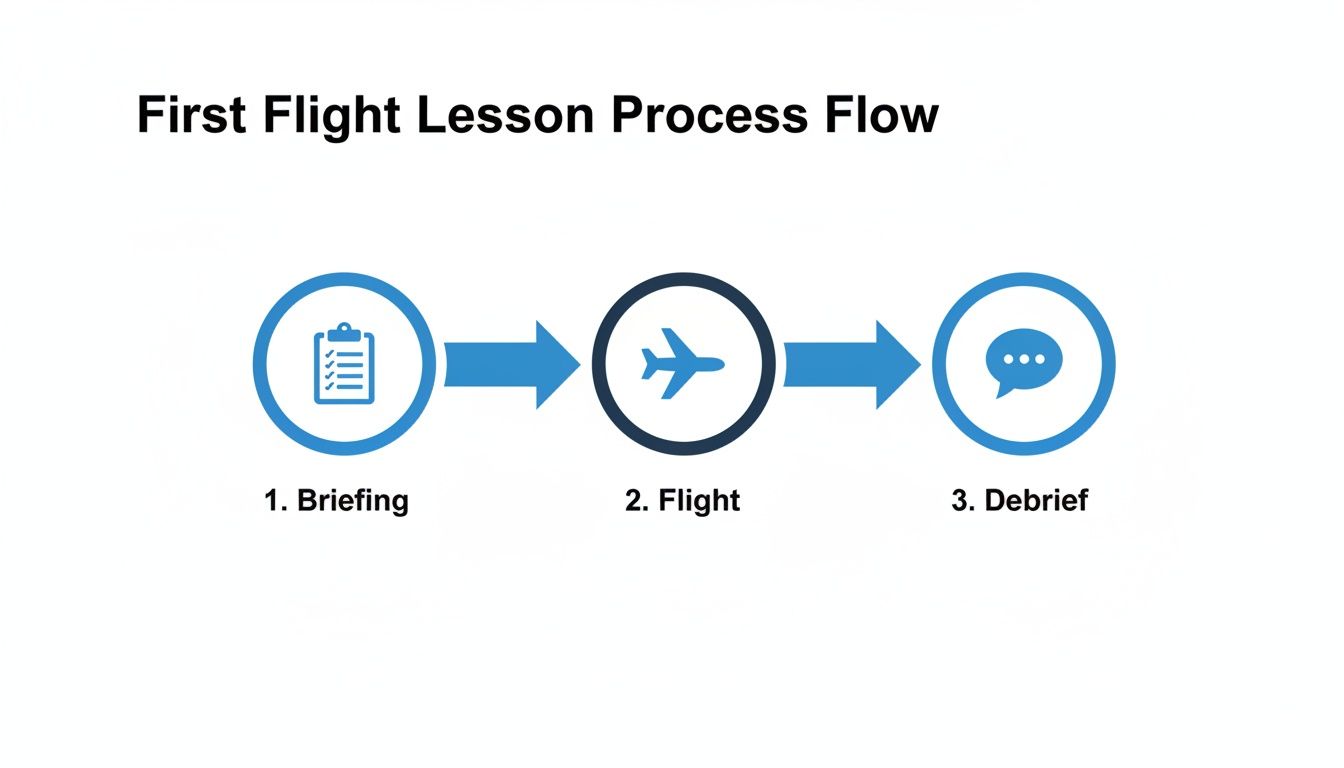
As you can see, every step is designed to get you comfortable and in control before moving on to the next.
Your First Taste of Real Flying
Once you’re cruising, your instructor will guide you through the four fundamentals—the absolute bedrock of all flying skills.
- Straight-and-Level Flight: The simple art of holding a steady altitude and direction.
- Gentle Turns: How to smoothly bank the aircraft left and right.
- Climbs: Gaining altitude by balancing engine power and the plane's pitch.
- Descents: A controlled reduction in altitude, setting up for your return.
Doing this in the Class D airspace around Chino Airport gives you a huge advantage right from day one. You're not in an empty sky; you're hearing and watching how real pilots interact with air traffic control, which is an invaluable piece of the puzzle.
The flight concludes as your instructor expertly guides the plane back toward the runway for landing, talking you through every decision and control input. Watching a pro handle the approach makes the whole complex process suddenly feel achievable. It’s the perfect end to an unforgettable experience, grounding the thrill of flight with a clear sense of what it takes to do it safely and skillfully.
Choosing the Right Aircraft for Your First Flight
The airplane you learn in matters more than you might think. You wouldn't learn to drive in a twitchy race car, right? The same logic applies to flying. Your first time at the controls should be in an aircraft built for stability, safety, and learning the fundamentals. At DuBois Aviation, we've built our entire fleet around that idea.
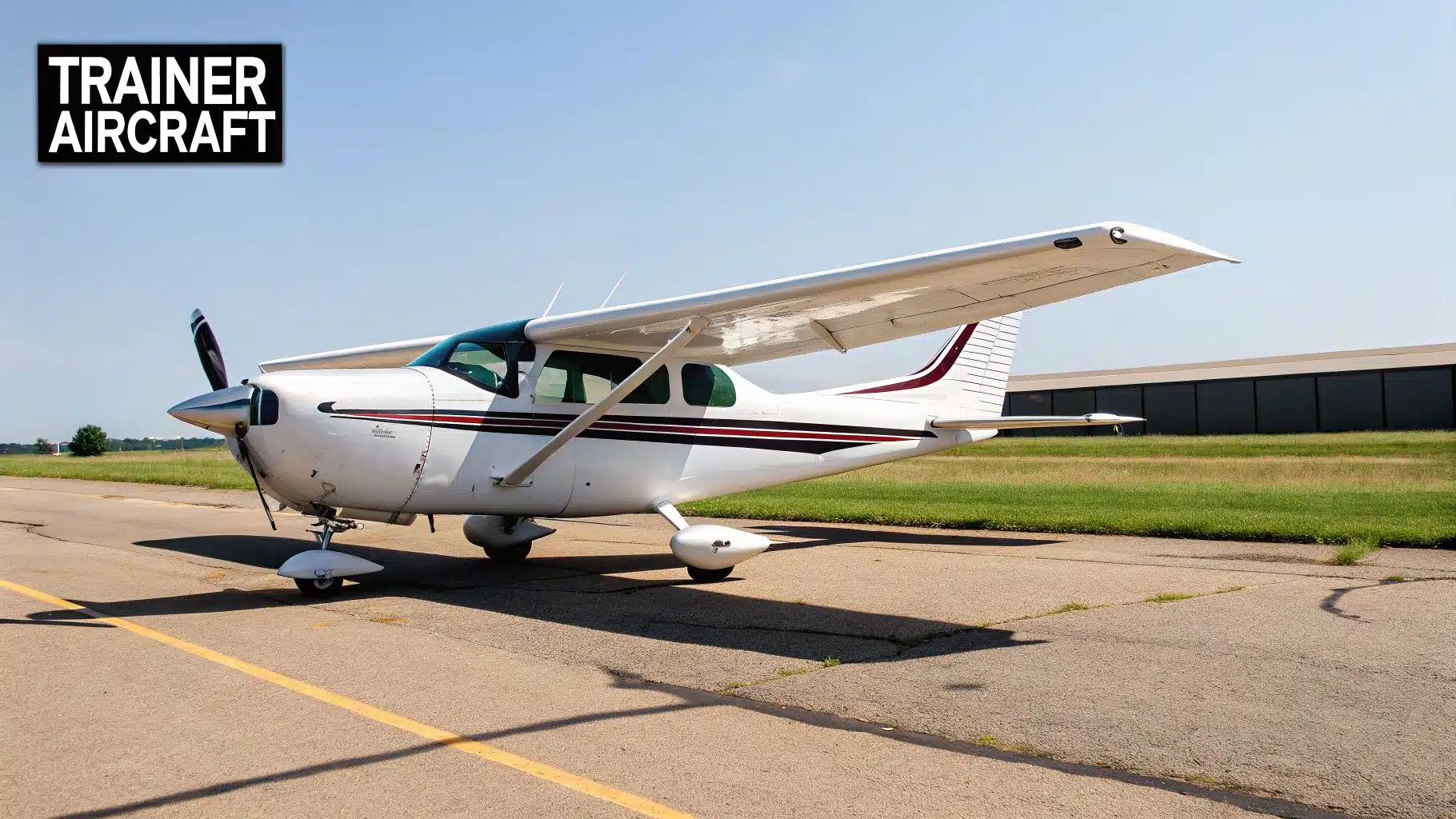
For most of our introductory flights, we turn to the workhorses of the training world: the Piper Cherokee and the Cessna 150. These planes are legendary for a reason. They have incredibly forgiving flight characteristics, which is just a pilot's way of saying they are predictable and won't overreact to the small, jerky inputs every new student makes. It's a huge confidence booster.
Their stellar safety records and no-nonsense designs make them the perfect classroom in the sky. Our focus on these reliable, meticulously maintained trainers means you can put all your mental energy into learning, not worrying about the machine.
Your Training Path Beyond the First Flight
That first flight is really just scratching the surface. While you'll start out in a foundational trainer, we have a whole fleet of aircraft ready for you as your skills develop. Think of it as a clear progression, ensuring that as you get better, we have the right tools waiting for your next certificate or rating.
- Advanced Aircraft: Once you’re ready for more speed and complexity, you can step up to planes like our Mooney M20B to earn your high-performance endorsement.
- Helicopters: If spinning rotors are more your style, we’ve got you covered with training in both Robinson and Enstrom helicopters.
- Flight Simulator: Our in-house simulator is a fantastic, cost-effective tool for practicing procedures and running through emergency scenarios safely on the ground.
This structure turns your first flight from a one-off adventure into the genuine first step in a complete pilot training program.
The goal is to build a solid foundation. Starting in a stable trainer like a Cherokee isn't just about making your first lesson easier; it's about developing the correct habits and muscle memory that will serve you throughout your entire flying career.
It’s this experience that often lights a fire, getting people hooked on aviation for life. For many, that journey eventually leads to thinking about aircraft ownership. We’ve seen it happen time and again. They start looking into how to buy or sell airplanes and helicopters and soon realize that learning how to buy an airplane the safe way involves skills like pre-buy inspections and careful logbook reviews.
These are principles of diligence and attention to detail that you’ll be introduced to from your very first flight lesson with us. We're here to provide the mentorship to guide you through it all.
Your Path from First Flight to Pilot Career
That incredible feeling you get during your first flight is usually just the beginning. It's the spark. What follows is a clear, achievable path to earning your pilot wings. And the best part? Your introductory flight wasn't just for kicks—it officially counts as the very first hour in your logbook.
For most people bitten by the flying bug, the next logical step is enrolling in a Private Pilot License (PPL) program. This is the foundational certificate for everything that comes after and the first real milestone in your journey. This is where you go from an excited passenger to a competent pilot in command.
Mapping Your Aviation Journey
At DuBois Aviation, we see that first flight as the launchpad for a complete training plan. We don't just get you started; we're here to guide you through every stage of your development. Our programs are designed to build on each other, creating a logical and efficient route to your aviation goals.
Your training pathway will likely include several key ratings:
- Private Pilot License (PPL): This is your starting point. It gives you the freedom to fly for fun and take friends and family up with you.
- Instrument Rating (IR): A crucial add-on that teaches you to fly by reference to your instruments, opening up the ability to fly in a much wider range of weather conditions.
- Commercial Pilot License (CPL): Ready to get paid to fly? This license is the gateway to a professional career.
This progression is structured to build your skills methodically, making sure you master one stage before tackling the next. For those dreaming of an airline career, our comprehensive programs tie all of this training together into one streamlined path. You can learn more about getting started in our guide on how to become a private pilot.
Why Now is the Time to Start
Deciding to start your flight training right now means stepping into an industry with massive demand. Aviation is facing a historic pilot shortage, which translates into incredible opportunities for newly qualified pilots.
The U.S. Flying Schools market hit $4.9 billion in 2025, growing directly because of this pilot shortage. Boeing's latest outlook estimates a need for 674,000 new pilots worldwide over the next two decades, with 123,000 of those needed right here in North America.
This isn't just a job—it's a stable, rewarding career with amazing potential. That introductory flight lesson you just took is the first step on a direct path to becoming part of this vital industry. With a clear roadmap and the right training, you can take that next step with total confidence, knowing a fulfilling career in the sky is waiting for you.
From First Flight to Aircraft Ownership
That first flight has a funny way of planting a seed. The dream of flying becomes a real ambition, and for many, that leads to the ultimate goal: owning your own aircraft. Whether you are looking to buy or sell airplanes and helicopters, the process demands the same diligence and attention to detail you learned in your very first lesson. Making a smart investment starts with a clear, methodical approach.
A Practical Guide to Buying Your First Airplane
Before you even scroll through online listings, the first step is to define your mission. What is this aircraft for? Are you building hours for a commercial license, or do you need a cross-country machine for family trips? Answering this question honestly narrows your search from hundreds of options to a handful that truly fit your life.
Establishing a Realistic Ownership Budget
Let’s be clear: the sticker price is just the entry fee. The true cost of owning an airplane is in the ongoing expenses, which often surprise first-time buyers.
You must budget for these key costs:
- Insurance: Varies wildly based on your flight hours and aircraft type.
- Hangar or Tie-Down: Protecting your investment from the elements is non-negotiable.
- Annual Inspection: A mandatory and thorough yearly inspection that can uncover unexpected issues.
- Routine Maintenance and Fuel: Just like a car, you have constant costs for oil, tires, and fuel.
- Unexpected Repairs: Always set aside a reserve fund for things that can and will break.
It's also worth looking into modern ways to protect your investment for the long haul. Things like graphene coatings, which are gaining traction in aviation, can help preserve the aircraft's finish and ultimately its value.
The Non-Negotiables of a Safe Purchase
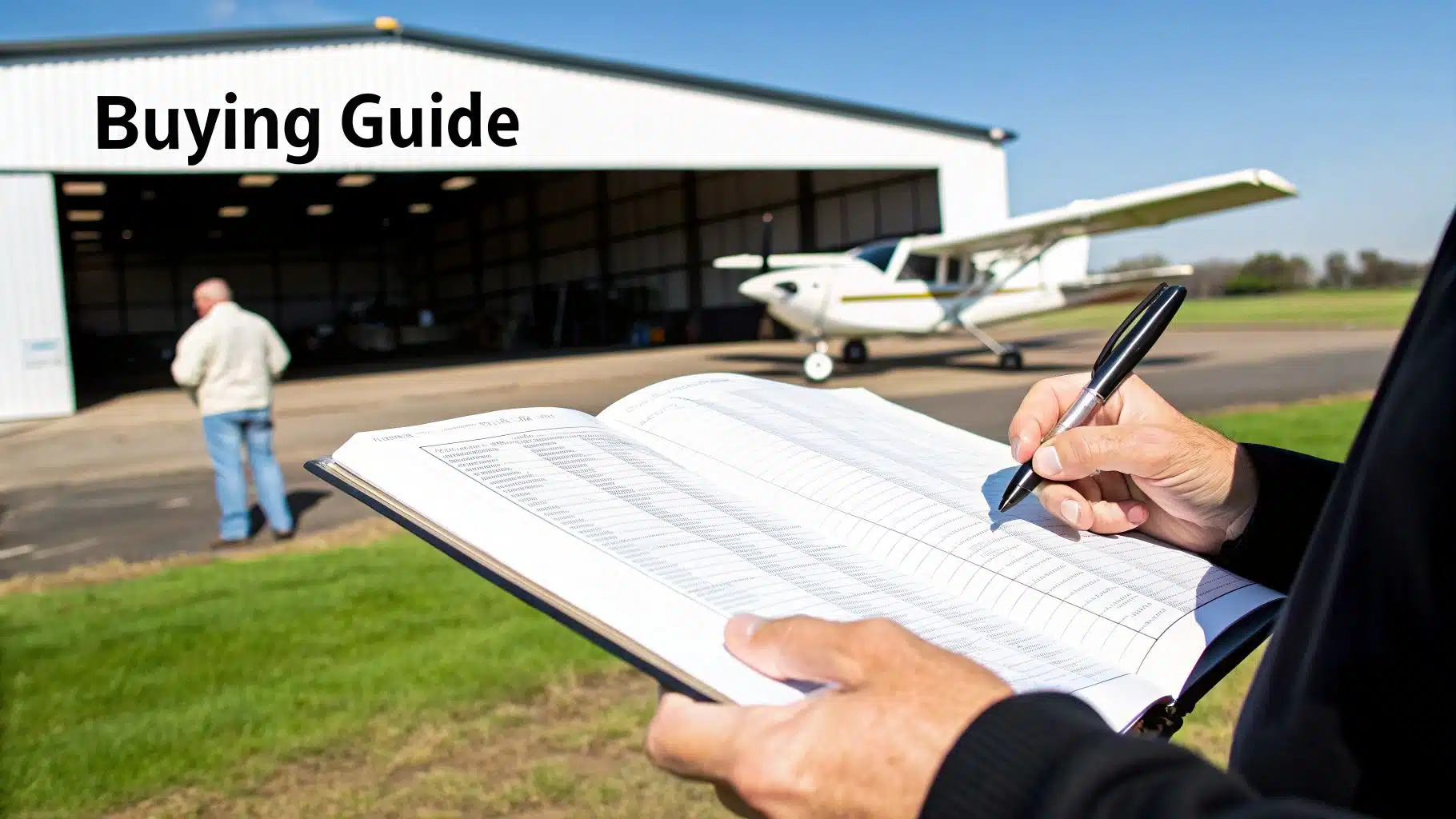
If you remember nothing else, remember this: a pre-buy inspection and a thorough logbook review are absolutely mandatory.
An aircraft's logbooks are its biography. A pre-buy inspection by a trusted mechanic who works for you—not the seller—is the only way to ensure the plane's physical condition matches what's on paper. You or your mechanic must comb through those records for damage history or suspicious gaps.
This is exactly the kind of real-world knowledge we foster here at DuBois Aviation. For a deeper look at the process, our guide on how to buy an airplane the safe way provides a detailed checklist to follow. Your introductory flight isn't just a thrill; it's your first step into a community and a world of incredible opportunities.
Frequently Asked Questions About Your First Flight
It’s completely normal to have questions before you climb into the cockpit for the first time. In fact, we encourage them! Here are some of the most common things people ask before their intro flight.
Do I Need Any Prior Experience to Fly?
Absolutely not. The whole point of an introductory flight is that it’s designed for complete beginners. No experience necessary, no books to read beforehand—just show up ready for an adventure.
Your Certified Flight Instructor is in full command and will handle everything from takeoff and landing to talking on the radio. Your job is to enjoy the experience, ask questions, and get a feel for the controls when your instructor gives you the go-ahead. It’s the perfect, no-pressure way to see what flying is all about.
How Long Is the Entire Experience?
You should plan on being at the airport for about 1.5 to 2 hours. We structure the time to give you a genuine feel for what a real flight lesson is like from start to finish.
The time breaks down into three main parts:
- A 30-minute pre-flight briefing where you'll walk around the plane and learn the basics on the ground.
- 45 to 60 minutes of actual flight time, from engine start to engine shutdown.
- A quick post-flight chat to answer your questions and discuss what you learned.
The best part? The time you spend in the air officially counts toward your Private Pilot License. We log it right from your very first flight.
Is an Introductory Flight Lesson Safe?
Safety is the absolute bedrock of everything we do. You'll be flying with an experienced, FAA-certified instructor in an aircraft maintained well above federal standards.
Every one of our training aircraft has a full set of dual flight controls. This means your instructor has their own yoke, rudder pedals, and throttle. They are always in command and can take over instantly at any moment, ensuring the flight is completely safe and controlled.
It’s a lot like a driver's ed car. The driving instructor has their own brake pedal, right? Your flight instructor has a complete set of controls, giving them ultimate authority over the aircraft at all times.
Can I Bring a Friend or Family Member?
That depends on which airplane we use for your lesson. Most of our primary trainers, like the classic Cessna 150, are two-seat aircraft with just enough room for you and your instructor.
However, we do have larger, four-seat aircraft like the Piper Cherokee. If you'd like to bring someone to ride along in the back, just give us a call when you book your flight. We'll check the availability and make the arrangements for you.
What Happens If I Want to Keep Going?
We love to hear that! If you get bit by the flying bug, the next step is to officially enroll in our Private Pilot License (PPL) program. Your instructor can sit down with you right after your flight to map out a personalized training plan and explain what comes next.
For a deeper dive, you can learn more about the introductory flight lesson cost and what it covers in our detailed guide.
Ready to take the controls and see the world from a completely new perspective? At DuBois Aviation, we have the expert instructors and top-notch aircraft to help you start your journey with confidence. Book your introductory flight lesson today and discover if a life in the sky is for you at https://duboisaviation.com.