A flight instructor is an FAA-authorized pilot who provides flight and ground training, issues required endorsements, and recommends qualified applicants for practical tests. The role can include a CFI, CFII, or MEI certificate, each adding authority to teach different parts of a pilot's training path.
But what is a flight instructor beyond someone sitting in the right seat and demonstrating a landing? At a busy flight school, the instructor is also a standards evaluator, lesson planner, risk-management coach, logbook signer, and mentor who helps a student develop sound judgment. The best instruction connects classroom knowledge, simulator work, cockpit technique, radio discipline, and honest debriefing into one system.
That distinction matters whether a student is preparing for a first solo, adding an instrument rating, learning multiengine procedures, pursuing helicopter training, or considering flight instruction as a profession. A pilot may be able to demonstrate a maneuver, but an instructor must also explain it, recognize when the learner is ready, identify weak habits, and document training accurately.
Two practical options worth comparing
These are specific products pilots commonly compare for this type of flying. Confirm compatibility with your aircraft and instructor before ordering.
 Premium ANR headsetLightspeed Zulu 4 ANR Aviation Headset - Dual GA PlugCheck current availability on Amazon (paid link)
 Premium headsetBose A30 Bluetooth Aviation Headset - Dual PlugCheck current availability on Amazon (paid link)
Table of Contents
- What a Flight Instructor Actually Does
- The Three Instructor Certificates Explained
- A Day in the Life of a Flight Instructor
- How Instructors Are Measured Beyond Maneuvers
- How to Become a Flight Instructor
- Why Training with an Experienced CFI Matters
- Is Flight Instructing a Real Career
What a Flight Instructor Actually Does
A flight instructor in the United States is more than a commercial pilot who enjoys teaching. To qualify for a flight instructor certificate, an applicant must be at least 18, read, speak, write, and understand English, hold a commercial pilot or ATP certificate with the appropriate category and class rating, complete required instructor training endorsements, pass the required knowledge tests, and pass a practical test in a representative aircraft. For several airplane, powered-lift, and instrument instructor privileges, an instrument rating or equivalent privileges is also required under 14 CFR § 61.183.
The certificate gives the instructor legal authority that a casual mentor doesn't have. A CFI can provide training, enter dual instruction in a student's logbook, make specific endorsements, and recommend an applicant for an FAA practical test when the applicant has met the applicable standards.
The work before and after the flight
A typical lesson may include:
- Planning: The instructor reviews the student's stage of training, selects lesson objectives, checks aircraft availability, and considers weather and airspace.
- Briefing: The student learns what will happen, which risks matter, and what performance standards will be used.
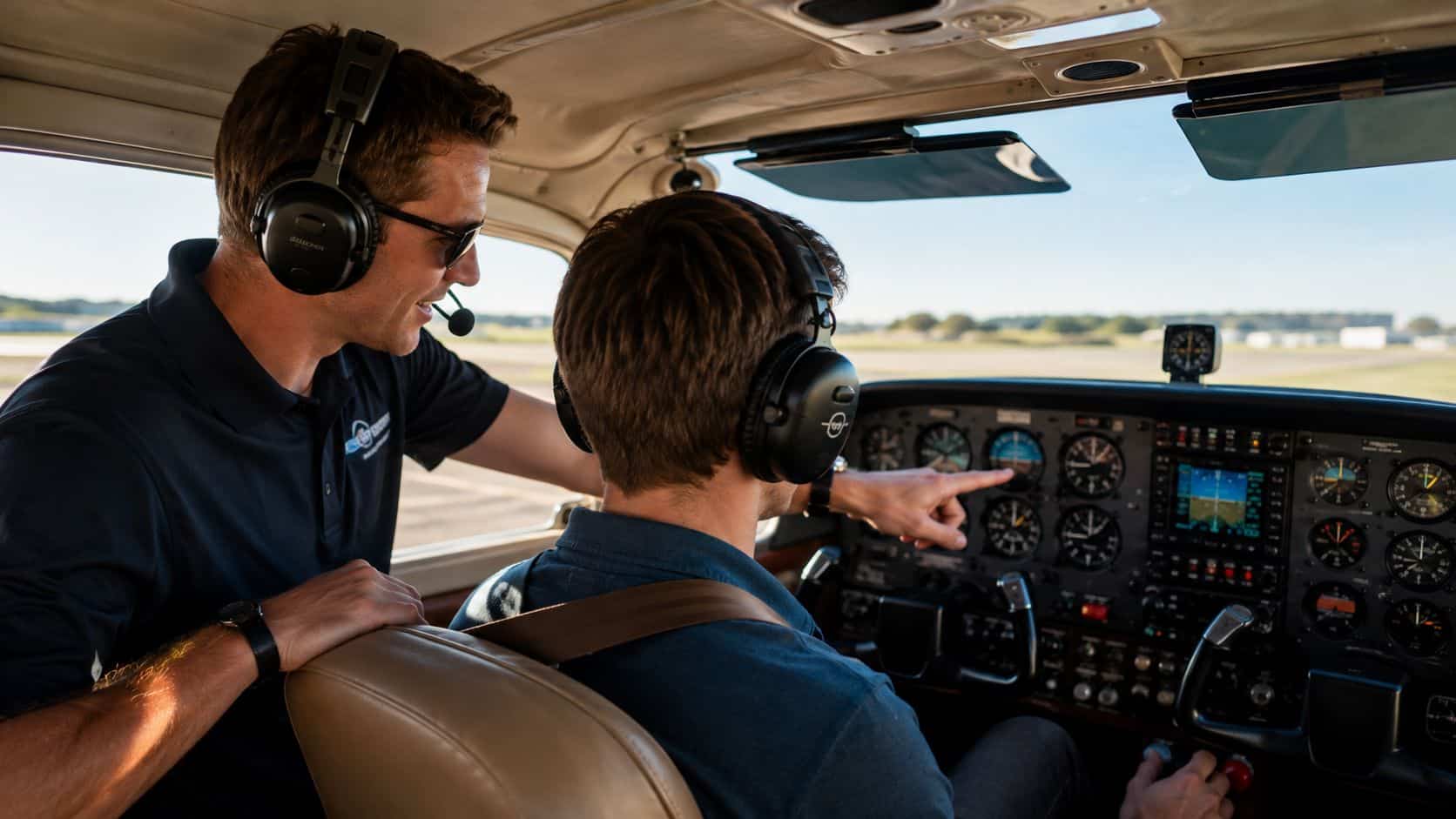
- Cockpit coaching: The instructor demonstrates or observes maneuvers, navigation, radio work, procedures, and decision-making.
- Debriefing: The instructor identifies what met standards, what needs work, and what the student should practice next.
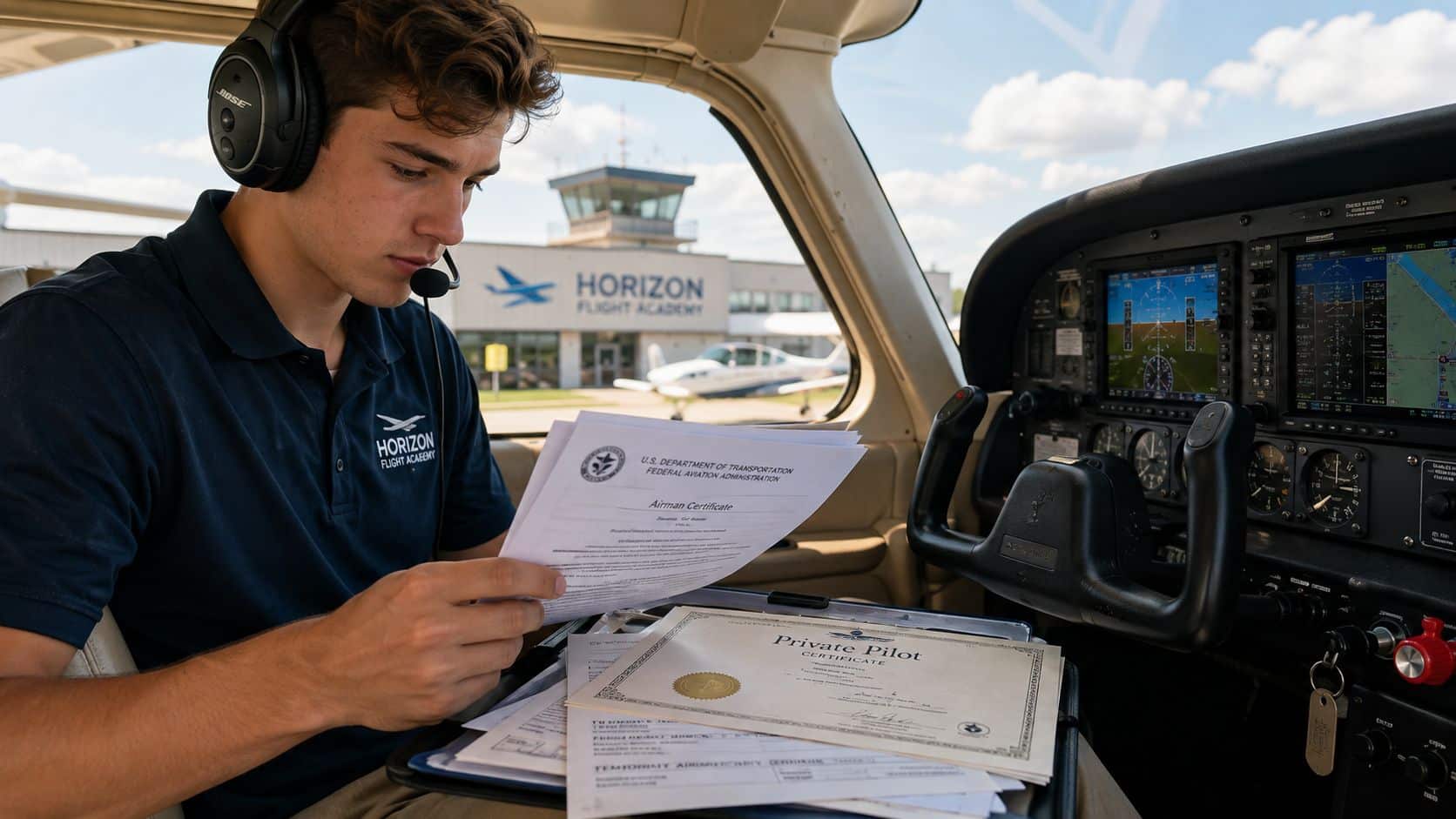
- Documentation: The instructor records training accurately and makes only the endorsements the student's demonstrated performance supports.
A ground instructor can teach approved ground subjects and prepare applicants for knowledge-based training, but that certificate doesn't by itself authorize flight instruction. A flight instructor combines ground and flight teaching authority within the limits of the certificate and ratings held.
Solo flight is another area where students often misunderstand the instructor's role. Under 14 CFR § 61.87, a CFI can't authorize a student to solo until the instructor has provided the required training, evaluated proficiency in the prescribed maneuvers and procedures, confirmed proficiency in the specific make and model, and endorsed the student's logbook. The endorsement must be updated every 90 days, and the instructor must maintain a record of each solo endorsement.
Good instruction also requires subject-matter expertise, not just flight time. For readers who want a broader explanation of how professionals develop and communicate specialized knowledge, this guide to subject matter expertise offers useful context.
The next question is which instructor certificate provides which authority. CFI establishes the foundation, CFII adds instrument instruction, and MEI extends teaching privileges into multiengine aircraft.
The Three Instructor Certificates Explained
The three common instructor designations build on different training needs. Each one expands what the instructor can teach, the aircraft the instructor can use, or the ratings a student can pursue.
CFI
The Certified Flight Instructor, commonly called a CFI, is the baseline flight-instructor certificate for the applicable aircraft category and class. In an airplane program, the CFI teaches core pilot skills such as takeoffs, landings, climbs, descents, turns, stalls, emergency procedures, navigation, radio communication, and practical decision-making.
The CFI also supports the certification path itself. Under 14 CFR § 61.193, instructor authority can include training and endorsements connected with student pilot certificates, pilot certificates, instructor certificates, ground instructor certificates, aircraft ratings, instrument ratings, flight reviews, recency requirements, practical tests, and knowledge tests, subject to the applicable privileges and limitations.
CFII
The Certified Flight Instructor Instrument, or CFII, adds authority to provide instrument training. That work includes teaching a pilot to operate under instrument flight rules, interpret weather and clearances, manage instrument procedures, maintain an effective scan, and make decisions when outside visual reference isn't available.
Instrument instruction is more than covering procedures on a checklist. The CFII helps the student understand how workload, navigation, communication, weather, and aircraft control interact. Ground lessons and structured simulator sessions can be especially useful before the student applies those skills in the airplane.
MEI
The Multi-Engine Instructor, or MEI, authorizes instruction in multiengine aircraft when the instructor meets the applicable multiengine requirements. The training focuses on engine-out recognition, directional control, performance, configuration changes, single-engine handling, systems knowledge, and disciplined emergency decision-making.
| Certificate | What It Authorizes | Prerequisites | Added Capability |
|---|---|---|---|
| CFI | Core flight and related ground training within the certificate's category and class | Commercial pilot or ATP certificate, applicable ratings, instructor tests and practical test | Establishes the foundation for teaching pilots |
| CFII | Instrument training and related endorsements within the authorized category and class | Applicable CFI privileges and instrument qualifications | Adds instrument instruction and IFR-focused teaching |
| MEI | Multiengine flight instruction within the authorized privileges | Applicable instructor certificate and multiengine qualifications | Adds multiengine systems and engine-out training |
A student doesn't need every instructor certificate for every goal. A private pilot may work primarily with a CFI, while an instrument student needs an instructor qualified to teach instrument operations. A multiengine applicant needs instruction from an appropriately qualified instructor, often an MEI.
The certificates describe legal scope. The instructor's daily work shows how that scope becomes useful training.
A Day in the Life of a Flight Instructor
A flight instructor's day often starts before the aircraft moves. At a towered airport, the instructor reviews weather, airport conditions, notices, traffic expectations, and the lesson objective. The plan may change before the student arrives because a training flight should match the actual conditions, not an idealized schedule.
The first appointment might begin with a ground lesson on stalls, slow flight, and the standards the student will eventually need to demonstrate. The instructor discusses angle of attack, energy management, coordination, recovery priorities, and common errors. The student should know not only what to do, but also what the instructor will observe and why the maneuver matters outside a checkride.
From briefing to cockpit
On the ramp, the lesson becomes practical. The instructor watches the student's preflight inspection, asks questions about fuel and oil, reviews weight and balance, and checks whether the student can explain the cockpit setup before engine start. Risk management belongs in this stage, including aircraft condition, wind, traffic, workload, and the student's readiness.
The dual flight might combine pattern work with navigation practice. During a simulated lost-communications exercise, the instructor creates the scenario from the right seat while preserving safety and allowing the student to make decisions. The student practices prioritizing aircraft control, understanding the situation, using available resources, and communicating appropriately.
A sample training flow could look like this:
- Ground briefing: Review the objective, risks, aircraft systems, and performance standards.
- Preflight: Have the student lead the inspection and explain discrepancies.
- Dual instruction: Demonstrate only when useful, then return responsibility to the student.
- Scenario work: Connect maneuvers with realistic operational decisions.
- Debrief: Compare observed performance with the applicable standards.
- Next lesson: Assign focused practice and document what the student has earned.
The work after shutdown
The instructor's job continues after parking. A useful debrief identifies specific strengths and deficiencies rather than relying on general praise. The instructor completes logbook entries, records the lesson, and issues the next endorsement only when the student's performance supports it.
Simulator or desktop-trainer time can support instrument scans, radio practice, and emergency procedures without placing every repetition in the aircraft. The instructor may then update lesson plans, review progress records, coordinate scheduling, and prepare the next briefing. Those administrative details affect continuity, especially when several instructors work with the same student.
Practical rule: The airborne portion is only one part of a flight lesson. Preparation and debriefing determine whether the student understands what happened and knows how to improve.
How Instructors Are Measured Beyond Maneuvers
A student may remember a steep turn by its bank angle or a landing by its touchdown point. An evaluator also looks for the thinking behind the maneuver. Can the pilot manage energy, maintain awareness, recognize a developing problem, and explain the correction clearly?
The FAA's instructor framework treats teaching as the transfer of knowledge and the development of a safe, professional pilot. That means an instructor must measure performance against standards, adapt teaching methods, and use ground training, simulation, demonstrations, practice, and debriefs as connected parts of instruction. The FAA Aviation Instructor's Handbook supports this broader view of the instructor's responsibilities.
What the evaluator is looking for
A practical test for an instructor candidate isn't just a display of smooth flying. The evaluator is also watching whether the candidate can organize information, explain technical subjects, identify errors, select an appropriate teaching method, and maintain a safe training environment.
| Common Assumption | What Is Really Evaluated |
|---|---|
| A CFI only needs to fly maneuvers well | The CFI must demonstrate, explain, observe, and correct those maneuvers |
| A student passed, so the lesson worked | The instructor must build habits that remain useful after the checkride |
| A logbook signature is routine paperwork | Each endorsement must accurately reflect training and demonstrated eligibility |
| A debrief can be general | Effective debriefs connect observed actions with standards and corrections |
| Emergency training is memorization | The instructor develops prioritization, judgment, communication, and aircraft control |
A Designated Pilot Examiner evaluating an instructor applicant is interested in teaching performance as well as technical performance. An applicant who can fly a maneuver but can't diagnose a student's error will struggle to meet the true standard of the certificate.
The same principle applies to student instruction. A CFI should explain why a go-around is appropriate, not merely announce that the landing was unstable. The student should learn to recognize the decision point, manage the aircraft, communicate when necessary, and review the event afterward.
An instructor is judged by the pilot the student becomes, not only by the demonstration the instructor can fly.
How to Become a Flight Instructor
Becoming a flight instructor is a sequence of qualifications, training events, knowledge tests, endorsements, and a practical test. The first major step is holding a commercial pilot or ATP certificate with the appropriate category and class rating, as required by 14 CFR § 61.183.
The applicant also needs the appropriate instructor preparation and must demonstrate the ability to teach. The exact route depends on the aircraft category, class, and instructor privileges sought, so a candidate should confirm the current requirements with an authorized instructor and the governing regulations.
A practical path for airplane candidates
A typical airplane applicant works through these areas:
- Commercial foundation: Build the knowledge, experience, and performance required for the commercial pilot certificate.
- Instrument qualification: Obtain the instrument rating or equivalent privileges when required for the instructor privileges sought.
- Instructor knowledge: Prepare for the applicable instructor knowledge tests, including fundamentals of instruction and technical subject matter.
- Teaching practice: Learn to present lessons, ask effective questions, recognize errors, and adapt explanations to the learner.
- Practical test: Demonstrate both instructional ability and flight proficiency in a representative aircraft.
Instructor training endorsements matter because they document preparation for the practical test. The applicant must be able to teach subjects such as aerodynamics, aircraft systems, regulations, performance, weather, navigation, human factors, and operational decision-making.
A future instructor also needs focused preparation for spin awareness and recovery where required by the applicable training and testing standards. This isn't a box to check casually. The training should connect the aerodynamic cause, prevention, recognition, recovery sequence, and instructional risks.
Maintaining the privilege
The certificate also carries ongoing responsibilities. The FAA limits flight instruction to 8 flight-training hours in any 24-consecutive-hour period, a workload rule directly connected with instructor alertness and training quality under 14 CFR § 61.195.
To keep instructor privileges active, the instructor must satisfy recent-experience standards every 24 calendar months. One common path is endorsing at least 5 applicants for practical tests with at least an 80% first-time pass rate, though the regulation provides other ways to meet the requirement. The same regulation should be checked for current details before an instructor relies on a particular path.
Candidates preparing for this career should review DuBois Aviation's flight instructor requirements and build a study plan around both teaching ability and regulatory accuracy. The strongest applicants don't treat the practical test as the finish line. They practice explaining, observing, correcting, and documenting until those actions become dependable habits.
Why Training with an Experienced CFI Matters
The quality of instruction shapes more than the next lesson. A CFI influences how a student prepares for a first solo, evaluates weather, communicates with air traffic control, handles an unstable approach, and responds when a plan no longer fits the conditions.
A busy towered airport provides a demanding learning environment. Students encounter radio calls, sequencing, runway changes, mixed traffic, airspace considerations, and go-around decisions that may not appear at a quiet field. Those experiences require careful pacing, because exposure alone doesn't guarantee learning. The instructor must explain the situation, let the student participate, and debrief the decisions afterward.
Consistency creates better habits
An experienced instructor usually brings structure to each lesson without making every lesson rigid. The plan may include a primary objective, supporting exercises, weather alternatives, and a clear stopping point if fatigue or workload rises.
A useful training relationship includes:
- Written objectives: The student knows what the lesson is meant to accomplish.
- Progressive responsibility: The instructor gives the student more control as competence develops.
- Specific feedback: Corrections refer to observable actions, not personality or vague impressions.
- Scenario connection: Maneuvers are tied to traffic patterns, cross-country operations, instrument procedures, or emergency decisions.
- Adaptability: The lesson changes when weather, aircraft availability, fatigue, or confidence changes.
The instructor also helps the student develop confidence without encouraging overconfidence. Confidence comes from preparation, repetition, honest evaluation, and knowing how to respond when conditions change. A student who learns to question an unclear clearance, divert when appropriate, or brief a passenger carefully is developing pilot judgment, not merely collecting logbook entries.
DuBois Aviation describes its instructor priorities as knowledge, work ethic, and professionalism, qualities that align with the practical demands of one-on-one training. Students comparing schools can use the National Association of Flight Instructors resource as additional context when considering what professional instruction should involve.
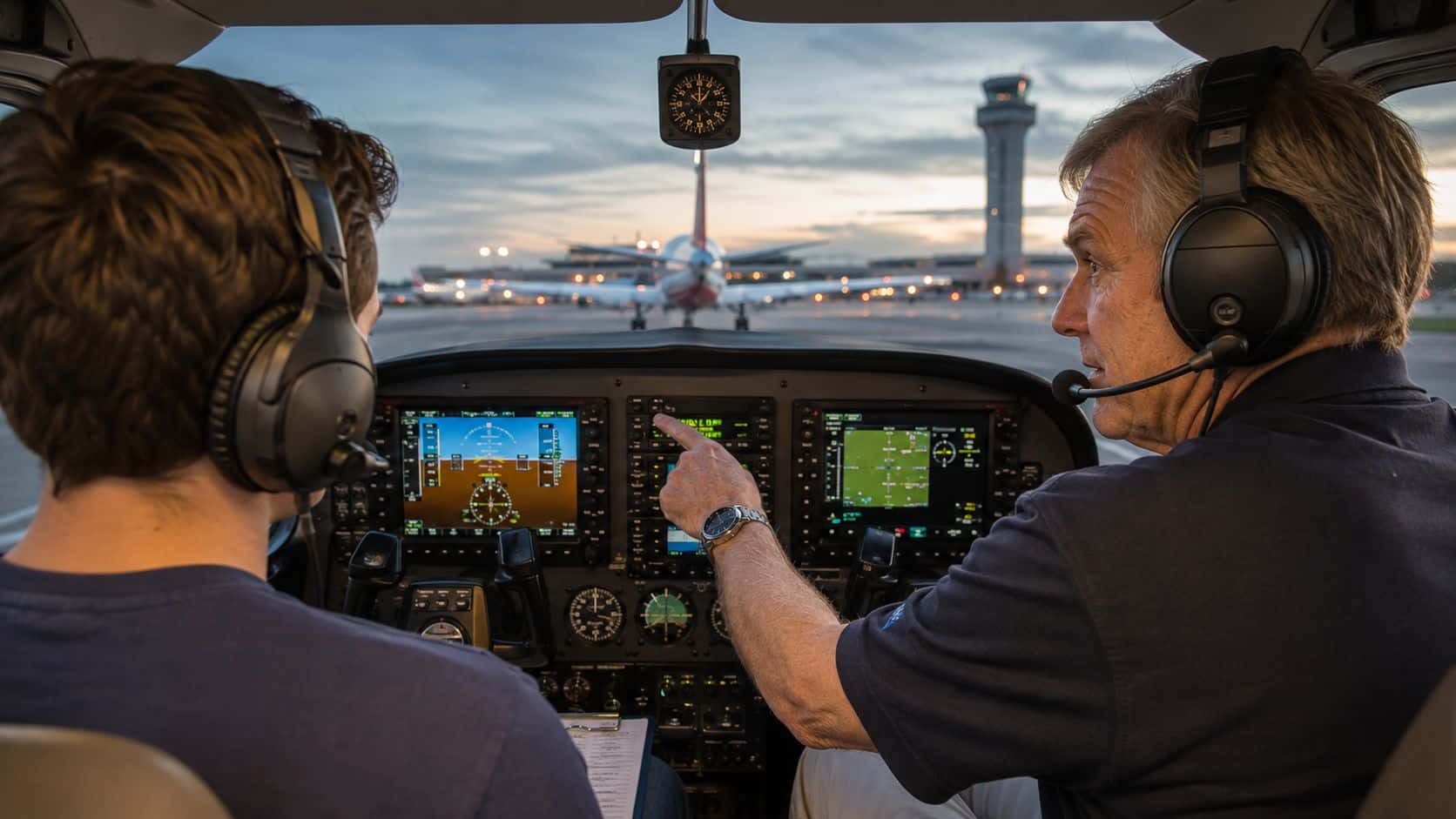
The right CFI also recognizes when a student needs more ground school before returning to the airplane. During the transition from private to instrument training, students face a new set of rules and procedures. Strong instruction combines substantial ground preparation with carefully planned independent pilot-in-command cross-country time, so the student gradually learns to manage IFR responsibilities rather than depending on constant prompts.
Is Flight Instructing a Real Career
Flight instruction is often described as a stepping stone to airline work. That description fits some pilots, but it doesn't describe the whole profession. Instructors may pursue airline or corporate careers, while others remain because they value teaching, standards, mentoring, and the direct influence they have on developing pilots.
The labor market can be mixed. Independent industry coverage cited in the available data describes airline hiring as moving from more than 12,000 hires in 2023 to a little over 4,800 in 2024, and later commentary notes that fewer CFIs have been moving into 121 or 135 jobs as hiring normalizes. Those figures come from the CFI professionalism and readiness presentation, and they point to a competitive entry market rather than a guaranteed fast-track.
The same source reports more than 138,000 active CFIs at the end of 2024 and 12,961 new instructor certificates issued in 2025. That suggests the challenge isn't merely a lack of certificates. Schools and instructors also have to manage regional demand, student enrollment, instructor turnover, and the pace at which CFIs move into other flying jobs.
A craft with several directions
Flight instruction can develop into several professional paths:
- Full-time teaching: An instructor may build a long-term schedule around primary, instrument, commercial, helicopter, or multiengine students.
- Standardization work: Experienced instructors can contribute to stage checks, curriculum development, and quality control.
- Leadership: A strong record of knowledge, work ethic, professionalism, and student development can support progression toward chief or check-instructor responsibilities where those roles exist.
- Career transition: Instructing can also provide valuable experience for pilots pursuing other professional operations.
The trade-offs are real. Schedules can change with weather, aircraft maintenance, student availability, and seasonal demand. Teaching requires concentration and emotional energy, especially when a student is struggling or needs a different explanation.
Still, flight instructing remains a serious aviation profession. The role rewards pilots who enjoy helping others think clearly, apply standards, and build safe habits. Prospective instructors can review current opportunities through DuBois Aviation's flight instructor jobs page, while recognizing that each position should be evaluated for training quality, schedule, supervision, and local demand, not just the promise of flight time.
DuBois Aviation provides one-on-one airplane and helicopter instruction, including pathways toward CFI, CFII, and MEI training, at Chino Airport in Southern California. Prospective students and instructors can visit DuBois Aviation to ask about course availability, tour the school, or request information about training and instructor opportunities.