

You passed the CFI checkride. The temporary certificate is in your wallet. People congratulate you, then the genuine questions start.
How do you teach well when the lesson didn't go the way you planned? How do you keep a nervous private pilot moving forward without lowering standards? How do you stay current when the job already eats your schedule?
That's where the National Association of Flight Instructors becomes useful. Not as a logo on a résumé. Not as a generic “professional membership.” It matters because most instructors hit the same wall after certification. The FAA gave you authority to instruct. It did not give you a complete system for briefing, debriefing, mentoring, managing burnout, or building a durable career.
Two practical options worth comparing
These are specific products pilots commonly compare for this type of flying. Confirm compatibility with your aircraft and instructor before ordering.
 Premium ANR headsetLightspeed Zulu 4 ANR Aviation Headset - Dual GA PlugCheck current availability on Amazon (paid link)
 Premium headsetBose A30 Bluetooth Aviation Headset - Dual PlugCheck current availability on Amazon (paid link)
A good instructor develops those skills through repetition, feedback, and exposure to other instructors who've already solved the problems you're facing. That's why many new CFIs start looking for a professional community soon after they finish the path described in how to become a flight instructor.
Experienced instructors benefit too. The longer you teach, the easier it is to rely on habit. Some habits are efficient. Some gradually erode safety, consistency, and student confidence. A serious instructor needs periodic recalibration.
Your Guide Beyond the CFI Checkride
The first year of instructing is usually a mix of momentum and uncertainty. You might teach a strong lesson in the morning, then spend the afternoon reworking a ground brief because a student didn't understand crosswind technique, radio flow, or airspace boundaries the way you thought they did.
That gap matters. The difference between a new CFI and a trusted one usually isn't technical knowledge alone. It's the ability to turn knowledge into repeatable student progress.
What new CFIs usually need most
Most instructors don't need more slogans about professionalism. They need practical help with things like:
- Lesson structure: Building a brief that is short enough to hold attention and detailed enough to prepare the flight.
- Student management: Knowing when a plateau is normal and when it points to confusion, fear, or weak study habits.
- Currency and judgment: Staying aligned with current standards instead of teaching the way someone once taught you.
- Career direction: Deciding whether to remain at a local school, move into advanced instruction, or build toward airline minimums.
Practical rule: A new CFI improves fastest when they stop trying to “perform confidence” and start building systems they can repeat under pressure.
The National Association of Flight Instructors is valuable because it addresses that in-between stage. It helps answer the question that comes after certification. Not “Can I teach?” but “How do I become the instructor students ask for by name?”
NAFI's Core Mission and Enduring History
A new instructor usually feels the pressure a few months into the job. Students are progressing at different speeds. Parents and owners ask bigger questions than the syllabus covers. The work starts to demand more than passing along maneuvers and ACS tolerances.
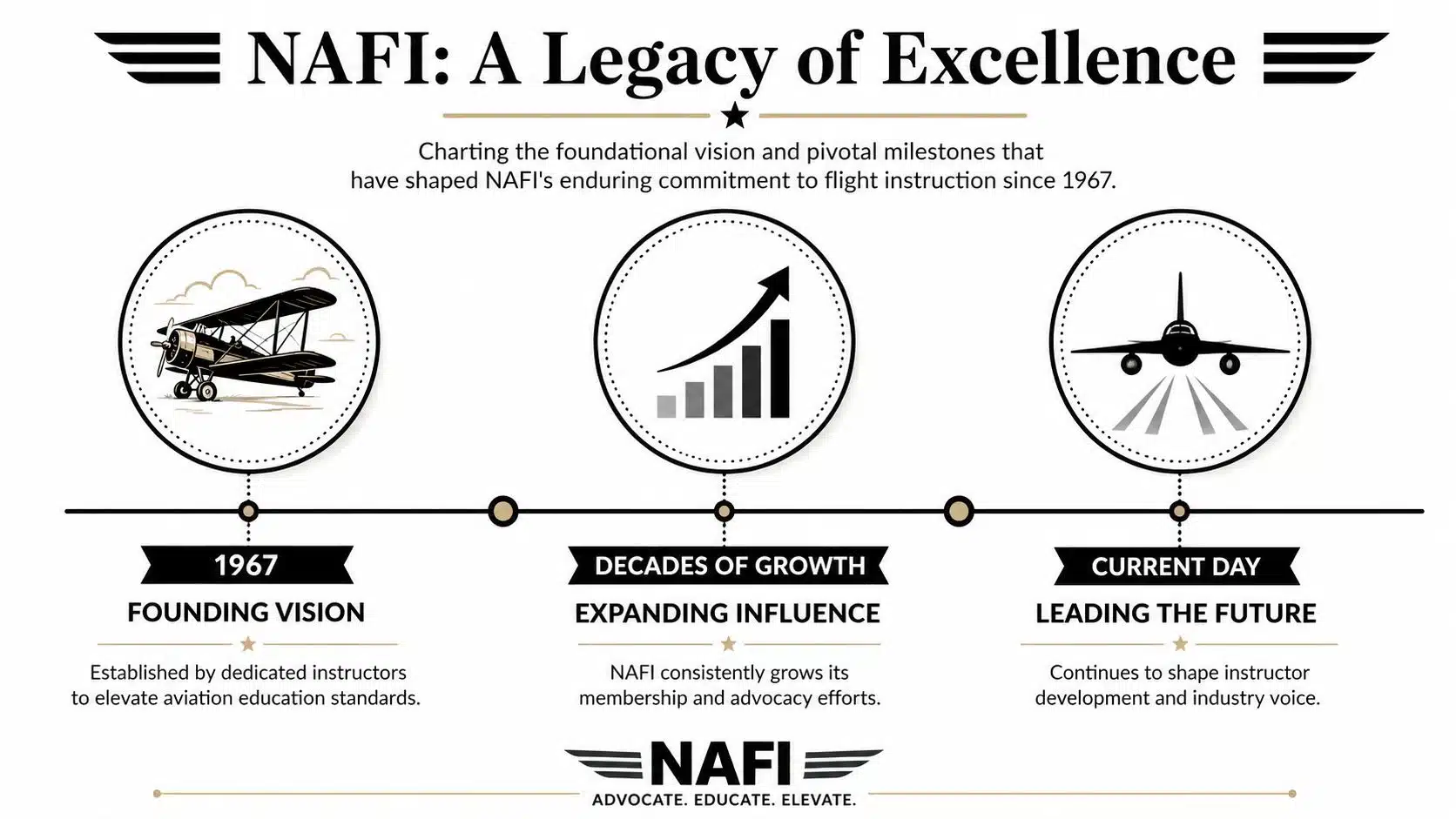
That is the problem NAFI was created to address. The National Association of Flight Instructors began in 1967 under Jack Eggspuehler, an aviation professor at Ohio State University, according to the National Association of Flight Instructors history summary. From the start, the focus was instructor development as a profession with standards, judgment, and continuing education.
Why the history still matters
At a busy school, weak instructional habits spread fast. One instructor teaches shortcuts on checklist discipline. Another signs off too early. A third gets burned out, stops preparing, and starts giving every student the same lesson whether it fits or not. An organization that has spent decades treating instruction as a discipline helps counter that drift.
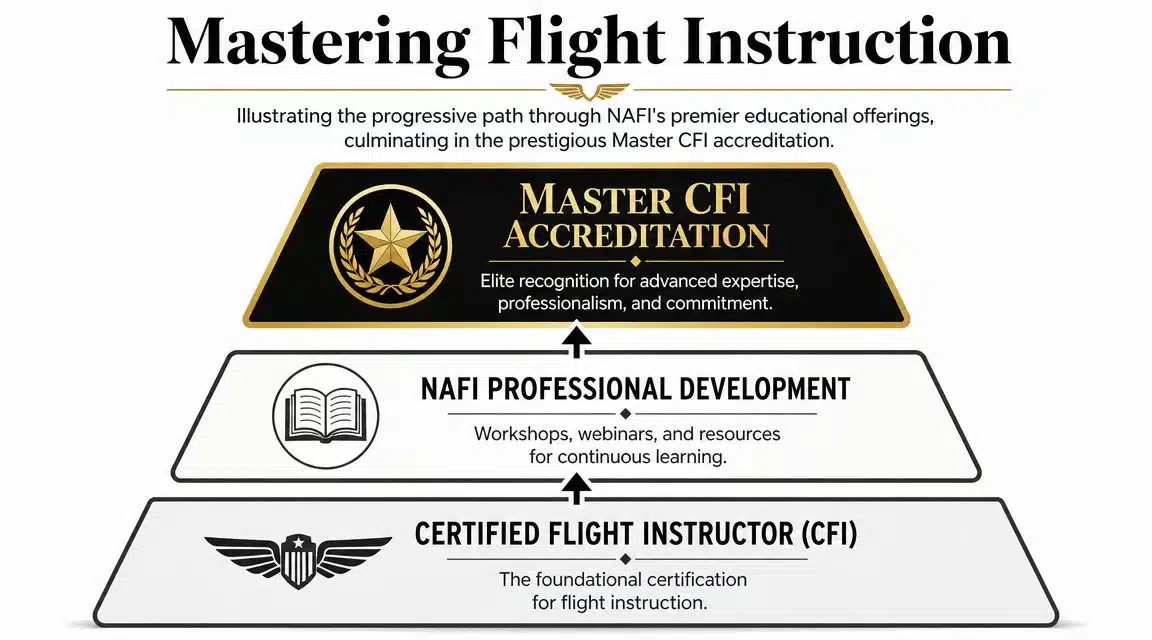
NAFI's long record matters because it kept its attention on the instructor, not just the pilot certificate. Its Master CFI program, developed in the late 1990s and later updated with FAA approval, reflects that standard. The designation has a two-year validity period, which reinforces a simple idea. Good instruction requires current study, reflection, and proof of growth.
That matters in daily teaching.
An instructor who commits to that model usually gets better at spotting why a student is stuck, adjusting a lesson before frustration sets in, and giving advice that goes beyond the textbook. That can include helping a student compare training paths, set realistic timelines, or even think through ownership questions before buying an aircraft. Schools also notice instructors who show steady professional development, especially those mapping out long-term aviation jobs for pilots rather than treating instructing as a short stop.
What that tells a working instructor
NAFI's history points to a practical conclusion. The organization has spent decades reinforcing the idea that teaching skill does not mature on autopilot.
Hours help, but directed improvement helps more. I have seen instructors with modest total time produce better results than higher-time CFIs because they reviewed their methods, sought feedback, and kept learning how students absorb information.
For a new CFI, that history offers a useful signal. For an experienced instructor, it is a reminder that credibility is earned twice. First when you qualify to teach, and again every year you prove students are learning safely, efficiently, and with sound judgment.
Unlocking Career Growth with NAFI Membership
Membership only matters if you use it to solve real problems. A CFI doesn't need another password to forget. A CFI needs better lesson material, sharper teaching judgment, and stronger professional connections.
NAFI says it has over 8,500 members across the globe and provides access to more than 1,000 educational resources, events, and opportunities on its official NAFI site. That scale matters because it means you're not limited to the habits and blind spots of a single airport or one chief instructor's style.
Where membership helps in day-to-day instructing
The biggest advantage is the communal resource. If you're building lesson plans from scratch, troubleshooting student setbacks alone, and trying to stay current through scattered sources, you'll spend energy reinventing work that other instructors have already refined.
Useful membership value often looks like this:
- Resource depth: You can pull ideas for preflight briefings, scenario-based teaching, and student debrief structure from a broad professional library instead of relying only on your own notes.
- Mentorship access: New instructors get perspective from teachers who've handled weak study discipline, fear of stalls, inconsistent landings, and checkride readiness decisions many times before.
- Career visibility: Professional involvement signals that you take teaching seriously, which matters when schools or clients compare instructors with similar flight time.
- Broader peer review: Exposure to instructors outside your local bubble helps catch weak habits before they become “the way you teach.”
NAFI membership tiers at a glance
| Feature | Associate Member | Certified Instructor | Master Instructor |
|---|---|---|---|
| Best fit | Aspiring instructor or aviation professional building involvement | Active CFI, CFII, or MEI using NAFI for current teaching support | Established educator pursuing recognized professional distinction |
| Main value | Early access to community, education, and industry awareness | Practical teaching resources, mentorship, and professional networking | Strong differentiation, formal recognition, and a higher standard of continuing development |
| Career use | Good for people preparing to enter instruction | Best for most working instructors | Best for instructors building a long-term brand around excellence |
| What to expect | Learning and observation | Ongoing skill-building and support | Commitment, documentation, and sustained professional effort |
The right tier depends less on prestige and more on where you are in your career. A newer instructor usually gets the most immediate value from practical education and community. A seasoned instructor may care more about differentiation and long-term credibility.
If you're using instructing as part of a broader career path, it also helps to compare NAFI involvement with the kinds of opportunities outlined in aviation jobs for pilots. The stronger your teaching record, the more doors tend to open.
The Path to Mastery Through Education and Certification
The most serious reason to join the National Association of Flight Instructors is simple. It gives instructors a structured path to keep getting better.
That matters because the FAA treats instruction as a safety-critical function. In the FAA's guidance on aviation instructor responsibilities and professionalism, instructors are expected to stay current on certification, training, and safety procedures. That isn't paperwork language. It directly affects what students carry into solo flight, checkrides, and later decision-making.
What the Master CFI path represents
A lot of instructors hear “Master CFI” and think of it as an award. That's too small a view.
It's better understood as a professional signal. It tells students, peers, and employers that the instructor is serious about development, not just legal currency. In practice, that usually means the instructor has put thought into teaching standards, educational growth, and professional accountability.
A respected designation also changes how you approach your own work. You stop asking, “Can I get this student through the ride?” and start asking, “Am I teaching in a way that produces safe, independent judgment?”
Here's a useful overview to pair with that mindset shift.
What actually improves instructors
The designation matters, but the true gain comes from the process around it. Instructors improve when they consistently do three things:
- Review their teaching methods instead of assuming experience equals effectiveness.
- Learn from other educators who've developed cleaner ways to explain, sequence, and evaluate.
- Refresh their standards before drift turns into normal practice.
A sharp debrief often does more for a student than an extra tenth on the Hobbs.
The practicality of NAFI-style professional development is evident. Workshops, webinars, mentor conversations, and educational content can help an instructor tighten lesson flow, improve student accountability, and teach risk management more clearly.
The strongest instructors usually aren't the ones who know the most obscure facts. They're the ones who can make the right facts usable in the cockpit.
Advising on Airplane and Helicopter Purchases
A student finishes a cross-country lesson, shuts down, and asks, “Should I buy this one or keep renting?” That question can do more for your career than another hour of pattern work, if you answer it with discipline.
Students remember the instructor who helped them avoid an expensive mistake. They also remember the one who gave casual advice on an aircraft they were not prepared to own, insure, or operate well. NAFI's professional-development culture matters here because it pushes instructors to think past the sale and toward long-term safety, training fit, and owner success.
Start with the mission and the pilot
Aircraft advice should begin with use, not brand loyalty. A weekend breakfast flyer, a private pilot building family travel capability, and a commercial student trying to lower training costs need different answers. The right aircraft for one mission can be a poor match for another once fuel burn, maintenance access, insurance limits, and transition training enter the picture.
I tell instructors to ask a few plain questions before discussing models:
- What will the aircraft do each month? Local proficiency flying, primary training, regular cross-country travel, or utility work lead to different choices.
- Who is the pilot in command? A low-time owner with limited recent experience should not buy into more speed, workload, or complexity than they can handle.
- Where will it operate? Runway length, density altitude, wind conditions, and busy airspace matter as much as cruise numbers.
- What training will ownership require after delivery? The purchase is only the start.
For a buyer comparing common trainers, a practical side-by-side like Piper Cherokee vs Cessna 172 for typical training and ownership use can help frame the discussion around mission, handling, and operating realities instead of appearance.
Use a repeatable buying framework
Good instructors do not play aircraft salesperson unless that is formally part of the job. They slow the process down, define the risks, and give the client a structure for making a sound decision.
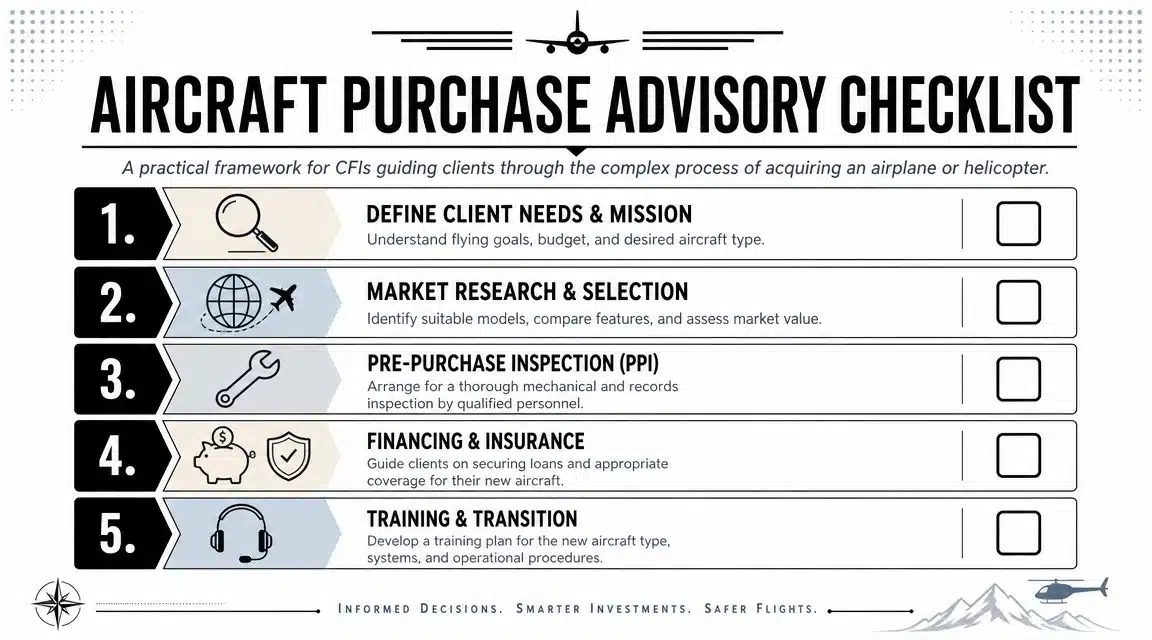
A useful framework looks like this:
- Define the mission in writing. Training, travel, time-building, aerial work, and recreation each change the shortlist.
- Compare realistic aircraft, not dream aircraft. Look at useful load, avionics familiarity, supportability, cockpit fit, and the owner's actual skill level.
- Require a real pre-purchase inspection. It should be done by maintenance personnel who know the type well enough to spot recurring problems.
- Review logs with care. Gaps, vague entries, damage history, and deferred issues should change the price or end the deal.
- Check insurance and financing early. Buyers often find out too late that their preferred aircraft carries training requirements or coverage limits they did not expect.
- Build post-purchase training into the plan. Transition training, emergency procedure review, and recurrent work should be part of the decision before money changes hands.
That process protects the buyer. It also strengthens your value as an instructor because you are helping a client make a better operational decision, not just offering an opinion on which aircraft looks better on the ramp.
Where instructors can add real value
This is one of the clearest ways to use NAFI-informed habits in day-to-day instruction. The same mindset that improves lesson planning also improves purchase advising. Ask better questions. Identify the hidden training burden. Keep the student focused on the mission.
Buyers often underestimate four things. Downtime. Maintenance complexity. Parts support. Proficiency demands after the excitement of the purchase fades.
Helicopter purchases require even tighter judgment. Component times, maintenance tracking, intended mission, and access to type-specific instruction can make a workable deal turn into a poor one very quickly. An instructor who understands those trade-offs becomes far more useful to serious clients.
Buyer advice: If a client wants a quick blessing on a deal, slow the conversation down and return to mission, records, inspection quality, and training needs.
A flight school can also support the owner after the purchase through checkout training, recurrent work, and aircraft-specific proficiency plans. DuBois Aviation, for example, offers airplane and helicopter instruction, rentals, and recurrent training at Chino Airport. That kind of setup gives new owners a place to keep learning after the paperwork is done.
Building Your Network and Industry Voice
Aviation instruction can get isolating fast. You may spend most of your day solving student problems, adjusting schedules, handling weather disruptions, and trying to keep your own proficiency sharp. That's one reason instructors burn out. Not because they dislike teaching, but because they carry every challenge alone.
NAFI is useful here because it functions as both a support network and a professional voice. Public NAFI material emphasizes mentorship, education, and advocacy, including work with the FAA and other aviation stakeholders on issues such as pilot wellness, ADHD certification challenges, and bringing safety-management concepts into training culture, as described on NAFI member benefits.

Why networking matters more than people admit
A strong instructor network does more than help you find jobs. It gives you places to test judgment.
You can compare how other instructors handle no-show students, weak home-study habits, pressure from customers to sign off too early, and the fatigue that comes from teaching multiple personalities back to back. Those conversations can save you from bad habits and bad decisions.
Three networking benefits stand out:
- Reality checks: Other instructors help you tell the difference between a normal student plateau and a deeper training problem.
- Professional resilience: Mentorship reduces the sense that every setback is unique to you.
- Better teaching language: Hearing how other CFIs explain stalls, radio work, or go-around judgment can sharpen your own communication.
Why advocacy belongs in the same conversation
Networking helps the individual instructor. Advocacy helps the profession stay workable.
If flight instruction is affected by wellness concerns, certification complexity, and changing training expectations, then individual grit isn't enough. Instructors need representation that understands how policy and industry culture affect daily work.
That's why the National Association of Flight Instructors matters beyond personal development. It gives instructors a place where practical teaching concerns and broader industry concerns meet.
The healthiest instructor community doesn't just share tips. It also pushes for conditions that make good instruction sustainable.
How to Join NAFI and Get Involved
Joining is the easy part. Using the membership deliberately is what makes it worthwhile.
Start on the NAFI website and choose the membership level that fits where you are now. Don't overcomplicate that decision. If you're an active instructor, pick the level that gives you access to the professional resources you'll use. If you're still entering the teaching side of aviation, start where you can participate and learn.
What to do in your first month
Don't wait for value to appear automatically. Build a short activation plan:
- Explore the resource library: Save material that helps with lesson planning, debriefing, and student accountability.
- Find one mentor or peer contact: One good conversation is more useful than passively joining a large network.
- Attend an educational event: Use it to refresh one area where your teaching feels stale.
- Pick one development target: Landings, instrument scan coaching, scenario-based training, or checkride prep all work. Just choose one.
A membership works best when you treat it like recurrent training for your instructional judgment.
Frequently Asked Questions About NAFI
Is NAFI mainly for brand-new CFIs
No. New CFIs often feel the need most urgently because the first teaching year exposes gaps quickly. But experienced instructors benefit too, especially when they want sharper professional development, a broader network, or a more formal standard for continued growth.
Is the National Association of Flight Instructors relevant outside the United States
Yes. NAFI says it has 8.5k+ members across the globe and 1,000+ educational resources, events, and opportunities on its public site, which supports the idea that it serves an international instructor community rather than a purely local one.
Is Master CFI worth pursuing
For the right instructor, yes. It's most valuable if you want to distinguish yourself as a career educator, show commitment to ongoing development, and hold yourself to a higher standard than minimum currency. It's less useful if you want a shortcut to credibility without doing the underlying work.
How much time does NAFI involvement take
That depends on how you use it. Some instructors use it lightly for reading, webinars, and professional awareness. Others build mentorship relationships and pursue advanced recognition. The key is consistency. A modest, regular effort usually beats occasional bursts of enthusiasm.
How does NAFI compare with other instructor organizations
The smart way to compare organizations is by fit. Look at the educational tone, mentorship access, recognition programs, advocacy priorities, and whether the resources match the kind of instructing you perform. Join the one you'll use, not the one that merely sounds impressive.
Can NAFI help me become a better adviser to students, not just a better stick-and-rudder coach
Yes. That's one of the most practical reasons to get involved. The more developed you are as an instructor, the better you'll handle student motivation, decision-making, training setbacks, aircraft ownership questions, and long-term pilot development.
If you're building toward a CFI certificate, looking for recurrent training, or want one-on-one airplane or helicopter instruction at Chino Airport, DuBois Aviation offers flight training, rentals, and instructor-led programs that fit real-world pilot development.