
You’ve got the certificates in mind, a logbook plan on a sticky note, and probably a simple assumption: get the CFI, apply everywhere, start teaching, build time, move on.
That used to be closer to the truth. It isn’t the whole truth now.
Flight instructor jobs still matter because training demand hasn’t disappeared and the long pilot pipeline still needs instructors. But the easy-entry version of the job has tightened. Schools want people who can teach safely, communicate clearly, and represent the operation well from day one. If you want a seat at a reputable school, especially one operating in busy airspace, you need more than minimum qualifications. You need to look hireable before you ever send the first application.
Two practical options worth comparing
These are specific products pilots commonly compare for this type of flying. Confirm compatibility with your aircraft and instructor before ordering.
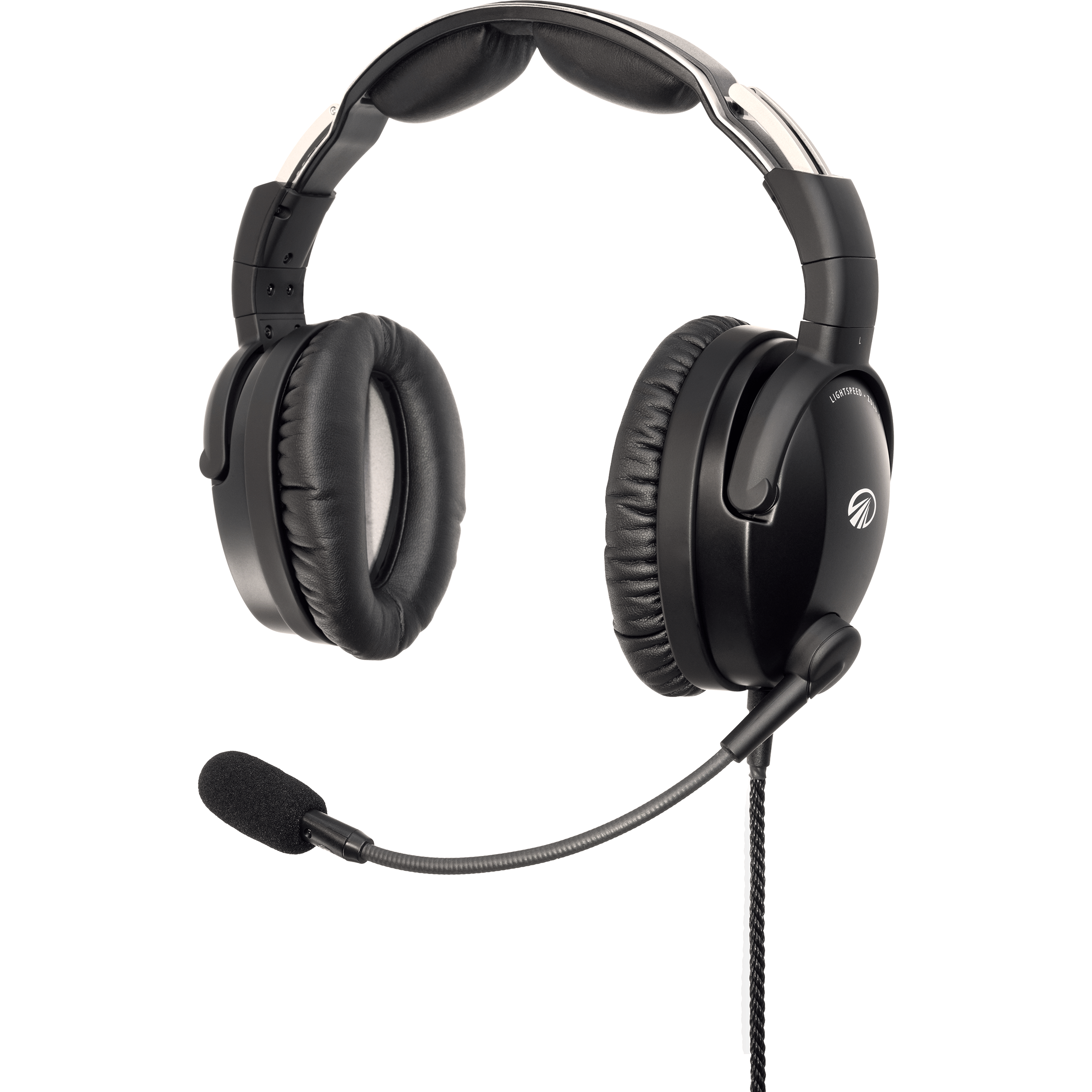 Premium ANR headsetLightspeed Zulu 4 ANR Aviation Headset - Dual GA PlugCheck current availability on Amazon (paid link)
 Premium headsetBose A30 Bluetooth Aviation Headset - Dual PlugCheck current availability on Amazon (paid link)
Navigating the 2026 CFI Job Market
A lot of pilots still talk about instructing like it’s automatic. Get the certificate, show up with a pulse, and someone will hand you students. That’s not how serious hiring works now.
The current market has shifted toward selective, quality-focused hiring, with schools prioritizing fundamentals, teaching proficiency, and professionalism over adding bodies alone, as noted by CFI Academy’s review of the 2026 hiring slowdown. That changes how you should prepare. The certificate gets you eligibility. It doesn’t get you trusted.
What schools are actually screening for
At a busy training operation, the first question isn’t “How fast can this person build hours?” It’s “Can this person protect students, standardize instruction, and make good decisions without drama?”
That means hiring managers pay attention to things applicants often undervalue:
- Communication under pressure: Can you explain a botched landing or a missed radio call without rambling?
- Professional habits: Do you show up prepared, on time, and organized?
- Instructional mindset: Can you teach a weak student without turning every lesson into a lecture?
- Cockpit discipline: Do your flows, checklists, and callouts look repeatable?
Practical rule: If your application only proves you can fly, you’re still only halfway qualified for flight instructor jobs.
The schools worth working for also tend to think long-term about fit. They know turnover is part of this business, but they still want instructors who will contribute while they’re there. That includes mentoring newer students, helping maintain training consistency, and handling parents or career-track students with maturity.
Stand out before the interview
In a selective market, your first filter is often your written presentation. Resume formatting, keyword choice, and clarity matter more than many pilots want to admit. If your experience is solid but your materials are cluttered, use AI tools to optimize your resume to tighten structure and language before anyone sees it.
It also helps to understand what kinds of schools are actively hiring and what they expect from pilot candidates. Reviewing current paths in aviation jobs for pilots is useful because it shows how instruction fits into broader career progression instead of treating the CFI role like an isolated step.
The main shift is simple. A school no longer asks, “Are you legal to hire?” It asks, “Are you the kind of instructor we want students to learn from?”
The Path to Your CFI Certificate
Every flight instructor job starts with the same basic truth. You can’t teach what you haven’t learned thoroughly yourself.
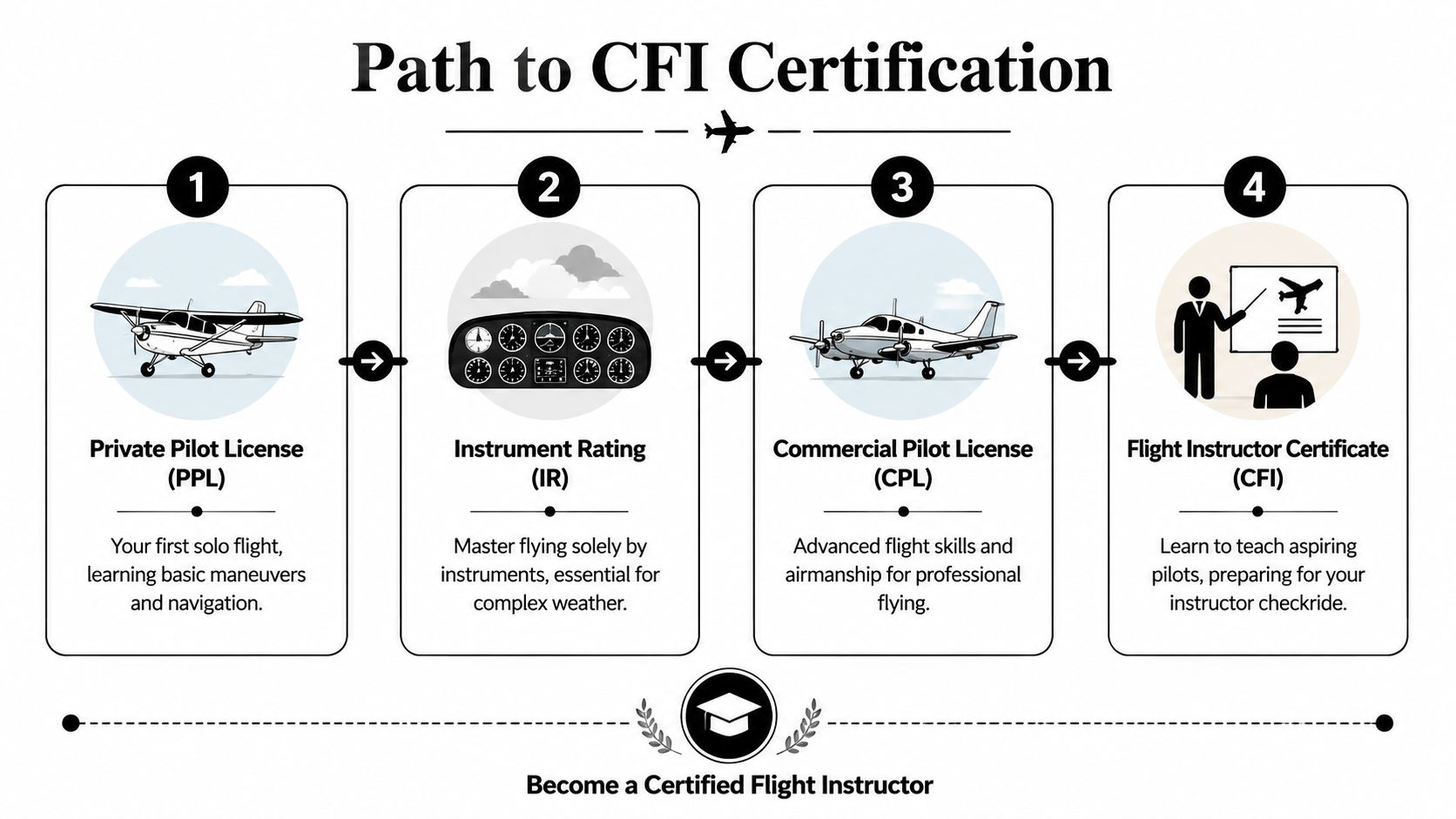
Most pilots move through a familiar ladder: Private Pilot License, Instrument Rating, Commercial Pilot License, then the Flight Instructor Certificate. The sequence matters because each level adds a layer of judgment, not just a new line on a temporary certificate.
Build the foundation in the right order
Here’s the practical version of the path.
Private Pilot License
The Private Pilot License involves learning basic aircraft control, traffic patterns, cross-country planning, and how to think ahead of the airplane. If your PPL habits are sloppy, they usually stay sloppy until someone forces a reset.Instrument Rating
Instrument training sharpens procedures, precision, scan discipline, and workload management. Even if your first students are private students in visual conditions, instrument training usually makes you more structured and more teachable.Commercial Pilot License
Commercial training should refine your standards. The maneuvers matter, but the bigger gain is consistency. A commercial pilot who can explain what good looks like is already moving toward instructor thinking.CFI certificate
The CFI certificate often humbles many applicants. Flying from the right seat is one thing. Teaching, evaluating, correcting, and managing risk while someone else flies poorly is another.
A useful overview of these steps appears in DuBois Aviation’s breakdown of pilot license levels, especially for students trying to map out the full sequence before they commit.
Treat the money like a business decision
The cost issue is where many aspiring instructors get unrealistic. The required certifications can run $80,000 to $120,000, and the same source notes that only an estimated 15% of trainees complete training, making financial planning a major part of the path according to this industry job-market summary.
That doesn’t mean the path isn’t worth it. It means casual planning won’t cut it.
A few habits help:
- Train on a written budget: Include flying, ground, checkride prep, materials, and schedule disruptions.
- Choose structure carefully: Some students need a formal syllabus to avoid wasting flights. Others need schedule flexibility to keep momentum.
- Use simulator time intelligently: A simulator doesn’t replace aircraft training, but it can make aircraft time more productive when used well.
- Avoid false shortcuts: Fast programs can look cheaper on paper and cost more if they leave you underprepared for the checkride or unemployable afterward.
The cheapest hour is often the one that fixes a mistake before you repeat it in the airplane.
Add ratings that improve marketability
A plain CFI can get hired. A CFII often gets more scheduling flexibility because instrument students need specialized support. An MEI can open doors at schools with multi-engine programs. Neither rating fixes weak teaching, but both can make you easier to schedule and harder to overlook.
Some schools package training in a more integrated way, using standardized materials, in-house simulators, and a sequential curriculum so students don’t lose continuity between ratings. That kind of structure can help if you need a straight path from first lesson to instructor candidacy.
Building Hours and Crafting Your CFI Resume
Getting certified is one milestone. Getting trusted with students is another.
The hiring pressure is different now because the supply side has changed. The United States had 138,127 active CFIs as of 2026, with nearly 13,000 new certificates issued in 2025, while the student pilot pipeline contracted, creating an imbalance where instructor supply exceeds available students, according to Renaissance Aviation Group’s market analysis. In plain terms, more people can teach than there are ideal seats to teach in.
Build hours in ways that make you more hireable
Not all time carries the same signal.
A logbook full of random flights may increase totals, but it doesn’t always show maturity. Schools notice whether your time-building developed judgment, procedures, and reliability.
A stronger approach looks like this:
- Fly with purpose: Cross-country planning, instrument practice, and recurrent maneuvers tell a better story than “just went up to burn holes.”
- Use safety pilot arrangements carefully: They can build instrument exposure and checklist discipline if both pilots treat the flight like training.
- Join a flying club or community group: Club environments often create chances to help with planning, briefings, and peer learning.
- Stay current in communication-heavy environments: Experience in towered operations helps if you’re applying to a school that expects strong radio work and traffic awareness.
Your resume should sound like an instructor, not a time-builder
Too many CFI resumes read like a dispatch sheet. Aircraft types. Total time. Ratings. End of story.
That format misses the point. A chief instructor is hiring someone to teach, debrief, document, reassure nervous students, and maintain standards. Your resume needs to hint at those abilities.
A better resume includes evidence of:
| Focus area | What to show |
|---|---|
| Teaching readiness | Tutoring, mentoring, lesson prep, public speaking, checkride prep support |
| Operational discipline | Standardized procedures, checklist use, safety mindset, record accuracy |
| Professionalism | Reliability, scheduling flexibility, customer-facing experience |
| Decision-making | Weather judgment, go/no-go thinking, risk management habits |
If your work history is thin, the writing still matters. Guidance on crafting an entry-level resume can help you frame limited experience in a way that highlights responsibility and communication instead of apologizing for what you haven’t done yet.
Your resume should answer one question fast: “Will this person make our students feel well taught and well protected?”
Prepare for the interview flight before you’re invited
The strongest applicants don’t wait for the interview to start practicing instruction. They rehearse mini-lessons, whiteboard explanations, and right-seat corrections well before they apply.
Expect some version of these tests:
- Teach a concept on the spot: stalls, crosswind correction, or airspace.
- Debrief a mistake clearly: no anger, no vagueness, no overtalking.
- Fly from the right seat with composure: especially when something isn’t clean.
- Show standardization: schools don’t want freelancers in uniform.
A sharp resume gets attention. A calm, teachable interview gets the job.
Finding and Securing Your First Instructor Job
Online job boards have their place. They show who’s advertising and what kinds of ratings schools mention most often. But many pilots make the same mistake. They click apply twenty times, attach the same generic resume, and wait for replies that never come.
The candidates who land better flight instructor jobs usually work the search from two directions. They monitor postings, but they also approach schools directly and professionally.
Direct outreach beats generic applications
A targeted school contact says more than a mass application ever will. It shows you cared enough to research the operation, understand its training environment, and picture yourself there.
That first message should be short and clean. Include your current certificates, expected timeline for any pending ratings, the kind of instruction you want to do, and why the school fits your goals. Skip the dramatic life story. Skip vague lines about “passion for aviation.” Say something real.
Good schools also pay attention to whether you understand who their students are. A school involved in youth outreach, discovery programs, or community events often wants instructors who can mentor, not just occupy the right seat. Programs such as youth aviation camps are becoming more important pathways into aviation, and schools that invest in them often look for instructors who can teach and mentor across age groups, as discussed in this post about DuBois Aviation’s Youth Aviation Camp.
What to look for before you say yes
Not every instructor opening is a good opening. Before accepting anything, look closely at the operation.
A strong school usually shows these signs:
- A maintained and appropriate fleet: Enough availability to keep students progressing.
- A defined training system: Syllabus, stage checks, standardization, and records that make sense.
- Real operating complexity: Towered airport work, varied airspace, and enough activity to build competence.
- A visible safety culture: Not slogans. Actual consistency in briefings, dispatch, and instructor behavior.
- Room to grow: Instrument, commercial, multi-engine, or rotor opportunities if those matter to you.
One practical way to evaluate fit is to talk with current instructors and ask what a normal week looks like. You’ll learn more from that than from polished hiring language.
Negotiating the first offer
New instructors often negotiate poorly because they only focus on hourly pay. Look at the whole arrangement.
Ask about:
- Scheduling consistency
- Expected student load
- Ground instruction compensation
- Standardization training
- Aircraft availability
- Path to added responsibilities or additional ratings
If a school can’t explain how lessons are scheduled, how students are assigned, or how instructors are supported, that’s not a small issue. It usually becomes your issue later.
The first job matters because it shapes your habits. Choose a school that will make you better, not just busier.
A Day in the Life at a Busy Flight School
Most new instructors imagine the fun parts first. Engine start. Taxi out. Pattern work. Solo endorsements. Those things are real, and they’re satisfying.
The rest of the day is where professionals separate themselves.

The day starts before the flight block
A busy instructor usually begins by checking weather, aircraft status, student notes, and the likely pressure points for the day. One student may need pattern repetition. Another may need instrument procedures. A third may need half the lesson spent on confidence instead of maneuvers.
Then the schedule starts moving fast. Pre-brief. Dispatch. Walkaround. Airspace coordination. Post-flight debrief. Logbook entries. Reset. Do it again.
That rhythm is one reason instructional skill matters so much. The average tenure for a CFI at a major flight training operation is only 10 to 16 months, with many staying only 1 to 2 years, according to Jason Blair’s discussion of CFI turnover and job stability. Schools know many instructors are time-building. That’s exactly why they still insist on professionalism. They need instructors who can contribute immediately.
What the job really includes
The airplane is only part of the work. A normal day also includes:
- Ground teaching: Systems, regulations, weather, airspace, and planning.
- Emotional management: Students get frustrated, scared, overconfident, and discouraged.
- Documentation: Notes, endorsements, stage readiness, and training continuity.
- Team coordination: Dispatch, maintenance, stage check instructors, and scheduling staff.
Some students need more flying. Others need a calmer explanation and one smaller objective.
If you want to sharpen your classroom-side delivery, material on instructor-led training methods is useful because it translates well to ground lessons, especially when you’re trying to keep students engaged instead of overloaded.
Busy airspace changes the teaching
At an active airport, lessons aren’t isolated. Students have to listen, sequence, adapt, and stay ahead of the airplane while dealing with real traffic and real radio work. That can accelerate learning if the instructor keeps the lesson focused.
Here’s a look at the training environment many instructors are preparing for:
The best part of the job is still the same. You watch a student move from uncertainty to competence in stages they can barely see while they’re in it. First stable landing. First cross-country they own. First instrument approach that finally clicks.
That’s also why weak instructors burn out. If you don’t like teaching people, the flying alone won’t carry you through a full schedule.
Beyond Instruction How to Buy an Airplane Safely
A lot of pilots eventually reach the same point. You’ve spent enough time around aircraft to start thinking about ownership. Sometimes it’s personal travel. Sometimes it’s a partnership. Sometimes it’s the first step toward a business operation.
That’s where instructor experience becomes surprisingly useful. A good CFI learns to evaluate aircraft condition, match equipment to mission, and spot gaps between what a seller says and what the airplane supports.
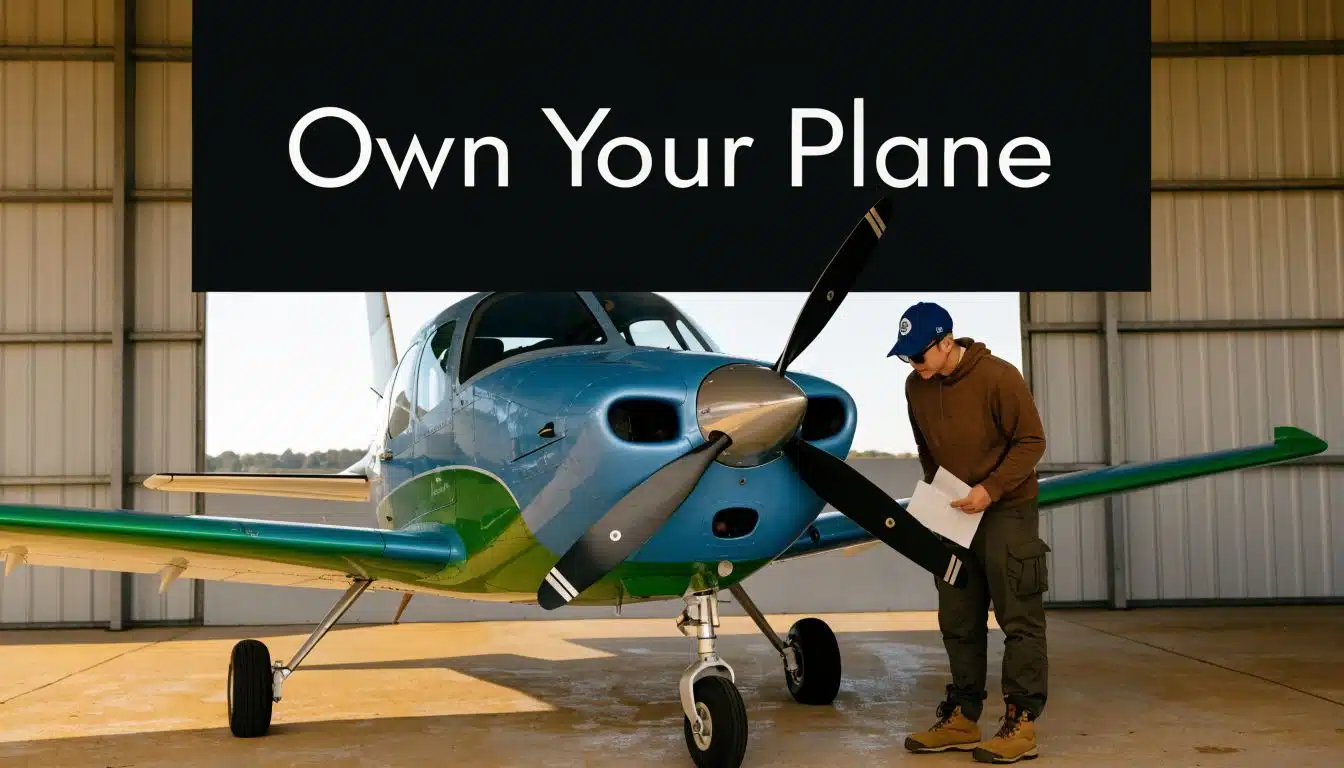
Start with mission, not paint
The safest purchase starts with a narrow mission definition. Local proficiency flying, instrument travel, family trips, primary training, and backcountry use all point toward different airplanes.
Write down what the aircraft must do. Then separate that from what would be nice to have.
Use questions like these:
- Who will fly it most often
- What kind of runways and airspace it will use
- Whether instrument capability matters
- How much complexity you want to maintain
- Whether the aircraft may later be rented, partnered, or used in training
For local support, maintenance relationships, and general aviation resources in Chino, Threshold Aviation at Chino Airport is one example of the kind of airport-based ecosystem buyers should understand before they purchase.
The pre-buy inspection is not optional
Never treat a pre-buy like a casual once-over. Use a mechanic or shop that knows the specific make and model and has no incentive to help the sale close quickly.
A sound process includes:
Logbook review
Look for consistency, damage history, recurring discrepancies, and major gaps.Independent mechanical inspection
Focus on airframe, engine, systems, corrosion, compliance status, and signs of deferred maintenance.Title and lien search
Make sure ownership is clean before money moves.Insurance check before closing
Some buyers shop insurance after agreeing to buy. That’s backward. Confirm insurability first.
Buy the aircraft that fits your mission and inspection results, not the one that flatters your ego on the ramp.
Airplanes and helicopters require different due diligence
The overall buying process is similar, but helicopters demand more specialized review. Component life limits, maintenance history, and model-specific support matter even more. If you’re looking at rotary-wing aircraft, involve a mechanic and pilot who know that exact platform. General fixed-wing buying experience doesn’t automatically transfer.
The safest buyers move slowly, ask plain questions, and walk away when records or answers get fuzzy. That habit serves instructors well too. Good aviation judgment travels across more than one kind of decision.
If you’re building toward flight instructor jobs, advanced ratings, aircraft ownership, or want training in a busy Chino environment, DuBois Aviation offers airplane and helicopter instruction, rental access, simulator support, and career-path training that can help you move from student to working pilot with a more structured plan.


