

Many pilots see becoming a Certified Flight Instructor (CFI) as just another box to check on the way to the airlines. But let me tell you from experience, it's so much more than that. It's a career that will sharpen your piloting skills and deepen your understanding of aviation in ways you can't imagine. With the industry hungry for skilled pilots, top-notch instructors are needed now more than ever.
This isn't just another checklist. We're going to pull back the curtain on what it's really like to be a CFI.
Two practical options worth comparing
These are specific products pilots commonly compare for this type of flying. Confirm compatibility with your aircraft and instructor before ordering.
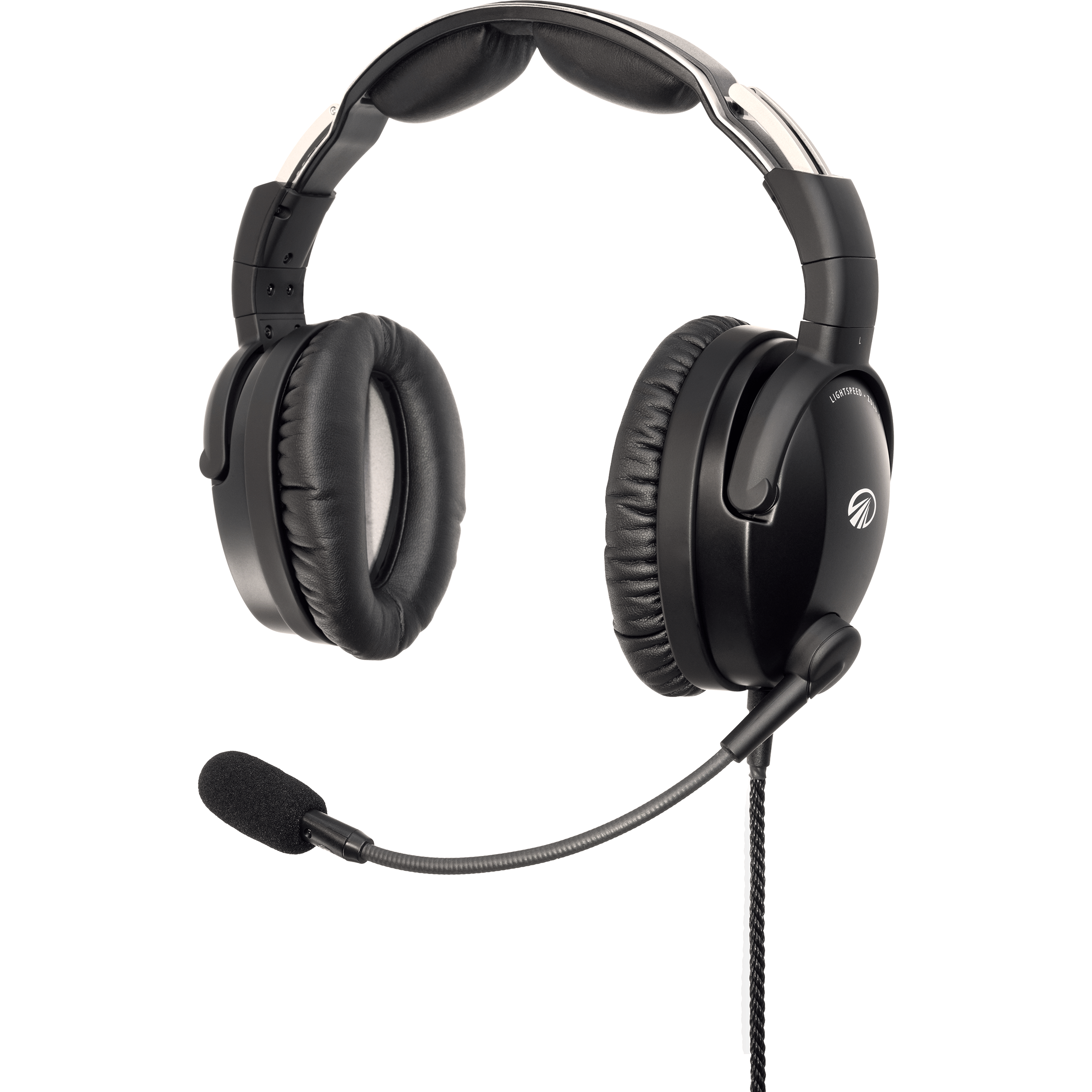 Premium ANR headsetLightspeed Zulu 4 ANR Aviation Headset - Dual GA PlugCheck current availability on Amazon (paid link)
 Premium headsetBose A30 Bluetooth Aviation Headset - Dual PlugCheck current availability on Amazon (paid link)
What It's Really Like to Be a Flight Instructor Today
We’ll dig into the real challenges and incredible rewards of teaching people to fly—from getting comfortable in the right seat to molding the next generation of aviators. Think of this as your straightforward roadmap, covering everything from the FAA minimums to landing that first instructor gig. The goal is to get you started with confidence.
Becoming a flight instructor is one of the most respected and demanding jobs in aviation. It's not just about building flight time. It’s about taking on the huge responsibility for your student’s safety, their learning curve, and ultimately, their success in the cockpit. This job requires a ton of patience, sharp communication, and a rock-solid grasp of why an airplane flies.
A Career in Flux
The aviation world is always changing, and the role of the CFI is right there with it. We've seen some interesting shifts lately. In 2023, the total number of active CFI certificates actually saw a 1.9% decrease, the first dip since 1999, mostly because of instructors retiring. But at the same time, a fresh wave of pilots is stepping into the role, helping to keep things stable.
This back-and-forth creates a real opportunity. Sure, lots of pilots use instructing as a launchpad to the airlines, but more and more are finding that they genuinely love teaching and decide to make it a long-term career.
More Than a Time-Building Job
For those who lean into it, flight instruction is an unbelievably rewarding profession. There’s nothing quite like the feeling of watching a student nail their first solo or the pride you feel when they pass their checkride.
The skills you'll build are invaluable:
- Razor-Sharp Stick-and-Rudder Skills: Flying from the right seat forces you to think three steps ahead of your student. You learn to anticipate their moves and your own control inputs become incredibly precise.
- A Deeper Understanding of Aviation: When you have to explain aerodynamics or FAA regulations to someone every single day, your own knowledge becomes unshakable—far beyond what you needed to pass your own tests.
- Real Leadership and Mentorship: You’re not just an instructor; you're a mentor. You are shaping the habits, attitudes, and decision-making of future pilots for their entire careers.
Thinking about the full path from student pilot to seasoned pro can seem overwhelming, but it's a well-defined and completely achievable goal. If you're wondering about the big picture, you can get a better idea of the timeline by exploring our guide on how many years to become a pilot. Choosing this career is a direct investment in your own expertise and a massive contribution to the future of aviation safety.
So, You Want Your CFI Certificate? First, Let's Cover the Basics.
Before you can even think about sitting in the right seat and teaching someone else to fly, the FAA wants to know you’ve got your own act together. These prerequisites aren't just boxes to check; they're the foundation of your entire career as an instructor. They prove you have the experience and knowledge to safely mentor a student pilot from their first flight to their checkride.
The biggest hurdle right out of the gate? You have to hold a Commercial Pilot Certificate. This isn't just another piece of paper. It’s a testament to your ability to fly with a much higher degree of precision than a private pilot. It shows you can operate an aircraft with the professionalism expected of someone getting paid to fly—and that’s exactly the standard you’ll need as a teacher.
The FAA's Non-Negotiables
Beyond your commercial ticket, there are a few other core requirements the FAA lays out. Think of these as the absolute minimums to get started.
- You must be at least 18 years old.
- You need to be able to read, speak, write, and understand English fluently. In the cockpit, clear communication isn't just helpful—it's a critical safety tool.
- You must hold a valid instrument rating. You'll be teaching students how to fly in the clouds one day, so you have to be an expert at it yourself.
You'll also need a current FAA medical certificate. A Third-Class is the legal minimum to act as a CFI, but if you have any plans to fly professionally in other roles, it’s a good idea to maintain a First or Second-Class medical.
The journey to becoming a CFI is less about just hitting a certain number of hours and more about what you do with those hours. Every flight is an opportunity to learn something new—navigating tricky airspace, dealing with unexpected weather, or mastering a new procedure. You'll be drawing on these experiences every single day as an instructor.
Building a Rock-Solid Foundation
Getting that commercial certificate is the most significant part of this whole process. The training is intense for a reason; it will polish your flying skills to a professional level. You'll go deep into advanced maneuvers, aircraft systems, and aerodynamics, building the kind of expertise you'll need to answer any question a student throws at you.
If you're mapping out your path, getting a handle on the specifics is a must. You can dive into the complete list of commercial pilot license requirements to see exactly what's involved.
Try to reframe how you think about your flight time. It’s not just about filling out your logbook. It’s about building a portfolio of real-world experience. Don't just fly on perfect, sunny days. Go out and practice crosswind landings when the sock is straight out. Plan a cross-country that takes you right through a Class B airspace. Every challenging situation you handle safely builds the kind of judgment and confidence that separates a good pilot from a great instructor. That's what truly gets you ready for the right seat.
Choosing the Right CFI Training Program
Deciding where to earn your CFI certificate is probably the most important choice you'll make on your path to becoming a flight instructor. Let's be clear: not all training programs are created equal. The school you choose will have a direct impact on your checkride success, how well you can actually teach, and your chances of landing that first instructor job.
The right program doesn't just check the boxes and hand you a certificate; it molds you into a competent, confident, and sought-after educator.
This decision is the culmination of all the work you've put in so far. This infographic is a great visual reminder of the milestones you've likely already hit to get to this point.
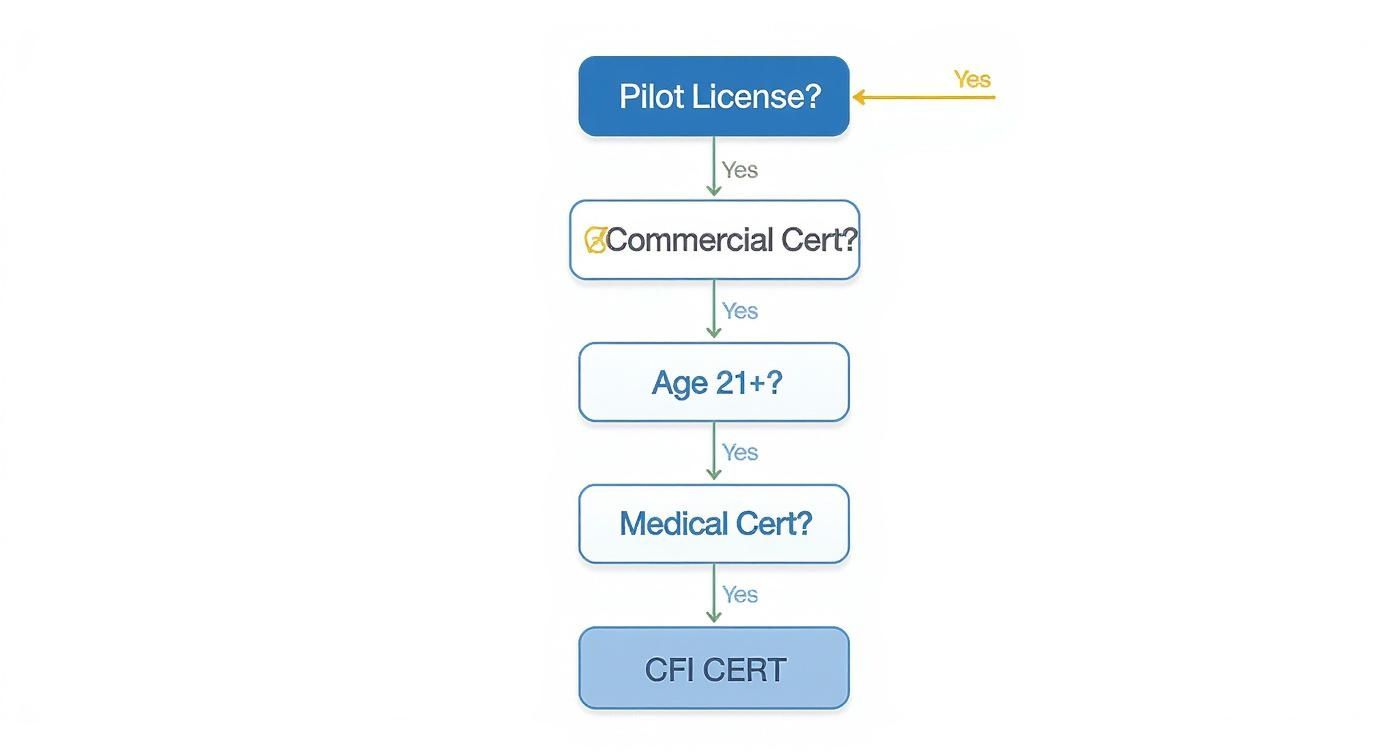
As you can see, becoming a CFI is a building-block process. Choosing your training program is the final, crucial piece that ties everything together.
Comparing CFI Training Program Models
There are a few different ways to approach your CFI training, each with its own rhythm and structure. The best fit for you really depends on your timeline, budget, and how you learn best. Let's break down the most common models you'll encounter.
| Training Model | Typical Duration | Pros | Cons / Cautions |
|---|---|---|---|
| Integrated/Career Path | 3-6 months | Deeply immersive; often a direct pipeline to a job at the school. Focuses on producing quality instructors. | Requires a significant time commitment; may be more expensive upfront. |
| Part 141 Program | 4-8 months | Highly structured, FAA-approved curriculum. Predictable timeline and costs. | Can be rigid; less flexibility for those with other commitments. |
| Part 61 (Pay-as-you-go) | Varies widely | Maximum flexibility to fit your schedule and budget. | Progress can be slow and disjointed without a dedicated instructor and plan. |
| Accelerated Course | 7-21 days | Very fast; gets you the certificate quickly. | Often superficial learning; graduates are viewed skeptically by many employers. High risk of checkride failure. |
Ultimately, a program that invests in you as a future employee is often the smartest choice. It shows they have skin in the game and are confident in the quality of their own training.
The Problem with "CFI-in-a-Week" Programs
You’ve probably seen the ads for "7-day CFI courses" that promise to get you certified in record time. While the speed is certainly tempting, I do not recommend going to a 7-day CFI course as you will not get a job if your knowledge is not good. These programs are notorious for cramming information, which is a far cry from developing genuine teaching skills.
Trust me, an examiner can spot a candidate from an accelerated program from a mile away. The knowledge is usually skin-deep, and the real ability to teach—to see a student's mistake, analyze it, and explain a correction clearly—is almost always missing.
Even more importantly, flight school owners and chief instructors know this. Many are reluctant to hire graduates from these "CFI mills" because they know it means they'll have to spend a ton of time and money retraining them to be effective.
Your goal isn't just to pass a checkride; it's to get a job. A rushed program might get you the certificate, but a comprehensive one makes you employable. Real mastery comes from time, practice, and solid mentorship.
Instead of looking for the fastest way through, look for a program that wants to integrate you into its operation. I recommend a course that you have a chance of a job offer at the end of it. The best schools are always on the lookout for their next generation of instructors, and they prefer to hire from their own pool of CFI candidates.
What A Top-Notch Program Looks Like
A quality CFI program is focused on one thing: producing skilled educators, not just certificate holders. They treat their CFI candidates like instructors-in-training from day one, giving them opportunities to build real-world experience. These schools often have a clear path from training to employment, sometimes offering interviews or even conditional job offers to their best graduates.
Finding the right fit means you need to do your homework and ask the tough questions. For a complete look at vetting potential schools, our guide on how to choose a flight school has a detailed checklist to help you out.
One of the biggest factors right now is instructor availability. The entire industry is grappling with a shortage of qualified CFIs. A recent study of collegiate aviation programs found that 16 out of 18 schools struggled to keep enough instructors on staff, which causes major training delays for students. A school with a healthy instructor-to-student ratio is absolutely essential for making consistent progress.
When you're talking to a potential school, be ready to ask direct questions:
- What's your graduate employment rate? Do you actively hire your own CFI graduates?
- How are instructors assigned? Will I have one dedicated mentor, or will I be bounced around between whoever is free?
- What does aircraft availability look like? How often are students grounded because they can't book a plane?
Choosing a program that gives you a high chance of a job offer upon completion is the smartest investment you can make. It proves the school stands behind its own training, and it gives you a stable, direct entry into your new career.
Mastering Your CFI Written Exams and Checkride
Alright, you've put in the hours and built the skills. Now it's time to tackle the final hurdles on your path to becoming a flight instructor: the FAA written exams and the practical test, better known as the checkride.
This isn't just another rating. The CFI checkride is less about proving you can fly and far more about proving you can teach. You need to show up with a game plan to demonstrate that you have the deep knowledge and instructional skill this certificate demands.
Before you can even schedule that checkride, you'll need to knock out two separate written knowledge tests: the Fundamentals of Instructing (FOI) and the Flight Instructor Airplane (FIA). A word of caution here: while it's tempting to just cram with test prep software to memorize the answers, that's a surefire way to set yourself up for failure when it really counts.
Conquering the Written Exams with Real Understanding
The FOI exam is a different beast altogether. It has very little to do with aerodynamics or regulations and everything to do with the art and science of teaching. You’ll dive into the psychology of learning, human behavior, and what makes for an effective lesson. Don’t just memorize the terms; truly get a feel for the concepts. This is the foundation you'll build your entire teaching career on.
Then comes the FIA exam, which is a deep dive into the technical subjects you'll be teaching. This is where your mastery of everything from aircraft systems to commercial maneuvers is put to the test. A solid score on both of these exams does more than just check a box—it signals to your examiner that you have a firm grasp of the material, setting a professional tone before you even shake their hand.
Demystifying the CFI Checkride
Let's be blunt: the CFI checkride is tough. It’s known for being one of the most challenging practical tests in aviation, often stretching out over a full day. It kicks off with an intensive oral grilling and is followed by the flight portion.
Throughout the entire process, the examiner is looking for one thing above all else: your ability to effectively transfer knowledge from the right seat to a student in the left seat.
The checkride isn't about flying like a seasoned airline captain; it's about teaching like a seasoned instructor. The Designated Pilot Examiner (DPE) is acting as your student. Your mission is to teach them, spot their mistakes, and offer clear, constructive feedback.
The single most important tool in your arsenal for the oral exam will be your lesson plans. I can't stress this enough: do not just download a generic set from the internet. The process of building your own from scratch is where the real learning happens. It forces you to organize your thoughts and truly master each topic, so you're ready to teach whatever subject the DPE throws at you. This is non-negotiable.
Once you get into the airplane, you'll be teaching and demonstrating maneuvers simultaneously. The DPE will intentionally make common student errors to see how you react. Your job is to catch those mistakes and correct them—all while maintaining complete control of the aircraft and the situation.
Examiners will be watching a few key areas like a hawk:
- Positive Exchange of Controls: They need to hear a crisp, unambiguous "You have the flight controls," "I have the flight controls," "You have the flight controls" every single time you swap who is flying. No exceptions.
- Stall/Spin Awareness: You must demonstrate a profound understanding of the aerodynamics at play. You need to teach stall recognition and recovery with the kind of confidence that shows you can keep a student safe in a critical situation.
- Risk Management: Your ability to continuously identify, assess, and mitigate risks throughout the entire flight is under a microscope from the moment you meet.
Ultimately, the checkride is a test of your ability to create a safe and effective learning environment. You're there to prove you're not just a pilot, but a true instructor—ready for the immense responsibility of teaching others to fly.
How to Land Your First Flight Instructor Job
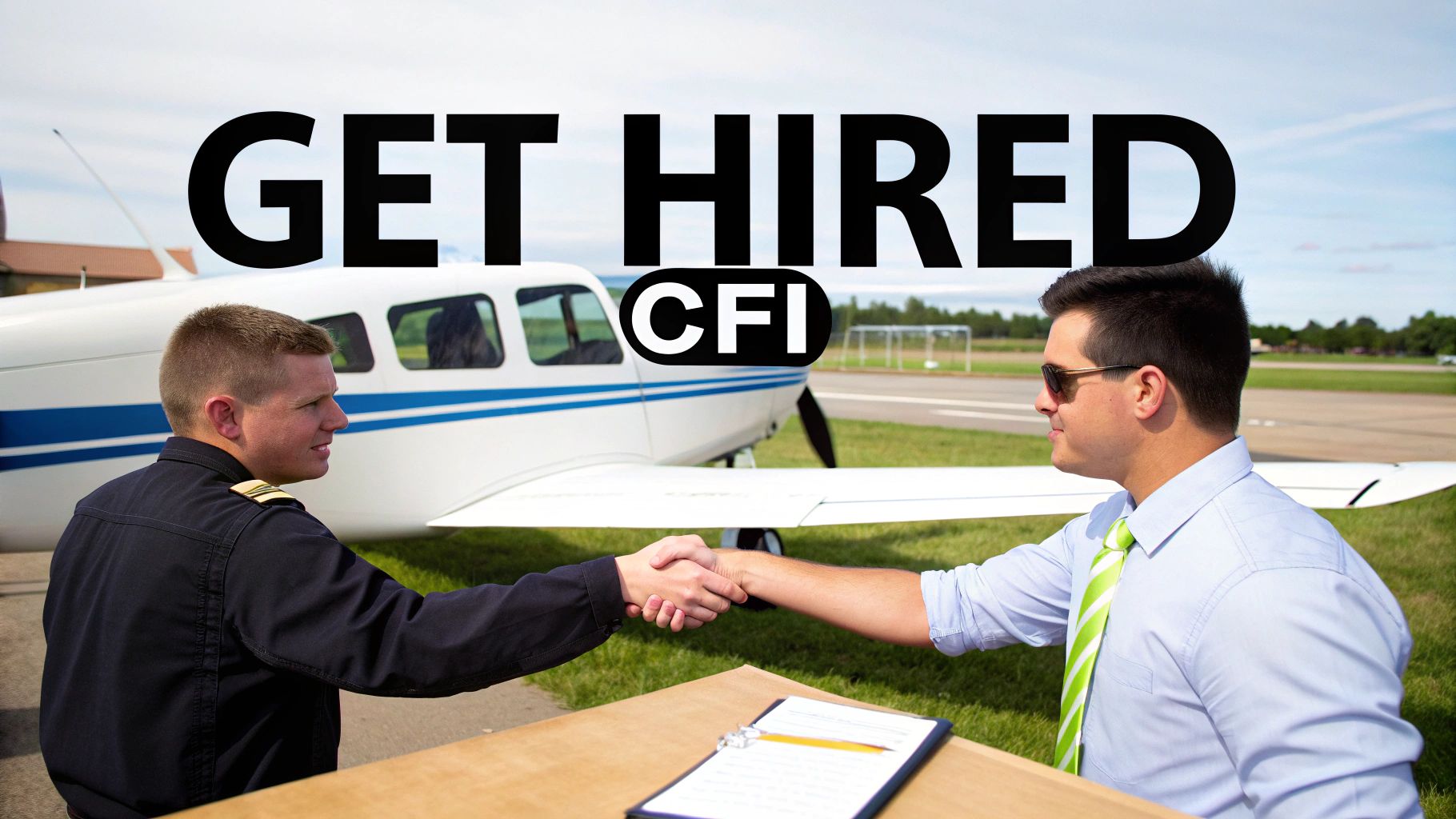
You’ve got that temporary CFI certificate in your pocket—congratulations! Now the real fun begins: landing that first instructing gig. It's easy to jump straight to the big job boards, but you might be surprised to learn that many of the best entry-level CFI jobs are filled before they're ever posted publicly.
So, where do you start? The best first stop is often the place you just left: the flight school where you did your training. Think about it—they’ve already invested a ton of time, money, and resources into you. They've seen your work ethic and your skills up close. If you were a sharp, dedicated student, you're already a known quantity and a prime candidate.
Making an Impression Long Before the Interview
Here’s a little secret: your job interview started on the first day of your CFI course. The chief flight instructor and school managers are always watching. They aren't just looking at your flying abilities; they're scouting for future colleagues. They want instructors who are professional, reliable, and have the right attitude.
Treat every single training session like it's part of the evaluation. Show up prepared, be professional, and build a good rapport with everyone, from the front desk staff to the mechanics. That’s how you make the seamless transition from being just another student to a valued team member.
Of course, you’ll still need a solid resume. Don't just list your certificates and ratings. Make sure to highlight any experience that involves teaching, mentoring, or customer service. Frame your background to show what you can bring to the school—an instructor who can manage students safely while delivering a top-notch experience.
Nailing the CFI Interview and Evaluation Flight
Most flight school interviews have two key parts: the formal interview and a flight evaluation. During the sit-down portion, expect a technical grilling. The chief pilot needs to know your stuff is solid, so be ready for questions on regulations, aerodynamics, and the nitty-gritty of aircraft systems.
They aren't just looking for right answers; they're assessing how you think and communicate. Can you explain a complex topic clearly and concisely? This is a direct preview of your teaching style.
After the interview, you'll almost certainly head out to the airplane. You'll take the right seat and be asked to teach a maneuver to the chief pilot, who will be playing the role of a student. They might even throw in some common student mistakes just to see how you handle the pressure. Your mission is to stay cool, spot the error, and give clear, constructive feedback—all while keeping the flight safe. This practical test is often the make-or-break moment.
The aviation industry is hungry for pilots, and that demand starts with qualified instructors. A global instructor shortage means that good flight academies are always looking for new talent to meet their training goals. For a newly minted CFI, this is a huge opportunity. You can find more details on the global demand for flight instructors and see just how critical this role has become.
A Guide to Buying an Airplane the Safe Way
https://www.youtube.com/embed/n0yt2kEIx4Q
For a lot of us in the aviation world, especially instructors and career pilots, owning your own plane or helicopter is the ultimate dream. It’s a massive investment, no doubt, but if you do it right, the payoff in freedom and experience is incredible. The key is to approach it with a solid, methodical plan to sidestep those nasty, expensive surprises later on.
Your journey shouldn’t start with scrolling through aircraft listings. Instead, you need to figure out your mission. What’s the primary purpose of this aircraft? Are you just looking to build hours in something simple and reliable? Maybe you want a cross-country machine for weekend getaways. Or perhaps a versatile helicopter for local flying is more your speed. Your mission will point you to the right type of aircraft, whether that's a classic Cessna 150 or a Robinson R22.
Due Diligence Is Non-Negotiable
Once you've settled on a specific model, the real work begins. The single most critical step in this entire process is the pre-purchase inspection. I'm not talking about a casual walk-around; this is a comprehensive, deep-dive into the airframe, engine, avionics, and every single system.
Here's a crucial piece of advice: this inspection absolutely must be done by a mechanic you choose and trust—not one the seller conveniently recommends. Getting an independent, expert opinion is your best defense against hidden problems that could drain your bank account.
At the same time, you need to put on your detective hat and dig into the aircraft's logbooks. Scrutinize every single entry, paying close attention to a few key areas:
- Damage History: Look for any sign of repairs from accidents, incidents, or even minor hangar rash.
- Maintenance Compliance: Verify that all Airworthiness Directives (ADs) and mandatory service bulletins are signed off. A missing AD can ground your plane indefinitely.
- Engine History: Check the time since major overhaul (TSMOH) and, just as importantly, who did the work. A reputable engine shop's overhaul is worth far more than one done in a barn.
Protecting Your Investment
Before a single dollar changes hands, a few final legal and financial steps will secure the deal. A professional title search is a must to confirm the seller is the legal owner and that there are no liens against the aircraft. You don't want to inherit someone else's debt.
Using an aviation escrow service is also a smart move. It protects both you and the seller by holding the funds until every condition of the sale has been met.
Owning an aircraft is more than just flying it; it's managing an asset. Think about forming an LLC to hold the title, which can offer a layer of liability protection. Finally, connect with an experienced aviation insurance broker to find the right coverage for your specific mission.
By following these steps, you turn what could be a risky gamble into a smart, safe investment that gets you into the sky with total peace of mind.
Your Top Questions About Becoming a Flight Instructor, Answered
If you’re thinking about becoming a flight instructor, you probably have a ton of questions. It's a big step! From how long it'll take to what the checkride is really like, getting solid answers is key. Let's dig into some of the most common things aspiring CFIs ask.
How Long Does It Take to Become a Flight Instructor?
This really hinges on where you're starting from and how much time you can dedicate to training. If you already have your Commercial Pilot certificate and can jump into a full-time program, you could be ready for your checkride in as little as 2-4 months.
If you're fitting training in around a job or other commitments, a part-time schedule usually stretches that out to 6 months or more. Things like instructor availability, the weather, and how you study all play a big role. The single most important thing is consistency—flying and studying regularly keeps the momentum going.
What Is the Hardest Part of the CFI Checkride?
Ask any seasoned instructor, and they’ll almost always tell you the same thing: the oral exam. This isn't just a quick Q&A; it's an intense, comprehensive grilling that can last anywhere from 4 to 8 hours. You’re not just reciting facts; you have to prove you can teach complex aviation subjects to the Designated Pilot Examiner (DPE) as if they were a brand new student.
The secret to acing the oral? Don't just study—prepare. Building your own lesson plans from the ground up is the best way to do it. It forces you to truly understand the material inside and out, so you can explain it clearly and confidently under pressure.
Can I Make a Long-Term Career as a Flight Instructor?
Absolutely. A lot of pilots see instructing as a stepping stone to the airlines, and that's a great path. But for many others, being a CFI is a deeply fulfilling career in itself.
Many career instructors find a niche they love, like:
- Aerobatics: Teaching the art of unusual attitudes and precision flying.
- Instrument Flying (CFII): Specializing in helping pilots master the skills to fly in the clouds.
- Multi-Engine Instruction (MEI): Guiding pilots into the world of more complex aircraft.
There's a real career ladder here, too. You can advance to roles like Chief Flight Instructor, where you manage an entire school's training program, or even work toward becoming a DPE.
What Is the Average Starting Salary for a CFI?
When you’re just starting out, you can expect to earn somewhere in the range of $25 to $40 per hour. That number can swing quite a bit depending on your location, the flight school you work for, and how much demand there is for instructors in your area.
The good news is that your earning potential grows as you do. Adding your Instrument Instructor (CFII) and Multi-Engine Instructor (MEI) ratings makes you much more valuable and opens the door to higher pay. Many schools also offer full-time, salaried positions to experienced instructors.
Your journey to becoming a professional pilot starts with the right foundation. At DuBois Aviation, we provide personalized, one-on-one instruction to build the skills and confidence you need to succeed. Learn more about our flight training programs.