
You’ve done it. The temporary certificate is in your wallet, your commercial checkride is behind you, and for the first time you can legally fly for hire. That part feels great. The next part is where many new pilots get stuck.
A commercial certificate opens the door, but it doesn’t automatically hand you a cockpit job. The FAA allows you to hold a commercial pilot certificate at 250 hours, yet many employers want more, often somewhere in the 500 to 1,500 hour range, which creates the first real career bottleneck for new pilots, as discussed in this overview of the low-hour commercial pilot gap. That disconnect is why smart pilots stop asking, “What job can I get right now?” and start asking, “Which first job builds the right kind of time?”
That’s where training environment matters. A pilot who learned at a busy towered field like Chino Airport (KCNO) usually reaches the job market with stronger radio habits, better traffic scanning, and more comfort working in real airspace than someone who did most training at a quiet uncontrolled field. Those differences show up fast when employers start evaluating who they trust with renters, students, tours, charter clients, or aircraft repositioning work.
This guide is built for that moment. It covers practical entry level pilot jobs, what each one teaches you, where the traps are, and how a place like DuBois Aviation at KCNO can shape your readiness from day one. If you’re also polishing your first aviation resume, these entry-level resume objective examples can help you tighten the basics before you start sending applications.
1. Flight Instructor (CFI)
For most new commercial pilots, this is still the cleanest first paying job. You teach, you fly regularly, and you build judgment faster than almost anywhere else because students force you to explain everything clearly. If you can teach crosswind correction, instrument scan discipline, and pattern decision-making to someone else, your own flying usually gets sharper.
At a school like DuBois Aviation, that work happens in a useful environment. Chino is a towered Class D airport with multiple runways and real radio flow, so instruction there doesn’t feel sheltered. New instructors who train and teach in that setting get used to sequencing, traffic advisories, runway changes, and the small distractions that become a big deal when a student is already behind the airplane.
What makes this path work
A lot of pilots think the main value of instructing is logging hours. That matters, but it’s not the whole point. Good CFI time is decision-making time.
You learn how to catch mistakes early. You learn when to let a student work through a problem and when to take the controls. You also build habits that interviewers care about later, especially professionalism, checklist discipline, and clear communication.
If becoming an instructor is your plan, DuBois Aviation has a dedicated guide on how to become a flight instructor.
Practical rule: Don’t become a CFI just because it’s the default. Become a CFI if you can stay patient, brief clearly, and keep standards high on your tenth pattern lesson of the day.
Trade-offs new instructors need to understand
The upside is obvious. Instructing is one of the few entry level pilot jobs that can keep you flying consistently while making you more employable.
The downside is just as real. Student cancellations, weather, maintenance, and seasonal slow periods can make your schedule unpredictable. Some instructors also let the job become passive time-building, which is a mistake. If you fly the same local profile without pushing your own knowledge, your logbook grows faster than your skill set.
A stronger version of this path looks like this:
- Add ratings strategically: CFII and MEI make you more useful to a school and broaden the kinds of students and aircraft you can teach.
- Track instruction carefully: Record dual given, ground instruction, stage checks, and endorsements neatly. Later employers will look for organized records.
- Teach in busy airspace if possible: Radio confidence and traffic management are hard to fake in an interview or checkout.
A pilot who leaves instructing after solid time in a Cherokee, Apache, simulator, and towered-airport environment usually moves on with a better foundation than a pilot who only chased Hobbs time.
2. Airline Career Pilot Program Participant
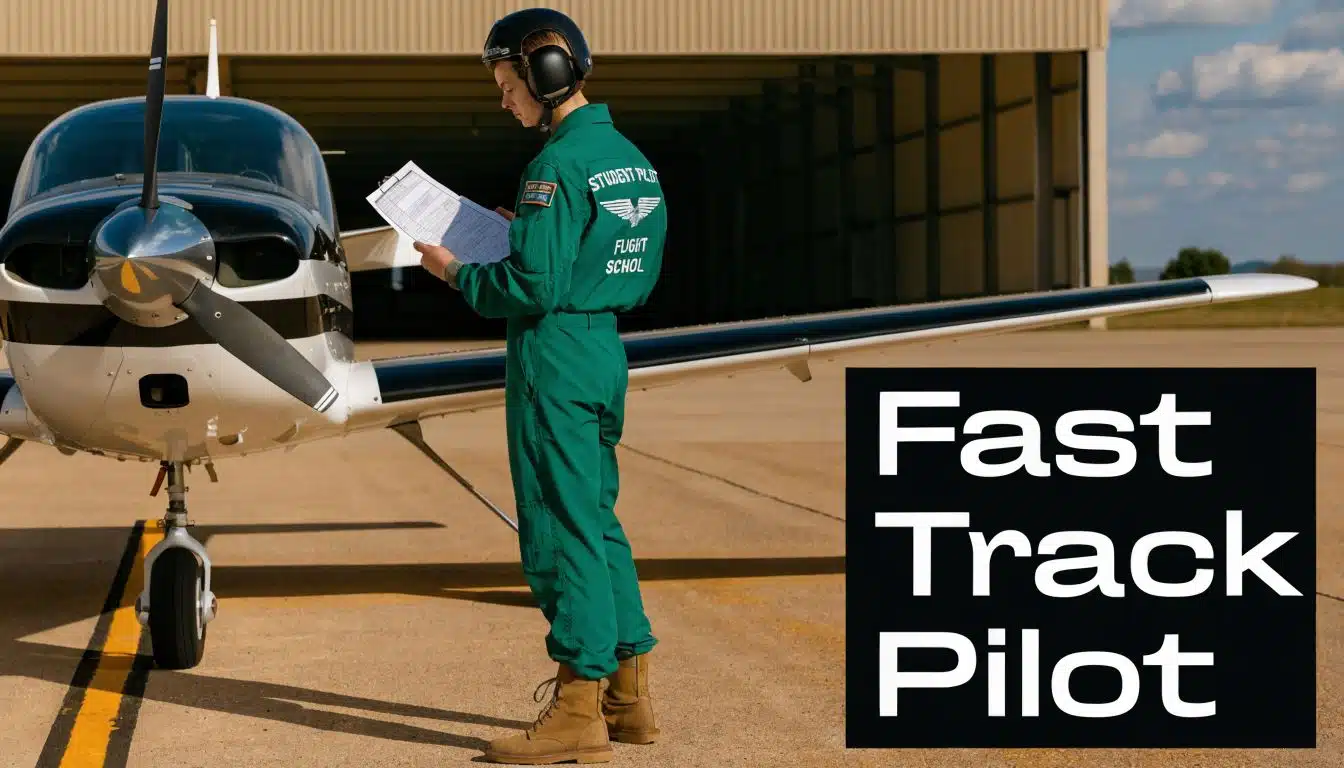
This one isn’t a “job” in the payroll sense at the start, but it is a serious early-career lane. A structured airline career program gives a new pilot something many self-directed pilots never really build: sequence. You’re not guessing what comes next. You move through ratings, multi-engine training, instructor preparation, and hour-building with the airline target in view.
That structure matters because the long game is still substantial. Boeing projects global demand for 660,000 new pilots between 2025 and 2044, including 124,000 in North America, in its 2025 Pilot and Technician Outlook. Strong long-term demand doesn’t remove the early-career grind, but it does mean the pathway remains worth building carefully.
Why structured programs help
The 250-to-1,500-hour stretch is where many pilots lose momentum. They finish commercial training, patch together random flights, and spend too much time reacting instead of planning. A solid program narrows that drift.
At DuBois Aviation, the Airline Pilot Career Path is built around that progression. Training at KCNO also adds something practical: repeated exposure to tower operations, multiple runways, and instrument procedures in a dense Southern California aviation environment. That won’t replace experience, but it does make the jump into professional flying less abrupt.
What to watch for before enrolling
Not every “career program” is a career program. Some are just bundled training sold with a better name.
Ask direct questions. How do graduates usually build time after commercial? Do they move into instruction? Is multi-engine training integrated well, or tacked on late? Is the school operating in an environment that builds airline-style habits, or just minimum checkride skills?
The best program is the one that makes the next step obvious. The worst one leaves you with ratings, debt, and no realistic plan for the hour gap.
This path works best for pilots who want a clear route, can train consistently, and don’t want to improvise every major decision. It works less well for people who need maximum flexibility or who aren’t yet sure whether they want airlines, charter, helicopters, or aircraft ownership and management as a long-term direction.
3. Helicopter Pilot (Robinson or Enstrom Specialist)

If fixed-wing flying doesn’t feel like your only lane, helicopters open a very different career track. The flying is more hands-on, the control feel is different, and the job market tends to be more specialized. That can be a plus if you want a narrower niche with clearer identity, or a minus if you prefer a broader mainstream pipeline.
At DuBois Aviation, students can train in Robinson and Enstrom helicopters, which matters because aircraft familiarity often shapes your first rotorcraft opportunities. If your early goal is tours, utility support, aerial observation, or eventually EMS-related work, your first hours in type and your comfort with local-area operations matter a lot.
Where this path fits
Helicopter training makes sense for pilots who want rotorcraft work, not just anyone trying to be “different.” The learning curve is real, and the skills don’t transfer one-for-one from airplanes. Hover control, confined-area judgment, and low-level decision-making require a different mindset.
That said, rotorcraft training can be a smart fit for pilots who enjoy precision flying and mission-oriented work. Scenic flights around areas like Chino Hills and the Prado Basin can also make training feel more connected to real commercial operations instead of purely academic maneuver work.
For a school-specific look at the training side, DuBois Aviation offers helicopter pilot training.
Trade-offs before you commit
Helicopter pilots often build highly relevant mission skills early, but the track is less standardized than the fixed-wing airline pipeline. You need to be comfortable networking into a niche market and building a reputation aircraft by aircraft, operator by operator.
A practical way to approach it is:
- Try a discovery flight first: Rotorcraft flying feels different enough that you shouldn’t commit based on internet research alone.
- Think in mission categories: Tours, utility, patrol, instruction, and EMS all reward slightly different backgrounds.
- Consider dual-track training carefully: Some pilots benefit from both fixed-wing and helicopter ratings. Others spread themselves too thin and become average at both.
The pilots who do best here usually choose helicopters because they want the work itself, not because they assume it’s a shortcut.
4. Aircraft Rental Pilot and Independent Operator
Not every early-career pilot gets hired immediately into a formal flying role. Some keep moving by renting aircraft, flying purposeful missions, and building the exact kinds of experience employers want to see. Done right, that can be useful. Done poorly, it becomes expensive wandering.
At DuBois Aviation, certificated pilots can rent aircraft like Piper Cherokees, the Cessna 150, Mooney M20B, and Piper Apache. That fleet matters because rental flying can be more than local laps around the practice area. It can support instrument proficiency, cross-country planning, passenger handling, systems familiarity, and more disciplined recordkeeping.
How rental time becomes valuable
Rental flying only helps your career if the flights have a reason behind them. Employers can tell the difference between “I flew a lot” and “I developed as a pilot.”
Useful examples include instrument approach practice into towered airports, longer cross-country legs with weather planning, supervised transition work in complex or multi-engine aircraft, and recurrent proficiency sessions with an instructor. If you’re planning on aircraft ownership, ferry support, buyer demo flights with an instructor, or future aircraft management work, this kind of rental experience can also sharpen your operational judgment.
That last point matters for people who want to buy or sell airplanes or helicopters later. A pilot who has spent time renting and learning aircraft systems, maintenance logs, dispatch procedures, and checkout standards is usually far better prepared to evaluate an aircraft purchase safely.
What doesn’t work
A lot of low-time pilots burn money trying to “look experienced.” They rent whatever is available, log random hours, and never tie those flights to a goal. That doesn’t impress employers, and it won’t protect you if you eventually decide to buy an aircraft.
Rental time should answer a question. Can you manage a cross-country well? Can you brief an instrument arrival cleanly? Can you operate confidently in towered airspace? If the flight answers nothing, it’s probably not helping enough.
If you use rental aircraft as part of your early-career strategy, keep it structured:
- Fly with a plan: Each flight should target a weakness or build a specific capability.
- Stay current with instruction: A checkout isn’t the same as recurrent training.
- Learn the paperwork side: Weight and balance, discrepancies, maintenance status, and operating limitations matter as much as stick-and-rudder skill.
This path is especially practical for pilots bridging between training and a first real flying paycheck, or for pilots preparing for aircraft ownership the safe way.
5. Commercial Pilot and Charter Operator
The first time a new commercial pilot shows up for a 6 a.m. passenger trip, the difference is obvious. The airplane has to launch on time, the client expects a calm answer when the weather shifts, and nobody cares that the pilot logged the certificate only a few months ago. Charter work feels more like professional flying because the mission is real and the pressure is real.
It is also one of the most misunderstood entry-level paths.
A commercial certificate lets a pilot get paid, but it does not make that pilot competitive for many charter seats. Insurance requirements, customer service expectations, and the operator's own standards usually push hiring well past bare minimum time. As noted earlier, federal labor data shows steady hiring across airline and commercial pilot roles, but those openings do not mean every low-time commercial pilot can walk straight into Part 135 flying.
That is why the training environment matters. A pilot coming out of Chino, especially one trained in the pace and radio flow around KCNO and in the structured environment at DuBois Aviation, often starts with a better grasp of workload than a pilot who has only flown in quiet practice areas. Busy ground movement, tower instructions, changing runway assignments, and tighter sequencing do not replace charter experience, but they do reduce the shock when the job starts asking for polished cockpit management on day one.
What this job teaches quickly
Good charter and small commercial operators teach habits that flight training only starts to build. The pilot has to think beyond the airplane. Passenger comfort, schedule reliability, weather decisions, fuel planning, and communication with the office all matter. A legal go decision can still be a poor business decision if it strands a client or creates an avoidable delay later in the day.
That trade-off is part of the job.
The best early-career operators teach new pilots how to balance service with restraint. A weak operator teaches the opposite. If the culture rewards saying yes to every trip, cutting corners on rest, or treating maintenance write-ups as inconveniences, a low-time pilot can pick up bad habits fast.
How to judge a real opportunity
Do not evaluate a charter job by the title alone. Evaluate the operation.
Ask what aircraft the company flies and what kind of missions fill the schedule. Ask who handles release decisions, maintenance coordination, and customer communication when a trip changes. Ask how new pilots are introduced to the line. A serious operator will have clear answers and no irritation about the questions.
A few practical signs usually separate a useful first charter job from a bad one:
- Structured onboarding: Initial operating experience, supervised trips, and clear SOPs matter more than promises about quick turbine time.
- Clean records and maintenance discipline: If logbooks, discrepancies, or MEL-style decision making seem sloppy during hiring, expect bigger problems later.
- Aircraft that match your next step: Single-engine piston time can still be valuable, but multi-engine, turbine, or IFR-heavy flying may fit your long-term plan better.
- Predictable standards: A company should be able to explain how it handles weather, duty limits, fuel reserves, and no-go calls without improvising.
For a pilot training at KCNO, this path makes the most sense when the goal is customer-facing professional flying and the pilot is ready for the responsibility that comes with it. The wrong charter seat can stall a career or damage judgment. The right one builds decision-making, professionalism, and logbook quality in a hurry.
6. Flight Test and Evaluation Pilot
This is the least typical option on the list, but it deserves mention because some pilots are wired for technical work more than passenger operations. If you care about systems, performance differences, modification effects, and disciplined documentation, flight test and evaluation can be a better long-term fit than line flying.
Early on, very few pilots step straight into formal test roles. What usually happens is more gradual. A pilot builds a reputation for precision, becomes proficient with a type, works around maintenance or avionics teams, and earns trust on increasingly technical flights such as post-maintenance checks, ferry work, acceptance flights, or evaluation flying under supervision.
Why this path suits a certain kind of pilot
The strongest candidates tend to be calm, analytical, and very exact with records. They don’t just say an airplane “felt off.” They can describe what changed, when it changed, under what conditions, and whether it was repeatable.
If you’ve trained in multiple aircraft and spent time around instructors who emphasize systems understanding, that helps. So does time in simulators, instrument flying, and any environment where checklist discipline matters. A school fleet that includes basic trainers and more advanced aircraft can be useful here because you start noticing how design choices change handling and workload.
Real-world relevance beyond formal test flying
Even if you never become a dedicated test pilot, the mindset behind this path is valuable in other aviation work. It’s especially useful for aircraft buyers, sellers, and owners.
A safe aircraft purchase depends on more than paint, panel photos, and a smooth demo flight. A technically minded pilot asks better questions. How current are the logs? What modifications were installed? Was the avionics work documented properly? Does the aircraft fly as expected through the full envelope you can safely examine during an evaluation? Those habits protect buyers from expensive mistakes.
If you want to buy an airplane the safe way, learn to think like an evaluator before you think like an owner.
This route won’t be the fastest way to log broad commercial hours, but for the right pilot, it builds a career around technical credibility instead of volume.
7. Medevac and Emergency Medical Services Pilot

A lot of new pilots are drawn to EMS work because the mission means something. You’re not flying people to vacation spots or teaching steep turns. You’re supporting medical crews and trying to help someone on a very bad day. That sense of purpose is real.
But this is one of the jobs new pilots romanticize too early. In practice, medevac flying is usually not a first job right out of commercial training. Operators want mature judgment, very strong weather decision-making, and a pilot who won’t let urgency override risk management. That’s why many future EMS pilots spend years building toward it through instruction, rotorcraft work, patrol, tours, utility support, or fixed-wing commercial operations.
What prepares you for EMS later
Helicopter training is a natural foundation if you want rotor EMS. DuBois Aviation’s Robinson and Enstrom training can fit into that longer-term preparation. Fixed-wing medevac, where available, also rewards instrument discipline and operational reliability.
The bigger issue is mindset. EMS flying demands that you stay calm around urgency. The mission may feel emotional to everyone around you, but the pilot still has to think in terms of ceilings, terrain, fuel, alternates, aircraft status, crew coordination, and whether the trip should launch at all.
Hard truths about this career path
Many pilots love the mission but underestimate the responsibility. Flying for medical transport means saying no when conditions don’t support a safe operation, even if every other person involved wants the flight to happen.
That’s why the best preparation often looks ordinary on paper:
- Build strong instrument habits: Sloppy scan and weak procedural discipline have no place near EMS.
- Develop crew communication: You’ll work around dispatch, medical staff, and operational pressure.
- Choose professionalism over adrenaline: If what attracts you most is excitement, this probably isn’t the right niche.
For the right pilot, EMS can become one of the most meaningful jobs in aviation. It just isn’t a shortcut, and it shouldn’t be treated like one.
8. Youth Aviation Advocate and Discovery Flight Instructor
One of the most overlooked entry level pilot jobs is also one of the most useful for long-term growth. Discovery flights, youth camps, intro lessons, and aviation outreach give low-time professional pilots a way to combine flying, communication, sales awareness, and mentorship.
This role can be especially strong at a place like DuBois Aviation, where the school already supports youth aviation camp activity, discovery flights, and an active local flying community. A new instructor or mentor in that environment isn’t just logging time. They’re learning how to welcome nervous first-time flyers, speak with parents, explain training pathways, and represent aviation well.
Why this job matters more than people think
A pilot who can conduct a safe, memorable discovery flight is doing more than turning left over local landmarks. They’re managing a customer experience while staying alert to airspace, passenger comfort, and the student’s first impression of flying. That’s a real professional skill.
There’s also a pipeline benefit to the industry. Boeing’s forecast points to a need for 124,000 new pilots in North America between 2025 and 2044, which reinforces why schools and mentors need to keep bringing new people into aviation through informed, positive first experiences. Outreach isn’t fluff. It supports the future workforce.
Where this path leads
Many pilots use youth and discovery work as a bridge into full instruction. Others stay involved because it broadens their professional value inside a school or aviation organization. It can also lead naturally into program management, recruiting, customer-facing instruction, and specialized introductory training for both airplanes and helicopters.
This job favors pilots who are good with people and who understand that first impressions matter. A sloppy, rushed, ego-driven discovery flight can turn a future student away from aviation entirely. A thoughtful one can start a career.
A few habits make a big difference:
- Brief clearly: First-time flyers don’t need jargon. They need clarity and calm.
- Keep the mission student-focused: Don’t show off. Help them enjoy and understand the flight.
- Treat every intro flight professionally: The person in the right seat may become a student, renter, buyer, or future aviation colleague.
8 Entry-Level Pilot Jobs Compared
| Role | Implementation Complexity 🔄 | Resource Requirements ⚡ | Expected Outcomes 📊⭐ | Ideal Use Cases 💡 | Key Advantages ⭐ |
|---|---|---|---|---|---|
| Flight Instructor (CFI) | Moderate 🔄, CFI written + practical; commercial cert required | Moderate ⚡, 250+ hrs, training aircraft, simulators | Rapid hour-building, steady instructional income 📊 | Entry-level pilots building hours and teaching skills 💡 | Consistent pay, networking, flexible schedules ⭐ |
| Airline Career Program Participant | High 🔄, compressed multi-rating curriculum, strict standards | High ⚡, $50k–$100k+, intensive flight time, multi‑engine access | Fast-tracked airline readiness; structured records 📊⭐ | Students targeting regional airline first officer roles 💡 | Mentorship, structured progression, multi‑engine experience ⭐ |
| Helicopter Pilot (Robinson/Enstrom) | Moderate–High 🔄, rotorcraft‑specific maneuvers & emergency procedures | High ⚡, expensive per-hour training, specialized helicopters | Faster commercial cert; niche job opportunities, higher pay potential 📊 | Scenic tours, EMS, rescue, corporate lift in rotorcraft 💡 | Lower hrs-to-commercial, niche demand, higher earning potential ⭐ |
| Aircraft Rental Pilot / Independent Operator | Low 🔄, certification-ready operations; flexible agency rules | Moderate ⚡, hourly rental fees, fuel, reservation costs | Flexible hour-building and personal/professional missions 📊 | Pilots needing flexible access and varied experience building 💡 | Scheduling flexibility, no ownership, diverse aircraft access ⭐ |
| Commercial Pilot / Charter Operator | Moderate–High 🔄, regulatory compliance (Part 135), ops management | High ⚡, insurance, maintenance, crew/operational costs | Revenue-generating ops while building airline-qualifying hours 📊 | Pilots seeking paid charter, air taxi, and mission work 💡 | Immediate income, diverse missions, market demand ⭐ |
| Flight Test & Evaluation Pilot | Very High 🔄, precision test execution, technical protocols | High ⚡, specialized instrumentation, engineering support, certifications | Technical career path with strong pay and engineering impact 📊⭐ | Analytical pilots aiming for manufacturer or research roles 💡 | Access to experimental aircraft, technical skill development ⭐ |
| Medevac / EMS Pilot | High 🔄, 24/7 readiness, medical/crew coordination, high-pressure ops | High ⚡, specialized training, on-call staffing, aircraft readiness | Life-saving missions, rapid skill growth, competitive pay 📊 | Emergency medical transport and rescue operations 💡 | Meaningful impact, strong demand, structured employment ⭐ |
| Youth Aviation Advocate / Discovery Flight Instructor | Low–Moderate 🔄, youth pedagogy, safety procedures, outreach | Low–Moderate ⚡, discovery aircraft time, curriculum materials | Community impact, mentorship, modest income and recruitment pipeline 📊 | Outreach, aviation camps, STEM education and youth recruitment 💡 | High fulfillment, builds future pilot pipeline, flexible roles ⭐ |
Your Career Takes Flight from Here
You finish your commercial checkride, logbook in hand, and the next question shows up fast. Do you instruct, rent and build time, commit to a structured airline track, shift into helicopters, or take a job that pays now but does little for your next qualification? That choice shapes your first 500 to 1,000 hours more than many pilots expect.
Early career decisions are rarely about finding the perfect job. They are about choosing a role that builds judgment, consistency, and the kind of experience your next employer will respect. A low-quality hour is still an hour in the logbook, but it may not improve your decision-making, cockpit discipline, or professionalism.
That is why airport environment and training culture deserve more attention than they usually get. A pilot who trained at a busy towered field like Chino Airport, with regular exposure to radio pressure, sequencing, runway changes, traffic conflicts, and real-world pace, starts many entry-level jobs with fewer blind spots. At DuBois Aviation, that training environment is not theoretical. Students see how airplane and helicopter training, simulator work, rental checkout standards, and instructor development connect to specific jobs, not just certificates.
The hiring market also needs to be viewed honestly. Airline demand has cooled from the post-pandemic rush, and that is normal. New pilots do not need a fantasy version of the industry. They need the honest version. Hiring speeds up, slows down, and shifts by operator type, but pilots who train well, keep their records clean, and choose useful early jobs still keep progressing.
Pay remains one reason many pilots stay committed, but compensation only makes sense when matched against training cost, time to employability, and the kind of flying you want to do. An instructor may earn less at first but build highly transferable skills. A helicopter specialist may face a narrower path but develop a more defined niche. A rental pilot or independent operator may gain flexibility, though that route demands sharper judgment about aircraft condition, insurance, and personal minimums.
There is no single best first job.
A patient teacher often does well as a CFI. A pilot who likes systems, procedures, and technical detail may be better suited to test support or evaluation work later on. Someone focused on rotorcraft may have little interest in the fixed-wing airline ladder. A pilot drawn to ownership or business flying may benefit more from rental operations, maintenance awareness, and aircraft decision-making than from chasing a title that sounds better than it performs.
The practical question is simpler. What is the next step that removes your biggest career bottleneck?
For one pilot, that means adding instructor certificates and getting paid to sharpen the basics every day. For another, it means choosing a school and airport where airline-style procedures are part of normal training. For someone else, it means committing early to helicopter time, aircraft access, or commercial operating standards. Good career progress usually looks repetitive from the outside. Add the rating. Build the right time. Improve judgment. Repeat.
For pilots who want airplane or helicopter training, rental access, instructor development, or an airline-focused training path, DuBois Aviation is one relevant option at KCNO. The school’s one-on-one instruction, rental fleet, simulator support, and location at a busy towered airport give new pilots a clearer view of how training decisions translate into job readiness.