You're probably in one of two spots right now. You saw a Cub, Citabria, or Decathlon on the ramp and thought, “I want to learn that,” or you typed Tailwheel endorsement near me into a search bar and found a messy mix of school pages, stale listings, and aircraft that may or may not be available.
That's normal. Tailwheel training is one of the most satisfying upgrades a pilot can make, but it's also one of the easiest to underestimate. The endorsement itself is simple on paper. Finding a real airplane, a current instructor, and enough schedule continuity to finish safely is the part that catches people off guard.
For Southern California pilots, especially around Chino, Ontario, Riverside, and the Inland Empire, the good news is that there are workable paths. The key is planning for reality instead of planning around a search result.
Table of Contents
- The Allure of the Taildragger and Your Path to Flying One
- The Reality of Finding a Tailwheel Endorsement Near You
- Mastering the Craft What the Tailwheel Endorsement Training Involves
- Budgeting Your Endorsement Typical Costs and Flight Hours
- How to Buy an Airplane Safely and Smartly
- Your Logbook Endorsement and Life as a Tailwheel Pilot
The Allure of the Taildragger and Your Path to Flying One
Most pilots don't decide to get a tailwheel endorsement because a regulation inspired them. They decide after standing near an old Cessna, a Piper Cub, or an aerobatic taildragger and realizing those airplanes ask more from the pilot. They look alive on the ground. They reward precision. They punish laziness.
That's why the endorsement carries so much respect. It's not just permission to fly a different landing gear configuration. It's a stick-and-rudder checkpoint. In a tricycle-gear airplane, you can get away with a little slop and still look acceptable. In a taildragger, the airplane tells the truth immediately.
At a busy field like Chino, that matters. Towered operations, changing winds, traffic flow, and real-world pace expose weak feet and delayed control inputs quickly. Pilots who train well in tailwheel airplanes usually come out sharper everywhere else. Taxi discipline improves. Crosswind judgment improves. Energy management improves.
Practical rule: A tailwheel endorsement isn't about collecting a line in your logbook. It's about learning to stay ahead of an airplane that won't forgive passive control work.
The path itself is straightforward. You find a school or instructor with an available tailwheel aircraft, train until you can safely handle the required takeoffs, landings, wheel landings, and go-arounds, then your instructor signs the endorsement once you've shown proficiency. The hard part isn't understanding the process. It's lining up the right airplane, instructor, schedule, and expectations from the start.
The Reality of Finding a Tailwheel Endorsement Near You
You find a school ten miles away, call, and hear some version of the same answer: the tailwheel airplane is down, the one instructor who teaches it is booked out, or training happens only when schedules line up just right. That is the practical meaning of “near me” for a lot of pilots.
Why local search results can mislead you
The local-search problem is simple. Tailwheel training is harder to keep available than primary training in a tricycle-gear fleet. There are fewer airplanes, fewer instructors who teach them regularly, and less slack in the schedule when maintenance or weather interrupts the plan.
That is why a search result is only a lead, not an answer. A website may still show tailwheel instruction even if the airplane has been offline for weeks or the instructor is only available a couple of days each month. I tell pilots to verify the operation, not the marketing.
In Southern California, cast a wider net early. A directory such as this list of flight schools near Chino helps you identify who is in range, but the useful part happens after that. Call, ask direct questions, and confirm what is flying now.
The “near me” paradox is real. The closest option is often the least practical if it stretches training over several weeks, while a school a bit farther away can be the better choice if it has a current airplane, a regular instructor, and enough availability to keep you progressing.
What to ask before you book
A good phone call should answer operational questions, not general ones. Skip “Do you offer tailwheel training?” Ask questions that expose whether you can complete the endorsement without wasting time and money:
- Aircraft status: Is the tailwheel airplane currently flying and bookable this month?
- Instructor availability: Which instructors teach in it, and how often do they fly tailwheel students?
- Training pace: Can lessons be scheduled on back-to-back days or in a concentrated block?
- Weather and wind approach: Do they train in reasonable crosswinds, or does the program stall every time conditions get slightly sporty?
- Program structure: Is tailwheel training a recurring part of the operation, or an occasional add-on when someone happens to be free?
Short, specific questions save a lot of frustration.
Vague answers usually predict a vague training experience. In tailwheel work, long gaps between lessons hurt. Students lose timing, feet get rusty, and the first part of the next lesson is often spent getting back to where they were before. A focused schedule usually produces better results than chasing scattered one-hour openings.
A practical SoCal path through Chino
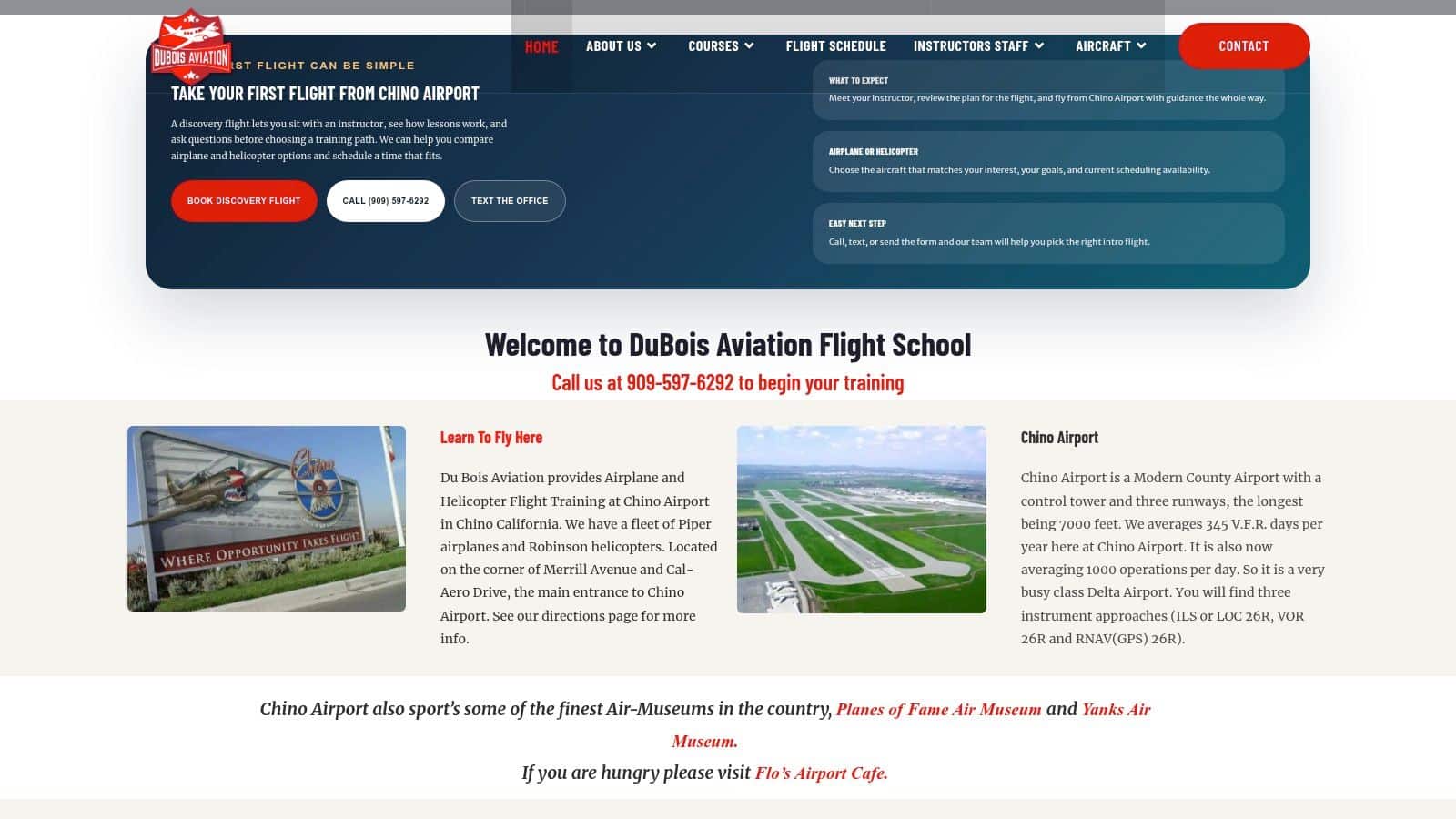
For Southern California pilots, Chino is often the cleanest answer to the “near me” problem because it gives you a realistic training destination, not just another search result. KCNO is busy enough to feel like an actual world, with active traffic flow, towered operations, and runway options that make the training relevant from day one.
One concrete option there is DuBois Aviation at Chino Airport (KCNO). The value is not hype. It is clarity. A named course is different from a casual “we can probably do that.”
That matters more than many pilots expect. If you are based in the Inland Empire, Orange County, or eastern Los Angeles County, it can make more sense to plan a focused block of training at Chino than to keep calling closer schools that cannot support a steady endorsement track. A little more drive time is often the cheaper, faster, and safer choice.
Mastering the Craft What the Tailwheel Endorsement Training Involves
A tailwheel endorsement is short on paperwork and long on judgment. Pilots usually figure that out on the first rollout, when the airplane starts asking for fast feet, disciplined eyes, and attention that does not switch off after touchdown.
What the FAA requires
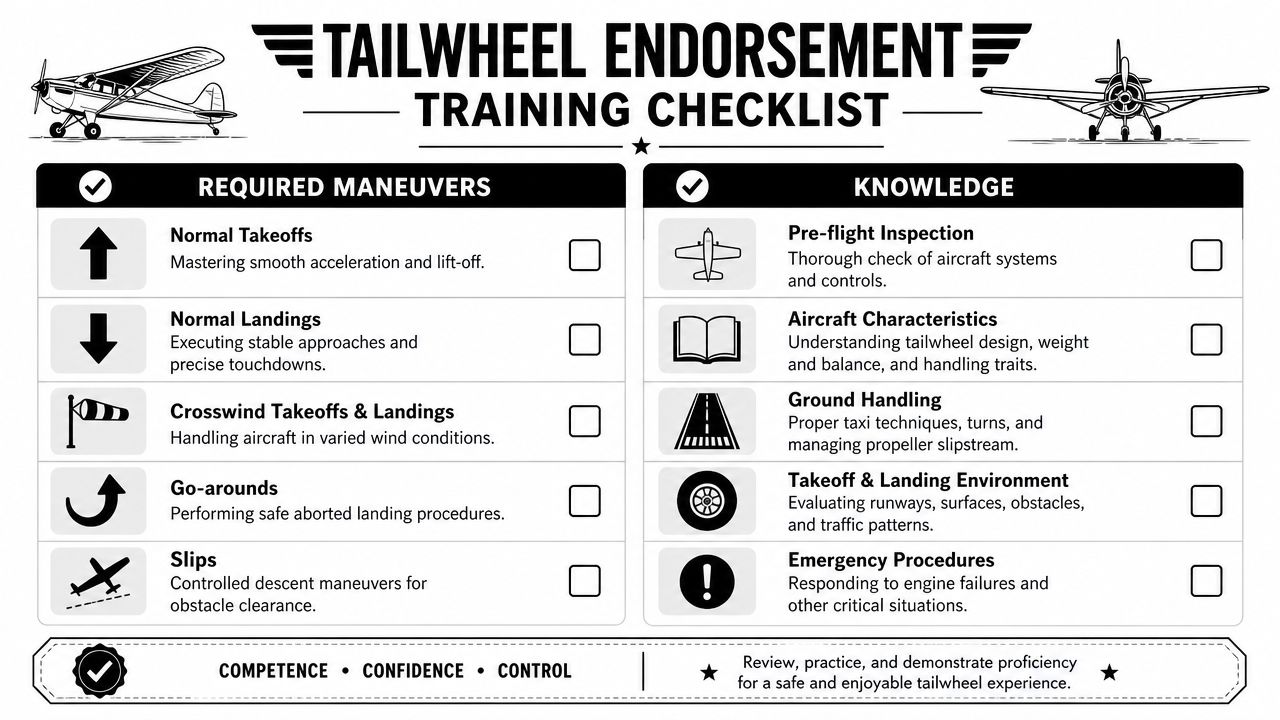
Under 14 CFR 61.31(i) as summarized by Hewison Aviation, the tailwheel endorsement is proficiency-based, not hour-based. The required areas include normal and crosswind takeoffs and landings, wheel landings, and go-arounds. There is no federal minimum hour requirement. The instructor signs the logbook when the pilot can handle the airplane safely and consistently.
That standard makes sense. Tailwheel flying is skill acquisition, not time collection.
Ground knowledge matters as much as stick-and-rudder work. Pilots need to understand why yaw develops so quickly on the ground, how aft CG changes the handling picture, and why wind during taxi can create problems before the takeoff roll even starts. At a place like Chino, where traffic pace stays up and runway conditions are not always gentle, those details stop being academic pretty quickly.
Where many pilots hit the wall
Most nosewheel pilots do not struggle because they are careless. They struggle because they are late.
They wait for the drift, then correct. In a tailwheel airplane, that delay is enough to let a small yaw grow into a bigger one, especially during takeoff roll or after touchdown when the airplane still has plenty of energy. The key phrase many instructors use is simple: be proactive, light, loose, but active with your feet.
That sounds easy on the ground. In the cockpit, it takes practice.
A few habits make a big difference:
- Keep your feet alive: Rudder work starts early and continues through the rollout.
- Look well down the runway: A longer sight picture helps you catch deviation sooner.
- Keep flying after touchdown: The landing is not finished when the mains touch.
- Use proper control position in wind: Taxiing carelessly in a taildragger can get expensive fast.
I tell transitioning pilots the same thing I see every week. Big corrections usually mean the pilot waited too long. Small, early inputs keep the airplane manageable.
What productive training looks like
Good tailwheel training has a clear sequence and enough repetition to build timing, not just familiarity. If the airplane, instructor, or schedule changes every lesson, progress slows down. That matters even more if you had to solve the "near me" problem by driving to a field that can support steady training. A focused block of lessons at one airport usually beats scattered sessions closer to home.
The skill progression is straightforward, but it is rarely easy.
Taxi and directional control
In this stage, pilots learn the airplane's ground manners. If you cannot keep it straight at low speed, the faster phases will feel rushed.Normal takeoffs and landings
These build sight picture, pitch discipline, and the habit of staying ahead of yaw.Wheel landings and crosswind work
Here the training gets more demanding. The pilot has to manage attitude, energy, and alignment together, with less room for lazy feet.Go-arounds
Tailwheel go-arounds teach decision-making under pressure. A pilot needs to recognize an unstable landing early, add power cleanly, and keep directional control while the airplane transitions back to flight.
A defined course helps because it gives the student a repeatable standard instead of a vague promise. If you are sorting through options, a school that publishes a clear tailwheel endorsement training program at Chino Airport gives you something concrete to evaluate. That is especially useful in Southern California, where the closest option is not always the one that can get you trained efficiently.
What good training feels like is simple to describe. Each lesson has a purpose. Each landing teaches something specific. By the end, the airplane still has your respect, but it no longer feels unpredictable.
Budgeting Your Endorsement Typical Costs and Flight Hours
The FAA does not set a minimum hour requirement for a tailwheel endorsement. That gives instructors room to sign off proficiency instead of a number, but it also makes budgeting harder for pilots trying to plan around work, travel, and aircraft availability.
What the money usually covers
Pilot Institute's tailwheel endorsement guide reports an average cost of about $1,800 and a typical training range of 7 to 10 hours. That is a useful starting point, especially for pilots who have only seen scattered hourly rates and are trying to turn them into a realistic total.
In practice, the final number depends on more than Hobbs time. Aircraft type matters. Instructor availability matters. Weather delays matter. So does how tightly you can schedule the training. A cheaper hourly rate can still cost more overall if you fly one lesson, wait ten days, then spend the next lesson rebuilding what you lost.
That is the part many pilots miss when they search for a tailwheel endorsement near home. The nearby option is not always the lower-cost option once you account for repeated travel, schedule gaps, and extra hours caused by inconsistent pacing. For Southern California pilots, a structured training plan at Chino can make the calendar easier to manage, especially if you already fly locally or have access through the Yellow Jacket Flying Club at Chino Airport.
Why the timeline varies so much
Pilots usually ask about cost first. The better question is how many calendar days to reserve.
A pilot who flies on consecutive days often progresses faster than a pilot with the same stick-and-rudder ability spread across three weekends. Tailwheel sight picture fades quickly when there are long breaks. So does the timing for rudder inputs on rollout. If crosswinds show up on training day, that can help or slow things down, depending on where the student is in the sequence.
The airplane also changes the pace. Some taildraggers are honest and forgiving. Others make you work harder for every good landing. Neither is wrong. It just affects how much time and money you should hold in reserve before you promise yourself a fast signoff.
Here is a practical way to budget the training:
| Planning item | Practical view |
|---|---|
| FAA minimum | No federal minimum hours |
| Typical flying | Expect several hours of dual, not a quick checkout |
| Final cost | Driven by aircraft, instructor, location, and training frequency |
| Best planning habit | Block enough time to finish without rushing proficiency |
Budget for proficiency, not optimism.
That mindset matters. A tailwheel endorsement earned under schedule pressure usually takes longer, feels worse, and teaches less. A pilot who plans for a realistic block of training time tends to show up calmer, learn faster, and leave with a signoff that holds real value.
How to Buy an Airplane Safely and Smartly
A lot of pilots catch the ownership bug soon after tailwheel training. That makes sense. Once you've flown a classic airplane well, it's easy to start scanning listings for Cubs, Citabrias, Champs, or older Cessnas. The same mindset shows up on the rotorcraft side too, with pilots looking at used helicopters and trying to decide what's real value versus a looming maintenance project.
The prebuy is where smart buyers separate themselves
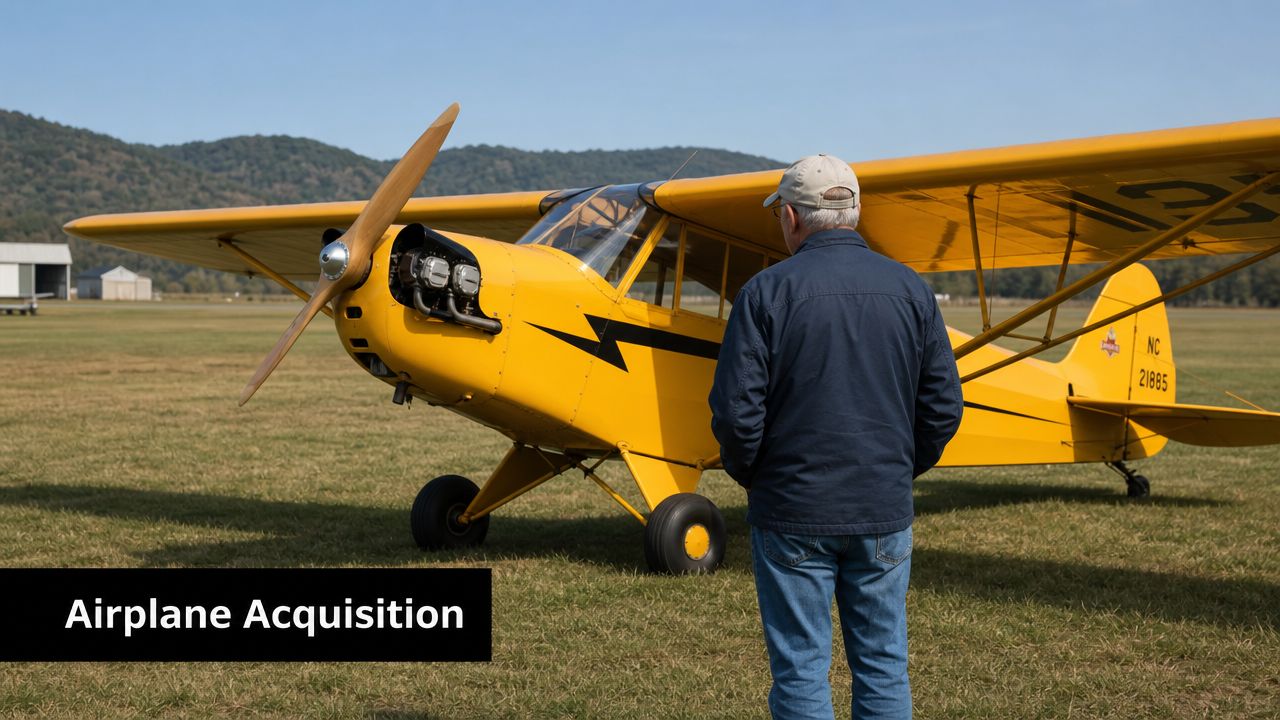
When buying a used aircraft, a pre-purchase inspection must include a differential compression check on each engine cylinder and a thorough review of logbooks for FAA Form 337, AD compliance, and service bulletins, according to AOPA's used aircraft buying guidance.
That's the baseline, not the deluxe package.
The smartest move is using an independent shop that has no connection to the seller. The mechanic doing the prebuy should work for you, not for the person trying to close the sale. Buyers get into trouble when they treat the prebuy like a ceremonial checkbox instead of a decision tool.
What to review before money changes hands
A good prebuy is half mechanical inspection and half paperwork investigation. Both matter.
Use this list as your minimum standard:
- Engine condition: Ask for the differential compression check and a realistic discussion of engine health, not just “it starts and runs.”
- Logbook continuity: Look for missing periods, unclear entries, and major repairs documented on FAA Form 337.
- AD and service bulletin status: You need to know what has been complied with and what may still be due.
- Serial number verification: Confirm components match the records.
- Recent use pattern: An airplane that sits can create a different risk picture than one that flies regularly.
There's also a budgeting side that first-time buyers often miss. One market-based rule of thumb discussed in a pilot ownership thread on inspection budgeting is to plan for approximately 6 hours of logbook review and inspection work by an independent shop, and to remember that major items like engine, paint, or avionics can each cost at least $25,000 if they haven't already been addressed.
That doesn't mean every airplane is a bad buy. It means purchase price is only the opening number.
A cheap airplane can become an expensive project very quickly if the logs are messy and the big-ticket items are still waiting for you.
If you're training and renting while you figure out ownership, a club model can be a sensible bridge. For pilots who want access without immediately taking on the full ownership burden, the Yellow Jacket Flying Club is one example of a shared-access path at Chino.
If you're also looking at helicopters
The same buying principle applies. Don't let cosmetic appearance drive the decision. With airplanes and helicopters alike, records, maintenance history, and independent inspection discipline matter more than shiny paint and a polished sales pitch.
Your Logbook Endorsement and Life as a Tailwheel Pilot
You taxi in after a lesson, clear the runway, and shut down with that mix of relief and focus tailwheel training tends to produce. If the landings have been consistently safe, directional control has been there from rollout to taxi speed, and you've shown good judgment, the endorsement goes in your logbook. That entry is what lets you act as PIC in a tailwheel airplane.
The endorsement marks demonstrated proficiency, not the end of the learning curve.
A CFI is signing off that you can safely handle the required tailwheel operations in that training context. The logbook entry does not mean every tailwheel airplane will feel the same, or that a new type, stronger crosswind, or rougher surface will be routine on day one. A Cub, a Citabria, and a heavier, higher-powered taildragger can each demand something different from your feet and your timing.
That is where good judgment starts to matter more than the ink in the logbook. Pilots who do well after the endorsement usually stay conservative for a while. They build experience in conditions that stretch them without backing them into a corner. They get transition instruction before hopping into a less forgiving airplane. They also stay honest about wind limits, runway width, and surface condition.
The payoff lasts well beyond the signoff. Tailwheel training often improves a pilot's rudder work, centerline discipline, and awareness of drift in any airplane. It can also help on the practical side. Some insurers look favorably on tailwheel training, and in some cases the training may count toward a flight review if it meets the regulatory standard and your instructor completes it that way. As noted earlier, that depends on the details.
Skills fade if they sit. Tailwheel skills fade faster than many pilots expect.
The fix is simple, but it does take intention. Go fly regularly. Pick conditions that are manageable but real. Do a few takeoffs and landings with a clear goal, whether that is holding better alignment, improving crosswind control, or cleaning up your touchdown timing. If you have been away from tailwheel flying for a while, get back in with an instructor instead of trying to prove you still have it.
That matters even more if you run into the "near me" problem after the endorsement. Plenty of pilots can find a place to get signed off, then struggle to find ongoing access to a tailwheel airplane close to home. If you are based in Southern California, it makes sense to plan the endorsement and the follow-on flying together so your skills do not stall right after the checkmark in the logbook.
DuBois Aviation at Chino Airport is one practical option for pilots working through that reality. They offer tailwheel training, recurrent instruction, airplane and helicopter programs, and rental options while you keep building time or sort out an ownership plan.