
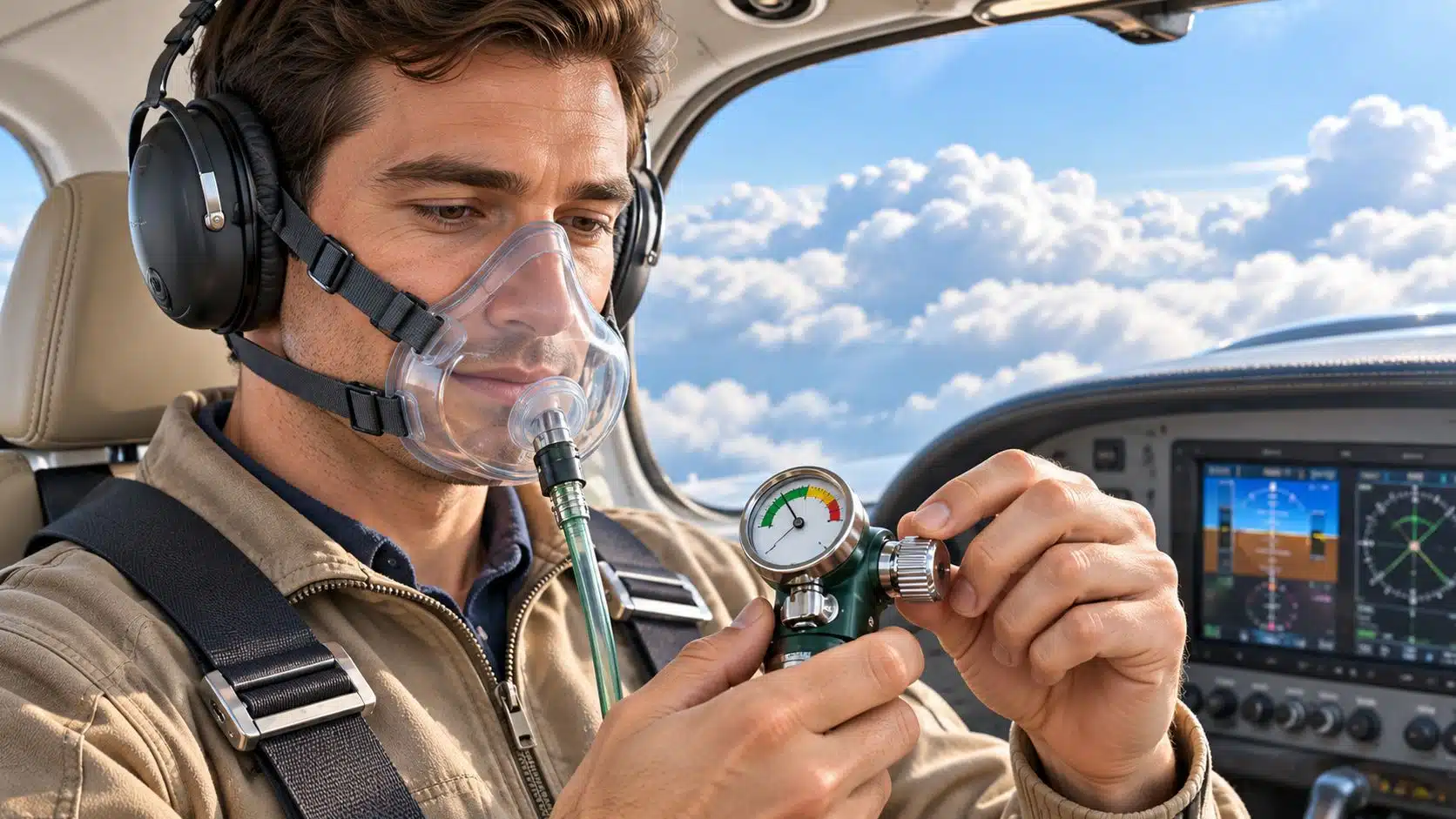
What should you decide before climbing into air where hypoxia can affect your judgment? Write down the altitude that will trigger oxygen use, so the decision is made before workload and symptoms cloud it.
Legal minimums and a conservative physiological benchmark serve different purposes. Use preparation, checklists, aircraft limitations, weather decisions, and an honest assessment of readiness to set your trigger. The next section explains the altitude rules; your preflight plan turns them into a clear action.
Table of Contents
- When Pilots Must Use Oxygen by Altitude
- How Hypoxia Affects You Before You Notice
- Hypoxia Prevention Steps Before Takeoff
- In-Flight Response When Symptoms Appear
- Training Exercises for Recognizing Hypoxia
- Confirm Your Oxygen Plan Before Your Next Flight
- Frequently Asked Questions About Hypoxia Prevention
When Pilots Must Use Oxygen by Altitude
Required use and recommended use are different decisions. The FAA's hypoxia safety brochure describes the Part 91 flight-crew requirement after more than 30 minutes above 12,500 through 14,000 feet MSL, continuous crew use above 14,000 feet, and oxygen availability for every occupant above 15,000 feet.
These thresholds refer to cabin pressure altitude, not height above terrain. In an unpressurized aircraft, the pilot plans for exposure to the surrounding atmospheric pressure; in a pressurized aircraft, the relevant value is the cabin's pressure altitude, not the aircraft's cruising altitude.
Oxygen Thresholds by Cabin Pressure Altitude
The FAA brochure supplies the regulatory thresholds and the daytime and nighttime benchmarks distinguished below.
| Cabin pressure altitude | Part 91 requirement under 14 CFR 91.211 | FAA recommended practice |
|---|---|---|
| Below 5,000 ft MSL | No altitude-based oxygen requirement under this provision | No FAA altitude benchmark at this level |
| 5,000 to 12,500 ft MSL | No altitude-based crew oxygen requirement under this provision | Use oxygen at night above 5,000 ft and by day above 10,000 ft |
| 12,500 to 14,000 ft MSL | Required flight crew use oxygen for the portion exceeding 30 minutes above 12,500 ft | Put oxygen on before entering this band |
| Above 14,000 ft MSL | Required flight crew use oxygen throughout the segment | Maintain oxygen use throughout the segment |
| Above 15,000 ft MSL | Every occupant must be provided oxygen; crew-use requirements continue | Plan oxygen use for every occupant |
The lower bands aren't an assurance of unimpaired performance. The night benchmark starts earlier because reduced oxygen availability can affect night vision before the pilot notices a more obvious problem.
The distinction in the final row matters: provided oxygen is the occupant requirement, while use oxygen is the required-flight-crew obligation. Passenger planning should go beyond having equipment somewhere in the aircraft.
Planning Without Oxygen
When oxygen or pressurization is unavailable, the FAA brochure advises less than one hour total between 10,000 and 14,000 feet, including no more than 30 minutes between 12,000 and 14,000 feet. Those exposure recommendations don't replace the regulation or justify continuing when impairment is suspected.
For readers unfamiliar with basic oxygen-equipment terminology, the DME Superstore oxygen therapy guide provides general medical-oxygen background. It isn't an aviation equipment approval or a substitute for aircraft-specific operating instructions.
Planning rule: Choose an oxygen trigger before departure, rather than asking an already-impaired pilot to make the decision during climb.
Cabin altitude, exposure time, daylight, workload, and passenger needs belong in that decision. Rules and guidance can change, so pilots should check the current 14 CFR 91.211 text and FAA publication revision or effective dates before flight. Suspected symptoms call for the immediate actions under In-Flight Response When Symptoms Appear.
How Hypoxia Affects You Before You Notice
How can a pilot be impaired while still feeling capable? Hypoxia can affect judgment before a person recognizes that anything is wrong. A mild headache or unusual fatigue may be easy to dismiss; euphoria, overconfidence, tingling, a narrowed instrument scan, and slow or sloppy radio calls are more concerning. Severe impairment can include confusion and blue lips or fingertips.
The main danger is impaired self-assessment. A pilot may feel comfortable while becoming less able to notice a missed clearance, check an oxygen connection, or choose a descent route.
The FAA's Pilot's Handbook of Aeronautical Knowledge provides these approximate time-of-useful-consciousness values without supplemental oxygen:
| Altitude | Time of useful consciousness without oxygen |
|---|---|
| 20,000 ft | About 30 minutes or more |
| 22,000 ft | 5 to 10 minutes |
| 25,000 ft | 3 to 5 minutes |
| 30,000 ft | 1 to 2 minutes |
| 45,000 ft | 9 to 15 seconds |
The handbook also cautions that after rapid decompression above 30,000 feet, average useful consciousness can fall to roughly one-third to one-half of its original value (FAA Pilot's Handbook of Aeronautical Knowledge).
Useful Consciousness Isn't a Countdown
Treat these values as a ceiling on available time, not a window for troubleshooting. Useful consciousness means effective performance, so a pilot can remain awake yet be too impaired to act reliably. The time shown is not guaranteed to be available to any individual pilot.
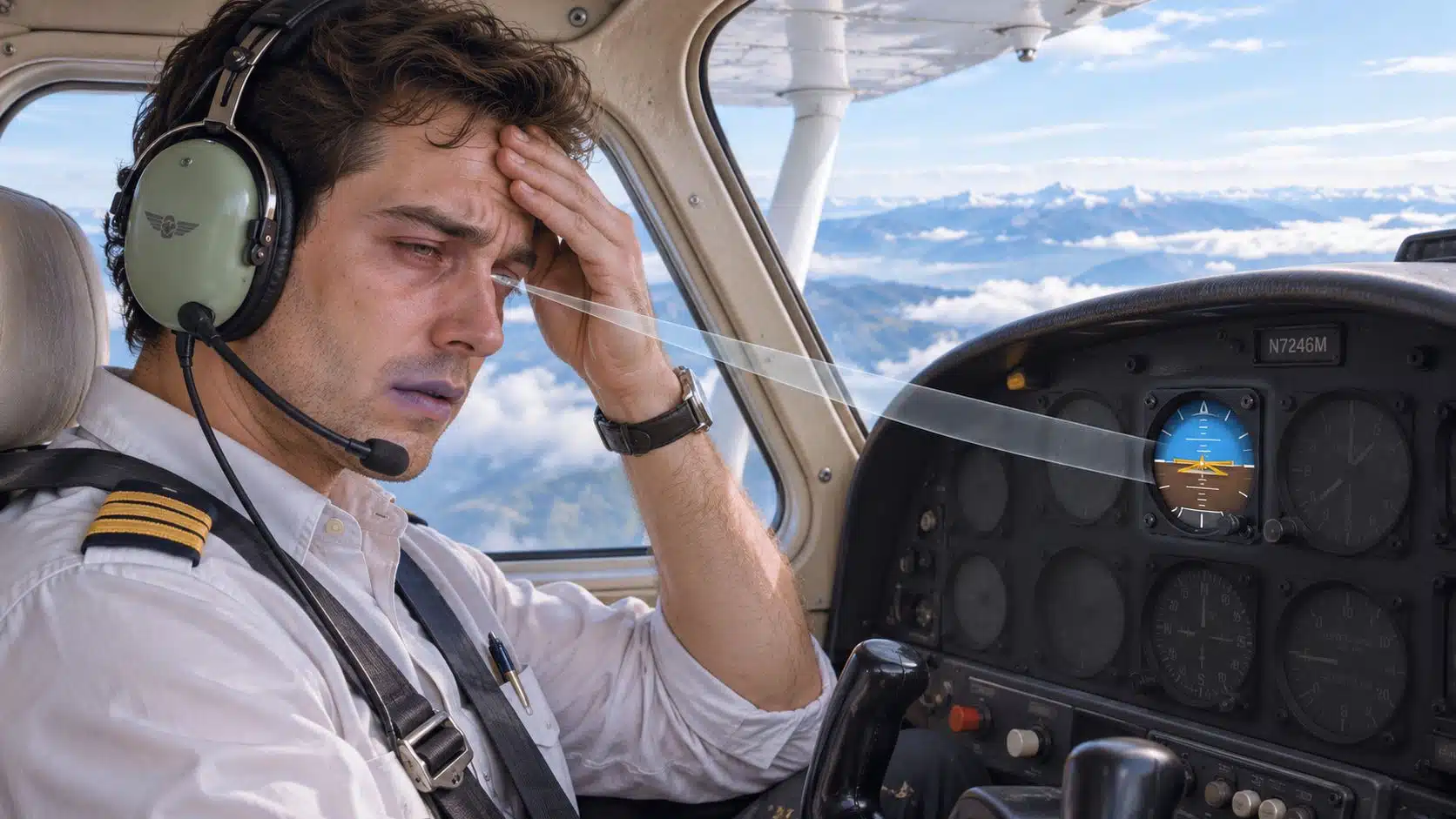
Individual susceptibility and oxygen tolerance vary. Fatigue, illness, dehydration, smoking, and alcohol belong in a pilot's readiness assessment. Night flight also deserves particular attention because of its visual demands.
An instrument student who feels unusually confident while missing checklist items should not take that confidence as reassurance. A second pilot may notice deteriorating performance first.
Symptoms are a late warning, not an oxygen-planning method. If impairment is suspected, take immediate corrective action rather than testing how long the pilot can tolerate the altitude.
Hypoxia Prevention Steps Before Takeoff
A useful oxygen plan fits on a kneeboard and matches the actual aircraft. The FAA's hypoxia education guidance supports preventive oxygen use above 10,000 feet by day and 5,000 feet at night, rather than waiting for symptoms.
Build the Plan Around a Written Trigger
Determine cabin exposure. Identify the planned cabin pressure altitude, highest expected level, and time at altitude. Include likely reroutes, holds, and a climb made to avoid weather, rather than planning only the preferred cruise segment.
Write the oxygen-on altitude. Compare the route with both the legal requirements and conservative benchmarks. The kneeboard entry should state when oxygen goes on, not merely when the pilot will consider using it.
Inspect the complete delivery system. Check cylinder pressure and usable quantity, regulator operation, tubing condition, connections, and the installed mask or cannula. Confirm fit and flow using the equipment's operating instructions, including its delivery-device limitations.
Make oxygen accessible to every occupant. Identify each person's assigned equipment and demonstrate its use on the ground. A passenger should know how to report a disconnected tube or difficulty receiving oxygen without searching through baggage.
Check the backup and descent options. If a backup system is installed or carried, verify its readiness and accessibility. Mark a terrain-compatible descent path and consider how weather could restrict that option.
Brief responsibilities aloud. State who will fly, who will identify the problem, and what action follows a failed oxygen supply or suspected symptom. A single-pilot renter should keep the plan simple enough to execute without passenger assistance.
Avoid Two Misleading Assumptions
A full cylinder doesn't establish system readiness. A closed valve, unsuitable setting, loose fitting, damaged tube, or poor mask fit can prevent effective delivery despite an apparently adequate supply.
Legal compliance doesn't establish physiological fitness. A tired or ill pilot shouldn't use the absence of an altitude-based requirement as proof that continuing is sensible.
The oxygen check is complete only when the pilot has checked supply, delivery, access, and the response to failure.
DuBois Aviation emphasizes preparation, checklists, aircraft limitations, weather decisions, and honest conversations about readiness. Oxygen planning belongs in that same preflight discipline, alongside fuel planning and a realistic go/no-go decision.
For a Southern California mountain crossing, the practical question includes whether the planned route leaves a usable lower-altitude escape. Descending isn't a complete plan until the pilot has considered terrain and weather.
A finished preflight leaves the applicable checklist completed, the oxygen trigger written on the kneeboard, and every occupant briefed. Any unresolved equipment discrepancy should be addressed before departure, not carried into the climb as a reminder.
In-Flight Response When Symptoms Appear
Put on the oxygen mask immediately. The FAA's high-altitude operations advisory circular directs a pilot with suspected hypoxia to breathe 100 percent oxygen slowly, descend to a safe altitude, and land as soon as possible if symptoms persist; without supplemental oxygen, it calls for an emergency descent below 10,000 feet MSL.
Maintain aircraft control and descend. Use the aircraft's emergency checklist and a terrain-compatible descent path. Don't remain at altitude to diagnose symptoms or investigate the oxygen system.
Communicate as workload permits. Tell ATC that the aircraft needs an immediate descent and assistance. Declare an emergency when necessary rather than treating a clearance request as routine.
Transfer flying duties when appropriate. If another qualified, unimpaired pilot is aboard, make an explicit transfer of control. The affected pilot can then concentrate on oxygen while the flying pilot manages the aircraft.
Land if symptoms persist. Continuing symptoms require landing as soon as possible, not resuming the original itinerary because the aircraft has reached a lower altitude.
Respond to Pressure Loss Without Hesitation
In a decompression scenario, the sequence begins with the pilot's mask, followed promptly by the descent while maintaining control. A pilot who pauses to explain the situation to passengers before securing personal oxygen risks losing the ability to help anyone.
Understanding the aircraft's pressurization system helps pilots connect cabin indications with the appropriate checklist. It doesn't replace immediate protective action when the pilot suspects impairment.
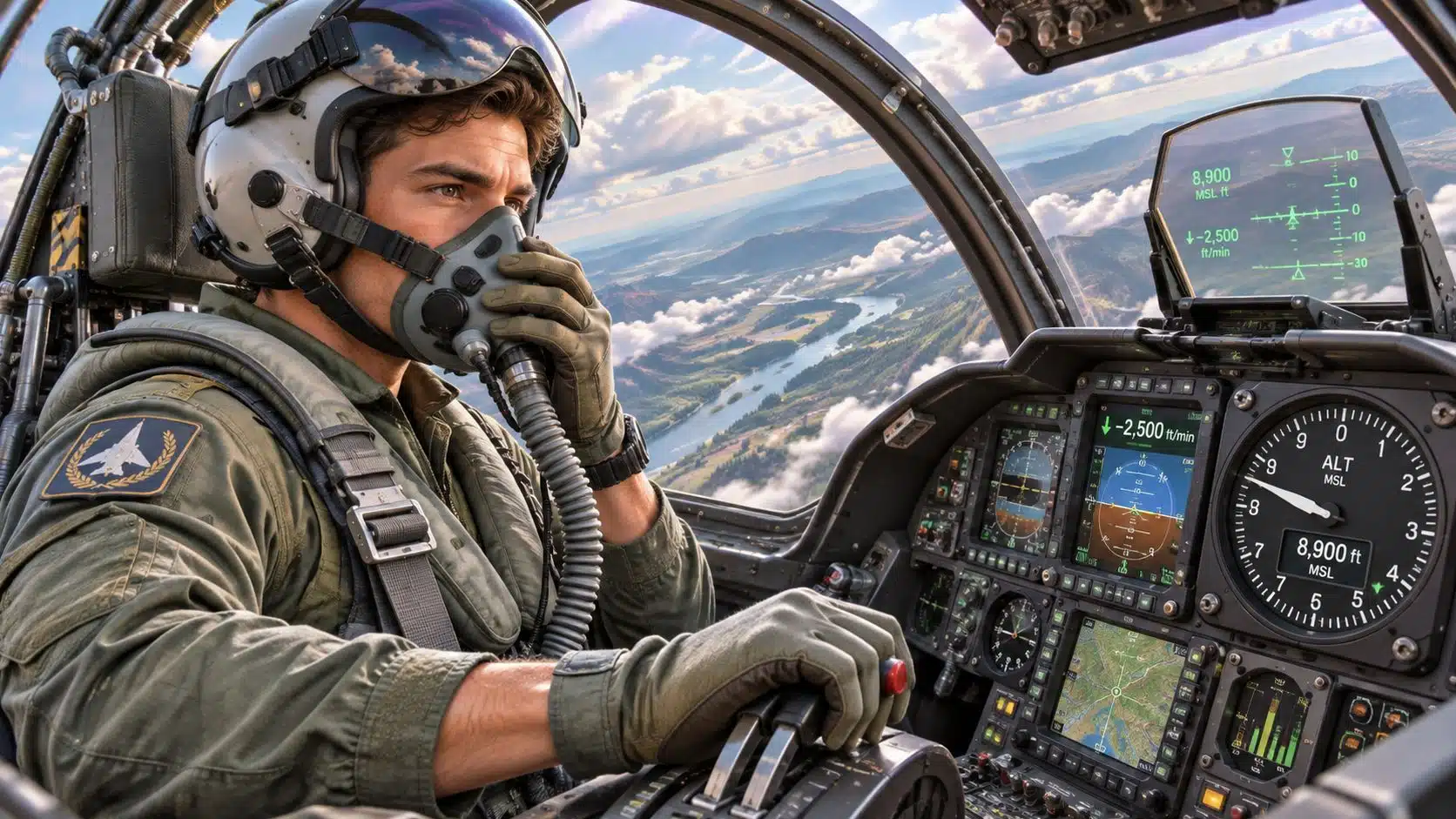
The regulation answers when oxygen must be used or provided during planned operations. The emergency response answers suspected impairment, even when the flight hasn't reached a regulatory trigger.
Don't Wait for an Oximeter to Confirm the Problem
A fingertip pulse oximeter is a trend aid, not a rescue instrument. A 2025 study of medically approved commercial oximeters found that their blood-oxygen-saturation and heart-rate readings did not agree reliably with reference measurements below 70 percent saturation.
Cold fingers, movement, and poor circulation can also complicate interpretation. A normal-looking, unstable, or delayed display must never postpone oxygen use or descent when symptoms or circumstances indicate a problem.
Checking flow can support the response, but staring at the display creates another distraction. The pilot's task is to restore oxygen delivery and reduce exposure, not obtain a reassuring number.
Memory drill: Mask, oxygen, descend, communicate, land.
Training Exercises for Recognizing Hypoxia
Recognition practice should teach decisions and equipment handling without deliberately creating oxygen deprivation. Ordinary cockpit drills can rehearse a response, but they can't reproduce the physiological experience of genuine hypoxia.
A flight student shouldn't remove oxygen at altitude, restrict breathing, or climb for the purpose of producing symptoms. Specialized physiological-exposure training requires an appropriate controlled program, not an improvised flight lesson.
Rehearse Actions on the Ground
Equipment walk-through. With the aircraft safely secured, the student locates the mask, supply controls, and regulator. The instructor checks that the student can reach and don the equipment without relying on a lengthy explanation.
Performance-cue exercise. The instructor assigns a simple readback or mental calculation while introducing a simulated missed call or narrowed scan. This demonstrates how a crew can respond to deteriorating performance, not what actual hypoxia feels like.
Trigger callout. The instructor announces a simulated cabin altitude. The student identifies whether the written trigger has been reached, states the required action, and demonstrates the appropriate oxygen check.
Chart-based descent planning. The student traces the route, identifies terrain constraints, and selects a usable lower-altitude escape. The instructor then changes the weather or aircraft-system scenario so the student must reconsider the route.
Debrief the Decision, Not Just the Checklist
The student should identify the first simulated cue noticed, the action taken, and any hesitation. If the student reached for an oximeter before the mask, or could not find the supply control, the next practice should target that specific delay.
Related spatial disorientation training can reinforce disciplined responses when a pilot's perceptions become unreliable. Hypoxia and disorientation aren't interchangeable conditions, but both make preparation more dependable than an improvised cockpit judgment.
Every exercise should follow school procedures and aircraft limitations. A brief review before a cross-country flight keeps the trigger, equipment location, and descent decision familiar.
The most useful closing question is concrete: What will the pilot do differently before the next climb? An answer such as moving the mask within reach is more actionable than promising to remain alert.
Confirm Your Oxygen Plan Before Your Next Flight
What altitude will make you start using oxygen? Write that trigger down before the climb. Separating the legal minimum from a more conservative physiological benchmark gives you a clear decision point without relying on symptoms, which may appear only after judgment is affected.
The written plan should also fit the aircraft and the route. A renter transitioning between aircraft should confirm how oxygen is supplied and controlled rather than assuming the equipment or backup arrangements are the same. Planned cabin pressure altitude and expected exposure time also matter, especially if delays could extend the flight at altitude.
Set a Trigger You Can Use
For the specific flight, write down both the legal oxygen requirement and the earlier altitude at which you plan to use oxygen. The legal threshold defines a requirement; a conservative trigger gives you a margin before that point. Account for whether the flight is by day or night, and make the trigger easy to find in the cockpit.
Before departure, resolve aircraft-specific questions with an instructor: which delivery device is appropriate, how to assess the oxygen supply, and what backup is available. This conversation is useful when preparing for a rental checkout or a cross-country lesson involving mountain terrain. At a flight school, preparation should follow the aircraft's limitations and established procedures.
Make the Emergency Plan Usable
Reviewing emergency descent procedures connects oxygen planning to aircraft control and route selection. Consider in advance whether terrain and weather leave a usable lower-altitude option. A descent plan should be compatible with the aircraft and conditions, not just a phrase beside the oxygen checklist.
Before relying on a threshold, check the current regulation and applicable FAA publication revisions. A saved article or old training handout may not reflect the requirements for a future flight.
DuBois Aviation's one-on-one instruction and aircraft rental provide opportunities to discuss oxygen planning in the aircraft being used. Students and renters can use its online flight schedule to arrange training or aircraft bookings. Before each climb, be ready to state your written trigger and explain why you chose it.
Frequently Asked Questions About Hypoxia Prevention
Is supplemental oxygen legally required below 10,000 feet?
The altitude-based Part 91 requirements depend on how high and how long the aircraft flies. See Section 1 for the applicable thresholds and how to use them in preflight planning.
Can a pulse oximeter replace oxygen?
No. A pulse oximeter estimates blood oxygen saturation; it does not supply oxygen or confirm that a pilot can make sound decisions. Treat suspected impairment as a reason to act, even if the display looks reassuring.
What is the difference between a regulation and a recommendation?
A regulation sets a legal requirement, while a recommendation can guide a more conservative operating decision. Use the distinction to set a personal oxygen trigger before climbing, as explained in Section 1.
How long can a pilot fly between 10,000 and 14,000 feet without oxygen?
The FAA hypoxia brochure's exposure guidance advises less than one hour between 10,000 and 14,000 feet, including no more than 30 minutes between 12,000 and 14,000 feet when oxygen or pressurization is unavailable. Treat this as exposure guidance, not a guarantee that symptoms will wait.
Do passengers need oxygen?
Part 91 requires oxygen to be provided to every occupant above the applicable occupant threshold. Before climbing, make sure passengers can reach the equipment and understand how to use it.
DuBois Aviation provides flight instruction and aircraft rental at Chino Airport, emphasizing preparation, checklists, aircraft limitations, weather decisions, and honest conversations about readiness. Visit DuBois Aviation to request training information or ask about course availability.


