You're comparing flight schools, trying to determine whether Pacific Sky Aviation is a conventional training provider, a corporate operator, or something more specialized. The clearest answer is that Pacific Sky Aviation Inc. is a Canadian aviation company based in North Saanich, British Columbia, at Victoria International Airport. Its public profile combines Transport Canada-approved flight training, aircraft maintenance, corporate flight operations, Twin Otter production testing, and ferry deliveries, with a fleet and simulator capability that extend well beyond basic ab-initio instruction.
Table of Contents
- What Pacific Sky Aviation Is at a Glance
- Company History and the Juan Air Renaming
- Fleet Composition and What Each Aircraft Teaches
- Twin Otter Simulator and Seaplane Training Infrastructure
- Operations Beyond the Training Classroom
- Reputation, Credentials, and How to Verify Them
- How Pacific Sky Aviation Compares to Other BC Flight Schools
- Practical Next Steps for Prospective Students
What Pacific Sky Aviation Is at a Glance
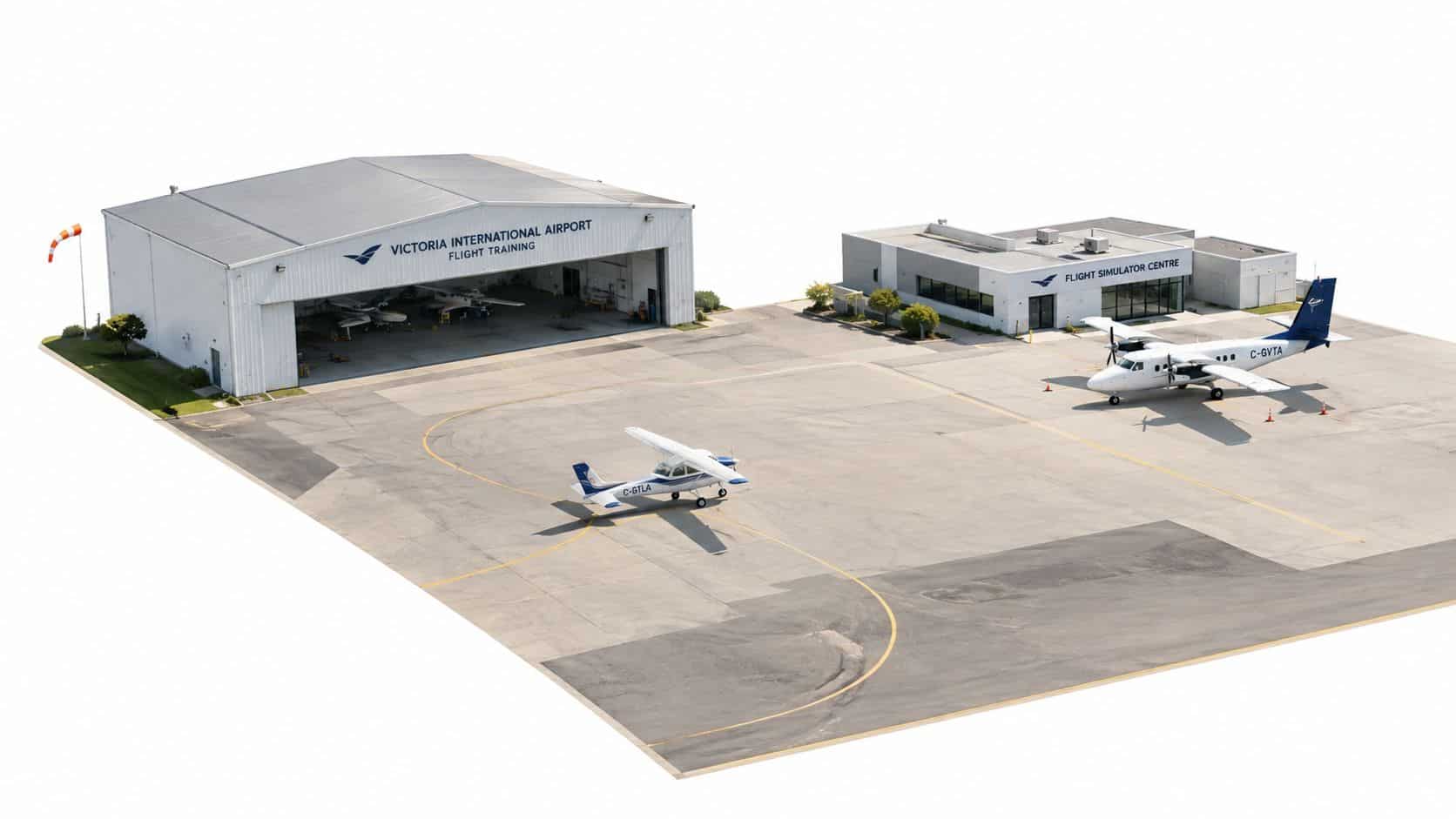
A prospective pilot evaluating Pacific Sky Aviation should start with the operating environment, not the aircraft photographs. The company is based in North Saanich, British Columbia, in the Victoria market, and its facilities are associated with Victoria International Airport. That location places training inside an active airport environment rather than an isolated classroom operation.
The organization combines several aviation functions. Public information identifies Transport Canada-approved flight training, aircraft maintenance, corporate flight operations, Twin Otter production testing, and ferry flights as parts of the broader operation. Those functions matter because they shape the people, aircraft, procedures, and priorities a student may encounter on the field.
The regulatory setting
The relevant approval framework is Canadian, so applicants should ask about the exact Transport Canada approval scope for the course they want. A school may support several kinds of flying while offering only particular licenses, ratings, or approved training programs at a given time. Current aircraft availability, instructor availability, and simulator qualification should be confirmed directly before a student builds a career plan around published material.
Why the organization's structure matters
A training-only school typically optimizes around lesson scheduling and student progression. An integrated aviation business has additional demands from maintenance, corporate flying, aircraft testing, and ferry work. That can provide useful operational context, but it can also mean that the student experience depends more heavily on current fleet allocation and instructor capacity.
The practical questions are straightforward:
- Training scope: Which licenses, ratings, and recurrent courses are currently available?
- Fleet access: Which aircraft are operational and available for student booking?
- Instructor capacity: How consistently can students fly with an assigned instructor?
- Operational priorities: How are training flights handled when maintenance, testing, or corporate work requires resources?
Pacific Sky Aviation is best understood as a broader aviation organization with a training division, rather than as a school presenting a list of light aircraft. That distinction becomes important when evaluating the company's history, fleet progression, and simulator offering.
Company History and the Juan Air Renaming
The company's public history contains a useful distinction between recent company information and older secondary accounts. Public company information identifies the training and simulation division as having more than 25 years of experience in flight training and corporate services. That supports the conclusion that Pacific Sky Aviation represents an established operation rather than a newly formed aviation venture. The company profile on LinkedIn is the relevant public reference for that experience claim.
A separate aviation discussion from 2008 provides older historical context. The account reportedly stated that the business had been renamed from Juan Air to Pacific Sky Aviation Inc. approximately three years earlier, placing the transition around 2005. The same discussion described a professional-pilot history of more than 30 years at that time, suggesting roots extending to at least the late 1970s.
Those older details are useful, but they need to be weighted correctly. A forum-era discussion isn't the same as an audited corporate history, official registry, or regulatory filing. It can preserve local aviation knowledge and historical context, yet it shouldn't be treated as conclusive evidence for every detail of the company's current operation.
How to read the timeline
The available record supports a cautious interpretation:
- The current public profile describes more than 25 years of training and corporate-service experience.
- The 2008 discussion places the Juan Air renaming around 2005.
- The same discussion describes a professional-pilot lineage exceeding 30 years at that time.
- The combined picture points to a longstanding regional aviation organization that developed into a broader training, simulation, and commercial or corporate operation.
Practical rule: A school's age is useful context, but current approval status, aircraft availability, maintenance arrangements, and instructor continuity are stronger decision factors than a historical label.
The history also explains why Pacific Sky Aviation's public identity can appear broader than that of a conventional flight school. The organization's background includes training, operational flying, and specialized aircraft work. Students should appreciate that depth without assuming every historical aircraft or service remains active today. Older descriptions establish continuity, not current availability.
Fleet Composition and What Each Aircraft Teaches
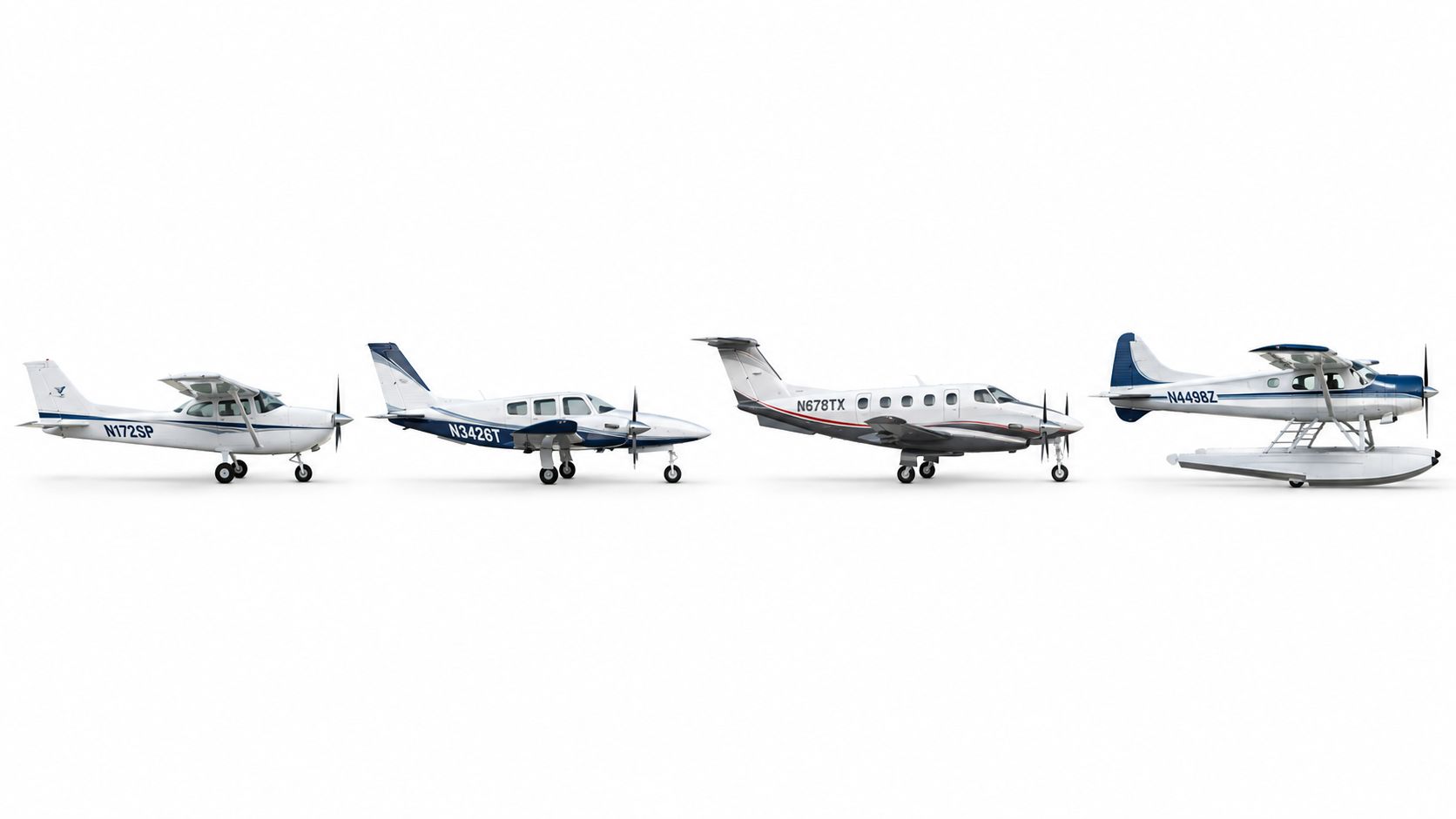
A fleet should be judged by the skills it develops, not by how impressive it looks on a website. Pacific Sky Aviation's publicly listed aircraft include a Cessna 172, Piper Navajo, a turbopropeller-powered aircraft identified as a Conquest, and a Turbo Beaver used for bush- and float-plane training.
That combination suggests a progression across different propulsion systems, workloads, runway environments, and operating contexts. It also gives students a reason to ask which aircraft supports each stage of training rather than assuming every listed type is available for every applicant.
Matching the aircraft to the lesson
| Aircraft | Primary Training Purpose |
|---|---|
| Cessna 172 | Foundational visual flight, basic instrument procedures, circuit work, and aircraft control |
| Piper Navajo | Multi-engine systems, asymmetric-thrust management, and crew-oriented workload |
| Conquest turboprop | Higher-performance systems, turbopropeller operations, and advanced operational discipline |
| Turbo Beaver | Bush flying, float-plane procedures, short-field work, and specialized water operations |
The Cessna 172 is the logical foundation for core handling. Students learn attitude control, coordinated turns, takeoffs, landings, traffic patterns, and basic instrument habits in an aircraft suited to repetitive practice. It supports the transition from procedural understanding to consistent aircraft control.
The Piper Navajo changes the workload. Multi-engine training isn't just single-engine training with another engine added. The student must understand engine-out performance, asymmetric thrust, systems management, checklist discipline, and the division of attention required when aircraft control and troubleshooting compete for attention. The Navajo can therefore serve as a meaningful bridge toward commercial or operational multi-engine flying.
The Conquest introduces another step in systems and performance. The publicly listed description identifies it as a turbopropeller-powered aircraft, so students should confirm the exact model, configuration, and training role with the operator. Turbopropeller operations require disciplined systems knowledge, performance planning, power management, and greater awareness of how aircraft speed and complexity affect decision-making.
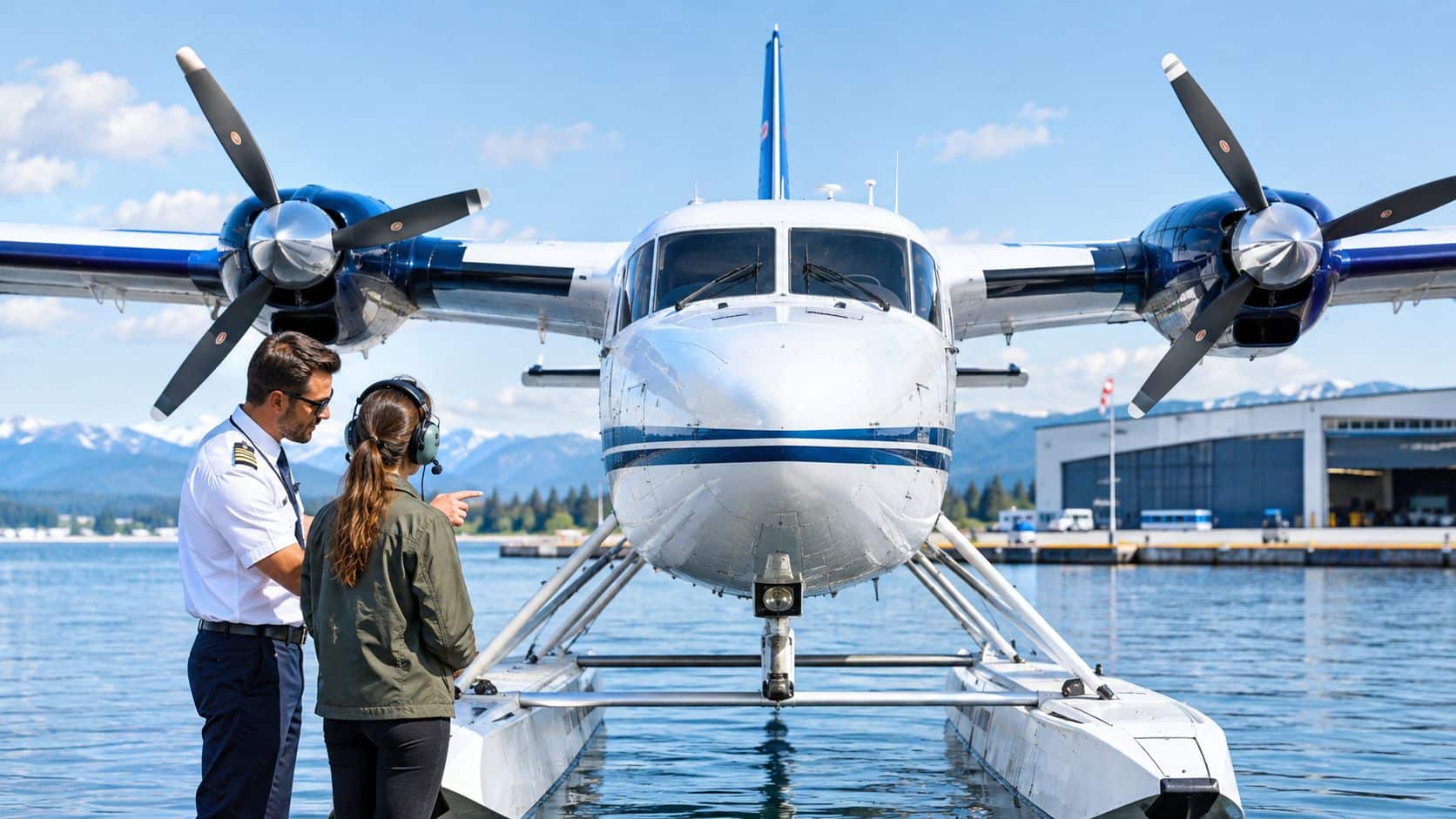
The Turbo Beaver offers a different kind of specialization. Float and bush training expose pilots to water operations, remote-area considerations, short-field technique, docking, and changing surface conditions. Those skills don't replace conventional licensing requirements, but they broaden a pilot's operational judgment.
A prospective student comparing aircraft layouts can also review this practical Piper Cherokee versus Cessna 172 comparison to understand why trainer characteristics influence lesson design.
What the fleet doesn't prove
A published fleet list doesn't prove that every aircraft is currently dispatchable, assigned to students, or included in a particular course. Applicants should request the current aircraft list, ask about maintenance downtime, and confirm whether advanced aircraft are used for instruction, corporate work, ferrying, or a combination of purposes.
Genuine value lies in the progression. A student can move from basic visual and instrument work into multi-engine, turbopropeller, float, or bush-oriented environments, provided the school confirms the pathway and current availability.
Twin Otter Simulator and Seaplane Training Infrastructure
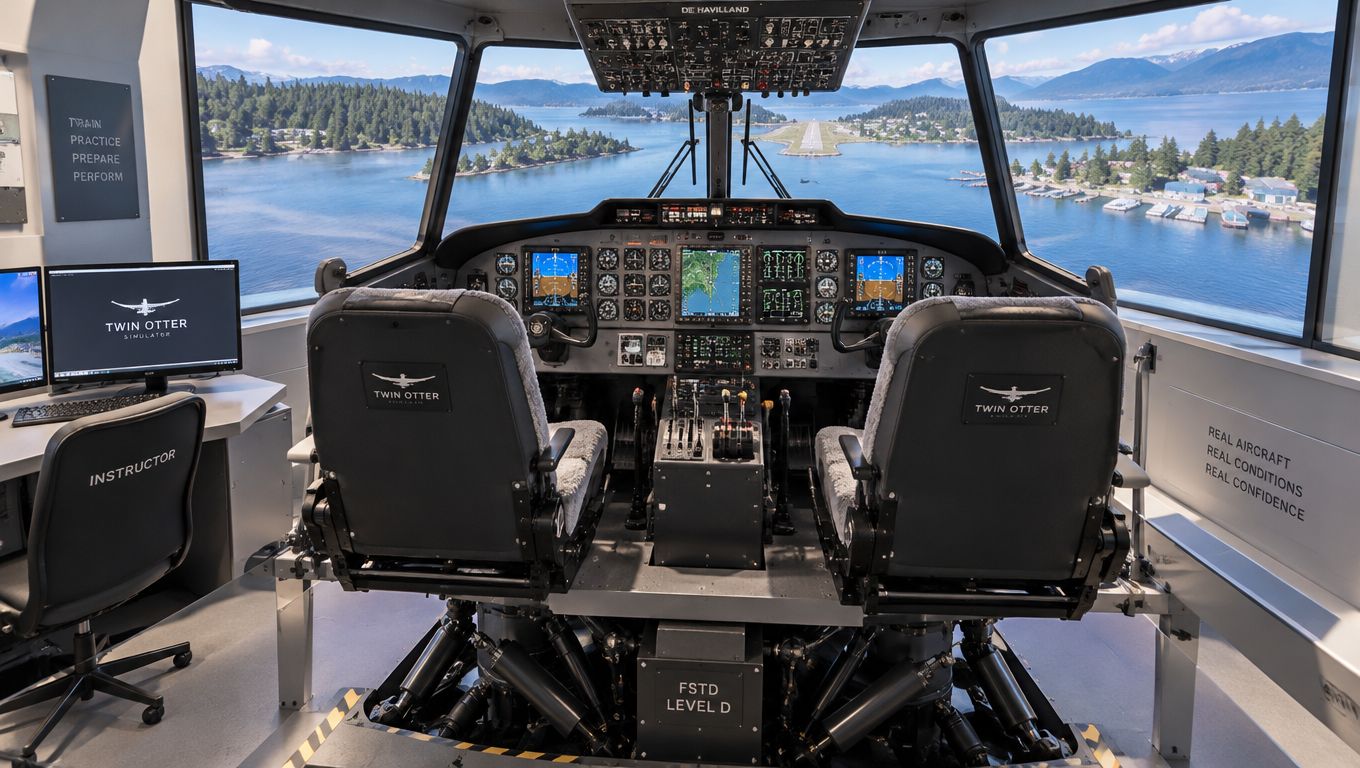
Pacific Sky Aviation's most distinctive training capability is its announced Twin Otter simulation infrastructure. The organization announced installation of a Level D full-flight simulator, a seaplane trainer, and a flat-panel procedures trainer designed to model both wheeled and float-equipped Twin Otter configurations. The simulator announcement describes the system's aircraft-performance, marine, visual, and motion cues.
A simulator of this type changes what can be practiced safely. A crew can rehearse situations that would be hazardous, expensive, weather-dependent, or difficult to reproduce consistently in an aircraft. The value isn't entertainment or a substitute for sound aircraft handling. It's structured repetition under controlled conditions.
What the simulator can rehearse
The announced system was designed for both wheeled and float-equipped Twin Otter configurations. That allows training around scenarios such as:
- Seaplane takeoffs and landings: Crews can repeat acceleration, step, lift-off, approach, and touchdown procedures without exposing an aircraft to every associated water hazard.
- Docking operations: Pilots can practice planning, power use, wind effects, and crew coordination around confined marine spaces.
- Glassy-water approaches: The visual problem can be rehearsed without relying on a rare and suitable real-world condition.
- Changing wind and sea states: The simulator can present different environmental conditions while instructors observe decisions and technique.
- Procedural failures: The flat-panel trainer supports flows, systems knowledge, and cockpit organization before aircraft time is used.
The stated course structure included initial, recurrent, and seaplane training. That makes the facility relevant to more than beginner instruction. Operators maintaining proficiency and crews preparing for specialized missions can use scenario-based practice in a way that a conventional light-aircraft syllabus can't reproduce.
Where simulator training helps, and where it doesn't
Simulator work is strongest when the instructor defines a clear objective, introduces realistic workload, and conducts a disciplined debrief. It's weaker when students treat repeated button pushing as evidence of aircraft mastery. Motion and visual fidelity support training, but they don't eliminate the need for aircraft-specific knowledge, supervised flight, and accurate records.
Students interested in how structured simulator sessions can support flight training can review this simulator training center overview. The important verification step remains current qualification. Applicants should ask whether the Twin Otter device is currently qualified for the specific course or recurrent requirement they intend to complete, and which portions must still be conducted in the aircraft.
Operations Beyond the Training Classroom
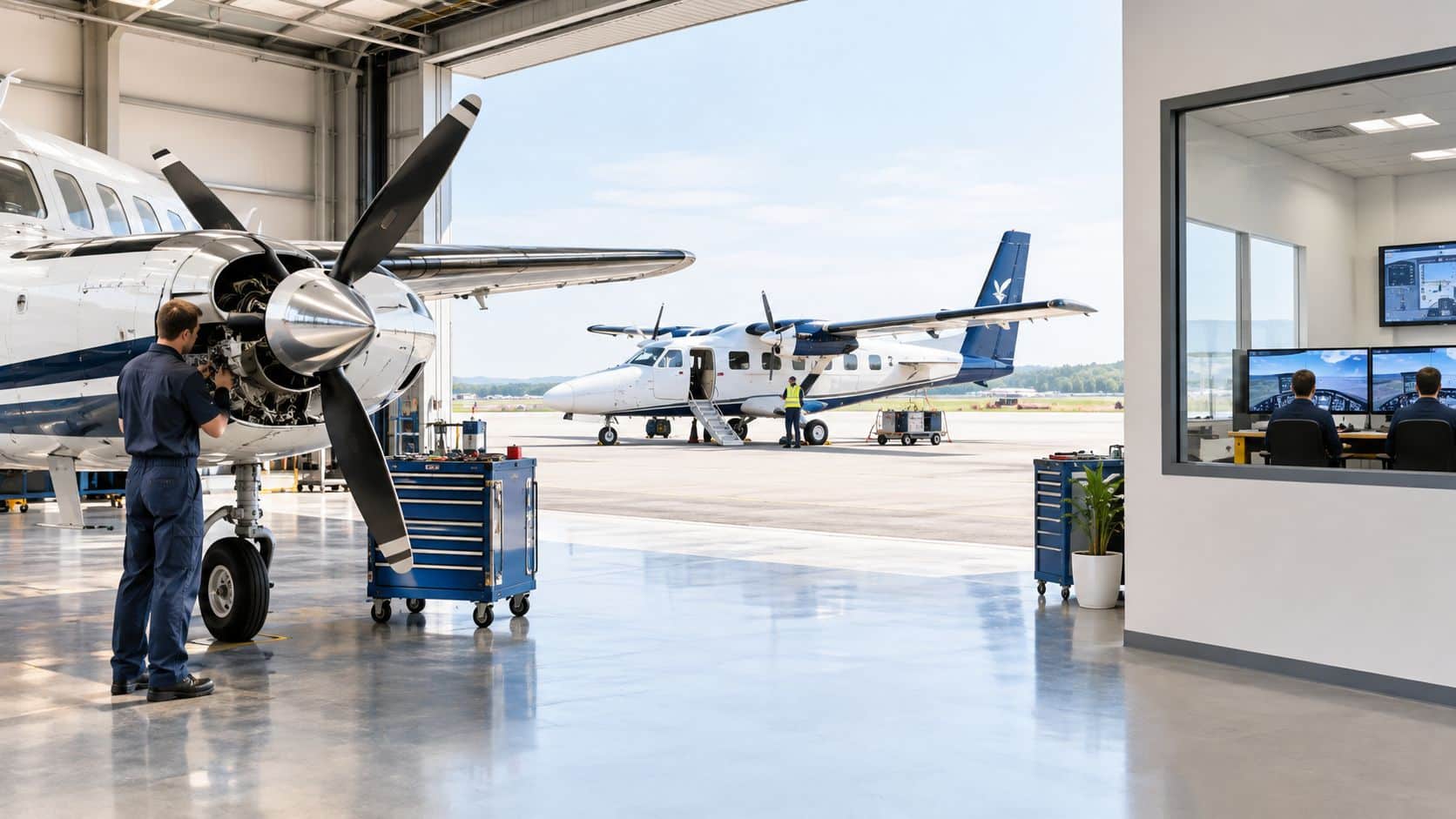
Pacific Sky Aviation's Victoria International Airport facilities support more than student lessons. The documented operating context includes Transport Canada-approved flight training, aircraft maintenance, corporate flight operations, Twin Otter production testing, and ferry deliveries. That combination gives the training division a connection to aircraft and personnel involved in real operational work.
For a student, the benefit is exposure to a wider aviation culture. Maintenance conversations, aircraft acceptance work, delivery flying, and corporate dispatch requirements can make the relationship between training exercises and operational standards more visible. A student may see why checklists, records, aircraft condition, and disciplined planning matter beyond the next lesson or checkride.
The operational trade-off
A broader organization doesn't automatically produce a better student schedule. Corporate flying, maintenance, production testing, and ferry work can compete for aircraft, hangar space, or specialized staff. The right question isn't whether multiple departments exist. It's how the school protects training continuity when operational priorities change.
Prospective students should ask:
- Aircraft allocation: Are training aircraft dedicated to students or shared with other operational work?
- Maintenance coordination: How are inspections and unexpected defects communicated?
- Instructor continuity: Will students maintain a consistent instructor relationship?
- Schedule recovery: What happens after weather, maintenance, or operational cancellations?
- Operational access: Can students observe maintenance, dispatch, or aircraft delivery processes?
That broader setting may be valuable to a career-track pilot who wants to understand how a commercial or corporate operation functions. It may be less important to a recreational student who needs reliable access to a basic trainer and an instructor.
For readers interested in how aviation spaces are presented visually, Virtual Tour Easy's hotel tour offers a useful example of cockpit-oriented virtual-tour design. It isn't evidence of Pacific Sky Aviation's facilities, but it illustrates why visual access can help a prospective visitor understand an aviation environment before arranging a tour.
Reputation, Credentials, and How to Verify Them
A recognizable fleet and a specialized simulator create a strong first impression, but they don't answer the questions that determine whether a course is suitable today. The applicant needs to verify approval scope, current aircraft status, simulator qualification, instructor availability, and the actual training pathway.
Several parts of Pacific Sky Aviation's public record are independently checkable. The company identifies Transport Canada-approved flight training, and the simulator installation was announced publicly. A separate aircraft record identifies a specific aircraft associated with the organization, giving prospective pilots a more concrete reference point than general promotional language.
The C-FHSP record
The documented aircraft is a 2014 Beechcraft B300C, commonly identified as a Beechcraft Super King Air 350 variant. It carries Canadian registration C-FHSP, serial number FM-57, is based in North Saanich, British Columbia, and has two engines. The C-FHSP aircraft registry record identifies Pacific Sky Aviation Inc. as the operator.
The same record references a full Reduced Vertical Separation Minimum approval and a last compliant monitoring date of February 20, 2026. RVSM approval is operationally significant because it supports flight in reduced vertical-separation airspace at typical high-altitude business-aviation levels. The aircraft was also reported as tracked near Calgary International Airport on June 26, 2026, showing activity beyond the Victoria-area base.
Those records establish that the company is associated with a documented twin-turboprop business aircraft and a high-altitude operational authorization. They don't prove that the aircraft is part of a student syllabus, available for rental, or relevant to a private pilot applicant. That distinction matters.
A verification routine
A serious applicant should request current answers rather than relying on older pages:
- Confirm the course approval. Ask which Transport Canada approval covers the exact license, rating, or recurrent program.
- Confirm simulator status. Ask whether the Twin Otter simulator is currently qualified for the intended training and what credits it provides.
- Request the active fleet. Separate aircraft used for student training from aircraft assigned to corporate, test, ferry, or maintenance work.
- Ask about records. Clarify how training records, aircraft technical defects, cancellations, and stage progress are documented.
- Test the timeline. Ask for realistic completion ranges based on the student's available training frequency, weather, maintenance, and instructor capacity.
A fleet proves capability. A current schedule and approval record prove access.
The strongest reputation is built from verifiable operating behavior. Applicants should be comfortable asking direct questions, and operators should be able to explain what is current, what is historical, and what depends on aircraft or instructor availability.
How Pacific Sky Aviation Compares to Other BC Flight Schools
The useful comparison isn't a ranking. It's a fit assessment based on the type of pilot a student wants to become. A basic private pilot student, a multi-engine candidate, a float-plane pilot, and a Twin Otter crew member will assign different value to the same organization.
Pacific Sky Aviation appears distinctive in four areas: its Transport Canada training context, announced Level D Twin Otter simulator infrastructure, varied aircraft progression, and connection to maintenance, corporate operations, production testing, and ferry work. Few conventional flight schools offer that exact combination, but that doesn't mean every student needs it.
Compare by decision factor
| Decision factor | Why it matters | Questions to ask |
|---|---|---|
| Approval scope | Determines which training can be completed under the organization's current authority | Which licenses, ratings, and recurrent courses are active? |
| Simulator access | Supports repeatable practice for procedures and higher-risk scenarios | Is the device currently qualified for the intended course? |
| Fleet progression | Determines whether a student can move into multi-engine, turbopropeller, float, or bush operations | Which aircraft are active and student-accessible? |
| Operational depth | Provides context around maintenance, corporate flying, testing, and ferry work | How does operational work affect training schedules? |
| Location and environment | Shapes local procedures, weather exposure, and airport habits | What conditions will students regularly encounter? |
A student focused on a private license may value instructor continuity, aircraft availability, and a clear syllabus more than access to a specialized Twin Otter simulator. A career-track pilot may place greater weight on multi-engine progression, advanced systems exposure, and the quality of operational briefings.
A float-plane applicant should ask about actual water-operation availability, not just the presence of a Turbo Beaver in a published list. A Twin Otter crew member should verify the simulator's current qualification, configuration, instructor credentials, and recurrent-training credit before treating the facility as a complete solution.
Students comparing schools more broadly can use this flight-school selection guide to organize questions around airport environment, fleet, instructors, maintenance, scheduling, and training goals.
The honest trade-off
Pacific Sky Aviation's breadth can be a major advantage for pilots pursuing specialized or progressive training. It can also be unnecessary complexity for someone who wants only basic local flying. The best choice depends on whether the organization's current resources match the student's next qualification, not on how extensive the company appears from the outside.
Practical Next Steps for Prospective Students
An inquiry call should produce specific answers, not general reassurance. Before committing to Pacific Sky Aviation, a prospective student should confirm:
- Approval status: Ask for the current Transport Canada approval scope for the intended course.
- Simulator qualification: Confirm the present status and permitted use of the Twin Otter simulator.
- Fleet access: Request the active training fleet and realistic booking availability.
- Instructor capacity: Ask how instructors are assigned and how continuity is maintained.
- Completion planning: Request a realistic timeline based on the student's expected lesson frequency.
- Operational priorities: Clarify how maintenance, corporate flying, testing, and ferry work affect training.
Older fleet descriptions shouldn't be used as a licensing or career plan without confirmation. The broader organization's maintenance, corporate-flight, and Twin Otter work may offer valuable exposure, or it may be largely irrelevant to a student seeking a private certificate. The deciding factor is the student's intended pathway and the current access the school can provide.
Frequently asked questions
How can a Level D simulator help a private pilot applicant?
It can support procedures, cockpit flows, instrument awareness, and scenario preparation, but it doesn't replace the aircraft training required for the applicant's licensing pathway. The student should ask which simulator sessions are appropriate for the course and how they complement flight lessons.
Which credentials matter most when choosing a flight school?
Current approval scope, aircraft airworthiness and availability, instructor qualifications, recordkeeping practices, maintenance support, and schedule reliability matter more than a long fleet list. Independent aircraft records and public simulator announcements can support due diligence, but the school must confirm current status.
What timeline questions should a student ask before enrolling?
Ask how often lessons can realistically be scheduled, what causes cancellations, how aircraft downtime is handled, whether stage checks create delays, and how the school distinguishes minimum flight-hour requirements from calendar time. A credible forecast should account for the student's availability and operational conditions rather than promise a fixed completion date.
DuBois Aviation offers personalized airplane and helicopter instruction, aircraft rental, simulator-supported training, and pathways through private, instrument, commercial, and multi-engine qualifications at Chino Airport. Pilots comparing fleet progression, airport environment, scheduling, and instructor support can visit DuBois Aviation to request training information, arrange a discovery flight, or discuss the next practical step.