
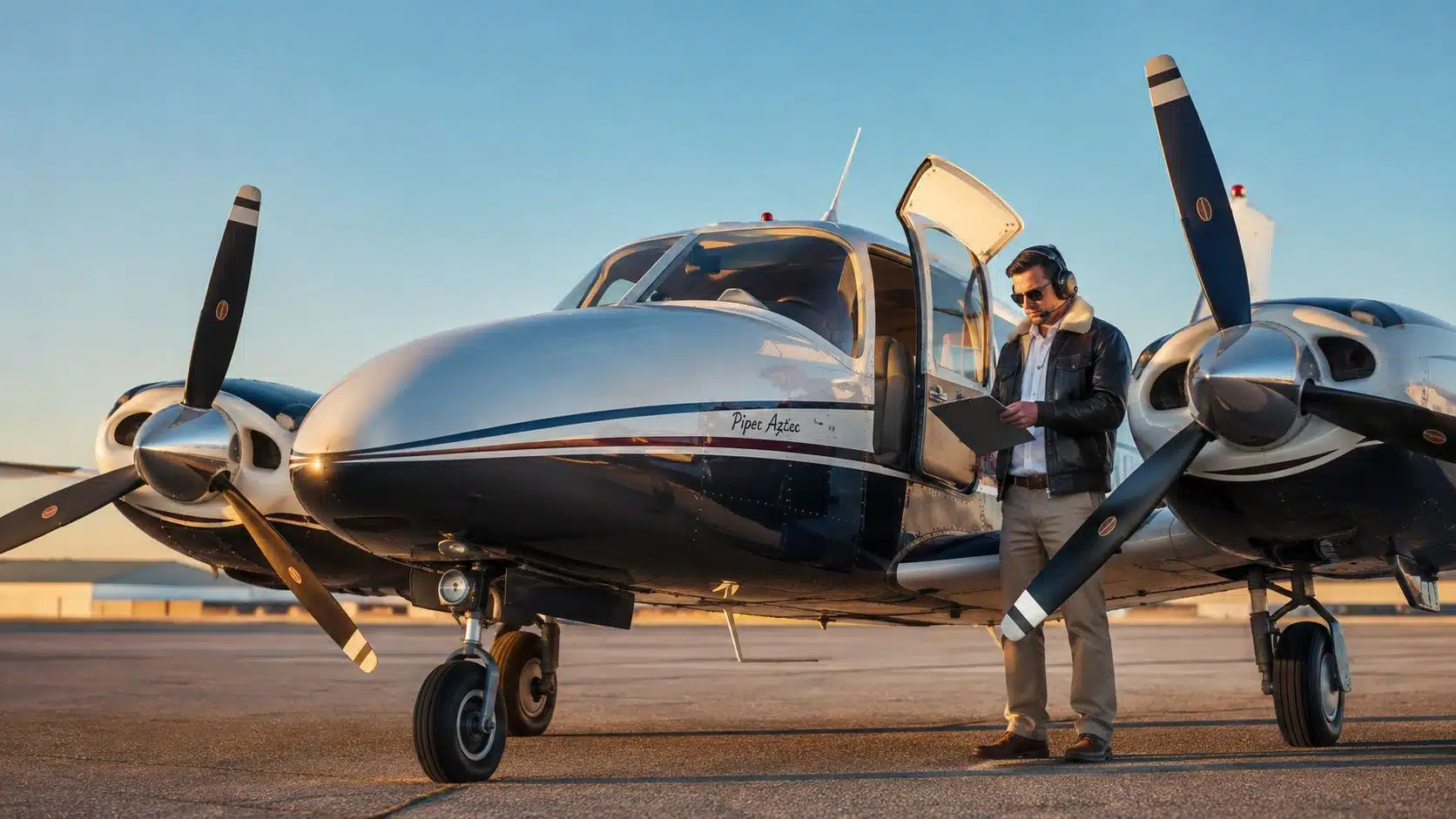
You're at the point where the single-engine trainer no longer feels like enough. You want more payload, more systems, and more real-world utility for cross-country flying, but you also know a twin isn't a casual upgrade. A Piper Aztec rental looks attractive on paper until the checkout, the insurance questions, and the ongoing proficiency burden show up in the room with you.
Table of Contents
- Stepping Up to the Piper Aztec
- Understanding Rental Rates and Economics
- Eligibility and Checkout Requirements
- Mission Profile Aztec vs High-Performance Singles
- Pre-Flight and Operational Quirks
- Finding the Right Rental Provider
Stepping Up to the Piper Aztec
A pilot usually starts asking about a Piper Aztec rental after a few trips in a single-engine airplane that felt just a little too cramped, a little too slow, or a little too exposed to weather and passenger load. That's the moment the Aztec makes sense as a real aircraft decision, not a novelty. The PA-23 family's well-known six-seat twin brings 2 Lycoming engines rated at 250 hp each according to the AOPA fact sheet, and the airframe's 6 seats and 2,010 lb useful load help explain why it was built for utility, not just fun flying. AOPA's Piper Aztec fact sheet
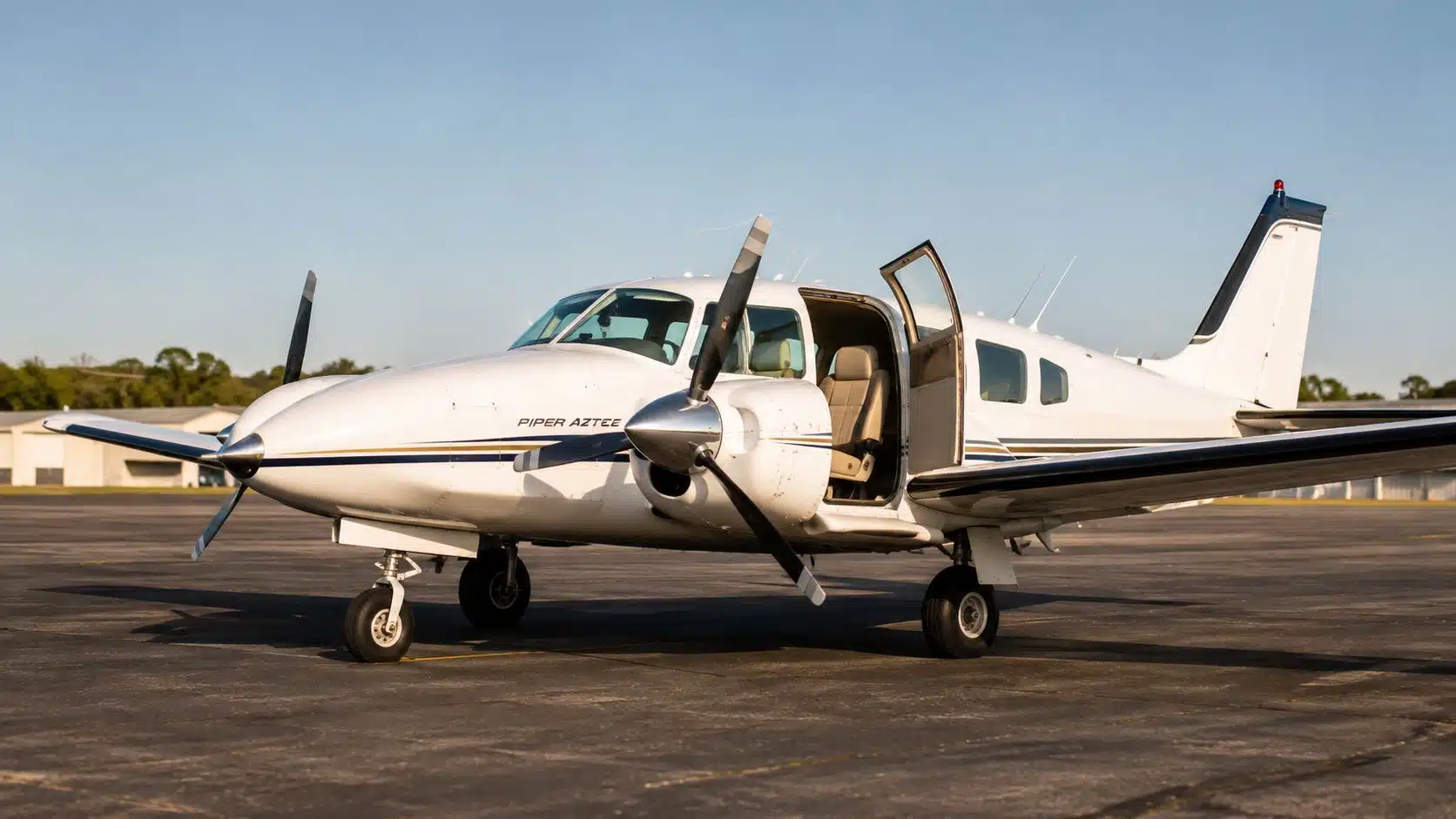
That extra engine changes the whole conversation. A twin adds redundancy, but it also adds more to manage, more to brief, and more to respect. A renter who is comfortable in a Cherokee or Cessna 172 can still get surprised by how quickly the Aztec demands disciplined engine monitoring, trim work, and clean procedure flow.
What the aircraft is really for
The Aztec has stayed relevant because it sits in a useful middle ground. It's not a sleek personal cruiser, and it isn't a turbine step-up. It's a practical twin that works for multi-engine instruction, proficiency flying, and trips where payload and redundancy matter more than keeping costs down.
Practical rule: if the mission doesn't need a twin, the Aztec usually isn't the right answer.
That's the part many pilots skip. They see the twin and think capability first, but the better question is whether the mission rewards capability enough to justify the higher operating burden. If the trip is light, short, and simple, a single-engine alternative often makes more sense.
A useful way to approach the decision is to treat the Aztec as a serious tool. It's a good fit for certificated pilots who want to maintain multiengine skills, for students working through advanced training, and for flyers who need a platform that can carry people and baggage without feeling maxed out. It's not a machine you rent lightly, even when the hourly rate looks tempting.
Understanding Rental Rates and Economics
The headline number on a Piper Aztec rental can be misleading if you don't know what's inside the quote. One market survey lists an average hourly rental rate of about $1,400 per hour, while another operator's posted rate is $250 per hour with fuel included. A separate flight-school page lists $420 per hour wet for a Piper Aztec 23-250E, and that spread shows how much the price depends on airport, aircraft condition, and whether the rate is wet or dry. Paramount Business Jets' Piper Aztec overview
Why the numbers vary so much
The Aztec is a twin, and twins cost more to run. Industry cost summaries put hourly operating expense around $226 per hour for training use, which helps explain why rental quotes often sit above the cost of basic single-engine aircraft. Some operators bundle fuel into a wet rate, others don't, and that difference can change what you pay by the time the airplane is back on the ramp. The same aircraft can look affordable in one quote and expensive in another if the terms aren't apples to apples.
A lower hourly rate doesn't always mean a lower total bill. If fuel, instructor time, and checkout overhead are separate, the final cost can climb quickly.
A good way to budget a twin is to price the whole mission, not just the Hobbs time. Add the aircraft rate, instructor time for checkout or recurrent flying, fuel if it's dry, and any insurance requirement your policy or the operator imposes. The airplane's complexity makes that structure unavoidable.
Reading the market correctly
Used-aircraft values help explain the economics too. Live market data in August 2026 showed a median asking price of $105,000 across active listings, with a range from $12,750 to $1,350,000 and an average year of 1965. Other industry sources place used Aztecs in different bands, including $30,000 to $96,000 and one average pre-owned estimate of $61,500. Those differences don't mean anyone is wrong, they show how much condition and equipment matter in this airframe. Box Aviation's rental and market data page
| Piper Aztec Rental Cost Variables | Typical Range | Considerations |
|---|---|---|
| Wet rental | $250/hr to $420/hr wet | Fuel included, easier to budget, still varies by airport and avionics |
| Higher-end hourly quotes | about $1,400/hr | Often charter-style pricing, not a simple local rental comparison |
| Training-oriented operating cost | around $226/hr | Helps explain why twins cost more to keep in service |
| Other market references | $300/hr to $600/hr | Broad general aviation range, strongly location-dependent |
| Operator examples | $345/hr and similar posted rates | Can reflect aircraft condition, checkout policy, and mission type |
The economics make the most sense when the flight is doing real work. Carrying people, flying multi-engine proficiency, or building twin time can justify the expense. A casual weekend hop usually can't.
Eligibility and Checkout Requirements
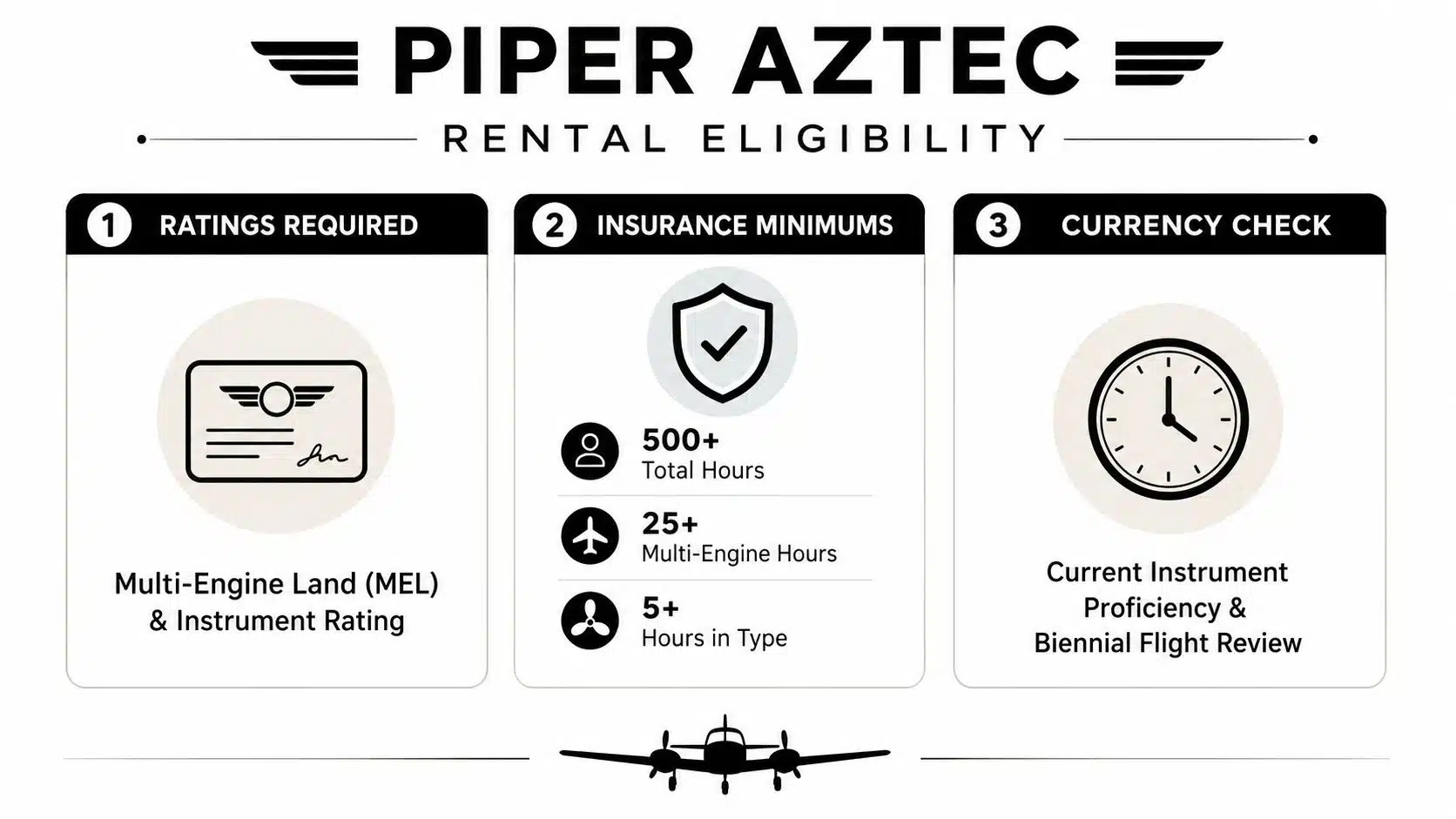
A Piper Aztec rental isn't a walk-up aircraft. The airplane sits in the category of machines that force pilots to prove they can manage the system, not just fly the route. The base expectation is a Multi-Engine Land (MEL) rating, and for many operators, an instrument rating and current instrument proficiency are part of the picture too. If you're not current, the airplane won't care that you're comfortable in it on paper.
What the operator is trying to verify
A strong checkout isn't about gatekeeping. It's about whether you can safely handle the airplane when the workload goes up. A checkout syllabus for a twin like the Aztec usually includes Vmc demonstrations, single-engine approaches, engine-failure recognition, and emergency procedures until the flows feel automatic. Those items matter because the aircraft's safety margin depends on the pilot catching problems early and flying the correct response without hesitation.
Insurance is the other hurdle, and it's often stricter than the airplane itself. Many operators and policies expect meaningful total time, multiengine time, and some time in type before they'll approve solo rental. A practical resource on multi-engine qualification questions is DuBois Aviation's multi-engine rating requirements page, which fits the kind of pre-rental thinking pilots need before showing up for a checkout.
Practical rule: if you need the instructor to talk you through every phase, you're not ready to rent the airplane alone.
What a real checkout should include
A thin checkout that only covers taxi, takeoff, and a pattern is not enough for a twin. You want an instructor who is willing to spend time on asymmetric control, proper engine-out pitch and trim discipline, and the decision points that separate a manageable abnormal from a bad one. That depth matters because the Aztec rewards crisp habits and punishes casual flying.
A good renter also keeps logbook currency in order. A current flight review, current instrument skills if the mission requires them, and recent multiengine experience are the basics an operator will look for before turning over the keys. The airplane's extra performance doesn't offset a rusty pilot.
The honest standard is simple. If you wouldn't feel confident taking the airplane into a high-workload departure, a weather-diversion scenario, and an arrival at a busy airport, you probably need more dual first.
Mission Profile Aztec vs High-Performance Singles
The question isn't whether the Aztec is a cool airplane. It's whether the twin makes your trip better enough to pay for the privilege. On Southern California routes, a high-performance single can cover a lot of the same ground with less complexity, lower operating burden, and fewer moving parts to manage. The Aztec earns its keep when payload, redundancy, or multi-engine training are the mission, not the byproduct.
Side-by-side mission logic
The twin's strength is obvious once the cabin is loaded. You get more flexibility with baggage, passengers, and flight planning margins. The trade-off is that you now own the extra training and currency burden that comes with a twin, plus the chance that a “simple” trip becomes a systems exercise if something is off.
The opposite case is also true. A high-performance single usually wins for efficient travel, solo or two-person trips, and uncomplicated legs where you want to arrive without a larger preflight and postflight mental bill. That's why many pilots eventually decide the premium for a twin is only worth paying when they'll use the twin's strengths.
If you're renting for utility, pick the airplane that fits the load. If you're renting for experience, know that experience costs more than hours on the tach.
For readers comparing options, DuBois Aviation's high-performance aircraft page is a useful reminder that not every capable mission needs two engines. A well-flown single can be the right answer when the cabin is light and the route is straightforward.
How to decide without fooling yourself
The wrong way to choose is to start with the hourly rate and build a story around it. The right way is to start with the mission and ask whether a twin changes the outcome in a meaningful way. If the flight is mostly about carrying more people, maintaining multiengine skills, or building confidence in a redundant platform, the Aztec can be justified. If the trip is just a point-to-point hop with no real load pressure, the single likely wins.
Judgment matters more than enthusiasm. A pilot can get seduced by the idea of a twin and miss the part where the airplane asks for more money, more training, and more discipline. That doesn't make the Aztec a bad choice. It makes it a serious one.
Pre-Flight and Operational Quirks
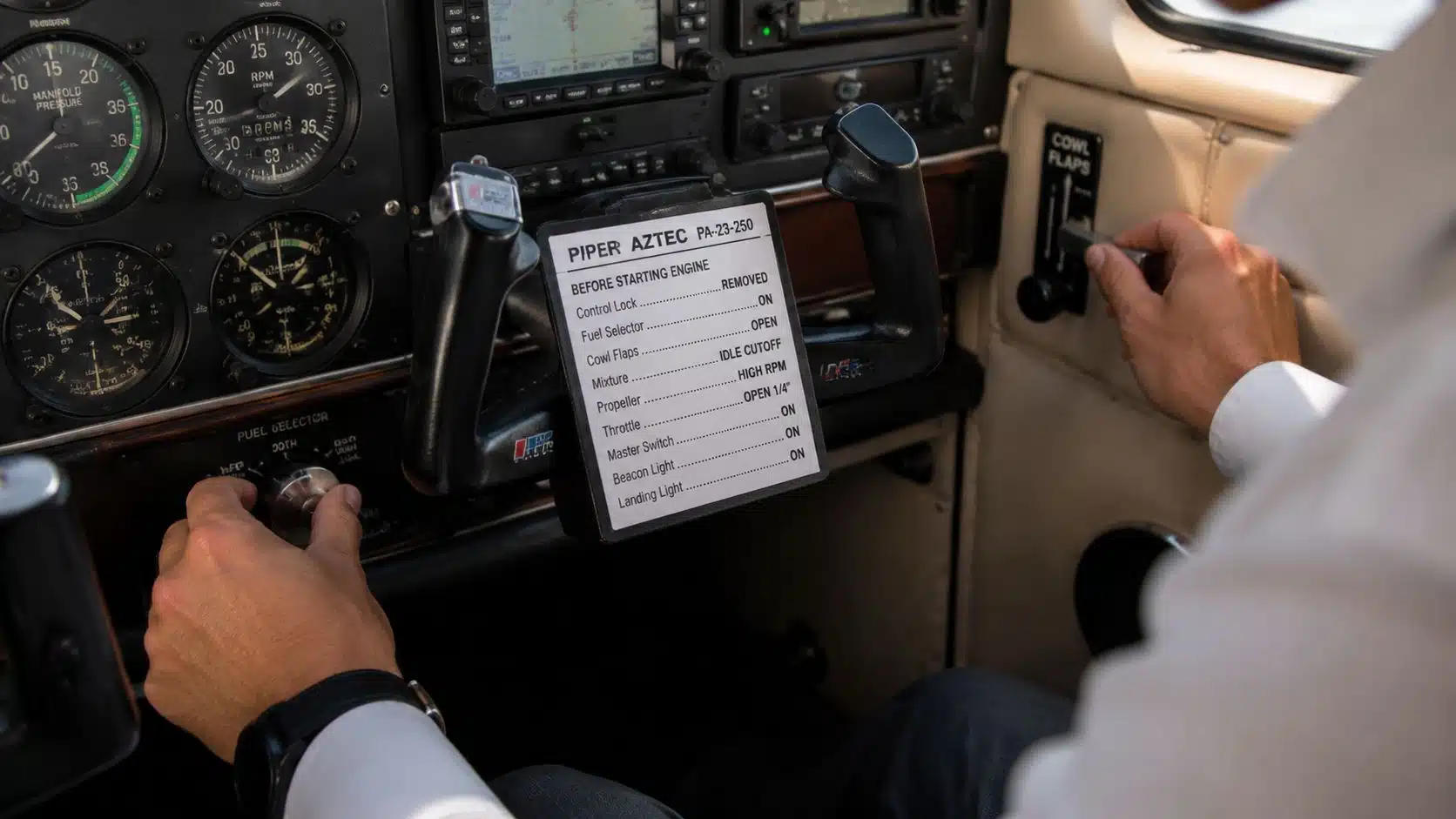
The Aztec gives you useful capability, but it also asks for a deliberate preflight. The airplane is old enough, and common enough, that many examples have their own habits, which means the renter has to be sharper than a pilot stepping into a newer trainer. Fuel planning, cowl flap discipline, and control-check habits matter because the airplane's margins are built on management, not convenience.
What to check before you launch
Start with the fuel system and don't rush the walkaround. Make sure the selectors are positioned correctly, the fuel quantity makes sense for the mission, and the caps, vents, and drains show no signs of trouble. On an airplane like this, a sloppy fuel check isn't a minor oversight, it's a risk you created before the props even start turning.
The cowl flaps deserve attention too. If they're not set correctly, the airplane can run hotter or drag more than expected, and both problems affect the way the flight feels. Trim is another place where inattentive pilots get behind the airplane fast, especially if one engine ever becomes unavailable. The control pressures are not forgiving when the airplane is out of trim.
A practical pre-rental habit set
- Confirm fuel balance: Look at both sides, verify the quantity, and match it to the route and reserve plan.
- Inspect the engine area carefully: Check for oil, loose hardware, and anything that looks different from the last time you saw the airplane.
- Verify cowl flap movement: Don't assume the setting is where you want it, move and confirm it.
- Test control freedom: A heavy aileron feel is normal enough in an older twin, but binding or stiffness is not.
- Check trim response: Make sure the trim system moves smoothly and gives you the authority you need.
- Review single-engine drills mentally: The cockpit workload rises fast if one engine quits, so the first response should already be in your head.
The physical side of flying matters in the Aztec. It's not just about knowing the checklist, it's about handling the aircraft cleanly with real control pressure and stable scan habits. That's why a pilot who looks good in a classroom can still feel behind the airplane on the first couple of flights.
A smart renter treats the preflight as part inspection, part systems review, part self-assessment. If the airplane's condition or the pilot's currency feels off, postpone the flight. The Aztec is useful, but it doesn't reward optimism.
Finding the Right Rental Provider
A Piper Aztec rental works best at a place that treats multiengine flying as a discipline, not a side item on the schedule. A busy towered airport helps, because you deal with radio work, traffic flow, and timing from the start. That is why a local option like airplane rental near me matters more than a bare hourly quote.
What to ask before you book
Ask how often the aircraft flies, how the maintenance schedule is handled, and whether instructors have real multiengine experience. Then ask what the checkout covers, how recent your currency needs to be, and whether the provider expects solo rental or dual-only use. Those answers tell you more than any glossy fleet page.
Ask about the training culture too. A twin that sits too long between flights can feel unfamiliar every time you return, and an operation that treats scheduling like an afterthought will make it harder to stay sharp. If you want a serious training environment, a provider with structured instruction, a maintained fleet, and realistic airport operations is worth more than a cheaper but disorganized option.
The decision that matters
The right provider helps you stay current, not just rent an airplane once. That means clear checkout standards, responsive instructors, and an aircraft that is maintained with the care a twin deserves. If the operation cannot explain its requirements plainly, it probably will not support you well when the flying gets real.
Insurance is part of the decision too. Some renters focus on whether they can pay the hourly rate, then discover the operator's minimums, checkout expectations, and approval process narrow the path far more than expected. A good rental shop spells that out before you commit, so you know whether the Aztec fits your mission profile, your experience level, and the insurance box you need to check.
If you are comparing options for a serious rental setup, the provider should be able to tell you exactly how it handles checkout, ongoing proficiency, and aircraft availability. That is the practical difference between a twin you can rent and a twin you can use well.


