
Does meeting an instrument-hour minimum mean a pilot is ready to handle an engine failure inside the clouds? Not necessarily. A multi engine instrument rating provides instrument privileges in multi-engine airplanes, combining instrument flying with asymmetric-thrust control and aircraft-specific performance management. For a pilot earning an initial instrument rating, the path includes eligibility, training, a knowledge examination, instructor approval, and a practical test. The important budgeting question isn't how many hours qualify. It's how much training produces consistent performance when aircraft control, navigation, configuration, and communication compete for attention.
Meta description: Understand multi engine instrument rating requirements, training hours, simulator use, costs, and engine-out proficiency before committing time and money.
URL slug: multi-engine-instrument-rating
Two practical options worth comparing
These are specific products pilots commonly compare for this type of flying. Confirm compatibility with your aircraft and instructor before ordering.
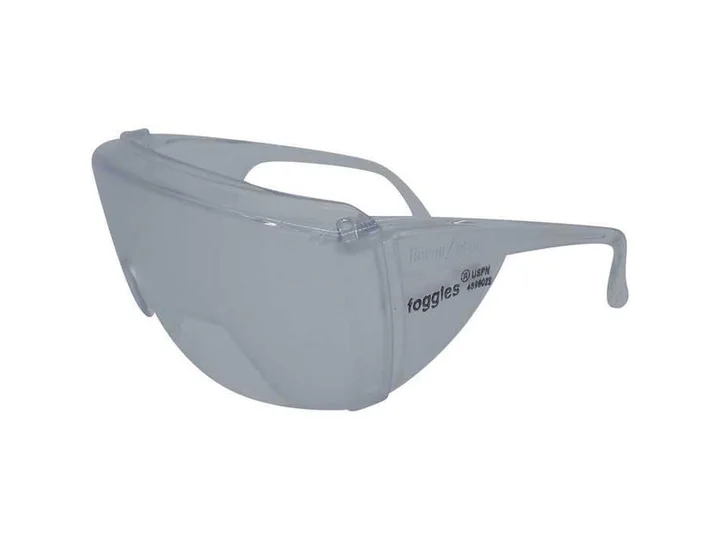 Instrument trainingFoggles Aviation IFR Training GlassesCheck current availability on Amazon (paid link)
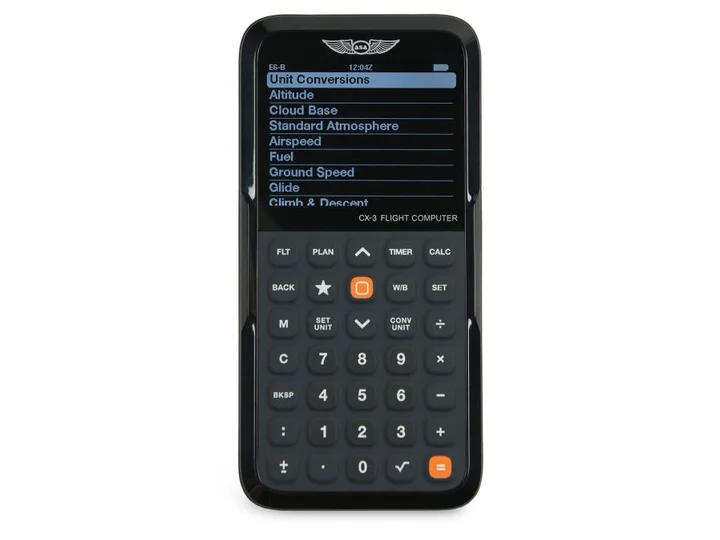 Flight planningASA CX-3 Flight ComputerCheck current availability on Amazon (paid link)
Table of Contents
- Multi Engine Instrument Rating Requirements You Must Meet
- What the Twin Instrument Curriculum Covers
- Engine-Out Handling and the Test Aircraft
- Hour Benchmarks for Each Training Route
- Simulator Hours Versus Aircraft Hours
- What the Rating Costs and How Long It Takes
- Is the Rating Worth It and How to Confirm Readiness
- Define readiness through scenarios
- Questions to settle before committing
- Is this the same as a multi-engine class rating?
- Does an existing instrument-rated pilot start over?
- Can simulator practice replace learning engine-out control?
- What should happen if the training twin becomes unavailable?
- What is the strongest sign of practical readiness?
Multi Engine Instrument Rating Requirements You Must Meet
The starting point is the pilot's existing certificate and privileges. A pilot pursuing an initial instrument rating needs a different training plan from an instrument-rated pilot adding multi-engine airplane privileges. Treating those paths as identical can lead to unnecessary training or missing prerequisites.
Under the instrument-rating eligibility and testing requirements in the eCFR, an applicant must hold, or concurrently apply for, a private pilot certificate with the appropriate aircraft category and class rating; meet the English-language requirement, subject to applicable medical limitations; and satisfy the required training and testing provisions.
Eligibility before scheduling
An instructor should review these items before the pilot commits to an aircraft reservation:
- Certificate and ratings: Establish whether the pilot already holds airplane multi-engine privileges or needs class-rating training as well.
- English proficiency: Confirm the ability to read, speak, write, and understand English, including any applicable limitations.
- Knowledge examination: Determine whether the planned certification path requires the instrument-airplane examination. An initial instrument applicant shouldn't confuse passing the written examination with being ready for the practical test.
- Instructor endorsements: Have the instructor check the applicable practical-test eligibility and endorsement requirements.
- Training platform: Confirm that any proposed simulator or flight training device is approved and appropriate for the maneuver or approach being credited or evaluated.
The knowledge examination and practical test are separate appointments. Ground-study completion doesn't reserve an examiner, and an examiner reservation doesn't establish flight proficiency.
A practical test may involve an appropriate airplane, full-flight simulator, or flight training device under the applicable testing provisions. That isn't blanket permission to use any desktop simulator for certification.
Documents for the first planning appointment
The pilot should bring:
- Pilot certificate: Include all current ratings and limitations.
- Medical status: Provide the applicable medical documentation and discuss the intended operation.
- Logbook: Identify instrument experience, cross-country experience, previous endorsements, and multi-engine training.
- Knowledge-test report: Bring the result if the examination has already been completed.
Regulatory paragraph wording and device approvals can change. The instructor should check the current eCFR before enrollment; no independently verified effective date is represented here.
What the Twin Instrument Curriculum Covers
A useful curriculum builds skills in layers. Starting with complex engine-out scenarios before the pilot can maintain a stable instrument scan usually produces task saturation rather than useful practice.
The FAA's instrument-rating practical-test standards cover navigation, departures, arrivals, holding, instrument approaches, missed approaches, and emergency operations. For multi-engine applicants, the standards also address control with an engine inoperative during straight-and-level flight and turns, plus an instrument approach and landing with an engine inoperative.
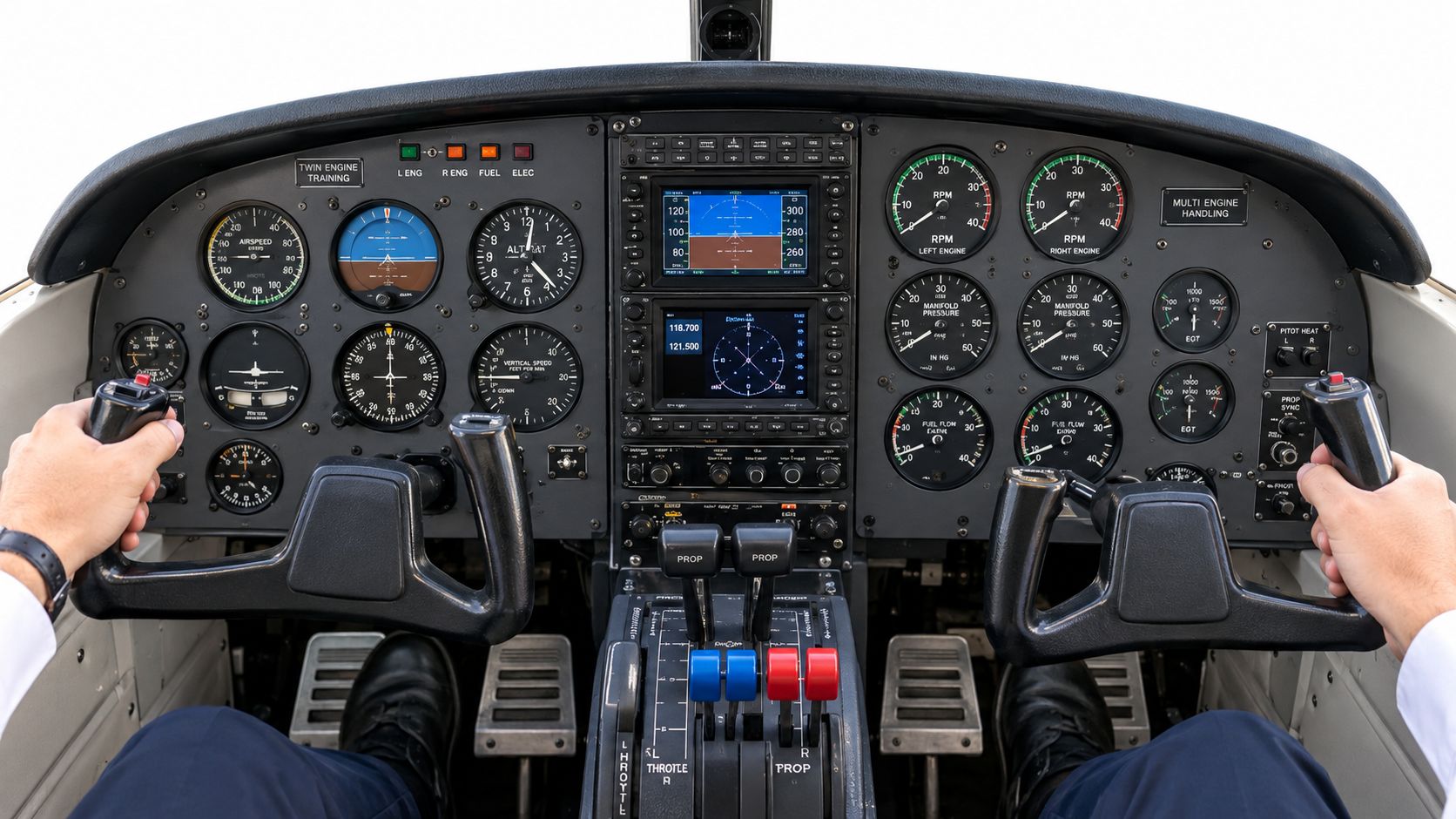
Build the instrument foundation
The first layer is attitude control by instrument reference. Under simulated instrument conditions, the pilot learns to recognize small deviations, make measured corrections, and verify the result without chasing individual indications.
The next layer adds navigation and communication. The pilot must interpret a clearance, select and verify navigation sources, manage course changes, and communicate without abandoning aircraft control.
Then the instructor combines procedures. An arrival can lead into a hold, an amended clearance, an approach, and a missed approach. The pilot needs to understand the sequence, not merely recognize familiar display pages.
Add the multi-engine workload
The instrument foundation teaches flying without outside visual references. The twin adds another job: managing unequal thrust while continuing to plan a route and make decisions.
A practical lesson progression might begin with a simulator hold and approach. An aircraft lesson then introduces a safely simulated engine failure, followed later by a complete approach with an amended clearance. The instructor increases complexity only when the underlying skills remain stable.
Training principle: A pilot who can recite an emergency checklist but can't maintain aircraft control hasn't completed the task.
A prospective student comparing instrument-rating lesson plans should look for a syllabus that connects procedures rather than listing isolated maneuvers.
The core coverage should include:
- Aircraft control: Scan, attitude interpretation, trim, and recovery from deviations.
- Navigation: Source selection, course tracking, and position awareness.
- Procedures: Departures, arrivals, holds, approaches, and missed approaches.
- Abnormal operations: Equipment failures, workload management, and checklist use.
- Twin integration: Engine-out handling, performance assessment, and configuration management.
An initial instrument practical test completed in a multi-engine airplane also supports single-engine instrument privileges under the FAA framework. That broader result doesn't remove the need for appropriate class privileges or aircraft familiarization.
Engine-Out Handling and the Test Aircraft
VMC isn't an approach-speed target. It describes minimum control speed under specified certification conditions, not a speed that guarantees climb performance or a comfortable margin in every configuration.
The airplane's approved flight manual or pilot's operating handbook supplies its published speeds, limitations, performance charts, and procedures. A generic diagram cannot replace those documents, and the published value shouldn't be treated as a universal number for every twin.
Understand the yaw before memorizing a flow
When an engine becomes inoperative in a conventional twin, the remaining engine produces thrust away from the airplane's centerline. That creates a yawing tendency toward the inoperative engine, requiring coordinated control inputs and careful airspeed management.
A shopping cart pushed unevenly offers a rough analogy: forward force continues, but steering correction becomes necessary. The aircraft adds aerodynamic effects, changing performance, and configuration limits that make the actual problem much more demanding.
The following illustration is a conceptual training aid, not an aircraft-specific emergency checklist.
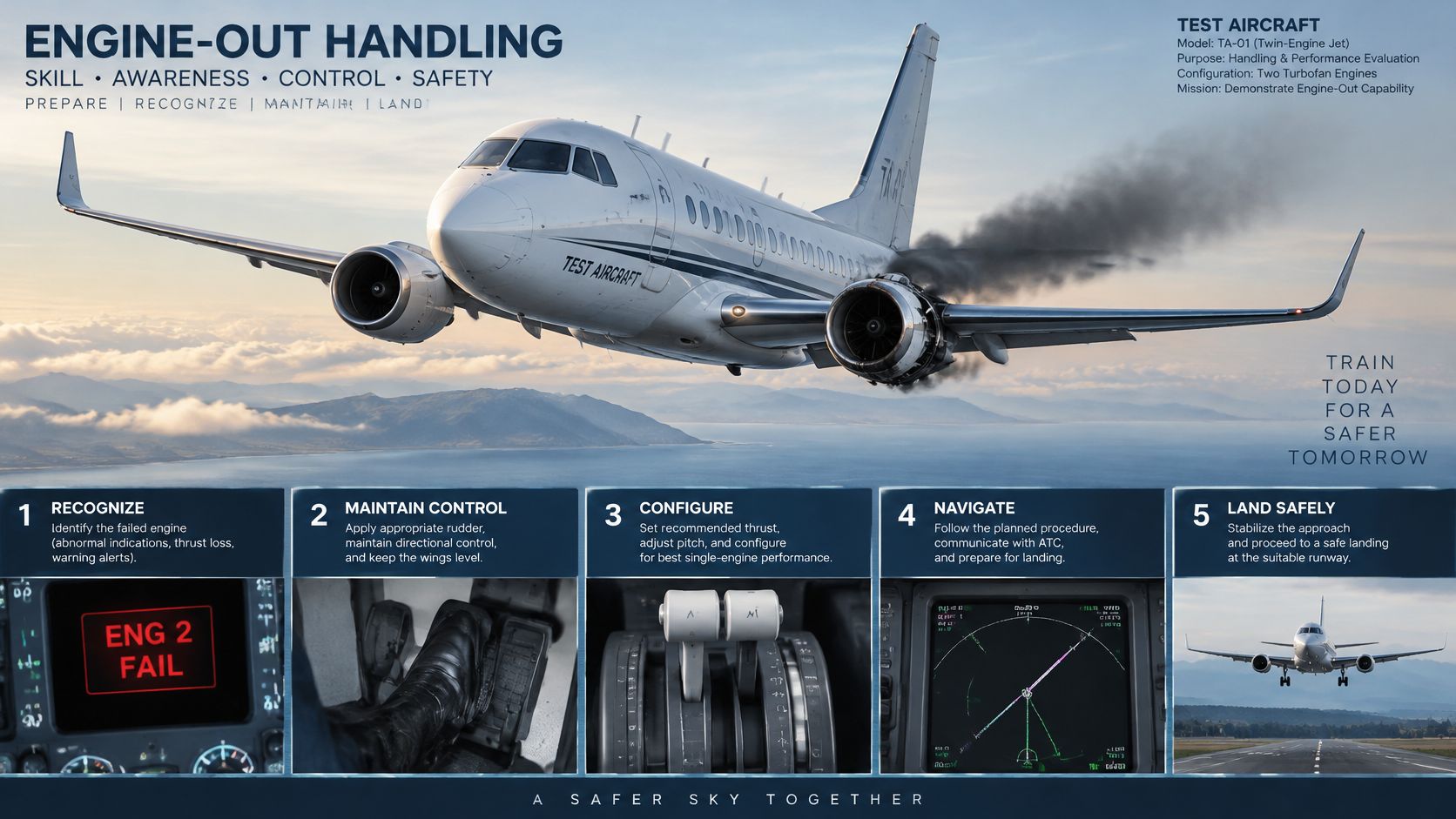
The instructor should teach control, identification, verification, and checklist discipline using the particular aircraft's approved procedures. Improvised control targets or memorized configuration changes from another model can create problems.
Confirm that the test aircraft fits the test
The FAA Instrument Rating Airman Certification Standards specify a published VMC for the applicable multi-engine test aircraft and require functional dual controls, suitable flight instruments, ATC communication equipment, and capability for the required instrument approaches; when GPS is used, the equipment must be instrument-certified with a current database.
The distinction matters: the standards establish the testing requirement; the aircraft documents supply model-specific values and procedures.
Before a lesson, the pilot and instructor should review:
- Control speeds: Published VMC and relevant single-engine operating speeds.
- Performance: Whether the planned weight, conditions, and configuration support the scenario.
- Equipment: Navigation capability, instrument operation, and database status.
- Training limits: How the instructor will simulate the failure and when the exercise will stop.
Aircraft familiarization should match the airplane booked. A pilot reviewing the PA-44 aircraft information should still confirm the specific aircraft, installed equipment, and approved documents before training.
Common mistakes include treating VMC as an acceptable approach target and extending gear or flaps without considering the approved sequence and performance consequences. Neither is solved by a faster checklist recital. Both require aircraft-specific planning and deliberate configuration management.
Hour Benchmarks for Each Training Route
Hour requirements belong to a particular certification path. A combined private-and-instrument course isn't the same product as an instrument course for an existing private pilot, and neither is identical to adding multi-engine privileges to an existing instrument qualification.
The following benchmarks separate those routes. Minimum experience is a floor, not a prediction of checkride readiness.
Hour benchmarks by training route
| Route or rule | Minimum or benchmark | Multi-engine or instrument portion | Source and notes |
|---|---|---|---|
| Part 61 instrument rating training | Required instrument experience must be established from the applicable rule | Instrument experience and instruction requirements must be audited separately | The applicable instrument-rating provision controls; instrument time shouldn't all be described as instructor-provided training |
| Part 61 multi-engine privilege | Proficiency and applicable additional-rating requirements | Multi-engine operations and any required instrument demonstration | No blanket three-hour multi-engine minimum should be attributed to the complex-airplane endorsement provision |
| Part 141 combined private and instrument course, multi-engine | 70 hours of authorized-instructor training | 35 hours of multi-engine instrument flight training | These figures apply to the combined course described by Part 141 Appendix M, including the cross-country and night requirements in the following rows |
| Part 141 multi-engine cross-country | At least 3 hours | Included within the combined course | Appendix M combined-course requirement |
| Part 141 IFR cross-country | At least one flight of 250 nautical miles or more | Airways or ATC-directed routing, with a segment of at least 100 nautical miles straight-line between airports | Appendix M combined-course requirement |
| Part 141 multi-engine night | At least 3 hours | A cross-country exceeding 100 nautical miles, plus 10 takeoffs and 10 full-stop landings | Appendix M combined-course requirement |
The combined-course figures belong together. They shouldn't be presented as a stand-alone multi-engine add-on package or as the expected training length for an already qualified pilot.
Audit the logbook before buying a package
Actual instrument time and simulated instrument time describe different operating circumstances. The logbook needs to identify what occurred, while device sessions require their own appropriate documentation and credit determination.
An instructor should separate:
- Experience already earned: Review eligible prior experience rather than assuming training starts from nothing.
- Required instruction: Identify what must be completed with an appropriately authorized instructor.
- Aircraft-specific proficiency: Evaluate systems knowledge, handling, and performance planning.
- Test preparation: Allow for weak areas revealed by a mock practical test.
For example, a pilot may satisfy the applicable experience requirements yet consistently mishandle approach configuration after an engine failure. Additional training addresses that deficiency even though the logbook totals appear complete.
A completed experience requirement answers whether an applicant has the required background. It doesn't answer whether the applicant can perform consistently.
Current paragraph wording should be checked during the training-plan review, especially when combining previous experience, device credit, and a new aircraft class.
Simulator Hours Versus Aircraft Hours
Simulator credit is limited by the certification route, device approval, and applicable conditions. The federal pilot-certification rules govern that credit; a device's marketing description doesn't establish how much time an applicant may count.
A school should identify the exact approved device and applicable credit before quoting a simulator-heavy program. Historical descriptions of personal-computer devices shouldn't be treated as current blanket authorization, and an unverified ceiling shouldn't become the basis of a training budget.
Where each training layer is best practiced
| Training layer | Best practiced in | Why |
|---|---|---|
| Instrument scan, holds and basic approach flow | Simulator or flight training device | Repeatable practice, manageable workload, and easy resets |
| Abnormal checklists and failure recognition | Simulator first, then the twin | Establishes the sequence before adding aircraft sensations and live operational demands |
| Engine-out control in straight-and-level flight and turns | Actual twin | Develops aircraft-specific recognition of yaw, rudder pressure, trim, and performance |
| Engine-out instrument approach and landing | Actual twin with an appropriately qualified instructor | Integrates configuration, aircraft handling, and approach workload |
| Missed approach with one engine inoperative | Simulator for procedural rehearsal; aircraft practice only within an instructor-approved, performance-supported plan | Configuration and available climb performance are aircraft-specific |
| Radio congestion, ATC changes and weather | Realistic simulator scenarios and suitable live-airspace training | Requires decisions under changing clearances and competing demands |
The device split is a training recommendation, not a regulatory ratio. A capable instructor selects the platform according to the lesson objective rather than replacing aircraft time because a device is cheaper.
Ask what the simulator actually reproduces
Useful questions include whether the device matches the aircraft's avionics, permits realistic failures, reproduces the intended approach procedures, and supports instructor-controlled ATC changes. The school's instrument-rating simulator information can help start that conversation, but the individual training plan still needs an approval-and-credit review.
For broad equipment-budget context, readers can find flight simulator price ranges through PSW Events. Those ranges aren't a flight-school training quote or evidence that a device qualifies for certification credit.
Common mistakes include recording repetitive device sessions without increasing decision workload and assuming a familiar checklist transfers automatically to the airplane. A procedural rehearsal should eventually lead to supervised integration, not an unsupported engine-out go-around attempt.
Planning distinction: A simulator can safely expose a poor decision. The aircraft lesson must be designed so that recognizing the same mistake doesn't require accepting unnecessary risk.
What the Rating Costs and How Long It Takes
There's no flat price here because a defensible total requires current rates, an experience audit, and an agreed proficiency plan. Aircraft availability, instructor scheduling, maintenance, weather, and examiner access also affect the calendar.
The useful estimate is itemized. A package price without assumptions about aircraft, instructor billing, device credit, and additional preparation gives a pilot little basis for comparison.
Cost drivers to ask about before booking
| Cost driver | What it covers | What to ask a school |
|---|---|---|
| Aircraft rental | Twin time for dual instruction, authorized solo activity if applicable, and checkout | Current hourly rate, billing method, minimum billing, and whether fuel is included |
| Simulator or training device | Instrument procedures and abnormal drills | Device rate, instructor billing, approval, and assumed credited time |
| Instructor time | Dual flight, briefings, debriefings, and ground instruction | Rates for appropriately qualified instructors and whether ground time is separate |
| Study materials | Ground course, reference material, and aircraft documents | What's included and what must be purchased |
| Knowledge and practical test fees | Testing-provider charges and examiner fees | Current charges, payment arrangements, and retest policies |
| Aircraft checkout and transition | Familiarization in an unfamiliar twin | Whether transition training is separate or integrated |
| Weather and maintenance delays | Cancelled lessons and aircraft downtime | Cancellation rules, rebooking priority, and substitute-aircraft policies |
Turn a training estimate into a calendar
The arithmetic is simple: remaining planned training divided by completed training per week produces a baseline schedule. The important word is completed, not booked.
For a hypothetical example, assume a pilot and instructor agree on a block of remaining training. A schedule that completes twice as much useful training each week would finish that block in half the flying time, provided retention and lesson quality remain comparable. That's scheduling arithmetic, not a promise about a particular pilot's completion date.
Real calendars include ground preparation, cancelled flights, maintenance interruptions, and time spent correcting weaknesses. An accelerated plan can also stall if the aircraft or examiner isn't available when expected.
A practical budget should distinguish:
- Planned training: The instructor's estimate based on an initial assessment.
- Proficiency reserve: Funding and calendar space for identified weak areas.
- External charges: Testing and materials that may sit outside aircraft-and-instructor billing.
- Disruption exposure: Travel, accommodation, and rescheduling costs when training away from home.
Budgeting only for the minimum experience requirement leaves no room for an aircraft transition or a difficult approach sequence. Ignoring twin availability can be equally costly when a postponed lesson also means lost travel days or additional refresher work.
Is the Rating Worth It and How to Confirm Readiness
The rating makes sense when it supports an actual flying objective: operating a suitable twin, qualifying for a rental arrangement, progressing toward professional flying, or preparing for further instructor training. A pilot should check the intended operator's and insurer's requirements before assuming the certificate change alone provides access.
It isn't an automatic authorization for every twin, avionics installation, or operating environment. The FAA instrument-rating certification standards address simulated engine failures, emergency operations, navigation, and instrument approaches, but practical readiness also requires matching those skills to the aircraft and intended operation.
Define readiness through scenarios
A useful readiness review follows a deliberate sequence:
- Resolve eligibility. The instructor checks the certificate, applicable examination requirements, endorsements, and documentation before a test date becomes a financial commitment.
- Audit experience. The logbook review identifies remaining requirements and distinguishes qualifying experience from skills that need refreshing.
- Rehearse difficult decisions. Device sessions combine an abnormal event with a hold, approach, diversion, or missed-approach decision rather than repeating a memorized flow.
- Integrate in the aircraft. An appropriately qualified instructor designs engine-out approach training around approved procedures, published performance, suitable conditions, and clear termination criteria.
- Complete a realistic mock practical test. A clearance amendment or changing weather scenario should test prioritization without turning the lesson into surprise-driven overload.
- Schedule on consistent performance. The instructor should see repeatable aircraft control, sound decisions, and effective checklist use, not a single good lesson.
A worthwhile training plan also defines what happens when continuing an approach or attempting a climb isn't supported by performance. Recognizing that boundary is part of proficiency, not a failure to complete the exercise.
Questions to settle before committing
The pilot should request the training aircraft's availability, current rates, instructor qualifications, and an explanation of how the estimate changes after the initial assessment. A school tour can clarify how simulator sessions, ground preparation, and aircraft lessons fit together.
Career-track pilots should also distinguish completing this qualification from meeting a specific hiring standard. Pilots interested in teaching need a separate discussion about instructor certificates, ratings, privileges, and preparation.
Is this the same as a multi-engine class rating?
No. The class rating concerns multi-engine airplane privileges; instrument qualification concerns operation by instrument reference under the applicable rules. A pilot's existing ratings determine which training and testing path applies.
Does an existing instrument-rated pilot start over?
Not necessarily. An instructor should assess existing privileges and the requirements for adding multi-engine instrument privileges rather than automatically selling an initial instrument course.
Can simulator practice replace learning engine-out control?
No. Device practice can develop procedures and decisions, but it doesn't remove the need to establish aircraft-specific handling proficiency. Creditable training and practical skill transfer are related questions, not interchangeable ones.
What should happen if the training twin becomes unavailable?
The pilot should obtain a revised schedule and discuss whether a substitute aircraft would require transition training. A different panel or emergency procedure can add preparation even when both aircraft are twins.
What is the strongest sign of practical readiness?
The pilot maintains control, recognizes performance limits, manages configuration deliberately, and makes sound continuation or diversion decisions without continuous instructor prompting. Consistency matters more than a completed hour target.
DuBois Aviation offers instrument and multi-engine instruction, aircraft rental, and simulator-supported training for pilots building these skills. Visit DuBois Aviation to ask about current twin availability, request an individualized training estimate, or arrange a school tour.


