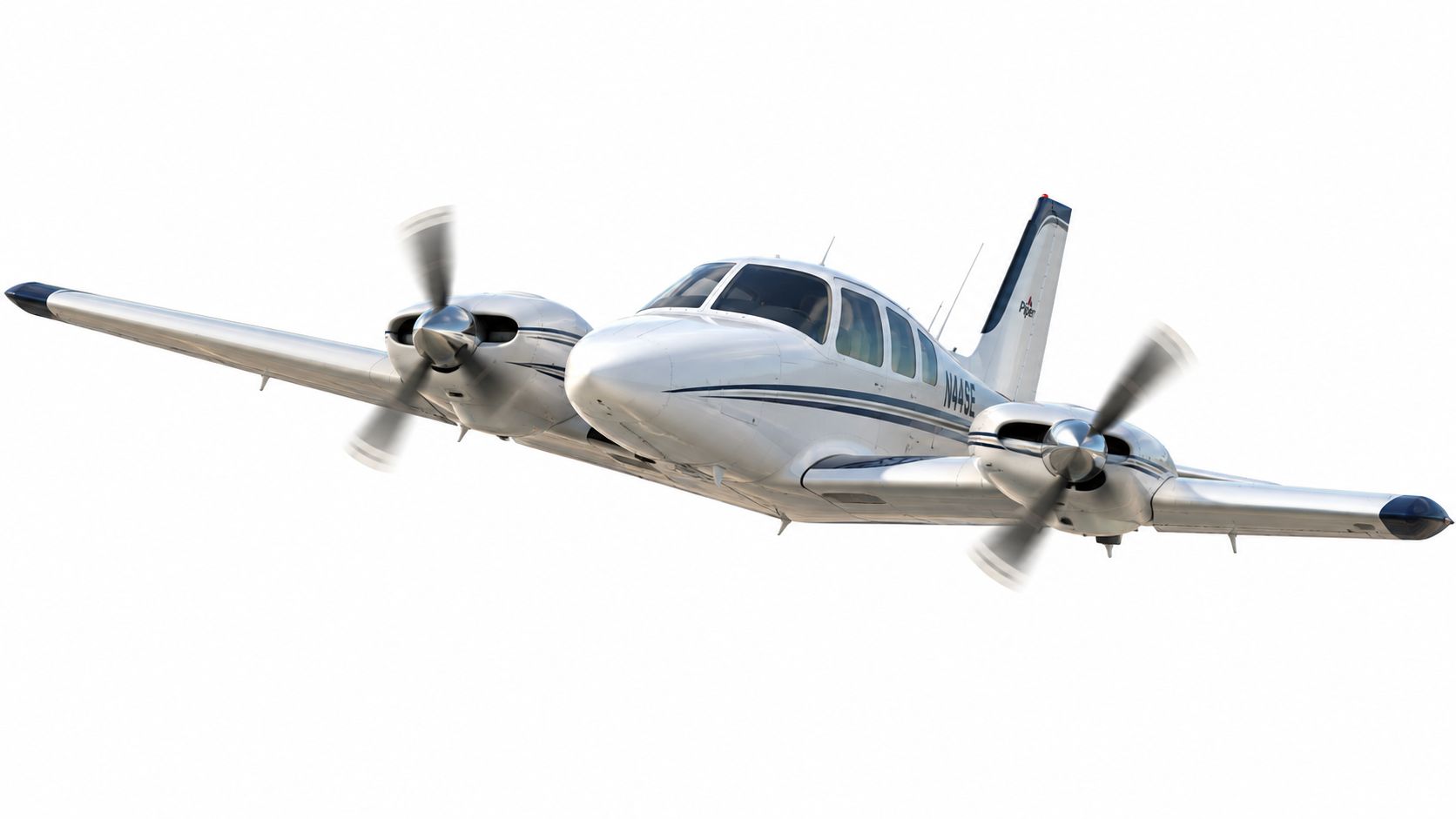
The Piper PA-44 Seminole is a four-seat, twin-engine trainer built for multi-engine instruction and the MEI checkride. Its original PA-44-180 configuration used two 180-horsepower engines, weighed approximately 3,800 pounds at maximum gross weight, and cruised at roughly 191 miles per hour. (Piper PA-44 specifications)
A student usually meets the PA-44 on the ramp with a checklist, headset, and a long list of questions. The airplane looks familiar enough to invite casual habits, yet it introduces asymmetric thrust, propeller feathering, landing-gear systems, and engine-out decision-making. That combination makes the PA-44 aircraft an effective bridge from single-engine flying to professional multi-engine operations, provided the pilot treats its systems and limitations seriously.
Table of Contents
- What the Piper PA-44 Seminole Is and Why It Matters
- How the Seminole Came to Be a Training Standard
- Key Design Features and Performance Numbers Explained
- Counter-Rotating Props, VMC, and the Critical Engine Question
- How the PA-44 Fits Into Multi-Engine and MEI Training
- Systems, POH, and What to Check Before the First Flight
- Maintenance, Operating Costs, and Ownership Versus Rental
- Seminole FAQs and Your Next Training Step
What the Piper PA-44 Seminole Is and Why It Matters
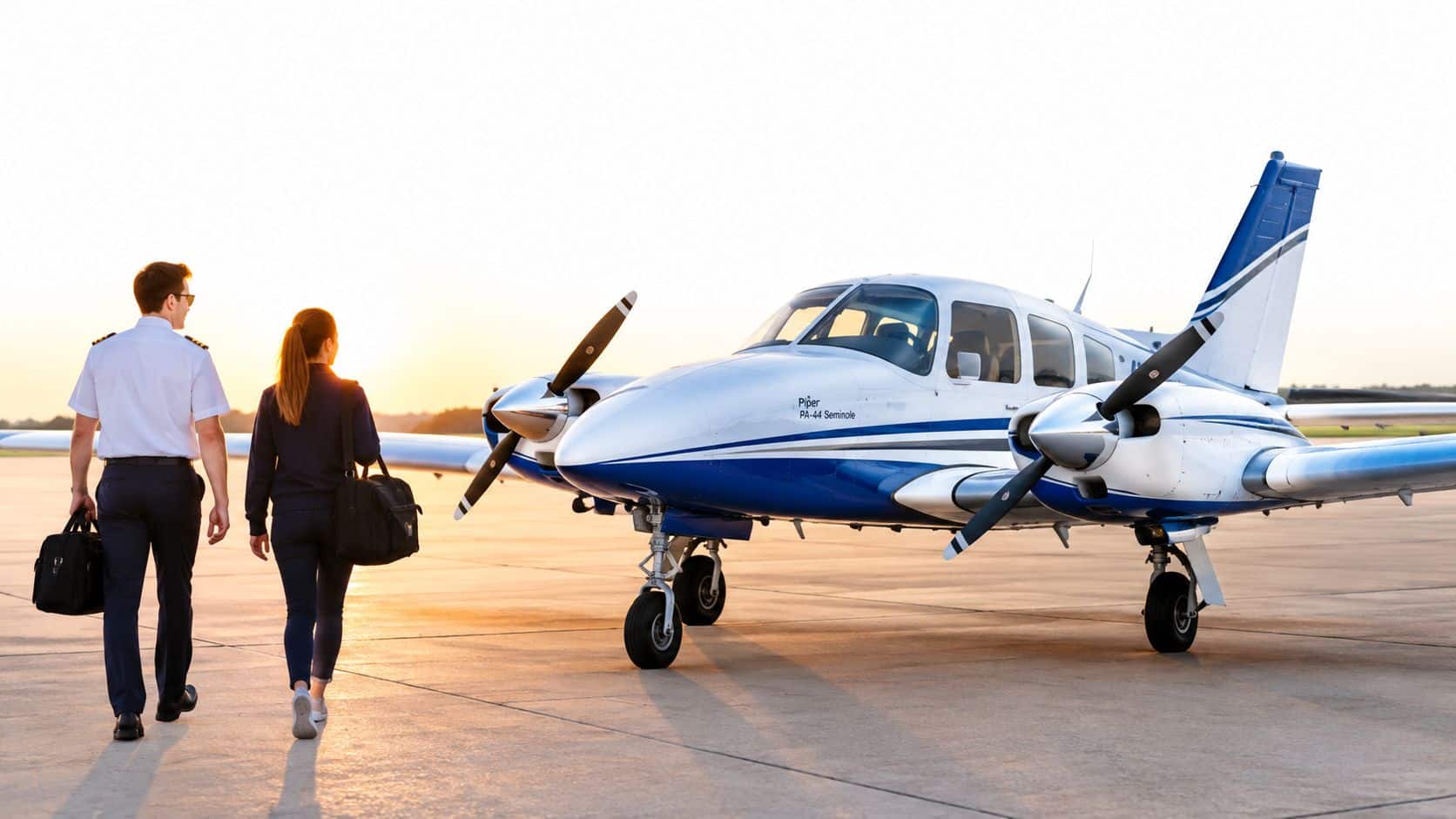
You taxi out in a light twin for the first time, advance both throttles, and the airplane still looks familiar. Then one engine becomes a training problem instead of a comfort blanket, and the lesson changes fast. That is why the Piper PA-44 Seminole matters. It is a four-seat, low-wing, twin-engine, unpressurized airplane with retractable tricycle landing gear built to teach multi-engine judgment as much as multi-engine control.
Piper designed the Seminole as a trainer with enough airplane around the student to make procedures real, but not so much airplane that the workload hides the lesson. You get two reciprocating engines, conventional flight controls, retractable landing gear, and a cabin that supports instrument work and cross-country training without turning the airplane into a passenger hauler. In practice, that means a pilot can rehearse engine-out drills, asymmetric thrust control, gear and propeller management, instrument approaches, and single-engine landings in one consistent platform.
Its certification status matters less as a line in a record than as a cockpit expectation. Under its type certification, the airplane still asks the pilot to protect airspeed, configure promptly, and use disciplined rudder and bank inputs during single-engine work rather than expecting excess power to clean up poor handling. The European type certificate continues to list it as a twin-engine piston airplane used in a structured training role, which fits how pilots use it. (European PA-44 type certificate documentation)
A trainer with real consequences
The Seminole is forgiving enough to teach in, but honest enough to punish sloppy technique. Let airspeed bleed off, hold the wrong rudder pressure, delay cleanup, or continue a demonstration too long, and the airplane quickly shows you how small the margin can become.
That is also why the four seats can mislead new pilots. The cabin says traveling airplane. The training mission says something more specific. Load planning still matters, and after an engine failure the performance picture changes enough that a pilot should treat the aircraft as a systems-training platform with transportation capability.
Who benefits from the PA-44
Several groups get clear value from the Seminole:
- Multi-engine add-on students use it to learn twin handling, engine-out procedures, and multi-engine emergencies.
- Commercial pilots may train in it for airplane category and multi-engine class work, depending on the certificate path.
- CFI and MEI candidates use it to demonstrate maneuvers, teach risk management, and fly accurately while instructing.
- Renters and transitioning pilots still need a careful checkout because equipment, avionics, and operating limits vary by airplane.
For a first twin, that combination matters. The Seminole does not just introduce another engine. It teaches what changes when one of them stops helping.
How the Seminole Came to Be a Training Standard
The Seminole emerged from a practical training need. Flight schools wanted a light twin that could teach multi-engine control without asking beginning twin pilots to manage a larger, more complex cabin-class airplane. Piper's answer was a compact four-seat design with familiar piston-airplane architecture and systems specifically useful for instruction.
The result was an airplane that made the training mission visible. A student could sit beside an instructor, operate two engines, practice propeller controls, and work through engine-failure scenarios without the airplane carrying more seats or equipment than the lesson required. The design also provided enough cruise capability for instrument and cross-country exercises while keeping the emphasis on handling and procedures.
Why the design stayed relevant
Training airplanes need more than impressive specifications. They need predictable control responses, understandable systems, and a layout that lets instructors repeat lessons consistently. The Seminole's conventional reciprocating-engine arrangement supports that repetition. Students learn the relationship between power, rudder, bank, airspeed, propeller controls, and configuration in a setting that resembles the logic of larger multi-engine aircraft.
Its continued relevance also comes from the gap between a single-engine cockpit and professional multi-engine operations. A pilot may understand basic flight planning and instrument procedures yet still lack practice identifying the failed engine, maintaining directional control, configuring the airplane, and deciding whether a climb is possible. The PA-44 makes those skills central to the lesson.
Seminole is not Apache or Aztec
Students researching Piper twins often confuse the PA-44 with older Piper multi-engine models. The Seminole belongs to a later training-oriented line and should be evaluated according to its own aircraft documentation, systems, and mission. It isn't just an updated version of every earlier Piper twin, and a pilot's experience in another model doesn't remove the need for PA-44-specific transition training.
The model's identity matters because aircraft differences can affect emergency procedures, performance planning, cockpit flows, and checkride preparation. A pilot should carry forward general multi-engine principles, then verify each procedure in the aircraft's current approved documentation.
Key Design Features and Performance Numbers Explained
You are rolling on takeoff, the airplane feels eager, and the numbers can tempt you to treat the PA-44 like a small transport. That is where students get misled. In the Seminole, published performance matters only if you translate each figure into a cockpit habit.
The original PA-44-180 used two 180-horsepower Lycoming engines, retractable landing gear, and a maximum gross weight of approximately 3,800 pounds. Its published cruise speed was roughly 191 miles per hour, with an initial climb rate of about 1,340 feet per minute, an all-engine service ceiling near 17,100 feet, and a range approaching 898 miles, depending on configuration and operating assumptions. (PA-44-180 published specifications)
| Specification | PA-44-180 Value | What the pilot does differently |
|---|---|---|
| Engines | Two 180-horsepower Lycoming engines | Expect redundancy, not excess power. Guard airspeed and configuration carefully during engine-out training. |
| Maximum gross weight | Approximately 3,800 pounds | Treat loading as a performance decision, not just a paperwork limit. Recheck takeoff, climb, and single-engine margins before departure. |
| Published cruise speed | Roughly 191 miles per hour | Stay ahead of the airplane on instrument lessons and abnormal procedures. Faster travel does not excuse rushed flows or checklist discipline. |
| Initial climb rate | About 1,340 feet per minute | Read this as a best-case all-engine figure. Do not assume similar climb after a failure. |
| All-engine service ceiling | Near 17,100 feet | Separate all-engine capability from engine-out reality before planning routes, altitudes, or practice areas. |
| Published range | Approaching 898 miles, depending on assumptions | Use range as a planning estimate. Fuel, loading, and conditions still decide how much flexibility you actually have. |
Two engines change the workload more than they change the laws of aerodynamics. If one engine stops producing thrust, the airplane still has to deal with drag, yaw, and a sharp drop in climb performance. Students who read the brochure-like numbers without that filter often expect the airplane to keep doing what it was doing a moment earlier. It usually will not.
Weight is a good example. At higher loading, the Seminole can feel perfectly normal in cruise yet give away margin where training happens, on takeoff, in climb, and during single-engine demonstrations. That is why instructors keep returning to loading, density altitude, and configuration. In this airplane, those are not background details. They shape the lesson.
Cruise speed also needs context. A Seminole moves quickly enough for instrument work, cross-country lessons, and systems practice to feel realistic, but speed raises the penalty for delay. If an indication looks wrong, the pilot needs a disciplined flow, positive identification, and the right checklist rhythm. A fast twin with a confused pilot becomes a busy cockpit very quickly.
The ceiling figures make this point even clearer. The all-engine service ceiling near 17,100 feet can create the wrong mental picture if a student never compares it with engine-out capability. The available single-engine service ceiling is only about 4,100 feet. (PA-44 single-engine performance reference)
That gap should change behavior before takeoff. Plan engine-out practice only where altitude, terrain, temperature, loading, and current aircraft performance leave room for a safe outcome. The better question is not whether a twin can fly on one engine. The better question is what this Seminole, today, in these conditions, can do after you clean it up and control it correctly.
Practical rule: Treat every performance number as conditional. The aircraft's current AFM or POH, loading, atmospheric conditions, and configuration determine what the number means today.
Counter-Rotating Props, VMC, and the Critical Engine Question
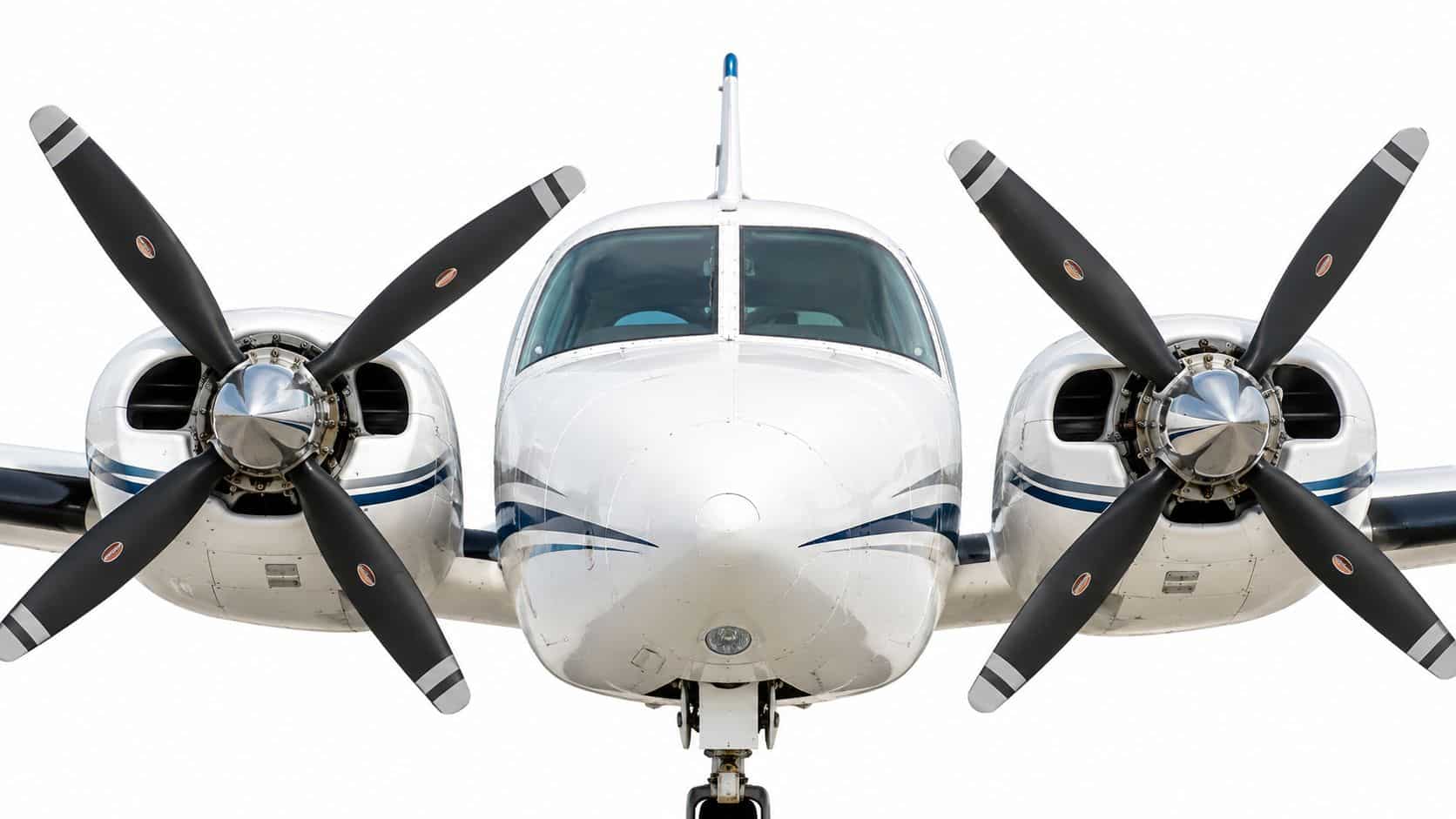
The Seminole's counter-rotating propellers are one of its most important training features. The propellers turn in opposite directions, which reduces the conventional asymmetry between the left and right engine. That arrangement helps make the airplane's engine-out handling more balanced, but it doesn't remove the need for disciplined control inputs.
The FAA defines VMC as the calibrated airspeed at which directional control can be maintained after a sudden critical loss of thrust under specified certification conditions. For multiengine certification, the airplane must have a manufacturer-published VMC and must produce an asymmetric-thrust condition when one or more engines is lost. (FAA multiengine certification guidance)
What counter-rotation does and doesn't do
On a conventional twin, the critical engine is the engine whose failure creates the greatest adverse effect on directional control. The FAA explains that, on conventional twins with clockwise-rotating engines viewed from the pilot seat, this is normally the left engine. Counter-rotation reduces the usual critical-engine difference in the Seminole, but a failed engine still removes thrust and adds drag.
The remaining risks come from the complete situation:
- Speed decay reduces the effectiveness of the rudder and vertical stabilizer.
- Excessive rudder can create unnecessary drag and may mask the developing loss of control.
- Excessive bank or pitch can reduce the available control margin.
- High density altitude and weight can reduce engine power and climb performance.
- Low altitude leaves less time and space to recognize the problem and recover.
The pilot must respond to the airplane, not just the red-line VMC value. FAA guidance notes that density altitude, weight, center of gravity, bank angle, and the relationship between VMC and stall speed all affect control margin. At higher altitude, VMC can become lower than stall speed, so aggressively raising the nose isn't an appropriate recovery technique. (FAA guidance on VMC factors and recovery)
How to handle a VMC demonstration
A VMC demonstration should be a managed training event. The instructor establishes the conditions, briefs the recovery, confirms adequate altitude, and stops the demonstration at the first clear indication of directional-control loss, stall warning, buffet, or an unsafe trend.
The first indication matters. A pilot shouldn't wait for a dramatic yaw or full loss of control. Reducing angle of attack and restoring directional control take priority over trying to “win” the maneuver. A student who terminates early has demonstrated better judgment than one who allows the aircraft to continue toward a stall.
The Seminole makes engine-out training more manageable. It doesn't make it optional to respect airspeed, configuration, altitude, and control authority.
For a structured review of the cockpit priorities that follow a power-loss event, pilots can study engine failure procedures, then apply those principles only through the aircraft's approved checklist and instructor briefing.
How the PA-44 Fits Into Multi-Engine and MEI Training
The PA-44 becomes most useful when each maneuver has a clear training purpose. A multi-engine student is not just learning to fly a larger airplane. The student is learning to divide attention between aircraft control, engine identification, configuration, communication, and decision-making.
A typical training sequence may include:
- Normal operations, including taxi techniques, engine controls, gear operation, and power management.
- Asymmetric thrust work, where the student feels how power changes affect yaw and roll.
- VMC demonstrations, conducted with a clear recovery plan and adequate altitude.
- Engine-out procedures, including identification, confirmation, securing, and checklist discipline.
- Single-engine approaches and landings, with attention to alignment, airspeed, configuration, and go-around planning.
- Instrument procedures, where the student manages navigation and communication while preserving control after a simulated failure.
The altitude rule has a reason
FAA practical-test guidance places specific limits on simulated engine-failure demonstrations during a commercial multiengine practical test. The airplane must reach at least VSSE or VYSE and an altitude of at least 400 feet above ground level before the failure is simulated. After the applicant simulates propeller feathering, the examiner sets zero thrust, and the test includes at least one landing with a simulated feathered propeller. (FAA commercial multiengine practical-test guidance)
Those limits aren't an invitation to practice low-altitude failures during ordinary training. They establish a controlled testing framework and require consideration of local atmospheric conditions, terrain, and aircraft type. An instructor may choose a more conservative plan when the airport environment, weather, loading, or student readiness reduces the available margin.
From add-on rating to MEI
The multi-engine add-on develops the pilot's ability to operate the airplane safely as a single pilot. The MEI path adds another responsibility. The applicant must explain the maneuver, monitor the learner, manage risk, and recognize when the demonstration should stop.
That makes the Seminole valuable beyond the checkride. A future instructor must know not only how to perform an engine-out maneuver, but also how to brief it, set boundaries, protect recovery altitude, and prevent a student from chasing a declining airspeed or unstable configuration. The airplane's paired engines and featherable propellers support those lessons, but the instructor's judgment remains the primary safety tool.
Pilots comparing training structures should review the available multi-engine ratings and match the course to the certificate, existing experience, schedule, and intended professional path.
Systems, POH, and What to Check Before the First Flight
Before the first start, a Seminole student should know where the airplane will demand precision. This is not just a matter of finding switches. In a twin, systems knowledge changes what you do with your hands and feet when the workload rises, especially if one engine stops producing the thrust you expected.
The place to start is the current AFM or POH for the specific airplane. That handbook is the aircraft's operating rulebook. It tells you which limitations apply, which procedures are approved, and which equipment or supplements belong to that exact serial number and panel. A Seminole may look familiar from one school to another, but small differences in avionics, placards, and supplements can change the correct response during an abnormal or emergency situation.
A practical checkout should then move from paper to cockpit. Sit in the airplane and trace the systems as if you were about to teach them out loud. That method exposes gaps quickly.
A renter or transition student should confirm these items with an instructor or authorized school representative:
- Documentation: Verify that the AFM or POH is current and matches the aircraft's serial number.
- Supplements: Check whether installed avionics or other equipment add procedures or limitations that change normal or emergency use.
- Fuel system: Identify the tank arrangement, selector positions, crossfeed logic, usable fuel information, and the approved response to abnormal fuel indications.
- Propellers: Review constant-speed operation, feathering, unfeathering, and what cockpit indications should appear in each condition.
- Landing gear: Know normal extension and retraction, gear indications, warning systems, and the approved alternate or emergency extension procedure.
- Electrical system: Understand what each source powers and what the checklist calls for after an alternator or broader electrical failure.
- Engine instruments: Learn the normal picture first, because abnormal troubleshooting starts with recognizing what "normal" looks like.
Use a cockpit flow, then back it up with the written checklist. A flow helps you move efficiently. The checklist catches the detail your memory skips under pressure, such as a limitation, a placard, or an aircraft-specific supplement.
Generic specification sheets often create false confidence. They describe the model in broad terms, but they do not tell you exactly how the airplane in front of you is equipped or what procedures are approved for it. In training, that difference shows up fast. If you lose an engine, confusion about fuel selectors, feathering steps, or electrical priorities is not an academic problem. It changes how well you hold control, identify the problem, and protect performance.
Before the first flight, the student should be able to answer three questions without guessing: Which handbook applies, which equipment is installed, and which limitations and emergency procedures govern this airplane? If any answer is vague, the checkout is not finished.
Maintenance, Operating Costs, and Ownership Versus Rental
A Seminole multiplies some ownership responsibilities because it has two engines, two propellers, and complex systems such as retractable landing gear. Maintenance planning must account for scheduled inspections, engine and propeller condition, landing-gear components, electrical equipment, and the aircraft's records. Insurance, storage, and downtime also shape the actual operating burden.
The financial choice usually falls into three categories:
| Option | Best fit | Main consideration |
|---|---|---|
| Rental | A pilot completing training or flying occasionally | Hourly availability and checkout requirements |
| Partnership | Pilots who want shared access | Shared scheduling, maintenance decisions, and fixed costs |
| Ownership | A pilot with frequent, predictable use | Responsibility for maintenance, insurance, storage, and records |
What renters should ask
A renter should ask how the aircraft is maintained, which inspections are current, how maintenance downtime is handled, and whether the rental process includes a model-specific checkout. The pilot should also understand whether the aircraft is equipped for the planned instrument or commercial training tasks.
The aircraft rental rates guide can help a pilot separate hourly rental charges from other checkout or training requirements. The useful comparison isn't just the published hourly figure. It includes instructor time, repositioning, weather cancellations, required proficiency flights, and the cost of keeping skills current.
Ownership may make sense for a pilot who expects regular access and can manage fixed obligations. Rental often makes more sense for a student whose primary goal is a rating or MEI qualification. A partnership can occupy the middle ground, but only if the partners agree on scheduling, reserves, maintenance authority, and exit arrangements.
Seminole FAQs and Your Next Training Step
Does a pilot need a high-performance endorsement?
The PA-44's engine arrangement and retractable gear don't automatically answer every endorsement question. The pilot should review the applicable FAA requirements with an instructor and confirm what endorsements or certificate privileges apply to the planned operation.
How does a multi-engine add-on relate to a commercial certificate?
A multi-engine rating can be added to an existing pilot certificate, while commercial privileges involve separate eligibility and practical-test requirements. The training plan should identify whether the goal is a multi-engine add-on, commercial multi-engine qualification, or later MEI work.
What does Seminole time show on a resume?
It shows exposure to twin-engine systems, asymmetric-flight procedures, instrument operations, and engine-out decision-making. Employers and chief instructors still care about proficiency, judgment, recency, and the quality of the pilot's training, not just the aircraft model.
How does the PA-44 compare with another light training twin?
Both aircraft types can support multi-engine instruction, but the meaningful comparison is specific to the school's maintenance program, avionics, instructor standardization, availability, and approved training syllabus. A pilot should fly the airplane that can be trained in consistently and operated safely.
What should a prospective student do next?
A prospective student should ask about course availability, the aircraft's current AFM or POH, instructor experience, checkout requirements, and the sequence from multi-engine add-on to MEI. A school tour can also clarify how simulator work, ground training, flight scheduling, and checkride preparation fit together.
DuBois Aviation offers multi-engine training, aircraft rental, and instructor-led preparation for pilots building practical proficiency in the PA-44 aircraft and related ratings. Visit DuBois Aviation to ask about course availability, schedule a school tour, or request training information.