
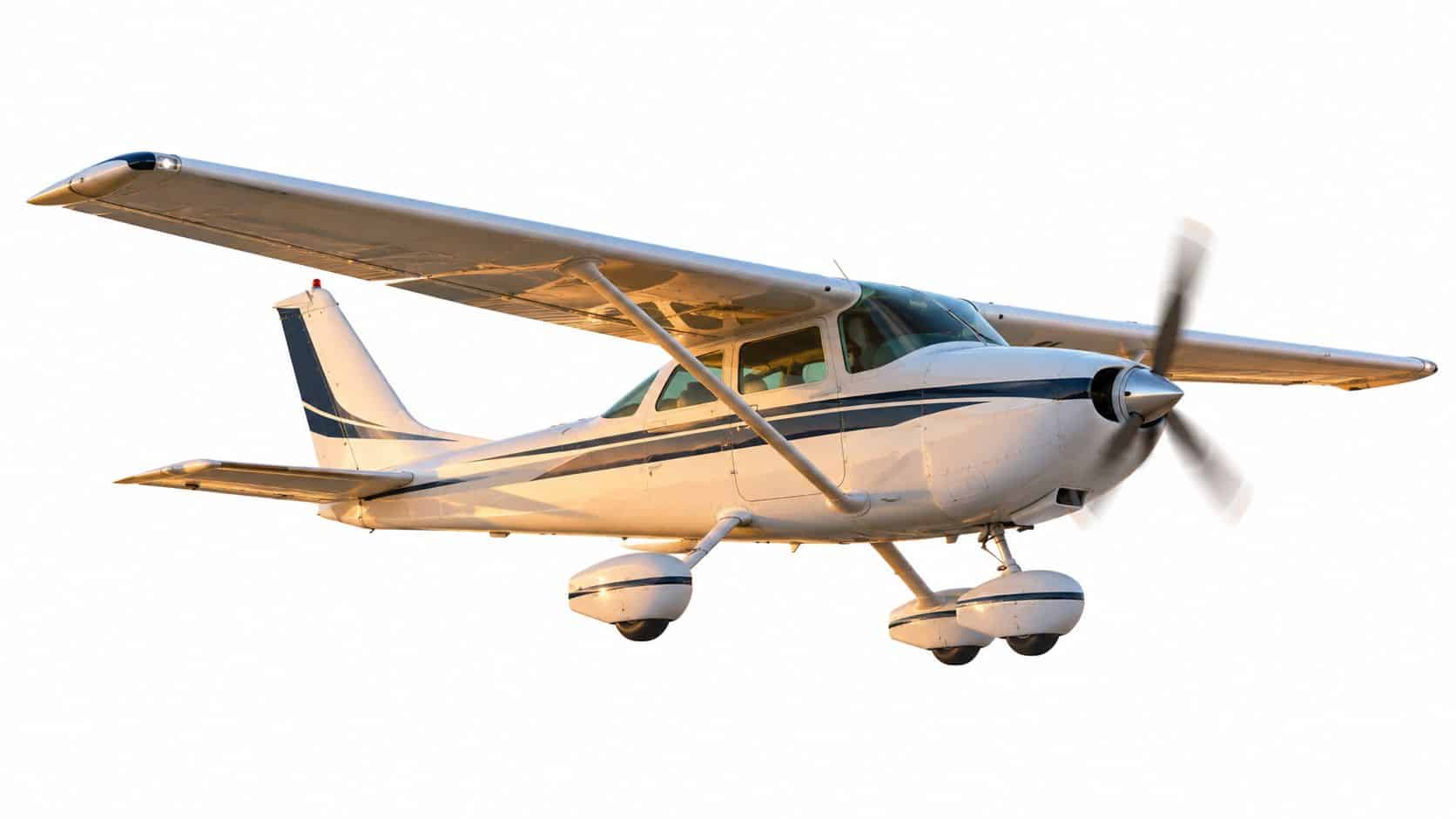
Meta title: Engine Failure Procedures Every Pilot Should Master
Meta description: Learn engine failure procedures by flight phase, from takeoff to landing, with clear steps for glide, restart decisions, radio calls, and training.
URL slug: /engine-failure-procedures
A student returning from pattern work is usually thinking about spacing, checklist flow, and the next landing, not a sudden cough from the engine. But engine failure procedures start the same way every time. Lower the nose, keep the airplane under control, and get to a usable glide before anything else. From there, the right response depends on the phase of flight, whether the power loss is partial or complete, and how much altitude is available to trade for time.
Engine Failure Procedures Every Pilot Should Master
Table of Contents
- What Engine Failure Really Looks Like in the Cockpit
- Single-Engine Versus Multi-Engine Failure Procedures
- Engine Failure by Phase of Flight
- Best Glide, Forced Landing, and Radio Calls
- Diagnosing a Partial Power Loss Before Shutting Down
- Simulator Practice and Training at DuBois Aviation
- Putting It All Together With a Chair-Fly Habit
- FAQs
- What is the first action in an engine failure after takeoff?
- Should a pilot always try to restart the engine?
- Is a rough engine treated the same as a complete engine failure?
- When should a pilot use the printed checklist?
- Is turning back to the runway after takeoff a good default plan?
- What should a radio call include during an engine failure?
What Engine Failure Really Looks Like in the Cockpit
A realistic engine failure rarely arrives as a neat training-script moment. A CFI and student might be headed back to Chino after pattern work when the engine coughs, surges, or drops toward idle. The first surprise for many students is that "engine failure" doesn't always mean silence. It can mean complete power loss, rough partial power, intermittent surging, or symptoms that only look like a failed engine.
That distinction matters because the pilot's first seconds still need a clean order. The FAA's Airplane Flying Handbook says the pilot should immediately lower the nose, maintain coordinated flight, and establish a controlled glide toward a plausible landing area, preferably straight ahead in a low-altitude event, as outlined in the FAA Airplane Flying Handbook chapter on emergencies.
The three priorities in the first seconds
Most confusion comes from trying to solve the wrong problem first. The airplane doesn't care yet why the engine changed. It needs airspeed.
- Fly the airplane first. Pitch to stop the deceleration, level the wings as needed, and protect coordinated flight.
- Identify what kind of failure it is. Is the engine rough, at idle, fully quit, or still making some power?
- Act on memory items before deep troubleshooting. Only then does it make sense to work the immediate flow for restart or forced landing.
Practical rule: The first usable gain in an engine failure isn't a clever checklist item. It's a quick reduction in angle of attack that preserves flying speed.
A common student error is dropping the eyes straight to the engine gauges. That feels productive, but it often delays the one action that buys time. A small altitude loss traded immediately for airspeed can create a few more seconds of control and decision space. A stall or departure from controlled flight removes that space completely.
Why the broad definition matters
Pilots often search for one memorized engine-out script. Real events don't cooperate. FAA safety guidance warns that training should cover events that may be misinterpreted as engine failures, and that pilots should confirm the failure before committing to shutdown actions, as discussed in FAA Safety Alert for Operators SAFO 09008.
That is why a student should think in terms of control, diagnosis, then action. The order stays stable even when the symptoms don't.
Single-Engine Versus Multi-Engine Failure Procedures
The procedure tree changes the moment one engine is still making thrust. In a single, a serious loss of power points quickly toward a forced landing mindset. In a twin, the operating engine is both the reason the airplane can keep flying and the reason directional control can become the main hazard.
Where the response splits
On a single-engine airplane, the pilot is usually asking one immediate question: where can this airplane land under control?
On a multi-engine airplane, the pilot has several additional tasks at once:
- Identify the failed engine. The pilot needs to know which side quit before touching anything.
- Verify with instruments and cues. Rudder pressure, yaw, and performance clues matter, but verification must come from the live indications as well.
- Feather and secure the dead side if required. A windmilling propeller creates drag that can turn a manageable event into a performance problem.
- Protect Vmc and target Vyse. Below minimum controllable airspeed, the airplane may no longer remain controllable with asymmetric thrust.
That is why multi-engine emergency training is its own discipline, not an extension of single-engine habit.
Single-engine vs multi-engine failure response
| Action | Single-Engine | Multi-Engine |
|---|---|---|
| Initial priority | Establish glide and landing option | Maintain directional control and safe single-engine speed |
| Failure identification | Confirm power loss or roughness | Identify and verify the failed engine before securing |
| Restart decision | Depends on altitude and landing site | Depends on controllability, performance, and proximity to an airport |
| Propeller management | Usually windmilling unless shutdown is required | Feathering may be critical to reduce drag |
| Best outcome | Controlled off-airport or runway landing | Single-engine landing at nearest suitable airport if performance allows |
| Main trap | Troubleshooting too early | Misidentifying the dead engine or letting airspeed decay |
The restart-versus-land decision also diverges. In a single at low altitude, a runway or field usually takes priority over a restart attempt. In a twin with one engine still producing thrust, the safer outcome may be a prompt diversion and single-engine landing at the nearest suitable airport rather than forcing the issue farther downroute.
Aviation safety guidance also shows why procedure discipline matters even though engine failures are uncommon. A Flight Safety Australia review citing ATSB analysis reported about 13 failures per 100,000 flight hours for traditional Continental and Textron/Lycoming piston engines, 15 per 100,000 for Rotax engines, and 0.15 per 100,000 for the Pratt & Whitney PT6 turboprop family in the Flight Safety Australia review of engine failure risk.
For pilots considering advanced training, a proper multi-engine rating course should cover those twin-specific memory items in type, not just the broad theory behind them.
Engine Failure by Phase of Flight
The same airplane can demand very different engine failure procedures depending on when the power problem appears. Altitude and airspeed change the order of available choices far more than many students expect.
Takeoff and initial climb
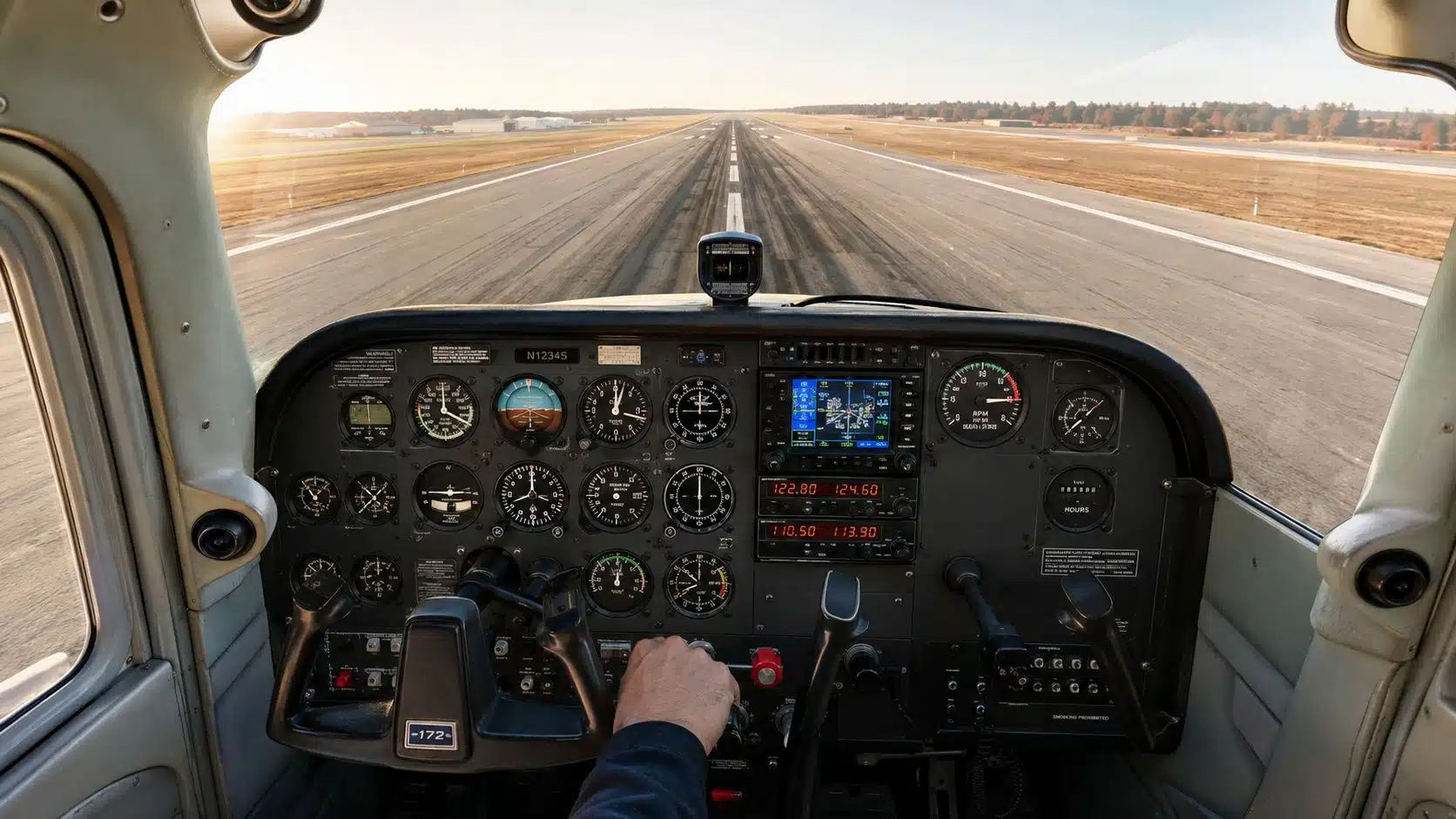
The most unforgiving phase is the departure end of the runway. If the engine fails on the roll, the answer is simple. Throttle idle if needed, maintain control, brake as required, and stop straight ahead.
After liftoff, the margin narrows fast. Below a very low altitude, the pilot usually doesn't have time for much more than pitch, wings level or a shallow correction, and a landing area more or less ahead. The FAA training emphasis is consistent here. Maintain control, attempt a restart only if possible, and land under control at the slowest safe speed, as reinforced in the FAA's safety training discussion on engine emergencies.
A useful training benchmark appears in operational guidance: below roughly 800 feet AGL, many instructors teach skipping the printed checklist and flying the airplane to the landing because delay during the takeoff phase can make the outcome worse. That same safety review also reported a 43% success rate for turnbacks versus 100% for straight-ahead outcomes in its test series, in the earlier linked Flight Safety Australia review of turnback risk.
A low-altitude engine failure is mostly an airspeed problem first and a checklist problem second.
Cruise and pattern
Cruise gives the pilot the most useful currency in an emergency: time. After pitching for best glide and choosing a likely landing area, the pilot can work the memory items for fuel, air, ignition, and mixture methodically. Restart attempts are most realistic here, especially in fuel-management or induction-related events.
A brief pattern segment can fool pilots because the airport is visible and close. That doesn't mean every runway is reachable from every base or crosswind position. The same discipline applies. Fly the glide first, then decide whether the runway is made or whether an alternate spot inside the airport boundary is the more realistic choice.
Approach and landing
On approach, the runway may already be in front of the airplane, but configuration can complicate the event. A pilot with flaps out, power reduced, and little extra speed may initially mistake a rough engine for an ordinary sink increase or a botched power setting.
The sequence still works:
- Pitch first: Hold or regain the target speed.
- Confirm the problem: Full failure, idle power, or rough partial power.
- Simplify configuration: Clean up only as needed to preserve the glide.
- Use restart items only if the runway or landing site is assured.
For students who like scenario repetition outside the airplane, even story-based debrief material can help build recognition. Some pilots use summaries of Walter White flight as a way to reflect on how cockpit decisions unfold under pressure, then compare that pacing to formal emergency chair-flying.
Chair-fly each phase separately
The mistake isn't forgetting that best glide exists. The mistake is assuming one memorized flow covers every altitude band. A stronger habit is to rehearse five separate snapshots:
- Takeoff roll
- After liftoff
- Climb
- Cruise
- Approach or pattern
Each one should begin with the same first move and then diverge based on time available. That's how the sequence sticks when workload spikes.
Best Glide, Forced Landing, and Radio Calls
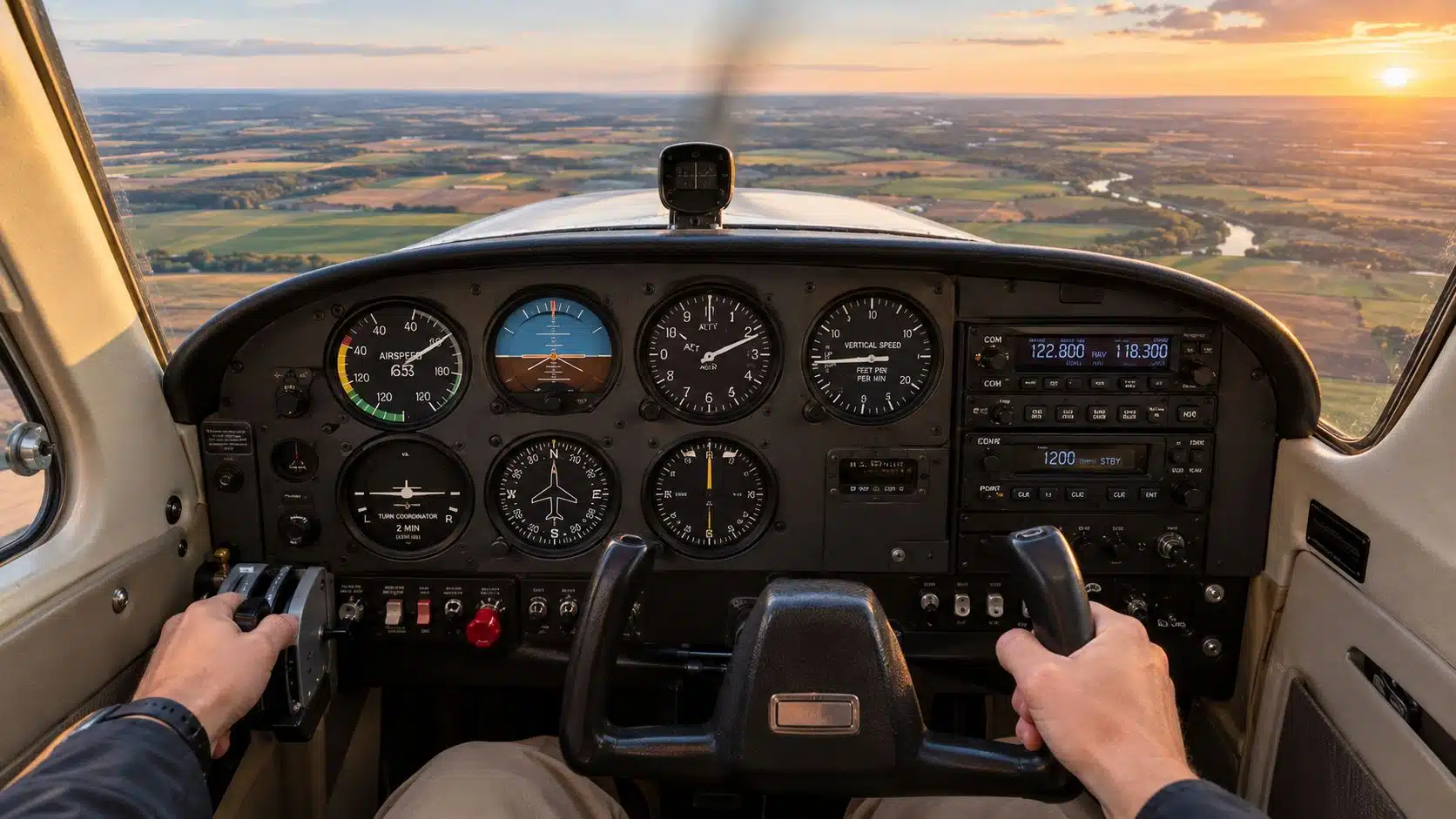
Best glide is not just a book number. In practice, it becomes the speed that turns altitude into range most efficiently. Once the pilot trims for the published glide speed, the airspeed indicator starts acting like a rough range meter. If the nose comes up and the speed decays, range shrinks. If the nose goes down too far, the airplane gives away altitude without useful benefit.
Turning best glide into action
A clean cockpit flow looks like this:
- Set the pitch attitude: Don't chase the needle. Place the nose where the airplane normally holds glide speed, then confirm.
- Trim early: Trim reduces workload and frees attention for landing-site selection.
- Check the prop condition: If the prop is windmilling, the engine hasn't seized. That affects diagnosis and restart logic.
- Keep a realistic mental circle: Altitude is what buys options now.
For pilots who want a clearer sense of range planning, this guide on how to calculate glide ratio helps connect the airspeed picture to actual landing-site choices.
Choosing the field and making the call
A useful rule of thumb is to think in broad glide rings, then shrink the options based on wind, surface, and obstacles. A field directly below the airplane may be safer than a runway that requires stretching. A road can look tempting until wires enter the picture.
Priorities for the landing site usually sort out this way:
- Into the wind if practical
- Firm, open surface
- Few obstacles on final
- An escape option if the first choice doesn't work out
Cockpit cue: If the pilot is still hunting for a field, it isn't time to bury the head in restart troubleshooting.
Radio comes after aircraft control and site selection are stable enough to spare the attention. If already talking to ATC, staying on that frequency is usually the easiest path. If not, 121.5 can be used, and 7700 on the transponder helps the emergency stand out.
Example phraseology:
- Towered environment: "Mayday, Mayday, Mayday, Cessna 12345, engine failure, two miles south of the field, gliding to runway or off-airport landing."
- Untowered area: "Mayday, Mayday, Mayday, Cessna 12345, engine failure, five miles west at three thousand feet, landing in a field north of the highway."
- If help is needed broadly: Broadcast on 121.5 with callsign, location, altitude, and intended landing area.
Restart attempts fit only after the airplane is trimmed, the site is chosen, and the glide is under control. If those pieces aren't in place, troubleshooting is premature.
Diagnosing a Partial Power Loss Before Shutting Down
A Cessna 172 at 4,500 feet starts running rough. The airplane is still flying, the prop is still turning, and oil pressure hasn't collapsed. A student pilot's first instinct may be to pull the mixture or jump straight into shutdown logic. That's exactly where many manageable events become worse.
The five-second scan
A partial power loss needs a quick diagnosis, not a long debate. The point isn't to become a mechanic in flight. The point is to avoid taking an irreversible step before the cues are clear.
The first look should answer a few basic questions:
- Is the prop still turning?
- Are oil pressure and temperature still in a normal range?
- Is there usable fuel selected?
- Does carburetor heat or alternate air change the roughness?
- Has the primer moved, or is mixture setting suspect?
FAA guidance specifically warns that some events are misread as engine failures and that shutdown decisions should follow confirmation, not panic, as noted earlier in the linked FAA Safety Alert for Operators SAFO 09008.
Rough engine vs. failed engine cues
| Indication | Rough Engine | Failed Engine |
|---|---|---|
| Propeller | Still turning normally or irregularly | May slow dramatically or stop |
| Sound and vibration | Sputtering, surging, uneven combustion | Sudden silence or near-silence except airflow |
| Oil indications | May remain normal | May be abnormal if mechanical failure caused the stoppage |
| Power available | Some thrust may remain | Little or no thrust |
| Immediate priority | Diagnose while preserving landing option | Transition to glide and landing plan |
Don't secure a salvageable engine just because it isn't running smoothly.
What to try before committing to shutdown
The scan should lead to short, deliberate actions. Each action needs to be long enough to observe a response, but not so long that the pilot abandons the landing plan.
A typical order in many piston trainers is:
- Mixture: Verify proper position, then adjust if fuel starvation or over-leaning is plausible.
- Throttle: Smoothly test response.
- Fuel source: Confirm the selector position if the aircraft has more than one tank option.
- Primer: Check that it is locked if the aircraft uses one.
- Carburetor heat or alternate air: Apply and wait for a response if induction icing or airflow restriction could be involved.
- Magnetos: Check for ignition-related roughness if altitude and workload allow.
The important principle is qualitative, not mechanical. If the engine is still producing something useful and no fire, seizure, or catastrophic oil loss is apparent, the pilot usually wants to preserve the option to recover power while flying toward a landing site.
The turnback reflex that needs to be broken
Another place where diagnosis goes wrong is right after takeoff. Many students see the runway behind them and assume a turnback is the smartest move. It often isn't.
The same Flight Safety Australia review cited earlier reported a 43% success rate for turnbacks versus 100% for straight-ahead outcomes in its test series. That doesn't mean a turnback is never possible. It means it is highly dependent on airplane, wind, pilot proficiency, bank angle, and altitude, and it becomes a terrible gamble when started low.
What replaces the turnback reflex is a pre-briefed rule. Below the pilot's proven turnback altitude in that specific airplane, on that day, with that pilot current and practiced, the answer is to land more or less ahead or within a shallow reachable arc.
A disciplined straight-ahead landing looks like this:
- Nose down immediately
- Small heading changes only if they improve survivability
- No stretching
- Touch down under control at the slowest safe speed
Students often need repeated exposure before this becomes automatic. The hands want to pull. The eyes want to turn toward the runway. Training has to replace that instinct with a stronger one.
Simulator Practice and Training at DuBois Aviation
Good emergency training doesn't begin with rare real-world surprises. It begins with repetition in a controlled setting until the pilot's first actions become automatic.

A simple four-session progression
A practical simulator syllabus can build engine failure procedures phase by phase:
- Session one: Engine failure on the takeoff roll and just after liftoff. The rep focuses on immediate pitch, directional control, and abandoning the turnback instinct.
- Session two: Climb and pattern failures. The rep adds landing-site selection and short radio calls after control is established.
- Session three: Cruise partial power loss and restart flow. The rep practices diagnosis first, then memory items, then checklist use if time allows.
- Session four: Multi-engine scenarios. The rep centers on identifying the failed engine, verifying correctly, and handling the airplane on one engine.
What each repetition should include
The strongest sim reps are brief and specific. One event, one phase, one debrief point. If the pilot is practicing an after-takeoff failure, the focus shouldn't drift into a long systems lecture.
Each run should include:
- A spoken memory-item callout
- A pitch and trim response
- A landing-site decision
- A radio call made only after the airplane is stabilized
- A short debrief on whether troubleshooting stole attention from flying
One structured option is work in an FAA-approved simulator training center where instructors can repeat the same failure at the same point in flight without burning time repositioning the airplane.
Repetition matters because emergencies are hand skills before they become verbal skills.
Students pairing simulator work with a weekly chair-fly habit tend to retain the sequence better. A short kitchen-table routine, done before a weekend flight, can be enough. One departure failure, one cruise rough-engine scenario, one pattern glide to touchdown. Say the memory items out loud and keep the order the same every time.
Putting It All Together With a Chair-Fly Habit
A useful chair-fly routine isn't long. It is consistent. The pilot closes the eyes and runs the same habit loop for the next phase of flight: pitch for glide, pick the landing site, diagnose or troubleshoot only as time permits, communicate, then prepare the cabin.
The order doesn't change with altitude. The pace changes. A takeoff failure compresses everything into seconds. A cruise failure may leave enough time to work through fuel, air, and ignition checks carefully after the landing site is under control.
A strong preflight habit is two minutes of verbal rehearsal before engine start. One script for takeoff. One for climb. One for cruise or pattern, depending on the mission. The point isn't to memorize a dramatic speech. It's to make the first physical actions so familiar that the hands move correctly before stress starts narrowing attention.
That is how engine failure procedures stop being abstract ground-school material and start becoming usable cockpit behavior.
Pilots who want to build that habit with structured repetition can use the training paths available at DuBois Aviation, including simulator sessions, airplane training, and multi-engine instruction built around realistic emergency scenarios. A school tour or training inquiry can help match those reps to a private, instrument, commercial, or instructor-track plan.
FAQs
What is the first action in an engine failure after takeoff?
The first action is to lower the nose and protect airspeed. The FAA's guidance emphasizes maintaining aircraft control first, then establishing a controlled glide toward a plausible landing area before deeper troubleshooting.
Should a pilot always try to restart the engine?
No. A restart attempt only makes sense if altitude, time, and workload permit. At very low altitude, trying to troubleshoot too early can cost airspeed control and reduce the chance of a survivable landing.
Is a rough engine treated the same as a complete engine failure?
Not exactly. A rough engine may still produce useful power and may respond to quick diagnosis steps such as carburetor heat, mixture adjustment, fuel-source confirmation, or ignition checks. A complete loss of power shifts the pilot more directly into glide and landing mode.
When should a pilot use the printed checklist?
Training and operational guidance often teach memory items first, then the printed checklist if time and altitude allow. During a low-altitude takeoff emergency, many instructors prioritize flying the airplane and landing over reaching for the checklist.
Is turning back to the runway after takeoff a good default plan?
No. It should never be the default. Turnbacks are highly altitude-dependent and proficiency-dependent, and low-altitude attempts are a known hazard. A pre-briefed straight-ahead or shallow-arc landing option is usually the safer baseline unless the pilot has established a specific turnback altitude in that airplane and conditions.
What should a radio call include during an engine failure?
Once the airplane is under control, the call should include the callsign, nature of the emergency, position, altitude, and intended landing area. If needed, squawk 7700 and use 121.5 when not already in contact with ATC.