

You've taken the private pilot checkride, built some cross-country experience, and now you want the instrument rating finished before work, school, or a career transition consumes the calendar. An accelerated instrument rating can work in roughly 7 to 14 days, but only when the pilot arrives prepared, the aircraft and instructor remain available, and the post-checkride plan protects proficiency. The program compresses downtime, not FAA standards, aeronautical experience, or practical-test expectations.
Table of Contents
- What an Accelerated Instrument Rating Involves
- Prerequisites You Must Complete Before Day One
- How the Condensed Training Syllabus Is Structured
- Scheduling Realities at a Busy Towered Field
- Cost, Time, and Long-Term Proficiency Trade-Offs
- Practical Tips to Finish Efficiently and Safely
What an Accelerated Instrument Rating Involves
A pilot may reserve consecutive days off, pass the knowledge test, and expect a checkride at the end of the block. The calendar rarely works that neatly. Each training day can include preflight briefings, ground lessons, simulator sessions, instrument flights, weather decisions, and debriefings. A morning approach may lead to an avionics and regulations review, followed by simulator repetition that preserves aircraft time for higher-value work.
Two practical options worth comparing
These are specific products pilots commonly compare for this type of flying. Confirm compatibility with your aircraft and instructor before ordering.
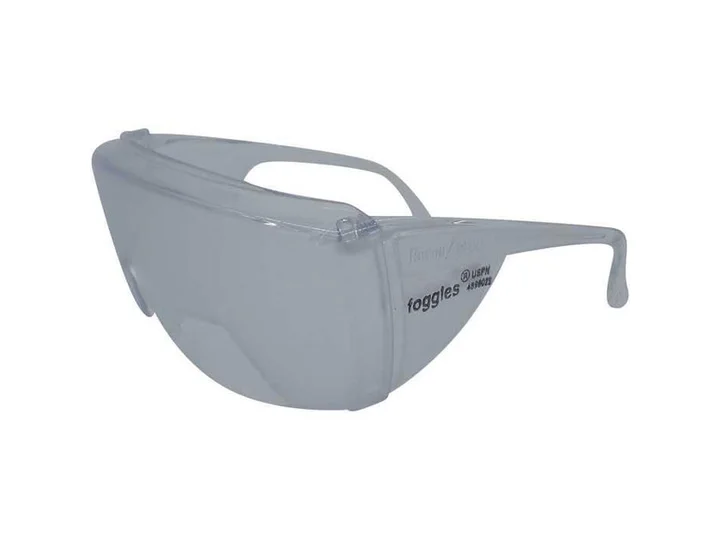 Instrument trainingFoggles Aviation IFR Training GlassesCheck current availability on Amazon (paid link)
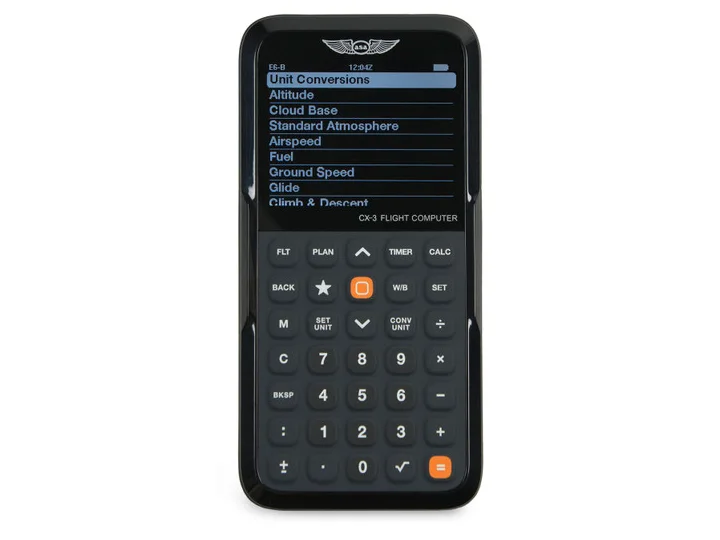 Flight planningASA CX-3 Flight ComputerCheck current availability on Amazon (paid link)
That repetition is the practical advantage of accelerated training. Short gaps keep the instrument scan, radio work, navigation procedures, and cockpit flows active. They also expose weaknesses quickly. A student who needs a day to recover from a difficult lesson can lose the rhythm that makes the condensed schedule effective. Providers commonly advertise an accelerated format of 7 to 14 days according to an accelerated IFR syllabus, but preparation, aircraft availability, instructor availability, weather, and local traffic determine whether that window is realistic.

Who benefits from the format
The format suits pilots who can protect the training period from competing obligations. Career-track aviators often value continuity. Working professionals may prefer one concentrated block of leave instead of scattered lessons over a longer period. A private pilot who flies regularly also starts with an advantage because basic aircraft control and cross-country decisions require less rebuilding between flights.
The schedule is less forgiving for a pilot who rarely flies, struggles with attitude control, or has unresolved logbook and endorsement problems. Compression does not remove those deficiencies. They consume training time, delay later tasks, and can force extra lessons when aircraft or instructor availability is already limited.
Practical rule: A fast course should remove idle days, not remove learning time.
The FAA standard remains unchanged. The applicant must still meet the instrument aeronautical experience requirements and demonstrate the practical-test tasks under 14 CFR 61.65. An accelerated plan should therefore be treated as a tightly managed training window, with reserve capacity for weather, maintenance, traffic delays, and any skill that does not hold up under workload. A scheduled checkride is a target, not a guaranteed completion date.
Prerequisites You Must Complete Before Day One
An accelerated instrument course can lose its schedule before the first takeoff. A missing endorsement, incomplete logbook entry, or unfinished knowledge test may leave the aircraft and instructor available while the student cannot use that block of training legally or effectively. Complete the pre-course audit early, then send the records to the instructor for review.
FAA eligibility and testing checklist
The applicant should hold at least a current private pilot certificate and be able to read, speak, write, and understand English. The file also needs logged ground training, an instructor endorsement for the knowledge test, an endorsement for the practical test, a passed FAA knowledge test, and the required aeronautical experience under 14 CFR 61.65.
Finish the knowledge test before the concentrated flight period whenever possible. Studying for the exam while learning approaches, holds, avionics, and IFR decisions splits attention across tasks that already demand sustained practice. Use structured instrument rating ground school to organize the knowledge areas and expose weak subjects before the course begins.
Passing the test is only the baseline. Before day one, the student should be able to explain the logic behind a clearance, approach setup, alternate decision, and missed approach procedure. That understanding reduces cockpit hesitation when workload rises at a towered airport.
For a closer look at factors that extend the schedule, see overcoming instrument-rating delays.
Logbook audit
Have a qualified instructor review the cross-country and instrument entries before the start date. Pay particular attention to these areas:
- Cross-country qualification: Confirm that each logged flight meets the applicable FAA definition and that pilot-in-command time is recorded correctly.
- Instrument experience: Separate actual and simulated instrument time, and verify that required instructional or safety-pilot information appears where applicable.
- Endorsements: Check that knowledge-test and practical-test endorsements are complete, current, and signed by an authorized instructor.
- Aircraft records: Ensure the aircraft type, registration, flight time, approaches, holding work, and related details are legible and consistent.
- Training records: Match previous ground and flight instruction to the tasks the instructor plans to review.
The audit should also identify practical readiness issues. A pilot who has not flown recently may need a tune-up in basic control, radio work, or cockpit organization before starting instrument procedures. Those sessions are easier to schedule before the compressed block than after it has begun.
An accelerated syllabus cannot create qualifying experience overnight. If a missing item appears on day one, the student may have to pause, complete the requirement legally, and rebuild the schedule around aircraft and instructor availability.
How the Condensed Training Syllabus Is Structured
A condensed syllabus works only when every day has a defined purpose. Students should not spend aircraft time deciding what to practice after engine start. Ground instruction, simulator work, and flight training must reinforce the same procedures, standards, and cockpit flows.
Early training builds control and flow
The opening block typically develops instrument scan, attitude instrument flying, trim, power management, navigation equipment, radio technique, and cockpit organization. On the ground, the instructor can introduce clearance interpretation, departure planning, and basic procedure tracking before asking the student to manage those tasks in the airplane.
Simulator sessions provide efficient repetition. A student can set up a procedure, find the relevant chart information, configure the avionics, and brief an approach without using aircraft time for every error. DuBois Aviation provides instrument rating simulator training among its available instrument-training resources.
The instructor should also watch for small weaknesses that become major scheduling problems later. A student who needs repeated practice with avionics setup or radio organization may use an entire flight block correcting habits that could have been addressed during ground or simulator work.
The middle block adds workload
After the scan and basic flows become consistent, the syllabus can add holds, intercepts, course reversals, instrument approaches, missed approaches, and partial-panel work. Each flight should connect to specific practical-test tasks, while still requiring the student to understand how the airplane, instruments, and clearance interact.
A typical progression looks like this:
| Training phase | Main emphasis | Instructor focus |
|---|---|---|
| Opening days | Scan, attitude control, navigation setup | Stable aircraft control and disciplined cockpit flow |
| Middle days | Holds, approaches, missed approaches, partial panel | Workload management and procedure accuracy |
| Final days | IFR cross-country work and checkride preparation | Decision-making, consistency, and oral readiness |
The calendar must remain adjustable. If a student understands the procedure but loses altitude during workload peaks, the instructor should isolate that weakness in the simulator or airplane before advancing. Advancing on schedule while control remains unstable usually creates more retraining later.
Final preparation tests consistency
The final block should combine IFR cross-country planning, communications, approaches, missed-approach execution, abnormal instrument scenarios, and oral questioning. A checkride-ready pilot can explain the plan, fly it accurately, recognize when it no longer works, and make a safe decision without waiting for the instructor to supply the answer.
The practical-test standard is consistency under changing workload. A student may perform each task correctly in isolation yet struggle when clearance changes, a frequency is busy, or an approach must be abandoned. Final lessons should therefore combine tasks rather than repeat them as separate checklist items.
The training calendar should leave room to correct weak areas and recover from weather disruptions. A compressed program becomes inefficient when every lesson assumes the previous one went perfectly.
Scheduling Realities at a Busy Towered Field
At a busy towered airport such as Chino Airport, the training environment gives the pilot valuable radio, taxi, traffic, and instrument-procedure experience. It also introduces dependencies that a marketing calendar may not show. The student controls preparation and attendance, but the school must coordinate instructors, aircraft, maintenance, air traffic conditions, weather, and the designated pilot examiner.
Ideal timeline versus operating timeline
An ideal accelerated plan has the same aircraft and instructor available for the required blocks, with the practical test coordinated near the end. The operating timeline can change when an aircraft becomes unavailable, an instructor is assigned elsewhere, a maintenance item requires attention, or weather prevents a planned flight.
| Planning assumption | What can disrupt it | Better response |
|---|---|---|
| The airplane is available daily | Maintenance or scheduling conflict | Protect access to a suitable backup aircraft |
| The same CFII teaches every lesson | Instructor illness or conflicting assignments | Confirm qualified coverage before training begins |
| Weather supports the planned route | Ceilings, visibility, winds, or convective activity | Move procedure work to the simulator and preserve the flight sequence |
| The examiner is available at course end | Booking limitations or rescheduling | Discuss practical-test timing before committing to dates |
| Tower operations remain predictable | Traffic volume and runway configuration | Build flexible blocks and avoid treating every slot as fixed |
The towered environment is an advantage when the student needs realistic communication and airspace experience. It can also make a rigid schedule fragile, particularly when several training aircraft need the same window or when an approach requires coordination with surrounding traffic.
Instructor and fleet access matter
Recent industry coverage identifies CFII shortages, examiner shortages, insurance costs, maintenance costs, and aircraft access as constraints on the flight-training pipeline summarized in this industry reporting on flight instructors. These aren't reasons to reject an accelerated course. They are reasons to ask operational questions before paying for a fixed block.
The student should ask who will teach each day, what happens if that instructor becomes unavailable, which aircraft are approved and equipped for the course, and whether simulator time can replace selected aircraft sessions during a delay. Flexible seven-day scheduling can help preserve momentum, but flexibility only works when the school actively manages the replacement blocks.
A two-week plan is a coordination project. The student is one part of it, not the entire system.
Cost, Time, and Long-Term Proficiency Trade-Offs
An accelerated instrument course can work well when the student arrives prepared and the schedule protects learning quality. Compressing lessons reduces skill decay between flights, but full training days can produce fatigue and slower decision-making. The budget should cover preparation, aircraft and instructor time, simulator use, practical-test expenses, and delay days. A short advertised timeline is a planning target, not a guaranteed finish date.
Programs may advertise 10 to 12 days, while independent reporting has described median completion times around 15 weeks and an instrument-rating cost of about $11,500 in 2025 in this Canadian pilot licensing analysis. These figures reflect different training environments, so they are not a universal quote. Ask for a written breakdown of included training, aircraft and simulator charges, examiner expenses, and the events that could extend the calendar. A clear explanation of how instrument-rating delays affect the timeline can help students identify those risks before reserving dates.

The rating is a starting point
The harder trade-off appears after the checkride. An instrument-rated pilot who rarely practices approaches, clearances, automation management, missed approaches, and weather decisions can lose the integration that makes IFR work manageable. Legal currency and operational proficiency are different. Satisfying a currency requirement does not automatically prepare a pilot for a demanding flight from a busy towered airport.
Instrument ratings are common among certificated pilots. AOPA reported that 342,400 of 495,907 certificated pilots held an instrument rating in 2024, equal to 69%, compared with 59% in 2004, a 10 percentage-point increase over that period as reported in this instrument-rating overview. For career-track pilots, the rating supports further training. For renters and personal pilots, its value depends on regular practice after the course.
Before the final lesson, set a post-checkride schedule for approach reviews, safety-pilot flights, simulator sessions, and an instrument proficiency check if needed. Include personal limits, route choices, weather avoidance, and clear cancellation criteria. The certificate marks the beginning of usable IFR proficiency, not its completion.
Practical Tips to Finish Efficiently and Safely
Preparation begins with the chart, not the airplane. Students should study the applicable FAA handbooks, use the school's assigned Jeppesen materials, review approach plates, and chair-fly the entire sequence from clearance delivery through shutdown. The goal is to make cockpit actions deliberate before workload rises.
A useful checklist looks like this:
- Pass the knowledge test early: Arrive ready to focus on applied IFR work rather than dividing attention between flight lessons and written-exam preparation.
- Audit the logbook: Have an instructor verify cross-country PIC time, instrument entries, endorsements, and training records before reserving the course.
- Brief every procedure: Review frequencies, minimum altitudes, courses, missed-approach instructions, and avionics setup before engine start.
- Use the simulator purposefully: Repeat procedures that require memorization or expose a workload weakness, then apply them in the aircraft.
- Protect mental performance: Full-day training can produce fatigue. A tired student should tell the instructor before safety and learning quality deteriorate.
- Plan for delays: Keep enough schedule flexibility for weather, maintenance, instructor changes, or examiner availability.
- Continue after the checkride: Schedule simulator sessions, safety-pilot flights, and supervised IFR practice so the new rating becomes usable skill rather than a certificate in a logbook.
The most common avoidable mistake is treating the advertised timeline as the objective. The objective is a pilot who can plan, communicate, control the aircraft, fly the procedure, recognize risk, and choose not to continue when the conditions no longer support a safe flight.
DuBois Aviation offers instrument, commercial, multi-engine, and instructor training at Chino Airport, with simulator access and flexible scheduling that can support a carefully prepared accelerated instrument rating plan. Prospective students can discuss prerequisites, course availability, aircraft access, and a post-checkride proficiency strategy by visiting DuBois Aviation.
Frequently asked questions
How long does an accelerated instrument rating take?
Many accelerated programs are structured for 7 to 14 days according to the cited accelerated IFR syllabus, but that is a planning range, not a guarantee. Missing prerequisites, weather, aircraft availability, instructor coverage, student performance, and practical-test scheduling can extend the course.
Can accelerated training reduce FAA requirements?
No. The format compresses calendar time and coordinates training blocks. It doesn't remove the applicant's aeronautical experience requirements or reduce the performance standard required by the FAA practical test.
Should the knowledge test be completed before training begins?
Completing it beforehand is generally the more efficient choice. It lets the student concentrate on applied instrument procedures, flight planning, aircraft control, and checkride preparation during the concentrated course.
Is simulator time a substitute for all airplane training?
No. A simulator can provide efficient repetition for procedures, avionics flows, approaches, holds, and workload management, but the instructor must still ensure that the applicant receives the required training and demonstrates the applicable FAA standards in the appropriate setting.
What causes the biggest accelerated-program delays?
The most common operational problems are missing logbook items, incomplete endorsements, weather, aircraft maintenance, instructor availability, and practical-test examiner scheduling. A pre-course audit and an early conversation about backup plans can prevent several of these issues from appearing at the worst point in the schedule.
How should a pilot maintain proficiency after the checkride?
The pilot should arrange recurring instrument practice that matches personal flying goals and recent experience. Simulator sessions, safety-pilot flights, supervised approaches, structured briefings, and an honest review of weather and workload limits can help turn the newly earned rating into dependable IFR capability.