
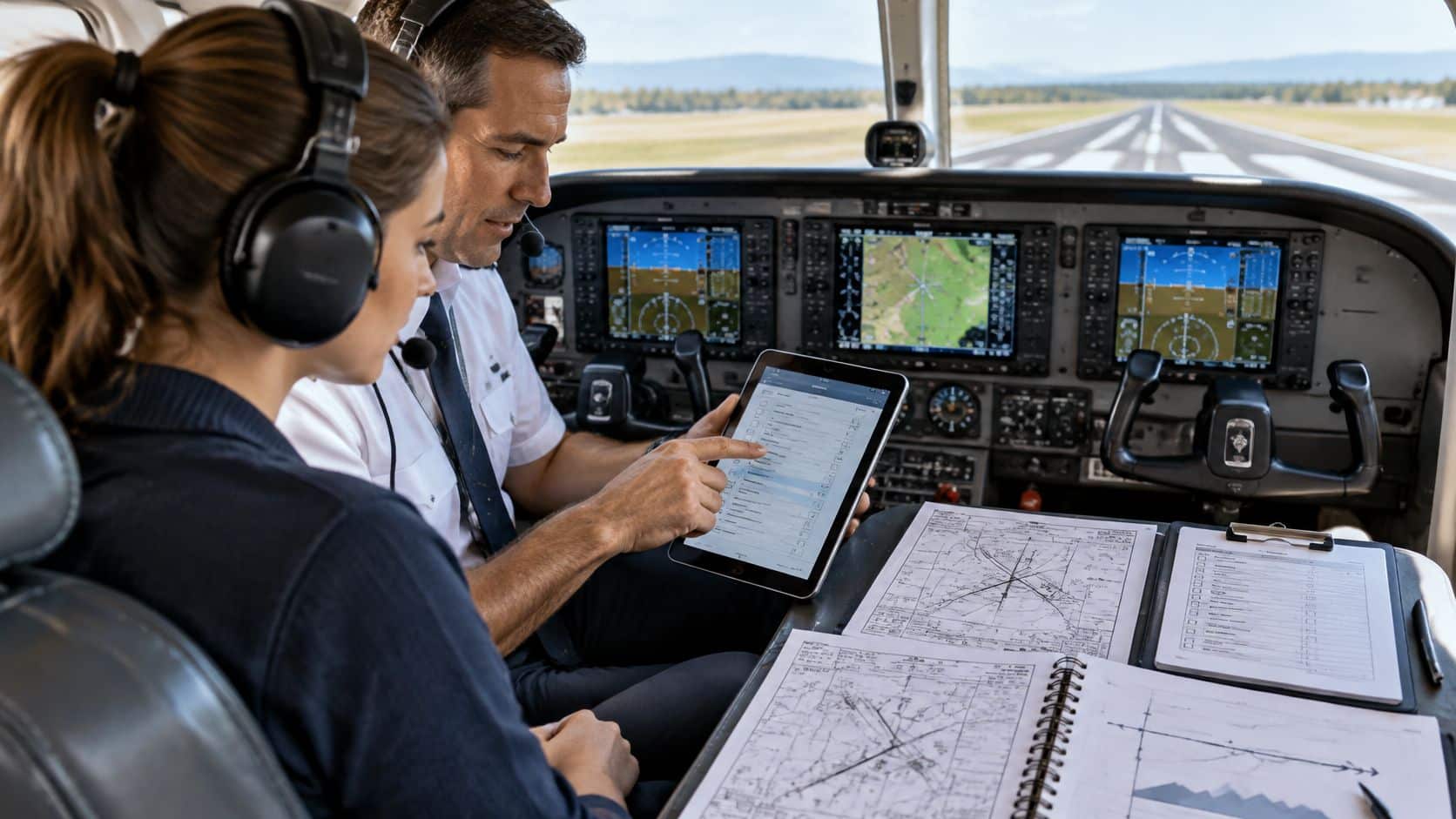
Instrument rating lesson plans for an airplane rating start with 40 hours of actual or simulated instrument time, including 15 hours from an authorized instrument-airplane instructor, plus 50 hours of pilot-in-command cross-country time, including 10 hours in an airplane. They must also include 3 hours of instrument training in an appropriate airplane within the 2 calendar months before the practical test.
The counterintuitive part is that accumulating hours isn't the same as making progress. A useful plan identifies the student's current bottleneck, selects the right training environment, and requires demonstrated proficiency before adding complexity.
Meta description: Build instrument rating lesson plans around FAA minimums, simulator practice, proficiency gates, and stage checks for a clear path to checkride readiness.
Two practical options worth comparing
These are specific products pilots commonly compare for this type of flying. Confirm compatibility with your aircraft and instructor before ordering.
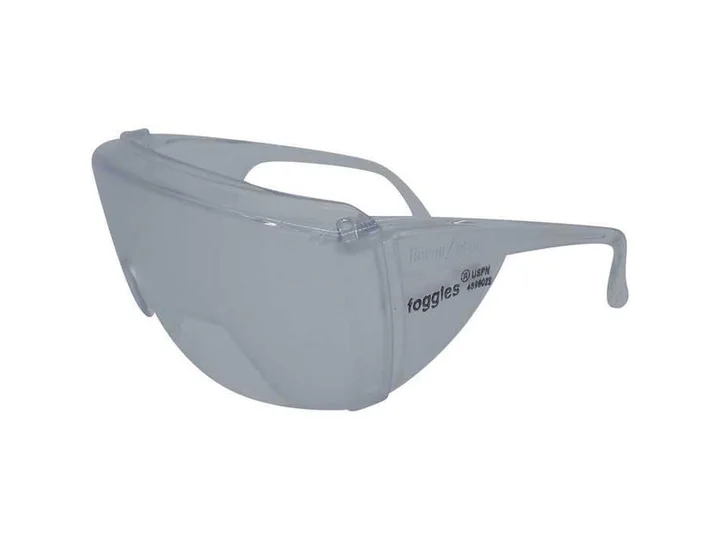 Instrument trainingFoggles Aviation IFR Training GlassesCheck current availability on Amazon (paid link)
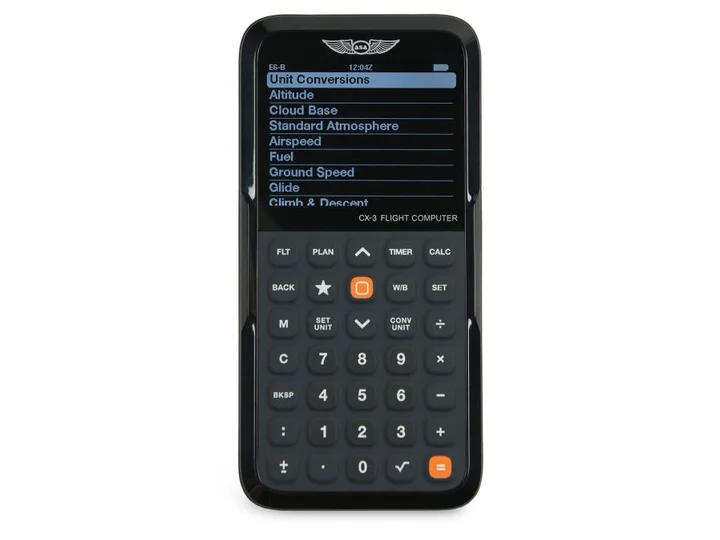 Flight planningASA CX-3 Flight ComputerCheck current availability on Amazon (paid link)
URL slug: instrument-rating-lesson-plans
Table of Contents
- Instrument Rating Requirements at a Glance
- How to Build One Instrument Lesson Plan
- Sample Private-to-Instrument Syllabus by Stage
- Simulator and Aircraft Time Allocation by Task
- Accelerated Versus Standard Pacing Compared
- Stage Checks and Currency Gates
- Common Lesson Plan Mistakes and How to Fix Them
- Choose Your Track and Request a Plan Review
- Frequently Asked Questions
Instrument Rating Requirements at a Glance
For the instrument-airplane rating, 14 CFR §61.65 establishes the 40-hour instrument-time minimum, including at least 15 hours from an authorized instructor holding an instrument-airplane rating; 50 hours of pilot-in-command cross-country time, including at least 10 in an airplane; and at least 3 hours of instrument training in an appropriate airplane within the 2 calendar months before the practical test.
These are eligibility minimums, not a recommended syllabus length. Students may need additional training to demonstrate consistent proficiency, and a responsible schedule leaves room for that possibility rather than promising readiness at the minimum.
Instrument Airplane Minimums and How the Plan Uses Them
| Requirement | Regulatory minimum under §61.65 | How the lesson plan uses it |
|---|---|---|
| Private pilot prerequisite | Hold or concurrently obtain a private pilot certificate with the appropriate airplane category and class | Confirm certificate status and the intended certification sequence before training begins |
| Total instrument time | 40 hours of actual or simulated instrument time | Allocate creditable instrument time between aircraft and qualifying devices; use ground lessons to prepare, not to accumulate instrument time |
| Instructor-provided instrument time | At least 15 hours from an authorized instructor holding an instrument-airplane rating | Schedule instructor-led training and distinguish it from other instrument practice |
| Pilot-in-command cross-country | 50 hours, including at least 10 hours in an airplane | Audit existing experience and build suitable cross-country flying into the plan |
| Recent instrument training | At least 3 hours in an appropriate airplane within the 2 calendar months before the practical test | Reserve final preparation around the expected test date |
The private pilot prerequisite doesn't mean every applicant must complete the private certificate before beginning any instrument instruction. The regulation allows concurrent certification, but the syllabus must make that sequence explicit.
Keep Experience and Instruction Separate
Logged instrument time describes qualifying instrument experience. Dual instrument instruction describes instruction received and documented by an authorized instructor. A flight can contribute to both categories, but the categories aren't interchangeable.
The training record should keep separate fields for instrument experience, instructor-provided instrument training, pilot-in-command cross-country experience, and recent test preparation. Ground instruction belongs in its own record.
The FAA's AC 61-65K endorsement guidance distinguishes knowledge-test endorsements from practical-test endorsements and directs instructors to the governing instrument-rating requirements. The syllabus should identify when the instructor will review eligibility, knowledge preparation, practical proficiency, and the corresponding endorsements.
Applicants comparing training structures can review the school's instrument-rating requirements and Part 141 information. The experience framework discussed here shouldn't be assumed to describe every approved course.
Before adopting a syllabus, the instructor should check the current eCFR text, amendment history, and applicable effective dates. A copied checklist isn't a substitute for the regulation in force.
How to Build One Instrument Lesson Plan
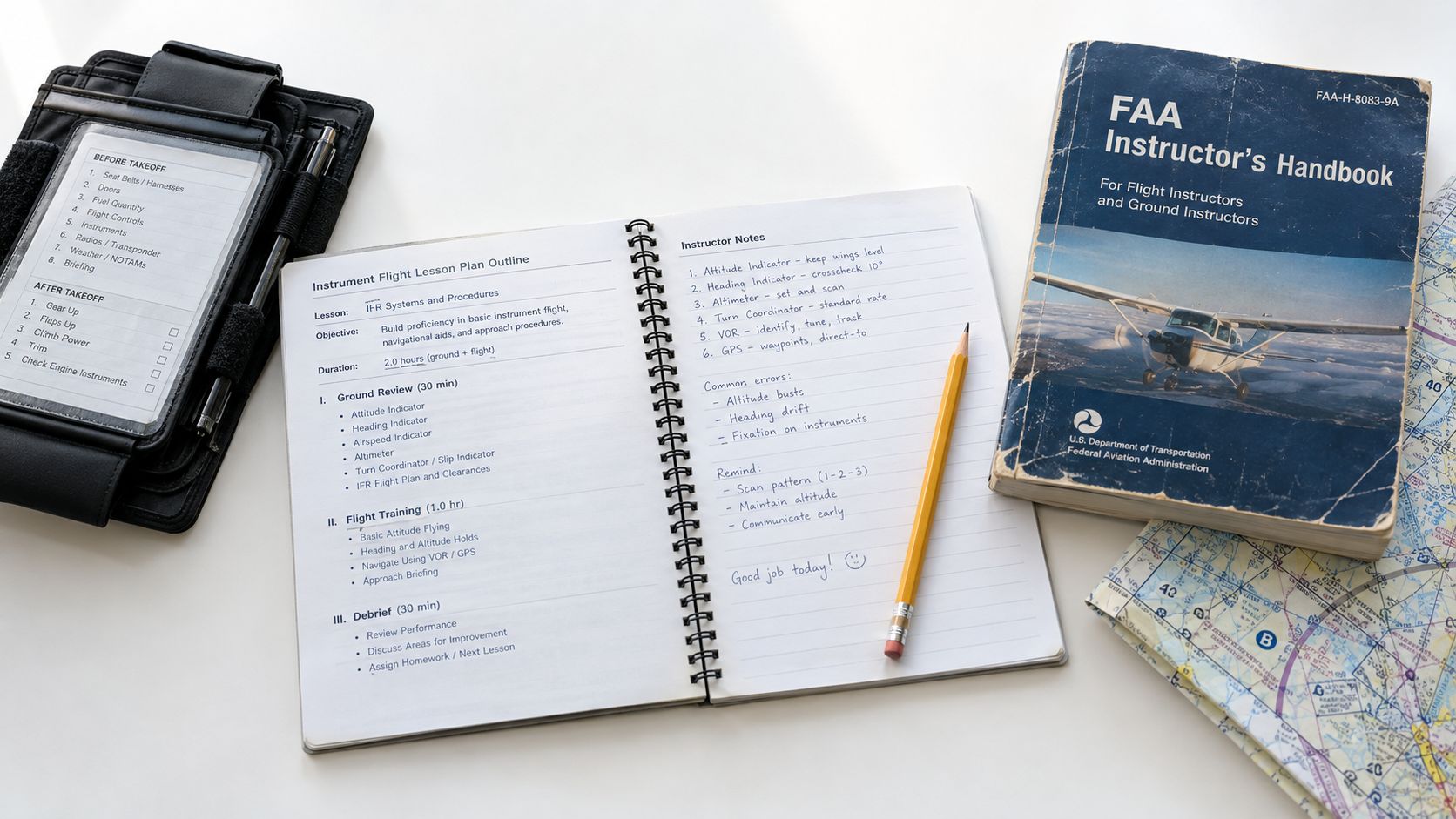
A lesson plan describes an instructional period, not an entire certificate course. Its purpose is to make the expected learning, practice conditions, and evaluation clear before the engine starts.
The FAA Aviation Instructor's Handbook describes organized lesson planning and the instructional sequence of explanation, demonstration, learner performance under supervision, and evaluation.
Write the Lesson Before Selecting the Route
Define a measurable objective. For an ILS lesson, the objective might include briefing the procedure, intercepting the final approach course, tracking the glideslope, and transitioning into the missed approach. “Practice approaches” doesn't identify what successful performance looks like.
Map the objective to the applicable ACS elements. Identify the knowledge questions, operational risks, and observable skills. Include fatigue, weather interpretation, automation setup, and radio workload where they affect the scenario.
Choose the training environment and configuration. Specify the airplane, full-flight simulator, or appropriate training device. Record the avionics configuration, starting position, weather scenario, and any simulated equipment limitations.
Write the completion tolerances. Copy the relevant altitude, heading, airspeed, and course-tracking standards from the applicable current task. Avoid applying a single tolerance to every phase of an approach.
Sequence explanation, demonstration, supervised performance, and evaluation. A learner who can't explain the procedure needs instruction before another attempt. A learner who understands it but struggles with execution needs focused practice.
Prepare instructor prompts. A clearance amendment can test whether the student pauses, confirms the change, and updates the navigation setup. A weather change can test whether the student recognizes when the original plan no longer works.
Record the debrief and the next objective. Describe the error, its likely cause, and the corrective assignment. “Needs improvement” doesn't tell the next instructor what to teach.
For instructors who need help turning a broad topic into observable objectives, Kuraplan's guide to writing lesson plans provides a general planning resource. Aviation-specific standards and logging decisions still belong with the applicable FAA documents.
Convert the Debrief Into the Next Assignment
Suppose a student misses the missed-approach sequence twice during a practice session. Repeating the entire flight may waste time if the student has not yet connected the charted instructions to the aircraft workflow.
The next lesson can begin with a written briefing checklist, a verbal walkthrough, and a focused missed-approach set. The instructor then evaluates whether the student can perform the sequence without coaching, rather than merely remembering it immediately after a demonstration.
Sample Private-to-Instrument Syllabus by Stage
The following syllabus is a planning sequence, not a regulatory schedule. The instructor advances the student when the relevant performance gate is met, not when the calendar reaches a particular lesson.
| Stage | Lesson focus | Training emphasis | Evidence of readiness to advance |
|---|---|---|---|
| Foundations | Instrument scan, attitude flying, trim, and partial-panel awareness | Device-heavy practice followed by aircraft confirmation | Stable control without continuous instructor correction |
| Navigation and ATC | VOR and GPS tracking, intercepts, clearance copy, and readbacks | Scenario practice plus aircraft application | Accurate navigation while handling communications |
| Approaches and holds | ILS, RNAV, and VOR approaches, holding, and procedure turns | Device repetition with increasing aircraft integration | Organized briefing, setup, tracking, and workload management |
| Missed approaches and emergencies | Missed-approach transitions, abnormal indications, and prioritization | Controlled device scenarios and appropriate aircraft practice | Correct action sequence with maintained aircraft control |
| Cross-country and checkride preparation | Integrated IFR flights, alternate planning, and mock practical evaluation | Aircraft-centered integration with targeted device remediation | Independent decisions and consistent performance |
Foundations Before Procedure Complexity
The foundation stage teaches the student to recognize aircraft attitude, make an appropriate correction, and verify the result. Trim, power changes, and instrument cross-check belong together because poor aircraft setup can look like a scan problem.
Partial-panel awareness should develop alongside normal instrument interpretation. The student needs to recognize conflicting or missing information rather than continuing to trust an indication just because it appears familiar.
Navigation and ATC then add purposeful tasks to stable aircraft control. The student practices copying a clearance, identifying the next action, setting the navigation equipment, and checking that the displayed course matches the intended route.
For a Southern California scenario, the instructor might introduce radio congestion and a revised clearance near Chino. The learning objective isn't local memorization. It's maintaining control while processing an operational change.
A student who can recite a clearance but loses aircraft control while entering it isn't ready for more complex approach work.
Build Procedures Into Complete Flights
Approach training should connect briefing, aircraft configuration, navigation setup, descent planning, and the missed approach. Teaching these as unrelated exercises can produce a student who tracks well but arrives unprepared for the next transition.
As the student becomes more consistent, aircraft lessons should combine the procedures into realistic sequences. The instructor can remove some coaching and evaluate whether the student notices an incomplete setup before it creates another problem.
The emergency stage adds uncertainty deliberately. The instructor should choose a specific learning target, such as recognizing unreliable information or reducing workload, rather than stacking unrelated failures until the student becomes overwhelmed.
Cross-country preparation integrates weather assessment, route selection, fuel planning, communications, approaches, and postflight review. A mock practical evaluation then identifies remaining weaknesses across the complete operation.
A student with strong recent instrument fundamentals may move through foundations more quickly. Another may need to return to basic control after struggling with approaches. Neither result is a scheduling failure; the lesson sequence should reflect the skill that needs work.
Simulator and Aircraft Time Allocation by Task
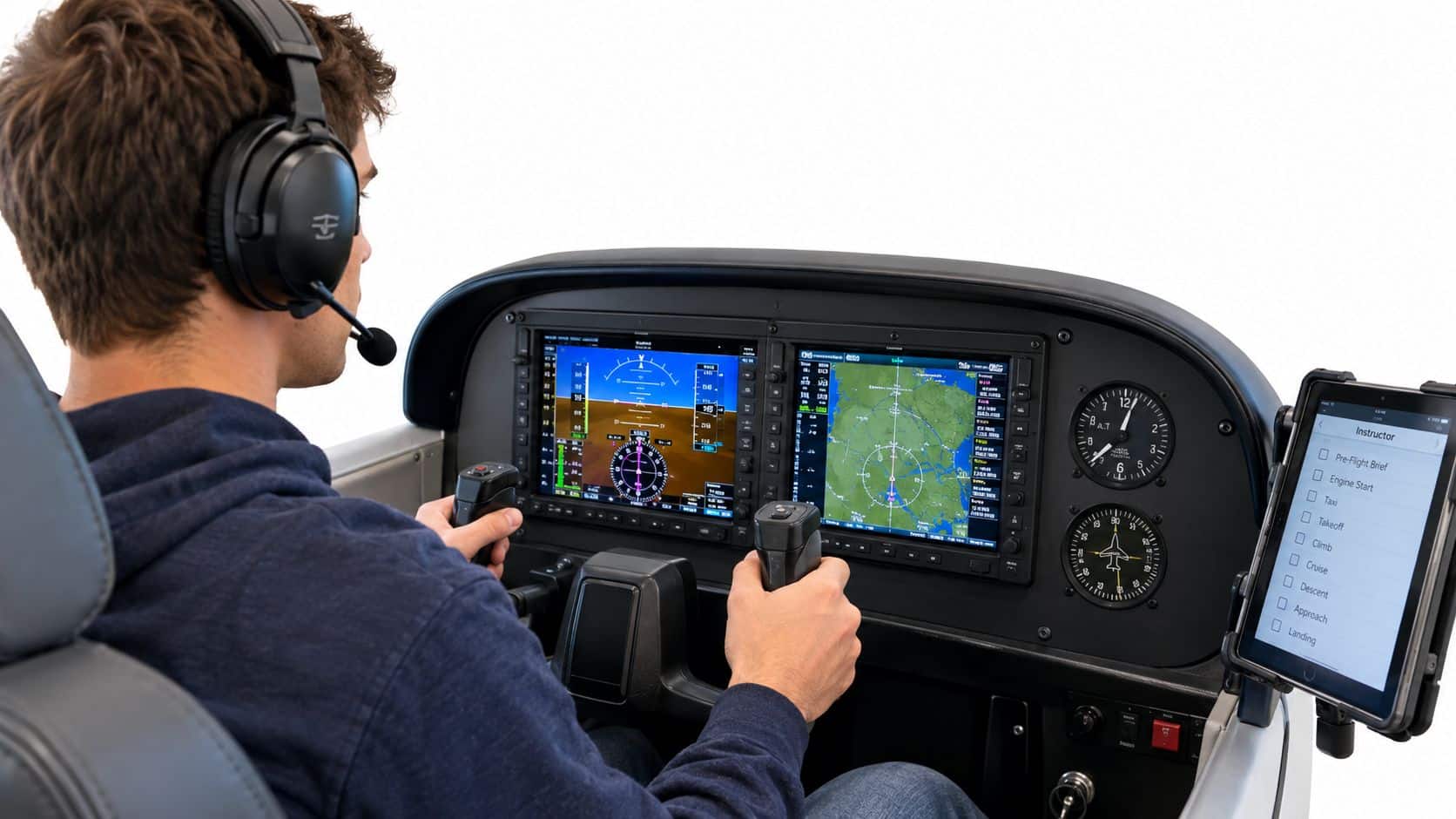
Use a simulator or appropriate training device for concentrated repetition, then move the task to the airplane when the student demonstrates the underlying procedure. A calendar date isn't a useful reason to change environments.
The FAA Instrument Rating–Airplane ACS integrates knowledge, risk management, and flight proficiency. Lesson records should evaluate all of those dimensions, rather than counting successful maneuvers alone.
Where Each Instrument Task Is Best Practiced
| Task | Primary for repetition | Aircraft for confirmation | Reason |
|---|---|---|---|
| Scan discipline and basic attitude flying | Simulator or FTD | Aircraft | Concentrated repetition develops cross-check; the airplane confirms actual control response |
| Holding patterns | Simulator or FTD | Aircraft | Repeated entries and corrections develop understanding; flight confirms handling in changing winds |
| Procedure turns and approaches | Simulator or FTD | Aircraft | Repetition develops sequencing; aircraft practice confirms configuration and performance |
| Partial-panel and abnormal indications | Simulator or FTD | Aircraft, within safe limits | Devices allow controlled failure scenarios; appropriate aircraft practice confirms handling |
| Missed-approach sequences | Simulator or FTD | Aircraft | Device practice organizes actions; flight confirms climb and configuration management |
| ATC clearances and readbacks | Simulator or FTD with scenarios | Aircraft in live airspace | Scripted communications control workload; live communications introduce unpredictability |
| Cross-country en route operations | Limited rehearsal | Aircraft | The airplane integrates actual weather observations, fuel management, and route execution |
Training value doesn't automatically establish logging credit. Before assigning device time against an experience requirement, the instructor must confirm that the device, authorization, task, and training conditions qualify under the applicable current rule.
An aviation training device isn't interchangeable with a full-flight simulator or flight-training device merely because all are casually called simulators. The lesson record should identify the actual device and the basis for any claimed credit.
Replace Unproductive Flights, Not Aircraft Validation
A student who repeatedly loads the wrong approach transition doesn't need another aircraft flight just to repeat that setup error. Ground explanation followed by device rehearsal allows the instructor to isolate the selection, verification, and briefing workflow.
A student who performs the procedure correctly in the device but struggles with trim, turbulence, or live communications needs aircraft integration. More device repetitions alone may not address that problem.
Cross-country planning can also be rehearsed on the ground or in a device. The aircraft remains necessary to confirm how the student applies the plan when conditions, communications, and aircraft performance don't match the rehearsal exactly.
The school's instrument-rating simulator information can help students prepare questions about available equipment, lesson uses, and credit eligibility. Those questions should be resolved before device practice is entered into the eligibility worksheet.
Accelerated Versus Standard Pacing Compared
Accelerated pacing trades shorter gaps between lessons for greater fatigue exposure. Standard pacing allows more time for study and reflection, but the instructor must account for skills that become less consistent between sessions.
The patterns below are illustrative scheduling models, not published course durations or promised completion schedules.
| Track | Typical weekly pattern in this example | Ground preparation | Lesson spacing | Main risk |
|---|---|---|---|---|
| Standard private-to-instrument | One to two sessions per week | Briefings and self-study before each lesson | Longer gaps between practice opportunities | Skill decay between lessons |
| Accelerated private-to-instrument | Three to five or more sessions per week, often on consecutive days | Ground lessons before each flight | Short gaps between related lessons | Fatigue and cramming |
| Accelerated with simulator-heavy first half | Consecutive days early, with simulator blocks | Daily scenario-based ground review | Closely spaced procedural practice | Overloaded sessions without a performance gate |
An Illustrative Accelerated Week
An example Monday-through-Friday schedule might begin each day with a 20-minute review of the previous day's performance, followed by ground instruction, two simulator blocks separated by a rest break, and an afternoon aircraft lesson.
That example is a scheduling option, not a target that must be completed regardless of fatigue. If the student can't explain the morning's procedure after the break, an afternoon flight may add workload without improving understanding.
Ground preparation must precede the task it supports. Assigning unfamiliar approach material late at night and expecting immediate proficiency the next morning encourages short-term memorization.
Retention check: The next session should begin with an unprompted explanation or demonstration, not a recap supplied entirely by the instructor.
Students considering a compressed schedule can review accelerated IFR training and ask how the course handles weather interruptions, fatigue, and lessons that need repetition.
An Illustrative Standard Week
A standard example might place lessons on Tuesday and Saturday. The student could use the interval for chart interpretation, clearance-copy exercises, chair-flying, and preparation for the next scenario.
After a gap longer than about a week in this example, the instructor could reserve a full review block before the next stage evaluation. The appropriate review depends on demonstrated retention, not on a universal interval.
Standard pacing often suits a working pilot whose availability changes. It works better when the student leaves each lesson with a specific assignment and the next instructor can see exactly what was accomplished.
An accelerated track suits a student who can protect consecutive days and sustain focused preparation. Neither format removes the need to slow down when the student can't retain or apply the material.
Stage Checks and Currency Gates
A stage gate is a measurable performance check, not an hour total. The instructor should define the task, conditions, completion standard, and permitted level of assistance before evaluating the student.
Training gates and legal currency checks serve different purposes. A student can perform a task well during instruction without having a complete experience record, while a rated pilot can satisfy a logging requirement yet still benefit from additional proficiency training.
Stage Gates and What to Do When a Gate Is Missed
| Stage gate | Example pass standard | If the gate is not met |
|---|---|---|
| Basic attitude and partial-panel control | Maintains assigned altitude, heading, and airspeed within the applicable current ACS task tolerances, using the available instruments | Repeat the attitude block in the device before aircraft confirmation |
| Navigation tracking | Intercepts and tracks a VOR or GPS course with stable indications | Add navigation-focused device sessions |
| ATC communication | Copies the scenario clearance and reads it back correctly without instructor prompting | Add controlled radio-load scenarios before the next flight |
| Approach briefing and execution | Completes the briefing before the initial approach fix in the planned scenario and flies a stabilized approach | Reorder the approach block and repeat briefing practice |
| Missed approach | Performs the published sequence correctly and explains the reason for the missed approach | Repeat the missed-approach set in the device |
| Currency tracking | Has a complete, qualifying record of required approaches, holding, and course tracking | Resolve missing tasks or required recovery before acting under IFR privileges |
These are instructional gates, not substitute regulatory text. The instructor should use the exact tolerances for the task being evaluated rather than borrowing familiar numbers from another maneuver.
An incomplete readback also needs interpretation. Requesting clarification of an unclear transmission is good judgment, not a failure merely because the student didn't produce a perfect readback immediately.
Track Currency Separately
Under 14 CFR §61.57(c), within the preceding six calendar months a pilot must log at least six instrument approaches, holding procedures and tasks, and intercepting and tracking courses using navigation systems, in an appropriate qualifying context.
Actual instrument conditions and qualifying simulated conditions can support the required experience. Aircraft and approved-device conditions must be checked carefully rather than treating every practice session as automatically creditable.
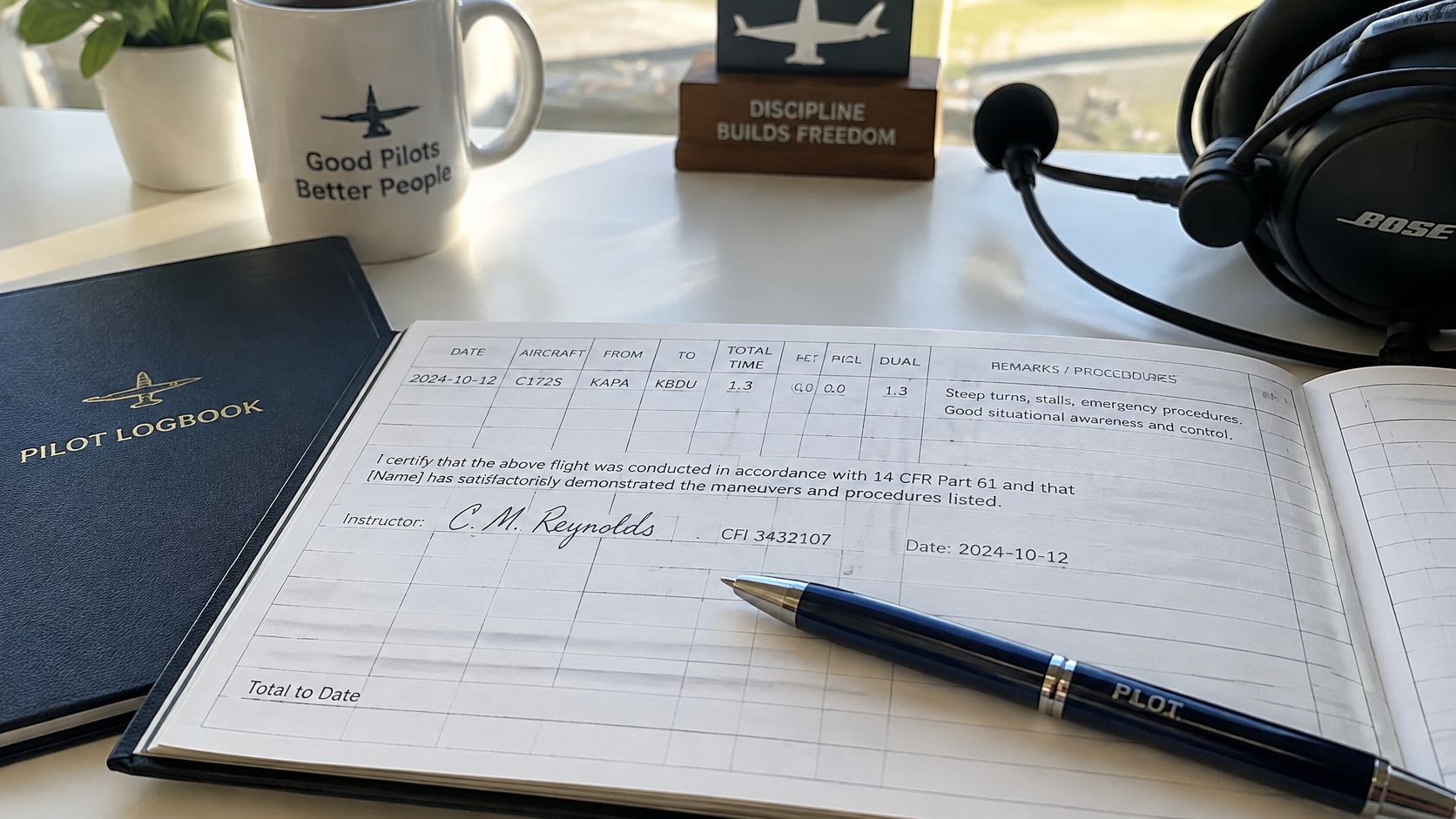
A currency worksheet should record:
- Date and training context. Identify the aircraft or approved device and the relevant conditions.
- Approach identification. Record the approach type and location or procedure identification.
- Holding activity. Identify the holding procedures and tasks completed.
- Course tracking. Record the navigation-system intercepting and tracking work.
- Outstanding requirements. Flag missing activities and determine the appropriate recovery method.
A recent approach doesn't automatically restore full currency. The pilot must evaluate the complete qualifying record and the applicable recovery provisions.
The instructor should verify current regulatory wording and effective dates before relying on a currency worksheet. The worksheet organizes the evidence; it doesn't replace the rule or establish proficiency by itself.
Common Lesson Plan Mistakes and How to Fix Them
Moving into approaches before scan and attitude control are stable is a common planning error. The student spends the lesson recovering from basic-control deviations instead of learning how to brief, configure, fly, and make decisions.
More approaches won't necessarily solve that problem. The instructor needs to identify where performance first deteriorates and assign practice at that point.
Lesson Plan Symptoms, Causes and Fixes
| Symptom | Likely cause | Plan fix |
|---|---|---|
| Plateau on approaches | Scan and attitude control aren't yet stable | Return to attitude blocks in the device and meet the performance gate first |
| Repeated missed approaches | Briefing gaps or an unclear missed-approach sequence | Add a written briefing checklist and focused missed-approach sets |
| Instrument time without a corresponding instruction record | Instrument experience and dual instruction have been confused | Audit and track the categories separately |
| Currency gap after a long break | A recent approach was assumed to restore currency | Evaluate the recovery rule and schedule an IPC when required |
| Recent-training block scheduled too early | Final preparation wasn't coordinated with the practical-test date | Place qualifying final preparation inside the required recent-training window |
| Overloaded simulator sessions | Repetitions continue without rest or review | Shorten practice blocks and begin the next session with a retention check |
Repeated missed approaches deserve careful diagnosis. A missed approach can be the correct operational decision, not evidence of poor flying. The instructional concern is whether the student misunderstood the procedure, failed to prepare, or couldn't manage the transition.
Likewise, a plateau may come from navigation setup rather than scan. The instructor should separate aircraft control, chart interpretation, avionics operation, and decision-making before prescribing more practice.
Treat an IPC as an Evaluation
The FAA Instrument Flying Handbook describes the instrument proficiency check recovery framework associated with §61.57(d): when a pilot has failed to meet the instrument-experience requirements for more than six calendar months, an IPC is required, subject to the exceptions in §61.57(e).
That isn't the same as saying an IPC becomes mandatory immediately upon losing currency. The instructor must determine the pilot's actual status and the recovery method permitted by the current rule.
An IPC plan should cover the applicable areas of operation and instrument tasks. It shouldn't be reduced to an informal refresher flight followed by a signature because the pilot appeared comfortable.
The instructor should document the aircraft category and model, date, and satisfactory completion, consistent with the applicable requirements. The evaluation and any device use must fit the privileges involved.
More practice is useful only when the instructor knows what the practice is intended to correct.
Protect the Final Preparation Window
A delayed practical test can change whether planned recent training still qualifies. The instructor should review the training dates whenever the expected test date changes, rather than discovering the problem during the final paperwork audit.
The same discipline helps prevent overloaded simulator lessons. A pause for explanation or rest isn't lost progress when the student has stopped learning from repetition.
Choose Your Track and Request a Plan Review
A student with recent private pilot experience and protected consecutive days may be suited to accelerated training. A working pilot with irregular availability may make steadier progress through standard pacing with deliberate review after gaps.
The useful comparison isn't just which course finishes sooner on paper. It's which schedule allows the student to prepare, retain the material, and demonstrate independent performance.
Questions Worth Asking Before Booking
- Confirm the certification starting point. The school should review the applicant's certificate status, category and class, experience records, and intended training pathway.
- Examine the syllabus. Each major training block should connect knowledge, risk management, and skill evaluation to the applicable ACS.
- Ask about device allocation. The explanation should distinguish useful rehearsal from creditable training and identify when aircraft confirmation occurs.
- Review advancement decisions. The instructor should explain what happens when a student misses a stage gate or returns after an interruption.
- Confirm instructional qualifications and documentation. The plan should identify who will provide the required instrument instruction and how experience, endorsements, and final preparation will be tracked.
Bring Records to the Review
A productive plan review starts with the student's logbook, existing endorsements, recent flying history, and realistic availability. Career-track applicants should also describe their intended next certificate so the school can discuss continuity without rushing instrument fundamentals.
Before committing, the applicant should confirm course availability, the aircraft and avionics to be used, device access, and the school's process for weather cancellations. A school tour can help clarify how briefings, device sessions, and aircraft lessons fit together.
Current requirements and effective dates should be checked against the eCFR before the plan is finalized. No schedule should depend on an eligibility assumption that hasn't been verified.
Frequently Asked Questions
Does Simulator Time Count Toward the 40 Hours?
Qualifying device training can count, but not every simulator session is creditable. Under the instrument-rating framework, the instructor must verify the device authorization, applicable limits, procedure, and training conditions before applying time toward eligibility.
How Long Does an Instrument Rating Take?
There isn't a universal completion schedule. Regulatory minimums establish eligibility floors, while actual readiness depends on preparation, proficiency, training continuity, aircraft availability, and the student's ability to apply procedures without coaching.
A useful schedule includes room for targeted retraining rather than assuming every lesson will meet its objective immediately.
What Is the Difference Between Instrument Time and Dual Instrument Instruction?
Instrument time records qualifying instrument experience; dual instruction records training received from an authorized instructor. They can overlap during a lesson, but they aren't identical categories.
The training plan should track both so the instructor can confirm experience and instruction separately.
Does One Recent Approach Restore Currency?
Not automatically. The currency rule requires the complete qualifying combination of approaches, holding, and navigation-system course work within its prescribed period.
After a lapse, the pilot also needs to determine which recovery provisions apply before resuming IFR privileges.
When Should the Recent-Training Block Be Flown?
It belongs in the final preparation phase, coordinated with the practical-test date and the regulatory recency window. If the test moves, the instructor should recheck the dates and schedule additional qualifying preparation when needed.
That final block should strengthen practical-test readiness, not merely complete an hour entry.
DuBois Aviation offers instrument instruction and in-house simulator practice at Chino Airport. Prospective and current students can visit DuBois Aviation to request training information, ask about course availability, or arrange a school tour and syllabus review.


