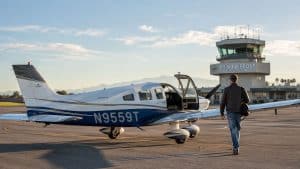
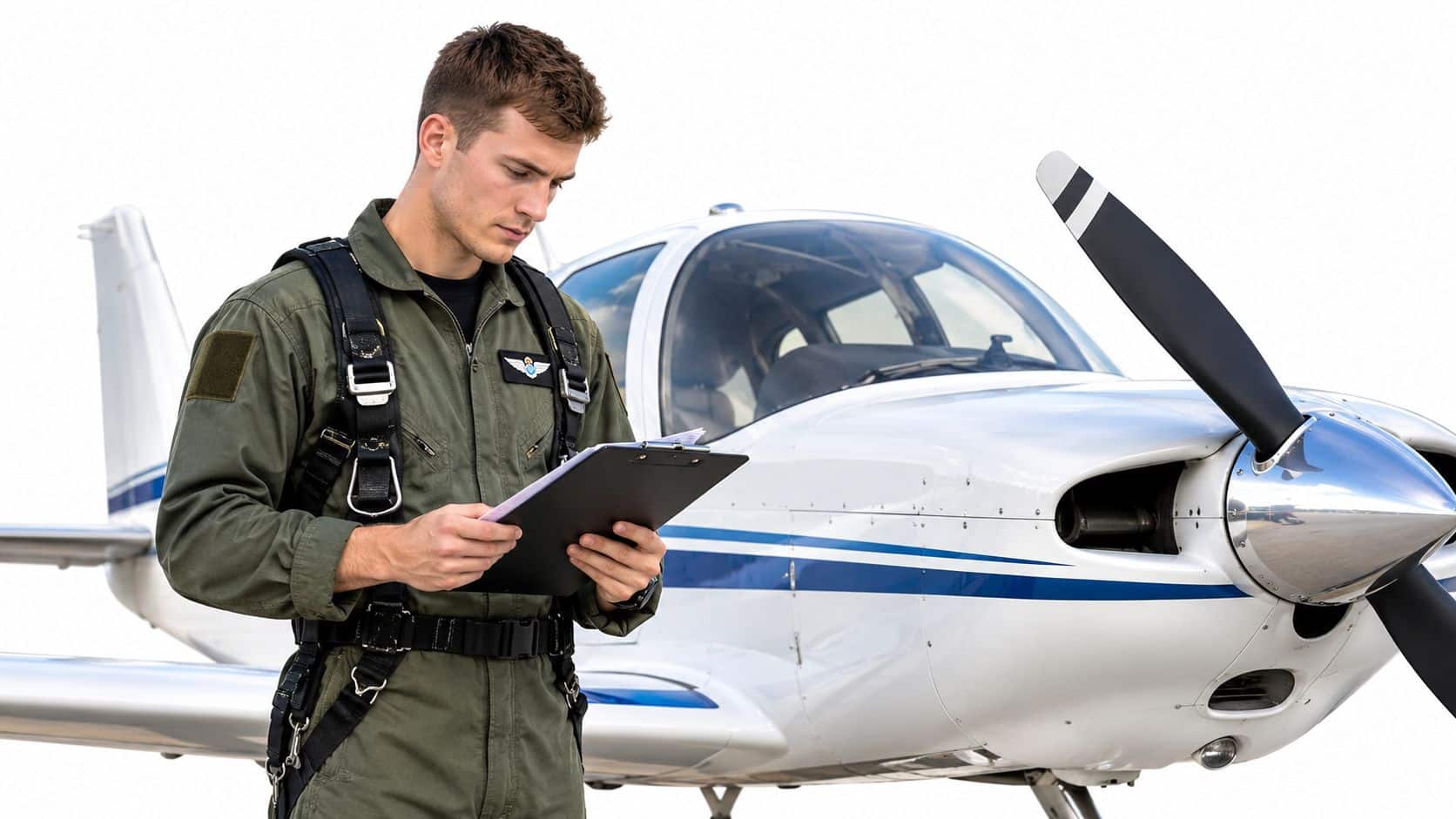
The morning of a private pilot checkride, the airplane may be fueled, the logbook may be signed, and the oral questions may be memorized. That still doesn't guarantee a pass. A successful checkride requires the applicant to show knowledge, risk management, and piloting skill together, while also presenting valid documents and an airworthy aircraft. The FAA's 2023 summary figure places the first-time private pilot practical-test pass rate at 74.5%, so roughly one in four applicants did not pass on the first attempt (FAA-based pass-rate summary).
Table of Contents
- What Your Private Pilot Checkride Really Tests
- Eligibility and Documents You Must Have Ready
- How to Prepare for the Oral Exam Without Just Memorizing
- Flight Test Maneuvers and ACS Tolerances Explained
- Common Reasons Applicants Fail and How to Avoid Them
- Your Checkride Day Timeline and What Happens After You Pass
What Your Private Pilot Checkride Really Tests
At a busy towered airport such as Chino Airport, the checkride can begin before the engine starts. The applicant is managing a schedule, confirming the aircraft, organizing paperwork, listening to ground instructions, and preparing for an oral examination. A candidate who knows the regulations but becomes task-saturated while taxiing has demonstrated only part of the required competence.
Two practical options worth comparing
These are specific products pilots commonly compare for this type of flying. Confirm compatibility with your aircraft and instructor before ordering.
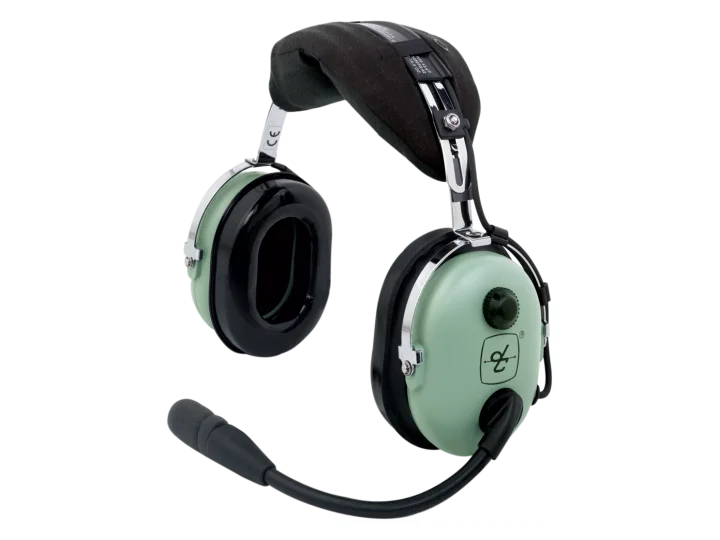 Student headsetDavid Clark H10-13.4 Aviation HeadsetCheck current availability on Amazon (paid link)
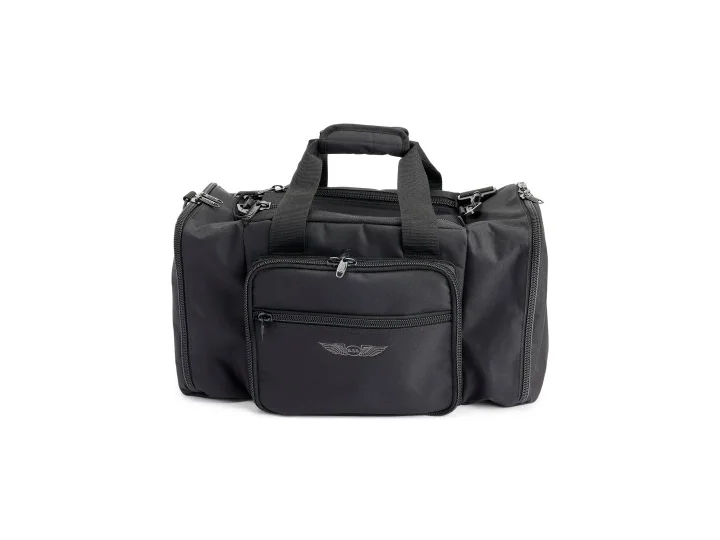 OrganizationASA Flight BagCheck current availability on Amazon (paid link)
The practical test is conducted by a Designated Pilot Examiner and follows the FAA's Private Pilot Airplane Airman Certification Standards. The ACS combines knowledge, risk management, and skill in each task, rather than treating them as unrelated subjects (FAA ACS guidance). The oral portion and flight portion therefore work together. An applicant might explain weather decisions on the ground, then demonstrate those decisions through route selection, diversion planning, traffic avoidance, and aircraft control in flight.
Passing means making safe decisions
The checkride isn't a memory contest. An examiner may ask how a pilot would respond to deteriorating weather, an unfamiliar runway, an equipment problem, or changing traffic conditions. The applicant must explain the legal requirement, identify the operational risk, and choose a practical course of action.
Regulations establish the minimum standard. Examiner recommendations, such as using a particular checklist flow or setting a personal weather minimum, are different. A candidate should know which answer comes from a regulation, which comes from the aircraft's POH or AFM, and which is a conservative operating recommendation.
The first major certification gate
The private pilot checkride is the first major practical test separating supervised student training from independent pilot privileges. FAA-based industry summaries show private pilot first-time practical-test results commonly in the mid-70s to high-70s, while knowledge-test results are often higher (AOPA pass-rate tracking). That difference matters because a written test can confirm recall, while a practical test requires the applicant to apply information while flying.
A sound preparation plan targets three questions:
- Does the applicant know the rule or procedure?
- Can the applicant recognize the risk in context?
- Can the applicant control the airplane while acting on that knowledge?
The private pilot checkride pass-rate guide provides useful context, but readiness still has to be demonstrated in the aircraft and at the desk. The strongest candidates don't chase obscure questions. They build repeatable habits that hold up when radio calls, navigation, weather, and aircraft control compete for attention.
Eligibility and Documents You Must Have Ready
A checkride can stop before the oral begins if the applicant, aircraft, or records aren't ready. Under 14 CFR § 61.39, an applicant must have a passing airman knowledge test report, required training and endorsements, and the applicable eligibility requirements for the certificate or rating (14 CFR § 61.39 endorsement reference).
The instructor should audit the applicant's records before scheduling the examiner. The applicant should then perform a separate review, because the person taking responsibility for the checkride needs to understand every document being presented.
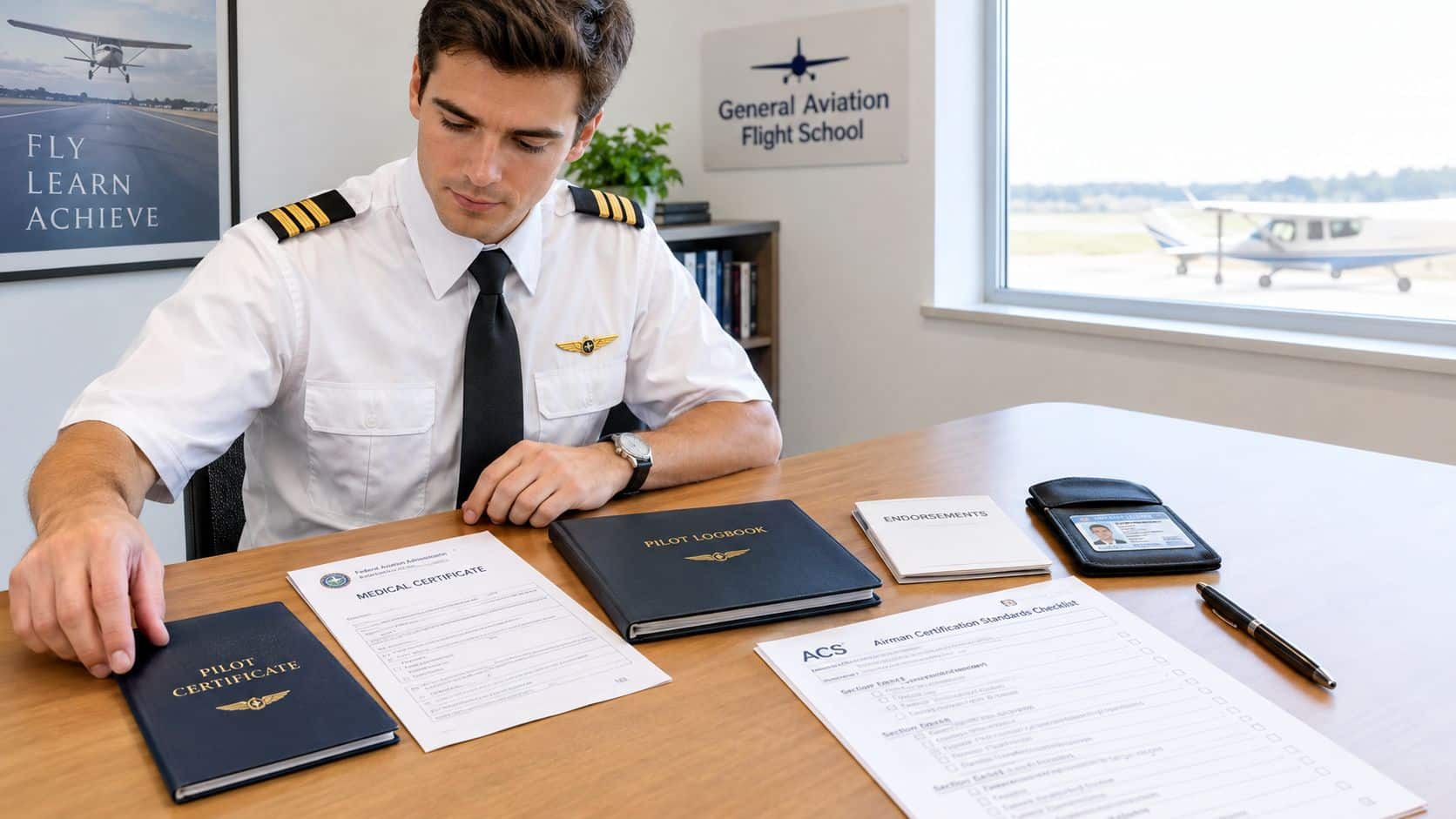
Applicant documents
Keep the following available in a clearly organized folder or digital record, subject to the examiner's accepted process:
- Government photo identification: The name and identity must align with the application and certification records.
- Medical qualification: Bring the current medical certificate, or documentation supporting BasicMed eligibility when applicable. Medical eligibility depends on the operation and the pilot's circumstances, so questions should be resolved with an aviation medical professional or the governing FAA rules.
- IACRA application: Confirm that the application is complete and that required signatures and application details are correct.
- Knowledge test report: The original report or accepted record shows the knowledge test result and missed knowledge areas.
- Logbook endorsements: The logbook must show the training and practical-test endorsements required for private pilot eligibility. These endorsements connect to 14 CFR §§ 61.103, 61.107, and 61.109, which address eligibility, required areas of operation, and aeronautical experience.
The Part 61 private pilot requirements guide can help applicants organize the regulatory picture, but it shouldn't replace a direct records audit with the recommending instructor.
Aircraft readiness
FAA guidance expects the applicant to provide an airworthy aircraft with required equipment, documents, operating limitations or POH/AFM, an equipment list, and weight-and-balance information (FAA private-airplane ACS). The core aircraft records generally include:
- Airworthiness Certificate
- Current Registration
- Operating Limitations
- POH or AFM
- Equipment list
- Weight-and-balance data
- Required maintenance and inspection records
The aircraft needs to be suitable for the planned practical test, not merely capable of starting and taxiing. A missing document, unresolved inoperative item, or weight-and-balance question can create a discontinuance even when the applicant's flying is satisfactory.
Applicants comparing aviation certification pathways should also recognize that airplane checkride preparation isn't the same as remote-pilot certification. For a different aviation role, CASA RePL certification courses offer a separate training context, but they don't substitute for FAA private pilot eligibility or endorsements.
How to Prepare for the Oral Exam Without Just Memorizing
An examiner's question often has three layers. The first asks what the rule, system, or procedure requires. The second asks what risk appears in the scenario. The third asks what the pilot would do.
Suppose an examiner presents a planned VFR flight from a towered Southern California airport and adds stronger winds, rising temperatures, and nearby busy airspace. A weak answer lists definitions. A stronger answer identifies the relevant weather information, checks aircraft performance, considers fuel and alternates, explains airspace requirements, and states when the flight would be delayed, rerouted, or canceled.
Organize study around ACS tasks
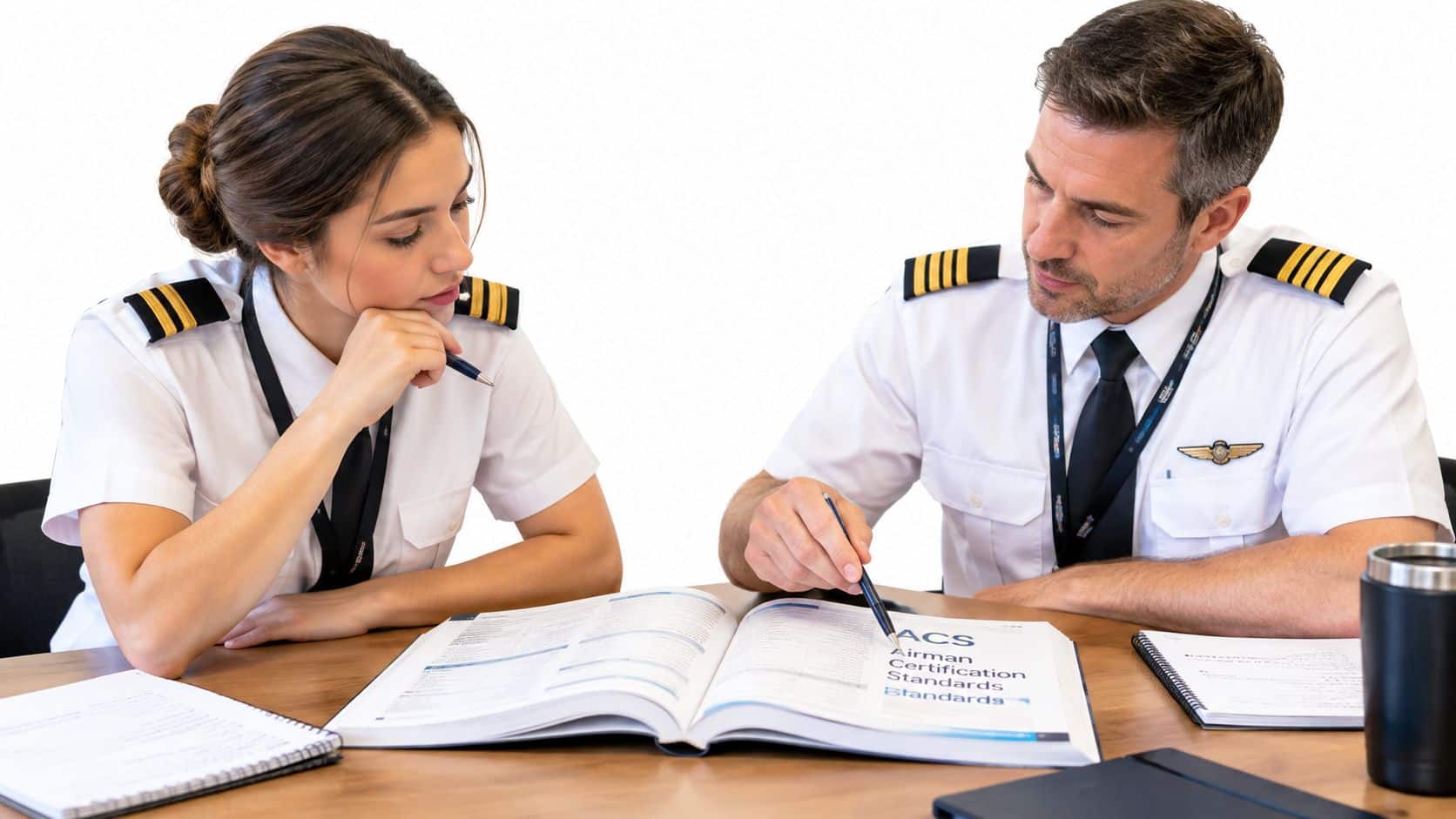
Each ACS task joins knowledge, risk management, and skill. Oral preparation should mirror that structure instead of separating flashcards from flying.
| ACS dimension | Useful preparation question |
|---|---|
| Knowledge | What regulation, chart, POH section, or procedure answers the question? |
| Risk management | What could make the planned operation unsafe or impractical? |
| Skill correlation | How would the pilot apply the answer while controlling the aircraft? |
High-value oral areas include pilot privileges and limitations, airworthiness, airspace, weather interpretation, performance, weight and balance, aircraft systems, emergency procedures, and aeronautical decision-making. The applicant should practice finding answers in the FAR/AIM, sectional chart, POH or AFM, and current ACS, rather than relying on a memorized script.
Practical rule: A precise answer supported by the correct reference is safer than a confident answer built from memory alone.
Use scenario prompts
Mock oral sessions should force the applicant to explain decisions aloud. Useful prompts include:
- Weather: What information would determine whether the flight can continue, and what conditions would trigger a cancellation or diversion?
- Airspace: What airspace lies along the route, what communication or equipment requirements apply, and where would the route become impractical?
- Performance: How would loading, runway condition, temperature, and wind affect takeoff or landing planning?
- Systems: What indications would suggest a system problem, and what immediate aircraft-control priorities come first?
- ADM: What would change the go or no-go decision after departure?
At KCNO, instructors can use realistic towered-airport scenarios, radio workload, runway changes, and Southern California airspace transitions. DuBois Aviation's scenario-based flight training reflects the larger principle that an applicant must connect a rule to an operational choice.
A useful study cycle starts with the ACS task, moves to the governing reference, then ends with a spoken scenario answer. Afterward, the candidate should fly or chair-fly the related procedure. Memorization still has a place for definitions, limitations, emergency actions, and required equipment. It just shouldn't be the whole preparation plan.
Flight Test Maneuvers and ACS Tolerances Explained
The flight portion evaluates more than whether a maneuver looks smooth. The examiner is watching for aircraft control, clearing procedures, coordination, situational awareness, checklist use, and timely correction. The exact tolerances come from the applicable ACS task, so applicants should use the current version rather than an old handout. The current Private Pilot Airplane ACS is FAA-S-ACS-6C, published in April 2024 and effective May 31, 2024 (FAA-based ACS preparation reference).
Fly the task while managing the airplane
Steep turns require coordinated control, altitude and heading management, visual clearing, and prompt correction. Slow flight and stalls reveal whether the applicant can manage angle of attack, rudder coordination, airspeed, and recovery priorities without becoming fixated on one instrument.
Ground-reference maneuvers test wind correction and awareness of the surrounding area. Takeoffs and landings test planning, configuration, airspeed control, runway alignment, and the ability to go around when the approach no longer supports a safe landing.
A practical rehearsal should include the task objective, clearing procedure, configuration, power changes, control inputs, tolerances, and recovery plan. The applicant should verbalize enough to show organized thinking without talking so much that aircraft control suffers.
Use correction as evidence of airmanship
A small deviation doesn't automatically define the outcome. The examiner needs to see that the applicant recognizes the trend, applies the right correction, and returns to the standard without creating a second problem. Continuing to drift while hoping the deviation goes unnoticed is far more concerning than an early, decisive correction.
Diversions expose workload management especially well. The applicant should maintain aircraft control first, establish a workable heading, select a suitable destination, communicate as needed, and then refine navigation and fuel calculations. Perfect arithmetic has little value if the airplane is not being flown safely.
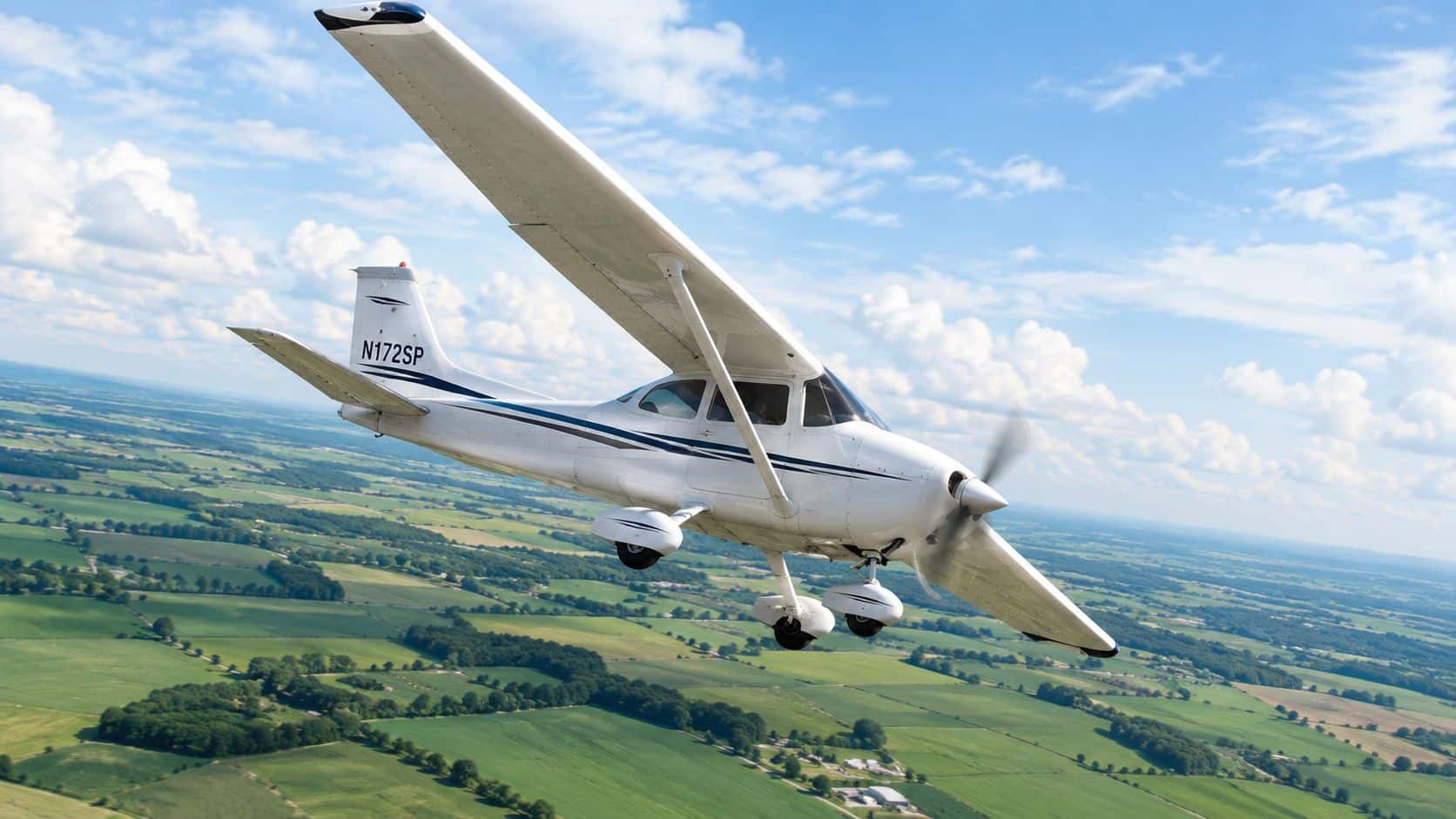
At a busy Class D airport with three runways, the applicant also has to manage radio work, taxi instructions, runway crossings, traffic flow, and changing patterns. The aircraft used for training matters because cockpit layout and handling characteristics affect workload. DuBois Aviation provides access to Piper Cherokees, a Cessna 150, a Mooney M20B, and simulator training, allowing instructors to match practice to the aircraft assigned for the practical test.
Chair-flying should use the actual checklist, cockpit flow, radio environment, and ACS tolerances. The final practice flights shouldn't introduce novelty. They should confirm that the applicant can perform familiar tasks calmly, correct deviations, and keep the larger traffic and airspace picture in view.
Common Reasons Applicants Fail and How to Avoid Them
The national benchmark is useful because it keeps expectations realistic. FAA-summary figures cited by industry sources show a private pilot first-time practical-test pass rate of 73.9% in 2014, 78.0% in 2021, and 74.5% in 2023. The figures suggest that preparation matters, but they don't identify a single magic maneuver or question list that guarantees success.
FAA survey data cited in pilot-training reporting found applicants were commonly evaluated on aeronautical decision-making at 85%, in-flight collision avoidance at 82%, and runway incursion avoidance at 71%. The same reporting states that 99% performed steep turns and 94% were asked about weather, while 66% of DPEs believed applicants were less prepared than five years earlier (FAA survey and DPE preparation reporting).
| Risk Area | What Data Shows | Prep Priority |
|---|---|---|
| Judgment and ADM | ADM was a frequent evaluation area, and piloting skill has become a leading failure concern in the cited industry reporting. | Practice decisions under changing weather, traffic, fuel, and aircraft conditions. |
| Collision avoidance | In-flight collision avoidance appeared frequently in the survey data. | Scan deliberately, clear before maneuvers, and maintain traffic awareness near busy airports. |
| Runway incursion avoidance | Runway incursion avoidance was also commonly evaluated. | Brief taxi routes, hold-short instructions, and runway crossings before movement. |
| Weather decisions | Weather questions were common in the cited survey. | Interpret available information and state clear personal go or no-go limits. |
| Piloting skill | Industry reporting identified piloting skill as the top failure reason, replacing training oversight. | Fly to ACS standards repeatedly, then correct trends early. |
The decision matrix
| Situation | Weak response | Safer response |
|---|---|---|
| Go or no-go | Continue because the flight is scheduled. | Compare conditions, aircraft capability, pilot readiness, and alternatives before departure. |
| Diversion | Keep perfecting calculations while the route deteriorates. | Fly the airplane, choose a practical destination, communicate, then refine the plan. |
| Unstable approach | Continue while trying to recover late. | Apply the aircraft's go-around procedure and explain the decision clearly. |
The common thread is compounding workload. A candidate may miss a radio call, rush a checklist, lose the outside scan, and then allow a maneuver deviation to grow. Preparation should therefore include deliberate interruptions, not just uninterrupted repetitions in ideal conditions.
Your Checkride Day Timeline and What Happens After You Pass
The final day should feel routine because the decisions were made earlier. During the final 24 hours, confirm the aircraft reservation, review the weather and airport information, calculate loading and weight and balance, and verify that the aircraft documents and applicant records are complete. The aircraft's required equipment and documentation remain the applicant's responsibility, even when the school provides the airplane.
A practical timeline
- The evening before: Organize identification, medical documentation, IACRA information, knowledge test report, logbook endorsements, ACS, charts, POH or AFM, and planning materials. Resolve discrepancies with the instructor before arriving.
- Before the oral: Inspect the airplane's documents, confirm fuel and loading, and arrive ready to explain the planned flight. At KCNO, allow attention for tower communications, taxi routing, runway changes, and local traffic.
- During the oral: Answer the question asked, use the correct reference when needed, and explain the operational decision behind the answer. Ask for clarification rather than guessing.
- Before the flight: Take a short break if the examiner permits it. Recheck the aircraft, weather, route, and personal readiness.
- During the flight: Fly the airplane first. Use checklists, maintain the scan, correct deviations early, and communicate clearly.
- Afterward: Review the examiner's results and complete the required logbook and certification records.
A successful applicant receives the applicable temporary certificate or other FAA-issued documentation through the certification process, and the examiner records the practical-test outcome. The new private pilot must still comply with ongoing requirements, including aircraft, medical, passenger, currency, and operational limitations.
A disapproval isn't a judgment on the applicant's long-term potential. The examiner identifies the unsatisfactory areas, and the instructor provides additional training before the applicant returns for the required retest process. A discontinuance caused by weather, maintenance, or time is different from a disapproval, so the applicant should read the examiner's paperwork carefully.
What comes next
After the certificate, many pilots begin instrument training, then progress toward commercial, multi-engine, or CFI qualifications. Others rent aircraft for continued local flying, join a flying community, or explore helicopter training. DuBois Aviation offers flight training, accelerated flight training, aircraft access through its fleet, discovery flights, and enrollment support, subject to course and aircraft availability.
Frequently asked questions
How long does a private pilot checkride take?
The total time varies with the examiner, weather, aircraft, and how efficiently the applicant completes the oral and flight portions. Candidates should keep the day flexible rather than schedule another obligation immediately afterward.
What should an applicant do if an answer isn't remembered?
The applicant should avoid bluffing. State what is known, identify the governing reference, and find the answer in the applicable regulation, POH or AFM, chart, or ACS when appropriate.
Can a checkride be discontinued without being failed?
Yes. Weather, maintenance, time, or another practical limitation can prevent completion. The examiner's documentation will identify whether the event was a discontinuance or a disapproval and what remains to be completed.
Does a small flight deviation automatically cause a failure?
Not necessarily. The applicant should recognize the deviation, correct it promptly, and remain within the applicable ACS standard. A pattern of poor control, delayed correction, or unsafe compensating actions is more serious than an isolated trend that is handled correctly.
Should applicants train at the same airport where they test?
Training at the test airport can help with local procedures, but it isn't required for sound preparation. More important skills include radio discipline, airspace awareness, runway incursion prevention, workload management, and consistent performance across unfamiliar but ordinary operating environments.
What training should follow the private pilot certificate?
The next step depends on the pilot's goals. Instrument training supports more capable cross-country planning, commercial training develops professional-level operations, and multi-engine or instructor training supports particular career paths. A training advisor can help sequence those ratings around experience, availability, and long-term objectives.
DuBois Aviation provides private, instrument, commercial, multi-engine, and instructor training from Chino Airport, with aircraft rental and simulator support for pilots who want structured preparation. Visit DuBois Aviation to ask about course availability, schedule a school tour, or request a checkride-ready training plan.