
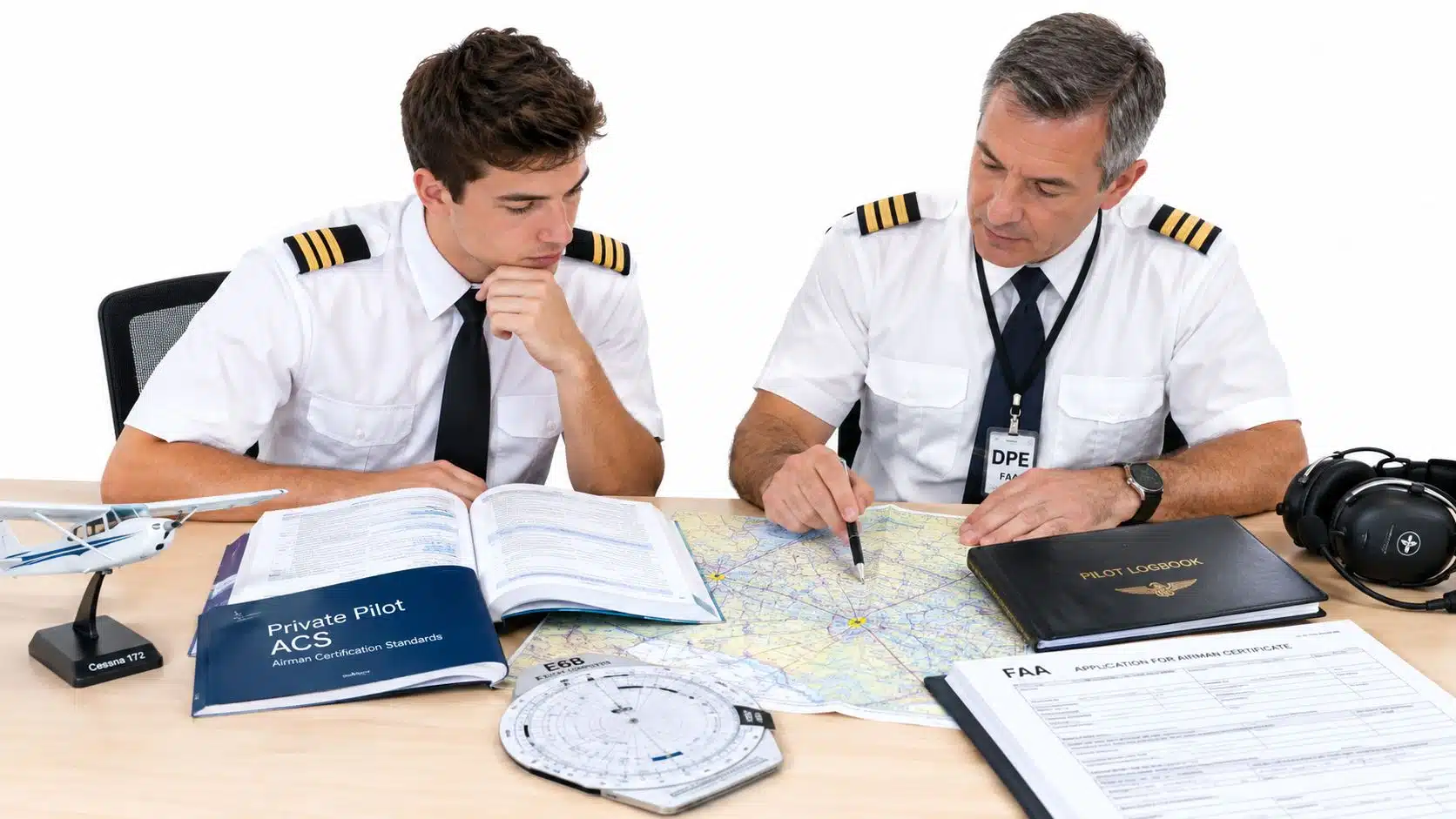
You've passed the knowledge test, planned the cross-country, and can fly the maneuvers. Then the thought arrives: what exactly happens during the oral exam for a private pilot? The oral isn't a separate trivia quiz. It's the ground portion of the integrated FAA practical test, evaluated with the flight portion under the Airman Certification Standards. Applicants should prepare to explain decisions, use current references, and apply regulations to realistic situations.
Table of Contents
- What the Private Pilot Oral Exam Actually Is
- The ACS Areas of Operation You Will Be Tested On
- Paperwork, Endorsements, and Documents to Bring
- Building a Realistic Study Plan and Timeline
- Best Resources for Private Pilot Oral Prep
- Running an Effective Mock Oral Before Checkride Day
- Common Pitfalls and How Examiners Test for Them
- The answer sounds right but has no support
- Weather knowledge remains disconnected
- Airspace answers rely on slogans
- Performance calculations are rushed
- The applicant overstates personal capability
- Student privileges get confused with private pilot privileges
- Absolute language creates avoidable traps
- A final readiness checklist
- Frequently Asked Questions
What the Private Pilot Oral Exam Actually Is
The private pilot oral exam is the ground portion of one integrated practical test. Under FAA practical-test rules, the oral and flight portions are evaluated together, and a failure in an area of operation can cause failure of the entire practical test. There's no official oral-only pass rate to calculate. The most useful benchmark is first-attempt practical-test performance, with industry analysis of FAA civil airmen statistics reporting a 74.5% first-time private pilot pass rate in 2023, meaning roughly one in four applicants failed on the first attempt. See the practical-test performance analysis.
Two practical options worth comparing
These are specific products pilots commonly compare for this type of flying. Confirm compatibility with your aircraft and instructor before ordering.
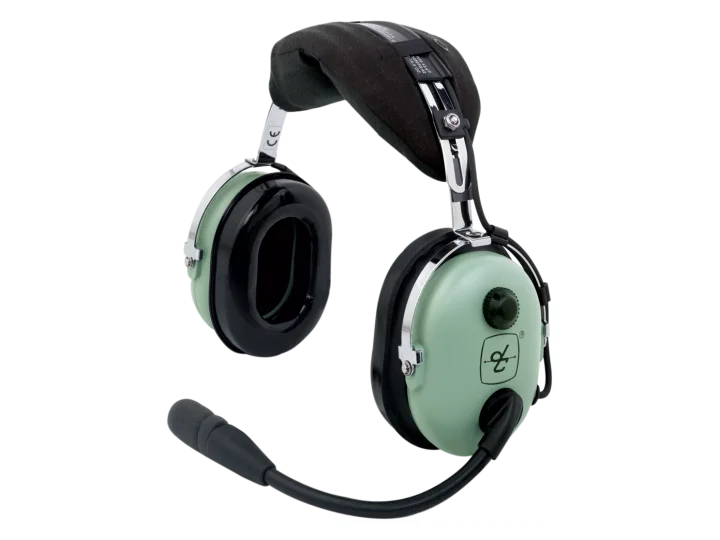 Student headsetDavid Clark H10-13.4 Aviation HeadsetCheck current availability on Amazon (paid link)
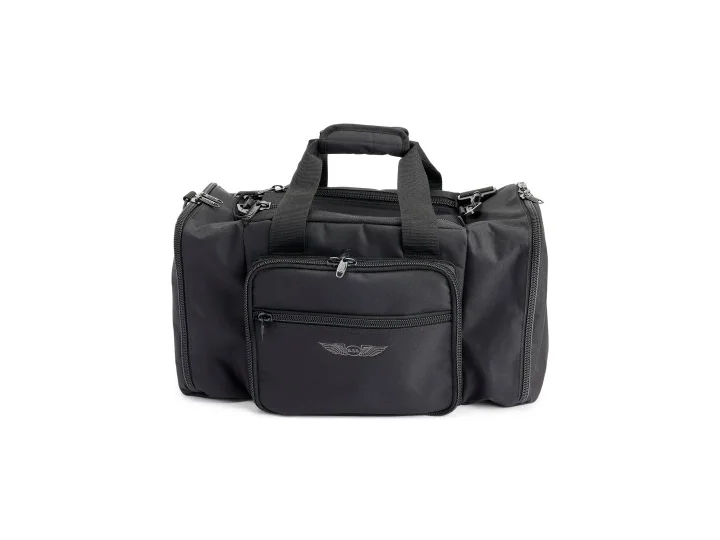 OrganizationASA Flight BagCheck current availability on Amazon (paid link)
A Designated Pilot Examiner, or DPE, normally conducts the evaluation, although an FAA Aviation Safety Inspector may administer it. The oral may happen before the flight, after the flight, or in separate portions around the flight, depending on the examiner, aircraft, schedule, and circumstances. Recent preparation guidance notes that the oral can last roughly 1.5 to 3 hours, and the length can vary substantially by examiner and by how thoroughly the applicant explains an answer.
What the examiner is evaluating
The examiner uses the Private Pilot Airman Certification Standards, or ACS, rather than an improvised list of trivia. The ACS directs the evaluation toward three connected abilities:
- Knowledge: Can the applicant explain regulations, weather, airspace, aircraft systems, performance, and operating procedures?
- Risk management: Can the applicant identify hazards, assess alternatives, and make a defensible go or no-go decision?
- Skill correlation: Can the applicant connect the explanation to the airplane, route, checklist, chart, and flight maneuver being evaluated?
An answer that sounds polished but can't survive a follow-up question is fragile. The examiner may ask where the information comes from, request a chart or aircraft manual, or change one detail in the scenario to see whether the applicant can reassess the decision.
Practical rule: A strong applicant doesn't just recite an answer. The applicant identifies the source, finds the relevant information, and explains how it affects the flight.
Preparation therefore involves more than memorizing a question bank. Applicants need to decode the ACS, organize their documents, create a realistic study timeline, select references, run a mock oral, and practice recovering when an answer is incomplete. DuBois Aviation's private pilot checkride guidance can serve as one additional way to frame that preparation.
The ACS Areas of Operation You Will Be Tested On
The FAA's Private Pilot Airplane ACS is the controlling document for the practical test. The current listed revision, FAA-S-ACS-6C, became effective May 31, 2024, confirming that private pilot expectations are tied to an actively maintained standard rather than an old, fixed syllabus. Review the current Private Pilot Airplane ACS.
The oral questions usually connect several subjects through a proposed flight. An examiner might begin with a route, ask whether the airplane is legal to dispatch, examine the weather, identify the airspace, review performance, and then discuss an emergency along the way.
The six operational areas
The ACS organizes the practical test around six Areas of Operation. The oral can draw knowledge tasks from each one, even when the flight portion emphasizes particular maneuvers.
| Area of Operation | Common Knowledge Tasks | Frequent Examiner Pet Peeves |
|---|---|---|
| Preflight Preparation | Pilot qualifications, weather sources, personal minimums, airspace, cross-country planning, weight and balance, performance | Quoting a rule without applying it, ignoring the route's weather or terrain |
| Preflight Procedures | Aircraft documents, inspections, cockpit organization, checklists, systems | Treating paperwork as a formality, skipping an aircraft-specific explanation |
| Airport and Seaplane Operations | Airport markings, traffic patterns, communications, runway selection, airspace entry | Confusing towered-airport procedures or guessing about Class B, C, or D requirements |
| Takeoffs, Landings, and Go-Arounds | Performance planning, rejected takeoffs, wind considerations, stabilized approaches, go-arounds | Claiming a landing or crosswind capability without explaining the aircraft data and judgment |
| Performance and Ground Reference Maneuvers | Density altitude, takeoff and landing calculations, maneuver purpose, wind correction | Using memorized numbers or skipping the actual chart calculation |
| Emergency Operations | Engine failure, emergency equipment, forced landing decisions, communications, risk management | Listing procedures without prioritizing aircraft control, suitable landing areas, and changing conditions |
Where preparation usually needs more depth
Weather products and the national airspace system deserve special attention. FAA and examiner-focused reporting identifies weather and airspace as recurring trouble spots, particularly when an applicant can answer the opening question but can't explain the reasoning, locate the source, or defend a calculation under follow-up questioning. Review the AOPA discussion of recurring checkride errors.
Density altitude also exposes shallow preparation. A competent answer explains how temperature, pressure, and elevation affect aircraft performance, then connects that explanation to the actual airport, runway, loading condition, and performance chart. The examiner isn't looking for a memorized definition detached from the proposed flight.
Paperwork, Endorsements, and Documents to Bring
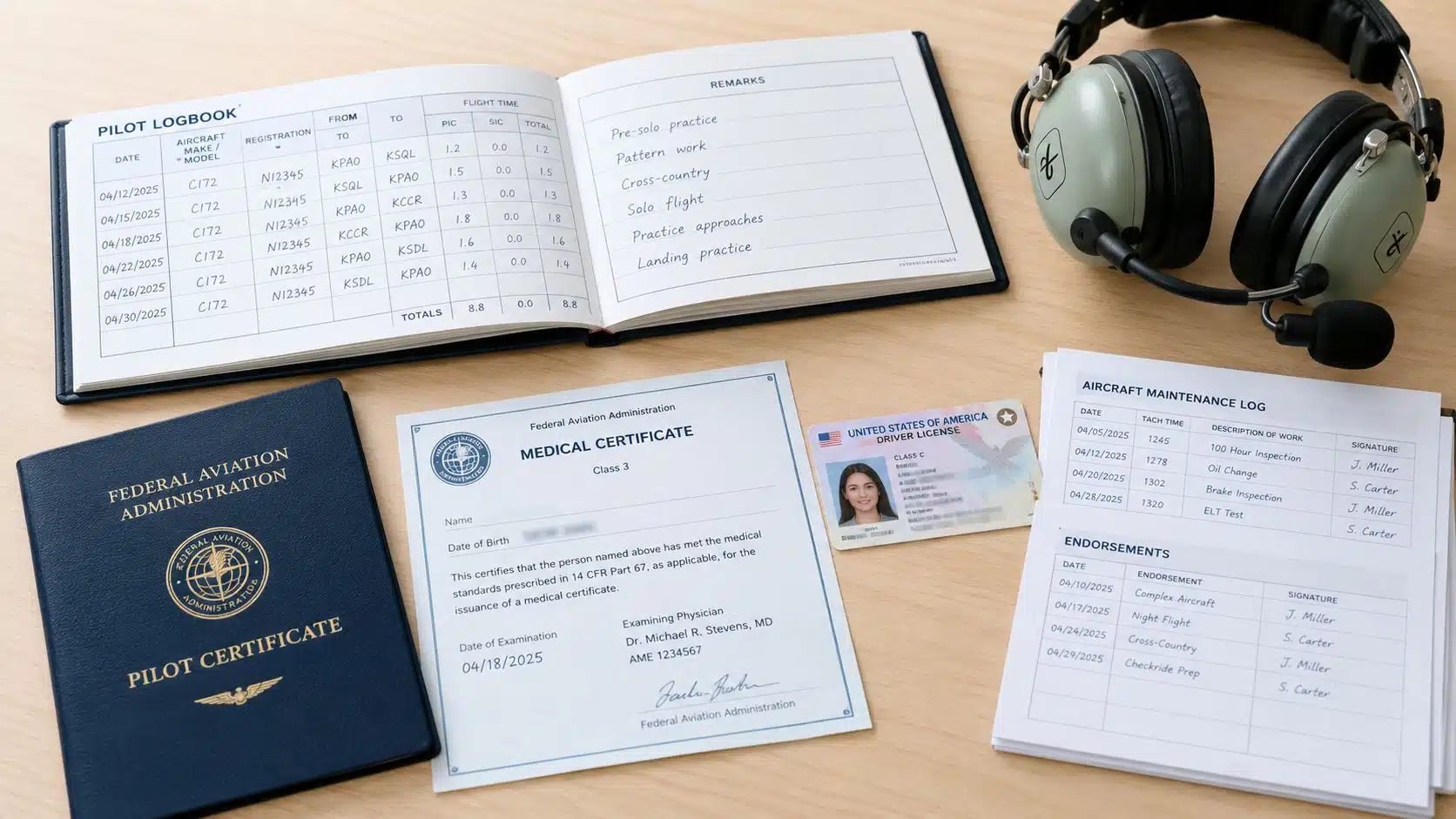
Paperwork is part of the evaluation, not a clerical warm-up. The examiner will expect the applicant to produce documents and explain why each item is valid, current, and applicable to the practical test.
Start with the applicant documents
The applicant should organize the personal documents in an order that makes review easy:
- Medical certificate: The certificate must meet the applicable medical requirement for the checkride. BasicMed isn't acceptable for the initial private pilot practical test because it doesn't substitute for the medical certification required for that certificate.
- Student pilot certificate: The applicant should have the required pilot certificate available for verification.
- Government-issued photo identification: The name and identity must match the application and testing records.
- Knowledge Test Report: The report confirms completion of the FAA knowledge test and establishes the validity window.
The knowledge test must be passed before the practical test. Its validity lasts through 24 calendar months after the month in which the test was taken. If the practical test isn't completed successfully within that window, another knowledge test is required. Confirm the knowledge-test timing in the FAA ACS change document.
Audit endorsements instead of assuming they're complete
The authorized instructor's endorsements should support the required training under 14 CFR 61.103 and 61.105, including aeronautical knowledge preparation, solo flight, and cross-country experience. The instructor must certify that the applicant received the required training and is prepared for the knowledge test. Review the FAA endorsement guidance in AC 61-65J.
The applicant should also verify that the FAA Form 8710-1 application has been completed through IACRA and that the logbook entries match the application. A logbook audit with the instructor should happen before checkride day, not while the examiner is waiting.
Stage the aircraft records
The aircraft packet should include:
- Airworthiness certificate
- Aircraft registration
- Operating limitations
- Weight and balance data
- Aircraft-specific checklist
- Maintenance and inspection records required for the aircraft's operation
An applicant shouldn't merely point to a document. The examiner may ask what makes the aircraft airworthy, which limitations apply, or how the weight-and-balance data affects the planned flight. DuBois Aviation's Part 61 private pilot requirements can help applicants organize the certification and endorsement side of training.
Building a Realistic Study Plan and Timeline
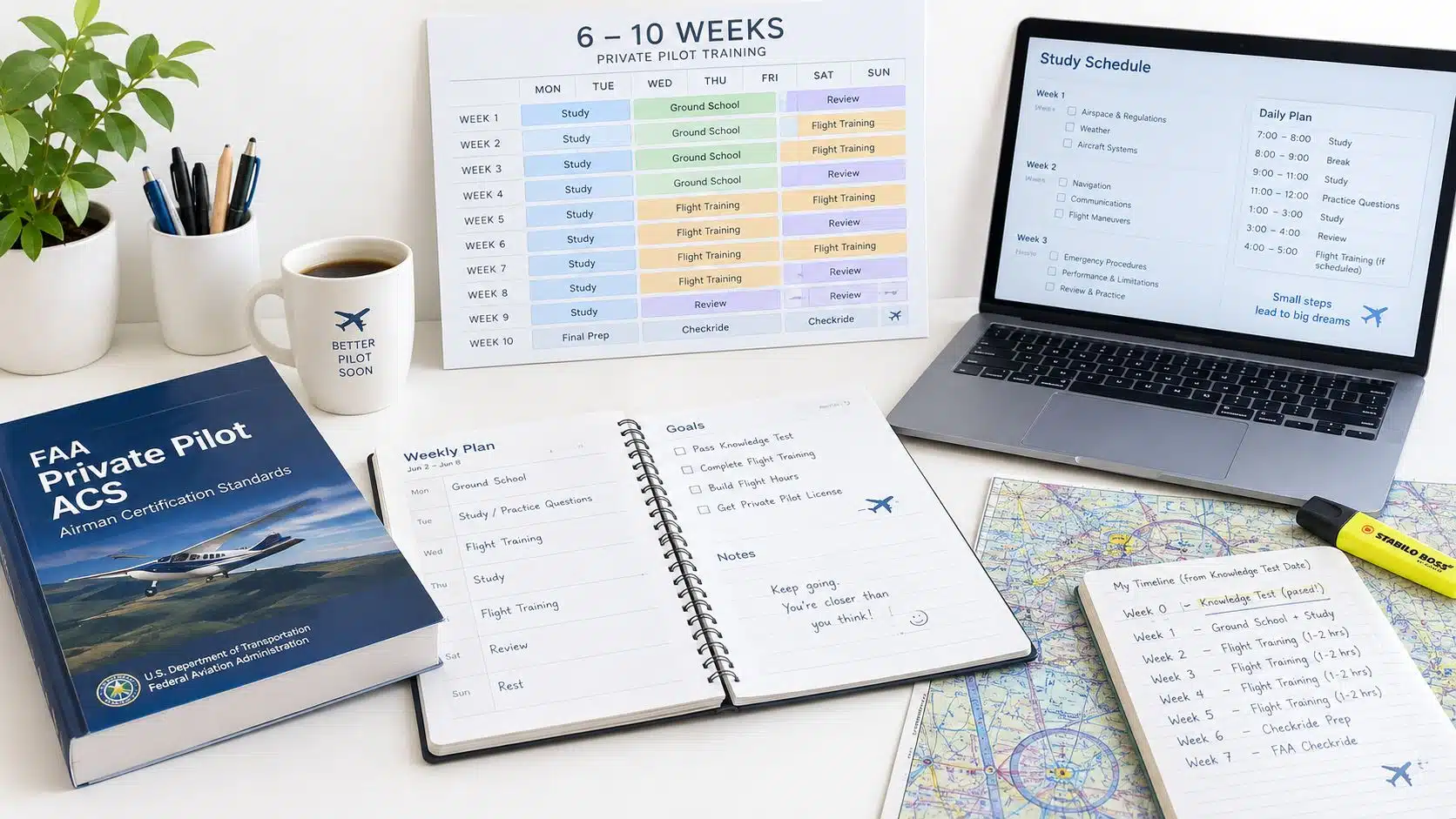
A six-to-ten-week preparation window gives a student enough time to convert weak subjects into usable skills without turning every evening into a cram session. The schedule should begin with the date the knowledge test was passed, because the 24-calendar-month validity period creates a firm outer boundary for completing the practical test.
A sample preparation sequence
Week 1 should be diagnostic. The applicant reads the Private Pilot Airplane ACS from beginning to end and marks unfamiliar Tasks, knowledge elements, and risk-management items. The knowledge-test report belongs beside the ACS so missed knowledge areas can be connected to the relevant standards.
Weeks 2 and 3 should build coverage. A daily 45-minute review session can rotate through the six Areas of Operation. Once each week, the student writes a scenario, such as a local flight with changing winds, an unfamiliar Class D airport, or a deteriorating forecast, then explains the decision using references.
During weeks 4 and 5, the work becomes more applied. The student plans a cross-country, interprets METAR and TAF information, evaluates forecast products, performs weight-and-balance calculations, and uses the aircraft's performance charts. Every calculation should be completed from the actual aircraft data rather than from a generic example.
The final stretch
Weeks 6 and 7 should introduce mock oral sessions. Each session needs a clear record of weak answers, missing references, calculation errors, and topics that required instructor rescue.
The final two weeks are for dress rehearsals, not broad new learning. The applicant should complete a full document check, polish the weakest ACS Areas of Operation, rehearse the assigned cross-country, and confirm that endorsements and IACRA information are complete.
The practical trigger is simple. The application and checkride planning should move forward early enough that scheduling problems don't push the practical test beyond the knowledge-test validity window. A student who sees the deadline approaching without a scheduled or realistic path to completion should contact the instructor and examiner immediately, rather than assuming the date can be extended.
Best Resources for Private Pilot Oral Prep
The Private Pilot Airplane ACS should be the spine of preparation because it defines the standards the examiner uses. It's free, and it shows the applicant what must be demonstrated instead of merely listing popular questions.
The FAA's Pilot's Handbook of Aeronautical Knowledge, FAA-H-8083-25B, supplies the foundation for aerodynamics, weather, airspace, navigation, aircraft systems, and human factors. It's especially useful when a student can repeat a term but can't explain the underlying reason. The FAA's endorsement guidance, AC 61-65J, belongs in the paperwork phase because it clarifies the certification and endorsement framework.
A question-and-answer oral guide can add structure and expose gaps. Its strength is breadth and quick practice. Its weakness is the same feature: short answers can encourage memorization. The applicant should treat each answer as a starting point, then open the cited FAA document, aircraft manual, chart, or regulation and explain the application.
Matching resources to the preparation stage
| Resource | Cost | ACS Coverage | Best Prep Stage | Key Limitation |
|---|---|---|---|---|
| FAA Private Pilot Airplane ACS | Free | Direct standard coverage | Entire preparation period | Doesn't teach every topic from the beginning |
| FAA aeronautical knowledge handbook | Free government reference | Supports many knowledge areas | Early and middle study | Requires the student to map chapters to ACS Tasks |
| AC 61-65J | Free government reference | Endorsement and certification support | Paperwork audit | Not a substitute for broader oral preparation |
| Question-and-answer oral guide | Varies by edition and format | Organized around common ACS subjects | Middle and late preparation | Can promote rehearsed answers |
| Preparation application | Varies by provider | Depends on the selected content | Short daily review | Flashcards may lack aircraft-specific context |
| Instructor-led mock oral | Depends on the instructor or school | Can be mapped directly to the ACS | Final preparation phase | Quality depends on the evaluator and preparation |
Students looking for a broader study-library discussion can review DuBois Aviation's private pilot training book recommendations. The right resource is the one that fits the gap. A handbook repairs understanding, the ACS defines the target, a question guide exposes recall gaps, and a mock oral tests whether the knowledge works under pressure.
Running an Effective Mock Oral Before Checkride Day
A mock oral works best one to two weeks before the practical test, when there's still time to correct weak areas. The student should recruit a CFI who isn't accustomed to the student's rehearsed answers and provide the current ACS before the session. The instructor can then follow the standards rather than asking familiar classroom questions.
Start with the planned cross-country. The evaluator can ask whether the flight is legal, whether the airplane is airworthy, what weather sources support the decision, which airspace lies along the route, and how the aircraft will perform at the departure airport.

Four high-value practice subjects
Weather: The student should decode METAR and TAF information, identify relevant forecast products, and explain how the information changes the go or no-go decision. Decoding alone isn't enough. The reasoning must connect visibility, ceilings, winds, convective concerns, and personal minimums to the proposed flight.
Airspace: The examiner may point to a sectional and ask about Class B, C, D, or E airspace. The student should identify the airspace, explain entry and communication requirements, and distinguish regulatory requirements from personal risk controls.
Performance: The student should use the actual POH or approved aircraft data to calculate takeoff and landing performance, then explain how weight, temperature, pressure altitude, wind, runway surface, and density altitude influence the result.
Regulations: Questions from 14 CFR Part 61 and Part 91 should be answered in context. The student should explain the privilege, limitation, or operating rule, then describe how it affects the planned flight.
Score the session honestly
A useful rubric can track four outcomes for each question:
- Accurate: The answer is correct and complete.
- Applicable: The answer is connected to the scenario.
- Referenced: The student can locate the supporting regulation, chart, handbook section, POH page, or checklist item.
- Defensible: The student can explain why the decision is safe and legal.
With the student's permission, recording the session can reveal rushed speech, unsupported certainty, or repeated verbal habits. The debrief should produce a short action list, with each weak point tied to a source and a follow-up exercise. “Study weather” is too vague. “Interpret the assigned TAF, identify the limiting forecast element, and write the cancellation decision” is actionable.
Common Pitfalls and How Examiners Test for Them
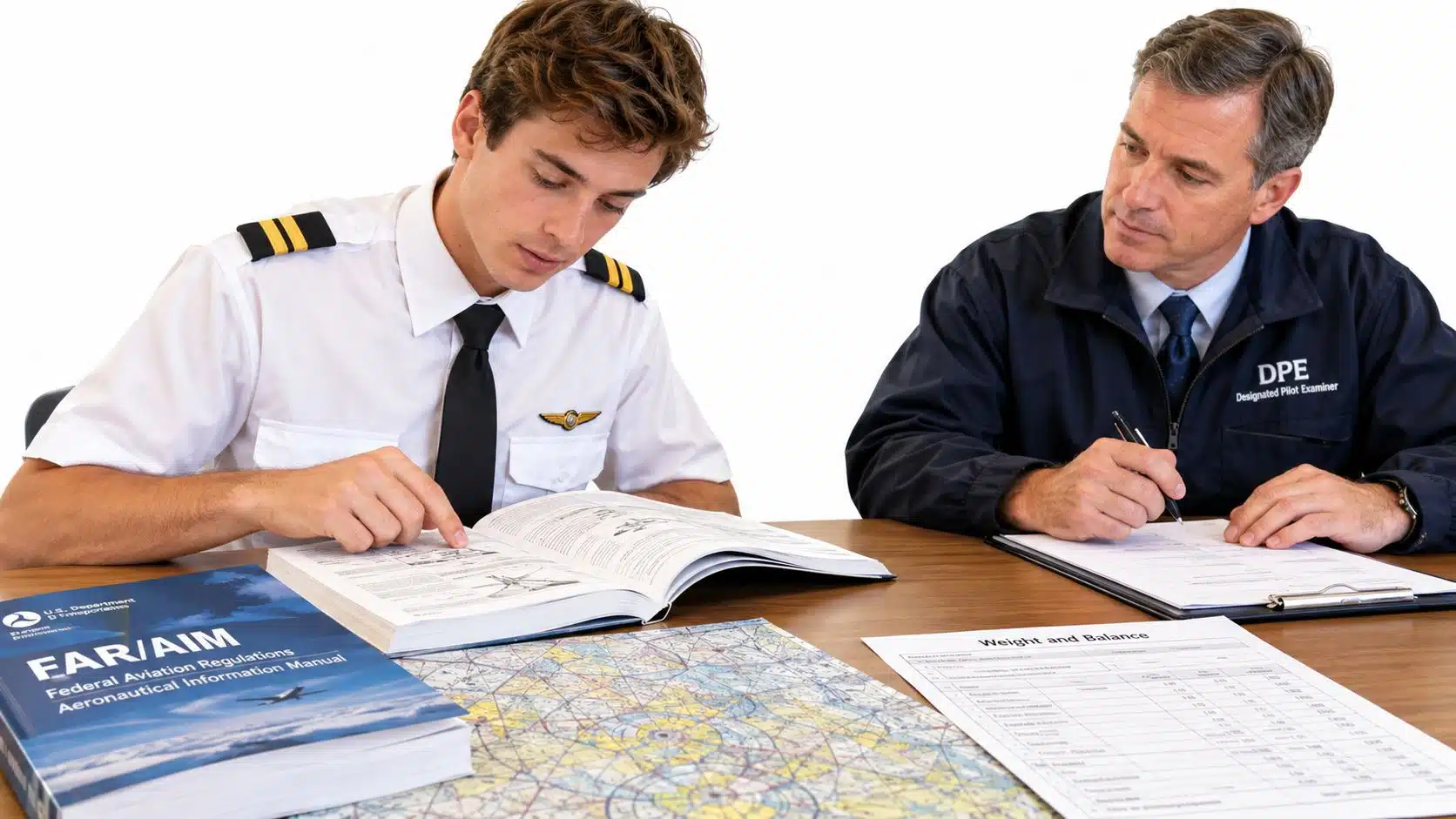
The most damaging oral answers often sound confident at first. The problem appears when the examiner changes the scenario, asks for the source, or requests the calculation. An applicant who has memorized a sentence may stall, while an applicant who understands the system can work through the question.
The answer sounds right but has no support
A student says, “That's Class C,” but can't point to the sectional or explain the communications requirement. The defensive move is to pull out the chart, identify the boundaries and altitudes, and state what the planned aircraft must do before entry.
The same issue appears with weather. A student recites a definition of stability but can't open the aeronautical handbook and connect stable or unstable conditions to clouds, turbulence, visibility, or the flight decision. The fix is simple but demanding: every major subject needs a reference trail.
A defensible answer has three parts: the rule or concept, the source, and the effect on the flight.
Weather knowledge remains disconnected
Decoding a METAR and TAF is only the beginning. The examiner wants to know whether the applicant can combine current observations with forecasts and make a decision that reflects the route, aircraft, pilot, passengers, and alternatives.
A practical drill starts with a departure airport, destination, and proposed departure time. The student identifies the limiting weather element, checks whether the forecast supports the flight, states personal minimums, and explains what would trigger a delay, diversion, or cancellation. The exercise should include a changed condition so the applicant must reassess rather than deliver a fixed speech.
Airspace answers rely on slogans
“Two-way communication is required” may be incomplete. The applicant must identify which airspace is involved, what the chart depicts, what communication or clearance action applies, and whether the route can be adjusted to avoid the area. Class B, C, and D questions expose students who remember labels but haven't studied the actual route.
The correction is to practice with sectional charts from the training area and unfamiliar locations. The student should trace a route, identify every controlled-airspace transition, and explain the decision at each boundary.
Performance calculations are rushed
An applicant may claim that a runway is adequate without opening the POH. That shortcut leaves out temperature, pressure altitude, aircraft weight, wind, runway condition, and the safety margin used by the pilot.
The examiner may ask the student to show the calculation, then change the loading or weather. The correct response is to use the approved aircraft data, state the assumptions, perform the calculation carefully, and explain what would make the result unacceptable. Density altitude deserves particular attention because it affects takeoff performance, climb, and engine operation.
The applicant overstates personal capability
Statements such as “the airplane can handle that crosswind” or “the airport is always fine in that weather” create problems because they replace judgment with certainty. The aircraft's demonstrated performance, the pilot's recent proficiency, runway conditions, gust spread, terrain, and escape options all matter.
A better answer identifies the relevant data and sets a personal limit. The applicant doesn't need to pretend to be comfortable with every condition. A conservative, well-supported decision is stronger than bravado.
Student privileges get confused with private pilot privileges
A student pilot's privileges, endorsements, limitations, and operating conditions aren't the same as those of a certificated private pilot. The examiner may ask what the applicant can do after certification, then test whether the answer distinguishes passenger carrying, compensation, flight conditions, currency, and other applicable limitations.
The fix is to build a comparison sheet from the governing regulations and training records. Each privilege should be paired with its limitation and an example of when the rule affects an actual flight.
Absolute language creates avoidable traps
Words such as “always” and “never” invite exceptions. Aviation rules often depend on aircraft category, operating condition, equipment, airspace, weather, or the exact wording of the regulation. A careful applicant uses qualified language when the rule has conditions, then identifies those conditions.
The applicant should also explain why a rule exists. Saying what the rule requires demonstrates recall. Explaining how it protects separation, airworthiness, fuel planning, passenger safety, or risk control demonstrates understanding.
A final readiness checklist
One week before the test:
- Review the application: Confirm the IACRA application status and reconcile it with the logbook.
- Verify validity: Check the medical certificate and knowledge-test validity.
- Audit endorsements: Confirm the required instructor endorsements are present and legible.
- Stage aircraft records: Organize the airworthiness certificate, registration, operating limitations, weight-and-balance data, checklist, and maintenance records.
- Pack references: Prepare the ACS, aeronautical handbook, sectional chart, plotter, E6B, logbook, and endorsements.
- Brief the route: Rehearse the planned cross-country, weather sources, airspace, checkpoints, performance, and diversion options.
Seventy-two hours before the test, confirm the meeting details, aircraft availability, document packet, and current weather picture. The student should use the remaining study time to repair specific weaknesses, not start an entirely new subject.
Twenty-four hours before the test, review the cross-country and the weakest ACS Tasks, then stop. A short final review is more useful than an exhausted night of random questions. Sleep, hydration, and a normal meal support clear decisions during both the oral and flight portions.
The weather decision should remain separate from emotional pressure. If conditions don't support a safe and legal flight, the applicant and instructor should communicate early, evaluate alternatives, and follow the examiner's process for rescheduling or discontinuing the practical test.
Applicants training at Chino Airport can ask DuBois Aviation about a mock oral at KCNO, stage checks, or a dedicated checkride-readiness flight. Those options can also be combined with broader private pilot, instrument, commercial, multi-engine, or instructor training, while applicants elsewhere can use the same ACS-based process with a qualified local instructor.
Confidence comes from being able to find the answer, explain the reason, and make the safer decision when the scenario changes.
Frequently Asked Questions
Is the private pilot oral exam a separate test?
No. The oral and flight portions form one integrated FAA practical test. A failure in an area of operation can result in failure of the entire practical test, so applicants should prepare for the oral as part of the complete checkride rather than as an isolated interview.
How long does the oral exam last?
Recent preparation references describe a typical range of roughly 1.5 to 3 hours, although the actual duration varies by examiner, applicant, aircraft, and how much follow-up a topic requires. The oral may occur before or after the flight, or be divided around the flight portion.
What document controls the oral exam?
The Private Pilot Airplane Airman Certification Standards controls the practical test. The current FAA-listed revision, FAA-S-ACS-6C, became effective May 31, 2024. The examiner uses it to evaluate knowledge, risk management, and skill.
How long is the FAA knowledge test valid?
The knowledge-test result remains valid for 24 calendar months after the month the test was taken. If the practical test isn't completed successfully within that period, the applicant must take another knowledge test.
Should applicants memorize oral-exam answers?
Memorization can help establish basic recall, but it shouldn't be the final preparation method. The applicant should practice locating the applicable regulation, chart, aircraft manual, checklist, or handbook material and explaining how it affects the flight.
What's the best final preparation step?
A realistic mock oral with an instructor who follows the ACS and challenges unsupported answers is one of the most useful final steps. It should happen early enough for the applicant to correct weak areas, then be followed by an aircraft-document audit and a dedicated readiness flight.
DuBois Aviation offers private pilot training, aircraft rental, stage checks, and checkride preparation at Chino Airport, including mock oral sessions and readiness flights for applicants preparing under the ACS. Visit DuBois Aviation to ask about training availability or schedule a conversation about the next step.


