
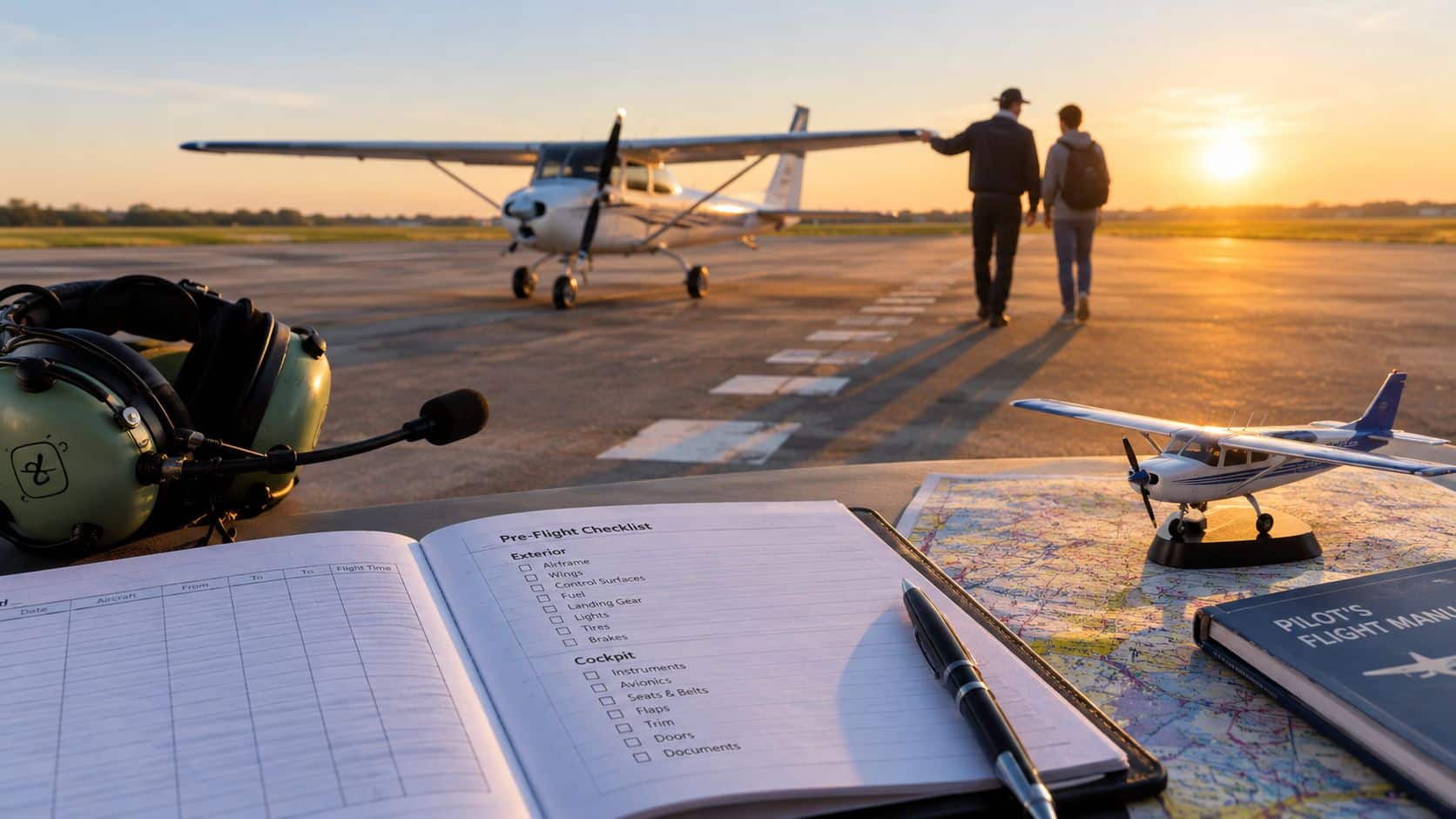
Under FAA Part 61, a private pilot applicant must be at least 17 years old, hold a valid medical certificate, log at least 40 hours of flight time including specific training categories, and pass both a knowledge test and a practical test. The required experience includes at least 20 hours with an authorized instructor, 10 hours of solo training, and dedicated cross-country, night, and instrument training.
A new student often starts with a discovery flight, then wonders why the regulatory minimum seems much shorter than the training schedule a flight school recommends. The answer is that 40 hours is a legal floor, not a promise of checkride readiness. Weather, aircraft availability, lesson frequency, instructor evaluations, knowledge-test preparation, and the student's ability to perform consistently all affect the actual path.
Table of Contents
- The Part 61 Pathway to a Private Pilot Certificate
- Eligibility Requirements Under 14 CFR 61.103
- Medical Certification and What to Expect
- Aeronautical Experience and Minimum Flight Hours
- Ground Training and Knowledge Test Preparation
- The Practical Test and Common Checkride Mistakes
- Training Variations and Frequently Asked Questions
Two practical options worth comparing
These are specific products pilots commonly compare for this type of flying. Confirm compatibility with your aircraft and instructor before ordering.
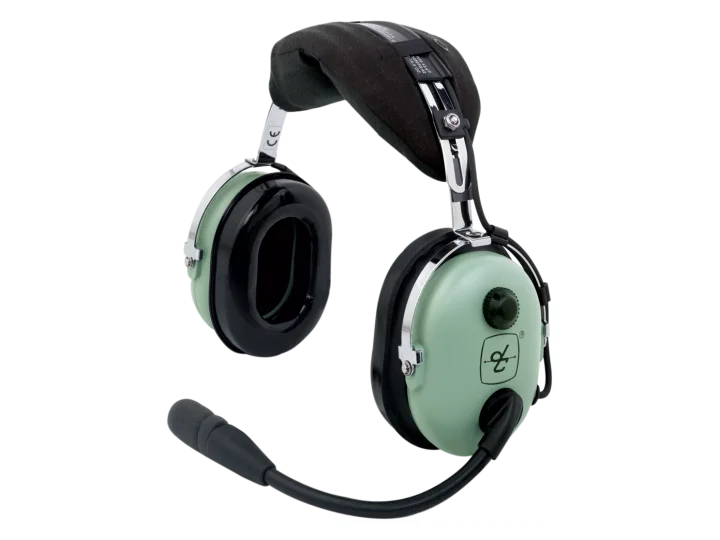 Student headsetDavid Clark H10-13.4 Aviation HeadsetCheck current availability on Amazon (paid link)
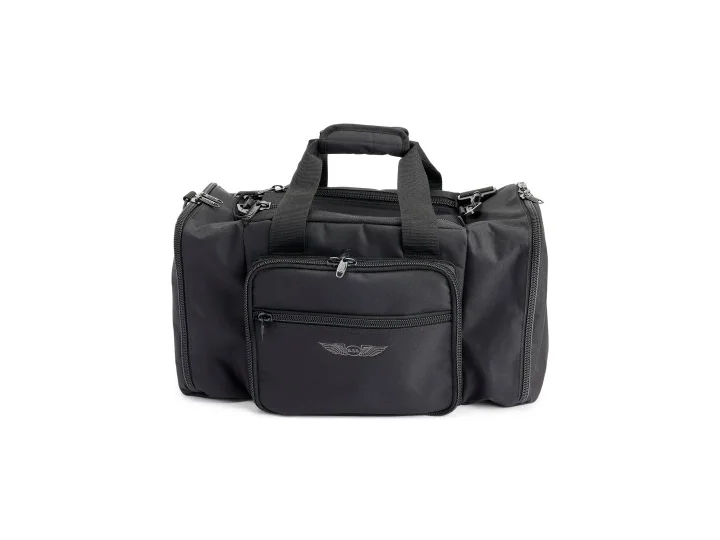 OrganizationASA Flight BagCheck current availability on Amazon (paid link)
The Part 61 Pathway to a Private Pilot Certificate
Part 61 gives a student a flexible route to a private pilot certificate. The applicant trains with an authorized instructor, completes the required aeronautical experience, studies the required knowledge areas, passes the FAA knowledge test, receives the necessary instructor endorsements, and completes the practical test.
A typical pathway looks like this:
- Initial planning: The student discusses goals, schedule, aircraft, medical certification, and training documents with a flight school or instructor.
- First flight: A discovery flight introduces the student to the aircraft, airport environment, and basic flight controls.
- Student eligibility: The applicant obtains the required pilot documentation and confirms that the age and English-language requirements can be met.
- Medical certification: The student completes the appropriate FAA medical process before investing heavily in training.
- Dual instruction: An instructor teaches aircraft control, airport operations, navigation, communications, emergency procedures, and risk management.
- Solo preparation: The instructor evaluates the student's judgment and proficiency before authorizing solo flight.
- Cross-country, night, and instrument work: The student builds experience in the specific areas required by Part 61.
- Knowledge preparation: The student studies the FAA knowledge areas and completes the required test endorsement.
- Practical-test preparation: The instructor reviews the applicant's logbook, endorsements, documents, and readiness for the oral and flight portions.
- Checkride: A designated examiner evaluates the applicant against the applicable practical test standards.
Part 61 and Part 141 are different training structures, not different pilot certificates. Part 61 generally allows more flexibility in scheduling and lesson design, while Part 141 uses an FAA-approved syllabus and training framework. Students balancing work, school, or family obligations often value the flexibility of Part 61, while career-focused students may prefer a more structured program. A detailed Part 61 and Part 141 flight training comparison can help applicants evaluate the differences before enrolling.
Practical rule: The fastest legal route isn't always the fastest practical route. Consistent training usually matters more than chasing the minimum hour count.
Most students should plan around milestones rather than a fixed number of calendar days. A student who trains irregularly may need extra review after each gap, while a student who maintains a steady rhythm can preserve more continuity between lessons. The instructor's progress evaluations, not the minimum alone, determine when the applicant is ready for the checkride.
Eligibility Requirements Under 14 CFR 61.103
Section 61.103 establishes the core eligibility requirements for a private pilot applicant. For airplane, rotorcraft, and powered-lift ratings, the applicant must be at least 17 years old. The applicant must also be able to read, speak, write, and understand English, subject to the regulatory provisions that apply to a person who cannot meet that standard.
The applicant must hold an acceptable pilot document before the practical test. The regulation identifies a U.S. student pilot certificate, sport pilot certificate, or recreational pilot certificate as acceptable options. In practical terms, most new airplane students begin with a student pilot certificate and keep that documentation available during training.
The applicant also needs instructor endorsements for the knowledge test and practical test. Those endorsements confirm that an authorized instructor has provided the required preparation and believes the applicant has met the applicable training conditions. The student should treat endorsements as formal records, not casual approvals.
What a new student should arrange
A prospective student can reduce administrative delays by handling the following early:
- Confirm the rating: The age requirement differs by certificate and rating, so the student should identify whether the goal is airplane, rotorcraft, or powered lift.
- Arrange pilot documentation: A student pilot certificate or another qualifying certificate must be available before the practical test.
- Address English proficiency: Radio communication and aviation instruction depend on clear understanding, reading, speaking, and writing.
- Start a logbook: Every lesson, endorsement, solo flight, and required training item should be recorded accurately.
- Keep identification consistent: Names and dates should match across applications, certificates, logbook records, and test documents.
The FAA rule also requires the applicant to meet the aeronautical experience requirements before taking the practical test and to pass both the knowledge and practical tests. The complete regulatory wording appears in 14 CFR § 61.103.
A common mistake is assuming that turning 17 automatically makes an applicant eligible. Age is only one condition. The student still needs the correct documentation, English-language eligibility, instructor endorsements, required aeronautical experience, and successful completion of both tests.
Medical Certification and What to Expect
A medical certificate should be addressed early, before a student commits substantial time and money to flight training. For private pilot privileges, a third-class medical certificate is generally the relevant FAA medical level, although an Aviation Medical Examiner determines whether the applicant meets the applicable standards.
The process begins with an appointment with an FAA-designated Aviation Medical Examiner. The applicant completes the required medical application, provides accurate health information, and attends the examination. The examiner reviews the applicant's history and may issue the certificate, request additional information, or defer the decision for further FAA review.

Preparing for the appointment
Applicants should gather relevant medical records, medication information, and prior aviation medical documentation. Accuracy matters. Omitting a condition or medication can create a larger administrative problem than disclosing it and allowing the examiner to determine the correct next step.
Color vision concerns, certain medications, and mental health history don't automatically produce the same result for every applicant. The outcome depends on the specific condition, available documentation, FAA standards, and whether a special issuance or additional evaluation is required.
A deferral isn't the same as a final denial. It means the examiner hasn't issued the certificate at that visit and the case requires further review or documentation. Students who receive a deferral should avoid guessing about the next step and should follow the examiner's instructions carefully.
An alternative pathway may be available to some pilots through BasicMed, but eligibility depends on prior medical history and other FAA conditions. It isn't a universal substitute for obtaining an initial medical certificate. Students can review the practical process through DuBois Aviation's third-class medical guidance, then confirm individual questions with an Aviation Medical Examiner.
The medical certificate isn't just paperwork for the school. It helps a student identify potential obstacles before training becomes a major financial or scheduling commitment. A careful applicant handles the medical process early, keeps copies of relevant documents, and tells the instructor about any restriction that could affect safe participation in flight lessons.
Aeronautical Experience and Minimum Flight Hours
The Part 61 minimum is 40 total hours of flight time, including specific categories of training. The FAA identifies at least 20 hours of flight training from an authorized instructor and 10 hours of solo flight training. Within the overall experience requirements, the applicant also needs at least 3 hours of cross-country training, 3 hours of night flying, and 3 hours of instrument time. These requirements are summarized by the FAA in its private pilot hourly requirements guidance.
The categories matter because the certificate isn't based solely on accumulating time in the aircraft. The student must develop experience with navigation, darkness, instrument reference, solo decision-making, and other risk environments before the practical test.
Part 61 private pilot hour requirements
| Training Category | Minimum Hours Required | Typical Student Hours |
|---|---|---|
| Total flight time | 40 hours | Varies by proficiency and readiness |
| Flight training with an authorized instructor | 20 hours | Varies by lesson needs |
| Solo flight training | 10 hours | Varies by solo approvals and practice |
| Cross-country training | 3 hours | Varies by navigation practice |
| Night training | 3 hours | Varies by weather and scheduling |
| Instrument training | 3 hours | Varies by skill development |
The third column can't responsibly be reduced to a universal number. Some students need additional dual instruction to stabilize landings or radio work. Others need more solo practice, navigation review, or instrument-reference training. The examiner cares about demonstrated proficiency, not whether the student stopped exactly at the regulatory minimum.
Why the minimum and the schedule diverge
A student who trains only occasionally may forget procedures between lessons. Weather can cancel planned flights, maintenance can make an aircraft unavailable, and instructor or airport scheduling can interrupt a carefully sequenced lesson plan. Busy airports can also consume lesson time during taxi and traffic sequencing, although the student may still gain useful communication and airport-operation experience.
A practical budget should account for the possibility of additional hours without treating them as a failure. The instructor's job is to identify weak areas before the checkride, when correcting them is safer and more efficient than relying on luck during the practical test.
For readers interested in how aviation training environments can be explored visually, the Virtual Tour Easy A320 guide offers an aircraft-interior reference, although it isn't a substitute for Part 61 training or FAA standards.
Ground Training and Knowledge Test Preparation
Part 61 requires the applicant to understand defined aeronautical knowledge areas before taking the knowledge test. Those areas include subjects such as regulations, airspace, weather, navigation, aircraft operations, performance, aeromedical factors, and risk management. The instructor must provide the required preparation and endorsement before the applicant takes the test.
Ground training can happen through instructor-led lessons, structured school sessions, guided self-study, or a combination of those methods. A strong plan connects the written material to flight lessons. For example, airspace study becomes easier to retain when the student reviews a planned route, identifies communication requirements, and discusses the decisions that would keep the flight within the rules.
A workable study sequence
- Begin with the aircraft: Learn the pilot's operating handbook, limitations, systems, performance information, and emergency procedures.
- Build the regulatory foundation: Study pilot privileges, limitations, airspace rules, right-of-way provisions, and required documents.
- Apply weather knowledge: Practice interpreting forecasts, observations, winds, visibility, ceilings, and hazardous-weather information.
- Use charts actively: Plan routes, identify airspace, calculate headings, and consider fuel and diversion decisions.
- Review missed questions: A practice-test score alone doesn't prove understanding. Each incorrect answer should lead to a rule, concept, or calculation review.
- Ask for the endorsement: The instructor must determine that the applicant has received adequate preparation before endorsing the knowledge test.
The knowledge test result has a 24-calendar-month validity window before the practical test, according to the FAA advisory circular on certification endorsements and prerequisites. The same guidance reflects a separate 2-calendar-month preparation recency requirement for practical-test eligibility under the applicable prerequisites.
Those time windows can affect scheduling. Taking the knowledge test too early may create unnecessary pressure if flight training proceeds slowly, while delaying it until the final stage can leave the student with avoidable study work during practical-test preparation.
The student should coordinate the test with the instructor's training plan. DuBois Aviation's private pilot written-exam study guidance can supplement instructor instruction, but no study resource replaces a thorough understanding of the applicable regulations and aircraft-specific procedures.
The Practical Test and Common Checkride Mistakes
Checkride day usually includes an oral examination followed by a flight evaluation. The examiner reviews the applicant's identity, certificates, logbook, endorsements, aircraft documents, and practical-test eligibility before evaluating knowledge and performance.
The oral portion may explore weather decisions, airspace, aircraft systems, performance, navigation, emergency procedures, regulations, and risk management. The flight portion evaluates the applicant's ability to plan and conduct a safe flight, communicate effectively, control the aircraft, perform required maneuvers, and respond appropriately to changing conditions.
Where applicants lose readiness
A student may be technically capable of performing a maneuver but still unready for the practical test if the overall decision-making is weak. Common problems include incomplete preflight planning, poor fuel reasoning, weak weather interpretation, inconsistent checklist use, and failure to recognize when a plan should change.
Another frequent issue is treating a mistake as a disaster. A small deviation can often be corrected through prompt recognition, proper control inputs, and a clear explanation of the decision. The examiner is evaluating the applicant's ability to manage the aircraft and situation, not demanding an unrealistic flight with no minor imperfections.
Before scheduling, the instructor should verify:
- Logbook accuracy: Required experience and endorsements are properly recorded.
- Aircraft eligibility: Required inspections, equipment, and documents are available.
- Knowledge readiness: The applicant can explain decisions rather than recite isolated answers.
- Flight consistency: Maneuvers, landings, navigation, and emergency procedures remain reliable across lessons.
- Risk management: The applicant identifies hazards and chooses defensible mitigations.
- Practical-test standards: The applicant understands what the examiner will evaluate.
A final mock oral and mock checkride can expose gaps while there's still time to correct them. The student should also know the procedure for a discontinuance or unsatisfactory result, then work with the instructor to address the documented areas before another attempt.
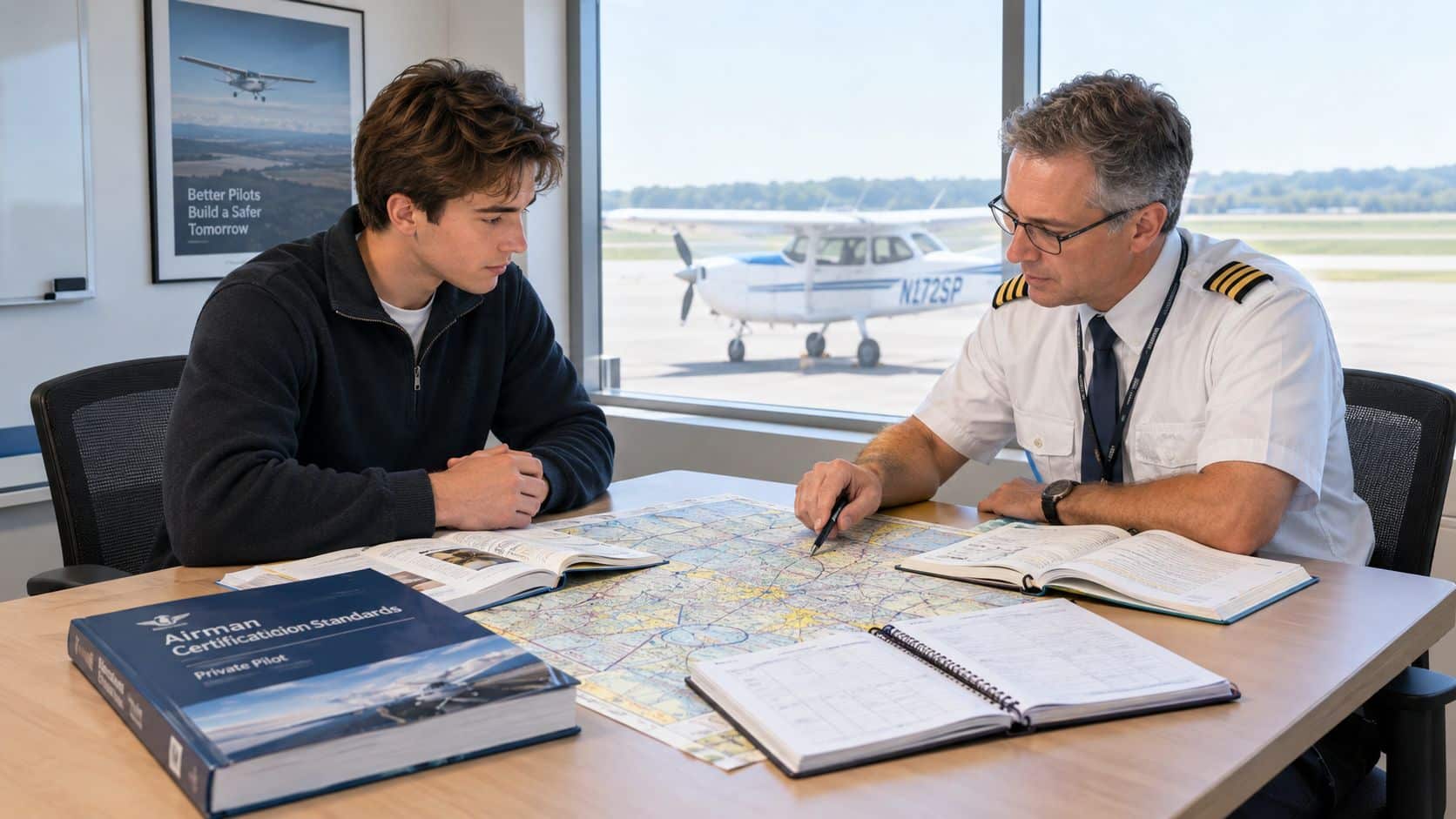
The following training media can help students connect chart work and cockpit preparation with the practical-test environment.
Training Variations and Frequently Asked Questions
Part 61 is the standard reference point for many independent and flexible training programs, but other pathways can change the experience requirement. Under 14 CFR § 61.109, an applicant who completes an approved private pilot course conducted by a Part 142 training center may need 35 total hours of aeronautical experience instead of 40, unless the Administrator approves fewer hours. The applicable rule is available in 14 CFR § 61.109.
Previous aviation experience may also affect the path. Military flight experience, a sport pilot certificate, or a recreational pilot certificate can create eligibility or credit questions, but the exact credit depends on the applicant's records, certificate, category, and the governing regulation. An instructor should review the logbook and certificates before promising any reduction.
Frequently asked questions
Is Part 61 or Part 141 better for most students?
Neither is automatically better. Part 61 suits students who need flexible scheduling or individualized instruction. Part 141 may suit students who prefer an FAA-approved syllabus and a more structured program. The right choice depends on availability, learning style, career goals, and the school's actual operating standards.
How long does the process take?
The calendar timeline varies. Training frequency, weather, aircraft maintenance, instructor availability, student preparation, and checkride scheduling all influence completion. A consistent schedule generally protects continuity, while long gaps often create additional review work.
What happens after a long training break?
The instructor should reassess proficiency rather than assume the student can resume at the previous lesson point. The review may include aircraft procedures, emergency actions, radio work, takeoffs and landings, navigation, and any required experience that remains incomplete.
Can a private pilot fly for compensation?
A private pilot certificate doesn't generally authorize the pilot to act as a pilot for compensation or hire. The certificate is intended for private flying within its privileges and limitations. Any proposed operation involving compensation, passengers, property, or business purpose should be reviewed under the applicable FAA rules before the flight.
A useful completion checklist includes:
- Eligibility: Age, English-language ability, and acceptable pilot documentation.
- Medical: Appropriate medical certification or a legally applicable alternative.
- Experience: Required total time and category-specific training.
- Knowledge: Test passed within the applicable validity window.
- Endorsements: Instructor sign-offs completed and recorded.
- Practical test: Aircraft, documents, oral preparation, and flight proficiency ready.
DuBois Aviation provides Part 61 private pilot instruction, aircraft rental, and progression into instrument, commercial, multi-engine, and instructor training at Chino Airport. Prospective students can review the training pathway, discuss scheduling and checkride milestones, and visit DuBois Aviation to request information about beginning their private pilot training.


