You've got the trip packet open on your phone, a hotel shuttle drops you at the training center, and the binder on the desk already feels heavier than it did in the crew room. That's usually how airline pilot recurrent training starts, not with a regulation, but with a week where your normal line flying pauses and the next check ride starts to breathe a little louder in the background.
The part most new first officers miss is that recurrent isn't a punishment for being out of practice. It's the system airlines use to keep crews sharp in the routines that matter most, especially the ones that don't show up every day on the line. If you want a useful public overview of how pilots talk about training today, it helps to browse insights from SupportGPT-1 alongside the official material.
Table of Contents
- The First Day Back at the Training Center
- What Recurrent Training Actually Is
- Ground School and Simulator Work by Aircraft Group
- How Cycles Differ by Region and Operator
- Why the Intervals Are Picked This Way
- A Sample 12-Month Recurrent Timeline
- Cost, Scheduling, and the Pilot's Reality
- How to Prepare and Where a Training Partner Can Help
Two practical options worth comparing
These are specific products pilots commonly compare for this type of flying. Confirm compatibility with your aircraft and instructor before ordering.
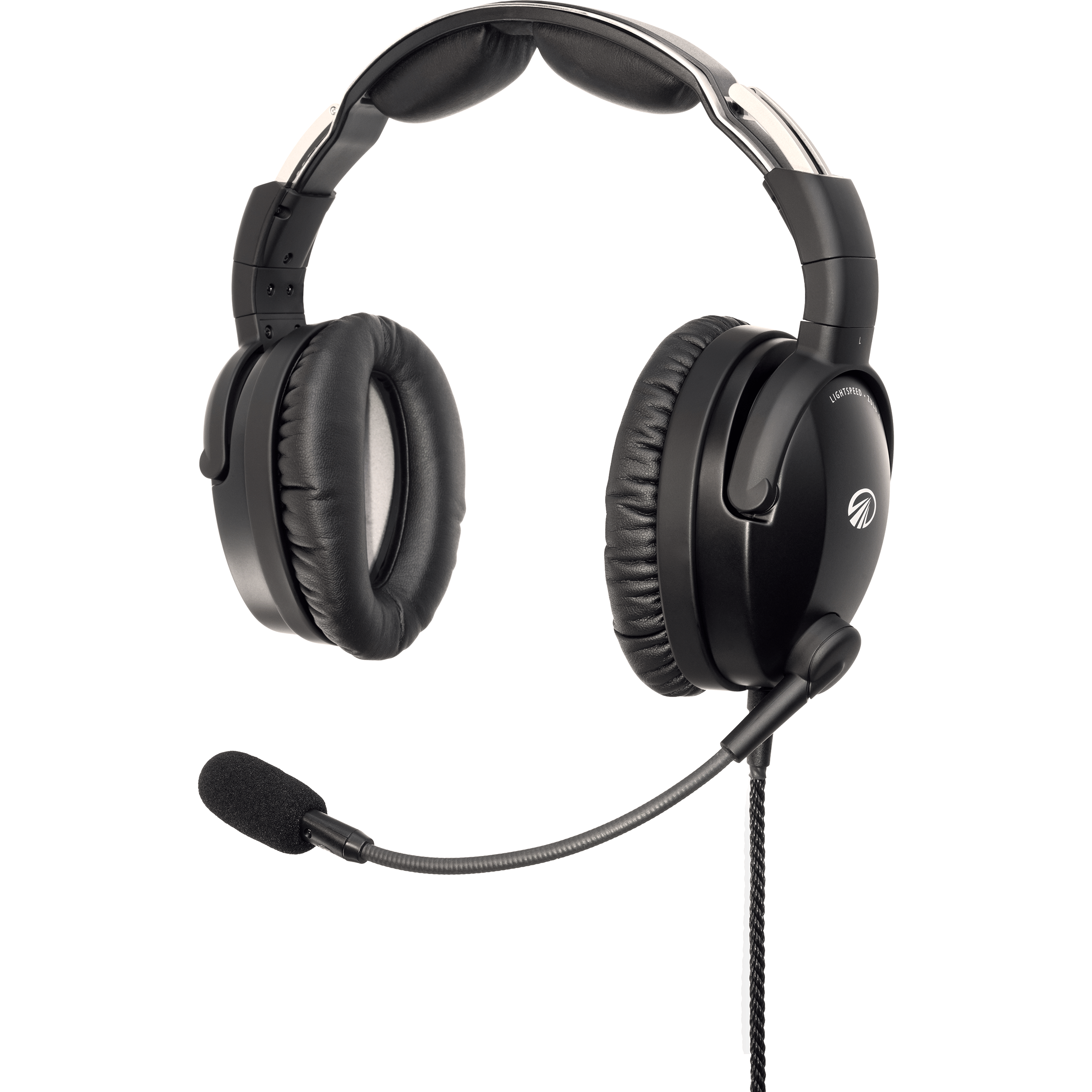 Premium ANR headsetLightspeed Zulu 4 ANR Aviation Headset - Dual GA PlugCheck current availability on Amazon (paid link)
 Premium headsetBose A30 Bluetooth Aviation Headset - Dual PlugCheck current availability on Amazon (paid link)
The First Day Back at the Training Center
He gets to the training center a week before recurrent with a cup of coffee, a schedule in one hand, and a stack of notes in the other. The trip dropped cleanly out of his monthly line, the hotel is close enough that he can hear the early traffic outside, and his week now belongs to the sim room, the classroom, and whatever the evaluator wants to see at the end.
That's the normal rhythm for a lot of airline pilots. Recurrent training isn't some rare career event, it's part of the operating cycle, and in major airline systems it's built to preserve proficiency in abnormal procedures, upset recovery, and line-oriented flying, not just to satisfy paperwork. The structure is usually multi-day, with ground training, simulator work, and a check item waiting somewhere ahead, and the workload can be large enough that one scheduling model described 2,891 training instances as the minimum assigned training needed to maintain qualifications, with an optimized solution assigning 3,110 and saving about 844 training days versus the manual method perpustakaan.poltekkes-malang.ac.id.
Practical rule: if recurrent feels like a one-day checkout, the program is probably being oversimplified in your head.
The new hire who understands that from the start usually walks in calmer. He knows why the week is blocked off, why the study binder matters, and why the sim instructor keeps talking about the same handful of threats, because those are the items the airline wants held in muscle memory when workload rises.
What Recurrent Training Actually Is
Recurrent training is the periodic, regulator-required program that keeps a qualified airline pilot current enough to fly the line. It's not the same thing as a one-time type rating, because the pilot already holds the qualification, the training is there to keep that qualification alive through repetition, review, and checking.
The basic shape of the program
Most airline recurrent programs keep coming back to four pieces. First is ground school or computer-based training, where pilots review systems, procedures, performance, weather, and company changes. Second is the simulator session, where normal and abnormal flying gets practiced in a controlled cockpit with the aircraft's automation and failure logic in the loop. Third is LOFT, or line-oriented flight training, which uses realistic route and crew scenarios so the pilot is thinking like a line crewmember instead of a drill student. Fourth is the check ride or line check, the moment where the operator or regulator confirms the pilot still meets the standard to return to routine service.
The FAA also treats “due” as a window, not a single day on the calendar. Under Part 121, airline recurrent training has a three-month eligibility period, made up of the month before the due month, the due month, and the month after it, and if the required recurrent work still isn't complete after that window, the operator must require requalification training before the crewmember returns to revenue service FAA. That matters because a late check isn't just a late check, it can change the pilot's return path.
Why that structure exists
Each piece protects a different layer of proficiency. Ground training keeps procedures fresh, simulator sessions let crews handle failures they can't safely practice in the airplane, LOFT tests judgment and crew coordination, and the check verifies that the standards still hold together under evaluation. The system works because it treats knowledge, coordination, and handling skill as separate things that can drift at different speeds.
For a clear reference on CRM's role in that larger picture, see this internal guide on crew resource management. And for a broader view of where recurrent training is heading, a summary from Typist gives a useful snapshot of the shift from static compliance to living proficiency management.
Ground School and Simulator Work by Aircraft Group
A pilot can walk out of one recurrent event feeling sharp on procedures and still be rusty on system flow, workload sharing, or abnormal decision-making. That is why the FAA ties recurrent ground training to aircraft group and sets minimum programmed hours, because the amount of review a crew needs rises as the airplane becomes more complex.
More complex aircraft get more ground time
Under FAA recurrent training standards, the ground phase includes a knowledge quiz or review and a set amount of programmed instruction. The minimums are 15 hours for Group I reciprocating-powered airplanes, 19 hours for Group I turbopropeller airplanes, and 24 hours for Group II airplanes. Those floors are not arbitrary. They reflect a simple training truth, a crew returning to a more complex aircraft needs more time to refresh systems, review procedures, and rebuild the judgment calls that support line flying.
The ground block usually covers the areas that fade first when flying becomes routine. Systems logic, performance planning, weather decision-making, threats, company revisions, and review quizzes all fit here because they are easier to sort out at a table than under cockpit time pressure. A classroom can slow the pace and let the crew compare modes, limits, and procedures without having to divide attention between flying the aircraft and answering questions.
The same review also exposes where memory is thin. A pilot may remember a procedure in outline, but if the logic behind it is not fresh, the first abnormal event can create hesitation. That is why the ground phase and the sim phase belong together, one rebuilds the knowledge base, the other shows whether that knowledge still holds when the workload rises.
Simulator time is where the paper becomes behavior
A good simulator session does not stop at checklist recall. It checks whether the crew can stabilize the airplane, divide duties, and keep the problem under control without letting the cockpit fill up with confusion.
The simulator exposes what a classroom cannot. If a pilot knows the memory item but cannot manage the workload, recurrent has already found a useful gap.
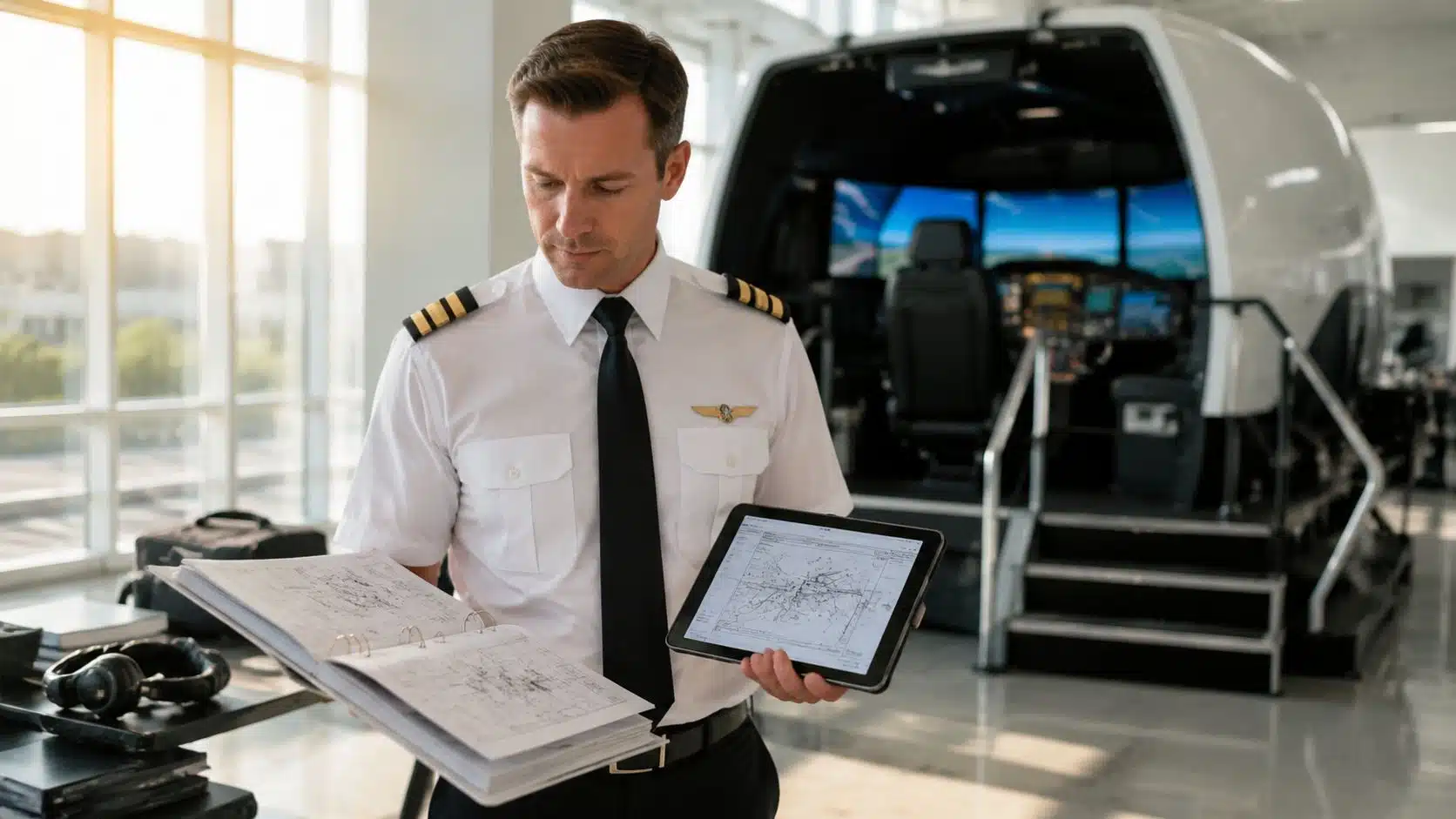
The training center setting matters because it shows how the classroom and device work fit into one progression instead of feeling like separate chores. A simulator training center overview helps make that relationship easier to see, especially for pilots who are trying to understand why the ground hours are part of the same proficiency system as the sim sessions. The hour count is not just a paperwork target. It is a measure of how much preparation the aircraft group needs before the crew goes back to line work.
How Cycles Differ by Region and Operator
A pilot can be current in one system and on a different clock in another. That is the part many new first officers miss at the start. They assume recurrent training works the same everywhere, then find out the cadence changes with the regulator, the operator's manual, and the kind of flying the airline does.
| Region | Simulator Check | Line/Prof. Check | Other Required Recurrent |
|---|---|---|---|
| United States, FAA Part 121 | Simulator checking is typically on a 6- or 12-month cycle | Annual line check is part of the standard recurrent structure | Recurrent ground training under FAA Part 121.427, with programmed hours tied to aircraft group |
| Europe, EASA | Operator Proficiency Check every 6 months | Licence Proficiency Check every 12 months | Annual CRM training and annual emergency and safety equipment training EASA overview |
| Canada, Transport Canada | Passenger-carrying currency includes 5 takeoffs and 5 landings in the same category and class within every 6-month period | Biennial recurrent activity every 2 years | Approved recurrent activity can be a flight review, safety seminar, approved recurrent training, or the self-paced study program updated each year Transport Canada |
The practical difference for a pilot
In the U.S. airline environment, the rhythm is usually built around ground training, simulator events, and the annual line check. That structure keeps the pilot moving through the same core blocks, but each block serves a different purpose. The classroom refreshes rules and procedures, the simulator shows whether those procedures still hold under workload, and the line check confirms they translate back to normal operations.
Europe uses a tighter check cycle, with recurring simulator and licence checks paired with annual non-technical modules. That matters because crew skills do not decay on a neat calendar boundary, they fade in pieces. A pilot may still remember the broad flow of a maneuver while losing sharpness in coordination, automation management, or the timing of a memory action. The recurrent structure is built to catch those edges before they become habits.
Canada adds a visible currency gate for passenger carriage, then layers on separate recurrent activity. That extra step is easy to misunderstand. It is not just a paperwork exercise, it is a reminder that recent takeoffs and landings, plus formal recurrent activity, are both part of staying ready to carry passengers.
If you want to see how that logic shows up in another recurring requirement pilots track outside airline recurrent cycles, the same idea appears in IFR currency requirements. Recent use, not just elapsed time, is what keeps a pilot honest about current skill.
The practical takeaway is simple. Choosing a carrier also means choosing its training tempo, and that tempo changes how often you will be in the simulator, how far ahead you need to study, and how much line time gets set aside for recurrent work.
Why the Intervals Are Picked This Way
The six-month and 12-month cycles aren't arbitrary administrative habits. They line up with what decays in the cockpit, and the skill-retention evidence shows why airlines don't like to let recurrent stretch too far.
What actually fades
A study of airline flight crews compared performance at 6 months and 12 months after training and found that both normal and emergency maneuvers decayed significantly more by the 12-month point than by 6 months. The authors concluded that the results support a six-month training schedule for better retention of knowledge and skill SAGE study. That's the core reason interval length matters. Calendar time isn't the issue by itself, skill decay is.
The biggest risk isn't that a pilot forgets everything. It's that the sharp edges dull first. Emergency tasks, non-briefed maneuvers, and automation management can lose precision while normal routine still looks fine, which is exactly why a pilot can feel comfortable on the line and still benefit from recurrent review.
Why the model is changing
Modern guidance is pushing recurrent training away from a single annual event and toward continuous proficiency management. ICAO's continuous pilot-training material emphasizes ongoing competency tracking, and current industry direction is increasingly evidence-based rather than one-size-fits-all. That's a real shift in philosophy. Instead of asking only whether the pilot showed up for the yearly event, operators are starting to ask which skills need earlier refresh, which scenarios should return more often, and how to use data to target the weak spots.
Best framing: recurrent training is no longer just a date on a calendar, it's a schedule built around what people actually forget.
For pilots who also fly outside airline Part 121, this internal guide on IFR currency requirements helps show how the same logic appears in other flying contexts, where recency and proficiency are linked instead of being treated as separate ideas.
A Sample 12-Month Recurrent Timeline
A recurrent year usually looks tidy on a planner and busy in real life. From the outside it can read like a short sequence of events. Inside the training center, it feels more like a concentrated block of study, evaluation, and reset before the crew goes back to the line.
A typical airline rhythm
Most programs start with ground school or CBT. That is where the pilot reviews procedure changes, system updates, and any items that have shifted since the last cycle. After that comes the simulator block, where the crew works through normal departures and arrivals, abnormal procedures, and at least one LOFT-style scenario. In that last part, cockpit coordination matters as much as aircraft handling, because the simulator is testing how the crew manages the flight together, not just whether one pilot can fly the profile.
Near the end comes the check event, often a line check or proficiency check. After that, there is usually administrative closeout and a return to line flying. For some crews, especially captains and many EASA operators, the year can include two simulator visits per year rather than one. That changes the feel of the cycle. The pilot is not preparing once and putting training out of mind, but keeping a second training block in view while the line schedule keeps moving.
What a pilot should mentally map onto the year
- Early cycle: review the material, sort out records, and mark what has changed since the last event.
- Middle block: run normal and abnormal profiles until callouts, flows, and decision points feel familiar again.
- End block: treat the line check or proficiency event as a crew standard check, not a memory test.
- After release: let the first line legs reinforce the training, because that is where the habits settle and stay honest.
A solid recurrent year also leaves room to recover between training days. That is one reason the event is usually spread over multiple days. The operator wants a pilot who is rested enough to learn, show, and retain the material, not one who is only trying to get through the slot.
Cost, Scheduling, and the Pilot's Reality
The airline pays for recurrent training in more ways than one. Training itself costs money, but the operational hit is the time a pilot is off the line while the trip disappears from the roster and another crewmember has to cover the flying.
What the pilot feels on the schedule
A recurrent week breaks the normal line rhythm. The pairings around it get reshuffled, hotel nights replace cockpit legs, and the calendar starts to look like a training event instead of a flight sequence. For the pilot, that can mean training pay, per diem, and the usual logistical churn that comes with being displaced from line flying for several days.
The operator feels the same week differently. It sees a crew member temporarily removed from production, simulator capacity allocated, instructors scheduled, and compliance deadlines kept inside the acceptable window. That's why the cadence itself becomes a strategic decision, not just a regulatory one. The airline is balancing proficiency decay against staffing pressure and fleet utilization.
Why good scheduling matters
A well-run recurrent program protects the line from surprise absences. If the training department tracks windows, books simulators early, and keeps the crew informed, the airline avoids last-minute conflicts and the pilot arrives with less stress and more bandwidth to learn.
Good recurrent scheduling is invisible when it works. If the pilot only notices the chaos, the training system probably got too close to the deadline.
That's also why many pilots treat recurrent preparation like a roster problem as much as a study problem. The better the coordination, the less likely the event becomes a scramble at the end of the month.
How to Prepare and Where a Training Partner Can Help
The best recurrent prep starts before the study packet starts feeling heavy. Review recent aircraft incidents, brush up on systems and abnormal procedures, rehearse automation scenarios in your head, and show up rested enough that your sim brain isn't already tired before the first briefing begins.

A good way to make that study stick is to turn it into a sequence you can hold onto. If you like structured learning, Ivory Mind's AI prompt guide is a useful model for how pilots can organize notes, questions, and recall cues before a check.
Practical habits that help
- Review recent events: read the operator bulletins, incident summaries, and fleet updates that matter to your aircraft.
- Rebuild systems memory: don't just read the checklist, explain the why behind each action out loud.
- Practice decision points: mentally run through automation surprises, weather deviations, and rejected takeoffs.
- Arrive rested: a tired pilot learns slower, misses cues faster, and needs more resets in the sim.
In the early pipeline, a strong flight school or simulator provider can help build the habits recurrent assumes already exist. One-on-one instruction, a well-maintained fleet, and an in-house simulator make it easier to develop instrument, commercial, and multi-engine automaticity before airline training ever starts.
If you're serious about staying ahead of your next recurrent cycle, DuBois Aviation can help you build the manual flying, instrument discipline, and cockpit habits that make airline training less stressful. Visit DuBois Aviation to explore training at Chino Airport and see how that foundation supports a stronger return to the simulator.