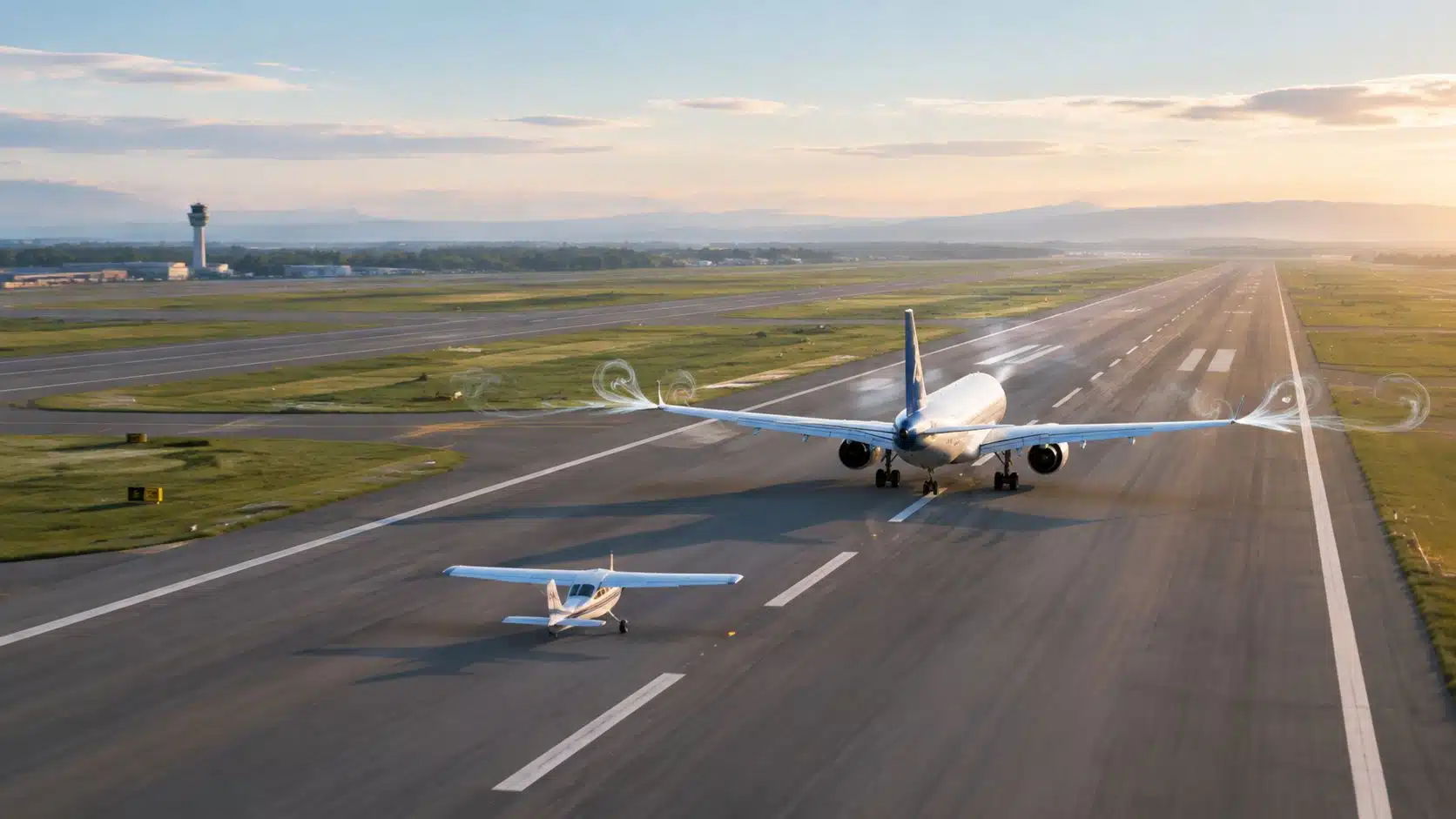
A light aircraft following a heavy aircraft should generally wait at least 2 minutes for a same-direction departure, while certain opposite-direction or intersection departures require 3 minutes. On approach, pilots should stay above the larger aircraft's flight path and land beyond its touchdown point, because wake turbulence can drift into the runway environment.
A student pilot may notice only a few seconds of traffic on final, yet those seconds can place a Cessna 172 behind a much larger aircraft at exactly the wrong point in the pattern. Wake turbulence is the spinning air trailing behind an aircraft in flight, generated by lift-producing wingtip vortices. It's most dangerous during takeoff and landing when the generating aircraft is heavy, clean, and slow.
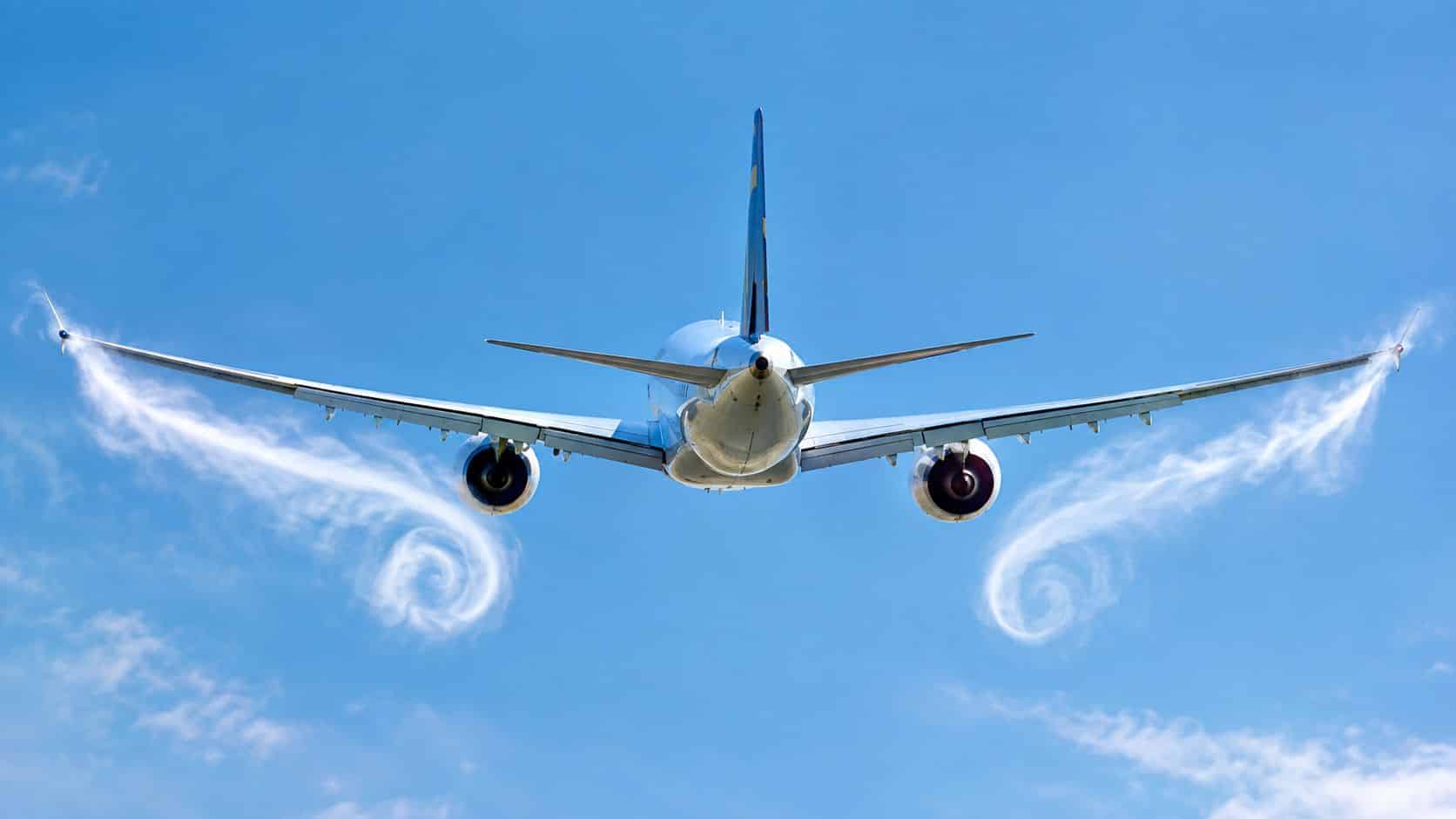
At a busy towered airport such as Chino, California, the risk isn't limited to a jet on the same runway. Pattern traffic, piston twins, training helicopters, parallel runway operations, and crossing flight paths can all create geometry that deserves a deliberate decision. Effective wake turbulence avoidance means understanding where the vortices form, how wind moves them, what separation ATC is applying, and when a pilot should delay or go around.
Table of Contents
- What Wake Turbulence Is and Why Pilots Care
- What Makes Wake Vortices Strong or Long-Lasting
- Regulations and ATC Separation Standards
- Cockpit Technique for Takeoff Approach and Landing
- Runway Geometry Wind and Local Field Considerations
- Helicopters Mixed Traffic and Decision Making
- Training Exercises and Phraseology for Wake Avoidance
- Wake Turbulence Pilot Checklist and Next Steps
What Wake Turbulence Is and Why Pilots Care
After a rough approach, a pilot's first question is often simple: what did the aircraft just fly through? The answer may be ordinary atmospheric turbulence, but a sudden roll, yaw, or sharp control displacement behind larger traffic should raise concern about wake turbulence.
A lifting wing creates higher pressure below the wing and lower pressure above it. Air spills around each wingtip, forming two counter-rotating vortices that trail behind, sink, and drift outward. Those vortices are the core hazard, rather than a vague disturbance left somewhere behind the aircraft.
Why the runway environment matters
The FAA treats wake turbulence as a serious operational hazard because the rolling force can overwhelm a smaller aircraft's available control authority. The danger becomes more severe close to the ground, where a pilot has little time or altitude to recognize an upset and recover.
The historical record shows why the subject belongs in every pilot's practical training. A NASA review of selected U.S. accident data found that wake turbulence accounted for 7% of the accidents it selected (NASA's wake turbulence study). The same source describes an FAA/NTSB training document reporting that, from 1964 to 1978, the NTSB cited wake vortices in 225 of about 68,000 U.S. aviation accidents, including landing, takeoff, and in-flight accidents.
Landing deserves particular attention. About two-thirds of those 225 vortex-related accidents occurred during landing, and three-quarters of those landing accidents involved a trailing aircraft on the same runway, according to the cited FAA analysis (NASA's wake turbulence study).
Practical rule: A wake warning is not merely a note about a bumpy ride. It's a cue to change the aircraft's position, timing, or runway plan.
At a field with mixed operations, a trainer may roll out behind a transport aircraft, cross beneath a larger aircraft's departure path, or approach beside helicopter traffic. The aircraft type, runway relationship, wind, and timing all matter. A pilot who sees wake turbulence as a moving volume of air makes better decisions than one who treats it as a fixed line on the runway.
What Makes Wake Vortices Strong or Long-Lasting
The strongest wake comes from an aircraft that must generate substantial lift while flying slowly. That's why the useful memory aid remains heavy, clean, and slow. A heavy aircraft needs more lift, low speed increases the angle of attack, and a clean configuration concentrates the lift distribution near the wingtips.
Configuration can confuse new pilots. Extending flaps and lowering the landing gear change how the wing carries its load and generally reduce the concentration of the wingtip vortices compared with a clean wing. That doesn't make an approach behind a large aircraft safe by default. The generating aircraft may still be heavy and slow, and its wake may remain a serious threat near the runway.
The main variables
Wind controls where the wake goes, not whether the generating aircraft creates it. A calm atmosphere can leave vortices near the flight path, while a crosswind can move one vortex toward a parallel runway. A light quartering tailwind deserves special caution because it can move wake toward the landing area instead of clearing it.
Ground effect adds another complication. Near touchdown, vortices can remain close to the runway surface rather than moving away as a pilot might expect. That's one reason a following aircraft shouldn't land at the same point because the preceding aircraft has already touched down.
| Factor | Effect on Vortex Strength | Effect on Persistence |
|---|---|---|
| Weight | A heavier generating aircraft produces stronger vortices because it must create more lift. | Stronger vortices can remain operationally significant longer. |
| Speed | Lower speed concentrates lift and increases vortex intensity. | Slow, low-altitude operations create a longer practical hazard window. |
| Configuration | A clean aircraft concentrates the wake more than an aircraft using approach configuration. | A concentrated wake can remain hazardous along the following aircraft's path. |
| Wind | Wind doesn't create the vortex, but it changes its position relative to the runway. | Calm or unfavorable wind can leave wake near the approach or departure corridor. |
| Ground effect | Near the surface, the wake may remain close to the runway rather than dispersing as expected. | The touchdown zone can stay affected after the generating aircraft lands. |
The FAA's operating guidance focuses on this cause and effect. Pilots should visualize where the larger aircraft was flying, then avoid the volume below and behind that path rather than relying on distance alone (FAA wake turbulence guidance).
Regulations and ATC Separation Standards
At a busy towered airport such as Chino, a clearance may sound routine while the runway geometry creates a different wake problem. Separation standards give ATC a baseline, but they do not replace the pilot's view of which flight path will cross, trail, or remain below another aircraft.
ICAO applies wake minima when an aircraft follows another at the same altitude or less than 1,000 feet below, uses the same runway or parallel runways separated by less than 2,500 feet, or crosses behind another aircraft within that vertical band (ICAO wake turbulence separation material).
ICAO's broad weight categories are:
- Heavy: Maximum certificated takeoff mass of 136,000 kilograms or more.
- Medium: More than 7,000 kilograms and less than 136,000 kilograms.
- Light: 7,000 kilograms or less.
These categories set the starting point for spacing decisions. They do not describe every risk at the runway. A controller may add spacing when the expected wake path, wind, runway layout, or crossing traffic raises concern. The pilot can also request more time or a different sequence when the assigned spacing does not fit the geometry.
A useful cockpit question is, “Where will the wake be when I reach that point?” At Chino, that may mean considering parallel runway relationships, an intersecting departure, or a helicopter operating near the pattern. A helicopter's wake can be especially relevant when it is heavy, hovering, climbing, or crossing near the runway environment. The category on the clearance does not show the complete picture.
Departure timing in plain language
FAA guidance states that, on the same runway or parallel runways separated by less than 2,500 feet, a following aircraft behind a heavy aircraft generally waits 2 minutes when departing in the same direction. The interval becomes 3 minutes for an opposite-direction departure or an intersection departure. When projected flight paths cross on intersecting runways, the FAA also calls for 2 minutes (FAA wake turbulence departure guidance).
| Following Aircraft | Heavy aircraft ahead | Super aircraft ahead | Large aircraft ahead | Small aircraft ahead |
|---|---|---|---|---|
| Light or small aircraft | Apply the published wake timing or distance, then add pilot judgment for wind and geometry. | Expect the greatest wake concern and ask for additional spacing if needed. | Maintain the assigned separation and avoid the larger aircraft's flight path. | Normal traffic spacing may be appropriate, but all lifting aircraft create some wake. |
| Medium aircraft | Use the applicable heavy-behind-medium separation standard and remain alert to drift. | Expect increased spacing where published. | Follow the assigned clearance and monitor the flight path. | Apply normal operating procedures. |
| Heavy aircraft | Follow the clearance and published category requirements. | Use the applicable super-category standard. | Use the assigned spacing and remain aware of crossing geometry. | Standard traffic sequencing normally applies. |
Local procedures, aircraft categories, runway relationships, and published approach information can change the required spacing. If a clearance places a light aircraft behind a heavy aircraft with little margin, state the concern plainly: “Cessna one-two-three request additional spacing for wake turbulence.”
Cockpit Technique for Takeoff Approach and Landing
Spacing helps, but positioning is the pilot's practical defense. The FAA's core technique is simple to remember: depart before the preceding aircraft's rotation point, stay above its climb or approach path, and land beyond its touchdown point (FAA wake turbulence guidance).
Departing behind larger traffic
Before takeoff, identify where the preceding aircraft rotated. If it lifted off near the midpoint of the runway, a following light aircraft should plan to rotate before that point, not after it. The aircraft should then climb above the preceding aircraft's departure path and continue climbing until clear.
That technique protects against the vortices generated from rotation onward. If the preceding aircraft is still on the runway, the following pilot should also consider jet blast and the possibility that the wake source hasn't yet departed the relevant area.
Approaching and landing behind larger traffic
On final, the pilot should remain at or above the preceding aircraft's glide path. The threshold crossing should occur above the larger aircraft's approach path, followed by touchdown beyond the point where that aircraft landed.
Aiming for the same touchdown point is a common error. The runway may look clear, but the wake can still be present where the first aircraft's wings were producing lift. If the required touchdown point would force an aircraft to land short of the preceding aircraft's touchdown location, the correct choice is a go-around or a request for additional spacing.
| Flight Phase | Technique | What to Look or Listen For |
|---|---|---|
| Takeoff behind larger traffic | Rotate before the preceding aircraft's rotation point and climb above its path. | Note where the aircraft lifted off and whether tower has issued a wake warning. |
| Final approach | Stay above the preceding aircraft's glide path and remain upwind when practical. | Track the larger aircraft's approach angle, touchdown location, and wind drift. |
| Landing | Touch down beyond the preceding aircraft's touchdown point. | If the point cannot be reached safely, go around. |
| Crossing behind traffic | Cross above the larger aircraft's flight path and avoid the area below and behind it. | Watch the aircraft's direction, altitude, and projected crossing point. |
Before committing to the runway: If the intended rotation or touchdown point can't be achieved with a safe margin, the pilot should delay, request a different sequence, or go around.
Runway Geometry Wind and Local Field Considerations
A wake vortex doesn't stay painted over the centerline. It sinks and drifts with the wind, while the two vortices spread outward from the aircraft's wingtips. That means a pilot can avoid the preceding aircraft's exact track and still enter the wake if the runway geometry and wind place the vortex across the intended path.
At Chino Airport, KCNO, parallel runway operations create side-by-side considerations, while the additional runway oriented approximately 3/21 can change the geometry of departures and arrivals. A pilot using one runway must still consider traffic on a nearby parallel or crossing runway, particularly when a heavy aircraft's flight path crosses the smaller aircraft's planned departure or approach path.
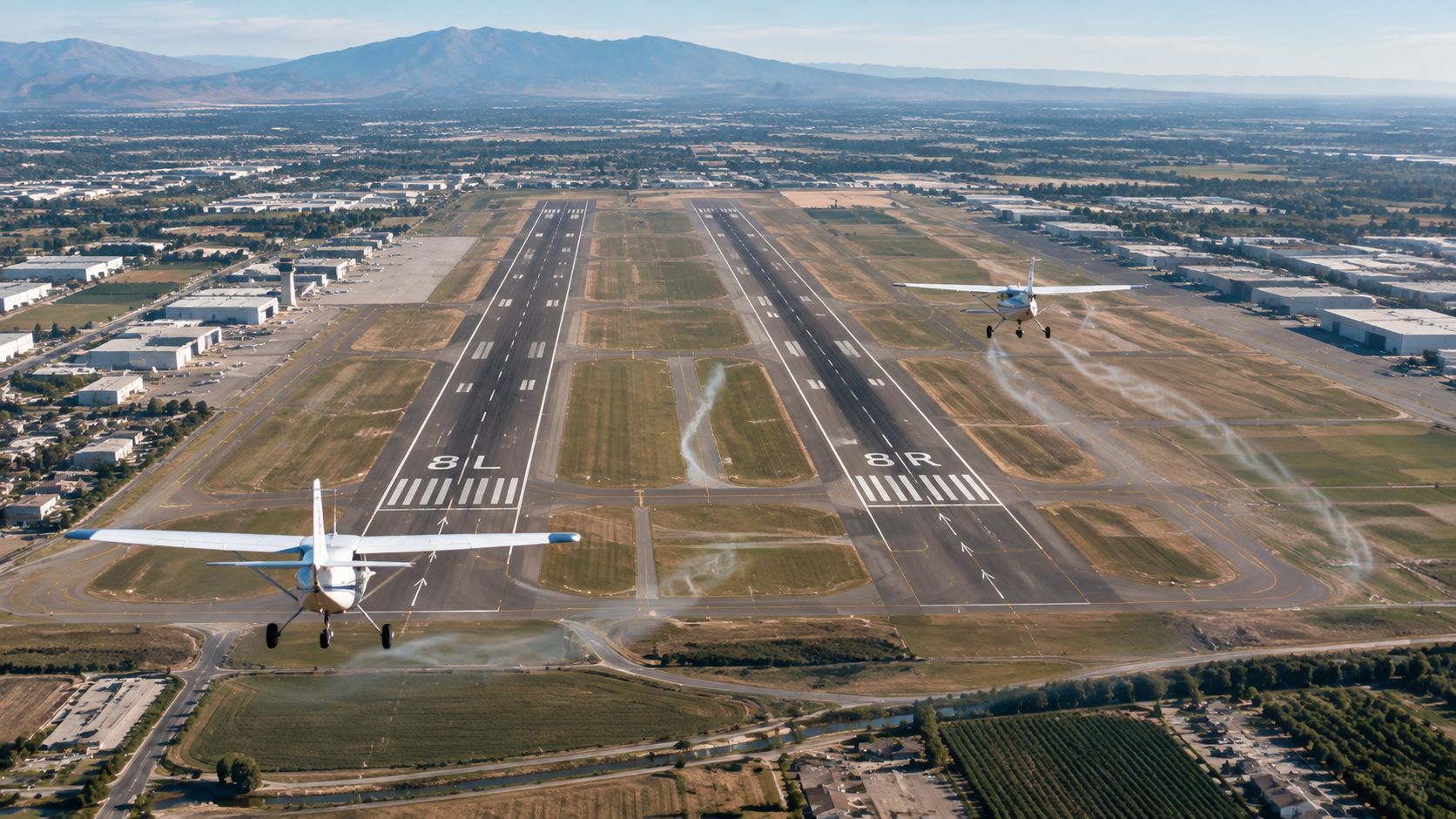
Wind changes the answer
- Headwind: The wake may remain closer to the generating aircraft's ground track, so the pilot should still respect the vertical and longitudinal separation.
- Crosswind: One vortex may drift toward a parallel runway, making side-by-side operations more complex.
- Calm conditions: The wake may linger near the runway environment rather than being carried away.
- Quartering tailwind: The wake can move toward the touchdown area, creating an especially poor setup for a following aircraft.
Before departure, a pilot should calculate the expected wind relationship to the runway and review the airport diagram. A practical crosswind component calculation helps the pilot understand the wind's runway-relative direction, but it doesn't replace a wake briefing.
ATC may stagger departures, assign diverging headings, extend a downwind, or change the runway sequence. Those instructions can protect the geometry, yet the pilot remains responsible for recognizing an unsafe setup. If wake is observed or suspected on final, the safest response is to discontinue the approach, advise ATC, and request revised spacing.
Helicopters Mixed Traffic and Decision Making
Helicopter wake needs separate attention because rotor downwash behaves differently from fixed-wing wingtip vortices. FAA guidance warns that helicopter wake vortices may be significantly stronger than those from fixed-wing aircraft of the same weight and advises pilots to avoid flying beneath helicopter flight paths, as described in FAA helicopter and aircraft wake guidance.
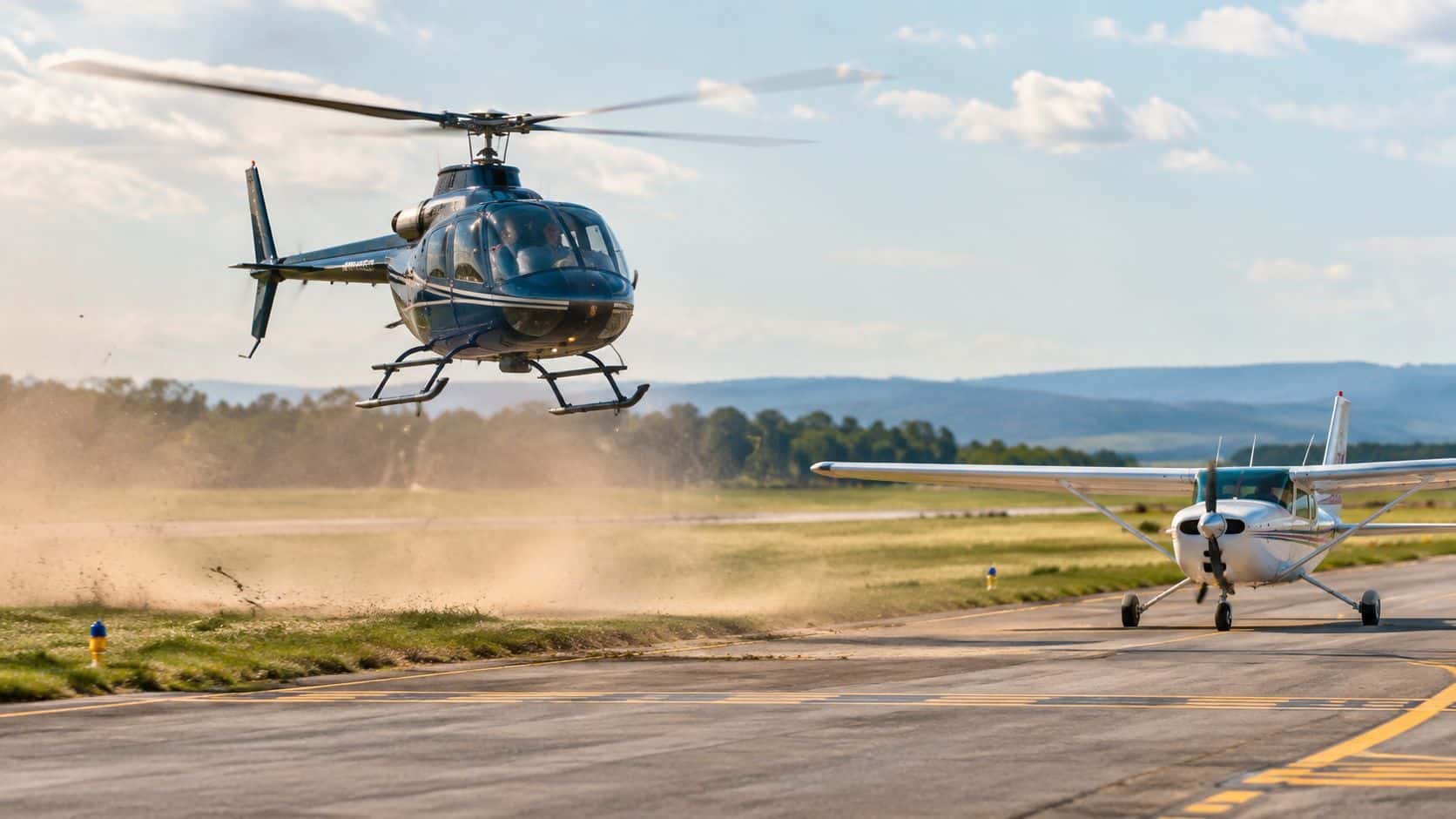
A hovering helicopter pushes air downward and outward near the surface. That outwash can move dust, shift a light aircraft, or disturb the air beside the helicopter even while it appears motionless. A helicopter moving slowly can also leave a strong wake along its recent path, so the aircraft's ground track matters more than its speed alone.
Two airport decisions
A Cessna 172 holds short while an Airbus H125 lifts off. Dust moves across the pavement as the helicopter departs. The student keeps the airplane stopped, watches the helicopter's path, and asks tower to confirm that the runway and departure corridor are clear. The safe decision follows the wake's expected geometry, not the helicopter's smaller appearance.
A light twin receives a takeoff clearance behind a heavy twin on a crossing runway. Runway intersection alone does not answer the question. The pilot checks whether the projected flight paths could cross within the wake-sensitive altitude band. If they might, the pilot can delay, request another runway, or ask for more spacing.
At Chino, where training traffic, helicopters, skydiving, banner towing, and jets may share a busy airport environment, use the traffic call to build a three-dimensional picture. A useful collision avoidance technique is to picture where the other aircraft's disturbed air will move, then compare that path with your planned climb, turn, or approach. That geometry supports a clearer decision than relying on aircraft category or runway labels alone.
Training Exercises and Phraseology for Wake Avoidance
Wake awareness improves when students rehearse geometry before the airplane moves. A simulator or briefing room can turn an invisible hazard into a visible planning problem.
Four repeatable drills
Stationary vortex planning: The trainee holds a 172 short while a mock heavy aircraft rotates several miles ahead on the same runway. The trainee marks the preceding aircraft's rotation and touchdown areas, then chooses whether to depart, wait, or request a revised sequence.
Parallel-runway sidestep: At a safe training altitude, the instructor introduces a wake concern from heavy traffic on a parallel final. The trainee identifies the upwind side, maintains appropriate vertical separation, and changes the path only with adequate clearance and coordination.
Crosswind departure briefing: With traffic departing on a nearby parallel runway, the trainee explains the planned rotation point, climb path, and escape option before entering the runway. The exercise tests whether the student is thinking about projected paths rather than runway names alone.
Radio decision practice: The trainee practices concise requests such as:
- “Cessna one-two-three request delay for wake separation.”
- “Request extend downwind for sequencing.”
- “Request 2-mile final for wake avoidance.”
The exact request may change with the traffic picture, but the principle stays the same. A pilot should communicate early, keep the cockpit sterile during the critical phase, and avoid rushing because a clearance has already been issued.
Training should also incorporate threat and error management. A student who identifies the heavy aircraft, wind direction, runway relationship, and go-around trigger before entering the pattern has more mental capacity available when the traffic picture changes.
CFI cue: “If in doubt, add a mile.” More distance, more time, and a clear radio request are usually better than trying to salvage a tight sequence.
Wake Turbulence Pilot Checklist and Next Steps
A short briefing can prevent a long recovery problem. Before taxi, the pilot should identify the runway, the expected traffic sequence, and the likely direction in which wake will drift.
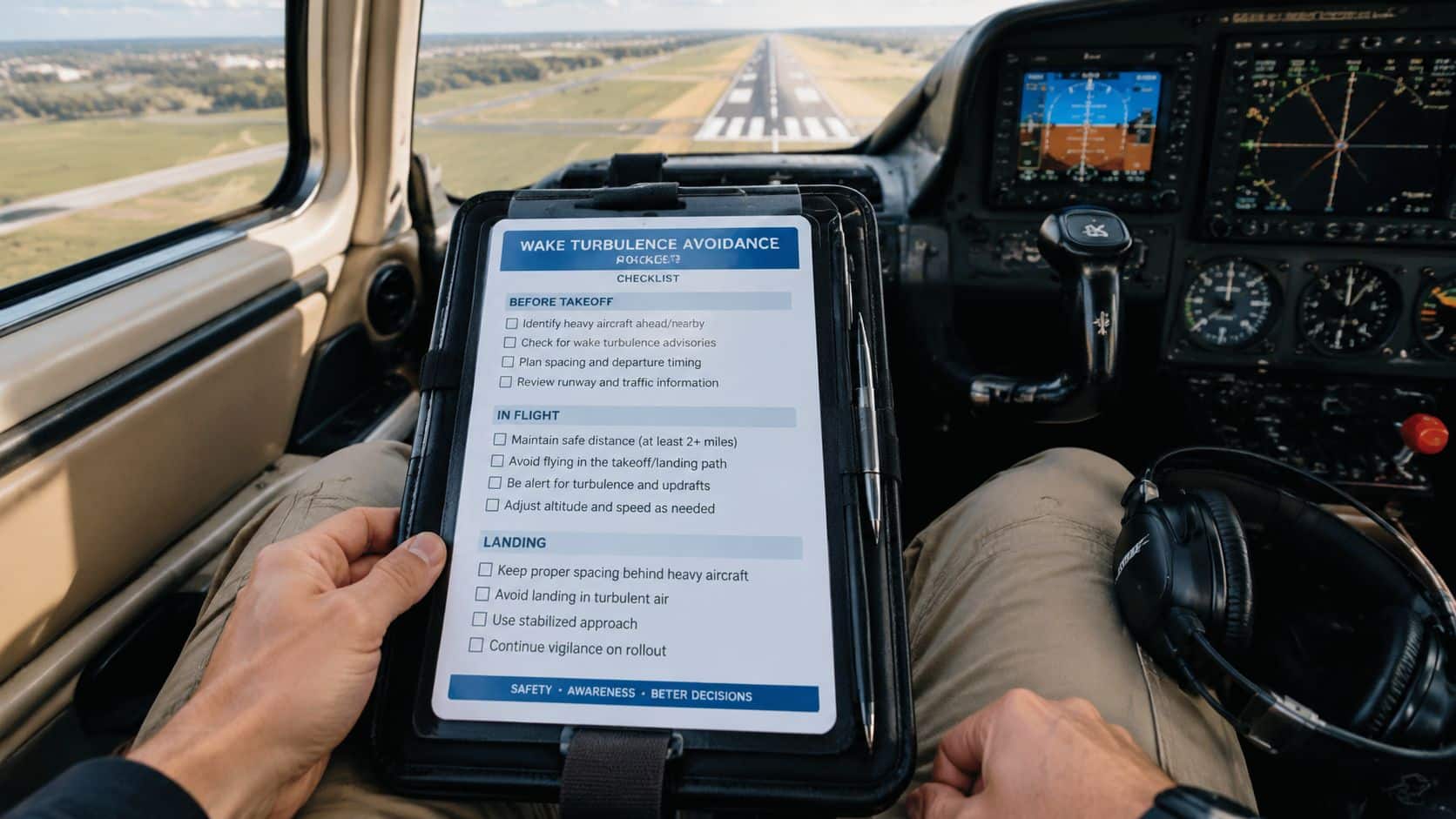
Kneeboard checklist
Before departure
- Review the ATIS: Note runway changes, heavy or super-category traffic, and unusual helicopter activity.
- Study the geometry: Check parallel and crossing runway relationships.
- Choose an escape plan: Decide which heading, delay, or go-around action would keep the aircraft clear.
- Brief the rotation point: Plan to rotate before the preceding aircraft's rotation point when appropriate.
Before approach
- Identify the wake source: Confirm the preceding aircraft type, runway, and touchdown location.
- Stay above the path: Remain at or above the larger aircraft's approach path.
- Plan the touchdown: Land beyond the preceding aircraft's touchdown point, or discontinue the approach.
- Monitor wind: Reassess if the wind becomes calm, crosswind, or quartering tailwind.
- Set the trigger: Brief the go-around before short final.
Frequently asked questions
How long can wake vortices linger?
There isn't one universal duration. Persistence depends on aircraft characteristics, altitude, wind, and atmospheric stability. Calm conditions can leave wake near the runway environment longer, so pilots should use the published separation and their own geometry-based judgment rather than relying on a fixed time rule.
Do helicopters produce wake turbulence?
Yes. Helicopters produce rotor wake, and the FAA warns that it can be significantly stronger than fixed-wing wake from an aircraft of the same weight (FAA helicopter and aircraft wake guidance). Pilots should avoid operating beneath helicopter flight paths and should allow extra space around hovering or low-speed rotorcraft.
What should a pilot do when ATC offers no spacing?
The pilot can request a delay, extended downwind, different runway, or additional spacing. If the aircraft is already on final and the planned touchdown point would place it in the preceding aircraft's wake, a go-around is the correct decision.
DuBois Aviation can help pilots practice wake management in the KCNO practice area through dual instruction, simulator sessions, and rental checkout training that includes busy Class D operations. Pilots and students can visit DuBois Aviation to ask about course availability, schedule a discovery flight, or arrange focused training for approach, departure, and mixed helicopter traffic decisions.