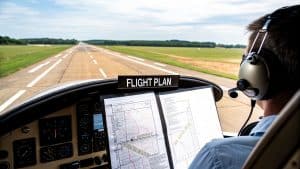
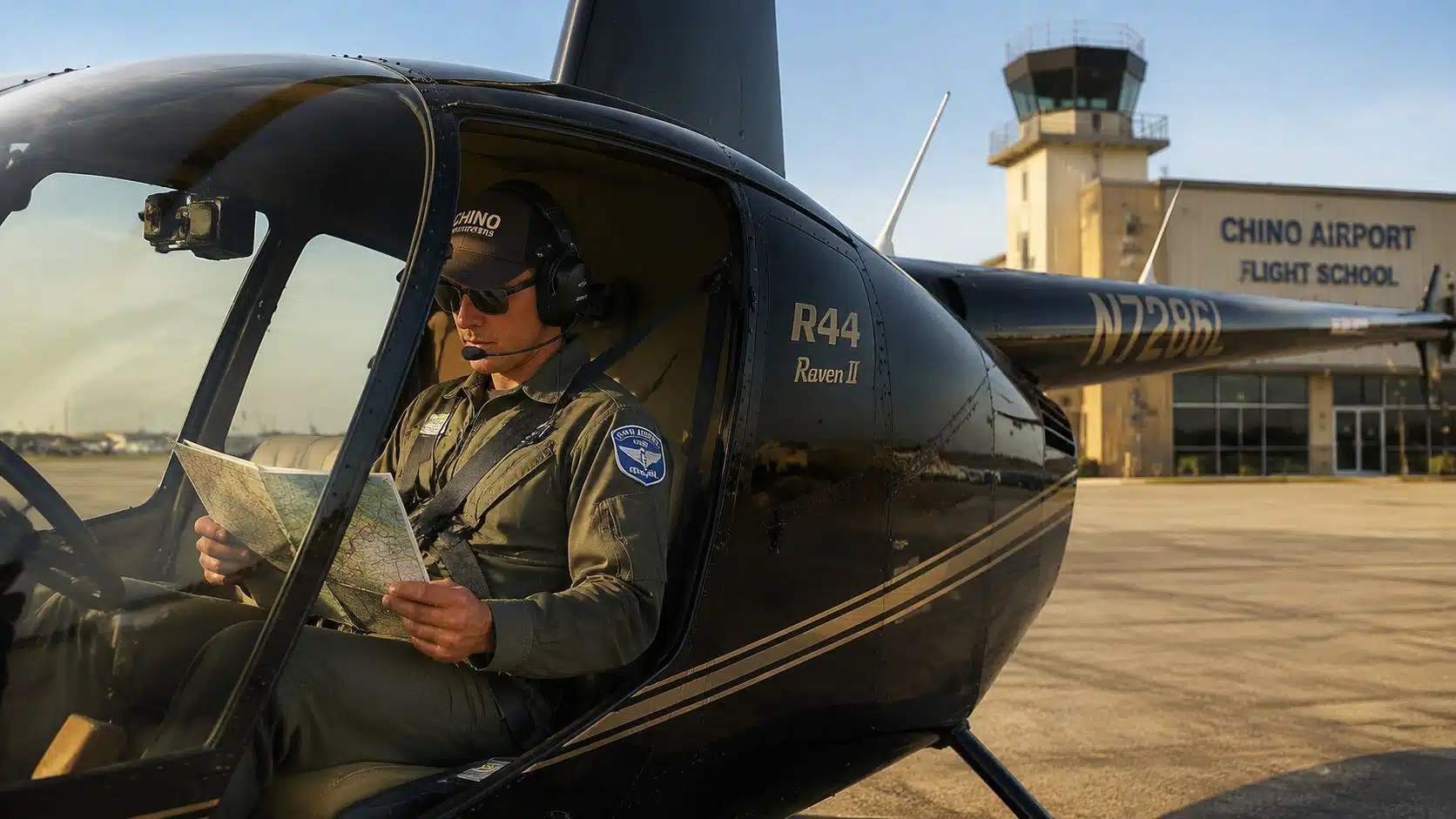
You're probably in one of two places right now. You've watched a Robinson lift into a hover and thought, “I want to do that,” or you've already decided to start and now the questions are getting more practical. Which helicopter should you train in, what does the process look like, how hard is the radio work at a place like Chino, and how do you avoid wasting time or money?
That's the right way to approach helicopter training. The dream matters, but progress comes from treating it like a professional skill from day one. Robinson helicopter training is rewarding, but it's not casual flying. You're learning precise aircraft control, disciplined emergency procedures, and constant traffic awareness, especially in a busy Class D environment like KCNO where radio calls and sequencing are part of the lesson every time the skids leave the ground.
Table of Contents
- Your Roadmap to the Helicopter Pilot Certificate
- First Steps Before You Take Flight
- Your Training Syllabus From Ground School to Checkride
- Mastering Robinson Flight Characteristics and Safety
- Beyond the Checkride Aircraft Ownership and Advanced Ratings
- Start Your Robinson Training at Chino Airport
Your Roadmap to the Helicopter Pilot Certificate
Most future helicopter pilots can remember the first time a takeoff made sense. Not just the sound or the look of it, but the realization that the aircraft wasn't leaping into the air by magic. A trained pilot was balancing pedal, collective, and cyclic inputs with calm precision, staying ahead of the machine and the traffic picture at the same time.
That's the shift that matters. Once you stop seeing helicopter flying as mysterious, the path gets clearer. You start with the basic gatekeepers, eligibility, medical, and aircraft choice. Then you move into ground school, pre-solo control work, emergency procedures, cross-country training, and the checkride. After that, many pilots either keep building ratings or start thinking seriously about ownership, recurrent training, and model-specific transition work.
A good training path feels demanding, but not chaotic. Each lesson should build on the last one. In a busy airport environment, that includes learning to talk on the radio early, learning where to look before every taxi or hover movement, and understanding that safe helicopter operations are built on habits, not talent.
Practical rule: If a school treats radio work, traffic scanning, or emergency procedures as things to “clean up later,” you're not getting the right foundation.
If your goal is the private certificate, the path becomes easier to manage when you break it into stages and commit to steady training. The process is much less intimidating when you can see the next milestone instead of trying to mentally carry the whole journey at once. For a closer look at the certificate itself, the private pilot helicopter license overview is a useful companion to this roadmap.
First Steps Before You Take Flight
The first lesson at Chino rarely starts with the helicopter. It starts on the ramp, headset on, listening to tower, watching fixed-wing traffic roll, and learning how busy the airport gets when you are trying to keep up with a machine that reacts to every small input. Students who prepare for that environment before lesson one usually settle into training faster and waste less time fixing preventable problems.
What to handle before lesson one
Get the administrative items done early. You need to speak and understand English well enough to follow instruction, make radio calls, and complete FAA testing. Get your FAA medical sorted out before you build momentum. A medical issue discovered late can stop training at the worst time, after you have already spent money and started making progress.
Students planning only for a private certificate often start with the medical that fits that goal. Students who may continue into commercial training should talk with an Aviation Medical Examiner early and ask the harder questions up front. It is better to know your limits now than after months of flight time.
Then get realistic about how training will fit your life. Three things matter more than enthusiasm:
- Training frequency: Helicopter control is perishable, especially in the hover. If you train too far apart, the first part of each lesson turns into review.
- Budget: Choose a plan you can sustain. A cheaper hourly rate does not help if interruptions stretch the program and force you to relearn skills.
- Airport environment: Training at a busy towered airport like Chino builds habits that pay off later. You learn to listen, sequence, scan for traffic, and respond to ATC while flying the aircraft, not after the fact.
That last point matters at KCNO. Students here start building radio discipline from the beginning. They hear ground, tower, run-up traffic, fixed-wing pattern calls, and changing instructions while learning basic aircraft control. It adds workload early, but it produces pilots who are less rattled when the airspace gets crowded.
Students who train consistently and arrive prepared usually progress faster than students who let long gaps reset the learning curve.
Choosing between the R22 and R44
Aircraft choice affects comfort, pacing, and cost from the first week. The Robinson R22 and R44 are both proven trainers, but they ask different things from the student.
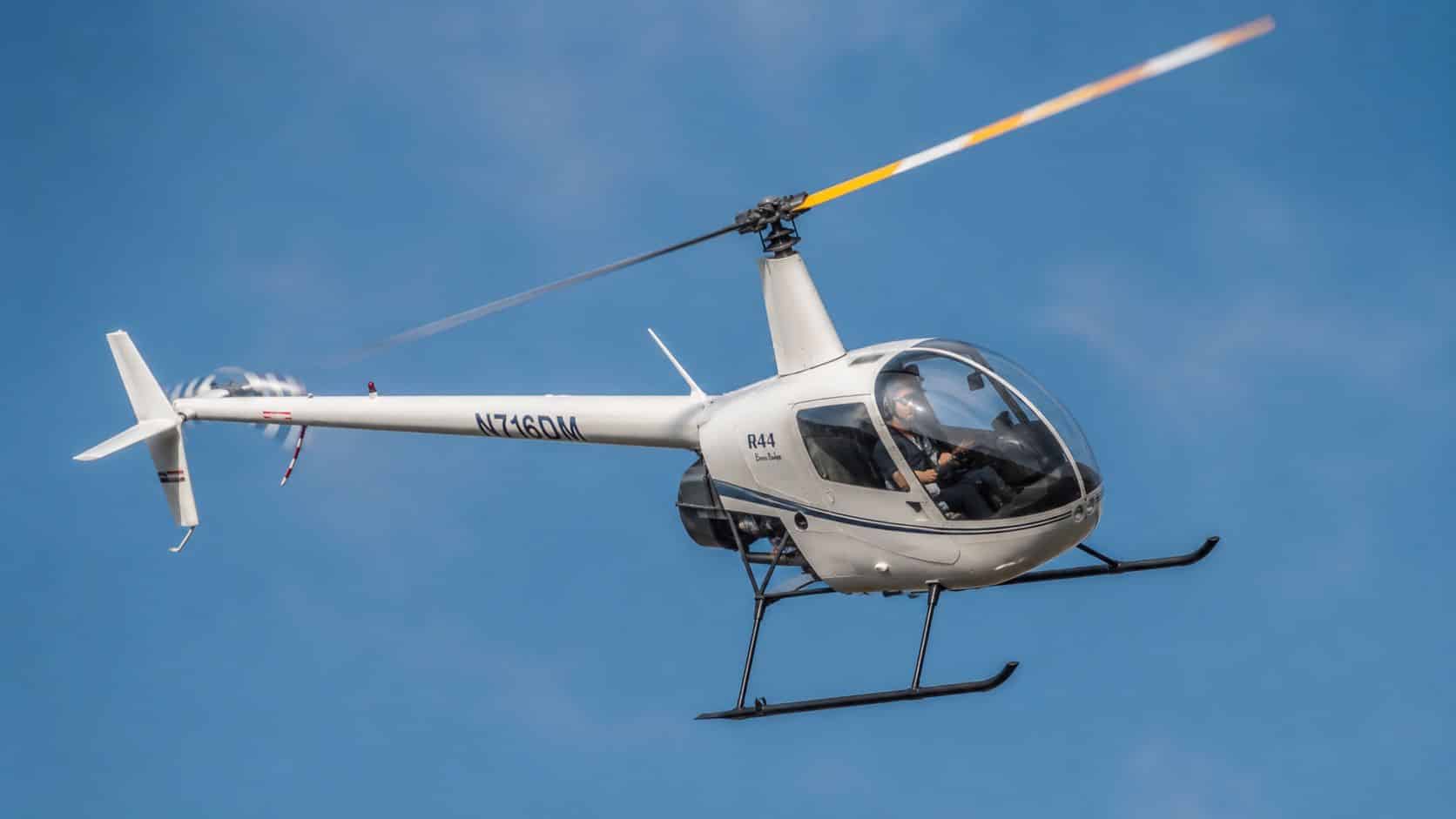
The R22 is light, direct, and honest. It rewards precise control and exposes sloppy technique quickly. For many pilots, that makes it an excellent primary trainer. The R44 gives you more cabin room, more elbow room on long lessons, and a training environment that can feel less physically demanding, especially for larger students or during warm Southern California afternoons.
The official Robinson Pilot Safety Course also uses different pricing by model, with separate fees for the R22, R44, and R66. That matters later in your training path, especially if you plan model-specific transition or recurrent work.
Robinson R22 vs. R44 for Primary Training
| Feature | Robinson R22 | Robinson R44 |
|---|---|---|
| Training role | Classic primary trainer | Common trainer with more cabin room |
| Engine type | Piston-powered | Piston-powered |
| Official Robinson Pilot Safety Course fee | $1,133 | $1,803 |
| Student feel | Demands very precise control inputs | Often feels more accommodating physically |
| Cabin and carrying comfort | More limited | More spacious |
| Best fit | Budget-conscious students who fit the aircraft well and want sharp control discipline | Students who want more space and a broader training platform feel |
Choose based on fit and training consistency, not image.
If you are physically larger, expect longer lesson blocks, or know fatigue affects how well you learn, the R44 may be the better platform. If budget control is the priority and the aircraft fits you well, the R22 is one of the best teachers in helicopter training. At a place like Chino, where you are learning aircraft control and traffic management at the same time, the right aircraft is the one that lets you stay ahead of both.
Your Training Syllabus From Ground School to Checkride
The first phase of training is usually humbling. Students come in expecting forward flight to be the hard part, then discover that a stable hover can feel like balancing on top of a moving ball. That's normal. Helicopter control starts with overcorrection, then gradually settles into smaller, cleaner inputs.
What the early phase really feels like
Ground school gives names and logic to what you'll later feel in the aircraft. You learn aerodynamics, regulations, systems, weather decision-making, and procedures. In Robinson training, this matters because the helicopter responds best when the pilot understands what the rotor system is doing and why the timing of each control input matters.
Then the flight lessons begin. Taxi technique, pickup to hover, hover control, pattern work, takeoffs, approaches, and landings all come early. At a place like Chino, this also means radio calls begin immediately. You're not training in a vacuum. You're learning to fly while listening, sequencing, reading traffic flow, and staying ahead of controller instructions.
The full journey is easier to picture when you can see the milestones in order.
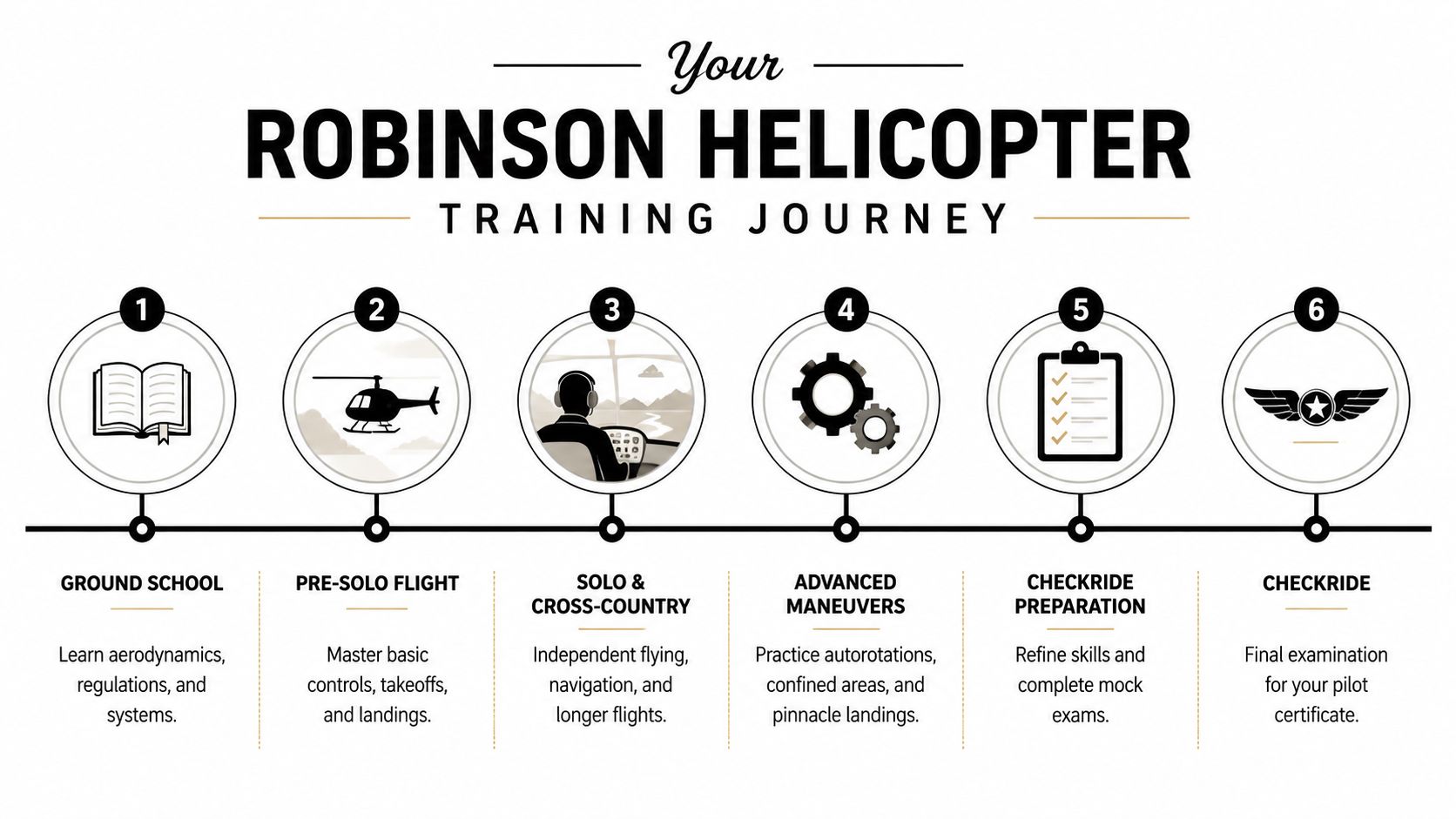
The first solo is where many students finally feel the training click. The aircraft gets lighter, the cockpit gets quieter, and every checklist item suddenly matters more because there's no instructor buffering your timing. A good solo doesn't look dramatic from the ground. It looks controlled, disciplined, and boring in the best possible way.
Building competence in real Southern California flying
Once the basics settle in, the syllabus expands. You'll work on navigation, local procedures, airspace awareness, confined area judgment, emergency work, and cross-country planning. In Southern California, a cross-country lesson is rarely just a matter of drawing a line and following it. You need to think about traffic, handoffs, local landmarks, weather trends, and where the workload rises.
Night flying changes the picture again. Depth perception shifts, lighting becomes a factor, and students learn quickly that neat cockpit organization matters. An introduction to instrument procedures also helps sharpen scan discipline, even for private students who are not pursuing an instrument rating at that moment.
A solid training flow tends to include these milestones:
- Ground knowledge that matches the aircraft: You should understand systems and limitations well enough that cockpit procedures make sense instead of feeling memorized.
- Emergency practice from the beginning: Autorotations, power management, and recovery procedures shouldn't appear late as a surprise topic.
- Cross-country lessons with real workload: Navigation has to include radio work, airspace awareness, and changes to the original plan.
- Checkride-style polish near the end: At this stage, the examiner isn't looking for flair. The examiner wants judgment, consistency, and safe control.
What the cost picture looks like
Money isn't the whole story, but students need a realistic framework. According to the Robinson press article on current training pricing, the average full-time student pursuing a Private Pilot Certificate on a Robinson platform at a major flight school can anticipate costs between $25,488 (FAA minimum hours) and $38,463, and dual instruction rates for the R44 Raven I are standardized at $565 per hour for private, commercial, and CFI training.
Those figures are useful because they frame the difference between legal minimums and what training often requires in practice. Students shouldn't budget for the most optimistic scenario and hope skill arrives on schedule. They should budget for steady, competent progress.
Budget for continuity, not just eligibility. The cheapest plan on paper often becomes the most expensive plan if it leads to training interruptions.
Mastering Robinson Flight Characteristics and Safety
The first time a student lifts into the Chino pattern in a Robinson, two things usually happen at once. The helicopter makes every control input obvious, and the radio never stays quiet for long. That combination is useful. It builds the habit of flying the aircraft precisely while managing real traffic, real sequencing, and real cockpit workload from the start.
Why Robinsons demand precision
The R22 and R44 respond directly. If the pilot is ahead of the helicopter, they feel light, direct, and predictable. If the pilot gets behind, especially in a low-energy situation, they do not hide it.
The low-inertia rotor system is the reason instructors put so much emphasis on timing and coordination. During an engine failure or any event that starts bleeding rotor energy, the window to make the correct control input is short. A delayed collective reduction, a fixation on heading, or a slow scan can turn a manageable problem into a bad one quickly.
That is why Robinson training has to be specific. Students need exact standards, exact callouts, and exact corrections. In a busy Class D environment like Chino, that also means learning to divide attention without letting aircraft control degrade. The student who can hold RPM, attitude, and trim while answering tower has a much better foundation than the student who only looks polished in quiet airspace.
The habits that prevent bad outcomes
Most preventable Robinson problems start with handling errors, not mechanical surprises. Poor collective management, decaying rotor RPM, and sloppy low-speed work show up again and again in accident discussions and instructor debriefs.
The corrective habits are plain, but they take repetition:
- Control collective with purpose: Small delays matter in a Robinson. Students need to connect collective input to rotor RPM, power demand, and sink rate every time.
- Guard rotor energy early: Do not wait for the needles or horn to tell you the aircraft is behind. Catch the trend first.
- Respect low airspeed and high workload together: Hover work, pattern work, confined area approaches, and radio congestion can pull attention away from the energy state fast.
- Use the same words every time: Standard callouts during takeoffs, approaches, and emergency practice reduce hesitation and clean up crew coordination.
I tell students the helicopter usually warns you before it punishes you. The warning is subtle. A slight RPM trend, a lazy pedal correction, a little extra aft cyclic, or a scan that got pulled outside too long. Good training teaches students to catch that early.
What safety training looks like in practice
Robinson safety is not about flying timidly. It is about flying with margin.
That shows up in the details. Students learn to avoid getting slow without a reason, to stay aware of wind direction instead of guessing, and to make deliberate power checks before committing to an approach profile. They also learn that smooth hands are not enough. Correct hands matter more.
At Chino, we add another layer. The student has to do all of that while fitting into an active traffic picture. Radio calls, sequencing with fixed-wing traffic, runway crossings, and tower instructions can raise workload in a hurry. That is not a distraction from helicopter training. It is part of helicopter training. A pilot who can manage a Robinson cleanly in that setting is building judgment that carries over well beyond the checkride.
Aircraft condition matters too. Students benefit when instruction is tied to a shop that knows the platform well and can explain how maintenance realities connect to cockpit decisions. Our Robinson helicopter maintenance support at Du Bois Aviation reinforces that side of training, from system familiarity to the practical consequences of operating limits.
Why the factory safety course matters
The factory course has value because it reinforces Robinson-specific risk areas and standard operating discipline in a way general flight training does not. It gives pilots repeated exposure to the accident patterns, procedural standards, and decision-making traps that are specific to these helicopters.
That matters after the certificate too. Students should not treat Robinson procedures as school-only habits that disappear once the checkride is over. The pilots who stay safe in these aircraft keep using the same disciplined scan, the same RPM awareness, the same approach planning, and the same respect for limitations every time they fly.
Robinsons are excellent training helicopters. They are also honest ones. If a student wants to build sharp aircraft control, disciplined radio work, and sound judgment in a busy airport environment, they are a very effective place to do it.
Beyond the Checkride Aircraft Ownership and Advanced Ratings
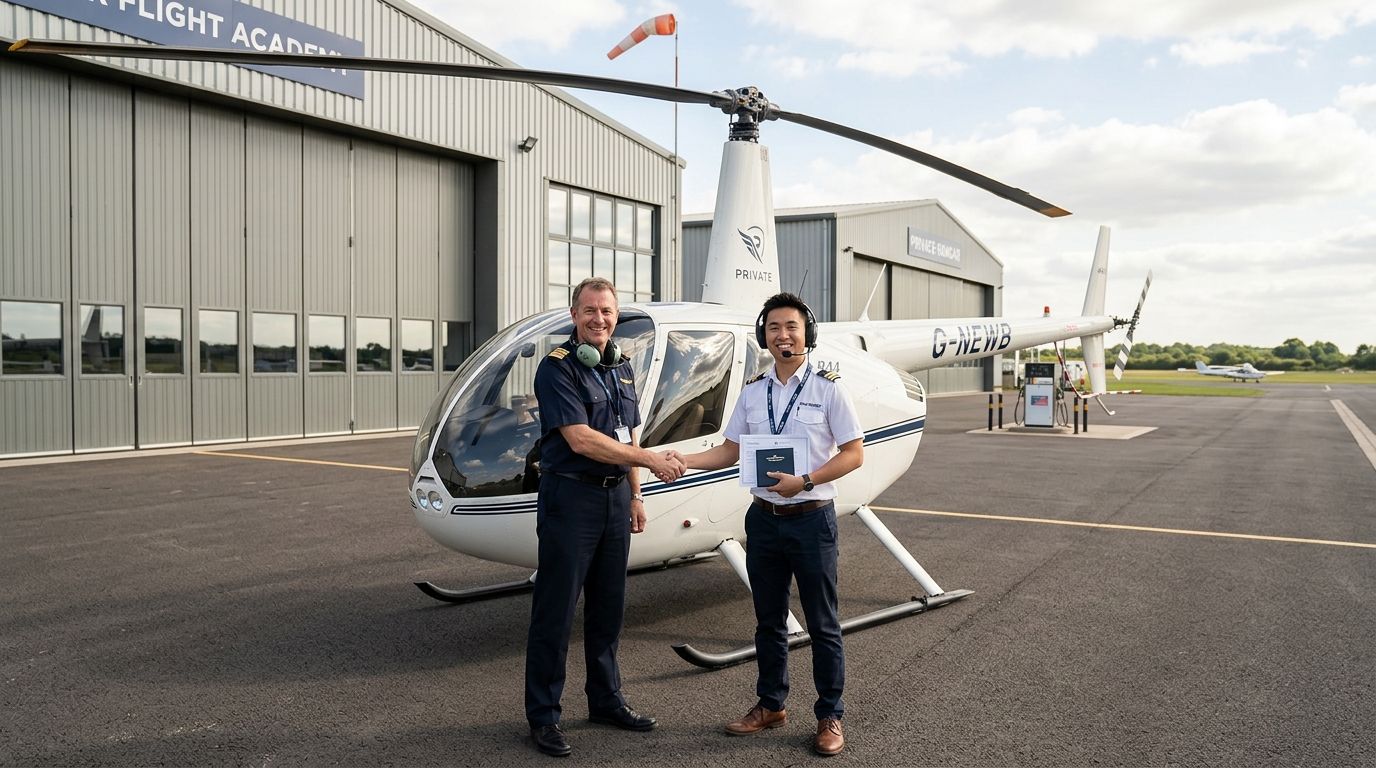
The checkride is a beginning, not a finish line. Once a pilot earns the private certificate, the next decisions usually fall into two buckets. Keep training, or start planning for aircraft access through rental, partnership, or ownership.
Transition training after the certificate
A new private pilot often wants to move into a different aircraft quickly. That's where transition training matters. A checkout should never be treated as paperwork. It should confirm that the pilot understands the model's systems, procedures, limitations, and handling differences well enough to operate safely without supervision.
For pilots moving into other Robinson models, that process has real cost attached to it. The same Robinson press article cited earlier lists an R44 Transition Course at $3,850 and an R66 Turbine Transition Course at $8,045, effective January 1, 2026, which gives a clear sense that turbine transition is a separate and more involved commitment in this training ecosystem.
Recurrent training also deserves more respect than it gets. Skills soften when pilots fly irregularly, and helicopters punish drift in precision faster than many airplanes do.
How to buy an airplane the safe way
A lot of pilots who start in helicopters also become interested in fixed-wing aircraft ownership. The basic buying rules are the same. If you want to buy an airplane the safe way, don't start with paint, avionics photos, or seller enthusiasm. Start with records, maintenance status, and an independent pre-buy inspection by a mechanic who works for you, not the seller.
A practical buying sequence looks like this:
- Define the mission first: Cross-country travel, training, local fun, and business use push you toward different airplanes.
- Review logs before traveling: Missing records, unclear damage history, or vague overhaul status are early warning signs.
- Use an independent mechanic: A proper pre-buy can prevent a bad purchase from becoming your maintenance project.
- Study calendar and condition items: Even aircraft that don't fly much can create expensive surprises through age, corrosion, or neglected systems.
- Plan the first year, not just the purchase: Insurance, storage, maintenance, and training after delivery matter as much as the sale price.
If a seller pressures you to move fast before your mechanic and instructor review the aircraft, slow the deal down.
How to buy a helicopter without learning expensive lessons
Buying a helicopter requires the same discipline, but the technical and operational stakes feel tighter. You need to understand component status, overhaul timing, maintenance support, and whether the aircraft fits your mission. A training ship, a personal travel machine, and a sightseeing platform are not interchangeable decisions.
The Robinson R44 Cadet is a good example of where buyers need more than brochure language. Robinson markets the Cadet as “optimized for training” with a 2,400-hour TBO, but, as noted in the Robinson FAQ material, the actual cost-benefit case versus a standard R44 Raven requires deeper analysis because the Cadet's distinct maintenance profile isn't widely documented in independent analysis. If you're evaluating Robinson ownership from the maintenance side, it helps to understand the service realities behind the aircraft through a Robinson helicopter maintenance resource.
That's the core ownership lesson. Don't buy a machine because the category sounds right. Buy it because the maintenance support, mission fit, training plan, and long-term operating reality all line up.
Start Your Robinson Training at Chino Airport
A student who trains only in quiet airspace often feels polished until the workload rises. Then the missing skills show up. Chino forces useful habits early because you're operating in a real towered environment with active traffic, multiple runways, and constant opportunities to improve communication.
Why Class D training changes the quality of your learning
At KCNO, students learn that good flying isn't just stick-and-rudder skill. It's listening accurately, reading the pattern, managing spacing, and making clean radio calls while still flying the helicopter well. That environment builds pilots who are less likely to freeze when traffic gets busy or instructions come quickly.
That's a major advantage of learning in a place where the airport is part of the curriculum. You don't need to simulate pressure when the actual environment already teaches it. Add flexible scheduling and simulator practice for procedures and cockpit flow, and the training becomes more efficient because every lesson doesn't need to introduce everything from scratch.
The best first step
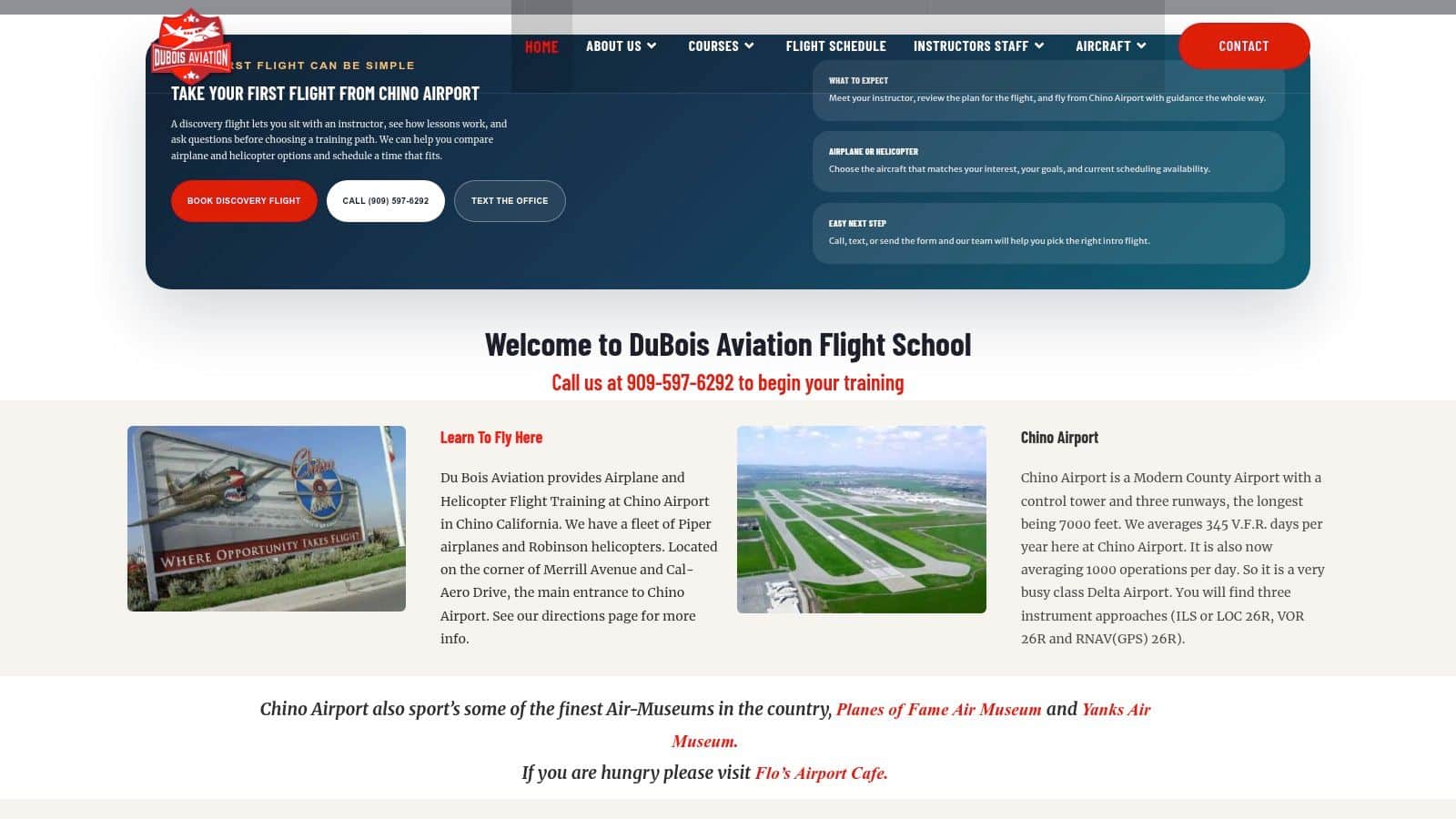
The smartest entry point is usually a discovery flight. It gives you a direct feel for the aircraft, the airport, and the training style before you commit to a full plan. You'll learn very quickly whether the helicopter environment feels exciting in a good way or overwhelming in a way that needs more discussion.
For students comparing schools in the area, the Chino Airport flight school page gives a clear sense of the operating environment. That matters because where you learn shapes how you fly later.
If you're serious about Robinson helicopter training, start with a conversation grounded in your actual goal. Private certificate, career track, recurrent training, transition work, or eventual ownership all require slightly different planning. The best schools treat that planning as part of the instruction, not as an afterthought.
DuBois Aviation offers helicopter and airplane training at Chino Airport with the kind of real-world Class D experience that helps students build usable skills from day one. If you want to explore Robinson helicopter training, book a discovery flight or contact the team through DuBois Aviation to map out the right starting point for your goals.