
Earning your private pilot helicopter license is your ticket into the world of aviation. It’s the essential first step, whether your dream is to become a career airline pilot, take on specialized work, or just experience the pure freedom of flight for yourself. It’s a challenging but incredibly rewarding goal, built on a clear path of learning, practice, and skill.
Starting Your Helicopter Pilot Journey
Deciding to become a helicopter pilot is a huge step—one that mixes the thrill of adventure with serious dedication, especially for students aiming for a professional career. The whole process is carefully structured and regulated by the FAA for one simple reason: to build you into a safe, competent aviator from the very first day. Every part of the journey, from getting your medical certificate to nailing the final checkride, is a critical building block.
Two practical options worth comparing
These are specific products pilots commonly compare for this type of flying. Confirm compatibility with your aircraft and instructor before ordering.
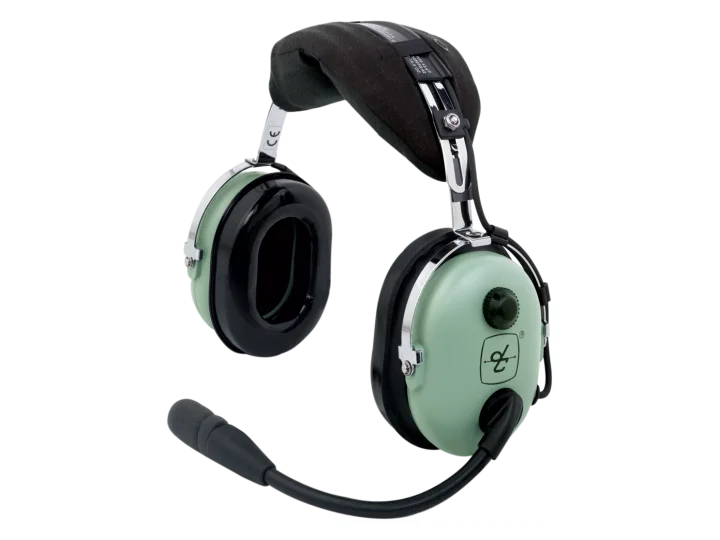 Student headsetDavid Clark H10-13.4 Aviation HeadsetCheck current availability on Amazon (paid link)
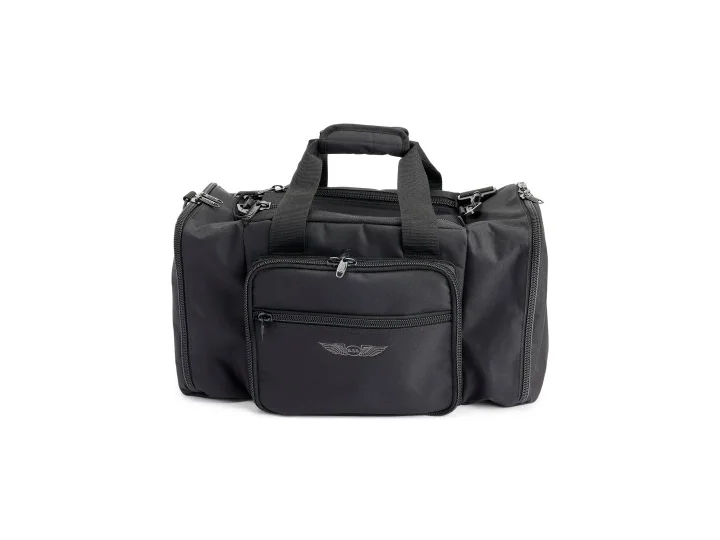 OrganizationASA Flight BagCheck current availability on Amazon (paid link)
Starting with a helicopter license is a common and highly respected path for aspiring professional pilots, even those who eventually want to fly for the airlines. The precision and skill it takes to fly a helicopter builds an incredible foundation in aircraft control and navigation that translates well to any cockpit. For a flight student, this is an excellent way to stand out.
This infographic lays out the major milestones you'll hit on your way to earning your Private Pilot Helicopter License (PPL-H).
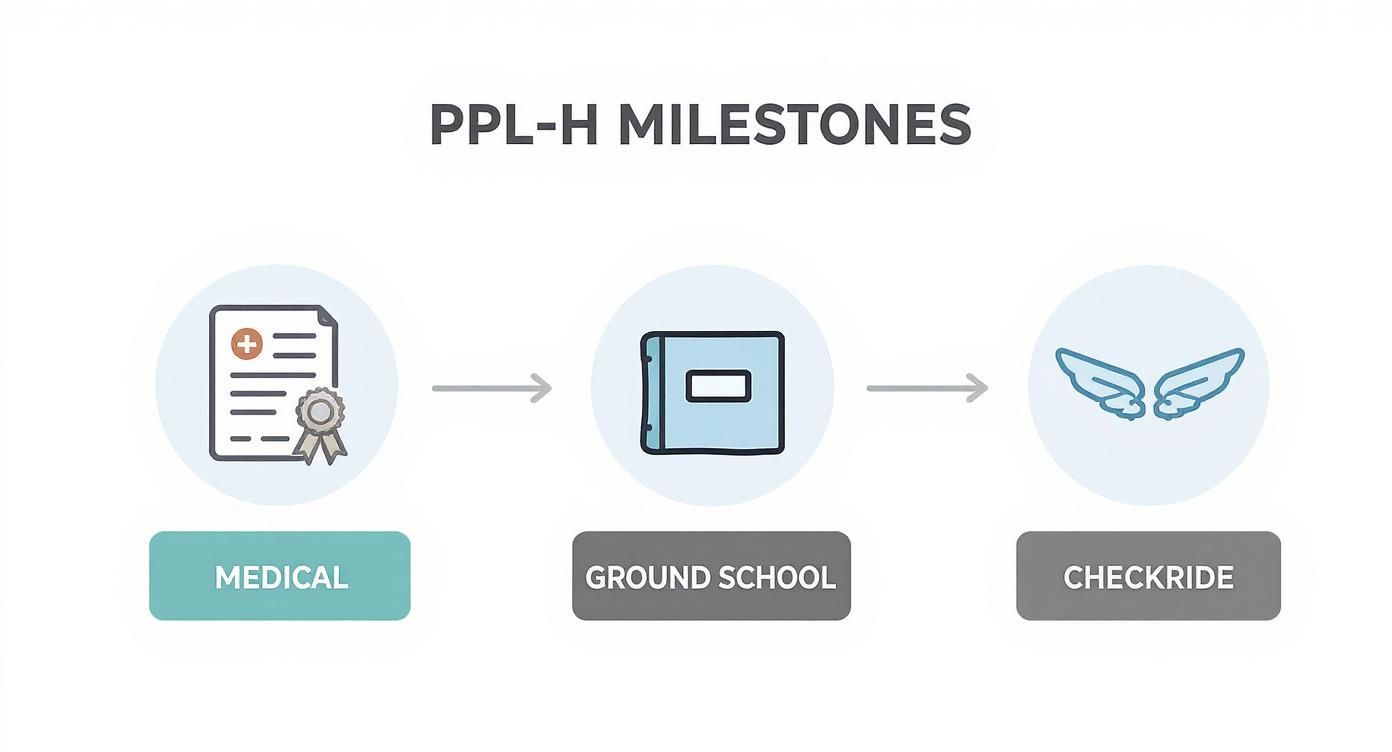
As you can see, it's a logical progression. You start by making sure you're medically fit to fly, then dive into the book knowledge, and finally, you put it all together to prove your skills in the air.
A Structured Path to the Skies
Your helicopter flight training is laid out methodically so that you build skills and confidence in the right order—no one gets thrown into the deep end. Flight schools generally operate under one of two FAA regulations: Part 61 or Part 141. They both get you to the same license, but the path is a bit different.
Part 141 schools, like ours, follow a very structured, FAA-approved syllabus. This can be a great fit for career-focused students who thrive in a formal learning environment and want a clear, step-by-step curriculum. If you want to dive deeper, you can learn more about the benefits of a Part 141 flight school to see if that structured approach is right for you.
To give you a sense of the big picture, your training is part of a massive global industry. The entire flight training market includes around 23,000 active programs worldwide, guiding over 120,000 trainees every year. Helicopter training is a specialized and vital piece of that puzzle, creating a dedicated community of highly skilled pilots.
A private pilot license is more than a certification; it’s a license to learn. The checkride isn't the end of your training but the beginning of your lifelong education as a pilot in command.
To help you visualize the path ahead, here's a high-level look at the key stages of earning your private pilot helicopter license.
Private Pilot Helicopter License Milestones
| Milestone | Key Requirement | Estimated Timeline |
|---|---|---|
| Medical Certificate | Pass an FAA medical exam with an Aviation Medical Examiner (AME). | 1-2 weeks |
| Ground School | Complete coursework covering aerodynamics, regulations, weather, and navigation. | 2-4 months |
| FAA Written Exam | Pass a multiple-choice knowledge test with a score of 70% or higher. | 1 day (after study) |
| Flight Training | Accumulate a minimum of 40 flight hours (Part 61) or 35 hours (Part 141). | 4-12 months |
| Checkride (Practical Exam) | Pass an oral exam and a practical flight test with an FAA examiner. | 1 day |
This table provides a general roadmap. Your personal timeline will depend on how frequently you can fly and study, but it all comes together one step at a time.
Buying or Selling Aircraft
For many pilots, the dream doesn't stop at just flying. Owning your own aircraft is the ultimate goal. When that time comes, it's crucial to approach the process of buying or selling with a sharp eye for detail.
A safe purchase always starts with due diligence. This means commissioning a thorough pre-buy inspection from a trusted mechanic, digging into the aircraft's maintenance history, and carefully verifying all logbooks and legal paperwork. Whether you’re looking at a helicopter or an airplane, a meticulous approach is the only way to ensure your investment is sound and, most importantly, that your aircraft is airworthy. You can find helpful articles about people looking to buy or sell airplanes and helicopters that detail the importance of this process. Learning how to buy an airplane the safe way is a skill that protects both your safety and your finances.
Clearing the Runway: Your Pre-Flight Checklist
Before you can even dream of lifting off the ground, the Federal Aviation Administration (FAA) has a few boxes you need to check. Think of these not as bureaucratic hurdles, but as the first steps in building a solid foundation for your entire aviation journey. Getting these sorted out upfront saves a ton of headaches down the road.
First, the basics. You have to be able to read, speak, write, and understand English—it's the universal language of the skies. Age is another key factor. You can start your training whenever you're ready, but you'll need to be at least 16 years old to fly a helicopter solo and 17 years old to earn your private pilot helicopter license.
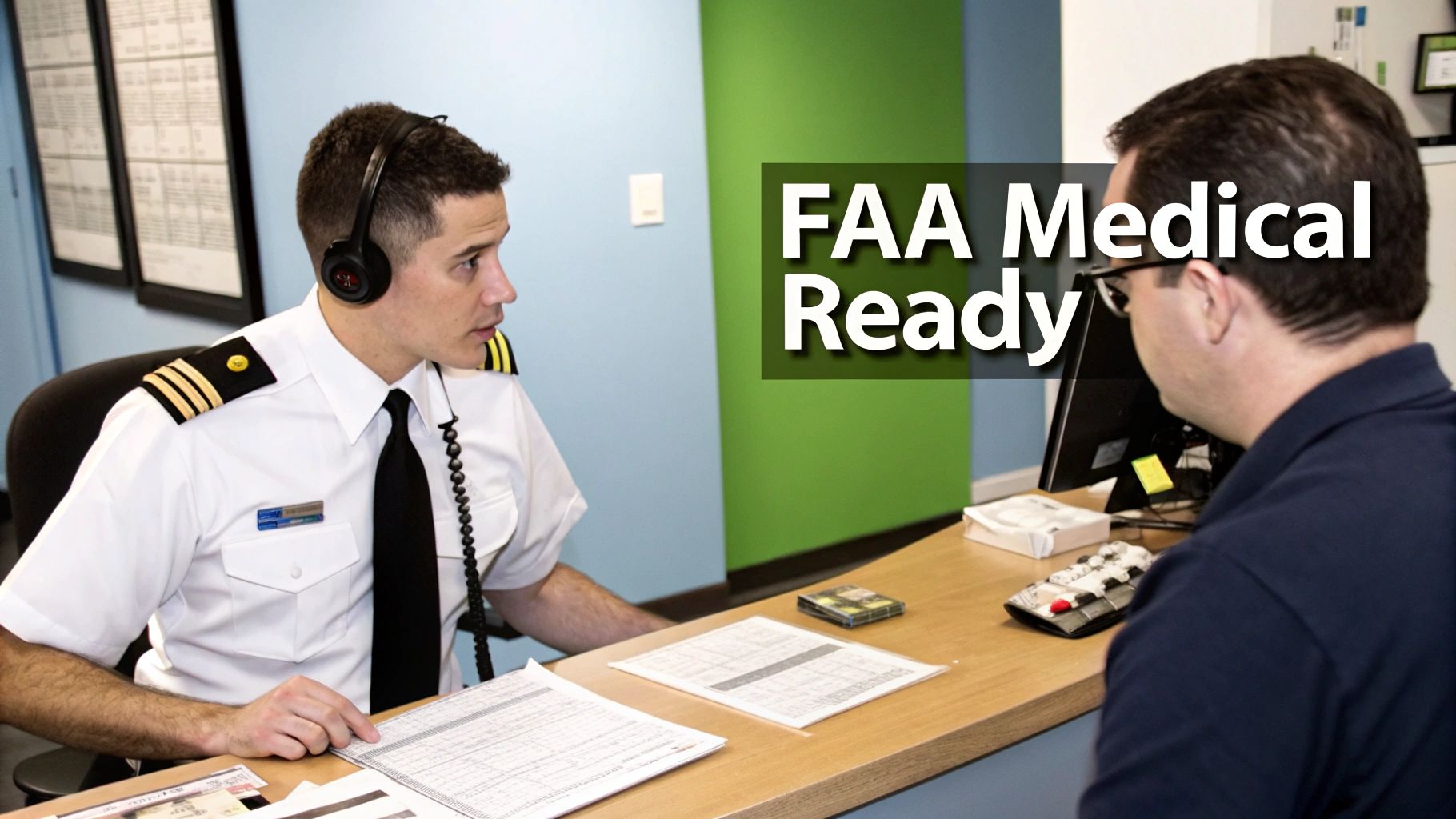
Getting Your FAA Medical Certificate
This one is a big deal. You absolutely must have an FAA medical certificate before you can fly. It’s the official word that you meet the health standards required to safely command an aircraft. For your private pilot license, a Third-Class Medical Certificate is the minimum, but if you're a flight student planning a career as an airline pilot, it's smart to go for a First-Class right from the start.
The process kicks off online with the FAA's MedXPress system. You'll fill out a comprehensive application detailing your health history. After that, you’ll book an in-person exam with an FAA-authorized Aviation Medical Examiner, or AME.
I always tell new students to book their AME appointment before anything else. It's far better to uncover a potential medical issue on day one than after you've already sunk time and money into training. Get it done early.
During the exam, the AME will go over your application and perform a physical check-up. They're looking at a few key areas:
- Vision and Hearing: This includes tests for acuity, color vision, and your peripheral sight.
- Cardiovascular Health: They’ll check your blood pressure and listen to your heart.
- Neurological Health: This is a basic assessment of your nervous system.
- Overall Physical Condition: The AME will have a detailed conversation with you about your medical history.
What About Common Medical Issues?
A lot of aspiring pilots worry that a past health issue might ground them before they even start. Things like color blindness, old surgeries, or even some mental health diagnoses aren't automatic disqualifiers. The most important thing is to be completely honest with your AME. The FAA has processes for waivers and special considerations, but trying to hide something can have serious repercussions.
Finding a good AME makes all the difference. We can recommend examiners who are known for being thorough but fair—they understand the system and know how to help student pilots work through it. Just come prepared with any relevant medical records and be ready to talk openly. Once you pass this exam, you’ve got the official green light to start logging flight time.
Many pilots, once they have their license, start thinking about owning their own aircraft. When that day comes, it's crucial to know how to buy an airplane the safe way. That means a meticulous pre-buy inspection, digging through every maintenance log, and verifying a clean title. Whether you’re looking at buying or selling airplanes and helicopters, that same level of diligence you're learning now will protect your investment and keep you safe. It all starts with that first proactive step: getting your medical certificate.
Building Your Knowledge in Ground School
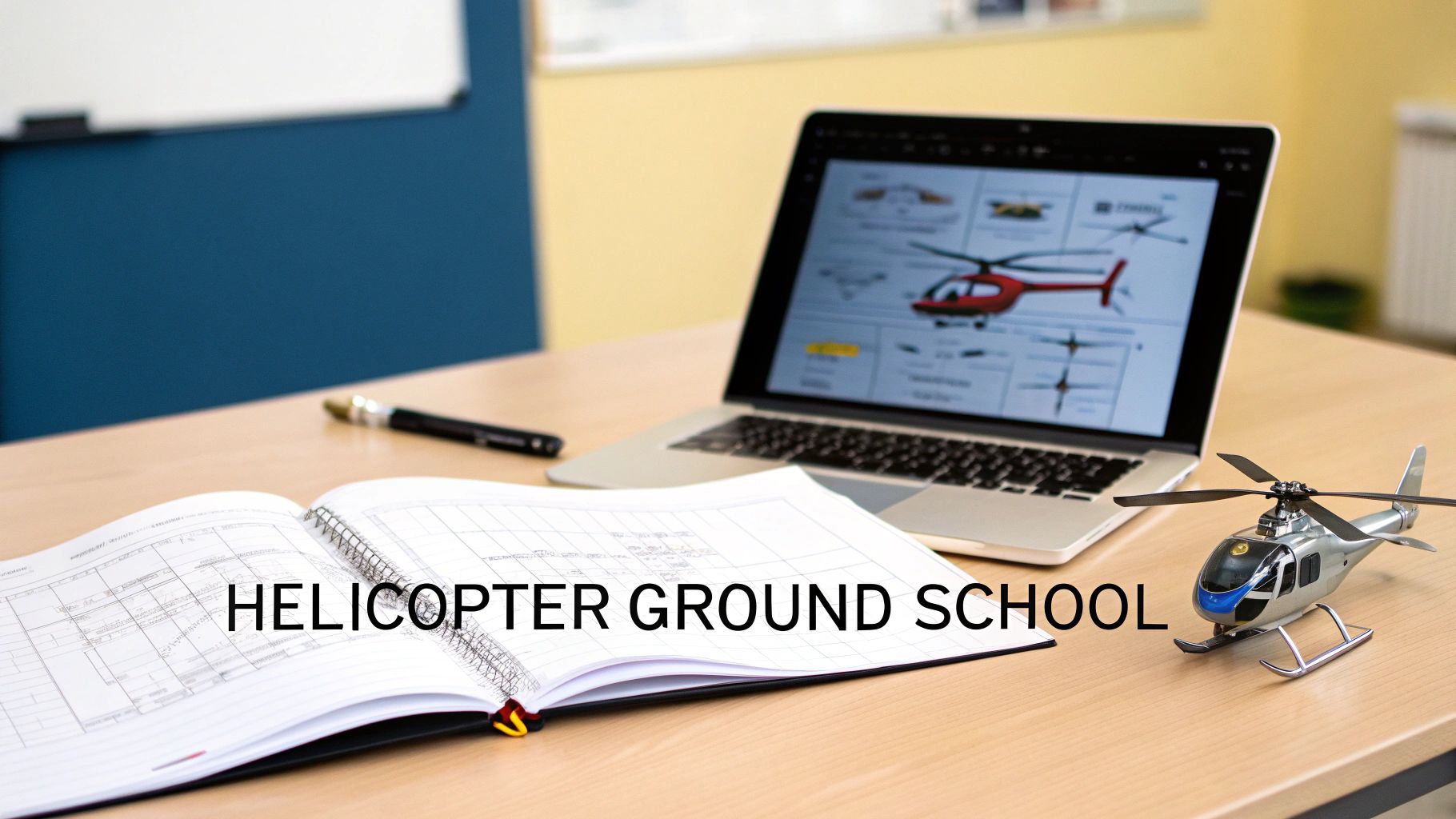
Every great helicopter pilot will tell you that sharp decisions in the air start with a solid foundation on the ground. That's exactly what ground school is all about. It’s not just a box to check or a test to pass; it’s where you build the deep, practical understanding you'll rely on every single time you're the pilot in command.
Think of it as the "why" behind every maneuver and decision you'll make in the cockpit. The concepts you learn here aren’t abstract—they directly translate to real-world flying, from deciphering a complex weather report to knowing the regulations that keep everyone flying safely.
Core Subjects You Will Master
Getting your private pilot helicopter license means diving deep into a wide range of essential topics. This isn't about skimming the surface; it's about gaining a complete picture of helicopter operations so you can handle any situation with confidence.
Here’s a look at what you’ll be covering:
- Helicopter Aerodynamics: You'll get into the fascinating physics of what makes a helicopter fly—from the principles of lift and the life-saving technique of autorotation to the subtle forces you'll feel at the controls.
- FAA Regulations: This is the rulebook for the sky. You'll master airspace classifications, right-of-way procedures, and how to communicate like a pro.
- Weather and Micrometeorology: Learn to read the sky like an open book. This is where you develop the critical judgment to make smart go/no-go decisions based on weather reports and atmospheric conditions.
- Navigation and Flight Planning: This is where you learn to get from Point A to Point B safely and efficiently, mastering everything from old-school chart reading to modern GPS navigation.
- Aircraft Systems: You’ll get to know the machine you're flying inside and out, from its engine and complex rotor systems to every instrument on the panel.
A firm grasp of these subjects is non-negotiable. They are the building blocks that allow you to anticipate challenges, manage risk, and operate your aircraft with precision.
Choosing Your Learning Environment
People learn in different ways, and modern ground school reflects that. Some students love the energy and direct feedback of a traditional classroom, where they can bounce ideas off instructors and classmates. Others need the flexibility of an online, self-paced program that fits around work and family life.
At DuBois Aviation, we offer a hybrid approach to make sure you get what you need. You can explore our comprehensive ground school programs to find the format that works best for you.
This commitment to quality education is part of a massive, growing industry. The global pilot training market was valued at around USD 9.37 billion in 2024 and is expected to rocket to nearly USD 31.38 billion by 2034. That surge shows just how high the demand is for skilled, well-trained pilots.
Ground school isn't just a hurdle to get over before you can fly. It's where you build the mental framework that will keep you and your passengers safe for your entire flying career.
All this study leads up to one key milestone: the FAA Private Pilot Knowledge Test. It’s a multiple-choice exam that confirms you’ve truly absorbed the theoretical concepts. You'll need to score 70% or higher to move on to your final checkride.
If you put in the work, you'll walk into that testing center feeling prepared and confident. Passing it is a huge step, proving you have the knowledge it takes to be a safe, competent pilot.
Mastering the Controls with Flight Training
This is where all that book knowledge gets real. Ground school teaches you the "why," but getting in the cockpit is all about the "how." For flight students, this is the most exciting part of the process, where you finally get your hands on the controls and feel the unique physics of a helicopter come to life. This isn't just about learning procedures; it's about building muscle memory, sharpening your judgment, and turning abstract aerodynamic concepts into instinctive skills.
To earn your private pilot helicopter license, the FAA requires a minimum of 40 flight hours under Part 61 rules. Now, let's be realistic—while 40 hours is the legal floor, most students actually need somewhere between 60 and 80 hours to become truly proficient and safe. The goal isn't just about hitting a number in your logbook; it's about mastering the machine with confidence.
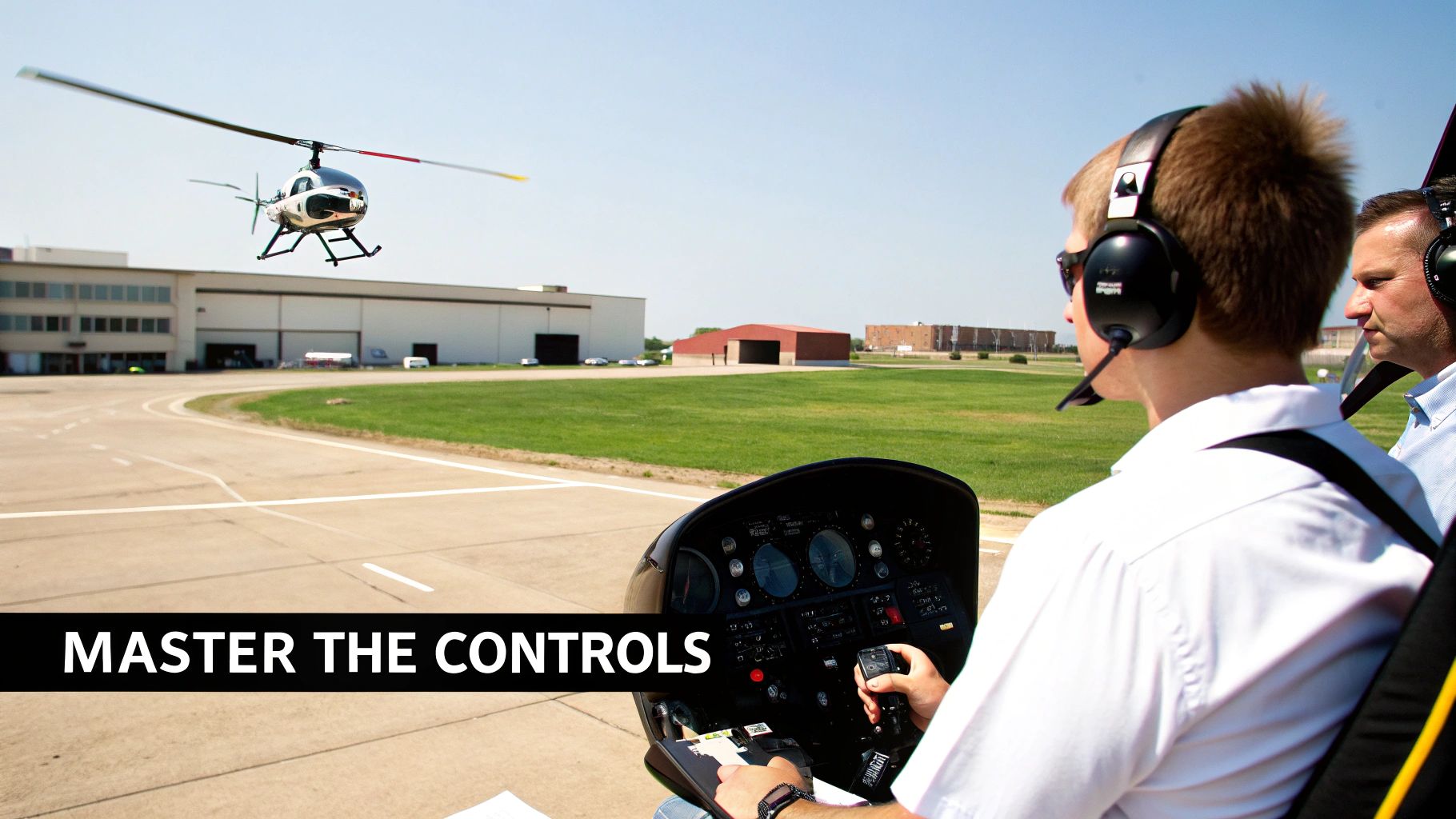
Dual Instruction: Your Foundation in the Sky
You'll spend most of your initial hours with a Certified Flight Instructor (CFI) sitting right next to you. This is your dual instruction time, and it's absolutely foundational. Your instructor is far more than a co-pilot; they are your guide, mentor, and safety net, showing you how maneuvers are done and giving you instant, actionable feedback.
During these one-on-one lessons, you'll tackle the core skills of helicopter piloting:
- Mastering the Hover: Ask any helicopter pilot, and they'll tell you this is one of the hardest things to learn. Hovering is a delicate dance, requiring you to make tiny, coordinated inputs on all four flight controls at once. It builds the fine motor skills you'll use in almost every other maneuver.
- Takeoffs and Landings: You’ll start with the basics and progress to more complex techniques, like maximum performance takeoffs and navigating landings in tight, confined areas. It's all about precision.
- Emergency Procedures: Your instructor will drill you on simulated emergencies, especially the autorotation. This is the critical skill of landing a helicopter safely without engine power. You will practice this over and over until it becomes second nature.
The relationship you build with your CFI is crucial. A great instructor knows how to challenge you without overwhelming you, creating an environment built on trust and crystal-clear communication.
Your First Solo Flight: A Milestone You’ll Never Forget
After you've proven your skills in basic maneuvers and handling emergencies, you'll hit a moment every pilot remembers for the rest of their life: your first solo flight.
Your instructor will hop out, give you a thumbs-up, and watch from the ground as you take the helicopter up, fly a circuit around the airport, and bring it back down… all by yourself. It's an incredible confidence builder. This is the moment you prove to yourself that you have what it takes to be the sole pilot in command. The FAA mandates a minimum of 10 hours of solo flight time, and this is where you really start to develop your self-reliance in the cockpit.
"The first solo is an incredible feeling. It's a mix of excitement and intense focus. When you land and shut down, you realize you've crossed a major threshold—you're not just a student anymore; you're on your way to becoming a pilot."
Expanding Your Horizons with Cross-Country Flights
Flying isn't just about circling the local airport. A huge part of your training is dedicated to cross-country flight. In the FAA's eyes, this is any flight where you land at an airport more than 25 nautical miles from where you started.
This is where all your ground school lessons on navigation, weather, and flight planning come together in a practical way. You'll manage fuel, talk to air traffic control in different types of airspace, and make real-time decisions far from home base.
Your training logbook will need to include:
- At least 3 hours of cross-country dual instruction with your CFI.
- At least 3 hours of cross-country solo flight.
- One long solo cross-country flight of at least 75 nautical miles total, with landings at three different points.
These flights are essential for building the navigation and decision-making skills you'll need for any professional flying career.
If you're dreaming of one day owning your own aircraft, this phase is incredibly insightful. Managing a flight from A to B gives you a deep understanding of the helicopter's performance and needs. This kind of hands-on experience is invaluable later on when you're looking at guides on how to buy an airplane the safe way or exploring marketplaces for buying or selling airplanes and helicopters. You’ll know exactly what to look for because you've already lived it.
What It Really Costs and Where It Can Take You
Earning your private pilot helicopter license is a serious investment, but it's one that pays dividends for a lifetime, whether you're chasing a career or the ultimate hobby. It’s essential for flight students to go into this with a clear understanding of what it takes financially and what doors it opens once you have that certificate in your hand.
So, let's talk numbers. What does it actually cost to get your helicopter license?
The total investment is more than just the hourly rate for the helicopter. You’ve got to factor in several key pieces to get the full picture.
- Helicopter & Instructor Time: This is the biggest slice of the pie. You're paying for the aircraft itself and, just as importantly, for the one-on-one time with a professional Certified Flight Instructor (CFI).
- Fuel: Helicopter fuel burn is no joke. Prices fluctuate, so this is often billed as a surcharge on top of the base rental rate.
- Books & Materials: Think textbooks, FAA charts, a flight computer (your trusty E6B), and other study aids you'll need for ground school.
- Testing Fees: You'll pay a fee for the FAA written exam and another to the Designated Pilot Examiner (DPE) who conducts your final practical test, or checkride.
- Your Own Gear: A good headset is non-negotiable. You’ll also need a logbook and a few other pilot supplies right from the start.
Being realistic, you should plan on a budget somewhere in the $20,000 to $30,000 range. Why the range? The FAA sets the minimum flight time at 40 hours, but almost no one is ready for their checkride at that point. Most students need a bit more time to truly master the skills and feel confident. Don't let that number scare you, though—smart financing, scholarships, and pay-as-you-go plans can make it much more manageable.
From Private License to Professional Career
A private pilot helicopter license isn't just a "license to learn"—it's the first critical step toward a massive range of aviation careers. For a lot of aspiring pilots, this is the very foundation they build upon to eventually fly for the airlines. The skills you master in a helicopter—precision flying, situational awareness, pure stick-and-rudder control—are incredibly valuable and highly respected across the entire aviation industry.
But the career paths don't stop there. Helicopter pilots are in demand for some of the most exciting and rewarding jobs out there:
- Emergency Medical Services (EMS): Flying air ambulances and being a critical part of a life-saving team.
- Law Enforcement & Firefighting: Providing crucial air support for public safety operations.
- Tours & Charters: Showing people the world from a breathtaking new perspective.
- Aerial Photography & Surveying: Using the unique capabilities of a helicopter for specialized industrial work.
The helicopter industry is facing a major pilot shortage, fueled by a wave of retirements and fierce competition from the airlines. This means demand for new, well-trained pilots is incredibly strong. If you want to dig into the numbers, the latest U.S. pilot market survey paints a very clear picture of the opportunities available.
Your PPL-H is more than just a piece of plastic. It’s the key that unlocks the cockpit door. Every single hour you log is a direct investment in a future where your office is literally the sky.
For any student serious about a career, the commercial rating is the next logical step after your private license. This is what allows you to actually get paid to fly. To understand what that journey looks like, check out our guide on commercial helicopter pilot training to see the full pathway.
What About Owning Your Own Aircraft?
For some, the ultimate dream is aircraft ownership. Having your own helicopter or airplane ready to go whenever you are offers a level of freedom that's hard to beat. But buying an aircraft demands the same sharp attention to detail that you develop during your flight training.
When you start browsing articles about people looking to buy or sell airplanes and helicopters, you'll notice a running theme: doing your homework is everything.
Learning how to buy an airplane the safe way boils down to a few critical, non-negotiable steps. The absolute most important thing you can do is get a thorough pre-buy inspection from a mechanic you trust—one who is completely independent of the seller. This isn't just kicking the tires; it's a deep, invasive look at the aircraft's logbooks, engine, components, and airframe. Meticulously reviewing those maintenance records is just as crucial. You're looking for a clean, continuous history of care. This due diligence isn't just about protecting your money; it’s about ensuring the aircraft is safe to fly.
How to Ace Your Final Checkride
The checkride. It's the final hurdle, the big day that stands between you and your private pilot helicopter license. This is where all those hours in ground school and in the cockpit finally come together. But try not to think of it as just a test. It's really your first flight as a true pilot-in-command, where you get to show a Designated Pilot Examiner (DPE) what you're made of.
Everything that happens on checkride day is pulled straight from the FAA's Airman Certification Standards (ACS). This isn't a secret—the ACS is your playbook. We'll have spent your entire training preparing you with this document, so nothing you encounter should be a surprise. The day is split into two parts: the oral exam and the practical flight test.
Navigating the Oral Exam
Before you even get near the helicopter, you’ll sit down with the DPE for the oral portion. This is just a conversation to make sure you have the head-knowledge to be a safe, competent pilot. The examiner isn't there to stump you or play "gotcha." They genuinely want to see how you think and watch your decision-making process unfold.
You can bet the questions will be based on practical scenarios and topics pulled directly from the ACS. For example, you might be asked to:
- Explain Regulations and Airspace: The DPE could point to a spot on a sectional chart and say, "Tell me about this airspace. What do you need to fly here?"
- Detail Aircraft Systems: You'll need to explain how the major systems on your helicopter work, from the engine all the way to the tail rotor.
- Interpret Weather Scenarios: A classic part of the oral is being handed a sample weather briefing and asked to make a go/no-go call for a proposed flight, and then justify your decision.
- Recite Emergency Procedures: The examiner will want you to talk them through the steps for handling simulated emergencies, like a tail rotor failure or an in-flight fire.
The trick is to think out loud. Talk through your answers clearly and confidently. If you stumble on a question, don't guess. It’s far better to say, "I'm not 100% sure, but I know I can find that information in the Pilot's Operating Handbook," than to make something up.
Your checkride is a performance, not an interrogation. The DPE wants to see that you can manage the aircraft, make safe decisions, and handle unexpected situations with a calm, methodical approach.
Demonstrating Your Skills in the Practical Test
Once the oral exam is complete, it's time to head out to the helicopter for the practical flight test. This is your chance to prove you can fly the aircraft safely and precisely, meeting the standards laid out in the ACS. The DPE is watching everything—your ability to perform maneuvers, your situational awareness, and your command of the aircraft.
You’ll be asked to demonstrate the skills you've practiced over and over with your instructor. While every checkride is a little different, expect to perform core maneuvers like hovering, takeoffs, landings, and, of course, emergency procedures like autorotations. Remember, the examiner isn't just looking at your control inputs. They're evaluating your overall aeronautical decision-making from startup to shutdown.
For any flight student dreaming of an airline career, the discipline you build here is invaluable. The intense focus on pre-flight planning and in-flight management translates perfectly to any cockpit. This attention to detail is also critical for students who might one day want to buy or sell airplanes and helicopters. Learning how to buy an airplane the safe way begins with the good habits and critical eye you develop during your primary helicopter flight training.
Common Questions About Helicopter Pilot Training
Thinking about getting your private pilot helicopter license? You're not alone, and you probably have a lot of questions. Let's tackle some of the most common ones I hear from aspiring pilots to help clear the path for your journey into the cockpit.
Time, Career, and Challenges
How long does it really take?
The FAA sets the minimum at 40 flight hours, but let's be realistic. Most students find their groove and build real confidence somewhere between 60 to 80 hours. Think of it this way: your progress is directly tied to how often you fly. If you can get up in the air consistently two or three times a week, you could be a licensed pilot in as little as three to six months.
Is a helicopter license a good first step for an airline career?
Absolutely. It might sound counterintuitive, but a lot of fixed-wing pros started right here. Flying helicopters builds an incredible foundation of skills—we're talking about precision control, advanced navigation, and the kind of quick, critical thinking that's gold in any cockpit. The hours and experience are highly transferable and respected across the industry.
What is the biggest challenge for new students?
Without a doubt, it’s mastering the hover. It’s the first real test for every student pilot. You're trying to make tiny, coordinated adjustments with all four flight controls at once, and it feels like juggling on a unicycle at first. But when it finally "clicks"—and it will—that's a huge milestone. That muscle memory is the bedrock for nearly every other maneuver you'll learn.
On the financial side of things, don't feel overwhelmed. There are plenty of avenues to explore, from third-party financing to aviation-specific scholarships offered by groups like Helicopter Association International (HAI).
The Broader Aviation World
Once the flying bug bites, it often leads pilots to think about aircraft ownership. You'll probably find yourself reading articles about people looking to buy or sell airplanes and helicopters, and you'll notice a pattern: smart buyers are incredibly thorough.
Learning how to buy an airplane the safe way isn't that different from learning to fly. It demands the same attention to detail—a meticulous pre-buy inspection, a fine-toothed-comb review of maintenance logs, and a clean title check. The same diligence you learn in the cockpit will serve you well when you decide to make an investment in your own flying future.
Ready to get your own questions answered and start this journey? At DuBois Aviation, our instructors have been there and are ready to guide you. Visit us to learn more about our helicopter training programs!