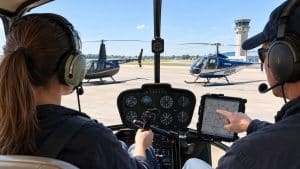

Earning your instrument rating is one of the most significant upgrades you can make to your pilot certificate. It’s a challenging process, for sure, but the payoff is immense. You're not just learning to fly in the clouds; you're becoming a fundamentally safer, more precise, and more capable pilot.
Your Path to Flying in the Clouds
Getting your instrument rating is what truly unlocks the national airspace system for you. It's the ticket to flying in a much wider range of weather, freeing you from the "clear and a million" restrictions of Visual Flight Rules (VFR). This guide is your roadmap, breaking down the entire journey into clear, manageable stages.
This isn't just about a new certification. It's about a complete shift in how you approach flying. You'll build a new level of confidence, sharpen your aeronautical decision-making, and develop a discipline that makes every flight you take safer, regardless of the weather. It all comes down to learning to trust your instruments, meticulously interpret complex approach procedures, and safely manage a flight with zero outside visibility.
Two practical options worth comparing
These are specific products pilots commonly compare for this type of flying. Confirm compatibility with your aircraft and instructor before ordering.
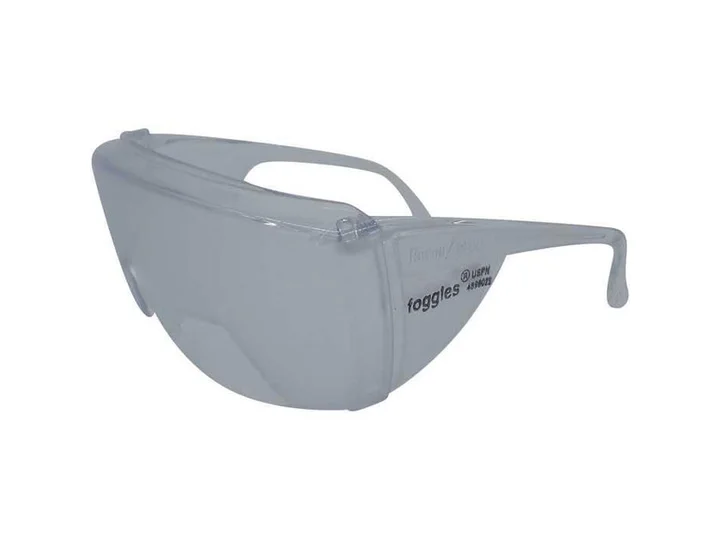 Instrument trainingFoggles Aviation IFR Training GlassesCheck current availability on Amazon (paid link)
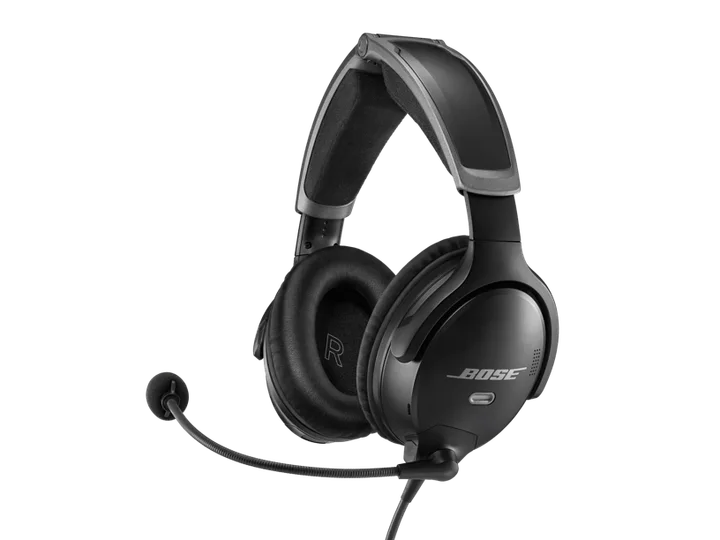 Premium headsetBose A30 Bluetooth Aviation Headset - Dual PlugCheck current availability on Amazon (paid link)
The Journey at a Glance
So, what does this path actually look like? For most pilots, seeing the big picture first helps make the process feel less daunting. The training is structured logically, starting with ground knowledge and building systematically toward real-world application in the cockpit.
This infographic lays out the core journey into three distinct phases.
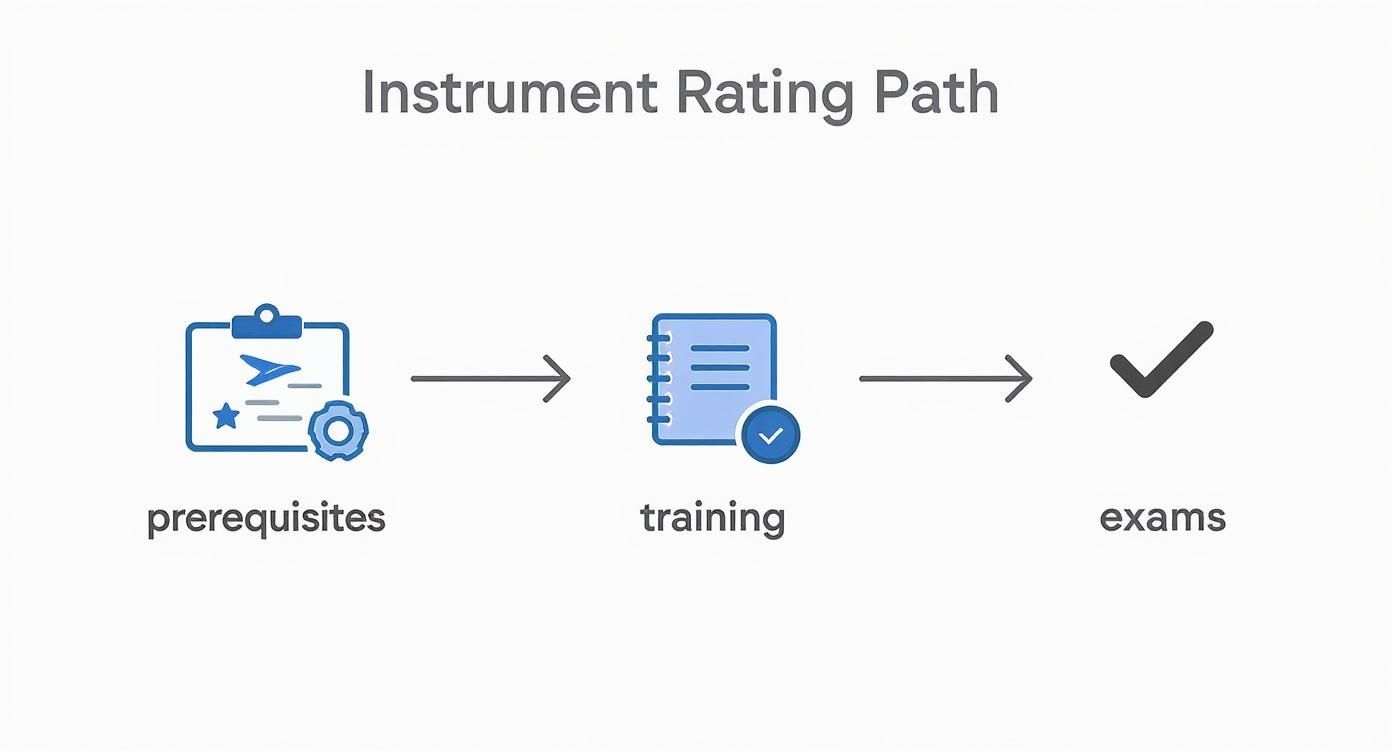
As you can see, it all starts with ticking the FAA's boxes for prerequisites. From there, you dive into the heart of the training—ground school and flight time—before facing your final exams.
Here's a quick table to summarize the key milestones you'll be working toward.
Instrument Rating Milestones at a Glance
| Milestone | Description | Key Objective |
|---|---|---|
| Meet Prerequisites | Ensure you meet the FAA's baseline requirements for age, certification, and medical clearance. | Confirm your eligibility to begin training. |
| Ground Training | In-depth study of instrument flight rules, weather, flight planning, and procedures. | Build the theoretical knowledge needed for safe IFR flight. |
| Flight Training | Practical, hands-on training in the aircraft and simulator with a CFII. | Develop the stick-and-rudder skills and procedural fluency. |
| Pass Written Exam | A multiple-choice knowledge test covering all aspects of IFR operations. | Demonstrate your grasp of the required aeronautical knowledge. |
| Pass Practical Exam | The final checkride with a Designated Pilot Examiner (DPE), including oral and flight portions. | Prove you can consistently and safely act as Pilot in Command under IFR. |
Each step builds on the last, taking you from theory to practical mastery of flying by reference to instruments alone.
Why the Instrument Rating Matters More Than Ever
The value of being instrument-rated is something the pilot community is embracing more and more. According to 2024 data from the Federal Aviation Administration (FAA), of the 495,907 certificated pilots in the U.S., about 342,400 held an instrument rating. That's an impressive 69%.
This is a huge turnaround from just a few years ago. By the end of 2021, that number had dipped to only 46%. This resurgence shows a clear, industry-wide recognition of the safety and utility that instrument proficiency brings to the cockpit. If you want to dig deeper into the numbers, you can learn more about the growing trend of instrument-rated pilots.
Gaining your instrument rating isn't just about adding a new line to your pilot certificate; it's about fundamentally changing your relationship with the sky. You gain the skills to navigate complex airspace and challenging weather with precision and confidence, making you a more competent and reliable pilot in command.
The skills you pick up aren't just for cloudy days, either. They bleed over into your VFR flying, making you a sharper pilot all around. You’ll see marked improvements in your:
- Situational Awareness: A good instrument scan forces you to be constantly aware of your aircraft's performance, position, and energy state.
- Precision and Accuracy: Flying an ILS to minimums demands a level of control that makes your VFR pattern work look and feel much smoother.
- Systematic Procedures: IFR flying is all about procedure. You’ll learn to live by checklists and standardized flows, which is one of the best ways to reduce errors on any flight.
Meeting the FAA's Eligibility Requirements
Before you can even think about shooting an ILS approach down to minimums or navigating through the clouds, you’ve got to check a few boxes for the FAA. These aren't just bureaucratic hurdles; they're foundational requirements that ensure you're ready for the demands of instrument flying.
First up, you must hold at least a current private pilot certificate. This is non-negotiable. Your private pilot skills—stick and rudder, decision-making, and understanding the airspace system—are the bedrock you'll build everything else on. We cover the different pilot certification levels on our blog if you want a refresher.
You'll also need to be able to read, speak, and understand English, and hold a valid medical certificate. With those basics covered, let's talk about the big one.
The Real Challenge: Logging Cross-Country Time
For most pilots, the biggest hurdle to starting instrument training isn't the complex theory, it's the flight time. The FAA requires you to have logged 50 hours of cross-country flight time as pilot-in-command (PIC), with at least 10 of those hours in an airplane.
This can feel like a grind, but it’s one of the most valuable experiences you’ll get. It's your chance to build the confidence and real-world savvy that separates a good pilot from a great one.
Don't just fly circles to build hours; fly with a purpose. Every cross-country leg is a masterclass in flight planning, fuel management, and reading weather—all skills you'll lean on heavily when you're flying IFR.
Make Your Time-Building Count
To get the most out of your 50 hours, treat every flight like a mission. This mindset transforms a boring time-building slog into a critical part of your training.
Here are a few ideas to make those hours genuinely productive:
- Explore New Airports: Make a point to fly to fields you've never visited. Mix it up between busy towered airports and quiet non-towered strips to get comfortable with different procedures and radio calls.
- Stretch Your Legs: Instead of just hopping over to the next county, plan a 200-nautical-mile trip. This will force you to manage fuel over a longer duration and make real-time decisions as weather and conditions change.
- Practice Getting "Lost": On a clear day, with a safety pilot, intentionally deviate from your flight plan. Cover up the GPS and use only your pilotage skills and VORs to figure out where you are and get back on course. It's a huge confidence builder.
Once you’ve met these requirements, you’re officially ready to start the real work. It's time to dive into the world of instrument flying.
Mastering Instrument Ground School
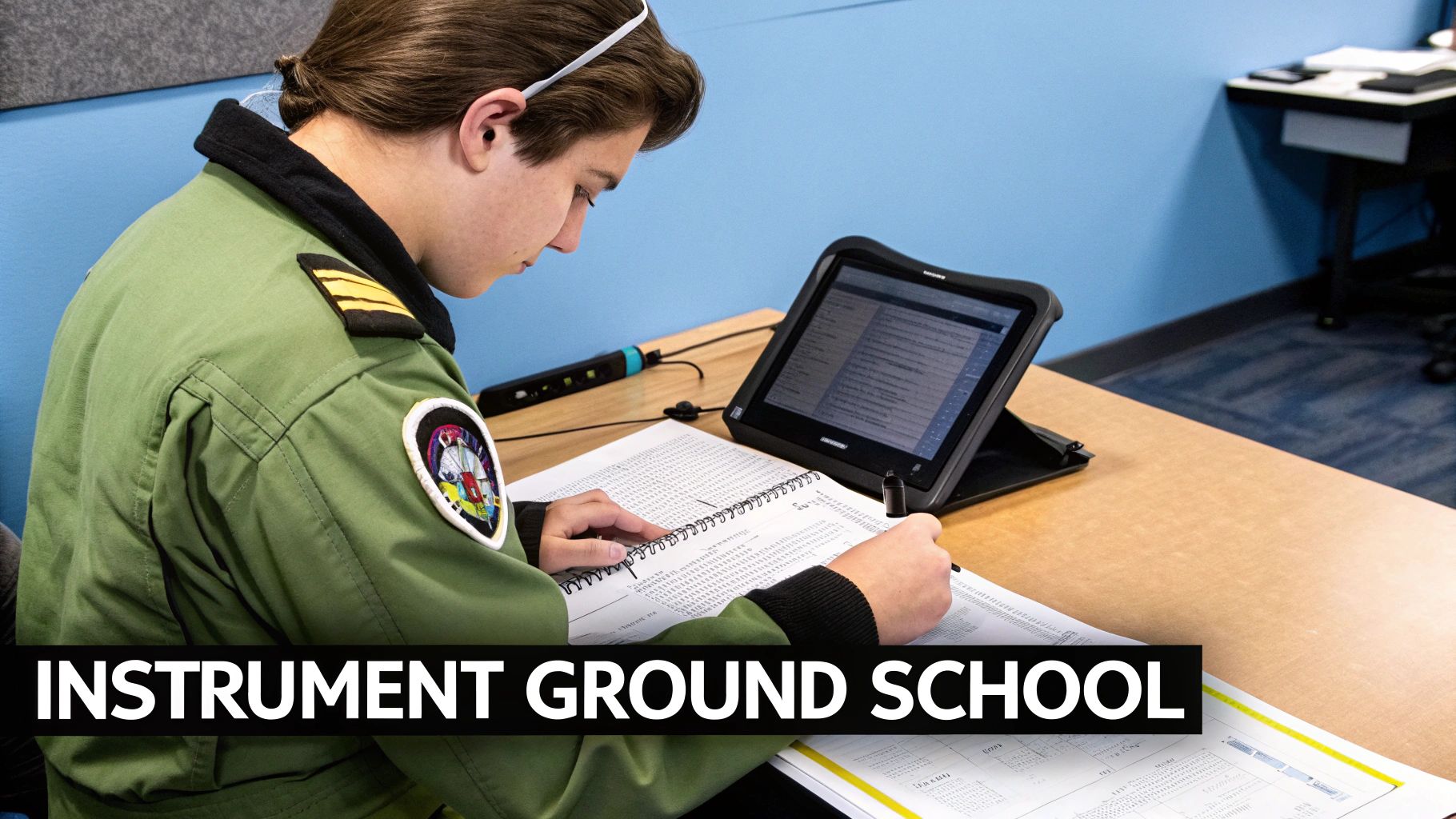
Before you ever fly an approach in the clouds, you have to hit the books. Hard. This is where you build the bedrock of knowledge that safe instrument flying absolutely depends on. It’s about so much more than just memorizing rules; it’s about truly understanding the intricate systems and procedures that will let you fly confidently without ever seeing the ground.
The first major milestone in this journey is passing the Instrument Rating Airplane (IRA) written exam. To even sit for that test, you'll need an official endorsement from an instructor who's confident you have the theory down cold. This means proving you’re proficient in some pretty complex areas.
Choosing Your Ground School Path
Every pilot learns a bit differently, so it's good to know you've got options. The key is finding a study method that actually works with your life, your budget, and how you learn best. Most pilots end up choosing between a structured course and dedicated one-on-one instruction with their CFI.
You can check out different options for instrument ground school to get a feel for what’s out there. A lot of people love the flexibility of online programs that let them learn at their own pace with videos and practice quizzes. On the other hand, nothing beats the personalized feedback you get when working directly with a Certified Flight Instructor-Instrument (CFII).
Honestly, a hybrid approach is often the most effective. You can use an online course to get through the bulk of the material, then book time with your CFII to hammer out the tricky stuff, like decoding a complex approach plate or really wrapping your head around weather theory.
Core Knowledge Areas You Must Master
Your ground studies are going to cover a ton of ground, all of which is critical for an instrument pilot. You should plan on dedicating a serious amount of time to these key subjects:
- FAA Regulations: You'll need to know the IFR rulebook inside and out. This covers everything from alternate airport requirements and mandatory equipment to the specific reports you have to make to ATC.
- IFR Chart Interpretation: Learning to read and instantly understand instrument approach plates, SIDs (Standard Instrument Departures), and STARs (Standard Terminal Arrival Routes) is a massive—and non-negotiable—part of your training.
- Weather and Aerodynamics: Get ready for a deep dive into weather theory. You’ll focus on the conditions that create instrument meteorological conditions (IMC), like icing, fog, and the hazards associated with thunderstorms.
- Flight Instruments: You must have a rock-solid understanding of how your gyroscopic and pitot-static instruments work. Even more important is knowing all the ways they can fail and how to recognize it happening.
The written exam is just a checkpoint, not the final destination. The real purpose of ground school is to build the kind of deep, intuitive knowledge you need to make smart, split-second decisions when you're alone in the clouds with nothing but your training to rely on.
Nailing this academic phase gives you the mental toolkit to handle the challenging, dynamic world of instrument flight. Every hour you spend on the ground directly translates to more confidence and competence when you finally get into the cockpit for your flight training.
Building Your IFR Cockpit Skills
https://www.youtube.com/embed/W7B7dDwkLC8
Alright, the books are closed and ground school is behind you. Now comes the fun part: translating all that theory into actual skill in the cockpit. This is where you'll log the required 40 hours of actual or simulated instrument time, and it's a completely different world.
Forget looking out the window. This phase is all about learning to trust your instruments completely, even when your inner ear is screaming that you're in a turn. It’s about precision, discipline, and developing a sixth sense for what the needles and numbers are telling you.
How Your Flight Time Breaks Down
The FAA has specific requirements for how you log your time. It’s not just about accumulating 40 hours; it's about getting the right kind of experience with a qualified instructor.
Here’s a simple table to show you what the minimums look like for a Part 61 flight school.
Flight Training Time Allocation Under FAA Rules
| Requirement | Minimum Hours | Notes |
|---|---|---|
| Total Instrument Time | 40 | This is the total time spent flying solely by reference to instruments. |
| Dual Instruction | 15 | At least 15 hours must be with an authorized instrument instructor (CFII). |
| IFR Cross-Country | One Flight | You'll need to complete one cross-country flight of at least 250 nautical miles under IFR. |
| Instrument Approaches | Three Types | This cross-country must include three different types of instrument approaches. |
| Aeronautical Experience | 50 Hours | You must have 50 hours of cross-country flight time as pilot in command. |
These are the absolute minimums. Most pilots find they need a bit more time to feel truly proficient and ready for the checkride, and that's perfectly normal.
The Power of Simulators in IFR Training
Back in the day, all this training had to be done in the air, which was expensive and inefficient. Today, we have an incredible tool at our disposal: the Aviation Training Device (ATD), or what most of us just call a simulator.
The beauty of the sim is that it’s a safe, controlled space to practice scenarios you’d never want to encounter for the first time in a real airplane. Think instrument failures in the middle of an approach, navigating nasty weather, or shooting a complex procedure over and over until it’s muscle memory.
The real game-changer with a simulator is the ability to hit 'pause.' You can fly a tough approach, mess it up, stop, talk it through with your instructor, and immediately fly it again. Trying to do that in a real plane would burn through time and money. In a sim, you can nail down a procedure five times in an hour.
Key Maneuvers and Procedures
Your flight training is a building-block process. Each lesson layers a new skill on top of the last one, taking you from basic control to complex, real-world scenarios. The goal isn’t just to perform these maneuvers; it’s to make them so routine you can execute them flawlessly when things get busy.
Here are the core skills you'll live and breathe:
- Basic Attitude Instrument Flying: This is the bedrock of everything. You'll learn to control the airplane—pitch, bank, and power—using only the "six-pack" instruments. No cheating with a glance outside!
- Instrument Approaches: You'll become an expert at flying different kinds of approaches, from precision ILS (Instrument Landing System) approaches down to minimums to non-precision approaches using VOR or GPS.
- Holding Procedures: Ever wonder how ATC sequences planes for landing? Holding patterns. You'll master how to enter them correctly, adjust for wind, and fly them with precision.
- Navigation and Cross-Country Flights: A huge part of your training involves planning and flying full IFR cross-country flights. This means talking to ATC, managing your route, and handling anything that comes your way.
Every one of these skills has to be performed to tight standards. The attention to detail required is on par with doing a thorough pre-flight inspection. In fact, building that meticulous mindset is crucial for IFR. If you want to get a head start on that kind of thinking, our guide on pre-flight checks for a Cessna 172 can help you build the right habits from the ground up.
Tackling the Written and Practical Exams
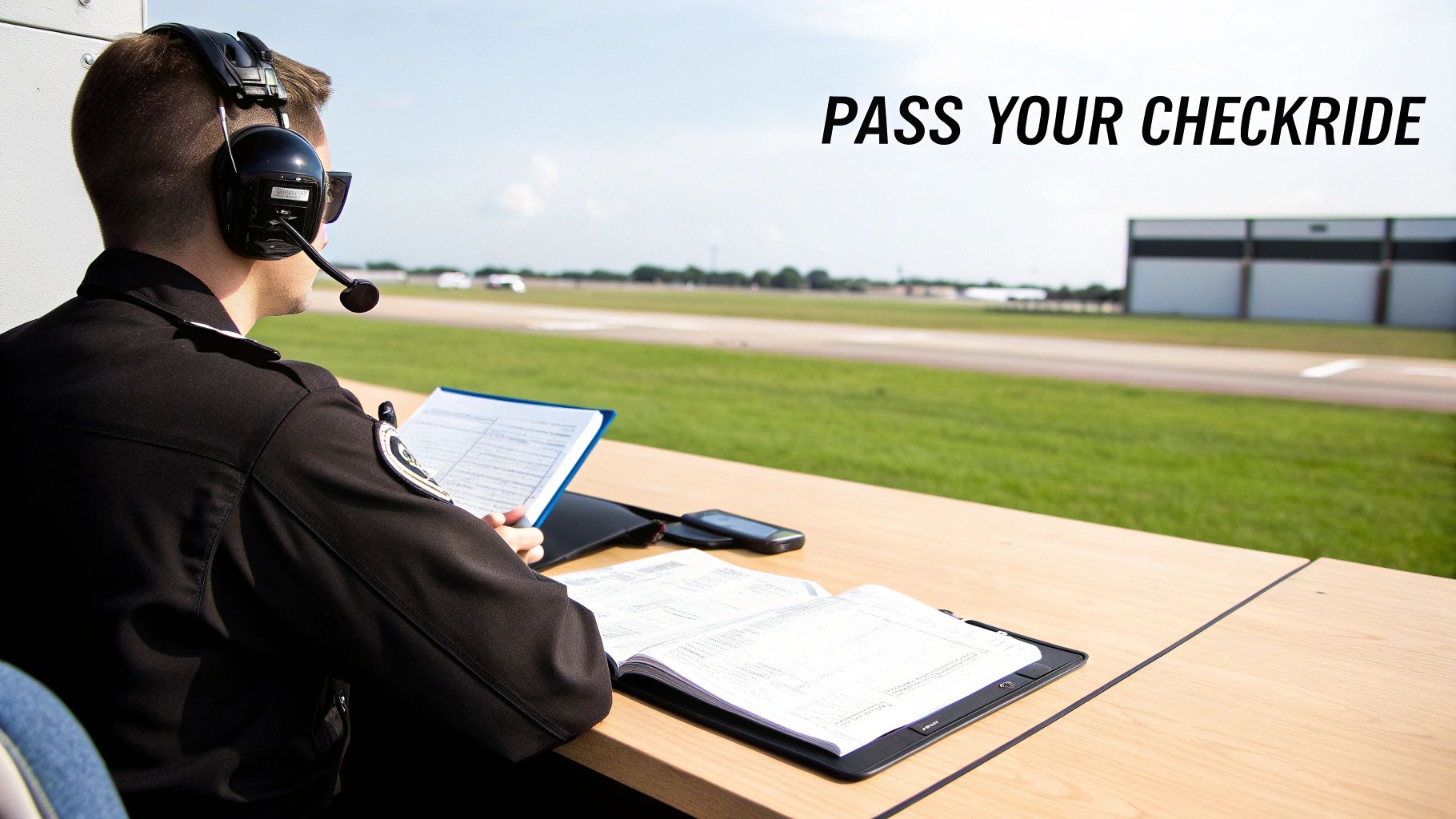
After all that time in the cockpit and in the books, you’re on the home stretch. The final hurdles are the FAA written test and the practical exam—what every pilot knows as the checkride. Think of these as your final validation, where you prove you have the knowledge and skill to be pilot in command in the clouds.
The key to both is methodical preparation, not frantic, last-minute cramming.
First up is the written exam. It's a comprehensive test of your book smarts, and while rote memorization might squeak you past the passing score, it does you a disservice in the real world. The real goal is to actually understand the material, from deciphering a complex prog chart to knowing IFR regulations inside and out. Using a solid test prep program is invaluable for spotting your weak areas long before you walk into the testing center.
And you're not alone in pursuing this. The number of pilots earning their instrument rating has been on a steady climb. Back in 2017, the FAA issued 11,443 new instrument ratings, a noticeable jump from 10,103 in 2015. This reflects a broader trend in general aviation, with more pilots seeking higher qualifications. You can actually explore more data on general aviation trends to see the bigger picture.
What to Expect on Your Checkride
The checkride is where the rubber meets the runway. You'll spend a few hours with a Designated Pilot Examiner (DPE) who will evaluate your skills from the moment you shake hands. It’s broken down into two main parts: the oral exam and the flight itself.
Don't think of the oral portion as a simple Q&A. The DPE won't just ask you to parrot back regulations. Instead, they'll give you a realistic cross-country flight scenario and expect you to plan it from start to finish, explaining your decisions along the way. This is a test of your aeronautical decision-making and risk management in a real-world context.
A key thing to remember: The checkride isn't about being perfect. It's about being safe, competent, and showing good judgment. The examiner wants to see that you have a plan, can adapt when things go wrong, and consistently make sound decisions. A professional attitude and meticulous organization speak volumes.
How to Show Up Ready to Pass
Walking in prepared is the single best way to calm your nerves. Your organization and professionalism immediately signal to the DPE that you take this seriously.
Here's a quick checklist to make sure you're ready for the big day:
- Prep Your Logbook: Don't make the examiner hunt for things. Use sticky tabs to mark every single requirement: your 50 hours of cross-country PIC time, the 40 hours of instrument time, your long IFR cross-country, and every necessary instructor endorsement.
- Know Your Airplane's Paperwork: Have the aircraft documents (ARROW), maintenance logs, and performance charts neatly organized and tabbed. You should be able to answer any question about the plane's systems or limitations without fumbling.
- Pack Your Flight Bag: Get everything together the night before. This means having all your charts, a completed flight plan, your hood or Foggles (paid link), a charged iPad or other EFB, and anything else you might need. A well-organized bag shows a well-organized mind.
Passing these exams is the final step in a long but incredibly rewarding journey. By focusing on genuine understanding over memorization and showing up as a true professional, you’ll be set to ace both the written test and the checkride with confidence.
Buying or Selling an Aircraft: What Pilots Need to Know
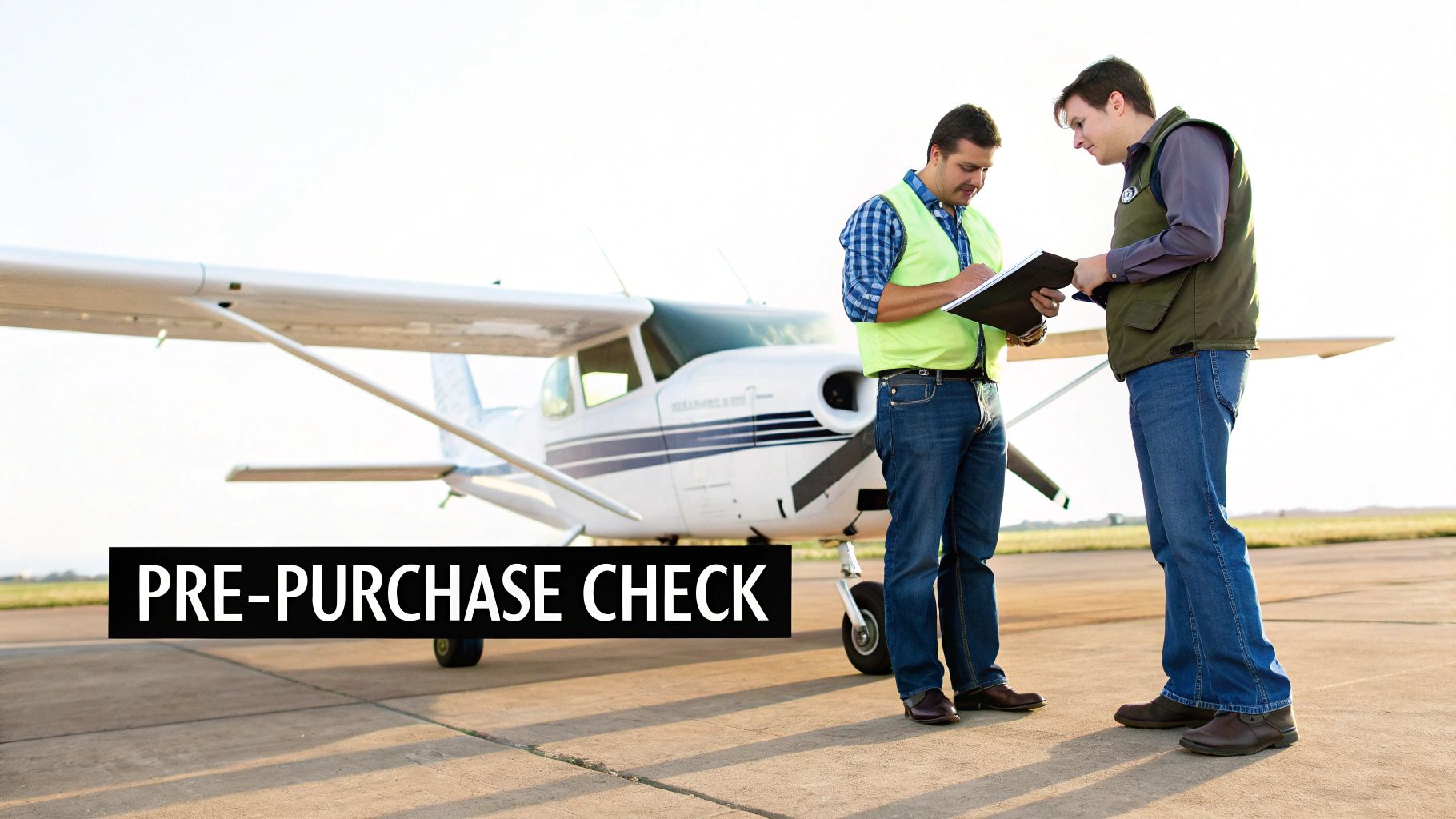
Once you've earned your instrument rating, the idea of owning your own airplane or helicopter starts to look pretty appealing. It’s the ultimate freedom. But jumping into aircraft ownership is a huge commitment, and without the right preparation, it can turn into a costly and even dangerous mess. Whether you are buying or selling, a safe and transparent process is key.
How to Buy an Airplane the Safe Way
The absolute first thing you need to do—and this cannot be stressed enough—is get a thorough pre-purchase inspection. This isn't just a quick look-over or a standard annual. It's a deep, comprehensive dive into every nut and bolt of that aircraft, whether it's a Cessna 172 or a Robinson R44 helicopter.
Here's the key: you must hire your own trusted Airframe and Powerplant (A&P) mechanic. Never use the mechanic suggested by the seller. You need an independent expert who is working for you, giving you the unvarnished truth about the aircraft’s condition.
Beyond the physical nuts and bolts, an aircraft's entire life story is tucked away in its logbooks. You need to go through them with a fine-toothed comb.
Look for a few specific things:
- Any mention of damage history, no matter how minor it seems.
- Recurring maintenance issues that might point to a bigger, unresolved problem.
- Any suspicious gaps in the records or missing entries.
A clean, detailed logbook is a great sign. A messy, incomplete one is a massive red flag telling you to walk away. Finally, always run a title search to ensure there are no outstanding liens against the aircraft. Securing a clear title is an absolute must.
Remember this: a cheap aircraft can quickly become the most expensive thing you ever own. Investing in a proper pre-purchase inspection and a meticulous logbook review is the best insurance you can buy to make sure your dream of ownership doesn’t turn into a financial nightmare.
Answering Your Top Instrument Rating Questions
As you start thinking about your instrument rating, some very practical questions are bound to pop up. It's a serious commitment of time and money, so getting a handle on the real-world costs and timelines is a smart first step. Let's break down what pilots ask most often.
What’s the Real-World Cost for an Instrument Rating?
Plan on a total investment somewhere between $10,000 and $15,000. Where you land in that range depends on a few key factors: your local airport's rental rates, the specific aircraft you train in, and how much time you can log in a cost-effective simulator versus the actual plane.
Your personal learning pace and how often you can fly are also huge variables. Flying consistently keeps you sharp, which almost always saves you money in the long run.
How Long Does This Whole Process Take?
If you can dedicate yourself to training full-time, you could potentially knock it out in as little as two months. That’s a fast track, though. Most pilots are balancing training with work and family, so a timeline of 6 to 12 months is far more typical.
The key here is consistency. Flying once a week is much better than flying four times one month and then taking the next month off. Muscle memory and procedural fluency fade fast.
Can I Just Do All My Training in a Simulator?
Not entirely, but you can get a huge chunk of it done that way. FAA Part 61 rules allow you to log a generous number of hours in an approved Aviation Training Device (ATD), which is a fantastic way to keep costs down while mastering procedures.
"I can't overstate the value of a good simulator. It's the perfect place to practice complex approaches and emergency scenarios without burning fuel or worrying about real-world consequences. You can pause, debrief with your instructor, and repeat an approach until it's second nature. That's how true IFR confidence is built."
You’ll still need to log a specific minimum number of hours in the aircraft with your Certified Flight Instructor – Instrument (CFII) to meet all the experience requirements. The sim is for practice; the plane is for proving you can apply it in the real world.
Ready to take the next step and learn how to get your instrument rating? The experienced instructors at DuBois Aviation are here to guide you with a personalized training plan that fits your life. Find out more about our flight training programs.