
You’re probably in one of two places right now.
Either you’ve wanted to fly for years and you’re finally serious about starting, or you took a discovery flight, felt the airplane lift off, and now one question keeps following you around: what does a private pilot license cost?
That’s the right question to ask first. Flying is one of the most rewarding skills you can learn, but it’s also one of the easiest to budget badly if you walk in with a vague number and no plan. I’ve seen students do well because they understood where the money goes, how training pace affects the bill, and which shortcuts are smart versus which ones backfire.
Two practical options worth comparing
These are specific products pilots commonly compare for this type of flying. Confirm compatibility with your aircraft and instructor before ordering.
See the complete pilot gear guide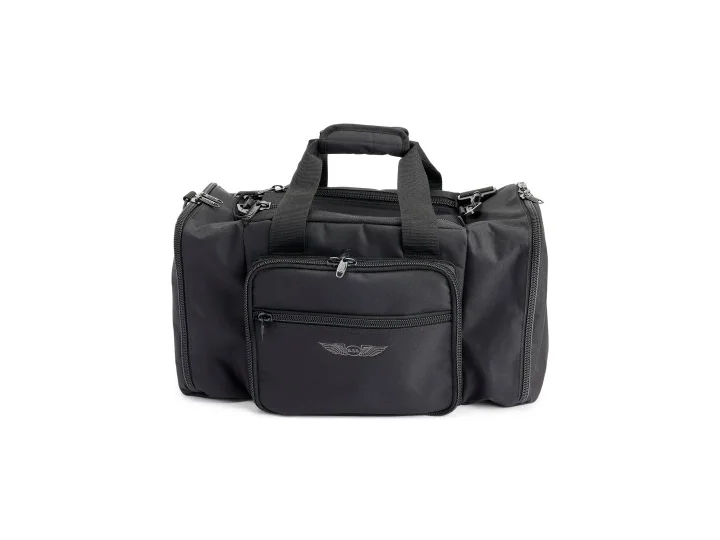
The private pilot license cost isn’t one flat fee. It’s a mix of aircraft rental, instructor time, study costs, testing fees, medical requirements, and the simple reality that many individuals need more than the FAA minimum flight time to become proficient. Then, after you earn the certificate, there’s another decision many new pilots don’t think through carefully enough. Should you keep renting, or should you buy an airplane or helicopter?
That second question matters more than people think.
A lot of articles stop at the training bill. They don’t deal with what happens after you pass your checkride, and they rarely explain how to buy an aircraft safely if ownership is your goal. This guide does both. It lays out the specific line items, shows what different training paths can look like, explains what lowers cost without hurting quality, and gives you a practical framework for the rent versus buy decision.
Your Dream of Flying and The Question of Cost
The dream of flying often starts with a clear picture. A cool morning, a preflight on the ramp, and the first time you point a small airplane toward somewhere you chose.
Then the practical question shows up fast. What will a private pilot license cost, and what happens after you earn it?
That second part matters. I’ve watched new pilots budget carefully for training, pass the checkride, then get blindsided by the next decision. Keep renting, or start looking at aircraft ownership? If your long-term goal includes regular weekend trips, business travel, or eventually buying your own airplane, you should think about that early because it changes how you plan your training budget now.
A pilot certificate is not sold like a fixed package. It is a skill you build over time. Two students can fly the same model aircraft with the same instructor and still finish at very different totals because lesson frequency, study habits, weather delays, and how well each lesson sticks all affect the final bill.
That is why a smart budget starts with the full process, not just an advertised hourly rate.
At Du Bois Aviation, I tell students to budget for efficient, consistent training and to leave room for the practical costs that show up along the way. A student who flies regularly, studies before each lesson, and shows up prepared usually spends less than the student who trains sporadically and repeats lessons. If you want a practical overview of the process before you start pricing line items, our guide on how to get your pilot’s license is a good place to begin.
There is also a simple habit that keeps this whole plan under control. Track every training payment from day one, including deposits, headset purchases, written test fees, and those extra flights that happen when progress pauses for a week or two. Students who track expenses effectively usually make better decisions about pacing, financing, and whether ownership makes sense after the checkride.
Cost matters, but cost by itself is the wrong target. The right target is finishing as a safe private pilot with a realistic plan for what flying will cost after the license is in your wallet.
The Complete PPL Cost Breakdown A Line-Item Guide
A private pilot budget gets clearer once you price the training the way a flight school bills it. Students do not buy “a license.” They pay for airplane time, instructor time, testing, and the smaller items that add up if nobody tracks them.
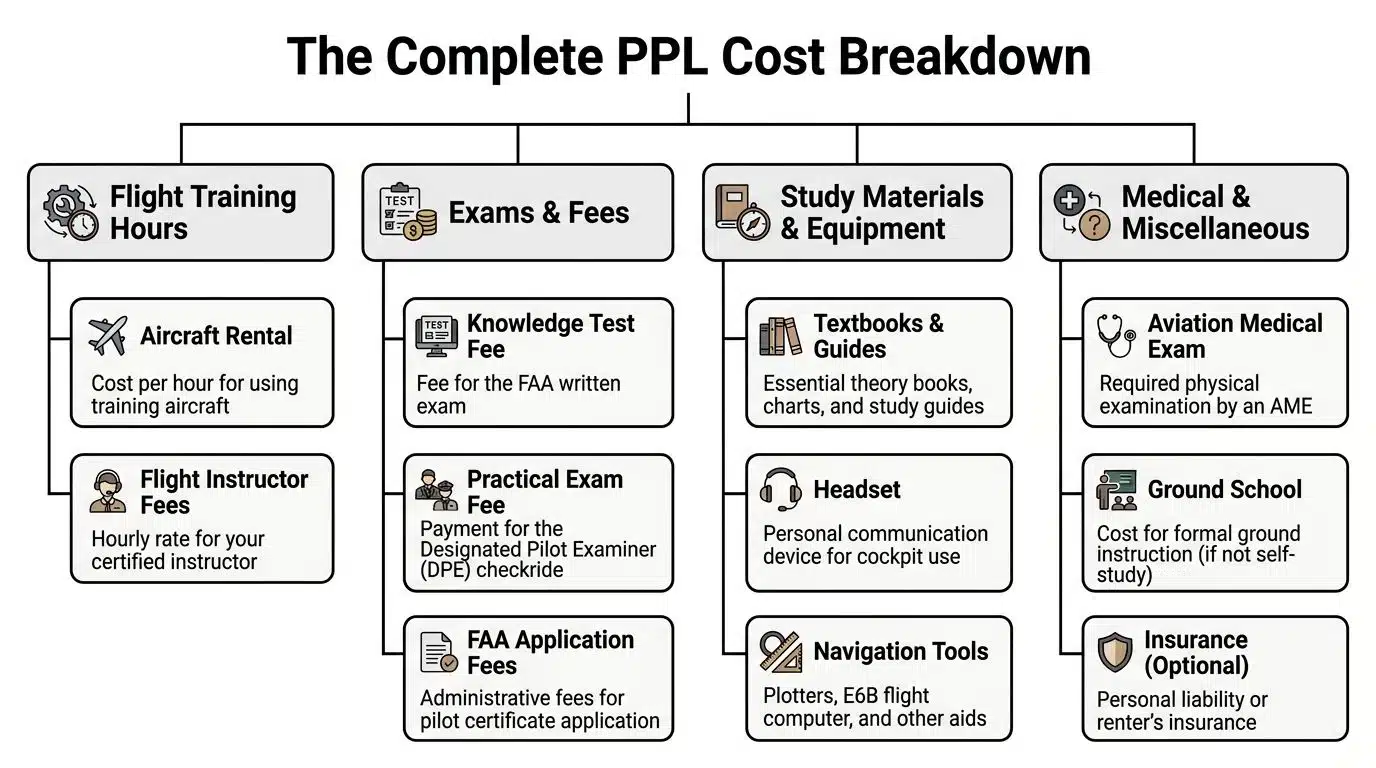
The big categories
Most private pilot students spend money in four places:
- Aircraft rental
- Instructor time
- Testing and FAA requirements
- Study materials and gear
The airplane usually drives the budget. Instructor time is next. The rest matters, but those smaller charges rarely decide whether training stays affordable. Total flight hours do.
Estimated Private Pilot License Cost Breakdown (2026)
| Expense Item | Estimated Cost Range | Notes |
|---|---|---|
| Aircraft rental | $165 to $250 per hour | Major driver of total cost. Type of aircraft and local market affect rate. |
| Instructor fees | $40 to $80 per hour | Applies to dual flight instruction and often some ground instruction. |
| Flight time total | About $10,000 to $12,000 | Based on combined flight-related costs in many typical training paths. |
| Ground school, materials, and exams | $1,000 to $2,000 | Includes training resources and required testing-related costs. |
| FAA written exam | $175 to $200 | Fixed test cost range. |
| Checkride | $500 to $800 | Varies by examiner and location. |
| Medical exam | $100 | Basic aviation medical cost benchmark. |
Where students usually underestimate
The line item that surprises people is not the written test or the medical. It is the extra block of flight time between “FAA minimum” and “checkride ready.”
A student may build an early budget around the legal minimum hours and still come up short because real training includes repeated maneuvers, weather cancellations, rusty landings after a long gap, and extra polish before the practical test. Every added hour usually means more aircraft rental and, in many cases, more instructor time.
Aircraft choice also changes the math. A lower hourly rate helps, but the cheapest airplane on paper is not always the cheapest way to finish. If that airplane is hard to schedule, down for maintenance often, or poorly matched to your size or training goals, the savings disappear fast. I tell students to compare three things together: hourly rate, availability, and reliability. That same thinking matters after you earn the certificate, because the aircraft you train in often shapes your first rent versus buy decision.
The fixed costs people forget
Some expenses show up once or twice, but they still belong in the plan:
- FAA medical exam
- Knowledge test fee
- Checkride fee
- Headset, books, charts, and supplies
- Ground school or app subscriptions
- Renter’s insurance, if your school or insurer requires it
These are not usually the biggest numbers. They are the expenses that get left out of the first spreadsheet.
A budgeting habit that pays off
Good budgeting in flight training is basic discipline. Keep one running log from the first lesson. Record lesson charges, ground instruction, supplies, cancellations, examiner fees, and anything you buy because it supports training.
Students who track expenses effectively usually spot problems earlier. They can tell whether the issue is flight frequency, too much repeat instruction, or a string of small purchases that never made it into the plan.
If you cannot show where last month’s training money went, you will have a hard time controlling next month’s cost.
What this looks like in practice
Before you start, build a budget that answers these five questions:
- Which aircraft will you fly most often
- How many lessons can you realistically schedule each week
- What instructor charges apply in the airplane and on the ground
- Which fees are fixed and separate from hourly flying
- How much reserve cash will you keep for extra hours or a delayed checkride
If you want the full training path laid out before you start pricing each item, review our guide on how to get your pilot’s license.
Sample PPL Budgets and Training Timelines
You start training in the spring, plan to fly twice a week, and expect to be done by summer. Then work gets busy, weather wipes out three weekends, and a two-week gap turns one landing lesson into three. That is how a private pilot budget changes in real life.
The biggest cost variable is not usually the posted aircraft rate. It is training rhythm.
Scenario one: The tightly scheduled student
This student has calendar control, solid study habits, and enough availability to keep lessons close together. Progress tends to be steady because each lesson builds on the last one instead of spending paid time getting back to where you were.
On paper, this is the cheapest path. In practice, it only works if your schedule, weather windows, instructor availability, and preparation all line up. I tell students to treat this budget as a best-case reference point, not the amount they should count on spending.
A student on this track may finish in a few months. If you want a realistic sense of pacing, our guide on the timeline to get a private pilot license lays out what affects the schedule.
Scenario two: The part-time student with a job and family
This is the common training pattern.
You fly once or twice a week when life cooperates. Some weeks go well. Some weeks disappear. You still move forward, but the calendar stretches because flight training competes with everything else you already have going on.
A typical progression often looks like this:
Month 1
Intro flights, checklists, basic maneuvers, and the start of ground studyMonths 2 to 3
Pattern work, takeoffs and landings, radio confidence, and emergency proceduresMonths 4 to 5
Solo prep, local solo flights, cross-country planning, and night trainingMonths 6 and up
Refinement, mock oral work, checkride prep, and waiting on examiner scheduling
This training path usually costs more than the tightly scheduled version because repetition creeps in. A long gap before a lesson often means paying to review landings, slow flight, or radio work you already learned once.
That does not make part-time training a bad decision. It just means the budget needs margin.
Scenario three: The accelerated student
Some students can fly several times a week and finish quickly. That pace helps because skills stay fresh, procedures stay familiar, and less lesson time gets burned on review.
It also creates pressure. Frequent flying only saves money if you show up prepared and keep the pace going. If you train hard for two weeks and then disappear for ten days, the cost advantage starts to fade.
I have seen accelerated students do very well when they treat training like a real commitment, with study time blocked off between lessons and enough cash reserve to avoid stopping midway.
Build your budget around the timeline you can sustain
Such planning helps students make better decisions. Do not choose the cheapest-looking plan. Choose the plan you can keep.
If your work schedule only supports one lesson most weeks, budget for a longer runway and more review time. If you can fly three times a week for two straight months, your total cost may be lower even though your weekly spending is higher.
That same thinking matters after the checkride. A pilot who trains slowly and then flies only once a month usually keeps paying for rust, whether that shows up as extra dual instruction in a rental or higher ownership costs in an airplane that sits. Pilots who expect to fly often should already be thinking ahead about the rent-versus-buy decision, because post-license flying costs can overtake training costs faster than new owners expect.
For some students, practicing procedures on the ground between lessons can help keep skills sharp and reduce wasted review time. Services such as Motion Flight Simulator Hire show how simulation can supplement repetition, especially for flows, scan habits, and cockpit workload. It does not replace airplane time for a PPL, but it can support better preparation.
Proven Strategies to Reduce Your Flight Training Costs
Saving money in flight training doesn’t come from cutting corners.
It comes from reducing waste.
Train consistently
This matters more than any coupon, package deal, or gear purchase.
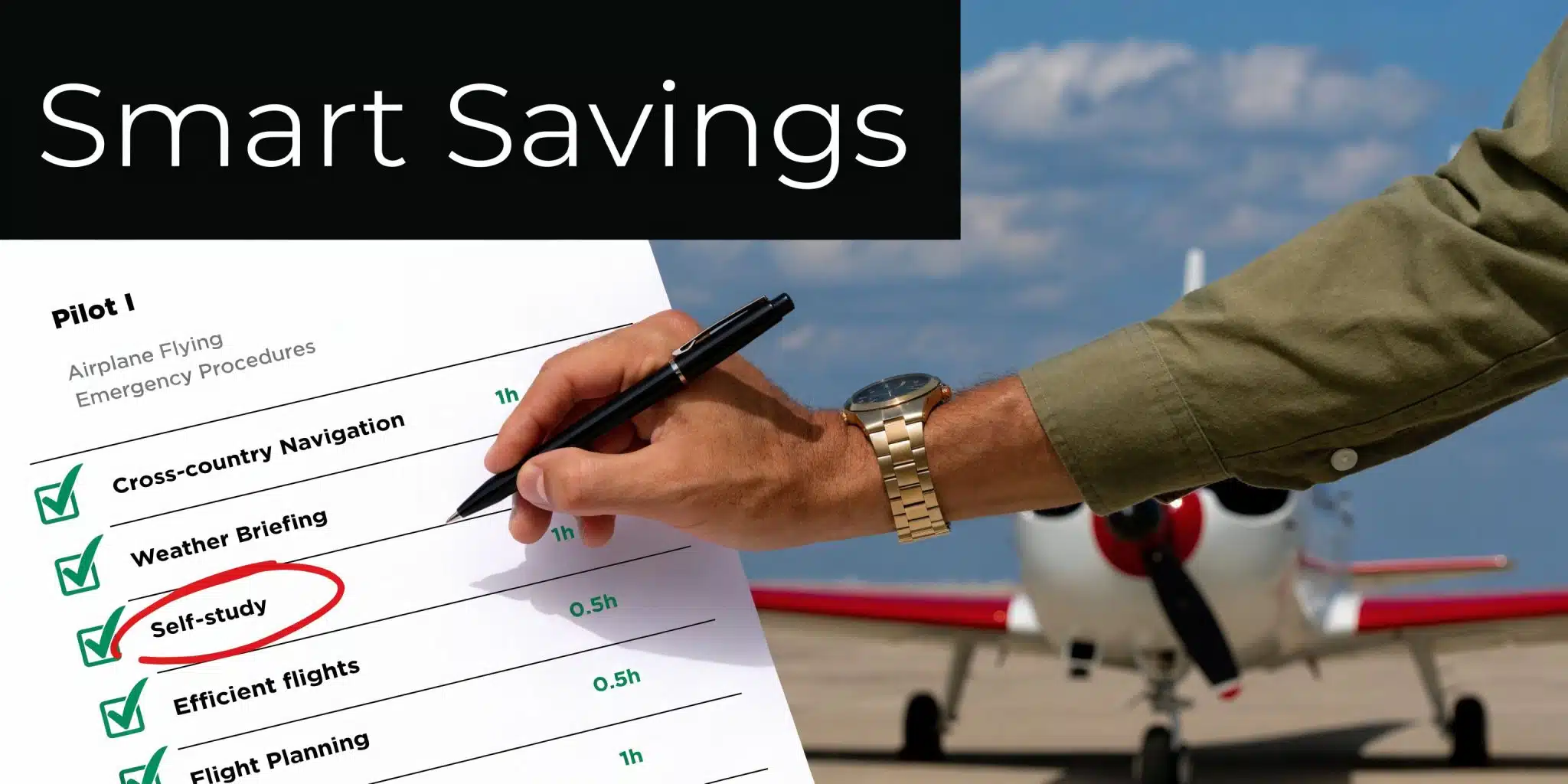
While the FAA requires 40 flight hours, most students take 55 to 70 hours. Each extra hour adds $150 to $250 to the total cost, and consistent training that reduces total hours can save $1,500 to $5,000 (AOPA student pilot cost guidance).
That’s why students who fly regularly usually spend less than students who “save money” by stretching lessons too far apart. Long gaps force review. Review burns hours. Burned hours raise the final bill.
Study on the ground before you pay to study in the air
Cockpit time is expensive. Chair-flying at home isn’t.
Come to each lesson already knowing the maneuver objective, the checklist flow, and the common errors. If you need your instructor to explain every concept from scratch during engine-running time, you’re using the most expensive classroom available.
Useful prep includes:
- Chair-flying procedures so your hands know the sequence before you taxi
- Reviewing lesson objectives before each flight
- Practicing radio phraseology aloud instead of only reading it
- Finishing assigned ground study before the next lesson, not after
Use simulation where it makes sense
A good simulator can sharpen flows, instrument scan habits, navigation sequence, and radio comfort without the full expense of live aircraft time. It won’t replace all flight training, but it can make your airplane lessons more productive because you’ve already rehearsed the task.
Some students also like aviation-themed simulation experiences outside formal training because they build familiarity and confidence. If you’re curious what a public-facing simulator setup looks like, Motion Flight Simulator Hire shows the kind of immersive format people often recognize before stepping into more structured aviation training.
Here’s a good place to pause and think about the habit that really cuts cost: preparation before the Hobbs meter starts.
Pick an operation that supports momentum
Well-maintained aircraft and reliable scheduling help students keep moving. That sounds obvious, but it’s one of the most overlooked cost factors.
If the airplane is frequently down, if booking is chaotic, or if you keep changing instructors, training drifts. When training drifts, proficiency drifts with it.
One option students in Southern California often consider is DuBois Aviation’s scheduling and training setup at Chino, which includes aircraft rental, one-on-one instruction, and simulator access in the same operation. If you’re comparing ways to make training financially workable, their financing overview is here: https://duboisaviation.com/financial-aid-for-pilot-training/
Buy fewer gadgets early
New students often overspend on accessories before they know what they’ll use.
Get the essentials. Skip the shopping spree. A basic headset, required books, and the standard planning tools will carry you a long way. You can upgrade later, after you know your preferences.
The Pilot's Dilemma Renting vs Buying an Aircraft
Passing the checkride creates a new kind of temptation.
You finally have the certificate. You want freedom, convenience, and access to an airplane on your schedule. Buying starts to sound logical.
Sometimes it is. Often it isn’t.
What renting gives you
Renting is simple. You pay the hourly rate, reserve the airplane, fly it, bring it back, and the operation handles the rest.
That matters because aircraft ownership has a long list of fixed obligations that don’t care whether you fly much that month. Renting avoids the management side of aviation. No annual inspection scheduling. No surprise maintenance coordination. No hangar contract. No insurance renewal shopping. No parts delay headaches.
For a new private pilot, that simplicity is worth a lot. It lets you focus on proficiency, cross-country planning, and confidence-building instead of ownership administration.
What ownership includes
The purchase price is only the opening bid.
According to Airplane Academy’s ownership analysis, annual fixed ownership costs for a typical single-engine airplane can run $10,000 to $20,000 for hangar, insurance, and inspections before fuel or maintenance are even added. For pilots flying under 200 hours per year, renting is almost always more cost-effective (ownership cost discussion).
That’s the line many people need to sit with for a minute.
Owning an airplane means paying for the aircraft even when you’re not using it. If weather cancels your weekend trip, the fixed costs keep running. If an unexpected maintenance issue grounds the plane, you still own the problem. If your flying slows down for family or work reasons, your cost per hour rises fast.
Renting buys access. Ownership buys responsibility.
When renting usually makes more sense
Renting is usually the smarter move when:
- You’re newly licensed and still figuring out your real flying habits
- You fly occasionally rather than on a very high annual schedule
- You want variety in aircraft type or mission
- You don’t want maintenance risk attached to your hobby or personal travel
This is especially true for pilots who are still building confidence and experience. Most don’t need “their” airplane yet. They need reliable access to a good one.
When buying can make sense
Buying starts to make more sense when your mission is stable and specific.
Maybe you know you’ll fly frequently. Maybe you need a particular payload, speed, or mission profile. Maybe you want an aircraft equipped a certain way and you’re prepared for the cost, downtime, and record-keeping that come with it.
That can be a reasonable decision. It just needs to be based on use, not emotion.
The hidden trap
The trap is buying too early because ownership feels like the natural next step after certification.
It isn’t. A private pilot certificate gives you legal privileges. It doesn’t automatically mean ownership is financially efficient. For many pilots, the lower-stress path is to rent for a while, fly enough to understand their true mission, and only then decide whether a purchase fits.
How to Buy Your First Airplane the Safe Way
If you decide ownership is the right move, excitement can become your biggest risk.
A first-time buyer sees paint, avionics, interior, and price. A smart buyer starts somewhere else. Logs, maintenance history, title status, and the quality of the pre-buy inspection tell you far more about the airplane than the ad does.
Start with mission, not inventory
Don’t shop by falling in love with a listing.
Write down what the aircraft needs to do. Short local flights. Weekend trips. Training use. Time-building. Family travel. Light utility work. Different missions point toward different airplanes and helicopters, and buying the wrong mission profile is one of the most expensive mistakes a new owner can make.
A Piper Cherokee may fit one buyer perfectly. A helicopter buyer considering an Enstrom or Robinson has a different maintenance and use profile entirely. The right purchase starts with the mission, not the photo gallery.
Make the pre-buy inspection independent
This is not optional.
Use a mechanic or maintenance shop that works for you, not for the seller. If the seller recommends someone, that can be a starting point for research, but it shouldn’t end the conversation. The pre-buy inspection needs to be independent enough that you trust the findings even if the report kills the deal.
Look for clear answers on:
- Airframe condition
- Engine status and time history
- Propeller condition
- AD compliance
- Logbook completeness
- Signs of damage history or corrosion
- Deferred maintenance
- Avionics condition and functionality
If the seller resists a proper pre-buy, walk away.
The cheapest airplane to buy is often the most expensive airplane to own.
Read the logbooks like they matter
Because they do.
The logs should tell a coherent story of maintenance, inspections, repairs, upgrades, and recurring issues. Missing logs don’t just reduce confidence. They reduce value and can hide major problems.
Pay attention to consistency. Are inspections documented clearly? Do entries make sense in sequence? Is there a pattern of recurring squawks? Was damage repaired and recorded properly? If there’s an engine overhaul in the history, was it documented cleanly?
A good mechanic helps here, but the buyer should still review the records personally.
Verify title and lien status
Before money moves, confirm the aircraft has clear title and no unresolved liens.
That’s where a title search and proper closing process matter. Aircraft transactions aren’t the place for casual paperwork and handshakes. Use a written purchase agreement that spells out price, deposits, inspection rights, closing conditions, and what happens if the aircraft fails inspection.
Escrow services help keep the money and documents controlled until all conditions are met. That protects both parties.
Treat the demo flight correctly
A demonstration flight is useful, but it’s not the same as a clean bill of health.
Use it to evaluate handling, avionics behavior, engine indications, cockpit ergonomics, and whether the aircraft fits the mission you defined. Don’t use it as a substitute for maintenance due diligence.
Know when to walk
A safe airplane purchase is as much about discipline as knowledge.
Walk away when the seller is evasive, the records are incomplete, the mechanic finds expensive uncertainty, or the transaction feels rushed. There will always be another airplane. There may not be another chance to avoid a bad one.
Start Your Flight Plan at Du Bois Aviation
Good flight training decisions usually come down to three things. The aircraft need to be available, the instruction needs to be structured, and the environment needs to build useful skills from the beginning.
That last point matters more than many new students realize. Training at a Class D airport with multiple instrument approaches provides realistic airspace experience from day one and can reduce total training hours by 5 to 10 percent compared with uncontrolled-field training by accelerating radio communication and navigation proficiency, according to Neu Aviation’s analysis of training environments (training environment discussion).
For a student trying to control private pilot license cost, that’s a practical advantage, not just an operational detail.
A school based at Chino also gives you exposure to real traffic flow, radio work, and a more complete day-to-day flying environment. That tends to produce pilots who are less rattled later when they branch into cross-country flying, instrument training, or aircraft rental.
Fleet choice matters too. An economical trainer can help keep the early phase of training manageable. A different aircraft may make more sense later as your mission changes. Having those options in one place makes budgeting easier because you can match the tool to the stage of training instead of forcing one solution onto every lesson.
If you’re serious about getting started, the most useful first step is simple. Book a discovery flight, ask direct questions about aircraft availability and lesson frequency, and look at the training plan in writing. A good first conversation should leave you with fewer unknowns, not more.
Frequently Asked Questions About PPL Costs
Is the private pilot license cost a fixed package?
Usually, no. Most training is billed by the resources you use, especially aircraft time and instructor time, plus fixed items like testing and medical requirements.
Why do two students spend different amounts?
Because proficiency doesn’t arrive on a schedule. One student may train frequently and retain each lesson well. Another may take longer gaps, need more review, or face scheduling interruptions.
Is the cheapest airplane always the cheapest way to train?
Not always. A lower hourly rate helps, but aircraft availability, condition, and how efficiently you progress matter too.
Should I buy an airplane right after getting my license?
For many new pilots, renting first is the more sensible move. It gives you access without taking on all the fixed costs and ownership risk before you know how much you’ll fly.
What’s the smartest way to keep costs under control?
Train consistently, study before each lesson, stay organized with your spending, and avoid building your whole budget around the FAA minimum hours.
If you want clear answers about training, aircraft options, and what your path could look like at Chino, contact DuBois Aviation. A good conversation upfront can save you time, money, and a lot of guesswork.