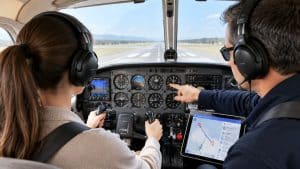
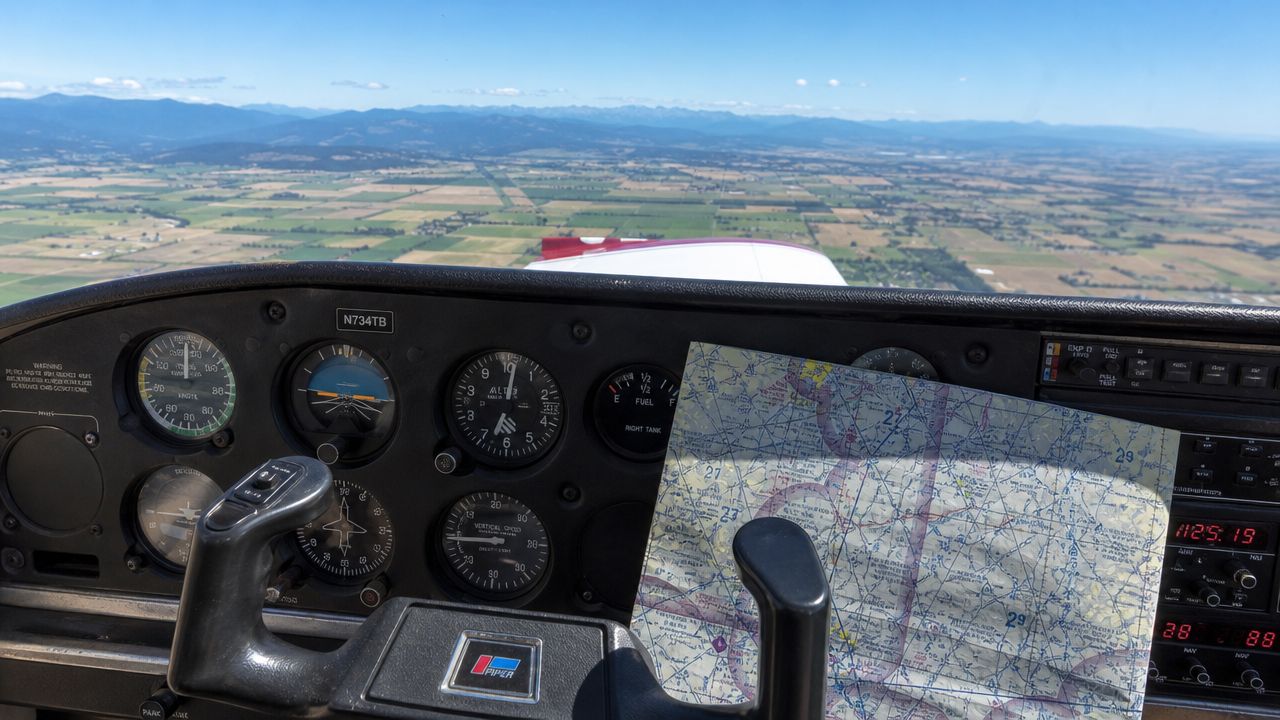
You're on the ramp at Chino with a kneeboard, a sectional, and that mix of excitement and nerves every student pilot knows. The flight looks simple on paper. Weather seems workable. The airplane is fueled. Then the two questions that matter most start pressing on you.
How far can this airplane really go, and how long can I safely stay airborne?
Those are not the same question. Student pilots often blend them together until the first serious cross-country planning session forces the issue. If you fly out of KCNO, where you can head toward the basin, the desert, the mountains, or the coast in a short amount of time, understanding range and endurance stops being academic very quickly.
Two practical options worth comparing
These are specific products pilots commonly compare for this type of flying. Confirm compatibility with your aircraft and instructor before ordering.
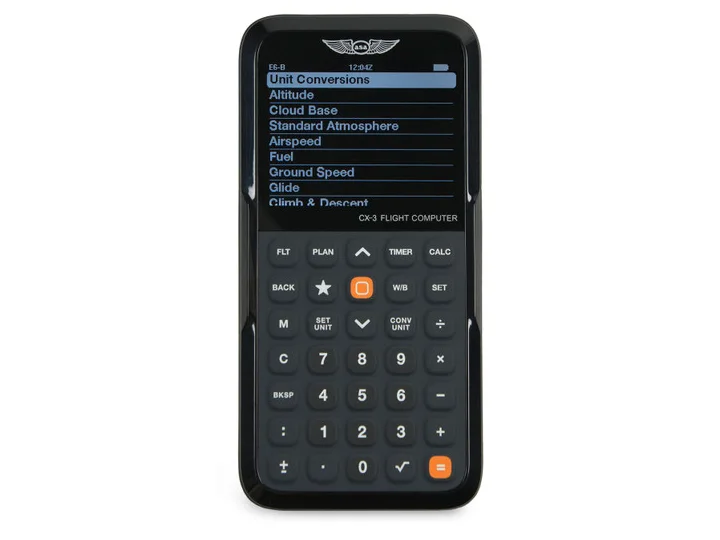 Flight planningASA CX-3 Flight ComputerCheck current availability on Amazon (paid link)
 Electronic flight bagApple iPad mini A17 Pro, Wi-Fi and Cellular, 128GBCheck current availability on Amazon (paid link)
Your First Cross-Country The Ultimate Planning Challenge
A student at Chino usually reaches this point right before a solo cross-country. You've done local work. You've practiced takeoffs, landings, slow flight, stalls, ground reference maneuvers, and maybe a dual cross-country or two. Now the route is yours to build, and the airplane's fuel system suddenly feels less like a chapter in the textbook and more like a real limit.
At that moment, the fuel gauges tempt you to oversimplify the problem. Full tanks must mean plenty of time, plenty of distance, and a wide safety margin. That thinking gets pilots in trouble because fuel aboard is only one part of the story. Wind, altitude, power setting, mixture, aircraft loading, and your actual mission all change what that fuel buys you.
A Chino departure makes this especially real. A run toward the desert may reward smart altitude and power choices. A westbound leg can feel efficient until a changing wind picture starts cutting into your groundspeed. A mountain route can consume more climb performance and fuel than a flatland student expects. That's why a careful VFR cross-country flight planning guide matters before you ever taxi.
You're not planning only for the flight you want. You're planning for the delay, reroute, stronger headwind, longer taxi, or second approach to the pattern that may happen instead.
That mindset is what separates a pilot who can fill out a nav log from a pilot who can make sound decisions as pilot in command.
Range vs Endurance The Core Concepts Explained
The cleanest way to understand this is to treat range and endurance as answers to different questions.
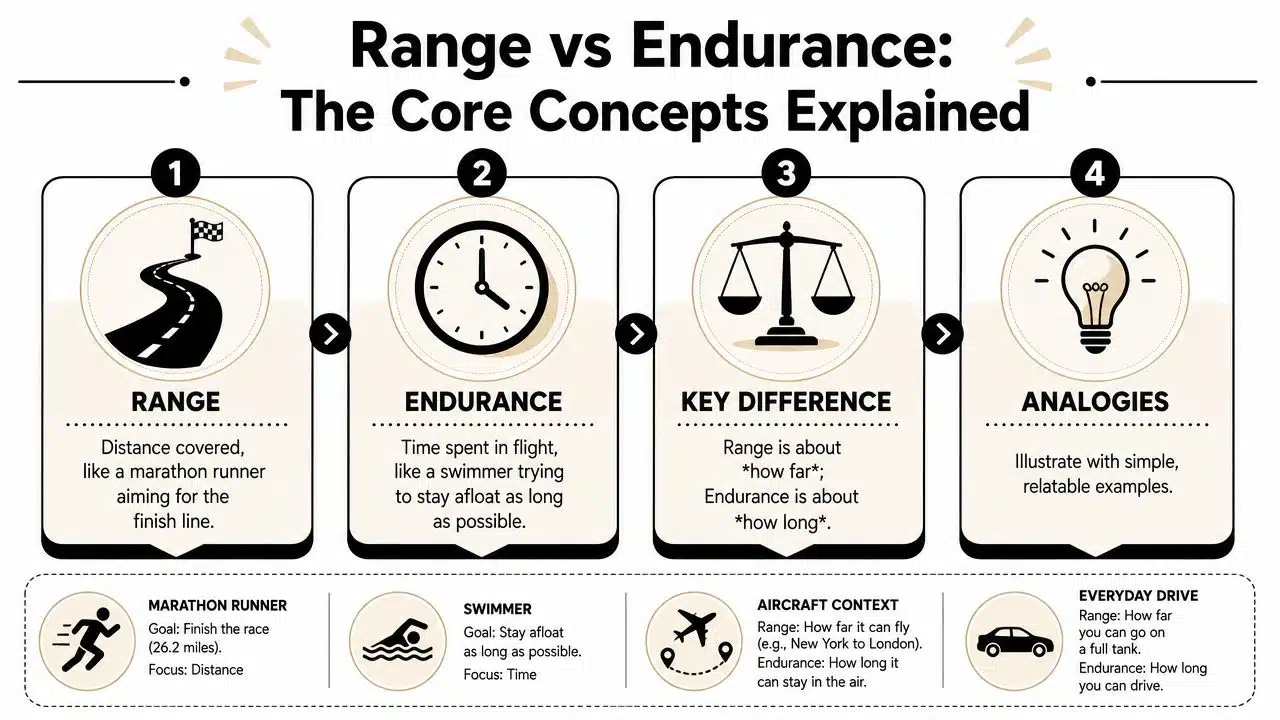
The two questions every pilot should ask
Range is how far the airplane can travel.
Endurance is how long the airplane can remain in the air.
That sounds simple, but students often miss the operational difference. If you're trying to get from KCNO to a distant destination with as few fuel stops as practical, range is the priority. If you're holding, orbiting, waiting on weather, searching visually for traffic, or stretching time aloft for a training objective, endurance matters more.
A good analogy is a runner versus a camper. The runner wants to cover the greatest distance before using up supplies. The camper wants supplies to last as long as possible, even if he hardly moves. Your airplane does the same thing depending on speed and power setting.
Why the difference matters in the cockpit
Many pilots assume one speed must be best for both. It isn't. The speed that gives you the most miles per gallon is not usually the speed that gives you the most minutes per gallon.
That's why the POH may show different performance targets for economy cruise, long-range cruise, or loiter-type operation. If you confuse those goals, you may arrive with less reserve than expected or spend less time airborne than planned.
A short way to remember it:
- Think distance: Use range thinking when the destination drives the decision.
- Think time: Use endurance thinking when staying aloft safely drives the decision.
- Think mission first: The airplane doesn't care what you intended. It responds to aerodynamic and power-setting choices.
After you've got the idea, this visual walkthrough helps reinforce it:
Where students get tripped up
The most common confusion is mixing up airspeed and groundspeed in the fuel conversation. Endurance lives mostly in the airplane's relationship to fuel flow. Range depends on how efficiently that fuel flow turns into distance over the ground.
A headwind can punish range because you cover less ground for the same fuel burned. Yet the same headwind doesn't directly shorten the amount of time the engine can run on the fuel you have. That distinction becomes very important on flights out of KCNO where the outbound and return legs can feel very different.
The Aerodynamics Behind Your Fuel Burn
The reason one speed favors range and another favors endurance comes from basic aerodynamics. You don't need to be an engineer to use it, but you do need to understand the shape of the problem.
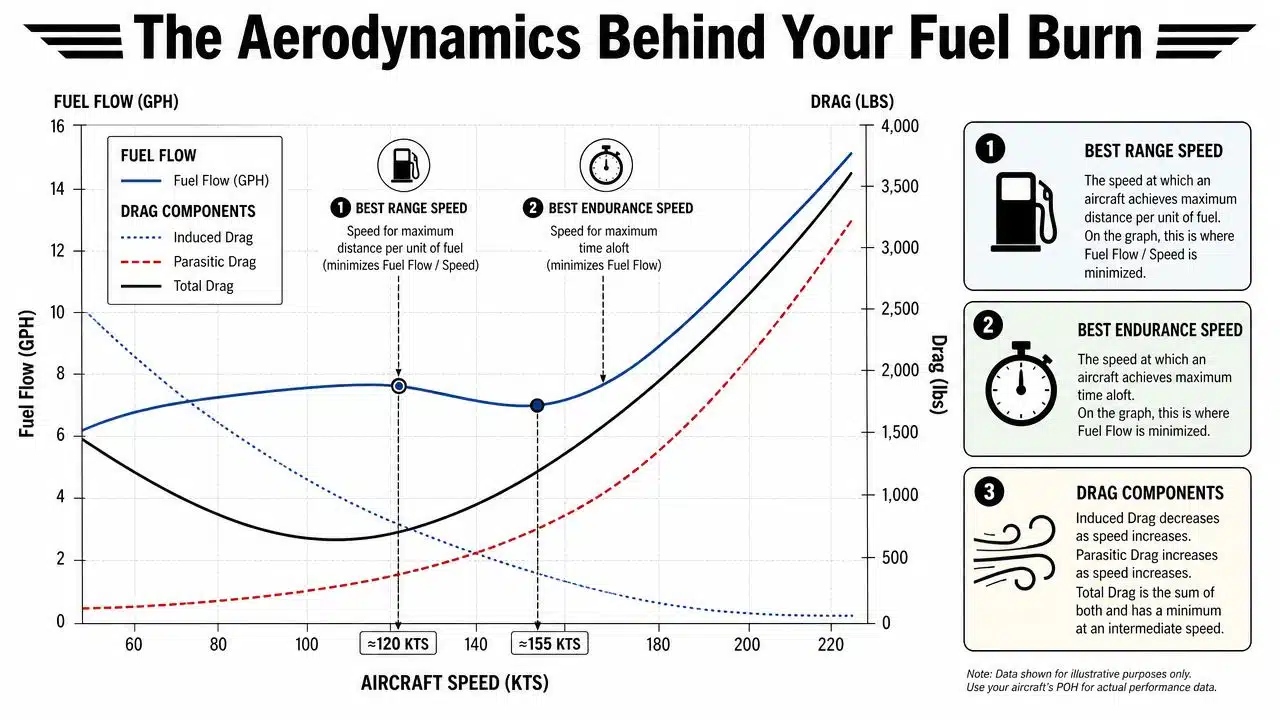
Drag is always asking for payment
In level flight, the engine has to provide enough power to overcome drag. Drag comes in two broad forms that student pilots should know cold.
- Induced drag is highest at lower airspeeds because the wing has to work harder to produce lift.
- Parasitic drag rises as airspeed increases because the airplane is pushing through the air faster.
- Total drag is the combination of those two, and somewhere in the middle there's a minimum point.
That minimum-drag area matters because it's tied to the airplane's most aerodynamically efficient lift-to-drag condition. In practical terms, that's why there's a speed neighborhood where the airplane gets the most distance from a given amount of fuel.
Best range and the drag picture
For a propeller airplane, best range is associated with a speed that gives strong distance return for the fuel being burned. Students often hear instructors connect this with the best lift-to-drag region, and that's a useful mental model.
If you fly too slowly, induced drag climbs and the airplane wastes energy holding itself up. If you fly too fast, parasitic drag rises and the engine spends fuel shoving the airplane through the air. The sweet spot sits between those two penalties.
Cockpit reminder: Best range is about getting the most ground covered from each unit of fuel, not simply flying as slowly as possible.
Best endurance and the power curve
Endurance shifts the question. Now you don't care about miles as much as minutes. For that, you want the lowest fuel flow that still supports the flight condition you need.
That usually means a slower speed than best range. Why? Because the goal isn't to move efficiently across the map. The goal is to keep the engine burning the least fuel practical while remaining safely airborne.
Students first encounter the backside of the power curve in a meaningful way. Very slow flight can require more power, not less, because induced drag becomes expensive. So best endurance isn't “as slow as the stall horn will allow.” It sits at the minimum power-required point, not at the minimum possible airspeed.
Why this matters near Chino
KCNO is a perfect place to see these ideas in real flying. Climbing away from the busy basin environment, crossing mixed terrain, and adjusting for routing or traffic can all pull you away from the neat textbook number. When you understand the aerodynamic reason behind the POH value, you're less likely to chase random airspeeds and more likely to make disciplined decisions.
A pilot who knows only the number memorizes. A pilot who knows the curve understands when conditions are nudging the airplane away from the efficient part of the envelope.
Calculating Performance with Your POH
The POH is where theory becomes planning. Students often open the performance section, see a chart with curved lines and footnotes, and mentally shut down. Don't. The chart is just a set of questions in visual form.
A simple way to read the chart
Use the same sequence every time:
- Start with the exact aircraft. Use the handbook for that make, model, and configuration.
- Set your conditions. Pressure altitude, temperature, weight, and power setting come first.
- Find the proper chart. Cruise performance, fuel consumption, and sometimes range data may be in separate places.
- Read across carefully. Match your altitude and temperature or performance condition.
- Translate to your flight. Convert what the chart tells you into expected fuel burn, time, and distance for the route.
For a Piper Cherokee, that process usually becomes manageable once you stop trying to absorb the whole page at once. Read one chart for one purpose. Don't bounce between takeoff, cruise, and landing charts in the same moment unless that's the task.
What to look for in practice
Suppose you're planning a cross-country from KCNO and want to compare a more economy-minded cruise with a more time-efficient cruise. The handbook gives you the legal and practical framework for that decision. What matters is not guessing from memory. What matters is selecting a power setting and airspeed that match the published data for the day's conditions.
Students sometimes ask for a quick-reference number they can carry in their head for every airplane. That's a trap. The Cessna 150, Piper Cherokee, and Mooney M20B all behave differently enough that using “about the same” logic can lead to poor planning. The exact values belong in the current POH for the specific aircraft you're flying.
Quick Reference Performance DuBois Aviation Fleet
Because the specific performance numbers for these aircraft are not provided here, the safest quick-reference table is a planning prompt rather than a substitute for the handbook.
| Aircraft | Best Range Speed (KIAS) | Fuel Burn (GPH) | Best Endurance Speed (KIAS) | Fuel Burn (GPH) |
|---|---|---|---|---|
| Cessna 150 | Check aircraft POH | Check aircraft POH | Check aircraft POH | Check aircraft POH |
| Piper Cherokee | Check aircraft POH | Check aircraft POH | Check aircraft POH | Check aircraft POH |
| Mooney M20B | Check aircraft POH | Check aircraft POH | Check aircraft POH | Check aircraft POH |
The right habit is simple. Use the table in the airplane's POH, then verify that your actual airplane, loading, and planned conditions match the assumptions behind that table.
Two mistakes that cause bad planning
- Using book numbers without checking conditions: Published performance assumes specific variables. If your conditions differ, your result can differ too.
- Treating fuel as fully usable for planning: Safe pilots don't plan as if every last drop is available for normal operations.
If you're evaluating aircraft for training, rental, or ownership, this POH discipline matters just as much as stick-and-rudder skill.
How Weight Wind and Altitude Affect Your Plan
Even a careful POH calculation is only the start. Real-world flying changes the result, and a smart pilot adjusts before takeoff instead of being surprised in cruise.

Wind changes distance more than time
Wind is one of the easiest places to get confused. A headwind lowers groundspeed, so your range suffers because each gallon buys fewer miles over the ground. But the wind itself doesn't directly reduce how long fuel lasts in the tanks. That's why your endurance picture can stay similar while your destination gets farther away in practical terms.
This is especially relevant around Chino. A route that looks comfortable on a calm morning can become much less forgiving later in the day when the wind shifts or strengthens.
Weight costs you in more than one way
A heavier airplane needs more lift. More lift usually means more drag, and more drag usually means more power required. That tends to work against both range and endurance.
Students often feel this first during climb. The airplane accelerates less eagerly, climbs less willingly, and may need more care in pitch and power management. Fuel planning should reflect that same reality. If you're carrying people, bags, and enough fuel for the mission, your performance assumptions should be conservative.
A good companion skill here is careful loading. A current Cessna 172N weight and balance sheet example is useful because it trains your eye to connect loading decisions with real performance consequences, even when you're flying another trainer.
Altitude can help or hurt depending on the mission
Higher altitude often improves cruise efficiency for a piston airplane because the airplane can achieve a useful true airspeed at a more efficient power setting. But that doesn't make “higher” automatically better. You still have to pay for the climb, respect terrain and weather, and use proper mixture technique if the engine and procedures call for it.
For flights from KCNO, altitude planning matters a lot. Desert routes, mountain routes, and coastal routes ask different questions. A pilot heading east may accept a higher cruise altitude for efficiency and terrain clearance. A pilot staying local may decide the climb cost isn't worth it.
Mixture is part of the plan, not an afterthought
Published cruise performance often assumes proper leaning where appropriate. If you skip that, your actual fuel burn may not resemble the chart you used.
Students sometimes treat mixture as a checklist item instead of a performance tool. It's both. Used correctly, it helps you approach the efficiency the handbook assumes. Used poorly, it can waste fuel and give you false confidence in your range and endurance planning.
A practical way to think about the variables
- Wind: Changes how efficiently time aloft becomes miles over the ground.
- Weight: Changes the power needed to fly the airplane.
- Altitude: Can improve cruise efficiency, but only if the whole mission supports it.
- Mixture: Helps the engine deliver the performance your planning assumed.
The safest fuel plan is the one that still works after a longer taxi, a reroute, and a less-than-perfect forecast.
Applying Performance Knowledge When Buying an Airplane
A lot of pilots think range and endurance only matter in training. They matter just as much when you're shopping for an airplane or helicopter.
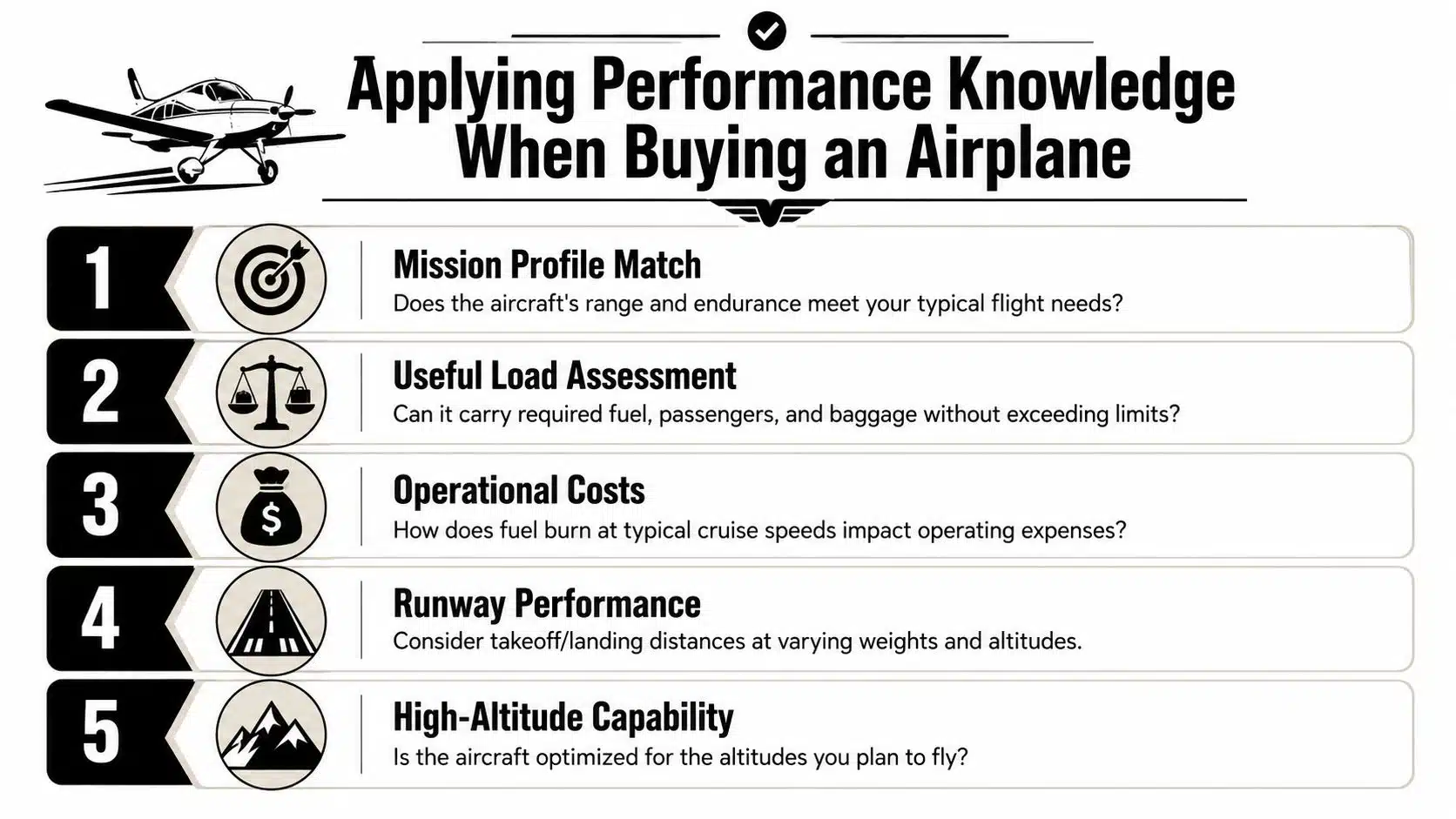
The first question isn't “Do I like this airplane?” It's “Does this aircraft fit the mission I fly?” A student who plans to build time around Southern California may need something very different from a pilot who wants regular family cross-countries or mountain operations. The airplane that looks attractive on the ramp may not carry the payload, fuel, or reserves you need for your real trips.
When you review a prospective purchase, read the POH with your own flying in mind. Think about departures from KCNO on warm days, the routes you expect to use, and whether the airplane can carry the people and fuel you want without backing you into a performance corner. That's where range and endurance knowledge becomes a buyer's filter rather than just a classroom topic.
The second question is safety. Buying an airplane the safe way means insisting on a proper pre-buy inspection by someone who understands the type. If the airframe, engine, propeller, fuel system, or instrumentation can't reliably support the performance you're counting on, the aircraft isn't merely inconvenient. It may be a poor safety bet.
A smart buyer also checks whether the seller's story matches the documents. Logbooks, maintenance history, POH supplements, installed equipment, and actual loading capability should all line up with the mission you plan to fly.
Flight Planning Tips for Pilots at Chino Airport
Pilots out of KCNO should treat range and endurance as daily decision tools, not just written-test vocabulary. Chino puts you near busy airspace, changing winds, rising terrain, and very different weather patterns within a relatively short flying radius. That means sloppy planning gets exposed fast.
Think in local mission types
A flight toward Big Bear asks for honest climb and terrain thinking. A flight toward Palm Springs brings heat, density altitude, and long stretches where fuel options may shape the route. A coastal trip toward Santa Barbara can look straightforward until marine influence and visibility changes force you to rethink altitude or timing.
Each of those flights starts with the same discipline. Know whether your goal is distance efficiency or time aloft, then choose your altitude, power setting, and fuel strategy accordingly.
Practice the skill close to home
The best way to build judgment is to practice these decisions on routine flights. Compare planned fuel burn with actual fuel added after flight. Notice how a different cruise altitude changes groundspeed and engine management. Practice loiter-style power settings in an appropriate training area and compare the airplane's feel to your cross-country cruise setup.
For pilots working on cross-country habits, filing and following a formal plan adds structure. A practical guide to filing a flight plan helps turn your route, timing, and fuel thinking into a repeatable process instead of a last-minute guess.
Local knowledge around Chino matters, but local habits matter more. The pilots who stay ahead of the airplane are the ones who plan fuel and performance before the engine starts.
If you rent, train, or time-build regularly, use every trip out of KCNO as a chance to sharpen that judgment. Range and endurance are not separate from safety. They are fuel planning expressed as discipline.
If you want structured help turning these concepts into better cross-country planning, aircraft evaluation, or safer buying decisions, DuBois Aviation offers flight training and aircraft access at KCNO where you can practice the judgment behind range and endurance in real Southern California operations.
Try the aviation tools
Work through fuel, wind, altitude, and navigation calculations in one place.