510 noncommercial icing-related accidents, including 202 fatalities, were recorded from 1998 through 2009. Icing conditions begin when supercooled liquid droplets freeze on a cold aircraft surface, and for a Cessna 172 or Piper Archer with little or no airframe ice protection, that can quickly become a launch, turn-back, or diversion decision.
A winter flight can look routine at Chino Airport. The airplane sits on the ramp with a damp windshield, a faint film on the wings, and a forecast that mentions scattered cloud near freezing. A student pilot may think the concern starts after entering visible cloud. It starts earlier, with the aircraft's actual contamination, the route's moisture, the airplane's approved limitations, and the escape options available before takeoff.
Icing conditions aren't a temperature checklist. They're a decision workflow built around forecast information, recent PIREPs, aircraft equipment, escape altitude, route exposure, and personal minimums. The process continues throughout the flight because ice can accumulate after a clean preflight and because an anti-ice or de-ice system doesn't make every icing environment acceptable.
Two practical options worth comparing
These are specific products pilots commonly compare for this type of flying. Confirm compatibility with your aircraft and instructor before ordering.
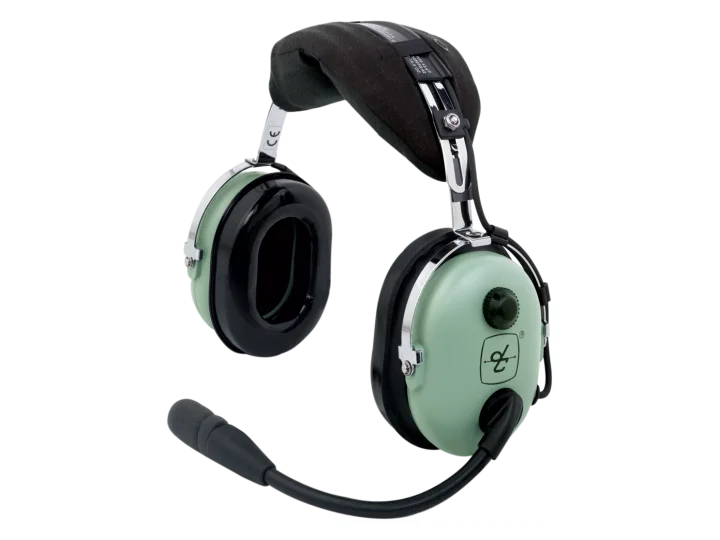 Student headsetDavid Clark H10-13.4 Aviation HeadsetCheck current availability on Amazon (paid link)
 OrganizationASA Flight BagCheck current availability on Amazon (paid link)
Table of Contents
- What Icing Conditions Mean Before You Even Start the Engine
- How Supercooled Water Creates Airframe Icing
- Where Ice Accretes on the Aircraft You Actually Fly
- Icing Severity Explained in Practical Terms
- Forecasts, AIRMETs, SIGMETs, and PIREPs You Should Read Before Launch
- FAA Rules and Operating Limitations That Apply to Your Aircraft
- Anti-Ice and De-Ice Systems on Trainers and Rentals
- In-Flight Decision Gates for Student Pilots at Chino
What Icing Conditions Mean Before You Even Start the Engine
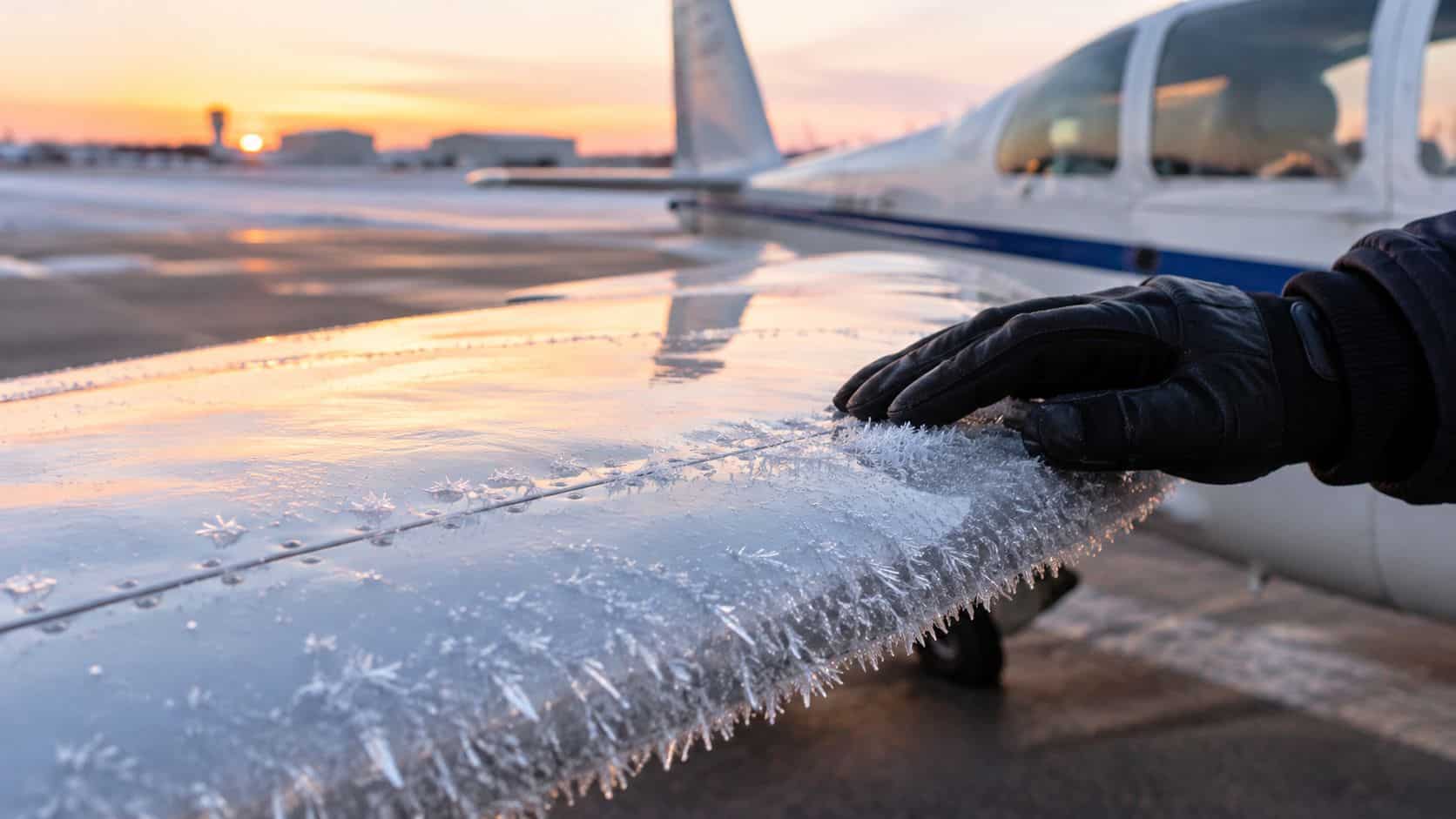
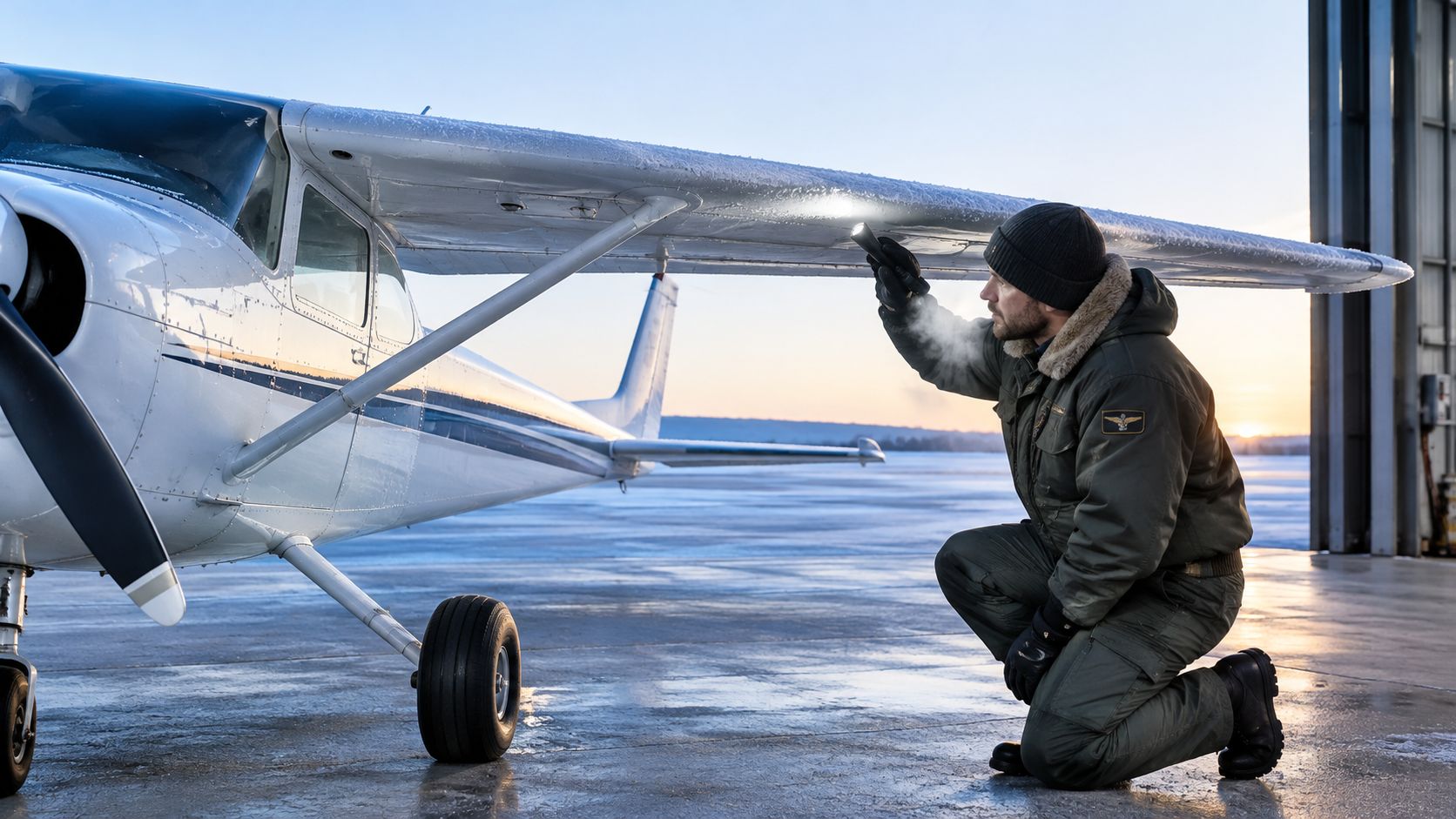
A cold morning on a tied-down Cherokee creates the first decision gate. Frost can be thin, polished, or difficult to see, but the wing, stabilizer, elevator, rudder, and other lift-producing or control surfaces must be inspected by touch and sight. A short local flight doesn't make contamination acceptable, and a clean-looking section of wing doesn't prove that the entire aircraft is clean.
The FAA's cold-weather guidance says lift-generating surfaces must be completely free of contamination before flight and warns pilots not to treat smooth or polished frost as acceptable just because it's hard to see. The same guidance recommends following the aircraft's flight-manual procedures and using approved deicing methods when available, as described in FAA cold-weather contamination guidance.
Why private pilots deserve a conservative plan
A U.S. Government Accountability Office review of National Transportation Safety Board data found that from 1998 through 2009, icing-related accidents included 510 involving noncommercial airplanes, 49 involving small commercial airplanes, and 6 involving large commercial airplanes. Those accidents caused 202 fatalities in noncommercial aviation and 27 fatalities in small commercial aviation during the period, according to the GAO review of icing-related aviation safety data.
The figures don't mean every forecast mention of icing produces an accident. They do show why a private pilot flying a lightly equipped trainer needs a clear refusal point rather than a vague hope that conditions will remain manageable. A non-FIKI trainer usually has fewer options for preventing or removing accumulated ice, and its operating limitations may prohibit flight into known icing entirely.
The first five decision gates
Before starting the engine, a pilot should be able to answer these questions:
- Is the airplane clean? No frost, ice, snow, or freezing contamination remains on critical surfaces.
- Where is the moisture? The route, cloud layers, precipitation, freezing levels, and terrain all matter.
- What does the aircraft permit? The POH, AFM, placards, and equipment status control the aircraft-specific decision.
- Where is the exit? A warmer altitude, clear-air route, turn-back path, or diversion airport must be realistic.
- What ends the flight? Personal minimums should trigger a delay, return, or diversion before workload and performance margins deteriorate.
A structured go or no-go decision framework helps turn those questions into an actual preflight choice.
How Supercooled Water Creates Airframe Icing
Water doesn't need to be frozen before it becomes an icing threat. Tiny droplets can remain liquid below 0 degrees C, then freeze when they strike a cold aircraft surface. The leading edge provides the first obvious target, but the droplets can also affect propellers, antennas, struts, windshields, engine inlets, and protected areas that aren't designed for every droplet size.
The most operationally important temperature band is approximately 0 degrees C to -20 degrees C, where supercooled droplets are more likely to remain available for accretion, according to FAA icing guidance. Temperature alone still can't answer whether icing exists. Liquid water, cloud or precipitation, droplet size, exposure time, aircraft geometry, and protection systems all influence the result.

Droplet size changes the shape of the threat
Small droplets freeze rapidly on contact and tend to form rime ice, a rough, opaque deposit. Larger droplets spread along the surface before freezing and form clear ice, which is smoother, denser, and often more difficult to judge visually. Mixed ice contains characteristics of both.
Clear ice deserves particular caution because it can reshape the leading edge instead of merely adding weight. It can increase drag, reduce maximum lift, raise stall speed, and degrade control margins, as the FAA explains in the linked guidance above.
A student flying a cross-country near Southern California might encounter a cloud layer with supercooled liquid water even when the sky below looks ordinary. A descent through a freezing layer can also create a different risk from a climb through cloud, because the aircraft may pass through changing temperatures and precipitation types while the pilot is managing terrain, radio work, and configuration.
Why freezing precipitation is a separate warning
Freezing drizzle and freezing rain involve supercooled large droplets. They can remain liquid beyond protected leading-edge areas, run aft, or splash onto surfaces that conventional boots or heated zones don't protect. This is why a forecast for freezing precipitation deserves a stronger response than a general statement about possible in-cloud icing.
The useful mental model is simple: cold air doesn't create ice by itself. Supercooled liquid water creates the accretion when it meets the aircraft. That distinction prevents a common mistake, treating a clear, cold day as automatically dangerous while overlooking visible moisture near freezing.
Where Ice Accretes on the Aircraft You Actually Fly
A pilot should inspect more than the wing leading edge. Ice changes the aircraft through several paths, and each path produces a different cockpit problem. A Piper Cherokee may show structural contamination on the wing, stabilizer, struts, windshield, antennas, and control surfaces, while the engine may face induction or propeller effects at the same time.
NASA Glenn Research Center tests found that clear icing for only 2 minutes could double drag, reduce maximum lift by 25 percent to 30 percent, and reduce the critical angle of attack by 8 degrees. That means an aircraft can stall at a substantially higher airspeed than the pilot expects, as documented in NASA's airfoil icing research.
Structural icing affects more than lift
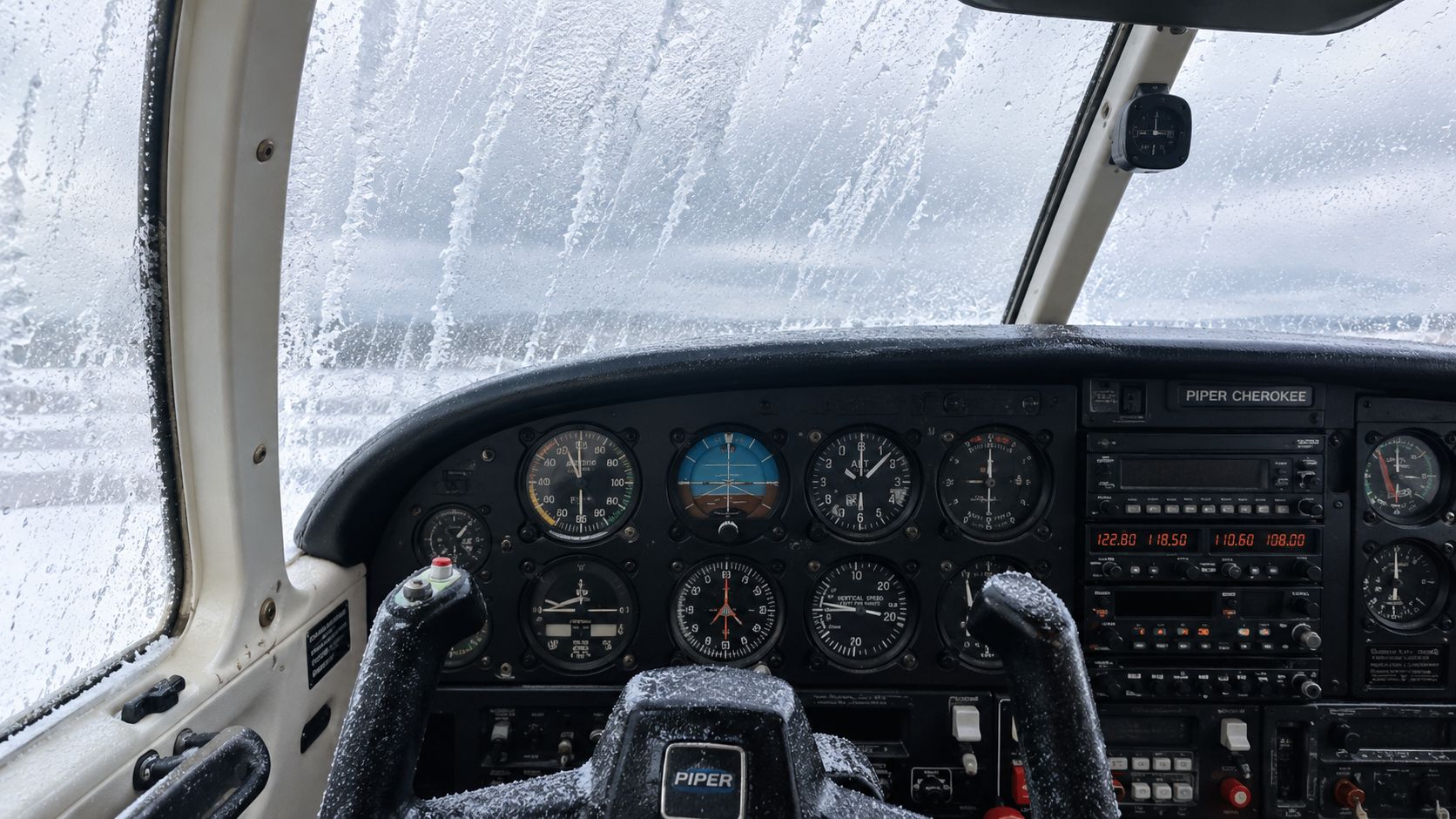
Ice on a wing or tail changes the airfoil's shape and increases drag. Ice on a stabilizer or elevator can alter pitch response, while ice on a rudder or aileron can reduce control authority. A windshield deposit may not change lift directly, but it can remove the visual references needed for traffic avoidance, approach alignment, and landing.
A pilot who sees a small ridge on a leading edge shouldn't assume that the rest of the aircraft is unaffected. Accretion can appear on antennas, wing struts, landing gear components, and other protruding surfaces. The correct response depends on the airplane's approved procedures, but a non-FIKI trainer should generally avoid entering the condition rather than evaluate how much ice it can tolerate.
Induction and propeller icing have different clues
Carburetor icing can occur through pressure and temperature changes inside the carburetor, including conditions where the outside air doesn't feel extremely cold. Carb heat procedures are aircraft-specific, and carb heat isn't a substitute for avoiding structural icing. A fuel-injected trainer may not face carburetor icing in the same way, but its induction inlet can still be affected by ice or snow.
Propeller icing reduces thrust and can create vibration as ice accumulates unevenly or sheds. A helicopter pilot also has to consider engine inlet behavior and rotor-system effects according to the specific helicopter's approved procedures. A Robinson or Enstrom student can't transfer a fixed-wing checklist directly to rotorcraft operations, because the aircraft's inlet, power response, rotor system, and limitations are different.
Practical rule: Identify the affected system before selecting a response. Carb heat, windshield defrost, pitot heat, and an airframe ice-protection system solve different problems.
Icing Severity Explained in Practical Terms
Severity describes how fast ice accumulates and what it does to the mission, not merely how cold the air feels. A forecast label such as light or moderate is a hazard description. It isn't permission to enter the condition, especially in an aircraft with no approved protection.
The National Weather Service describes trace icing as perceptible accumulation where deicing may not be needed unless exposure lasts longer than about one hour. Light icing can become problematic after roughly one hour, while moderate icing can create hazardous conditions during an encounter of less than about 30 minutes. Severe icing can accumulate at a rate that makes deicing equipment ineffective, according to NWS aviation icing guidance.
What those labels mean in the cockpit
| Description | Operational meaning | Student-pilot response |
|---|---|---|
| Trace | Ice is perceptible, with risk increasing during prolonged exposure | Avoid treating it as harmless. Monitor conditions and know the exit. |
| Light | Accumulation may become a problem during continued exposure | Don't use the label as a clearance to continue. |
| Moderate | A short encounter can become hazardous | Exit promptly, communicate, and divert or land as needed. |
| Severe | Accumulation can overwhelm deicing equipment | Immediate diversion or escape action is required. |
The exact effect varies with cloud water, droplet size, airspeed, aircraft design, and system capability. A trainer that has no approved airframe protection has a much narrower practical operating envelope than an aircraft certificated for flight into known icing.
Conditions that deserve extra caution
NWS guidance identifies freezing precipitation, cumuliform clouds, temperatures around -2 to -10 degrees C, and multiple freezing levels as especially significant situations. These clues should make a pilot examine the route and escape plan rather than focus on the severity label alone.
A pilot departing through a shallow layer might still face a serious problem if the only clear route requires continued flight, terrain prevents a safe descent, or the nearest suitable airport is behind the weather. The decision gate is not “Can the airplane handle light icing for a while?” It is “Can the pilot avoid the condition or exit it immediately if ice begins to accumulate?”
Forecasts, AIRMETs, SIGMETs, and PIREPs You Should Read Before Launch
A weather briefing should connect products to the route, not become a collection of disconnected graphics. Start with the planned departure, altitude, cloud layers, freezing levels, terrain, and destination. Then ask whether the aircraft can legally and practically operate through each part of that environment.
AIRMET Tango can identify widespread moderate turbulence, strong surface winds, and freezing levels, while icing information may appear in the relevant aviation weather products and briefings. SIGMETs address more serious hazards, and a Center Weather Advisory can provide a timely update for an area where conditions are changing. The product name matters less than matching the forecast area and altitude to the actual flight path.
Read the reports in context
A freezing-level chart can show where the temperature transitions occur, but it doesn't reveal every supercooled droplet or guarantee that air above a freezing level is free of ice. A forecast icing layer also doesn't tell the pilot whether a particular trainer's limitations permit entry.
A useful briefing sequence includes:
- Route and altitude. Identify every cloud layer, freezing level, and terrain segment along the planned path.
- Forecast icing. Note the expected location, altitude, probability, and severity, without treating “light” as approval.
- Recent observations. Ask for PIREPs near the route and at a similar altitude.
- Escape options. Identify warmer air, clear air, lower exposure, a return path, and suitable diversion airports.
- Communication plan. Know who will receive an icing report if conditions differ from the forecast.
Why PIREPs change the decision
A PIREP is an observation from an aircraft, not just a model or forecast interpretation. A recent report from a similar altitude and route can confirm or contradict the briefing, although the reporting aircraft's type, speed, equipment, and exposure still matter.
NWS guidance recommends asking a flight briefer for available PIREPs when icing is suspected and reporting encountered icing to Flight Service or the appropriate air traffic facility. Those reports can contribute to updates of an AIRMET, SIGMET, or Center Weather Advisory, as explained in the NWS pilot guidance on PIREPs.
For radio preparation at a towered airport, students can review flight service frequencies before departure. The essential information in an icing report includes location, altitude, time, aircraft type, intensity, type of ice, and whether the aircraft is climbing, descending, or level.
FAA Rules and Operating Limitations That Apply to Your Aircraft
Pilots often repeat “known icing” as though one rule applies to every airplane. The regulatory answer depends on the aircraft and operation, but the practical starting point for a typical trainer is 14 CFR 91.9, which requires compliance with operating limitations, approved manuals, and required placards.
14 CFR 91.527 does not apply to most Part 91 general-aviation airplanes. FAA guidance explains that the rule appears in Subpart F and applies to large and turbine-powered multiengine airplanes and certain fractional-ownership aircraft, not the typical single-engine Cessna or Piper trainer. The current regulation can be reviewed in the electronic Code of Federal Regulations.
The AFM or POH controls the aircraft decision
A pilot should locate the aircraft's exact limitations before planning a winter flight. The relevant documents may identify:
- Whether flight into known icing is prohibited.
- Whether flight into forecast icing is restricted.
- Which pitot, propeller, windshield, carburetor, or airframe systems must function.
- How the aircraft's approved equipment must be operated.
- What contamination is prohibited before takeoff.
A pilot certificate doesn't override an aircraft limitation. Nor does a pilot's confidence, recent instrument training, or the presence of a heated pitot tube. Pitot heat protects the sensing system from ice. It doesn't protect the wings, tail, propeller, windshield, or engine inlet.
Separate legal compliance from conservative judgment
Meeting a regulation or placard limitation doesn't automatically make a flight wise. A forecast can be legal to interpret yet operationally unacceptable because the route lacks an immediate exit, the aircraft has limited equipment, or the pilot's recent experience doesn't support the exposure.
For a typical Cessna or Piper trainer, the decision often becomes simple once the manual is checked. If the aircraft isn't approved for the expected icing environment, the pilot should avoid entering it, not test the boundary in flight.
Anti-Ice and De-Ice Systems on Trainers and Rentals
Anti-ice systems prevent or delay accumulation. De-ice systems remove ice after it forms. That distinction matters because a heated pitot tube, carburetor heat, pneumatic boot, or TKS fluid system doesn't provide the same protection, and none should be treated as a universal solution.
| System | Primary purpose | What it doesn't protect |
|---|---|---|
| Heated pitot tube | Keeps pitot or related sensing areas from freezing | Wings, tail, propeller, and windshield |
| Carburetor heat | Reduces carburetor icing risk in applicable engines | Structural airframe icing |
| Propeller heat | Limits or removes propeller ice on equipped aircraft | Most other exposed surfaces |
| Pneumatic boots | Remove accumulated ice from protected leading edges | Unprotected aft surfaces and every icing environment |
| TKS fluid | Applies fluid to selected surfaces to prevent or remove ice | Areas and conditions outside the approved system |
| Ground deicing | Removes contamination before departure | Ice that forms after takeoff |
Most flight-school Cessna and Piper trainers have limited or no airframe ice protection. They may have pitot heat or carb heat, but those systems don't make the aircraft FIKI, and they don't authorize prolonged exposure to visible moisture near freezing.
Why FIKI isn't a blank check
Even approved ice-protection systems are designed for defined certification environments. FAA material explains that protections may not cover freezing rain, freezing drizzle, or mixed liquid-and-ice-particle conditions, which can produce extreme accumulation beyond system capability. Freezing precipitation can also form ice aft of protected leading edges, as described in FAA guidance on supercooled large droplets and ice protection.
That limitation is especially important for renters. A pilot should inspect the actual aircraft, not assume that another airplane in the fleet has the same equipment. An inoperative system, missing placard, or unresolved maintenance item changes the dispatch decision.
Students can use DuBois Aviation's ice-protection systems resource to review the difference between anti-ice and de-ice functions, then confirm the exact equipment and limitations in the assigned aircraft's documents.
In-Flight Decision Gates for Student Pilots at Chino
A Chino winter departure can involve frost on a tied-down Cherokee, a cool marine layer moving over the Prado Basin, or a cloud route that looks manageable from the ramp but offers no comfortable exit after takeoff. The pilot's task is to make each decision before workload peaks.
Gate one starts on the ramp
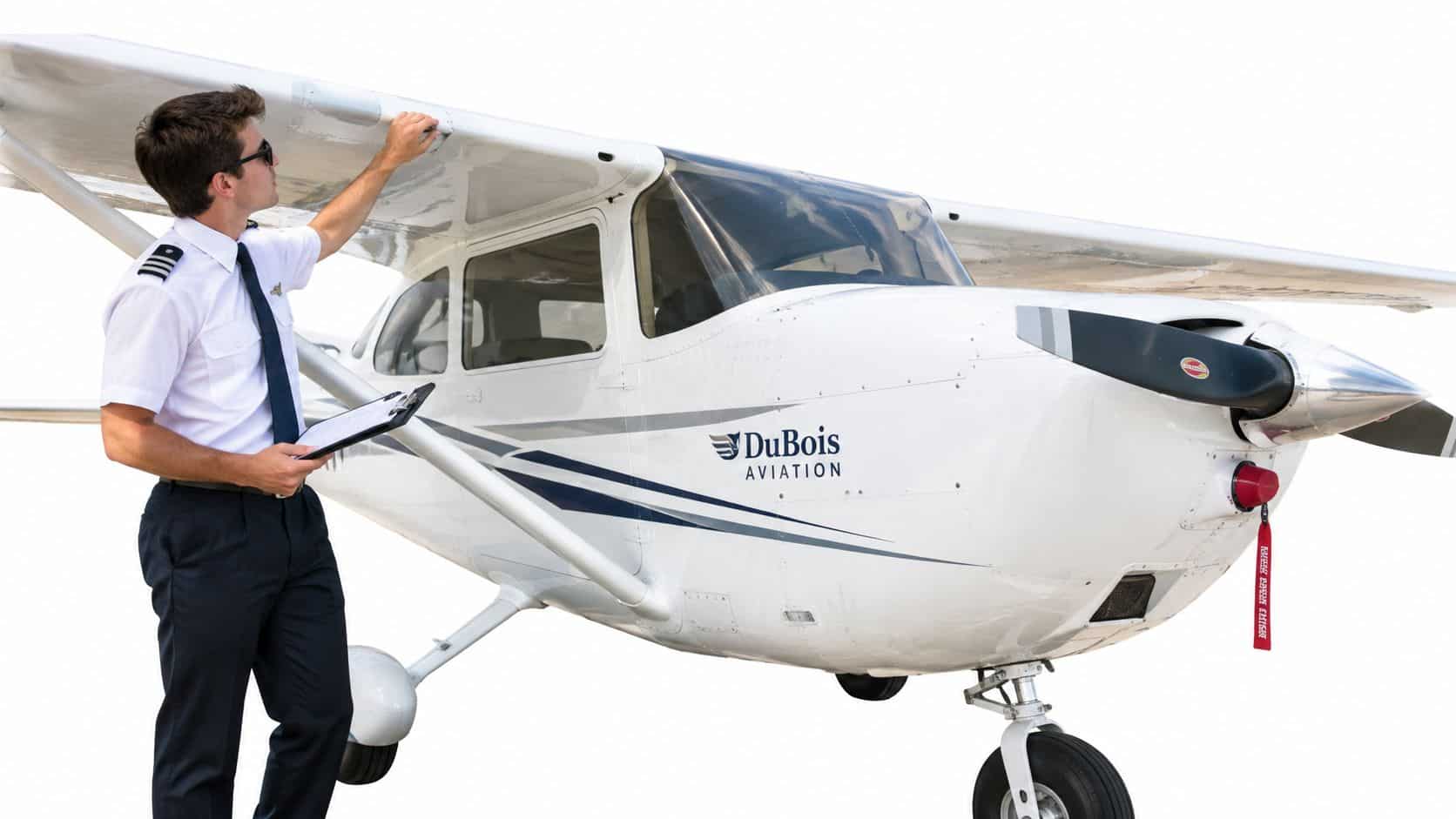
The aircraft must be free of frost, ice, snow, and other contamination on lift-generating and control surfaces. A polished frost layer isn't acceptable merely because it looks smooth, and a pilot shouldn't improvise a removal method that isn't approved for the aircraft.
Before taxi, the pilot should also confirm:
- Aircraft status. Required heat, instruments, lights, and communication equipment work as expected.
- Route exposure. The flight path avoids forecast moisture and temperatures associated with accretion.
- Escape altitude. A change in altitude or heading can reach clear or warmer air without creating a terrain problem.
- Return option. A turn-back remains available before the aircraft enters a layer or loses visual references.
- Diversion trigger. Any unexpected accumulation, reduced performance, vibration, or windshield restriction ends the planned mission.
Gate two begins with the first sign of ice
A non-FIKI trainer shouldn't wait for severe accumulation. If ice appears, the pilot should follow the aircraft checklist, advise ATC, and exit the condition promptly through an approved altitude or route change. If the planned exit isn't working, the pilot should divert or land rather than preserve the original destination at the cost of shrinking performance margins.
The pilot should request a PIREP when actual conditions differ from the forecast and file one after landing or through the appropriate facility when icing is encountered. Scenario practice in an approved simulator can help students rehearse radio calls, altitude changes, turn-backs, and diversion decisions without introducing real weather exposure.
Operational judgment also benefits from training beyond aircraft handling. A useful discussion of why pilots stall before production can help career-track aviators connect technical knowledge with disciplined execution, especially when a plan starts to unravel.
A concise Chino go or no-go check
If the airplane is contaminated, the flight doesn't launch. If the aircraft isn't approved for the forecast condition, the route changes or the flight waits. If ice begins accumulating, the pilot exits before the situation becomes severe.
DuBois Aviation students and renters can rehearse this workflow with an instructor and simulator before a winter lesson, then apply the same gates to private, instrument, commercial, multi-engine, and helicopter training. Visit DuBois Aviation to ask about course availability, aircraft-specific winter-operations practice, simulator sessions, or scheduling a school tour. A training conversation can also clarify which aircraft and instructor support best fit the pilot's next certificate or rating.