You passed the checkride. The temporary certificate is folded in your flight bag, your headset is still where you dropped it after the oral, and now you're typing Piper Archer rental near me into a search bar because the primary question has arrived.
Not how to pass. How to keep flying.
At Chino Airport, that first post-checkride rental feels exciting right up until the practical details show up. Which airplanes are available to renters. Whether the posted rate is wet or dry. What the checkout really includes. Whether the operator's insurance rules line up with your logbook. At a busy Class D field in Southern California, those details matter as much as stick-and-rudder skill.
A Piper Archer is a strong fit for this stage. The Piper PA-28 Cherokee family was built by Piper Aircraft as a four-seat light aircraft for flight training and personal use, and the Archer II (PA-28-181) uses a 180-horsepower engine that helped make it a staple trainer in major markets including Southern California, as summarized in the Piper PA-28 Cherokee background. But finding one locally, and renting it smoothly, takes more than clicking “reserve.”
Table of Contents
- Your First Flight After the Checkride
- Meeting Pilot and Insurance Requirements
- Booking Your Plane and Understanding the Rates
- Preflight and Operating at Chino Airport
- Great Local Flights for Time-Building and Scenery
- Beyond Renting How to Buy an Airplane the Safe Way
Your First Flight After the Checkride
The first rental after your checkride usually starts the same way. You don't want a lesson. You don't want a stage check. You want a clean dispatch, a couple of friends, maybe a breakfast run, and the feeling that the certificate now means something in real life.
That's where a lot of new pilots hit friction. They assume the jump from student to renter is immediate. At Chino, it usually isn't. You're moving from a training environment into an operational one, and a busy field exposes weak habits fast. Taxi discipline, radio pacing, crosswind judgment, and cockpit organization all stand out more when nobody's sitting right seat to catch the miss.
The freedom is real, but it's not automatic
KCNO is a strong place to start because it forces you to work like a pilot from engine start. You're not hiding in a sleepy untowered pattern. You're dealing with a towered airport, multiple runways, changing traffic flows, and Southern California airspace that rewards preparation and punishes sloppiness.
A lot of newly certificated pilots also discover that “available locally” and “available to me” are two different things. A school may have aircraft on the line, but those airplanes may be reserved for instruction, for members, or for renters who have already completed the operator's checkout and paperwork. That's why your first call shouldn't be, “Can I book it tomorrow?” It should be, “What are your solo rental requirements for my experience level?”
Your certificate says you're legal. The rental desk still needs to know you're current, insurable, and competent in that airplane.
If you're still deciding what your first months after certification should look like, this practical guide on what to do after getting your private pilot license is a useful next-step checklist.
What new renters usually get right and wrong
What works:
- They plan simple flights first. Local proficiency, short cross-countries, and daytime VFR are smart choices.
- They ask about checkout expectations before booking passengers. That avoids awkward rescheduling.
- They choose airplanes they already understand well. An Archer or Cherokee feels familiar to many low-time pilots.
What doesn't:
- Treating the first rental like a reward flight. It's still a proving flight, even if it's solo.
- Assuming all PA-28s feel identical. They don't. Power, panel layout, and avionics change the workload.
- Showing up without studying local procedures. At Chino, that's a fast way to sound behind the airplane.
Meeting Pilot and Insurance Requirements
A new private pilot often thinks the key document is the certificate. In practice, the more important question is whether the operator and its insurance carrier will release the airplane to you.
That's where many “Piper Archer rental near me” searches go sideways. The market isn't blocked by airplane scarcity alone. It's often blocked by experience rules, checkout standards, and local insurance limits that aren't obvious on a rental page.
Why the certificate alone usually isn't enough
A Facebook aviation group survey of 147 pilots in NC, VA, and AL found that 74% couldn't rent a Piper Archer locally because of age or experience restrictions, even after passing the checkride, and only 22% of U.S. FBOs in that discussion offered wet rentals with no hour minimum for newly certificated pilots, according to the pilot survey discussion on local rental barriers. The exact numbers come from a different region, but the lesson applies everywhere. Don't assume a fresh certificate opens every rental door.
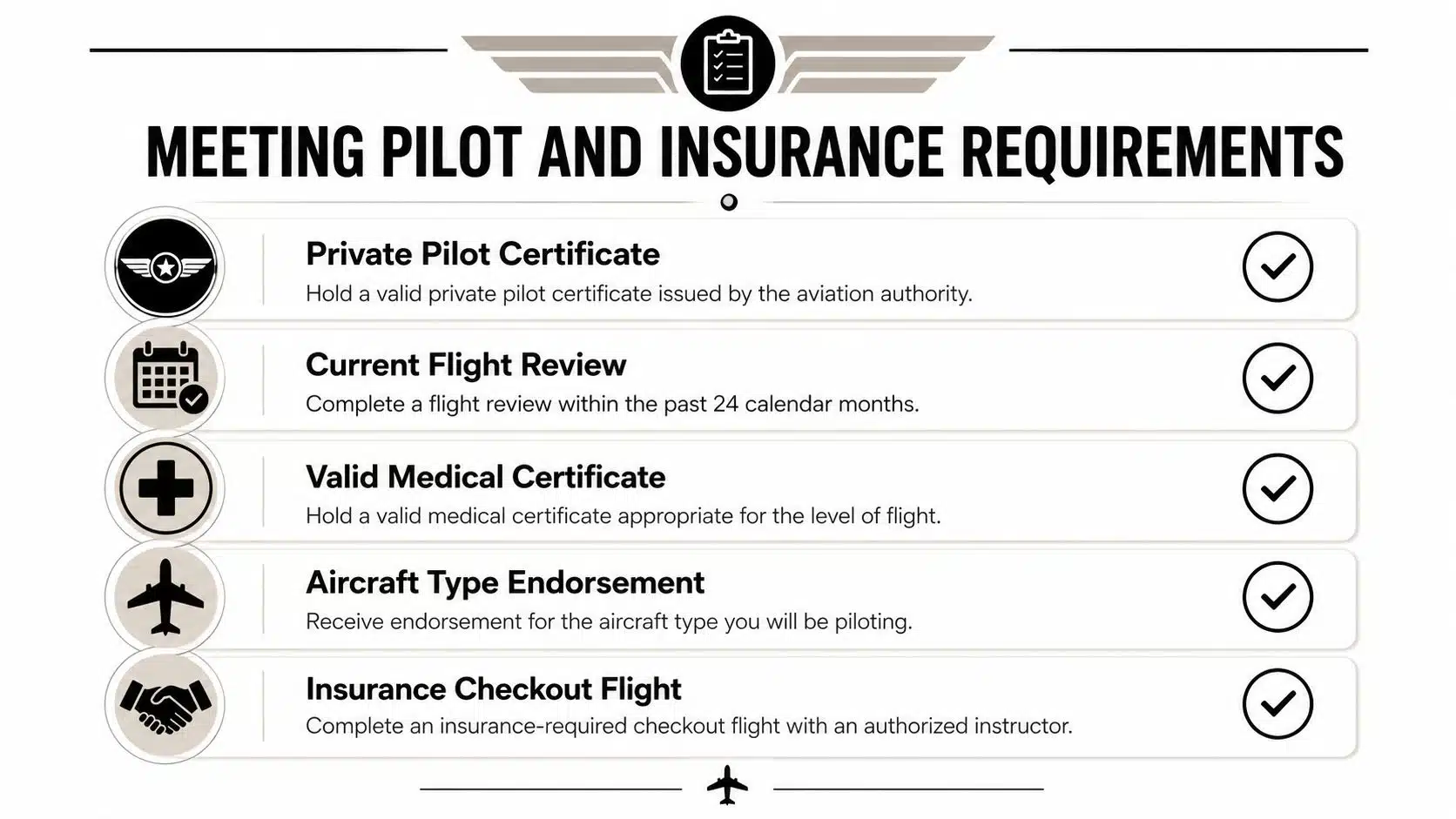
At a practical level, most operators care about a few things before they hand over keys:
- Currency and recency. If your flight review, medical, or recent experience is stale, the conversation ends early.
- Aircraft familiarity. A PA-28 signoff isn't always enough if the operator wants model-specific work in an Archer or comparable Cherokee.
- Insurance fit. Some owners and schools have stricter limits for low-time pilots than the FAA requires.
- Mission type. Day VFR local flying may be approved sooner than passenger trips, IFR use, or longer cross-countries.
If you're low time, ask the hard questions directly. Are there minimum solo hours? Any passenger restrictions? Any weather limitations for new renters? Schools don't always publish those details clearly.
What the checkout flight is really for
The checkout isn't a punishment lap. It's a risk screen, and for a good operator it's also a training event.
For a Piper Archer near Chino, the mandatory checkout flight typically takes 1 to 3 hours of dual with a CFI, and the wet cost often falls between $155 and $175 per hour, depending on the airplane's equipment and condition, as described in DuBois Aviation's aircraft rental guidance. Pilots often hope for a quick one-hour hop, but 2 to 3 hours is commonly needed for first-time renters in that airframe to cover systems, steep turns, and emergency procedures from a real rental standpoint, not just a checkride standard.
Practical rule: Show up for a checkout as if it's a combination oral, transition lesson, and local procedures flight. That mindset saves time.
Expect the instructor to look at more than landings. A solid checkout usually includes:
Systems knowledge
Fuel system, electrical basics, flap limits, emergency gear you're carrying, and any quirks on that specific airplane.Airplane handling
Slow flight, stalls, steep turns, and emergency work. Not because the CFI wants to revisit your private syllabus, but because rental flying exposes weak control habits fast.Operational discipline
Checklist use, taxi awareness, engine handling, radio flow, and whether you brief yourself like a safe PIC.Decision-making
This matters more than people think. Instructors pay attention to whether you rush, whether you notice small discrepancies, and whether you're willing to discontinue.
The insurance angle gets overlooked because it feels administrative. It isn't. Insurance standards shape who can rent, what they can do, and how quickly they're released for solo use. Treat that part with the same seriousness you'd give a weather briefing.
Booking Your Plane and Understanding the Rates
At Chino, booking an Archer usually gets simpler once you stop treating every rental listing as the same product. They are not. A flight school airplane and an independently rented local airplane can both be Piper singles on the same field, but the scheduling rules, checkout expectations, dispatch process, and cancellation flexibility are often very different.
That matters more at KCNO than at a quieter airport because the calendar gets crowded fast. Training flights, maintenance holds, instructor availability, and weekend demand all compete for the same airplanes.
Flight school fleet versus independent local rentals
A school fleet usually gives you a cleaner system. Online scheduling is often better, maintenance writeups are easier to track, and there is usually an instructor available if you need a quick refresher or an instrument proficiency flight. The trade-off is access. If the airplane is part of an active training fleet, student solos, stage checks, and primary lessons will usually outrank a casual sightseeing booking.
Independent local rentals work differently. You may find a specific Archer or Archer II that suits your mission better than the school fleet, especially if you want a familiar panel, a lower-utilization airframe, or an airplane available for longer cross-country blocks. You also need to ask sharper questions up front because the policies can vary from owner to owner.
Ask these before you put down a deposit or block payment:
- Is the rate wet or dry?
- Is the airplane available for solo rental, or only with an instructor?
- Does the checkout approve local day VFR only, or full rental privileges?
- Are there daily minimums for weekends or overnight trips?
- What happens if maintenance cancels your booking?
- Do prepaid hours expire?
Those questions save money and frustration.
What the rates actually mean
The posted hourly number is only the starting point. Wet rate means fuel is included. Dry rate means you are buying the airplane by the hour and paying for fuel separately, which can change the actual cost of a local flight more than new renters expect. Around Chino, that difference matters because many pilots book short local hops, and fuel reimbursement policies are not always generous or simple.
Block time can be a good deal if you already know how often you will fly. It can also become stranded credit if your work schedule shifts, the airplane goes down for maintenance, or the operator changes availability. I tell newly certificated pilots to buy block time only after the checkout is complete and after they have flown enough with that provider to know the scheduling pattern is realistic for them.
Here is the practical way to compare one rental option to another:
| What to compare | Why it matters |
|---|---|
| Wet or dry rate | Determines your real hourly cost |
| Tach or Hobbs billing | Changes what you pay during taxi, run-up, and delays |
| Daily minimums | Affects day trips and overnight rentals |
| Fuel reimbursement policy | Matters on cross-countries away from KCNO |
| Block hour expiration | Determines whether the discount is usable |
| Instructor checkout cost | Part of your true first-flight budget |
A lot of pilots miss the tach versus Hobbs point. At a busy airport like Chino, taxi time, run-up delays, and release timing can add up. If one operator bills by Hobbs and another by tach, the lower posted rate is not always the better deal.
For a current local reference, this page on Piper rentals at Chino gives you a useful starting point for the kinds of aircraft and rental arrangements pilots look for around KCNO.
Budget for the first booking, not just the airplane
The first reservation usually costs more than the hourly rate suggests. You may pay for instructor time during the checkout, rental time for the checkout flight, renter's insurance if the operator requires proof before dispatch, and sometimes a deposit against future bookings. Independent rentals can be less formal on paper, but that does not always mean cheaper once you include insurance requirements and transition time in type.
A good rule is simple. Budget the first Archer rental as a small training event, not as a one-hour fun flight.
If you want to keep the process smooth, book your checkout on a day when you are not rushed, avoid the busiest weekend windows if possible, and do not prepay a large block until you know three things: the airplane is consistently available, the operator's maintenance response is solid, and the checkout grants the privileges you anticipate.
Preflight and Operating at Chino Airport
The airplane doesn't care that you just got your certificate. Chino doesn't care either. That's useful, because KCNO rewards professional habits from the moment you walk up to the tiedown.
Rental preflight habits that prevent bad surprises
A renter's preflight is different from a student preflight. You're not just proving you know the checklist. You're verifying dispatchability and protecting yourself from inheriting someone else's oversight.
Start slower than you think you need to. Review the aircraft binder or dispatch documents, confirm required inspections are current, then compare the airplane in front of you to what the paperwork says you're flying. In a rental environment, mismatches happen. Headset adapter left behind. Oil not where you expected. Fuel caps secured but not seated well. Cabin items moved around by the last pilot.
Use this sequence every time:
Documents first
Confirm the aircraft records available to renters are in order and that any squawks are understood before engine start.Fuel and oil second
Don't trust assumptions, especially if the airplane just flew. Visually verify quantity and condition.Cockpit setup before startup
Seat position, belts, parking brake, avionics status, circuit breakers, and any portable equipment. A clean setup reduces taxi workload.Exterior with rental eyes
Look for things the previous pilot may have missed or decided were “probably fine.” If you don't like it, stop and ask.
If something feels ambiguous on preflight, it usually gets less clear after takeoff, not more.
How to sound organized on the radio at KCNO
At a Class D field, sounding polished isn't about ego. It reduces confusion for everyone on frequency. Chino can move quickly, and the pilot who falls behind usually does it on the ground first, not in the air.
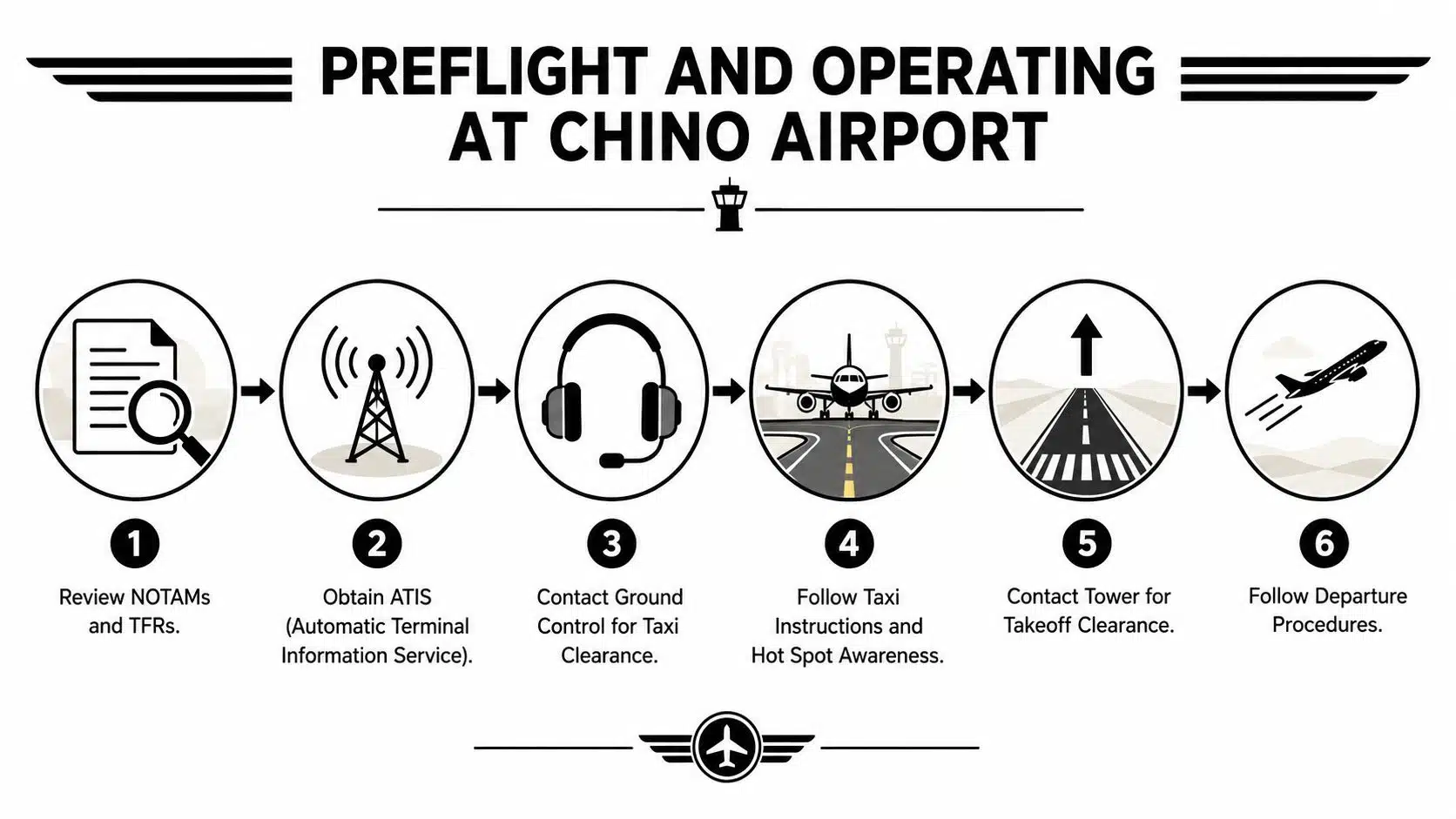
Before you call for taxi, have four things ready in order: ATIS, your location, your request, and your first expected taxi move. Don't key the mic while still folding your chart or loading your tablet. If ground gives you a route with a hold short, read it back cleanly and then visualize it before brake release.
This nearby local airport overview gives a useful orientation to Threshold Aviation at Chino, which helps newer pilots picture the rhythm of operations around the field.
A few habits help a lot:
Listen for pattern flow before startup
You'll catch runway use and whether training traffic is stacking up.Write taxi instructions immediately
New renters often think they'll remember. Then a similar-sounding call distracts them.Keep the first departure simple
A local area departure or short VFR route beats trying to sort out a complicated sightseeing plan while managing tower instructions.Brief the return before you leave the area
Know the likely runway, how you'll re-enter, and what frequencies you need. Coming back prepared is half the battle at KCNO.
Great Local Flights for Time-Building and Scenery
Once you're checked out, the best Archer flights out of Chino usually aren't the longest ones. They're the flights that give you one clear lesson at a time. Better airspace management. Better weather judgment. Better energy control on unfamiliar runways.
That's why I like to see new renters build outward in rings. Local proficiency first. Then a breakfast run. Then a more demanding destination where terrain, marine layer timing, or special procedures add workload in a useful way.
Trips that build judgment, not just Hobbs time
A short out-and-back to a familiar towered airport is a smart first rental mission. It keeps the planning manageable and gives you real repetitions in departure, cruise setup, arrival briefing, and postflight pacing. You're learning how long things take when no instructor is setting the tempo.
After that, mountain and desert transitions are useful if the weather supports them and your checkout permits them. They force you to think harder about winds, density altitude, terrain escape paths, and go/no-go discipline. The point isn't to collect dramatic stories. It's to learn when the airplane still has margin and when the plan needs to change.
A good time-building flight should do at least one of these well:
- Add navigation workload with route planning and frequency changes
- Add performance thinking through altitude, runway, or weather considerations
- Add procedural repetition with multiple legs or different airport environments
Scenic flights worth doing in an Archer
Catalina is the classic Southern California answer for a reason. It turns a routine rental into a real trip, and it teaches respect for planning because the island environment makes casual thinking expensive. Don't treat it as a sightseeing hop just because everyone talks about it that way.
Big Bear is another memorable choice when conditions support it. The route adds terrain awareness and performance considerations that sharpen judgment quickly. It's a rewarding flight, but it's not one to approach casually just because the total distance seems manageable.
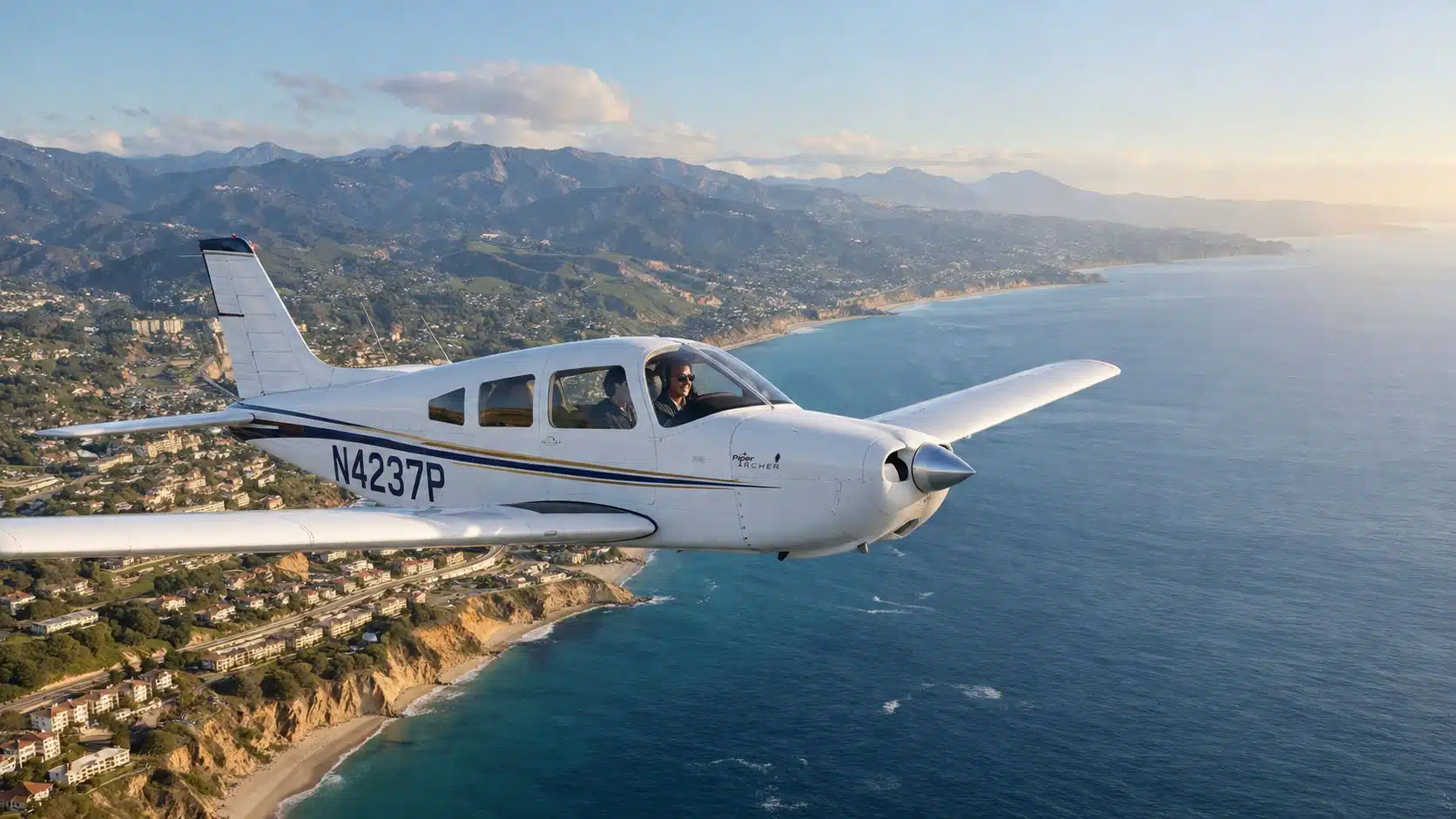
For a lower-stress option, a coastline flight can be ideal in an Archer. The airplane is stable, the visibility can be spectacular, and the route reminds you why renting is worth the paperwork. If you're bringing a friend or family member on an early post-checkride flight, scenic coastal flying often makes more sense than trying to prove something with a harder destination.
Pick destinations that let you come home feeling more disciplined, not just more excited.
Beyond Renting How to Buy an Airplane the Safe Way
A lot of renters eventually run the same math in their heads. If I'm flying often enough, should I just buy? Sometimes the answer is yes. But ownership only works if you buy with discipline, because a bad purchase wipes out the savings you thought you found.
That applies to airplanes and helicopters alike. The shape of the deal changes, but the risk doesn't. Buyers get into trouble when they fall in love with the machine first and structure the transaction later.
The agreement comes before the prebuy
The safest way to buy an aircraft is surprisingly unglamorous. Get the paperwork right before the inspection starts.
A safe aircraft purchase requires a signed agreement before the prebuy inspection, and that agreement must explicitly state the price and that the aircraft is sold “as is” with no warranties, making the buyer solely responsible for determining its condition and safe operation, with the seller warranting clear title, as explained in Aviation Consumer's guidance on buying and selling aircraft safely.
That single step protects both sides. It establishes the deal structure before emotions and inspection findings start moving the goalposts.
Here's what works in practice:
Lock the basic terms first
Price, contingencies, deposit handling, and what happens if the inspection finds material discrepancies.Use the prebuy for fact-finding, not deal formation
The inspection should test the airplane against the agreement, not substitute for one.Accept what “as is” really means
You, not the seller, carry the burden of determining airworthiness, condition, and operating risk.
Don't send an airplane to prebuy on a handshake. That's where expensive misunderstandings start.
A practical path for airplane and helicopter buyers and sellers
People looking to buy or sell airplanes and helicopters usually focus on listing quality, engine times, cosmetics, avionics, and price. Those matter. They're not first.
First comes transaction structure. Sellers should present complete records and define expectations clearly. Buyers should decide in advance who will perform the prebuy, what standards they care about, and what findings would make them walk away. That prevents the familiar trap where a buyer keeps renegotiating because they never set a standard in the first place.
For renters moving toward ownership, an Archer can be a sensible next step because it's familiar, widely understood, and practical for training and personal travel. But the safe way to buy isn't model-specific. It's process-specific.
A simple ownership screen helps:
Mission fit
Why are you buying this aircraft instead of continuing to rent?Record quality
Are the logs complete, understandable, and consistent with the airplane in front of you?Prebuy independence
Is your inspector working for you, not for the seller or the broker?Exit discipline
If the deal stops making sense, will you walk away quickly?
Pilots who answer those questions realistically tend to buy better. Pilots who skip them usually end up owning a project they didn't mean to buy.
If you're looking for flight training, aircraft rental, or help building a practical next step after certification at Chino, DuBois Aviation is a solid place to continue your flying with structured instruction, local rental options, and a team that understands how Southern California operations shape pilot proficiency.