
Your teen keeps looking up every time an airplane passes overhead. They know the difference between a Cessna and a Piper before most adults do. They've spent hours on model kits, flight videos, airport viewing areas, or home simulators, and now they're asking a bigger question: “How do I get started?”
That's where many families get stuck.
Aviation can feel exciting and confusing at the same time. Parents usually want the same things. A safe program. Real instruction. Clear expectations. A path that turns curiosity into something practical, not just another summer activity that's forgotten by August.
Aviation summer camps do exactly that when they're well run. They give young people a place to touch the controls, learn the language of flight, ask serious questions, and see whether aviation is just a passing interest or the beginning of something much larger.
Is Your Teen Dreaming of the Skies
Some kids don't just like airplanes. They lock onto them.
They track tail numbers. They pause movies to identify aircraft. They ask why one airplane has its engine in the nose and another carries it on the wing. If that sounds familiar, your family is already seeing the first signs of a real aviation spark.

What many parents don't realize is that this interest fits naturally into STEM education. Aviation pulls together physics, weather, communication, navigation, mechanics, and decision-making in one place. It gives math and science a cockpit, a runway, and a reason.
The Federal Aviation Administration treats youth aviation exposure as a meaningful part of that pipeline. FAA STEM Aviation and Space Education programs reach over 10,000 middle school students annually through hands-on learning opportunities across the country according to the FAA middle school aviation education page. That matters because it shows these programs aren't fringe hobbies. They're part of a larger educational effort.
What an aviation camp feels like to a teen
For a teenager, aviation summer camps often answer a question school can't quite answer on its own. “When will I ever use this?”
At camp, lift isn't a diagram on paper. It's tied to a wing you can inspect. Weather isn't just a chapter in science class. It becomes the reason a pilot changes a plan. Radio communication isn't abstract public speaking. It's short, clear, disciplined language with a purpose.
Aviation is one of the few subjects where a young student can see science, responsibility, and adventure all working together on day one.
Some teens come in convinced they want to fly for a living. Others just know they love aircraft. Either way, camp gives them a low-pressure first step. They can explore without having to commit to full flight training right away.
If your student also loves space, engineering, and how flight connects to exploration, they may enjoy fun space lessons from Space Ranger Fred. It's a helpful way to keep that curiosity active between camp sessions and school projects.
The first real step
Families often ask me when a teen should move from interest to actual aviation exposure. My answer is simple. Start before the spark cools off.
Aviation summer camps create that bridge. They let students try the environment, meet instructors, and learn whether they enjoy the discipline behind the dream. For teens who want a more direct next step, flight lessons for teenagers can show how camp and formal training fit together.
A Typical Week at Aviation Camp
Parents often picture aviation camp as a few airport tours and maybe a quick ride in an airplane. Good camps are far more structured than that.
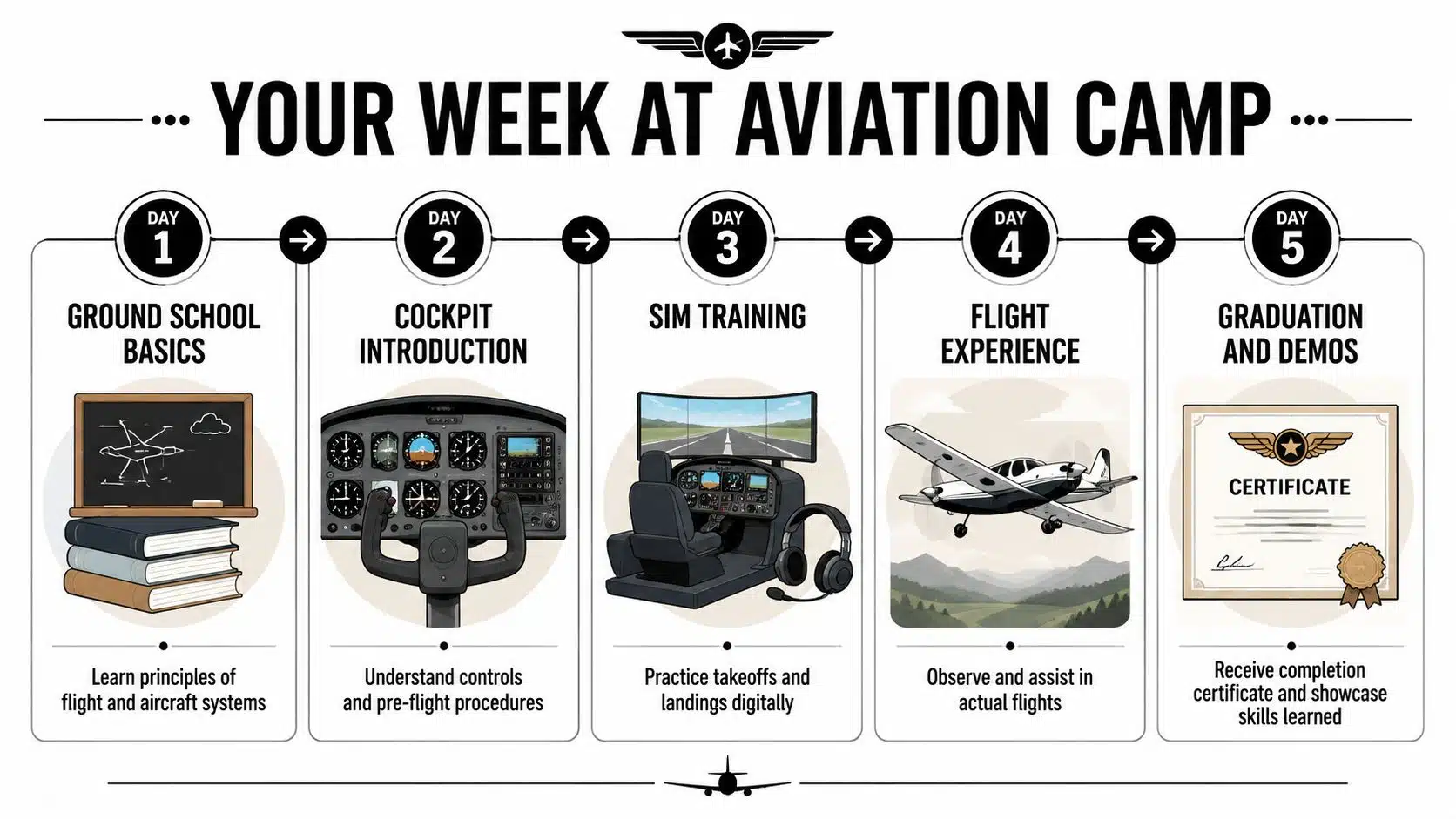
Most follow a rhythm that builds skill in layers. Students learn the basic idea first. Then they practice it in a controlled setting. Then they see how it works around a real airplane and a real airport environment.
Ground school comes first
The first part of camp usually looks a lot like a simplified ground school. That term can sound intimidating, but it just means the knowledge pilots need before and during flight.
Students may cover topics such as:
- Principles of flight so they understand how an airplane produces lift and why attitude matters
- Aircraft systems including the basic job of the engine, flight controls, and cockpit instruments
- Weather awareness so they begin to see why pilots pay close attention to wind, clouds, and visibility
- Airport operations including signs, markings, runway awareness, and safe movement around aircraft
- Navigation basics such as charts, headings, landmarks, and GPS concepts
This early classroom portion matters because it prevents the airplane from feeling mysterious. Once a student knows what the yoke does and why a checklist exists, the whole experience gets less overwhelming.
Why simulators matter so much
The strongest programs don't jump straight from classroom to airplane. They use the sequence theory → simulation → real flight. According to the Take Flight Summer Camp overview, pre-flight simulator exposure has been shown to significantly reduce the dual instruction hours required for a private pilot certificate by building procedural competency before costly aircraft operations begin.
That sentence has a practical meaning for families. A simulator lets students make mistakes safely.
They can practice:
- Checklist flow without engine noise and time pressure
- Control inputs while watching how the aircraft responds
- Instrument scanning in a calmer learning environment
- Simple emergencies so they learn to think, not panic
Practical rule: A simulator doesn't replace the airplane. It prepares the student to use aircraft time better.
A teen who has already practiced taxi flow, climb attitude, turns, and radio habits in a sim often steps into the aircraft with much better focus.
What the week usually feels like
A typical week has a nice balance between concentration and excitement. One part of the day might involve drawing traffic patterns on a whiteboard. The next could be a preflight walk-around on the ramp. Later, students may rotate through a simulator, a group challenge, and a short session on weather or navigation.
Here's a simple snapshot of the experience many families can expect:
| Part of the day | What students do | Why it helps |
|---|---|---|
| Morning briefing | Review plan, safety, weather, and topic of the day | Builds routine and discipline |
| Classroom session | Learn flight concepts and airport basics | Gives vocabulary and context |
| Hands-on activity | Inspect aircraft or practice procedures | Connects ideas to real objects |
| Simulator block | Apply lessons in a cockpit-style environment | Builds confidence before flight |
| Debrief | Discuss what worked and what was learned | Turns experience into understanding |
The result is a week that feels active, not passive. Students aren't just watching aviation. They're participating in it.
The Long-Term Benefits of Aviation Camp
The biggest benefit of camp isn't the photo beside an airplane. It's the shift that happens afterward.
A student who spends a week around aircraft usually comes home with a sharper sense of purpose. They've seen adults using math, judgment, and technical skill in a setting that feels real. School subjects stop feeling disconnected.

Aviation is bigger than the pilot seat
One of the healthiest things about modern aviation summer camps is that they don't force every student into the same dream. Flying is one path, but it isn't the only one.
Some students light up around mechanics. Others get interested in dispatch, engineering, airport operations, or air traffic systems. That broad exposure matters because the aviation world needs more than pilots. According to the US Aviation Academy summer camp information, the FAA estimates an A&P mechanic shortage of around 35,000 to 40,000 positions in the U.S. aerospace industry.
A camp that includes maintenance demonstrations, cockpit familiarization, and airport career exposure helps students discover where they fit.
Skills that transfer back to school
Aviation trains habits that are useful far beyond the airport.
Students learn to slow down and verify. They use checklists. They make decisions based on conditions, not mood. They speak clearly. They accept that safety depends on paying attention even during routine tasks.
Those are adult skills.
Good aviation instruction teaches a young person that confidence comes from preparation, not guesswork.
That mindset helps in algebra, lab work, driving later on, and any setting where details matter. Families who want to understand the full training path after camp can get a practical overview from this guide on how to get my pilot's license.
A short look at real cockpit training helps make those next steps easier to picture:
Maturity is part of the outcome
I've watched young students change quickly around airplanes. Not because someone lectures them into growing up, but because aviation implicitly requires it.
An airplane rewards calm thinking. It doesn't care whether the student is dramatic, distracted, or overconfident. Camp introduces that lesson in a healthy way. Students see that preparation matters, teamwork matters, and following procedure isn't boring. It's what keeps everything running safely.
That's a strong return from one summer experience.
How to Choose the Right Aviation Camp
Not all aviation summer camps are built the same. Some are broad STEM programs with a flight theme. Others are much closer to beginner pilot training. Neither is automatically better. The right fit depends on your child, your budget, and what you want them to come away with.
The easiest way to evaluate a camp is to stop looking at the brochure first and start looking at the structure.
Start with safety and supervision
Ask direct questions. Who supervises students on the ramp? Who teaches simulator sessions? Who handles any real aircraft portion? If a program includes flight activity, parents should understand whether a Certified Flight Instructor is involved and how student safety is managed around moving aircraft, propellers, and airport traffic.
Look for camps that can clearly explain:
- Instructor roles and who is responsible for the student at each stage
- Airport procedures for moving groups safely in active areas
- Weather plans when outdoor activities or flights need adjustment
- Communication with parents if schedules change
If a camp answers these questions vaguely, keep looking.
Match the program to the student
A younger student may need a camp built around discovery, hands-on STEM activities, and short learning blocks. An older teen who already talks about ratings and certificates may need more technical content, more simulator time, and more exposure to actual flight training procedures.
A simple comparison helps:
| Student profile | Better camp fit |
|---|---|
| Curious beginner | Introductory program with airport tours, basic flight concepts, and short activity blocks |
| Teen with strong aviation interest | Camp with structured ground school topics and simulator application |
| Student considering formal training | Program with clear next-step guidance into discovery flights or lessons |
Families sometimes overspend in this area. They choose the most advanced-looking camp for a student who really needs an introduction, or they choose a lightweight camp for a teen who's ready for more challenge.
Understand the price, then inspect the value
Cost matters. It matters to almost every family. According to the Aerospace Center for Excellence summer camp information, average STEM camps cost $400 to $800 per week, aviation camps often run 20% to 30% higher due to flight elements, and a 2025 parent survey by Aviation Week identified cost as the top barrier for 62% of families.
That doesn't mean a higher-priced camp is overpriced. It means you need to ask what's included.
Look for clear answers on items like:
- Simulator access and whether it's part of the base price
- Flight time or aircraft experience and whether it's included or optional
- Materials and supplies such as notebooks, headsets, or shirts
- Meals or snacks
- Transportation requirements for tours or off-site visits
The useful question isn't “What does it cost?” It's “What does this fee actually buy?”
One option families may compare is an aviation camp near me, especially if they want local airport access and an easier path to continued training after camp ends.
A short parent checklist
Before you register, ask these five questions:
- Is the camp designed for my child's age and current knowledge level?
- What parts are classroom, simulator, and real-aircraft exposure?
- Who teaches each part of the program?
- What is included in the listed price?
- What would a logical next step look like if my teen loves it?
If a camp can answer all five clearly, you're probably looking at a solid program.
Launch Your Dream at DuBois Aviation's Youth Camp
For Southern California families, location changes the quality of the experience more than many people expect. A camp based at a quiet airfield feels different from one based in an active training environment with regular radio traffic, multiple runways, and a steady flow of aircraft.
That setting gives students context. They don't just hear about airport procedures. They watch them happen around them.
Why the environment matters
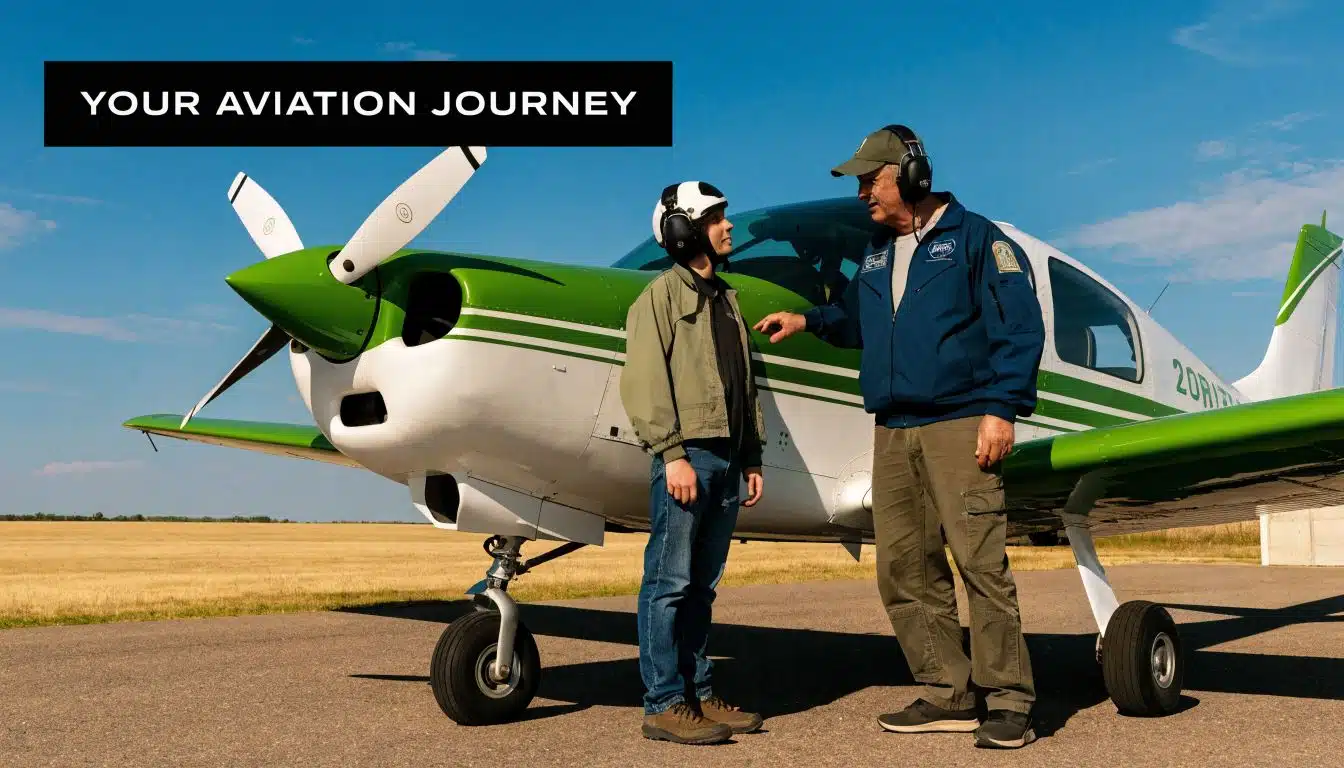
A youth camp works best when the airport itself becomes part of the classroom. Students can connect ground school ideas to practical application faster when they see taxiways, listen to radio calls, and watch pilots move through checklists and departures in real time.
An active airport setting also helps students understand that aviation is a professional system. There are standards, routines, and communication habits behind every takeoff.
What families should look for in a camp operator
A strong youth camp provider should offer more than enthusiasm. The pieces need to fit together:
- A varied training fleet so students can see that aviation includes more than one type of aircraft
- Simulator access because practice before flight builds familiarity
- Experienced instructors who know how to teach beginners, not just licensed adults
- A clear progression from first exposure to later flight training if the student wants it
For families comparing programs in the Chino area, DuBois Aviation operates from Chino Airport and offers airplane and helicopter training, aircraft rental, simulator-supported instruction, and youth camp opportunities in that airport environment. For a parent, that means the camp isn't isolated from the rest of aviation training. It sits inside it.
A camp has more long-term value when a student can see the next rung on the ladder.
Questions to ask before you sign up
When you contact any camp, ask practical questions that affect the week your child will have.
A good registration conversation should cover:
| Question | Why it matters |
|---|---|
| What age range is this session built for? | Keeps students with peers at a similar level |
| How much time is spent in classroom work versus activities? | Helps you gauge energy and pacing |
| Is simulator training included? | Shows whether students get applied learning |
| Will students be around real aircraft regularly? | Tells you how immersive the environment is |
| What follow-up options exist after camp? | Useful if your child wants to continue |
The right camp doesn't need flashy language. It needs a clear plan, an appropriate learning pace, and instructors who understand both safety and young learners.
From Camper to Owner A Guide to Buying an Airplane
Most families who attend aviation summer camps are thinking about the next season, not aircraft ownership. That's sensible. Buying an airplane comes much later, if it comes at all.
But I've seen the pattern often enough to mention it. A teen starts with camp. Then comes a discovery flight, then lessons, then ratings, then regular renting. Years later, a family asks a very serious question. Should we buy an airplane?
If that day comes, buy the safe way.
Start with the mission
Never shop by paint, speed rumors, or a listing headline. Start with the mission.
What will the airplane do?
Will you use it for local training flights, short family trips, instrument practice, or cross-country travel? Do you need two seats or four? Airplane or helicopter? Simple fixed gear or something more complex later on? The right aircraft is the one that matches the work you'll really ask it to do.
A first-time buyer gets into trouble when they buy too much airplane, too little airplane, or the wrong kind of airplane for the mission.
Build a team before you shop seriously
You don't want to evaluate an aircraft alone unless you already have deep ownership experience. A safe purchase usually involves two outside eyes.
One is a trusted aircraft broker or experienced advisor who understands listings, paperwork, title issues, and the normal warning signs in a deal.
The other is an A&P mechanic, ideally one with Inspection Authorization, who is working for you, not for the seller.
Here's the simple rule:
- Seller's mechanic may know the airplane
- Your mechanic protects your interests
Those aren't the same job.
Never confuse a friendly showing with an objective evaluation.
The pre-buy inspection is not optional
The most important step in the entire process is the pre-buy inspection.
This happens before money changes hands in a final way, and it should be done by a mechanic who knows the aircraft type well enough to spot expensive problems, poor repairs, logbook gaps, corrosion concerns, or deferred maintenance.
A proper pre-buy should review the aircraft's condition and records together. Clean paint and a polished spinner don't tell you much. Logbooks, maintenance history, and an honest inspection do.
Pay special attention to:
- Engine and propeller condition
- Airframe corrosion or damage history
- Avionics function and installation quality
- AD compliance and maintenance records
- Signs the airplane has been sitting too long without proper care
If the seller resists a genuine pre-buy, walk away.
Budget for ownership, not just the purchase
The purchase price is only the doorway. Ownership includes insurance, storage, fuel, maintenance, inspections, and the inevitable surprises that show up with any machine.
That doesn't mean ownership is a bad idea. It means families should enter it with open eyes. In many cases, renting remains the smarter choice for a long time. In other cases, shared ownership or a partnership may fit the mission better than buying alone.
The same basic rule that makes aviation camp valuable applies here too. Learn in stages. Ask questions early. Don't skip process. Aviation rewards careful people.
Pre-Flight Checklist and Frequently Asked Questions
By the time a family is ready to register, the big question usually changes from “Should we do this?” to “What do we need to bring, and what should we expect?”
That's a good sign. It means you're close.
A simple camp packing list
Pack for comfort, sun, and note-taking. Airports can be bright, warm, and active places.
Bring:
- Comfortable clothes that allow movement and make sense for the weather
- Closed-toe shoes for walking around hangars and ramp areas
- Sunglasses because glare around aircraft and pavement can be intense
- A water bottle to stay comfortable through outdoor portions
- A notebook and pen for diagrams, new terms, and questions
- A small camera or phone if the camp allows photos
- A hat and sunscreen for sunny airport days
Leave anything fragile or distracting at home unless the camp says otherwise.
Common questions parents ask
Does my teen need flying experience
No. Most aviation summer camps are built for beginners. A student who already knows a little aviation language may feel comfortable faster, but prior experience usually isn't required.
How young can students start
That depends on the camp. Some programs are designed for younger children with short, hands-on activities. Others are aimed at teens who can handle more technical material and more focused simulator work.
Are aviation camps becoming more inclusive
Yes. Nationally, aviation camps are helping broaden access. According to Air Camp's program background, these programs have contributed to a 20% rise in female participation in aviation programs since 2015. That's an encouraging shift in a field that has long had visible gender gaps.
What kind of supervision should I expect
A good camp should explain supervision clearly, especially during any airport movement, simulator rotation, or aircraft interaction. If that answer isn't specific, ask more questions.
Have camps been around for a long time
Yes. Youth aviation programs have roots going back decades, and today's versions are more structured, more STEM-focused, and often better connected to real career pathways than earlier generations of camps.
One final thought for families
Some students leave camp wanting to fly. Others leave wanting to build, design, manage, or invent. That's all a success.
If your child enjoys the bigger picture of creating projects, solving problems, and building ideas into something real, Kubrio entrepreneurship activities can be a smart complement to aviation learning. Aviation needs people who can think technically and act resourcefully.
The best camp outcome isn't forcing a career decision. It's giving a young person a clearer sense of what excites them enough to keep learning.
If your family is ready to explore youth aviation training, next-step flight instruction, or local camp options, DuBois Aviation offers a practical place to start the conversation.


