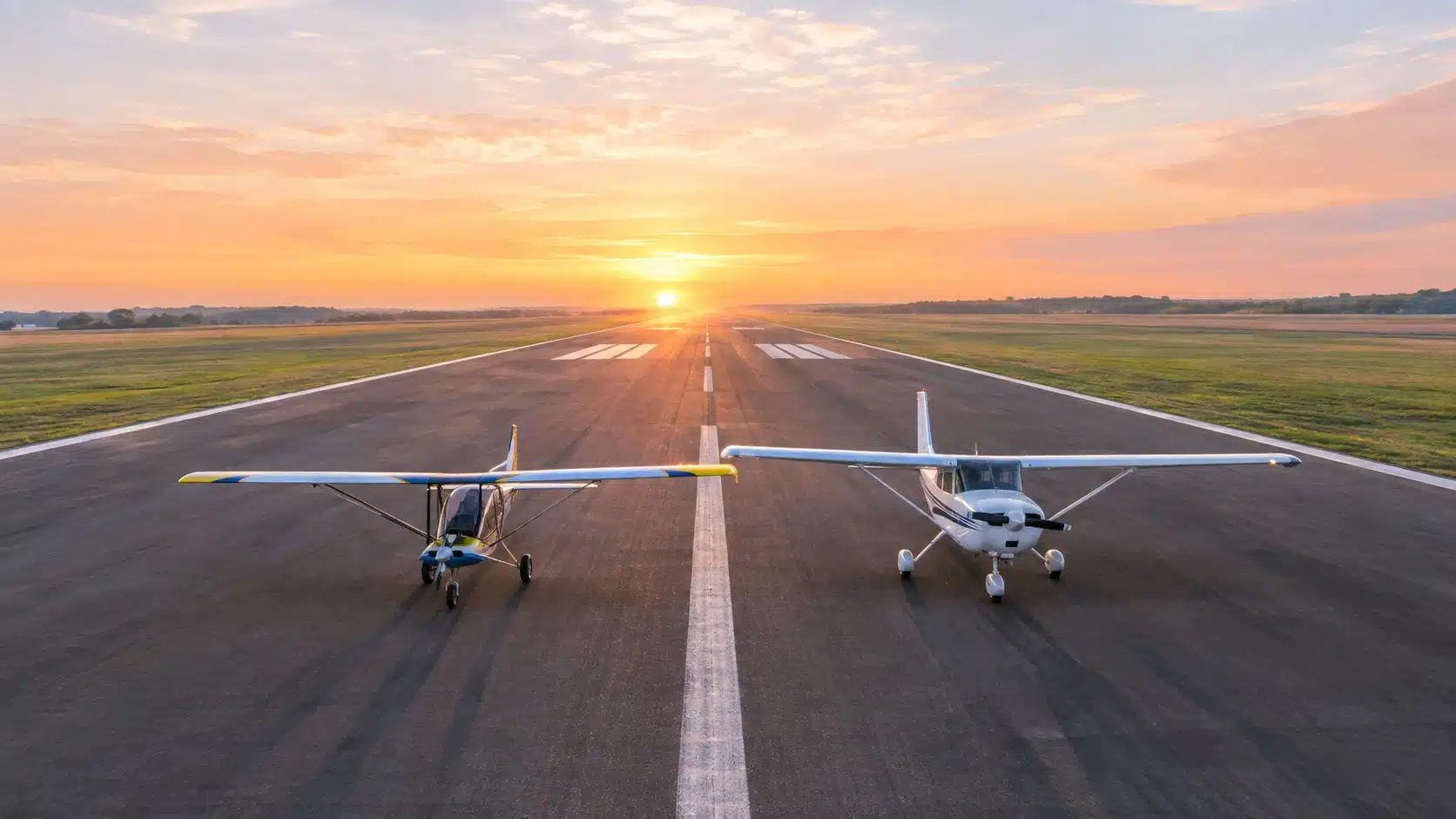
Can a pilot really save time and money with a sport pilot certificate without discovering that the certificate doesn't fit the flying they want to do? The practical answer is simple: sport pilot certification suits limited, daytime recreational flying, while private pilot certification provides far broader aircraft access, passenger privileges, airspace flexibility, and a foundation for advanced ratings and professional training. The right choice depends less on the minimum hours and more on where, when, and why the pilot plans to fly.
Table of Contents
- Sport Pilot vs Private Pilot – The Core Difference
- Certification Requirements and Training Hours
- Operating Privileges and Limitations Comparison
- Cost and Time Investment Breakdown
- Which Certificate Fits Your Flying Goals
- Getting Started with Training at DuBois Aviation
Sport Pilot vs Private Pilot – The Core Difference
What kind of flying should the certificate support after training? That question matters more than the minimum hours. Sport pilot certification offers a lower-burden entry for limited recreational flying, while private pilot certification supports broader aircraft access, passenger privileges, airspace operations, and future ratings.
Two practical options worth comparing
These are specific products pilots commonly compare for this type of flying. Confirm compatibility with your aircraft and instructor before ordering.
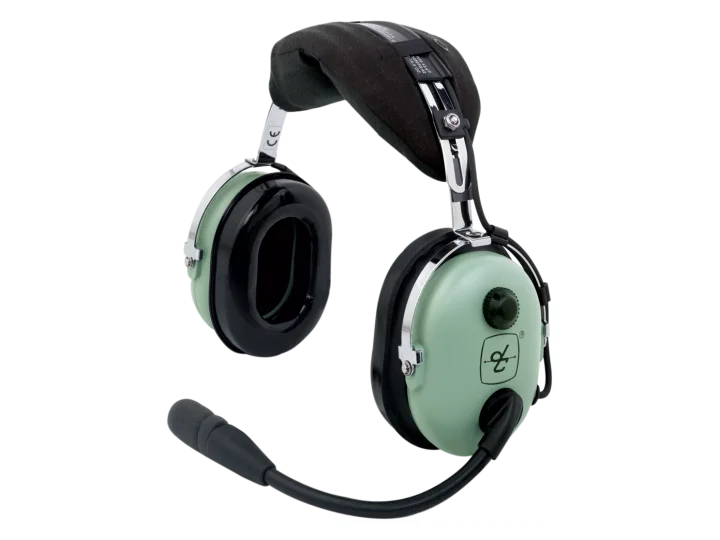 Student headsetDavid Clark H10-13.4 Aviation HeadsetCheck current availability on Amazon (paid link)
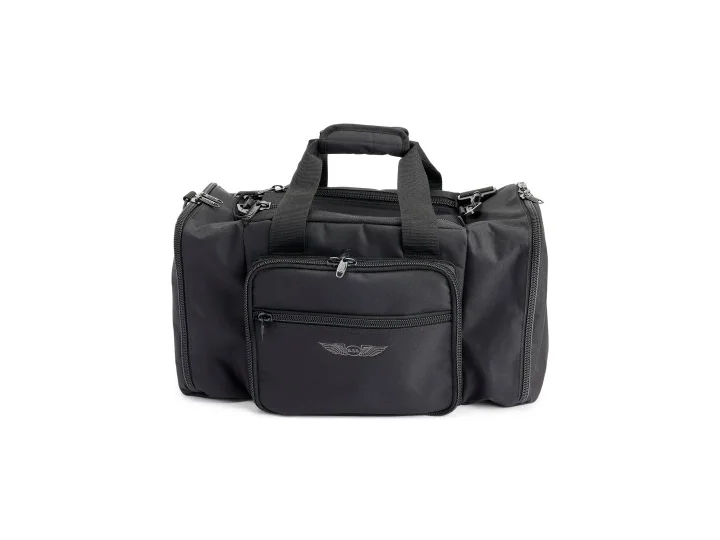 OrganizationASA Flight BagCheck current availability on Amazon (paid link)
The FAA created the sport pilot certificate through its light-sport aircraft rule, effective in September 2004. It established a simpler route for pilots whose plans remain recreational and relatively local. The FAA sport pilot certification guidance outlines the training threshold, eligible aircraft, and operating restrictions that define the certificate.
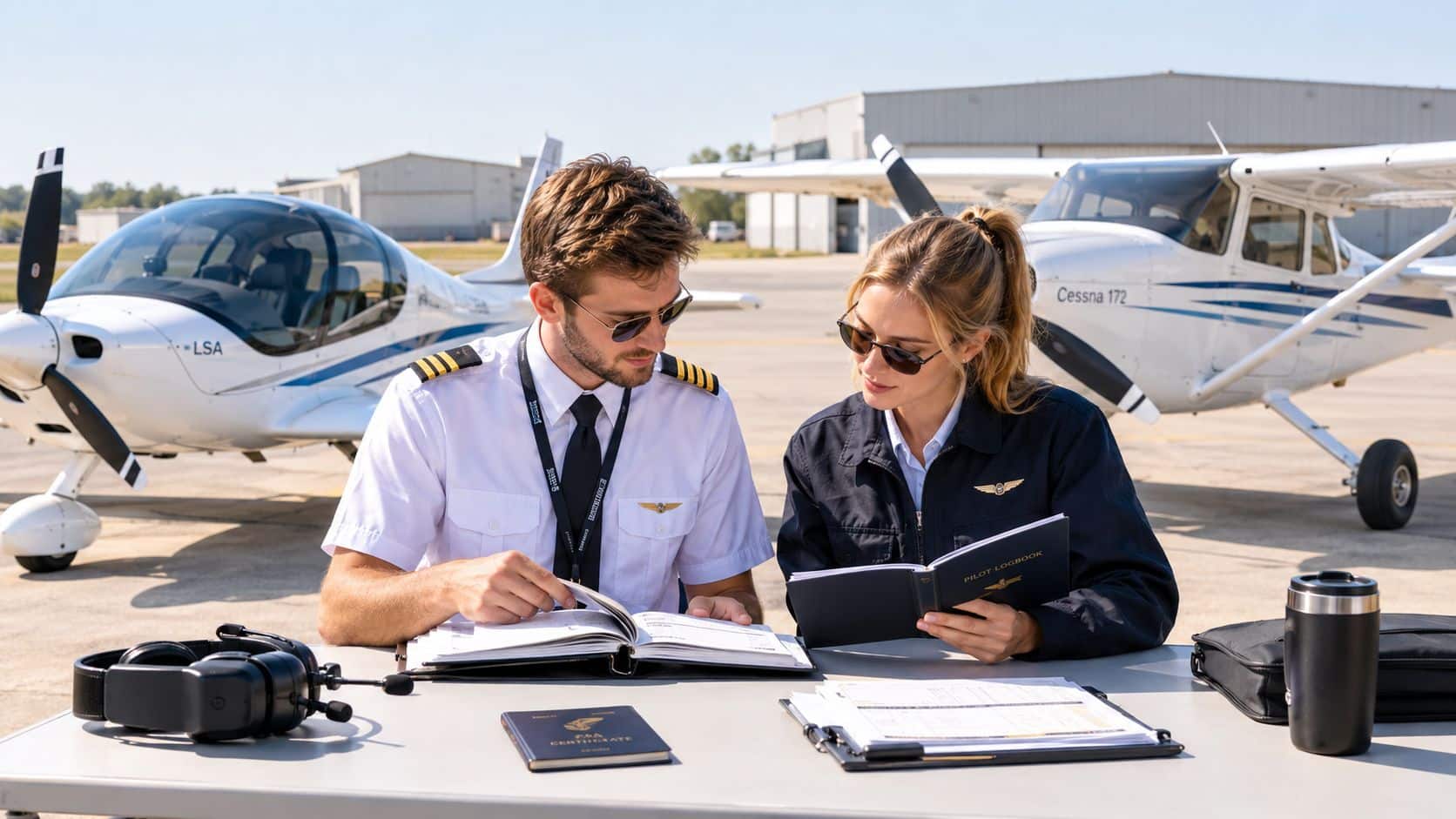
A sport pilot may fly only eligible light-sport aircraft, carry no more than one passenger, and conduct daytime VFR operations. Class A airspace is prohibited, and operations at Class B, C, and D airports require the applicable training and endorsement. At Chino Airport, those requirements become practical tasks rather than abstract regulations. Before soloing in the towered pattern at KCNO, a sport-pilot student must be prepared for tower communications, local traffic procedures, and the required Class D endorsement. DuBois instructors can build that work into training instead of treating it as an afterthought.
The aircraft choice also matters. A sport pilot's certificate is tied to a narrower group of aircraft and a tighter operating envelope. That can work well for local daytime flying, but it becomes restrictive when weather, destinations, passengers, or aircraft availability change.
A private pilot certificate gives the pilot a broader starting point. With the required training, the pilot can fly at night, carry more passengers, operate a wider range of airplanes, and continue toward instrument, commercial, and instructor ratings. For many students, it is both a recreational credential and the normal foundation for career-track training.
The certificate should match the mission
A pilot planning clear-weather flights near home with one passenger may find the sport pilot route practical. A pilot who expects to carry family members, rent different aircraft, fly after sunset, travel farther, or pursue an instrument rating will likely outgrow those limits.
The decision concerns the aircraft, airports, passengers, weather, and destinations that will shape actual flying. A certificate that looks efficient during training can become inconvenient once the mission expands.
Practical rule: Choose the certificate based on the flying planned after training, not only on the hours required to earn it.
Safety comparisons also require context. In research covering 2012 through 2022, investigators matched 2,585 sport pilots with 2,585 active third-class private pilots. The study recorded 113 accidents among sport pilots and 40 accidents among private pilots, corresponding to accident proportions of 4.37% and 1.55%, as reported in the comparative sport and private pilot safety study. The research also found a higher percentage of fatal accidents in the private pilot group, which the authors associated with differences in aircraft types.
A certificate does not determine safety by itself. Judgment, aircraft condition, weather decisions, proficiency, and instructor quality all affect the outcome. The comparison shows why a lower training threshold should not be mistaken for a lower operational workload, especially in the communications and airspace environment around Chino.
Certification Requirements and Training Hours
How much training does each certificate require, and what do those minimums mean at Chino Airport?
The FAA establishes a 20-hour minimum flight-training requirement for sport pilots and a 40-hour minimum under Part 61 for private pilots, as described in the FAA sport pilot requirements. These figures are regulatory minimums, not reliable predictions of when a student will be safe, proficient, and ready for a checkride.
Both paths include ground preparation, an aeronautical knowledge test, practical flight training, and a checkride. Students practice aircraft control, takeoffs and landings, emergency procedures, weather interpretation, airspace, navigation, regulations, and aeronautical decision-making. Private pilot training builds a broader operating foundation, including the experience and skills required for night operations and longer cross-country flights.
Minimum hours are only one planning variable
Training frequency affects progress. Long gaps between lessons can require additional review, while weather, aircraft maintenance, availability, instructor scheduling, and individual proficiency can extend the calendar. Regular flying and preparation between lessons give each flight a clear purpose and help retain previously learned skills.
Chino Airport adds real operational workload to that training. Students must communicate with tower personnel, follow local procedures, monitor traffic, and respond to changing airspace demands. Those skills are useful beyond the checkride, but they can make the early stages feel more demanding than a minimum-hour comparison suggests.
A student who reaches the minimum hours without consistent proficiency may still need more training.
The private pilot license requirements under Part 61 provide a practical starting point for reviewing the private pilot route and its regulatory framework. DuBois Aviation should then translate those requirements into a written plan covering the aircraft used, instructor availability, study expectations, lesson sequence, and measurable milestones.
Medical eligibility requires early attention
Sport pilots may use a current, valid U.S. driver's license instead of an FAA medical certificate, but specific conditions apply. The pilot must not have been denied a third-class medical certificate, had a medical certificate revoked or suspended, or know of a medical condition that would make safe operation impossible.
A driver's license does not remove the responsibility to determine whether the pilot can safely act as pilot in command. Students with medical uncertainty should address it before investing heavily in training. An unresolved medical history can affect which certification path remains available.
The private pilot route may also permit certain pilots to operate under medical relief provisions when the aircraft and operation meet applicable limits. Students should verify current FAA requirements rather than rely on informal advice or outdated training material.
Training quality matters more than chasing the minimum
A sound program should provide:
- A defined syllabus: Each lesson needs objectives, completion standards, and preparation tasks.
- Consistent instruction: Coordinated records and expectations prevent students from repeating work after scheduling changes.
- Aircraft familiarity: The training airplane should match the certificate sought and the flying planned afterward.
- Checkride preparation: Mock oral questioning, flight reviews, and standards-based feedback should expose gaps before the practical test.
The minimum is a regulatory floor. Treat proficiency, not the hour count, as the training target.
Operating Privileges and Limitations Comparison
Which certificate fits the flying you will do around Chino Airport? A sport pilot may fly a qualifying airplane with one passenger on a daytime VFR trip, yet the same pilot may be unable to depart after sunset, carry another passenger, or use a towered airport without the required training and endorsement.
The sport pilot operating rules in 14 CFR 61.315 prohibit night flying, limit the pilot to one passenger, prohibit Class A operations, and require training and an endorsement for operations to, from, through, or at Class B, C, or D airports. Those restrictions matter around Southern California, where towered airports and busy terminal areas can shape an otherwise short local flight.
| Operation | Sport Pilot | Private Pilot |
|---|---|---|
| Aircraft eligibility | Light-sport aircraft meeting applicable limits | Many airplanes within the certificate and aircraft qualifications |
| Passengers | One passenger maximum | Broader passenger privileges, subject to aircraft and operating rules |
| Time of operation | Daytime VFR only | Night operations permitted after required training |
| Class A airspace | Not permitted | Permitted only when properly qualified and equipped |
| Class B, C, or D airports | Required training and endorsement apply | Normal operations are allowed when the pilot meets applicable requirements |
| Instrument flying | Not available as a normal sport-pilot privilege | Instrument rating pathway is available |
| Medical option | FAA medical certificate or qualifying U.S. driver's license | Applicable medical certification or relief provisions may apply |
| Aircraft weight example | Landplanes capped at light-sport limits, including 1,320 pounds maximum gross weight and two seats total under the cited FAA guidance | Up to 12,500 pounds maximum takeoff weight under the private-pilot operating rule |
Chino operations expose the difference quickly
Chino Airport is a towered Class D airport. A sport pilot who plans to use it must complete the applicable training and endorsement before treating it as a routine departure point. Radio work, traffic sequencing, runway awareness, and pattern procedures still demand preparation, even after the endorsement is complete.
That requirement can affect training decisions at DuBois Aviation. Students should practice the communication and traffic-management tasks they will face at Chino, rather than assume a certificate alone provides operating comfort in a busy airport environment.
Private pilots also need proper training, communications, and clearances. A private certificate does not make someone proficient in every airspace setting. It provides a broader regulatory platform for building that proficiency and for planning flights that extend beyond the sport-pilot operating envelope.
The private pilot operating rule in 14 CFR 61.113 allows broader operations in qualifying airplanes, including aircraft with no more than seven occupants, a maximum takeoff weight of 12,500 pounds or less, and flights at or below 18,000 feet MSL and 250 knots indicated airspeed. These are operating boundaries, not permission to exercise every privilege immediately. Aircraft checkout, endorsements, ratings, and actual proficiency still control what a pilot can safely and legally do.
Medical relief doesn't erase certificate limits
A sport pilot using a driver's license remains subject to sport-pilot aircraft and operating restrictions. The driver's-license option changes the medical-certification pathway. It does not expand passenger, airspace, aircraft, or time-of-operation privileges.
Private pilots must hold an appropriate medical qualification for the operation. Review the 3rd class medical requirements before choosing a certificate based on assumptions about medical relief.
The FAA's medical guidance for aircraft operations states that BasicMed is not intended to be exercised by sport pilots. Students should confirm current eligibility with an aviation medical examiner or the FAA before committing to a certification path on medical grounds.
The most expensive limitation is often the one discovered after a pilot has built plans around it.
Cost and Time Investment Breakdown
Is the lower entry cost of a sport pilot certificate still lower after you account for scheduling, extra practice, and the flying you plan to do at Chino Airport? Sport pilot training generally requires less initial flight training than private pilot training, so the first financial commitment may be smaller. The final bill depends on more than multiplying minimum hours by an aircraft rate. Rental time, instructor briefings, ground instruction, study materials, knowledge and practical tests, medical processing where applicable, and additional practice all contribute.
The FAA minimums are 20 flight hours for sport pilot certification and 40 hours for private pilot certification under Part 61, as documented in the FAA sport pilot certification information. Those figures are regulatory minimums, not reliable completion estimates. Students training in the Chino area should budget for the time needed to build consistent proficiency, particularly when aircraft availability or weather interrupts the schedule.
Where the money goes
A realistic training budget includes:
- Aircraft use: Rental time covers the airplane and the fuel or operating costs included by the school.
- Instructor time: Preflight and postflight briefings remain part of effective training, even while the aircraft is parked.
- Ground preparation: Knowledge-test study and oral-exam preparation require structured work outside the cockpit.
- Testing: The knowledge test and practical test involve separate planning and fees.
- Medical administration: Private pilot applicants may need an FAA medical certificate depending on the intended operation and eligibility pathway.
Sport pilot aircraft may have different rental economics from private pilot trainers, but the available fleet and qualified instructors matter more than the advertised hourly rate. At a busy airport such as Chino, a less expensive airplane provides little financial advantage if lessons are difficult to schedule or the aircraft is unavailable when your instructor is ready.
The private pilot route can require more money at the beginning. It may still be the more efficient financial choice for a student who expects to pursue broader privileges later, because changing direction can mean repeating foundational training in a different aircraft or operating environment.
The installed population signals the practical norm
The FAA's 2023 airman statistics listed 7,144 active sport pilots and 167,711 active private pilots, according to the reported FAA airman-statistics comparison. Private pilots therefore outnumbered sport pilots by about 23.5 to 1, and sport pilots represented about 4.1% of the private-pilot total.
That difference does not make sport pilot certification a poor choice. It shows that private pilot training is the more common general-aviation route, while sport pilot certification serves a narrower mission. At DuBois training, the practical question is whether the lower initial commitment outweighs restrictions that could affect your future flying.
Training pace influences the final bill
Consistent scheduling helps preserve skills between lessons. Preparing for each flight, reviewing instructor notes, and correcting knowledge gaps promptly make better use of aircraft time. Long interruptions can require review flights, while rushing lessons can leave weak fundamentals that cost more to repair.
Plan a reserve for additional training instead of assuming either regulatory minimum. A flight school can explain aircraft rates and scheduling options, but no responsible instructor can promise that every student will finish at the minimum.
Which Certificate Fits Your Flying Goals
The best certificate depends on the mission, not on which application appears easier. A student who wants a simple daytime recreational activity may value the sport pilot's lower entry threshold. A student who wants to travel, carry several people, fly at night, or pursue advanced ratings should usually evaluate private pilot training first.
Scenario one supports the sport pilot path
Consider a pilot whose plan is limited to local daytime flights with one passenger in eligible light-sport aircraft. The pilot has no interest in night operations, instrument training, commercial aviation, or carrying additional passengers. For that mission, the sport pilot certificate can provide a direct and appropriately bounded route into flying.
The pilot still needs disciplined weather decisions, aircraft inspections, airspace awareness, and recurrent practice. A certificate with fewer privileges doesn't remove the need for sound judgment. It defines a narrower operating environment.
Scenario two points toward private pilot certification
A different student may want to fly from Chino to visit airports across Southern California, take family members along, and continue into instrument training. That plan calls for broader aircraft and passenger privileges, more flexible airspace operations, and a certificate that supports advanced ratings.
A private pilot certificate also makes more sense for a career-track student. Instrument, commercial, multi-engine, and instructor training build on the private pilot foundation. Starting with a sport certificate may delay that progression if the student already knows professional aviation is the objective.
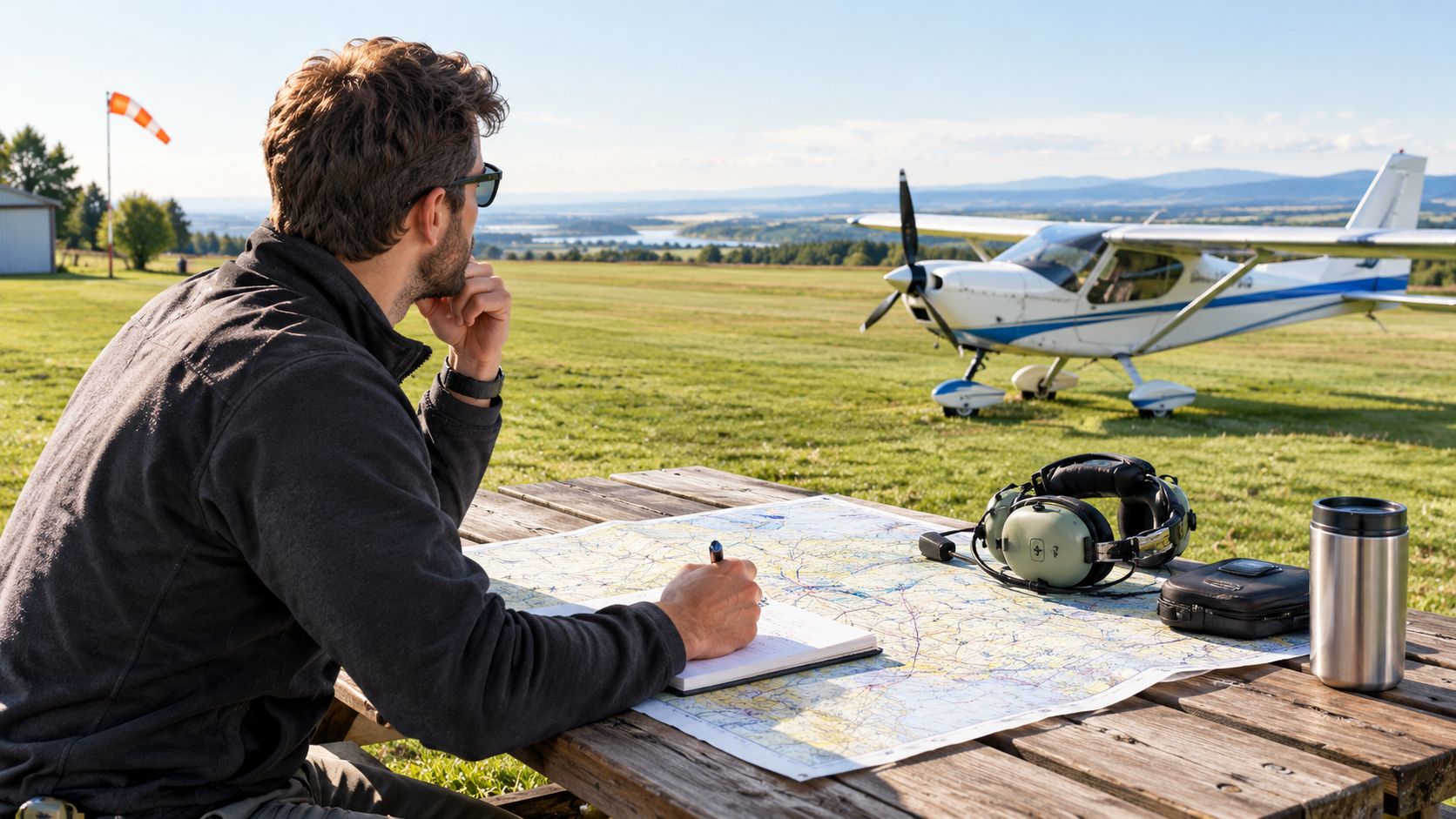
Scenario three requires a careful medical decision
A prospective pilot who can't use the driver's-license option because of a medical denial shouldn't assume the sport pilot certificate solves the problem. The FAA conditions that privilege on the applicant's medical history and current ability to operate safely.
A pilot with uncertainty should seek qualified aviation medical guidance before beginning a certificate program. Starting flight training first and investigating eligibility later can create avoidable financial and scheduling problems.
A practical decision filter
The following questions usually clarify the choice:
- How many passengers will the pilot want to carry? One passenger maximum may be sufficient, or it may become restrictive immediately.
- Will night flying matter? If evening departures or arrivals are part of the mission, private pilot training offers a more suitable foundation.
- Is instrument training a possibility? A student considering instrument, commercial, or instructor ratings should plan around the private pilot path.
- Which aircraft will be available locally? Certificate privileges are useful only when suitable aircraft and instructors are accessible.
- Where will the pilot operate? Busy towered airports require specific preparation, and local airspace should be part of the decision.
- Is the lower initial burden the primary need? If budget or medical eligibility drives the choice, the sport route may remain appropriate.
The right certificate is the one that supports the pilot's expected mission without forcing an expensive change of direction.
Getting Started with Training at DuBois Aviation
A sound start begins with an honest mission statement. The prospective pilot should write down intended passengers, aircraft interests, preferred flying times, likely destinations, and whether advanced ratings or a professional career are possible goals. That information helps an instructor recommend a certificate instead of defaulting to the shortest checklist.
At Chino Airport, training takes place in a towered Class D environment with multiple runways and instrument approaches. That setting gives students practical exposure to radio communication, traffic management, airport procedures, and the decision-making demands of a busy Southern California airport.
A useful first sequence
- Schedule a discovery flight: Use the flight to evaluate comfort in the aircraft, communication with the instructor, and the training environment.
- Discuss certificate fit: Ask how the intended mission aligns with sport pilot or private pilot limitations.
- Review medical eligibility early: Resolve questions before committing to a longer training plan.
- Inspect the training pathway: Ask about aircraft availability, instructor continuity, ground preparation, and checkride planning.
- Set a sustainable schedule: Regular lessons are easier to build on than isolated flights separated by long gaps.
DuBois Aviation provides airplane and helicopter instruction at Chino Airport, with training options that include private, instrument, commercial, and multi-engine programs, along with aircraft rental and helicopter instruction. Students comparing schools can also review this guide on choosing a flight school in Southern California before making a decision.
Students who begin with private pilot training can later discuss instrument, commercial, multi-engine, CFI, CFII, or MEI planning with an instructor. Students who choose sport pilot certification should confirm that the selected aircraft, airport access, and future goals remain compatible with its operating limits.
DuBois Aviation can help prospective pilots compare sport pilot and private pilot training, schedule a discovery flight at Chino Airport, and build a plan around recreational or career goals. Visit DuBois Aviation to request training information and discuss the next available course options.