
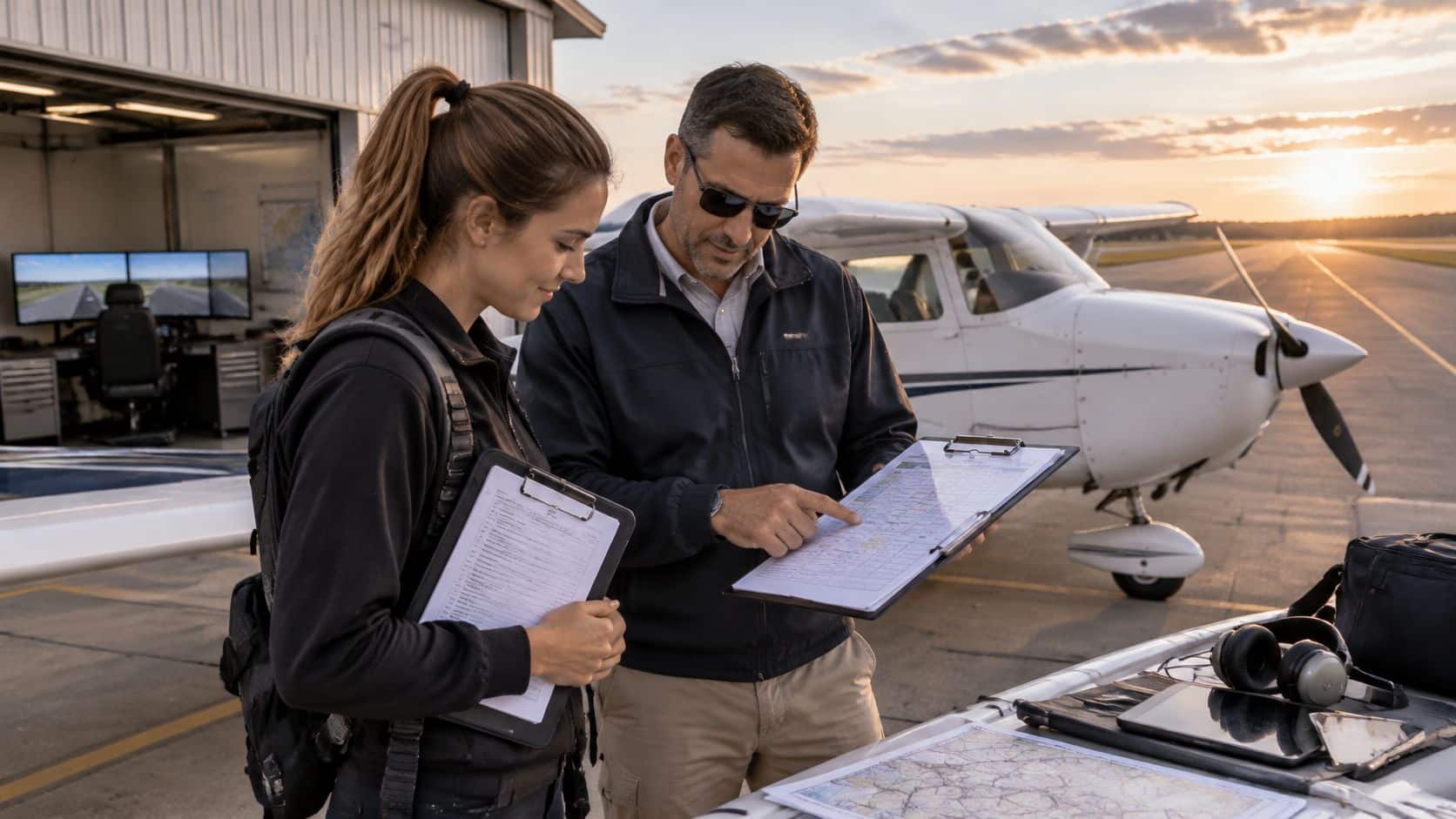
Two lessons a week can take six months or less to finish a private pilot certificate, and three lessons a week can take about four months. The 2024 national median time was 24 weeks, and no school can promise the date you will be done.
Accelerated flight training for a private pilot shortens the calendar. It does not shorten the standard you have to meet. A passed knowledge test and a logbook that hits the hour floors can still leave you unready for the oral and the flight. The cheaper path is often the one that adds a week when skills slip, instead of buying remedial lessons after a failed practical test.
Treat the schedule as a readiness and total-cost question. Pick a lesson count you can hold for twelve straight weeks, protect sleep and study, and let proficiency decide when the checkride is real.
Two practical options worth comparing
These are specific products pilots commonly compare for this type of flying. Confirm compatibility with your aircraft and instructor before ordering.
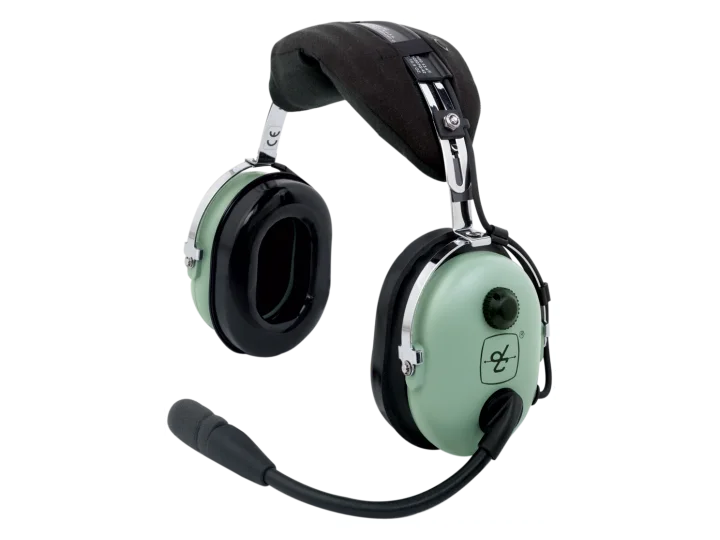 Student headsetDavid Clark H10-13.4 Aviation HeadsetCheck current availability on Amazon (paid link)
 OrganizationASA Flight BagCheck current availability on Amazon (paid link)
Table of Contents
- Private Pilot Timelines by Weekly Lesson Count
- Experience Minimums an Accelerated Plan Cannot Shorten
- How to Sequence Every Lesson Around the ACS
- Weekly Training Blocks and Knowledge Test Pacing
- Warning Signs Your Schedule Is Outrunning Your Skills
- Simulators, Cost and Time Tradeoffs
- Choose Your Pace and Book a Discovery Flight
- Frequently Asked Questions
Private Pilot Timelines by Weekly Lesson Count
A weekly lesson count sets a range. Where you land inside that range depends on weather, aircraft availability, examiner scheduling, and whether each skill still holds on the next flight. Treat published figures as planning inputs, then build your own range around a pace you can sustain.
| Planning point | Value | Source |
|---|---|---|
| Two lessons per week, airplane private pilot | Six months or less | DuBois Aviation planning guide |
| Three lessons per week, airplane private pilot | About four months | DuBois Aviation planning guide |
| National median time to earn a private pilot certificate, 2024 | 24 weeks (about six months) | Redbird Flight's 2025 State of Flight Training Survey |
| Lessons at three per week across a median-length plan | 72 lessons | Calculation from the median |
| Median-length plan after two weather-cancelled weeks | 26 weeks | Calculation from the median |
How Accelerated Flight Training for a Private Pilot Shifts the Math
Say you book three lessons a week, and a run of low ceilings wipes out two of them. Six lesson slots are gone. Where the slip hurts depends on where your knowledge test sits. A written already passed starts fading while you wait out the delay. A written still ahead loses the flights that were supposed to turn test material into something you can fly. The fix is the same either way: hold the weekly count, accept the later finish, and let the extra calendar buy proficiency rather than scheduling flights you will have to repeat.
Three variables move the finish more than any published timeline.
- Weekly lesson count: The one lever you control. Frequency compresses the calendar only when each lesson produces a skill you can repeat on the next flight.
- Weather cancellations: Southern California flying is often good, but a marine layer or a maintenance day still deletes a slot. Build those weeks into the plan before you book the block.
- Knowledge-test timing: A written taken too early fades for the oral. One taken with no operational practice leaves you reciting answers you cannot fly. Aim for the middle of the training arc, where test knowledge still backs up the flying.
Every range in the table assumes the legal hour floors and endorsements are met in full. At DuBois Aviation, progress depends on preparation, proficiency, weather, aircraft availability, and examiner scheduling, and the school guarantees no completion date for the private pilot license. What the school controls is the structure around those variables: one-on-one instruction, stage-check flights before solo, and a sequence that ends with a checkride only after you meet the practical test standards.
Practical rule: Pick the weekly pace you can hold through delays, then write the expected range in weeks next to a budget of around $20,000 before you put money on a start date.
Experience Minimums an Accelerated Plan Cannot Shorten
An accelerated course cannot cut the hours the FAA requires. It can only pack those hours into fewer calendar weeks. Under 14 CFR 61.109(a), an applicant for an airplane single-engine private pilot certificate must log at least 40 hours: 20 hours of flight training with an authorized instructor and 10 hours of solo flight training. The FAA hourly requirements page also sets at least 3 hours of cross-country training, 3 hours of night training, 3 hours of instrument-reference training, and 3 hours of practical-test preparation in the 2 calendar months before the test.
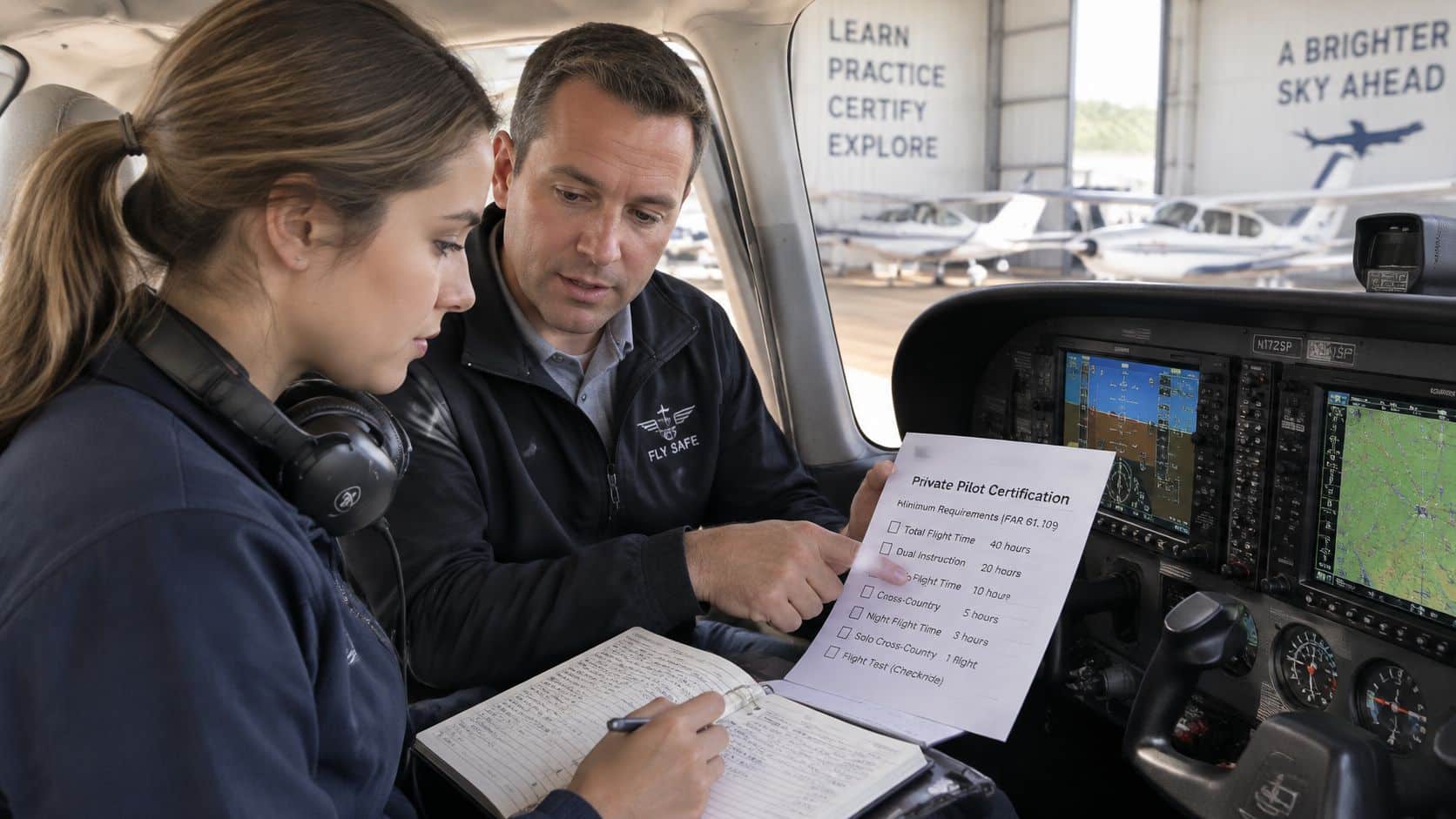
Those numbers are floors, not targets. A tighter week can keep maneuvers fresh, which is why concentrated scheduling works for some students. Reaching a target date does not issue a certificate. Knowledge-test results, endorsements, and the practical-test standard still apply. The same point shows up in Fluidwave's guide to completion time: a short calendar only helps when the required work is finished.
| Requirement | Minimum hours | Notes |
|---|---|---|
| Total aeronautical experience | 40 | Required for an airplane single-engine private pilot certificate |
| Flight training with an authorized instructor | 20 | Dual instruction counted within the 40-hour total |
| Solo flight training | 10 | Counted within the 40-hour total |
| Cross-country training | 3 | Counted within the 40-hour total |
| Night training | 3 | Must include one cross-country over 100 nautical miles total distance and 10 takeoffs and 10 full-stop landings with traffic-pattern landings |
| Instrument-reference training | 3 | Separate from night hours |
| Practical test preparation | 3 | Completed within the 2 calendar months before the practical test |
Night hours are a separate gate
For the airplane single-engine rating, the 3 hours of night flight training must include one cross-country of more than 100 nautical miles total distance and 10 takeoffs and 10 landings to a full stop, each landing from a traffic pattern. Instrument-reference time is a different 3-hour block. Hood work on a day flight does not fill the night line, and a string of evening pattern laps does not fill the night cross-country.
The common miss is easy to make on a compressed week. A student logs short local night flights, hits three hours on the page, and still lacks the distance or the full-stop count. Schedule that night cross-country around weather, airport lighting, and instructor availability. At a busy tower, add radio workload to the plan instead of treating the flight as a quiet pattern session.
Regulation versus a sensible plan
Logging more than the floor is a sound recommendation. It is not a substitute for the floor. The 3 hours of practical-test preparation have to fall inside the two calendar months before the checkride, so put that block near the test, not in month one of a rush.
Check the current wording of 14 CFR 61.109 on eCFR before you schedule, because regulatory text can change. A plain checklist of the categories in private pilot license requirements belongs on the log sheet before anyone talks about a checkride date.
How to Sequence Every Lesson Around the ACS
Organize the course around the FAA Airplane Private Pilot Airman Certification Standards (ACS), not around a target hour count. The private pilot airplane ACS tests knowledge, risk management, and flight skill from preflight preparation through postflight procedures. Compressing the calendar does not drop a task. It means you reassess every task on a shorter loop.
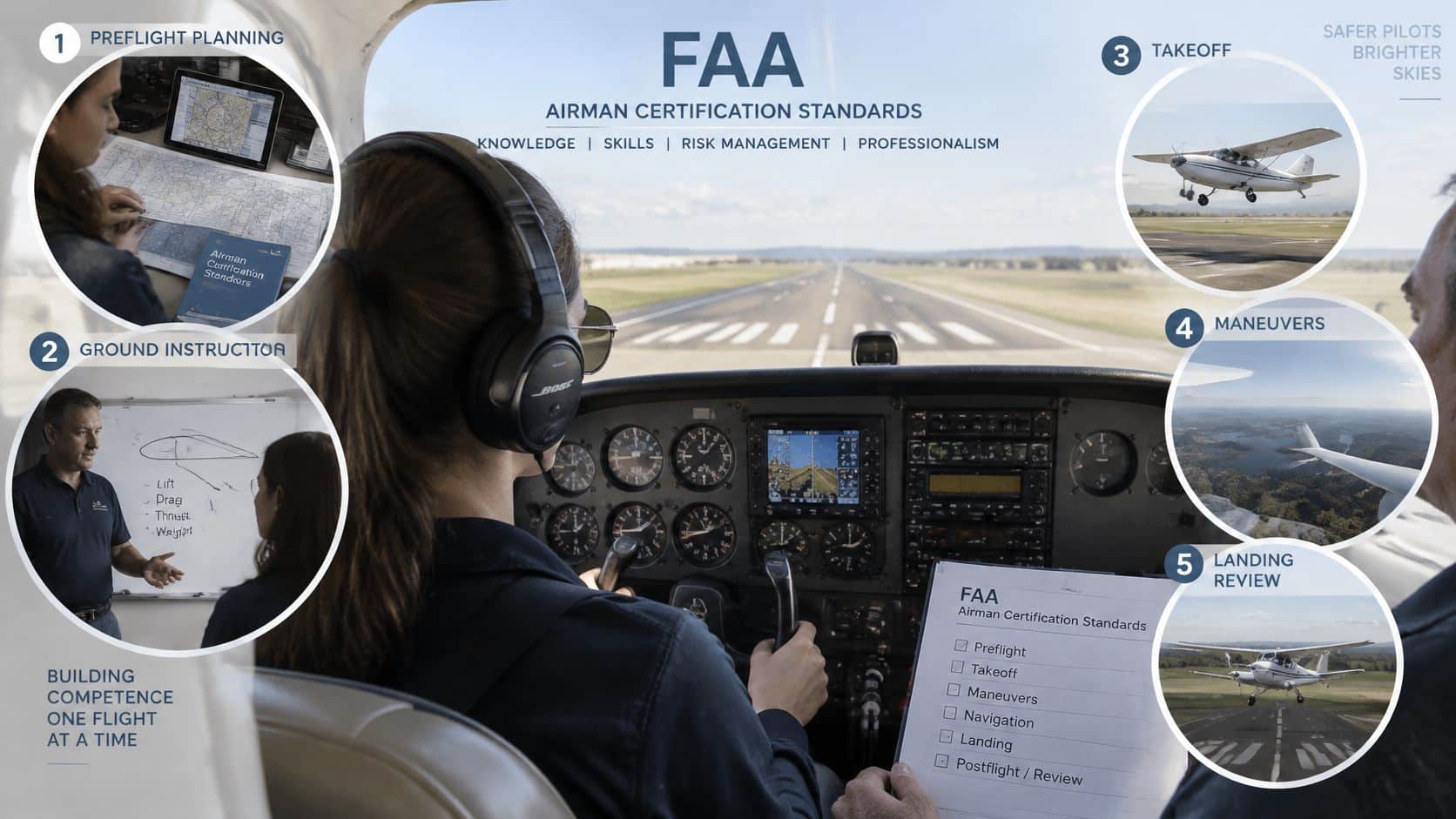
At DuBois Aviation, progress follows a clear order: fly and study, solo the aircraft, learn to pilot and fly across Southern California, then schedule a checkride once the practical test standards are met. The ACS gives that order its checkpoints.
- Ground before the first flight. Cover regulations, weather, airspace, navigation, aircraft systems, performance, human factors, and risk management. Do not start the airplane until that block has a checkpoint. A useful companion is the private pilot study guide.
- Aircraft orientation. One lesson on the training airplane, flows, and checklists. The objective is a clean preflight and a positive exchange of controls, not a tour of every maneuver.
- Core airplane control. Takeoffs, landings, pattern work, slow flight, stall recovery, and emergency procedures. Write a tolerance for altitude, heading, and airspeed on each task so "good enough" has a number.
- Operational flying. Navigation, diversions, radio work, and towered-airport operations, including Class D calls when the pattern is busy.
- Mock practical tests. Scenario flights that mix an abnormal with a diversion, scored the way a checkride is scored.
The same template on every flight
Each lesson needs a measurable objective, a preflight briefing, one or two focused maneuvers, one operational scenario, and a postflight debrief that writes the deficiencies down. Touch the FAA emphasis items on purpose: positive aircraft control, positive exchange of flight controls, collision and wake-turbulence avoidance, runway-incursion avoidance, controlled-flight-into-terrain prevention, aeronautical decision-making, risk management, and checklist use.
A short look at how those tasks show up in the cockpit helps before you try to stack them into one week.
The failure mode is lesson density. Several flying days in a row, with no protected study, sleep, or solo consolidation, can produce a performance that looks sharp and then falls apart when workload rises. The safer benchmark is ACS-level consistency on separate days, including an abnormal or a diversion, not a logbook that merely clears the minimum hours.
Weekly Training Blocks and Knowledge Test Pacing
A useful accelerated week has two flight lessons, study days between them, and a consolidation session that is not a same-day repeat. That spacing is a cost decision as much as a rest decision, because a lesson flown on tired retention is a lesson you pay for twice.
| Day | Focus | Output before the next lesson |
|---|---|---|
| Day 1 | Flight lesson on maneuvers and pattern work | Logged deficiencies and tolerances |
| Day 2 | Ground study with a practice exam | Each missed knowledge code explained aloud |
| Day 3 | Light review or rest | Weak areas flagged for the next flight |
| Day 4 | Cross-country planning on paper | Completed flight plan with alternates, fuel margin and diversion triggers |
| Day 5 | Flight lesson with scenario and radio work | Debrief with objective tolerances recorded |
| Weekend | Solo consolidation or stage check on a separate day | Skills confirmed without a same-week repeat |
A paper week is easier to defend than a mental one. A printable monthly template, such as April 2027 layouts for handwritten planning, keeps weather moves and study blocks visible before they collide with a booked airplane.
Run the Knowledge Test as a Loop
Private-pilot knowledge-test content is based on 14 CFR 61.105. The FAA knowledge-test guidance points applicants toward instructor-directed study or an approved home-study course, and a failed attempt returns a test report listing deficient subject-matter codes so remediation can be specific. Run every practice exam through that same loop.
- Weekly practice exam: Log every missed knowledge code.
- Say it aloud: Explain the rule or the calculation in your own words.
- Fly it: Apply the item in a scenario, such as picking an alternate after a weather change, calculating takeoff performance, or stating Class D communication requirements.
The ACS expects both understanding and use: airspace classes, chart symbols, special-use airspace, temporary flight restrictions, performance and limitations, and operational decisions. A passing score built on memorized choices still leaves the oral exam exposed, and an oral that stalls costs ground time and reschedule delays whether or not the flight portion ever happens.
Apply the Same Loop to the Airplane
Record objective tolerances for altitude, heading, airspeed, stabilized approaches, checklist completion, and radio accuracy. Then repeat the task after a delay or after a higher-workload exercise. Numbers that hold only on a familiar local flight describe memorized conditions, not a ready skill.
The cross-country benchmark is stricter. Complete the full preflight and flight plan alone, then defend the assumptions, risks, alternates, fuel margins, and diversion triggers out loud before anyone starts the engine. Any element that needs prompting becomes the next ground session.
The expensive failure in a compressed week is retraining: one maneuver flown badly three times costs more than a rest day and a single clean repeat. When a missed code or a missed tolerance shows up twice, insert the slower day. The block gets cheaper, and the checkride gets closer.
Build a one-page weekly planner with the six rows above, a column for missed knowledge codes, and a column for the tolerance you missed. If a code or a tolerance repeats, that item is the next lesson, not an extra maneuver.
Warning Signs Your Schedule Is Outrunning Your Skills
A full calendar and a passing written score are not the same thing as checkride readiness. In the FAA's 2025 airplane knowledge-test results, private-pilot applicants took 44,657 tests, with an 89.56% pass rate and an average score of only 81.64%, as published in the CY2025 airman knowledge test volume report. Plenty of people pass without a margin that supports independent weather, airspace, and systems decisions.
What to change when a sign shows up
| Warning sign | What it usually means | Schedule response |
|---|---|---|
| Written score passes but weather or airspace answers are shaky | Memorized answers without operational understanding | Add a scenario lesson before the next flight |
| Landings vary from day to day on the same plan | Too many consecutive flying days | Insert a day off and repeat the maneuver on a separate day |
| Radio calls rushed or missed at a Class D airport | Workload exceeds current skill | Practice radio phraseology on the ground, then fly a shorter pattern session |
| Cross-country plan needs help on every element | Navigation practice too thin | Hold further cross-countries until the plan is completed independently |
| Emergency procedure recall slow during debriefs | Insufficient repetition | Add focused emergency drills before the next solo or checkride preparation |
Before solo, DuBois Aviation runs stage-check flights that review flying skills, procedures, and decision-making. Completing a stage check does not replace required instructor training and endorsements. A training tracker can show tasks and next steps, but it does not replace instructor judgment, FAA requirements, or the readiness call before solo and a checkride.
Move on milestones, not on a date. The gates that matter are knowledge-test readiness, landings that stay consistent on separate days, emergency-procedure recall, cross-country judgment, and oral performance. Slowing down is often the cheaper choice. A checkride after fragmented learning tends to buy remedial lessons, a failed practical test, and retraining.
After each lesson, answer three questions without notes.
- Could you repeat the emergency checklist without prompting?
- Could you explain the weather decision you made and the alternate you would use?
- Could you state the airspace requirements for the next flight without looking them up?
When two warning signs show up in the same week, add a lesson before you add another flight.
At a busy Class D airport such as Chino, radio work, traffic sequencing, and the airspace around the field often need more repetition than a generic accelerated timeline assumes. That extra pattern session is cheaper than a discontinuance.
Simulators, Cost and Time Tradeoffs
A flight training device fills the gaps between airplane lessons. It is a good place to rehearse procedures, instrument scan, radio phraseology, and emergency flows when the airplane is down or the weather is not. It is not a substitute for the landings, solo time, and cross-country distance the certificate requires.
Simulator time counts toward the hour totals in 14 CFR 61.109 only inside the limits written in that section. Read the current limit before anyone logs device time as if it were airplane time. DuBois Aviation keeps a Gleim BATD on site for that procedural work, and the full-motion aircraft simulator page is the place to see how device time is scheduled around airplane lessons.
What belongs on a written quote
Ask for these lines before you compare two schools on an hourly rate.
- Airplane time: rental by the hour for the aircraft you will fly.
- People time: instructor hours, ground instruction, and the preflight and debrief that bookend each flight.
- Tests: knowledge-test fees, practical-test fees, and examiner fees.
- The miss: extra lessons after a stage check or a weak mock oral.
Rates change by airport and by year, so a quote without those lines is not a plan. A higher lesson frequency shortens the calendar and raises the weekly spend on airplane and instructor time. A slower pace spreads the spend and adds weeks in which skills fade, which means review time you also pay for. Compare two plans by total cost to the checkride, including the remediation you should expect, not by the advertised hourly rate.
Students who later want to teach can read about landing your first flight instructor job once the private certificate is solid. That path still starts with the same private-pilot floors.
What has to exist before lesson one counts
A realistic start date waits on a student pilot certificate, a medical certificate, and the endorsements required before first solo under 14 CFR 61.23, 61.83, and 61.87. Confirm the current text on eCFR and the FAA medical certification page before you lock a first week. A schedule that ignores those gates looks fast on paper and sits idle in the first month.
Choose Your Pace and Book a Discovery Flight
Pick the lesson frequency and the checkpoint rules before you enroll. Two lessons a week suits a student who can protect study time but cannot fly every other day. Three lessons a week suits someone who can keep twelve weeks clear and still leave room for a weather day. Assuming clear skies every week is how a four-month sketch becomes a six-month bill.
Before you call any school, ask four questions.
- How many lessons per week does the school expect, and what happens if you miss one?
- How are weather cancellations handled, and is the airplane rebooked or lost?
- Are lesson plans built on the FAA ACS, with a written objective and a debrief?
- Who decides you are ready for solo and for the checkride, and what evidence do they use?
A discovery flight is the right first step. You sit with an instructor, see how a lesson runs, and ask those questions before you commit to a path. All flight instruction and ground school at DuBois Aviation is one-on-one with qualified instructors using Jeppesen Learning Materials, at Chino Airport's towered Class D field, so radio and traffic show up early rather than on the week of the checkride.
What to have in hand before you dial
- Target lessons per week you can hold for twelve weeks.
- Weeks you can protect, including a buffer for weather.
- A checkride window written as a goal, not a guarantee.
Call DuBois Aviation at (909) 597-6292 to ask about course availability, arrange a school tour, or schedule a discovery flight. Bring the weekly count and the four questions. A clear pace beats a fast promise.
Frequently Asked Questions
Can an accelerated course waive the 40-hour minimum?
No. Concentrated scheduling compresses calendar time, and nothing in it shortens the aeronautical experience in 14 CFR 61.109, the endorsements, the knowledge test, or the practical test.
Does a passing written score mean I am ready to solo?
No. A pass is one input, and solo clearance still rests on instructor judgment, stage-check performance, and the required training and endorsements.
What do I do with a week lost to weather?
Treat it as buffer spent. Rebook the airplane quickly, keep the ground work moving, and avoid stacking extra lessons to catch up, since rusty skills make compressed weeks expensive.
How should I read a stage-check result?
Read it as a snapshot of that day. Passing moves you toward solo, while flagged items still need practice and instructor sign-off, and the check itself never replaces required training or endorsements.
Can a parent or sponsor see my training records?
In Pilot Training Tracker, parents and sponsors follow a student's progress only when invited and authorized by the school. Access is role-based, and records are not public.
Is slowing down a waste of money?
Often the opposite. A few extra days of consolidation cost less than a failed practical test plus the retraining that follows.
DuBois Aviation trains private pilot students one-on-one at Chino Airport, with lesson pace set by proficiency, weather, and aircraft availability rather than a guaranteed finish date. If you want a realistic weekly plan before you commit, visit DuBois Aviation to review training options and ask about a discovery flight or a school tour.


