
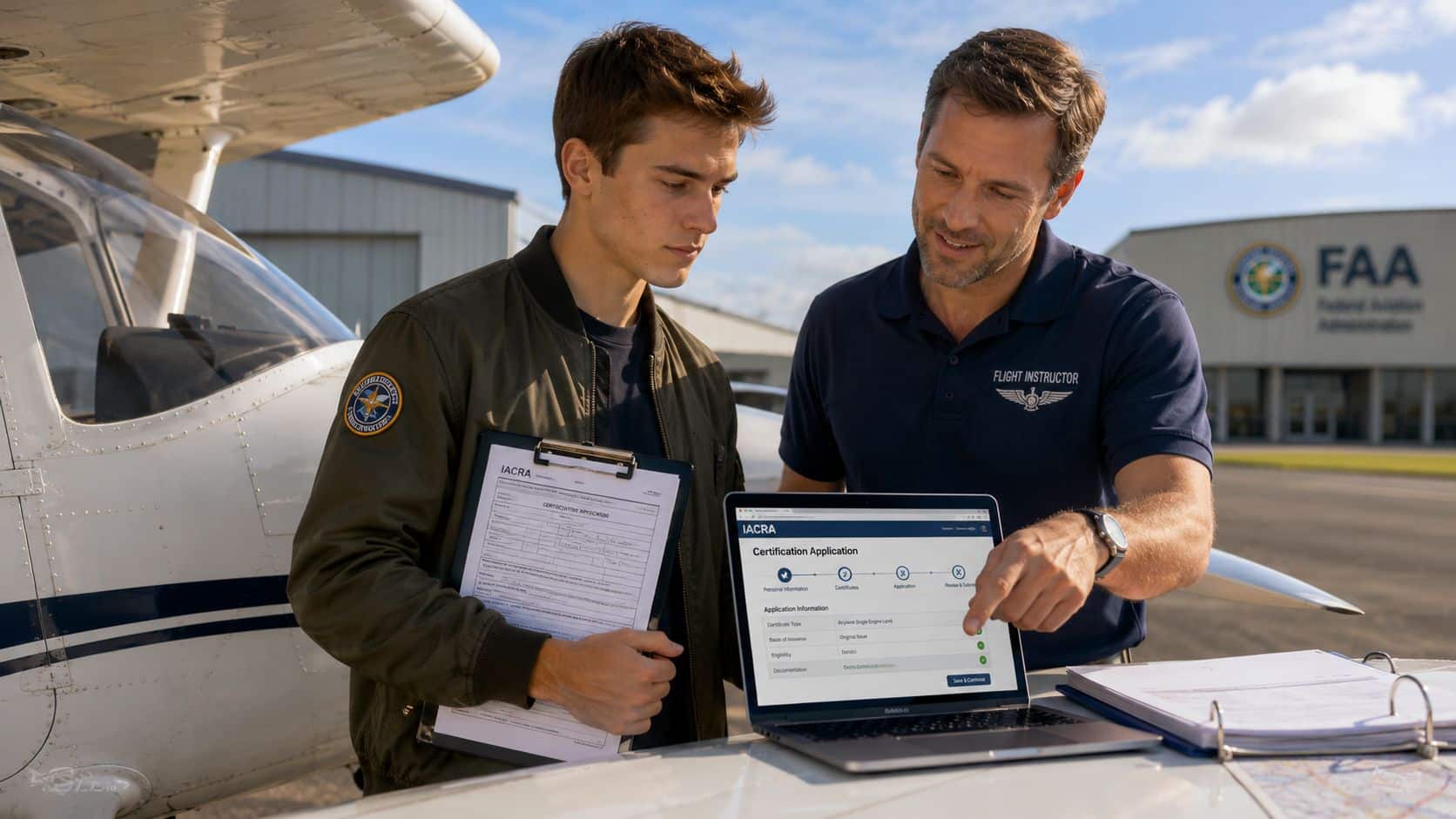
To earn a student pilot certificate, an applicant must be at least 16 years old for airplanes, be able to read, speak, write, and understand English, and apply through an authorized FAA channel such as a CFI or FSDO. The certificate isn't required to begin dual flight lessons, but it is required before solo flight.
A new student at a busy airport often discovers that flying skill isn't the only factor controlling the first-solo timeline. The medical certificate, IACRA application, identity verification, FAA processing, instructor endorsements, and aircraft availability all have to line up. Handling those items early keeps paperwork from becoming the reason a prepared student remains on the ground.
Two practical options worth comparing
These are specific products pilots commonly compare for this type of flying. Confirm compatibility with your aircraft and instructor before ordering.
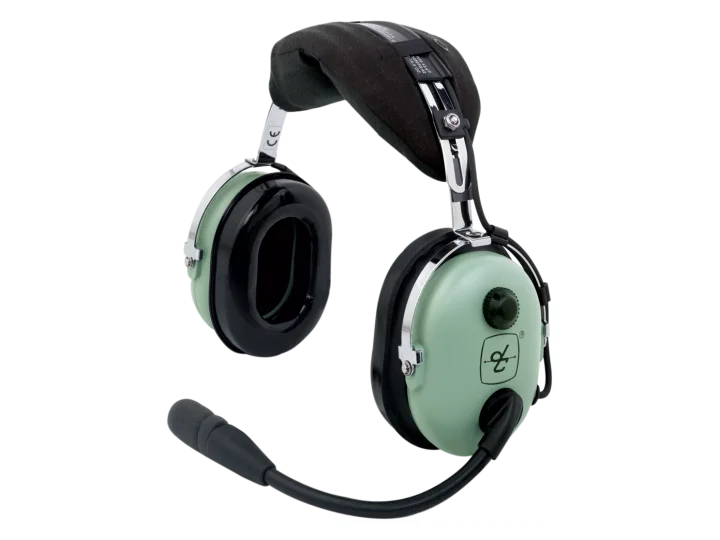 Student headsetDavid Clark H10-13.4 Aviation HeadsetCheck current availability on Amazon (paid link)
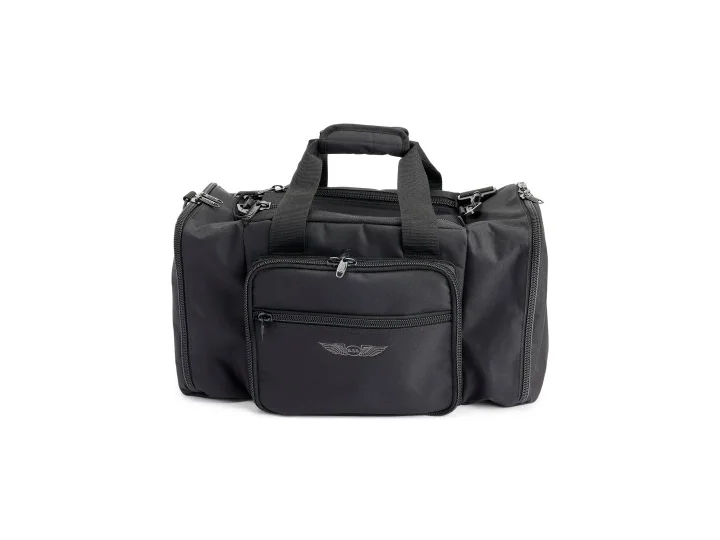 OrganizationASA Flight BagCheck current availability on Amazon (paid link)
Table of Contents
- Core Eligibility Rules for Student Pilots
- Medical Certificate Requirements and Timing
- Completing the FAA Application Through IACRA
- Training Milestones and Instructor Endorsements
- Common Application Mistakes That Delay Solo Flight
- Your Path from First Lesson to Solo
Core Eligibility Rules for Student Pilots
The basic student pilot certificate requirements come from 14 CFR 61.83. For airplane training, the applicant must be at least 16 years old. The minimum is 14 years old for gliders or balloons. In every case, the applicant must be able to read, speak, write, and understand English.
Those rules govern eligibility for student pilot privileges, not the beginning of instruction. A student can take dual lessons with a flight instructor before the certificate is issued. The practical milestone is solo flight, because the student must have the certificate, the required medical qualification for the aircraft category, and the instructor's endorsements before flying alone.
The age distinction matters to families and younger aviation students. A teenager may begin learning aircraft controls, traffic-pattern procedures, radio phraseology, and basic aerodynamics before reaching the airplane solo age, but the instructor cannot authorize airplane solo privileges until the applicable age requirement is met. DuBois Aviation's pilot license age guide can help families organize those early training decisions.
Why the certificate and medical are separate
The FAA changed the certificate process on April 2, 2010, moving student pilot certificates away from the former combined medical and student document. The application now moves through authorized FAA pathways, including a flight standards district office, a designated pilot examiner, an authorized certifying representative at a Part 141 school, or a certificated flight instructor. The FAA final rule background describes that transition.
The separation became especially important after April 1, 2016. New student pilot certificates issued after that date no longer expire. Older certificates issued before that date retained their original 24- or 60-month expiration terms, according to the FAA's current regulatory guidance. The student certificate and medical certificate therefore follow different administrative paths, and a student should track both independently.
Medical Certificate Requirements and Timing
A medical certificate is a separate item from the student pilot certificate, and the distinction affects the first-solo schedule. For powered-aircraft students, FAA guidance requires a current medical certificate before solo flight. The certificate application can move forward separately, so waiting to address medical eligibility can leave an otherwise prepared student unable to solo.
The sensible approach is to schedule an Aviation Medical Examiner appointment early in training, particularly when a student has a medical history that may require additional FAA review. The medical decision belongs to the FAA medical-certification process, not to the student certificate application. A student should also confirm the applicable medical standard with the instructor and AME before choosing a long-term training path.
DuBois Aviation provides a FAA Class 3 medical requirements guide for students preparing for that conversation. It's still important to use the AME appointment to address individual circumstances rather than treating a general checklist as a medical determination.
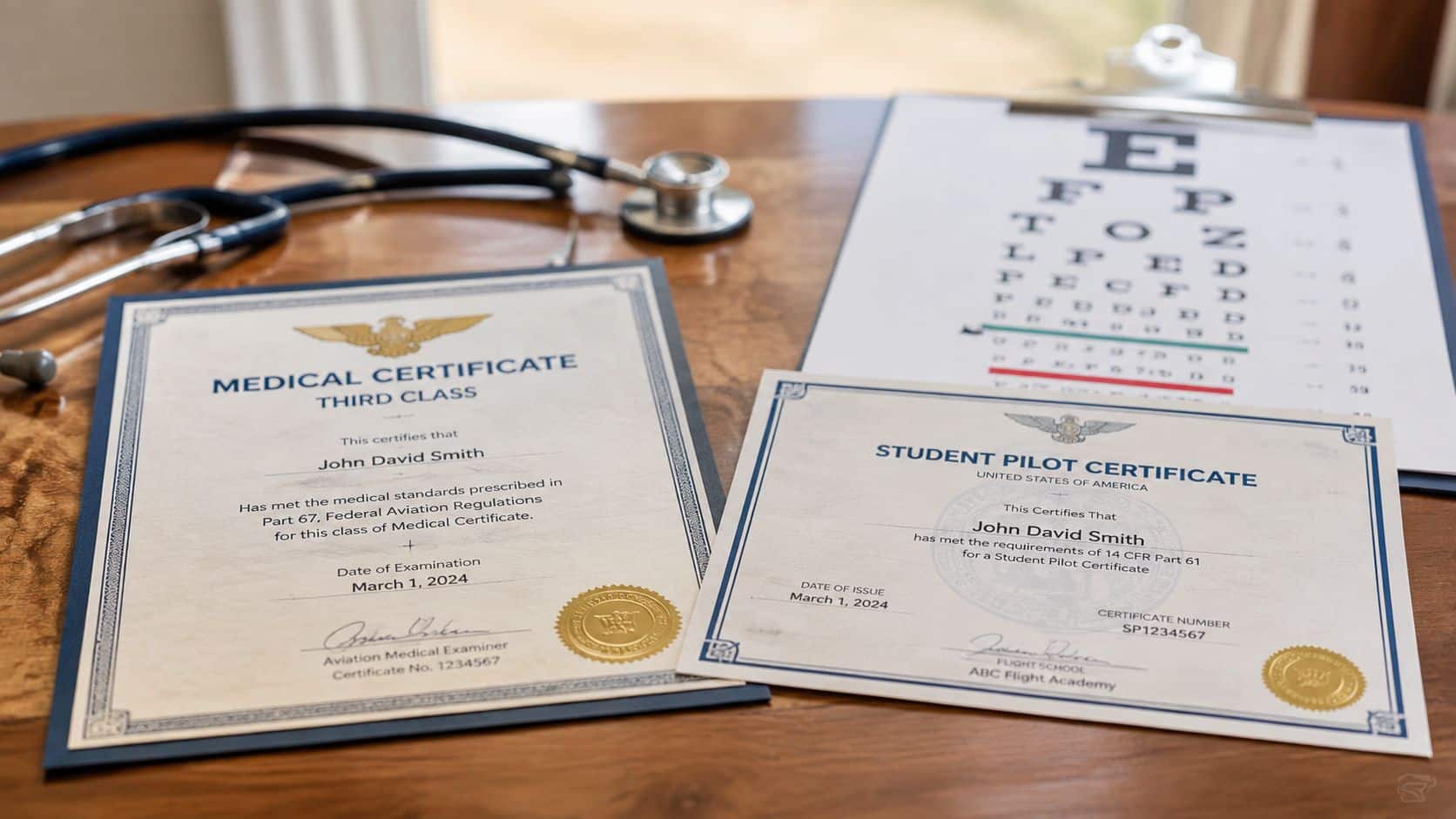
The powered-aircraft solo checkpoint
The student certificate alone isn't enough for airplane solo privileges. The FAA states that the medical certificate must be valid at the time of solo flight, and there's no separate age minimum for obtaining the medical certificate itself. The operational question is whether the certificate is current when the instructor is ready to authorize solo.
That makes medical timing a parallel workflow:
- Start lessons: Dual instruction can begin while certification paperwork is pending.
- Arrange the medical: Schedule an AME appointment early enough to resolve questions before solo preparation is complete.
- Track the documents separately: The student certificate identifies the training status, while the medical certificate addresses the medical requirement for applicable solo operations.
- Confirm readiness with the CFI: The instructor should verify both documents before planning the first solo.
Sport-pilot training has a specific alternative. For light-sport aircraft other than gliders or balloons, the student must possess either a valid FAA medical certificate or a current and valid U.S. driver's license when exercising student-pilot privileges. The FAA's sport-pilot student guidance confirms that this alternative doesn't remove the age or English-language requirements.
Completing the FAA Application Through IACRA
The application can be completed through an FAA online workflow or paper Form 8710-1, with the final routing handled by an authorized person. At a flight school, the CFI is often the most practical point of contact because the instructor can review the student's identity documents, correct obvious omissions, and route the application through the appropriate FAA process.
Students should create an IACRA account, enter personal information exactly as it appears on government-issued identification, and keep their login details available for future certificates and ratings. The FAA's student pilot certificate guidance confirms that the certificate isn't needed to begin lessons, but it is required before solo flight.
A careful application sequence
-
Create the account. Use the FAA's IACRA system and select the applicant role. The account becomes part of the student's continuing certification record.
-
Choose the correct application. Select the pilot certification path for a student pilot certificate. A CFI or other authorized official can help confirm that the correct application type is being used.
-
Match the identification. Enter the legal name, birth information, and other identifying details exactly as shown on the government-issued document. A spelling difference, omitted name, or inconsistent address can require correction before the application can proceed.
-
Review before signing. The applicant should read every field, check contact information, and confirm that the application reflects the intended aircraft category.
-
Route it through an authorized channel. The application must be handled through an authorized CFI, DPE, FAA inspector, FSDO, or qualifying Part 141 school representative. An AME no longer issues the former combined student pilot and medical document.
A general application form example from Formcarry can be useful for understanding how carefully form fields should be organized, but it isn't an FAA substitute and doesn't replace CFI review.
The age-window trap
The FAA's advisory guidance notes that an online application may be started at 13, but it can't be completed until the applicant is within 90 days of turning 14. That timing is particularly important for younger glider or balloon students. Airplane applicants still need to meet the applicable airplane age requirement before solo privileges are authorized.
The certificate is produced on tamper- and counterfeit-resistant plastic stock and sent through the FAA's certification process. Students shouldn't schedule a first solo around an assumption that an application has been submitted. The CFI should confirm that the application was properly routed and that no identity or approval issue remains.
Training Milestones and Instructor Endorsements
The first solo is an instructor judgment supported by specific knowledge, skill, and logbook requirements. At a towered airport such as Chino, a student must do more than demonstrate acceptable takeoffs and landings. The student must also communicate clearly, understand hold-short instructions, recognize traffic-pattern conflicts, and respond appropriately when the tower changes the plan.
The pre-solo knowledge assessment is one checkpoint. Flight training then develops the practical habits that support safe independent operation, including aircraft inspections, normal and crosswind landings, rejected takeoffs, engine-failure procedures, go-arounds, runway incursion avoidance, and radio discipline. The instructor may require additional practice when the student's performance is inconsistent or when local traffic and airspace create a demanding workload.
What the endorsements accomplish
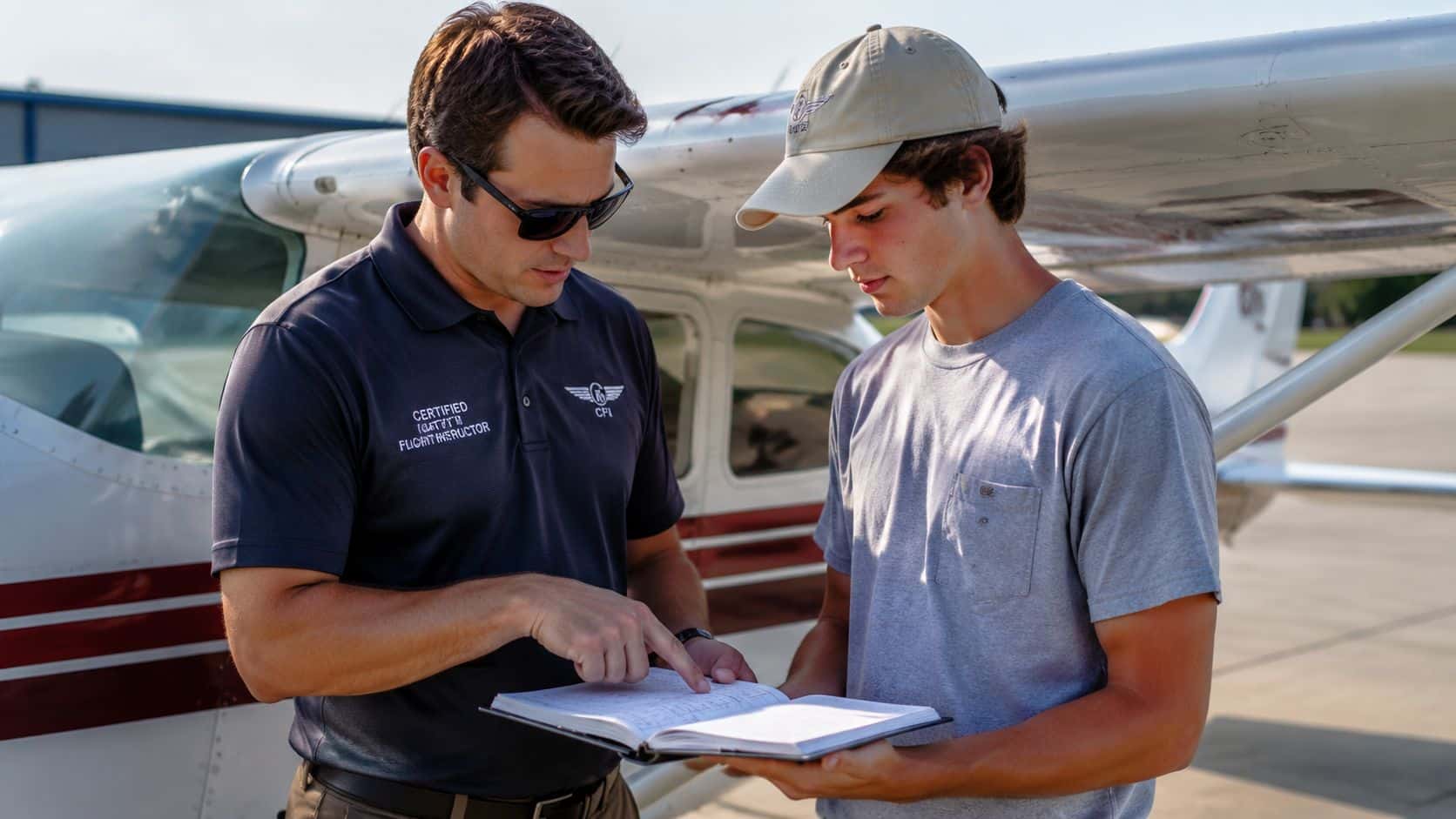
A pre-solo knowledge endorsement confirms that the student has addressed the required aeronautical knowledge for the intended operation. A separate solo endorsement applies to the specific make and model of aircraft in which the student will solo. The wording and scope matter, because a general understanding of airplanes doesn't automatically authorize solo operation in every aircraft type.
The instructor may also impose more conservative limits than the regulatory minimums. At a busy airport, that can mean restricting the first solo to a particular runway, traffic pattern, weather window, or time of day. Those limits aren't a setback. They give the instructor a controlled way to expand privileges as the student demonstrates sound decisions.
Maintaining the authorization
FAA guidance identifies a 90-day timing requirement for certain student solo endorsements. Weather, maintenance, instructor scheduling, and aircraft availability can interrupt training, so students should ask the CFI to review endorsement currency before resuming solo work after a long gap.
A structured private pilot syllabus using Jeppesen materials can help connect ground lessons, flight maneuvers, and endorsement checkpoints. The syllabus doesn't replace instructor judgment. It gives the student and CFI a shared reference for what must be demonstrated before the next privilege is authorized.
Practical rule: A student should be able to explain the clearance, execute the maneuver, and recognize when to discontinue the plan before asking for a solo endorsement.
Common Application Mistakes That Delay Solo Flight
Most avoidable delays come from treating the student pilot certificate as a single transaction rather than a sequence of approvals. A certificate application, medical certificate, identity review, and logbook endorsement each have separate requirements.
Mistakes that create unnecessary waiting
-
Applying at the wrong age window: An application started too early may not be completable within the FAA's permitted timing. The fix is to confirm the applicant's birthday, aircraft category, and application timing with the authorized certifying official.
-
Waiting on the medical: A student may finish the required flight preparation while still lacking the medical certificate needed for powered-aircraft solo. The fix is to schedule the AME process early and keep the instructor informed of the status.
-
Assuming the AME handles everything: The former combined medical and student pilot document no longer represents the current process. The fix is to treat medical certification and student certificate application as separate tasks.
-
Using a name that doesn't match identification: Even a small mismatch can trigger additional review or require a corrected application. The fix is to copy the legal name precisely from the government-issued identification used during verification.
-
Failing to confirm routing: A student may believe an application is complete because personal fields were entered, while the authorized official still needs to review or submit it. The fix is to ask the CFI or other authorized official whether the application has reached the proper FAA channel.
-
Misunderstanding sport-pilot documentation: A driver's license alternative applies only under the FAA's stated sport-pilot conditions. It doesn't erase the English-language or age rules, and it doesn't automatically apply to every training objective.
Students should keep a simple document checklist and bring questions to the CFI before a solo date is discussed. Early clarification works better than trying to repair an incomplete application after training has reached the solo stage.
Your Path from First Lesson to Solo
A practical path starts with an honest look at the student's schedule, medical situation, and aviation goal. A discovery flight can help confirm that airplane or helicopter training is the right fit, while a conversation with an instructor can identify whether a structured Part 141 program or a flexible Part 61 approach better matches the student's availability and long-term plan.
The sequence below keeps the administrative and training tracks moving together:
-
Schedule an introductory flight. Use the flight to assess comfort in the aircraft, airport environment, and instructor communication style.
-
Begin dual instruction. The student pilot certificate isn't required for lessons with a CFI, so training can start while the application is being prepared.
-
Address medical eligibility early. Arrange the appropriate AME process for the intended powered-aircraft or sport-pilot path. Don't wait until the instructor is ready to discuss solo.
-
Create and route the application. Complete the FAA online workflow or paper Form 8710-1, then have an authorized official review and route it correctly.
-
Build the knowledge foundation. Study aircraft systems, airspace, weather, airport operations, emergency procedures, and communications alongside flight lessons.
-
Train consistently. Frequent practice generally makes it easier for the CFI to observe stable performance and decision-making. Long gaps can make previously mastered procedures feel unfamiliar.
-
Complete the pre-solo checkpoints. The CFI will assess knowledge, maneuvers, landings, emergency responses, radio work, and aircraft-specific readiness before providing the required endorsements.
-
Verify the solo packet. Before departure, confirm that the certificate, required medical qualification, current endorsements, aircraft documents, and instructor-imposed limitations are all in order.
At Chino Airport, tower communications and surrounding traffic make disciplined preparation especially valuable. The first solo should be the predictable result of repeated preparation, not a rushed date selected before the administrative pieces are ready.
DuBois Aviation offers airplane and helicopter instruction, structured private-pilot training, aircraft access, and instructor support at Chino Airport for students working through these requirements. Prospective students can visit DuBois Aviation to ask about course availability, schedule a discovery flight, or request a training information meeting.