
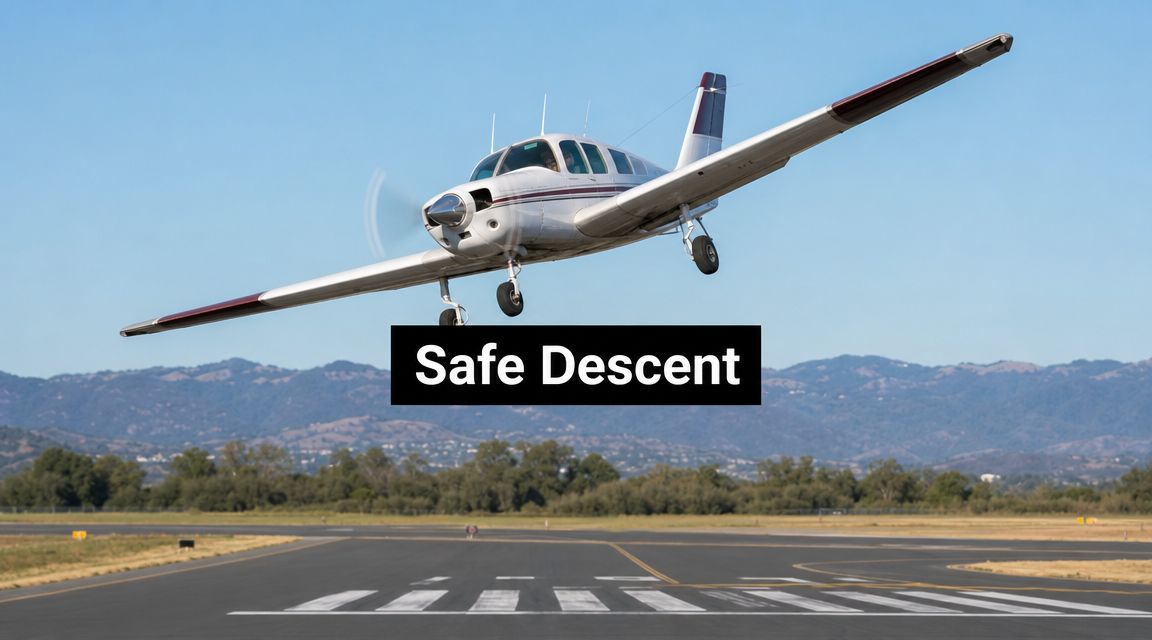
You turn final, glance at the runway, and the picture isn't right. The centerline is there. The aiming point is there. But the airplane feels like it's arriving from above the whole scene instead of settling into it.
That moment catches a lot of pilots off guard because nothing looks dramatic. You're not out of control. You're just high enough that idle power alone won't fix the problem cleanly. That's where a forward slip landing belongs. Not as a stunt, and not as a rescue for bad planning every time, but as one of the most useful energy-management tools in light airplanes.
A good slip is disciplined, not aggressive. It lets you trade excess altitude for drag while protecting airspeed and runway alignment. A bad slip usually starts with the wrong question. Pilots ask, “How do I force this airplane down?” The better question is, “Should I be slipping at all, or is this a flap problem, a planning problem, or a go-around?”
That judgment matters more than the mechanics.
The View from a High Final Approach
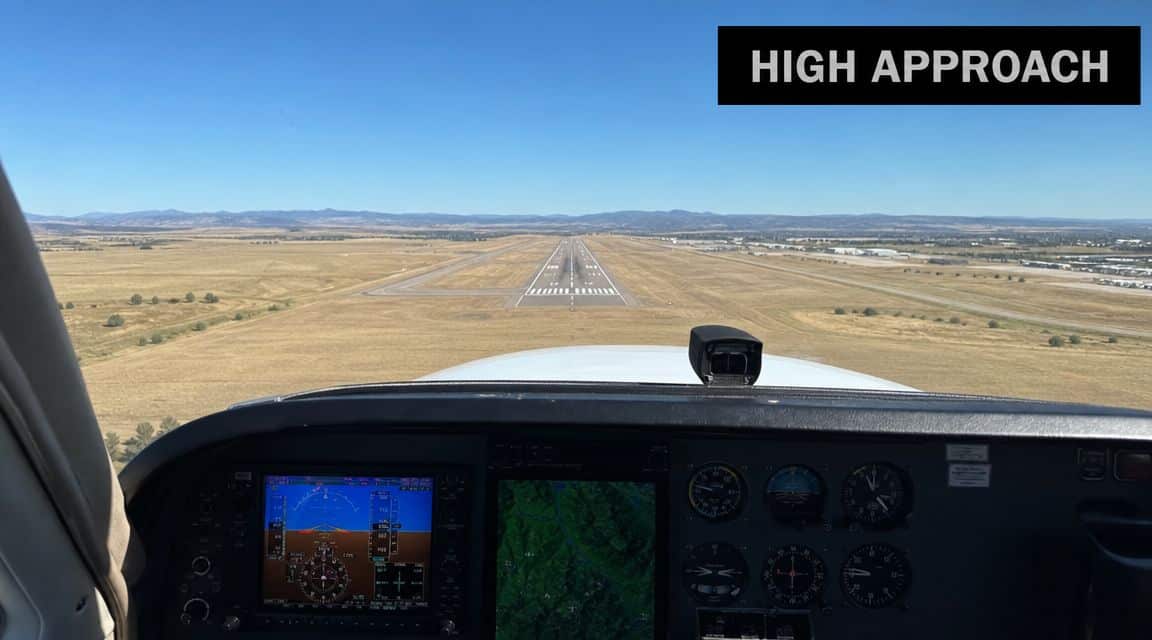
A student once rolled out on final with the runway perfectly framed and said, “This looks fine.” It didn't. The numbers were sliding lower in the windshield, not staying where they should. That's one of the oldest signs in flying. You're high, and unless something changes, you'll either float deep, force the airplane onto the runway, or start making rushed control inputs close to the ground.
Pilots at busy airports run into this all the time. Maybe the base leg stayed wide. Maybe a tailwind on downwind changed the picture. Maybe ATC kept you high for traffic. The point isn't to feel embarrassed about it. The point is to recognize it early enough to respond with a tool that fits the problem.
A forward slip landing is exactly that kind of tool. You bank one way, apply opposite rudder, and present more of the airplane to the relative wind. The airplane keeps tracking where you need it to go while drag goes up and the descent steepens.
What the runway is telling you
If the runway is getting bigger but the aiming point keeps moving down the windscreen, you're carrying extra altitude. If you wait too long, you shrink your options. That's why experienced pilots don't stare only at the airspeed indicator. They cross-check the whole picture. Windshield, runway, descent angle, and control margin all matter.
Crosswinds can complicate that sight picture even more. If you're still building comfort with runway alignment and drift correction, this guide to calculating crosswind component helps connect what you see outside to what the airplane is doing.
Cockpit reality: Most high finals don't become dangerous because the airplane is high. They become dangerous because the pilot delays the decision.
Precision, not panic
The slip isn't an emergency move. It's a precise correction. The best pilots use it calmly and only when it still leaves room to return to normal, coordinated flight before landing.
That last part matters. A slip is for fixing the approach so you can finish with a normal landing attitude. It isn't a license to drag a cross-controlled airplane all the way onto the runway.
Slip Flaps or Go Around
You turn final and the runway is clearly within reach, but the sight picture says you are high. That is the moment that matters. A good landing can still come out of it, but only if you pick the right correction early and stop trying to rescue a weak approach with wishful thinking.
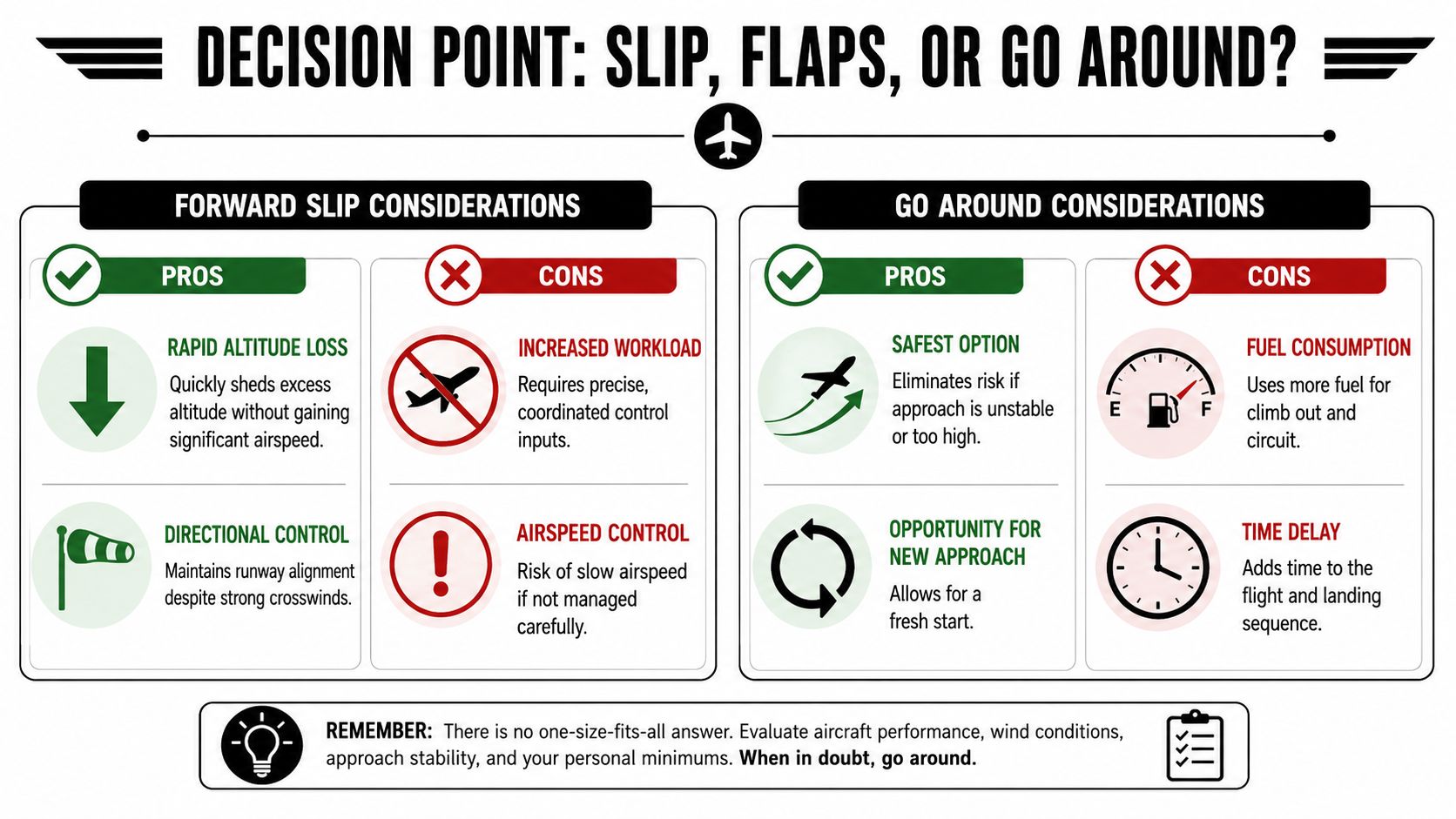
Many pilots focus on the slip itself because the control inputs are easy to describe. Judgment is harder. The question is not whether a forward slip works. The question is whether it is the best tool for this approach, in this airplane, at this point on final.
Start with the least disruptive fix
If you are high, use the normal tools first if they are still available and the approach is stable.
That may mean reducing power sooner. It may mean adding another notch of flap if your aircraft allows it and the airplane is already on speed. Flaps usually solve the problem with less workload than cross-controlling, and they keep the airplane in a more familiar attitude. If you still have that option, take a hard look at it before adding a slip.
The common error is delay. Pilots see the high picture, hesitate, then arrive on short final with too much altitude and too little room to make a small correction.
When the slip is the right call
A forward slip earns its place when the runway is made, the airplane is under control, and you need more descent angle than power reduction or your current flap setting will give you. In that case, the slip is a correction, not a recovery.
Use a narrow standard. If the approach is stable except for excess altitude, a slip can cleanly fix one problem. If you are high and fast, drifting off centerline, or still changing pitch and power aggressively, that is no longer a one-problem approach.
Pilots who understand how adverse yaw affects cross-controlled flight usually manage slips more cleanly because they expect the airplane to feel different and keep their attention outside where it belongs.
| Situation | Better choice |
|---|---|
| Slightly high, runway assured, airplane stable | Consider a slip |
| Still have normal flap option available | Consider flaps first |
| High and fast, chasing airspeed and centerline | Go around |
| Large correction needed close to the ground | Go around |
When a go-around is the smart answer
A go-around is the professional choice when the approach stops making sense.
If you need a large correction near the ground, if the airspeed is not under control, or if the slip would carry too far down final to allow a normal transition back to coordinated flight, discontinue the approach. Busy instructors see the same trap all the time. The pilot knows the airplane will probably still reach the runway, so they keep trying. Reaching the runway is not the standard. Arriving in a condition that supports a normal landing is the standard.
A forward slip should solve one clear problem. If it adds confusion, speed control issues, or poor alignment, the safer answer is a go-around.
Understanding the trade-off
A slip increases drag and steepens descent without asking for extra airspeed. That is useful, especially in airplanes with limited flap effectiveness or on an approach where power is already low. It also increases workload. You are managing airspeed, runway track, rudder pressure, and a less familiar sight picture at the same time.
A go-around costs a minute or two and a little fuel. What it gives back is margin, time, and a chance to rebuild the approach from the top instead of forcing the last 500 feet to work out. That is usually the better bargain once the approach starts to unravel.
The disciplined question is simple. Are you making a small correction to a good approach, or trying to save a bad one?
How to Execute a Forward Slip
A good forward slip starts before the controls move. Turn final, confirm you are already lined up and on target speed, then decide how much correction you need. The goal is simple. Lose extra altitude without building speed and still arrive in a normal landing attitude.
Enter the slip without creating a new problem
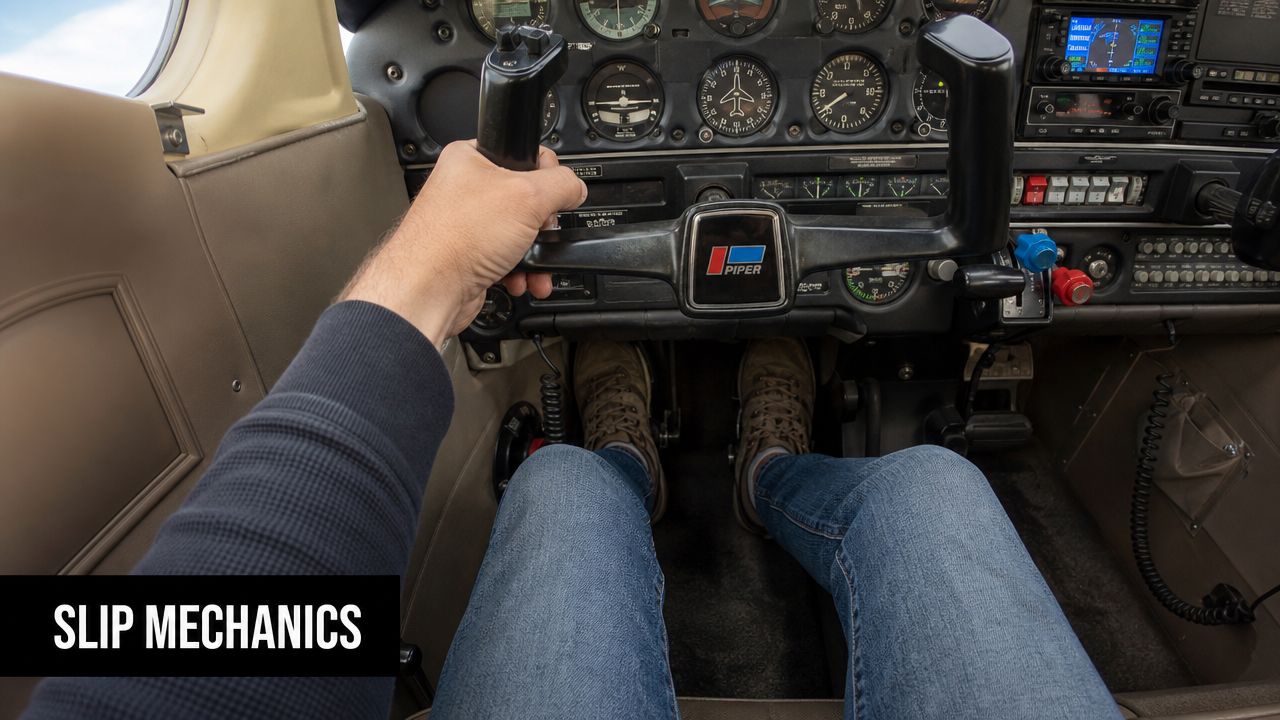
Start from coordinated flight. Add a small bank, then apply opposite rudder until the airplane stops turning and the ground track stays on the centerline. In practice, that usually means easing into the controls, checking the outside picture, and adding only enough cross-control to get the descent angle you need.
The nose will sit off to one side. That is normal. Judge the maneuver by runway track and airspeed, not by whether the spinner looks centered.
Students get into trouble when they rush the entry. A slip is easier to control when each input has a purpose.
Begin after rollout to final is complete
Entering while still correcting from base to final mixes turn coordination with slip inputs. The result is usually sloppy alignment and extra workload at the worst time.Pick outside references before adding drag
Use the centerline to judge track and the aiming point to judge whether the descent is doing what you want.Build the slip gradually
Small control pressures tell you a lot. Large, abrupt inputs only make the picture harder to read.
Pilots who understand how adverse yaw affects aileron and rudder use usually learn slips faster because the airplane's behavior feels less mysterious.
Fly the slip with clear priorities
Once established, keep the job divided.
Pitch controls airspeed
Hold the approach speed you planned. If the runway starts filling the windshield, resist the urge to push. If the sink rate gets your attention, resist the urge to pull first and ask questions later.Aileron and rudder control track and drag
Increase or reduce the slip in small steps. More cross-control is not a badge of skill. It is just another setting, and it should match the correction required.The centerline gets the vote
A forward slip should still look disciplined from outside the airplane. If the track is wandering, fix that before trying to fine-tune the descent picture.
A useful cockpit habit is a steady scan. Airspeed, centerline, aiming point, then back around again. If that scan breaks down, the slip is starting to cost more attention than it is worth.
A short demonstration can help connect the outside picture to the control feel:
Recover early enough to land normally
The recovery should be boring. That is the standard.
Smoothly relax the rudder and aileron pressures, return to coordinated flight, and let the airplane settle back into the sight picture you expect for the roundout and flare. If you wait until the last moment, the transition tends to get abrupt, and abrupt control changes close to the ground are where a manageable correction turns into a rushed landing.
In training, I want slips ended with enough runway picture left to prove the landing is still ordinary. The maneuver removes excess altitude. It should not dominate the last few seconds before touchdown.
Managing Airspeed Trim and Flaps
A forward slip often starts as an altitude problem and turns into an airspeed problem if the pilot gets behind the airplane. That is why this part of the maneuver deserves more judgment than muscle. The question is not just whether you can hold the slip. It is whether you can hold it while keeping the airplane in a configuration that still leaves you an ordinary landing.
Airspeed comes first
Pitch still runs the show.
In a slip, the nose attitude can look unusual and the descent can look productive enough to fool you into accepting a slow trend. I see that in training all the time. The pilot likes the steeper path, then gradually gives away speed while focusing on the runway picture. The cure is simple and disciplined. Keep pitching for the same target approach speed you planned before the slip started.
A forward slip adds drag. It does not change the need for speed control. If holding the aiming point requires increasing back pressure and watching the airspeed bleed off, the slip is no longer solving the problem cleanly. At that point, use less slip, adjust flap if the aircraft and situation support it, or go around.
For pilots still sorting out why a slipping airplane can feel busy without being close to a stall, this review of angle of attack and wing margin is a useful refresher.
Trim is usually a poor bargain here
The extra control pressure in a slip tempts pilots to trim it out. In most light airplanes, that trade is not worth it.
A slip is a temporary correction. If you wind in a bunch of trim to relieve pressure now, you have created another task for yourself during recovery, right when your attention should be going outside for the roundout and flare. Hold the pressure. Keep the maneuver brief. Then recover to the trim state you already know.
If the control force feels heavy enough that you want significant re-trim, reconsider the whole approach. That usually means the slip is lasting too long, the airplane is not configured well for the descent, or the approach should end with a go-around.
Flaps change the decision, not just the feel
Flaps and slips interact differently from one aircraft to the next, so the POH gets the final word. Some trainers tolerate slips with moderate flap settings just fine. Others develop pitch changes or handling quirks that add workload without giving you much benefit. A pilot who treats every airplane the same usually learns this at the worst time, low and busy on final.
The practical question is whether more flap will simplify the approach or complicate it. If a moderate flap setting gives you the descent path you need with normal control feel, that is usually the cleaner choice. If adding more flap makes the airplane feel mushy, pitch-sensitive, or distracted by configuration changes close to the ground, stop trying to salvage it with hardware and consider the go-around early.
A few cockpit rules help keep this honest:
- Use the flap setting the aircraft manual allows for the conditions and for slips.
- Avoid last-minute flap changes after the slip is already established.
- If flap, trim, and cross-control are all demanding attention at once, reduce the task load before continuing.
That is the judgment piece many slip guides skip. The maneuver is not there to rescue a poorly managed final at any cost. It is one option among several, and sometimes it is the wrong one.
Set up the landing you already know how to make
By short final, the airplane should feel familiar again. Coordinated, on speed, and ready for a normal flare.
A slip is useful because it removes altitude without building airspeed. It becomes a hazard when pilots carry the cross-control too long, keep fiddling with trim, or try to sort out flap choices in the last seconds before touchdown. The landing gear is built for aligned touchdowns, not for absorbing rushed decisions and side loads.
The standard is simple. Use the slip to fix the descent path, then give yourself enough time to finish the approach like any other landing.
Common Forward Slip Mistakes to Avoid
Students rarely struggle because they can't physically cross-control the airplane. They struggle because one small error starts feeding the next one. The best way to fix that is to diagnose each mistake by symptom.
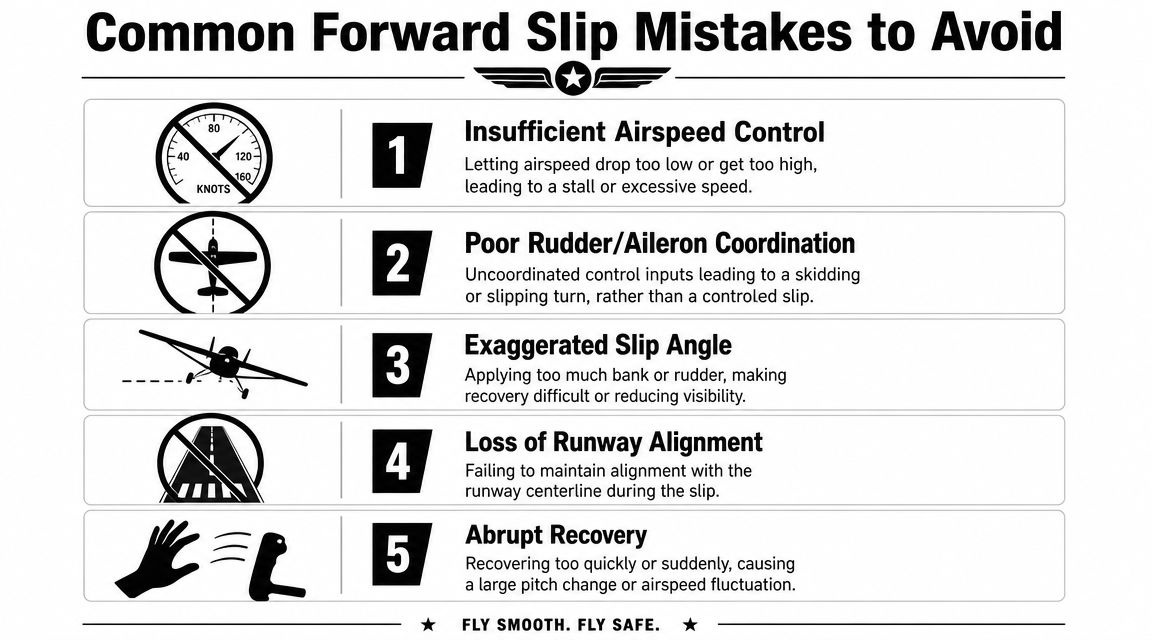
Entering the slip while still turning
This is one of the most common training errors. The pilot is still rolling out from base to final and starts cross-controlling before the airplane is settled. The result is a muddled picture, wandering alignment, and too much cockpit workload right away.
Fix: finish the turn first. Then establish a stable final. Then add the slip.
That sequence sounds simple because it is. A lot of good flying comes from refusing to combine tasks that don't need to be combined.
Letting airspeed decay
Airspeed loss in a slip can sneak up on pilots because the descent angle looks steep and productive. The airplane feels like it's coming down, so the pilot assumes all is well.
It isn't, unless the airspeed agrees.
Fix: keep the scan disciplined and pitch for the target speed. If your eyes are mostly outside, fine. But the instrument cross-check still has to happen often enough to catch a trend early.
Students who struggle with slips usually aren't using too much rudder. They're forgetting to keep flying pitch.
Using excessive bank or rudder
Some pilots try to make the slip “work harder” by piling in more control input than the situation calls for. That can reduce visibility, make recovery clumsy, and increase the chance of overcontrolling.
Fix: use only the amount needed to get the descent and track you want. A moderate, adjustable slip is more professional than a dramatic one.
Here's a quick troubleshooting guide:
| Symptom | Likely cause | Correction |
|---|---|---|
| Nose swings too much | Overdone rudder input | Ease rudder, recheck track |
| Centerline won't stay put | Poor bank-rudder balance | Rebuild the slip smoothly |
| Recovery feels abrupt | Slip held too long | Exit earlier next time |
| Airspeed wanders | Pitch neglected | Reset pitch priority |
Losing runway alignment
A forward slip landing only earns its keep if it preserves placement. If the airplane is descending steeply but drifting away from the centerline or arriving crooked, the maneuver has stopped helping.
Fix: fly the ground track, not the nose. The fuselage will be yawed. That visual discomfort is normal. The centerline is the truth.
Failing to recover before touchdown
This is the mistake instructors watch for most closely because it can turn a decent approach into a rough landing. If the pilot holds the slip through the flare and touches down while still cross-controlled, the landing gear can take a side load it wasn't meant to absorb.
Fix: recover while there's still time to be smooth. If you can't exit the slip, stabilize, and finish normally, the maneuver started too late or lasted too long.
The correction is often not “do a better slip.” It's “make the decision earlier.”
From Mastering Skills to Aircraft Ownership
A well-flown forward slip says something useful about a pilot. It shows judgment under time pressure. The pilot sees the approach developing, chooses the right correction early, and avoids pressing a poor setup all the way to the runway. That same judgment matters even more once the airplane is your own.
Ownership changes the questions. The paint, panel, and purchase price matter, but they are not what keep the operation safe or affordable over time. A smart buyer looks at handling qualities, system complexity, maintenance records, parts support, insurance expectations, and the kind of flying the aircraft will perform. Pattern discipline carries over here. Pilots who make measured decisions on final usually make better decisions in a pre-buy, too.
The same habit applies on the ground. Use the airplane that fits your actual mission, not the one that sounds good in hangar talk. If most flights are short trips with one passenger and light bags, buying for the rare max-range day can leave you paying for capability you do not use, while taking on more speed, more systems, and more training burden than you need.
That is why aircraft ownership should be treated as an extension of instruction, not a separate project. Read the logs carefully. Bring in an independent mechanic for the pre-buy. Be realistic about recurrent training, transition time, and whether your recent experience matches the aircraft's demands. A complicated airplane can be a fine choice, but only if the pilot is ready to operate it with the same discipline used on a high, fast approach.
DuBois Aviation offers airplane and helicopter instruction, aircraft rental, and recurrent training at Chino Airport. For pilots considering ownership, that kind of training environment helps sharpen the part that matters most. Judgment before commitment.


