
Individuals considering la flight schools ask the wrong first question. They ask, “Which school is best?” The better question is, “Which airport, fleet, and training style will make me safer, faster, and less frustrated?”
That matters more in Southern California than almost anywhere else. You’re not just choosing an instructor and an airplane. You’re choosing whether you’ll learn in coastal marine layers, dense Class D radio work, academy scheduling, club-style flexibility, or a family-run operation where the same instructor knows exactly where you struggled on the last lesson. The U.S. pilot population is large and the training pipeline is deep, with the FAA reporting 197,665 student pilots, 161,105 private pilots, 100,863 commercial pilots, 113,445 flight instructor certificates, and 314,168 instrument ratings in the United States as of December 31, 2019, according to the FAA pilot statistics summarized by FSANA.
That scale is good news for students. It means you have options. It also means the wrong fit can waste time and money.
If you also care about how local aviation businesses get found online, this data-driven guide for local businesses is worth a look. Now to the schools that deserve your attention.
1. DuBois Aviation (KCNO)
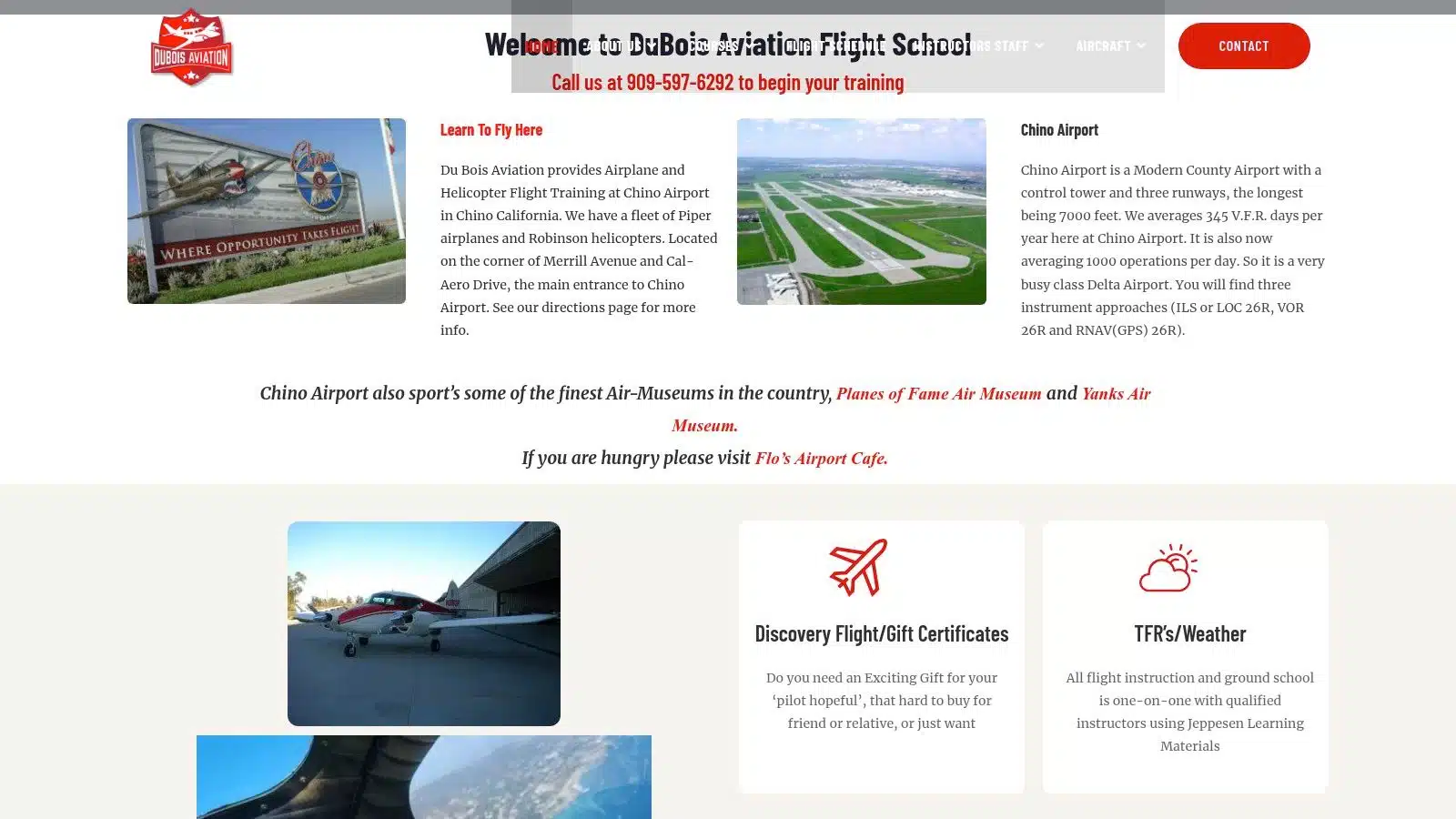
DuBois Aviation stands out because it does something many schools claim but few deliver well. It gives students a genuine one-on-one environment without sheltering them from real-world flying. If you want training that feels personal but still prepares you for busy SoCal operations, this is one of the strongest starting points in the region.
The school operates at Chino Airport, a towered Class D field with three runways and multiple instrument approaches. That matters. A student who learns to handle tower instructions, sequencing, and traffic management from the start usually develops cleaner radio habits and better cockpit organization. It can feel demanding at first, but it pays off later.
Why KCNO changes the training experience
Most LA flight school roundups over-focus on Van Nuys. That misses a practical alternative. Chino gives you tower experience, varied traffic, and realistic SoCal workflow without forcing every lesson into the most crowded rhythm in the basin.
DuBois uses that environment well. Students can move from basic private training into instrument, commercial, multi-engine, and helicopter training without switching schools. That continuity is valuable because every transfer between schools usually means relearning procedures, expectations, and aircraft quirks.
For pilots comparing programs, DuBois lays out its broader Los Angeles pilot training options clearly enough to see the range, from introductory flying through career-focused progression.
Practical rule: If you're serious about instrument or commercial work later, don't choose a training airport only because it feels easy on day one. Choose one that builds habits you'll still want at checkride time and after.
Fleet and instruction trade-offs
DuBois has one of the more useful fleet mixes in this list. Not the flashiest. Useful. Piper Cherokees, a Cessna 150, Mooney M20B, Piper Apache, Robinson R-22, and Enstrom F-28A cover a lot of ground for students who want fixed-wing, rotorcraft, or both.
The in-house simulator also matters more than people think. Used properly, a sim doesn't replace flying. It sharpens flows, instrument scan, navigation setup, and emergency thinking before you burn aircraft time on the same repetition.
Here’s where DuBois makes sense, and where it may not:
- Best for students who want continuity: You can start with a discovery flight, continue through advanced ratings, and keep renting in a familiar environment.
- Best for students who value instructor access: A family-style operation usually gives you more direct communication and less academy-style handoff.
- Less ideal for students who need instant online price comparison: Rates aren't fully published on the site, so you'll need to call.
- Less ideal for students who are intimidated by towered operations: Absolute beginners can succeed here, but you have to be ready to work.
DuBois also fits a wider audience than many schools. Teens exploring aviation, career-minded students, renters needing recurrent work, and helicopter trainees can all train in one place. Open seven days a week with online scheduling, it feels set up for actual student life, not just brochure language.
2. Santa Monica Flyers (KSMO)
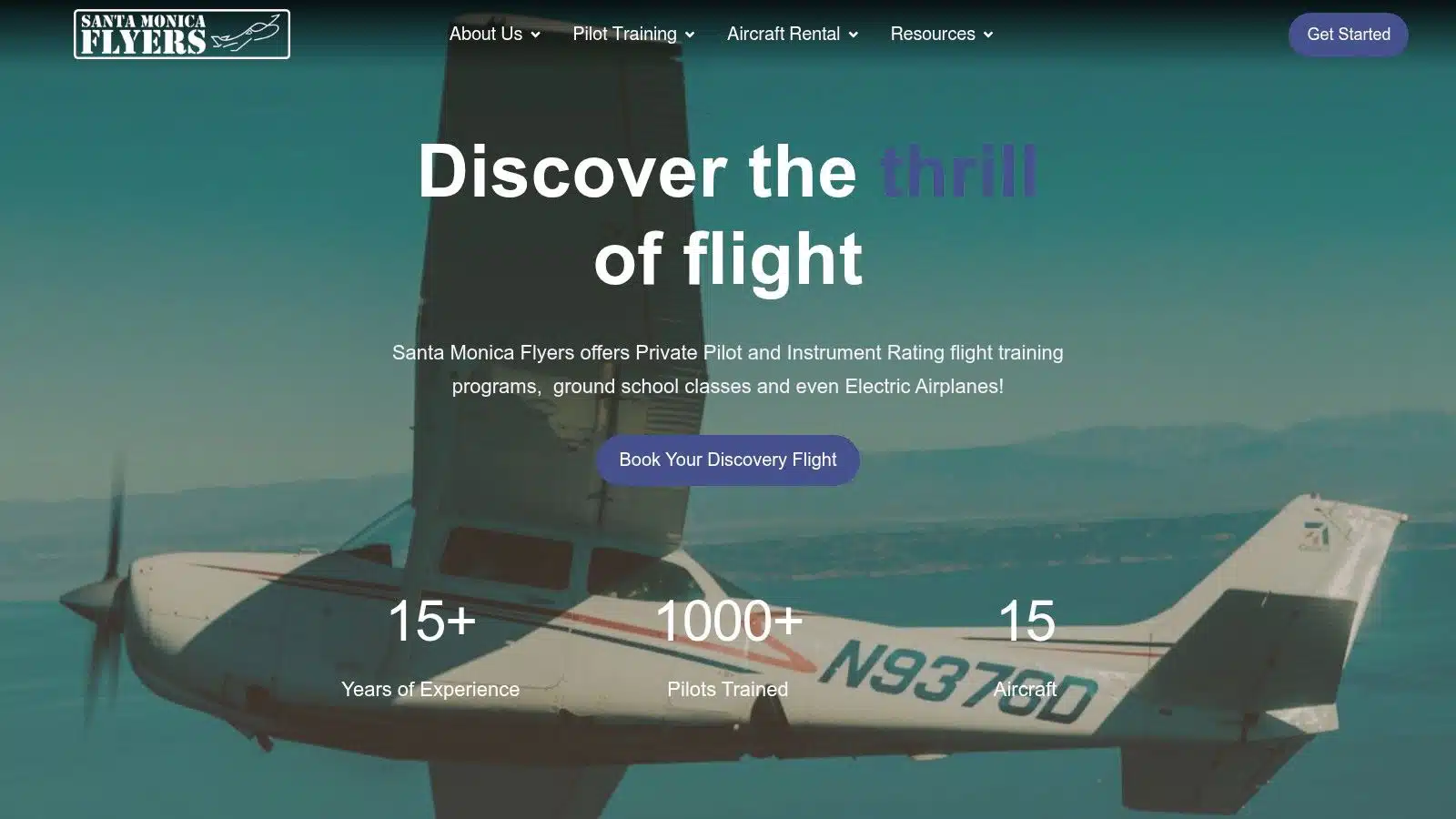
Santa Monica Flyers is a smart pick for students who want a clear progression path instead of a single-aircraft dead end. You can start in the light-sport lane, move into Cessna training, and continue into Cirrus if that’s where your goals are heading.
That’s a practical advantage. A lot of students don't know on lesson one whether they want simple recreational flying or a higher-performance ownership path. This school gives room to grow without forcing a full academy commitment.
What works well at KSMO
The light-sport entry point is useful for budget-conscious students and for people who want to test their interest before diving deeper. The availability of the Pipistrel Velis Electro is also notable. Even if electric training isn't your long-term platform, exposure to different aircraft systems sharpens your adaptability.
The Cirrus-authorized side is the other major draw. If you expect to buy into modern glass-cockpit flying later, getting instruction from instructors who work inside that ecosystem is valuable.
- Strong fit for coastal flyers: You’ll learn in busy westside airspace and build radio confidence fast.
- Good long-term upgrade path: SportCruiser to Cessna to Cirrus is a logical ladder.
- Better for self-directed students: Part 61 flexibility rewards people who stay organized between lessons.
Busy coastal airspace is a great teacher, but only if your instructor lets you learn progressively instead of drowning you in task saturation.
Where students get tripped up
Santa Monica has operating constraints, local procedures, and a runway environment that can add pressure for early solos. None of that is automatically bad. It just means the airport itself becomes part of the training challenge.
Some students thrive on that. Others do better starting at a field with fewer local sensitivities and less procedural friction. If your confidence is fragile, KSMO can feel like a lot. If you want to become comfortable in tight LA-area operating conditions, it can be a strong proving ground.
Visit the school directly at Santa Monica Flyers.
3. Pacific Skies Aviation (KTOA)
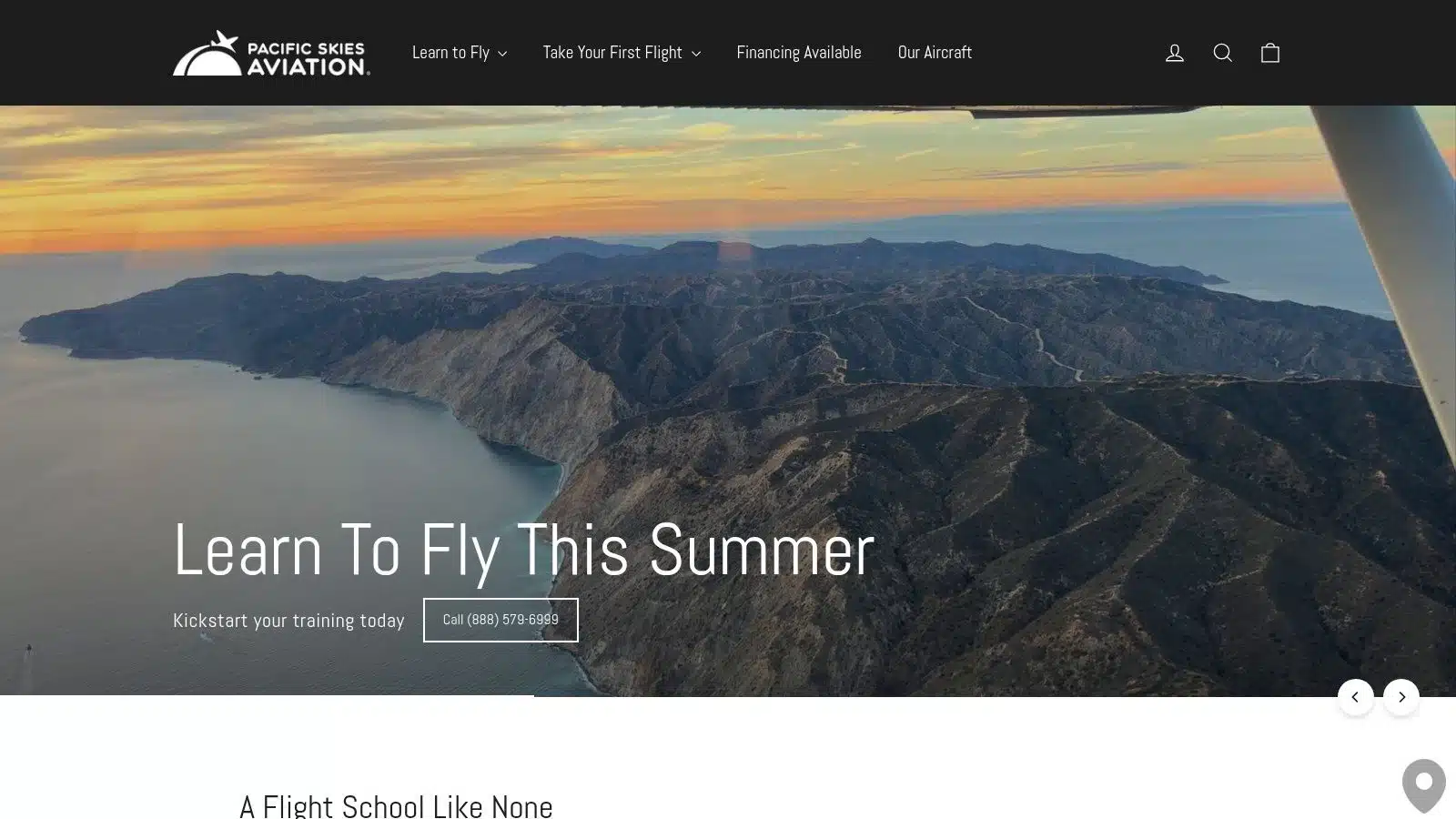
Pacific Skies Aviation appeals to the student who wants fewer surprises. Published fleet information, visible wet rates, and a choice between accelerated and flexible pacing make it easier to budget and plan without a long sales process.
That transparency is more important than many first-time students realize. When schools hide too much, students can't compare total training friction. They only compare logos.
Best for planners, not gamblers
Torrance is a useful middle ground airport. You get serious SoCal airspace exposure without the same reputation for congestion that drives some students away from other LA basins. For many private and instrument students, that's a sweet spot.
Pacific Skies also benefits from staying focused. Cessna-based training is familiar, practical, and easy to understand. If your main goal is to earn a certificate efficiently in common training aircraft, there’s a lot to like here.
- Clearer budgeting: Published rates help students map training realistically.
- Flexible pacing: Fast Track and Your Pace acknowledge that not every student has the same life constraints.
- Helpful sim integration: An AATD is useful for procedures and repetition.
Limits to know before enrolling
If you're already thinking ahead to multi-engine training, Pacific Skies may not be the cleanest one-stop path based on the publicly visible fleet. That doesn't make it a weak school. It just means your long-term plan may include a later transition elsewhere.
This is a good example of how to evaluate la flight schools properly. Don't ask whether a school is good in the abstract. Ask whether it supports the next certificate after the one you’re currently chasing.
Find current fleet and scheduling details at Pacific Skies Aviation.
4. Mach 1 Aviation (KVNY)
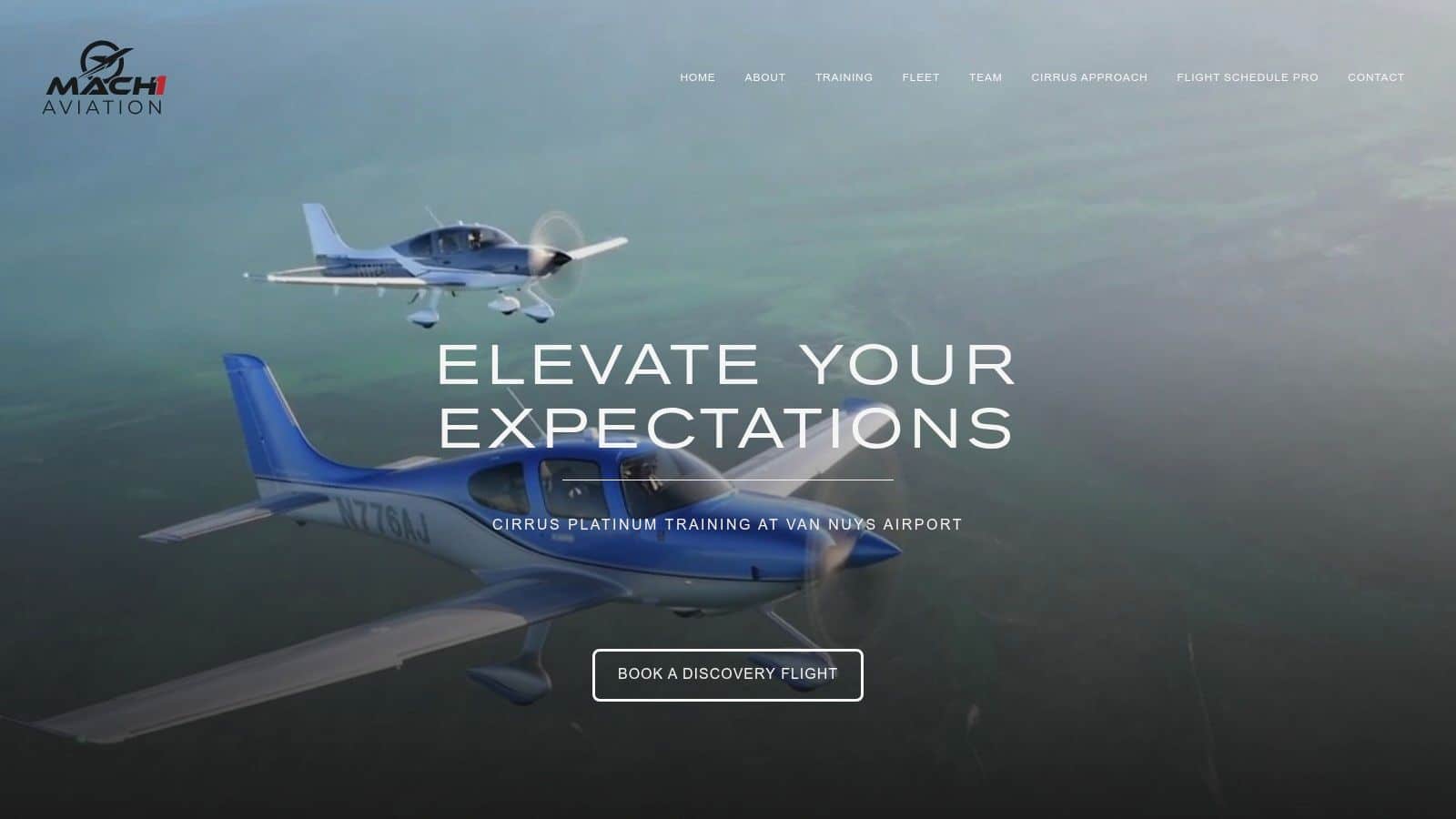
Mach 1 Aviation is not trying to be everything for everyone. That's a strength. It is a Cirrus-focused operation, and students who want Cirrus standardization should pay attention.
Van Nuys gives you dense radio work and high traffic volume. Cirrus aircraft add modern avionics, standardized procedures, and a platform many owners aspire to fly. Put those together and you get training that feels closer to owner-operator proficiency than basic trainer time-building.
Who should choose Mach 1
If you know you want to fly Cirrus aircraft, don't waste time bouncing through unrelated fleets unless the budget forces it. Training in the aircraft family you intend to own or rent later usually produces better systems familiarity and stronger cockpit discipline.
Mach 1’s published rate sheet is another plus. In higher-end training, hidden costs become a bigger problem. Public pricing isn't everything, but it signals operational maturity.
The wrong reason to choose Van Nuys is ego. The right reason is that you want your radio, spacing, and workload management to improve quickly.
The obvious trade-off
Cirrus training costs more than typical Cessna-based training. That's not a flaw. It's just a category reality. Students need to decide whether they want the most economical route to a certificate or training that aligns with a premium piston platform.
Van Nuys can also stretch lesson efficiency during busy periods. Long taxi time and sequencing are part of the package. Some students value that immersion. Others get frustrated watching Hobbs time tick while they wait.
Go straight to Mach 1 Aviation if Cirrus-specific training is your target.
5. Sling Pilot Academy (KTOA)
Want a school that runs more like a training system than a neighborhood flying club? Sling Pilot Academy fits that lane well. At Torrance, it offers a modern, standardized fleet and a program built for students who want momentum, especially those aiming at professional flying.
The big advantage is consistency. Students do better when aircraft layouts, flows, and procedures stay close from one lesson to the next. Less cockpit variation means less wasted mental bandwidth. That matters even more in accelerated training, where a few disrupted lessons can snowball into expensive review flights.
Sling also stands out because it sits in a useful middle ground between a local independent school and a large national academy. You get a more defined structure than many family-run operations, but without buying into the fully industrial pace some students run into elsewhere. For a new pilot comparing schools now and ownership later, that distinction matters. The habits you build in a standardized fleet often carry over into how safely you evaluate and operate your first aircraft.
Why the Sling model works for some students
Published pricing helps. So does simulator access and a fleet that supports training beyond the early private pilot stage. Students who want fewer surprises in scheduling, equipment, and training flow usually see real value in that.
A good way to pressure-test whether this type of program fits is to use a practical flight school selection framework before you commit. Ask how often students switch instructors, what dispatch reliability looks like, and how makeup flights are handled when weather or maintenance interrupts a week of training.
- Best for career-focused students: The structure rewards people who can train often and study between lessons.
- Best for students who want modern equipment: Standardized aircraft reduce transition friction during training.
- Less ideal for occasional flyers: If you can only fly sporadically, the pace and cost of staying current may work against you.
The trade-off to understand
This kind of academy setup asks for consistency from the student too. If your job schedule changes every week, or family obligations frequently force cancellations, a structured program can start to feel expensive fast. Progress in a system like this depends on repetition.
Also separate the marketing pitch from the day-to-day operation. Ask how far out aircraft are booked, whether simulator time replaces canceled flights in practice, and how often students get pushed because of maintenance or instructor availability. I’d also ask what graduates do next, not just whether they finished. That answer tells you a lot about whether the program produces pilots who are ready for the next step, whether that means an instrument rating, commercial training, or eventually buying their first airplane with realistic expectations.
Visit Sling Pilot Academy and ask those questions in person before you sign anything.
6. ATP Flight School (KLGB)
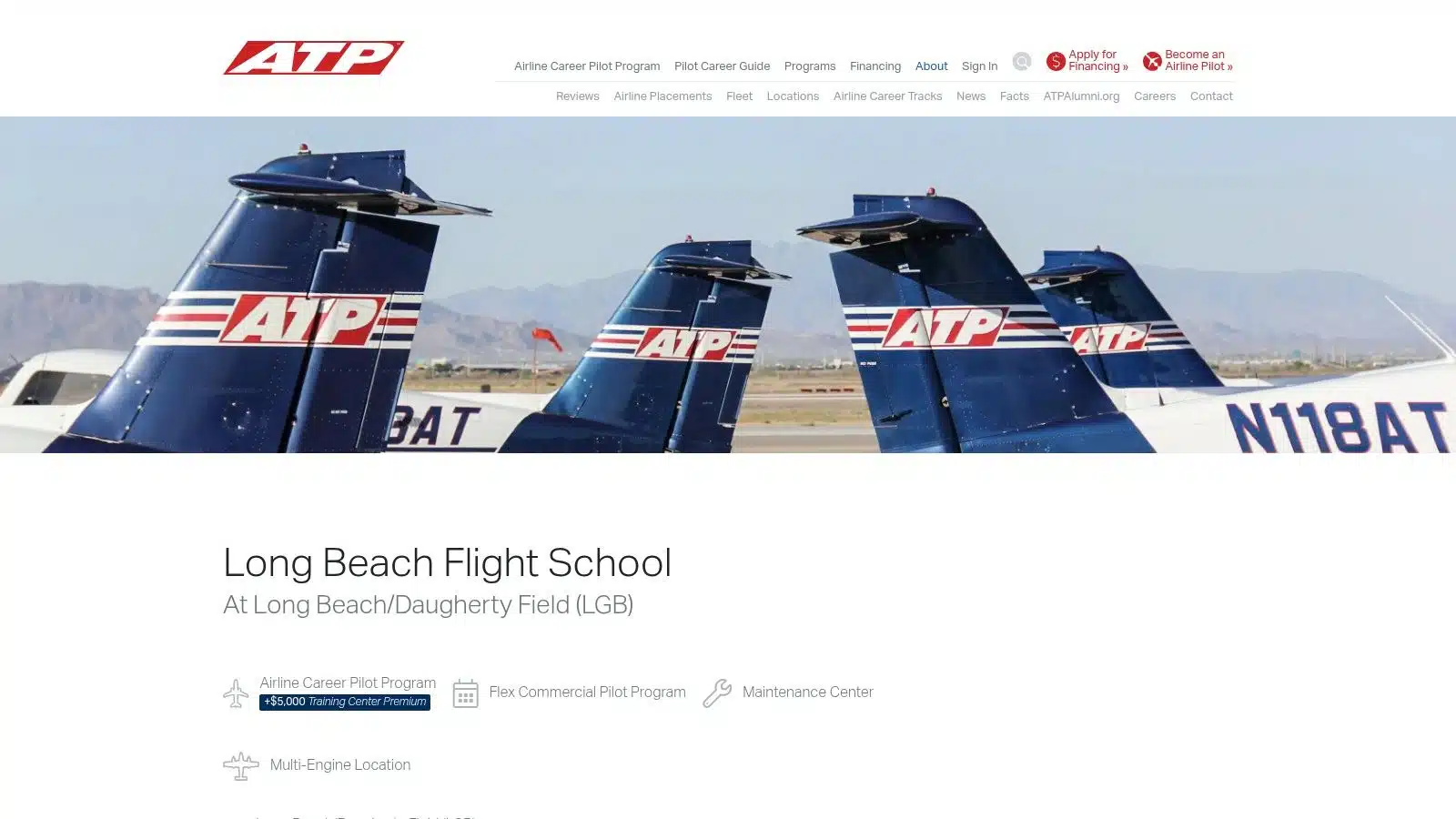
ATP is the opposite of the local family-run experience. That isn’t a criticism. It’s just important to understand what you're buying.
You’re buying systemization, speed, and a strong career-first structure. For the right student, that's exactly the point. For the wrong student, it can feel like getting pushed down a conveyor belt.
The case for ATP
If you want a nationally standardized route into professional flying, ATP has one of the clearest identities in the market. The flying schools industry in the U.S. comprises 1,105 businesses as of 2025, with market size reaching USD 4.9 billion in 2025, according to IBISWorld's U.S. flying schools industry data. In a large market, ATP's appeal is obvious. It reduces ambiguity.
Program pricing is published. Timelines are defined. Airline partnerships are part of the pitch. For students who don't want to assemble training piece by piece, that can be a relief.
Before signing with any large academy, it helps to read a grounded perspective on how to choose a flight school and compare that framework against ATP’s model.
When ATP is the wrong fit
This path requires commitment and resilience. Fast-paced training doesn't magically fix weak study habits, poor checkride preparation, or financial uncertainty. It compresses all of those problems.
Choose ATP if you want a pipeline. Don't choose it if what you really want is flexibility, a long runway to learn, or a school that adapts around your schedule.
Some locations earn stronger word-of-mouth than others, so local due diligence still matters. ATP's national scale doesn't remove the need to visit the Long Beach location, ask about instructor continuity, and understand exactly how training flow works at that base.
You can review the Long Beach program details at ATP Flight School in Long Beach.
7. Anthelion Helicopters (KLGB)
Most la flight schools lists are really airplane school lists with one helicopter option tacked on at the end. Anthelion deserves more than that because it’s focused on rotorcraft training as a primary mission, not an afterthought.
That focus matters in helicopters. Rotorcraft training has its own handling demands, safety culture, and operational realities. A school that lives in that world every day usually gives better context than a fixed-wing school with a token rotorcraft offering.
Why rotorcraft students should pay attention
Anthelion offers structured helicopter training through advanced professional paths, using Robinson and Cabri aircraft along with simulator support. Long Beach is also a useful training environment. It gives students towered-airport exposure and varied operational context without pretending helicopter flying happens in a vacuum.
If you're comparing fixed-wing and helicopter paths, don't assume the decision is just about what looks cooler. Helicopter training tends to be costlier and operationally narrower, but for the right student it opens a very different kind of flying life.
Students who want another local perspective on helicopter pilot training in Southern California should compare training philosophy, fleet, and instructor access before deciding.
The real trade-off with helicopter schools
Rotorcraft students need to be even more careful about school fit because aircraft availability, maintenance rhythm, and instructor consistency affect progression quickly. You want to ask direct questions about fleet access and how often students can realistically fly.
The simulator angle is a plus here. In helicopter training, procedure work and repetition on the ground can protect both budget and lesson quality when used well. Visit Anthelion Helicopters if rotorcraft training is your main goal.
LA Flight Schools: 7-Way Comparison
| School | 🔄 Process / Complexity | ⚡ Resources & Fleet | ⭐📊 Expected outcomes | 💡 Ideal use cases | Key advantages |
|---|---|---|---|---|---|
| DuBois Aviation (KCNO) | Moderate, one‑on‑one CFI programs; busy tower ops | Diverse fleet (piper/cessna/mooney/apache + R‑22/Enstrom), Jeppesen curriculum, in‑house sim | ⭐⭐⭐⭐, multi‑rating readiness; strong radio/ATC skills | Mixed airplane & helicopter training; real‑world tower experience | One‑on‑one instruction; diverse rotor/fixed‑wing fleet; 7‑day ops |
| Santa Monica Flyers (KSMO) | Moderate, Part 61 with coastal airspace & curfew constraints | LSA (SportCruiser), Pipistrel Velis Electro, Cirrus‑authorized instructors | ⭐⭐⭐, economical entry; pathway to Cirrus with coastal ATC exposure | Budget‑conscious students progressing from LSA to Cirrus; eco‑friendly training | Affordable LSA rates; electric trainer; Cirrus authorization |
| Pacific Skies Aviation (KTOA) | Low–Moderate, flexible pacing (Fast Track / Your Pace) | Multiple Cessnas, AATD sim, published wet rates, financing links | ⭐⭐⭐⭐, predictable budgeting; steady skill development | Students wanting clear pricing and flexible pacing with Cessna focus | Transparent rates; pacing options; favorable training environment |
| Mach 1 Aviation (KVNY) | Moderate–High, type‑specific Cirrus curricula; busy VNY ops | All‑Cirrus fleet (SR20/SR22T), Platinum CSIP/TCI center, AATD sim | ⭐⭐⭐⭐, high avionics/IFR proficiency; Cirrus standardization | Pilots seeking Cirrus type training and advanced avionics/IFR work | Platinum Cirrus center; CSIP instructors; published pricing |
| Sling Pilot Academy (KTOA) | High, academy model with accelerated career tracks | Standardized modern Sling fleet, Tecnam twin, Redbird sims, multi‑locations | ⭐⭐⭐⭐, airline pipeline readiness; standardized training | Career‑oriented students targeting airline pathways and fast completion | Modern standardized fleet; airline partnerships; transparent pricing |
| ATP Flight School (KLGB) | High, fixed‑cost, time‑certain ACPP; intensive schedule | Networked multi‑engine aircraft, sims, housing partnerships, published pricing | ⭐⭐⭐⭐, predictable airline‑track outcomes; frequent starts | Students committed to accelerated, career‑directed training | Fixed‑cost ACPP; airline partnerships; scalable national network |
| Anthelion Helicopters (KLGB) | Moderate–High, Part 141 rotorcraft syllabi; towered field ops | R22/R44/Cabri G2 fleet, AATD sim, tour/charter ops for exposure | ⭐⭐⭐⭐, professional helicopter qualifications (PPL→ATP(H)) | Aspiring professional helicopter pilots seeking structured Part 141 training | Dedicated helicopter focus; simulator use; operational exposure |
Buying your first airplane or helicopter safely
A lot of students finish a certificate and immediately start shopping for an aircraft. That can be smart, but only if you slow down enough to avoid the classic mistakes.
The history of flight training in the United States goes back to the Wright brothers opening one of the first flight schools in 1910, and Congress later funded the Civilian Pilot Training Program in 1939 with $4 million to train 20,000 civilian pilots, according to this history of flight training in America. The point isn't nostalgia. It's that structured aviation has always depended on disciplined standards. Aircraft buying should follow the same mindset.
Start with mission, not make and model
Buy for the flying you'll do. Don't buy for the fantasy version of yourself. If you'll mostly fly local trips with one passenger, a simple trainer or modest cruiser may serve you better than a complex machine that raises your insurance, maintenance, and transition burden.
The same logic applies to helicopters. If your real goal is recurrent proficiency, local sightseeing, or private rotorcraft ownership, don't let status push you into more machine than you can safely operate and afford to maintain.
Never skip the pre-buy inspection
A seller's logs, a fresh annual, or a clean ramp appearance don't replace a true pre-buy inspection by a mechanic who knows that aircraft type. For helicopters, type familiarity matters even more.
Use a mechanic who works for you, not the seller. If a seller resists an independent inspection, walk away. There will always be another aircraft.
- Check logbook continuity: Missing or unclear records can create airworthiness, resale, and insurance problems.
- Match the mission to the panel: Fancy avionics are nice, but poor maintenance history is a deal breaker.
- Budget for the first surprise: New owners almost always discover deferred items after closing.
- Plan transition training early: The right instructor in type is part of the purchase, not an optional extra.
Be careful with partnerships and leaseback promises
New pilots often get sold on partnerships and leasebacks as easy ways to offset ownership costs. Sometimes they work. Sometimes they create scheduling headaches, maintenance wear, and disagreements that ruin the whole ownership experience.
If you're buying with partners, write the exit terms before anyone exchanges money. If you're considering a leaseback, understand who controls dispatch, maintenance decisions, damage responsibility, and downtime.
A safe aircraft purchase isn't the one that closes fastest. It's the one that still feels like a good decision after the first maintenance invoice and the first insurance renewal.
Get insurance and training quotes before you buy
Don't assume you'll be insurable on the aircraft you want at terms you can live with. Ask before you commit. Do the same for transition training, hangar or tie-down, and recurring maintenance support in your area.
Students trained at relationship-driven local schools often have an advantage. Instructors, mechanics, and airport neighbors can save you from bad deals faster than any glossy listing can.
Ready for Takeoff? Your Journey Starts Here
What does the right start look like in Los Angeles? It looks less like picking the biggest name and more like choosing a school, airport, and training style that fit the way you learn and the kind of flying you plan to do after the checkride.
That last part matters. A school is not just where you get a certificate. It often shapes your first real habits as a pilot, the airports you get comfortable in, the instructors and mechanics you trust, and, for some students, the judgment you bring into your first aircraft purchase.
The schools in this guide each serve a different kind of student. Santa Monica Flyers makes sense for pilots who want a lighter entry point and an organized path toward technically advanced aircraft. Pacific Skies fits students who care about clear pricing and flexible scheduling. Mach 1 is a focused choice for Cirrus training. Sling and ATP suit career-track students who can commit to a faster, more structured program. Anthelion is for students who want rotorcraft training from day one, not as an add-on.
DuBois stands out for a different reason. It gives students a broad view early. Airplane and helicopter training, simulator access, rental options, and daily exposure to a towered environment at Chino all help build practical judgment, not just test prep. For a new student, that combination can shorten the gap between "I passed" and "I can handle real flying decisions."
A discovery flight is still the best first filter. Pay attention to the briefing, the condition of the aircraft, how the instructor explains mistakes, and whether the school is transparent about cost, weather delays, and scheduling pressure. Those details tell you more than any polished website will.
The pilot training market is growing, as noted earlier, but growth alone does not make a school a good fit. Good fit comes from honest instruction, reliable scheduling, solid maintenance standards, and an airport environment that helps you progress without burying you in avoidable frustration.
If your goal includes ownership, choose a school that treats that as part of pilot development. The better operations help students think past the checkride and into insurance requirements, transition training, maintenance realities, and aircraft selection mistakes that are expensive to fix later.
If DuBois feels like the right fit, call them at (909) 597-6292 and ask direct questions about your goals, timeline, and budget before you book. That short conversation usually tells you whether the school's culture matches the way you need to train.
If you're comparing la flight schools and want training that balances personal instruction with real-world airport experience, DuBois Aviation is a strong place to start. Their team offers airplane and helicopter training, rental access, simulator support, and a practical path from first lesson to advanced ratings at Chino Airport.