Let's cut right to the chase: choosing a career as a commercial pilot is one of the most financially rewarding decisions you can make. The idea of a six-figure salary isn't just a possibility; it's the industry standard. For top-tier airline pilots, earnings can soar well past $400,000 annually. Thanks to today's high demand, your path to a high-paying seat in the cockpit is shorter than ever.
Your 2026 Earning Potential as a Commercial Pilot
Thinking about a pilot career is like mapping out a long-distance flight. Your initial training is the takeoff, a critical investment that sets you up for a destination with incredible earning power. And right now, in aviation, the sky is truly the limit when it comes to compensation.
Two practical options worth comparing
These are specific products pilots commonly compare for this type of flying. Confirm compatibility with your aircraft and instructor before ordering.
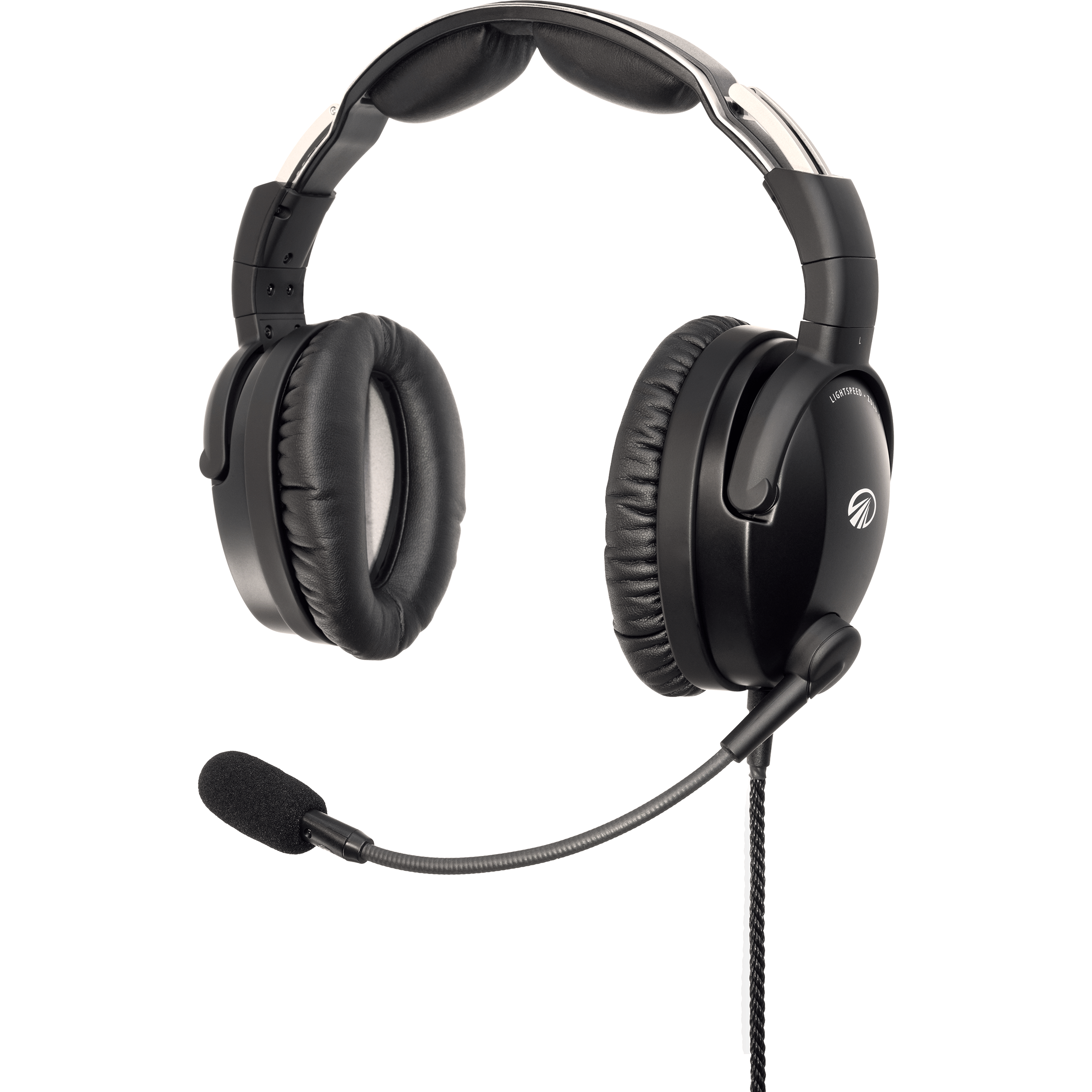 Premium ANR headsetLightspeed Zulu 4 ANR Aviation Headset - Dual GA PlugCheck current availability on Amazon (paid link)
 Premium headsetBose A30 Bluetooth Aviation Headset - Dual PlugCheck current availability on Amazon (paid link)
Just look at the numbers. As of May 2024, the median annual salary for airline pilots, copilots, and flight engineers climbed to an impressive $226,600. This isn't just a small bump; it's a significant leap driven by a well-documented pilot shortage and solid union contracts that have locked in major pay raises.
For example, a new first officer at Delta Air Lines can expect to make around $230,000 in their first year. Senior captains flying wide-body jets are routinely clearing $400,000 and can even push into the $500,000-$700,000 range. Here in Southern California, where DuBois Aviation operates out of the bustling Chino Airport (KCNO), the average pay for airline pilots is a healthy $208,070. For a deeper dive into these salary trends, check out this informative breakdown on pilot pay.
2026 Pilot Salary Snapshot by Career Stage
To give you a clearer picture, this table provides a quick overview of typical annual salary ranges for various commercial pilot roles, from entry-level to senior positions at major airlines.
| Pilot Role | Entry-Level Annual Salary | Mid-Career Annual Salary |
|---|---|---|
| Flight Instructor | $45,000 – $65,000 | N/A |
| Regional First Officer | $95,000 – $130,000 | $150,000+ |
| Major Airline Captain | $180,000 – $260,000 (as FO) | $380,000 – $700,000+ |
As you can see, each step up the career ladder comes with a substantial pay increase, turning your dedication and flight hours into tangible financial rewards.
Your pilot training is more than just learning to fly; it's the launchpad for a career where your income potential grows with every hour you log in the sky. Starting your journey at a professional flight school like DuBois Aviation sets a strong foundation for reaching these top-tier salaries quickly.
Planning for Your Financial Future
This remarkable income potential makes your flight training a sound investment. But as you start planning for that future, remember that high earnings also bring unique tax situations. To get the full picture of your earning potential, it’s just as important to understand how tax regulations might affect your take-home pay. Be sure to review the latest 2026 tax updates for individuals so you’re fully prepared.
Breaking Down Pilot Salaries by Employer Type
Where you decide to fly has the single biggest impact on your paycheck. It’s not just about the type of plane; it’s about the employer, the routes, and the lifestyle that comes with the job. Think of the aviation world as a series of different career tracks, each with its own financial landscape.
From the fast-paced world of cargo giants to the specialized service of corporate aviation, every sector offers a unique earning potential. Figuring out these differences is crucial as you plan your future beyond flight school here at DuBois Aviation.
Regional Airlines: The Common Starting Point
For most new airline pilots, the journey kicks off at a regional carrier. These are the airlines that operate smaller jets for major partners like United, American, or Delta, connecting smaller cities to the big hubs. In the past, regional pay was notoriously low, but the pilot shortage has completely flipped the script.
These days, regional airlines are in a bidding war for qualified pilots. That means much, much better starting pay for First Officers. It's not uncommon to see first-year salaries in the $95,000 to $130,000 range, especially when you add in the massive sign-on bonuses that can climb as high as $100,000. This has made the regional route a smart and financially solid first step.
Major and Legacy Airlines: The Ultimate Goal
This is what most people picture when they think of an airline pilot. The "majors"—like Delta, United, and American—represent the top of the passenger airline world. Flying larger aircraft on long-haul domestic and international routes, these pilots also command the highest salaries in the business. A First Officer landing a job at a major can expect to start at well over $110,000, and that number grows quickly.
The real money, though, comes when you upgrade to Captain. Senior Captains flying wide-body international jets are some of the highest-paid professionals in any industry, with potential earnings between $380,000 and $700,000+ a year.
Cargo Carriers: Flying Freight for High Pay
While the rest of the world sleeps, cargo pilots are moving everything from packages to priceless goods across the globe. And for that, companies like FedEx and UPS pay handsomely. In fact, their pay scales are right up there with the major passenger airlines, sometimes even higher.
A senior Captain at FedEx or UPS can easily pull in $350,000 to $450,000 annually, and often more. These jobs are highly coveted not just for the base salary but also for the more predictable schedules and generous profit-sharing programs that can add a significant chunk to your total compensation.
Corporate, Charter, and Other Commercial Opportunities
The airline world isn't the only game in town. The term "commercial pilot" covers a huge range of jobs, from corporate jet pilots and charter pilots to flight instructors and aerial surveyors. The U.S. Bureau of Labor Statistics' May 2024 data shows a median annual wage of $122,670 for this broad category, but it’s a big spectrum. While the top earners can clear $239,200, entry-level roles often start lower. For a closer look, you can review the full BLS report on pilot compensation.
A perfect example is flight instruction, which typically pays between $35,000 and $60,000 to start. While it isn't the highest-paying gig, it's the most common and effective way to build the flight hours you need.
- Corporate and Private Jet Pilots: Flying for a company or a private owner can be a fantastic career. Pay can range from $65,000 to over $135,000, depending on the size of the aircraft and the demands of the client.
- Charter Pilots: These pilots fly "on-demand" for all sorts of clients. Pay structures vary, but it’s a dynamic and exciting way to fly.
- Flight Instructors (CFIs): This is the bedrock of the training industry. Working as a CFI, especially at a busy school like DuBois Aviation, is the best way to gain invaluable experience and build the 1,500 hours required by the airlines.
Ultimately, whether you set your sights on a major airline, a cargo giant, or a corporate flight department, that choice will steer your earning potential more than anything else.
The Financial Journey from First Officer to Captain
Pilot pay isn't a single, fixed number. Think of it more like a staircase you climb throughout your career, where each step up brings a significant bump in earning potential. The real story—and the dramatic financial rewards—unfolds as you move from a brand-new First Officer to a seasoned Captain.
Let's imagine a pilot who just finished their training right here at DuBois Aviation. With a fresh Commercial Pilot License and all the right ratings, they land their first airline job as a First Officer at a regional carrier. While the pay here is based on an hourly rate, the exciting part is how quickly that rate begins to climb.
From the Right Seat to the Left Seat
In that first year, a pilot's hourly rate might be around $95. With a guaranteed 75 flight hours per month plus per diem and other bonuses, their starting salary can easily clear $100,000. That's a great starting point, but it’s truly just the beginning.
Airline pay is all about seniority and the type of aircraft you fly. After a couple of years of building seniority, that same pilot can bid for a spot on a larger regional jet. Just that one move can boost their hourly rate to $130 or more. Now, they're pushing well past $150,000 a year, all while still in the First Officer's seat.
This is the classic progression you’ll see in the industry—moving from flight instruction, to the regionals, and ultimately to the majors.
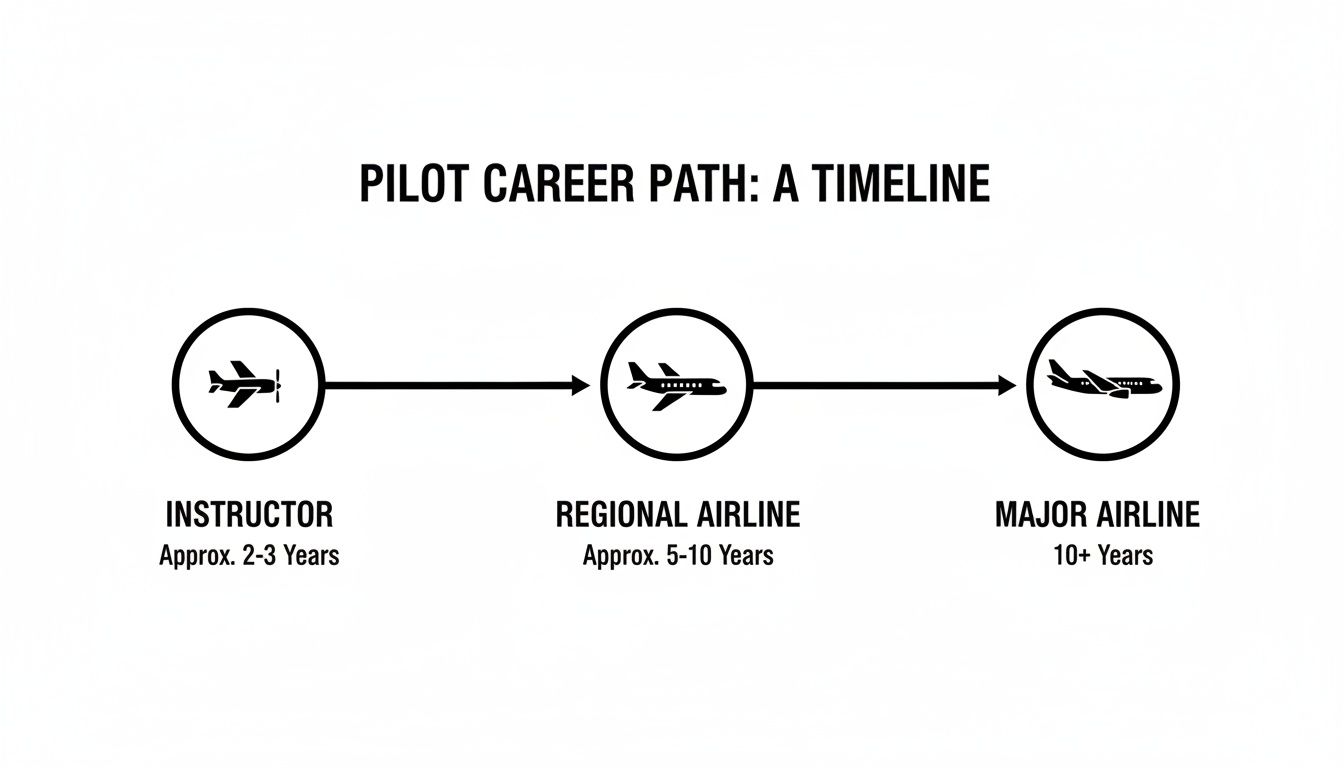
As you can see, a pilot's career is built on a series of strategic moves, with each one unlocking a new level of responsibility and, of course, compensation.
The Captain Upgrade and Beyond
The first huge financial leap is the upgrade to Captain. It’s not uncommon for this promotion to nearly double a pilot's hourly rate. Suddenly, our pilot, now in the left seat at a regional airline, could see their rate jump to $200 or more. But the ultimate prize has always been a major airline.
The moment you get hired by a major airline, the pay scale resets—at a much higher baseline. A new First Officer at a major can easily earn more than a senior Captain at a regional.
Once that pilot upgrades to Captain at a major, their income enters an entirely new stratosphere. Senior Captains flying wide-body jets like the Boeing 777 or Airbus A350 on long-haul international routes command rates often exceeding $400 per hour. At that level, annual pay can soar past $450,000, with the top earners pushing into the $500,000–$700,000 range. This entire journey is built on the fundamental skills you gain in training, which we break down in our airline pilot career path guide.
How to Buy or Sell an Aircraft Safely
That pilot salary starts looking pretty good, and for a lot of us, the mind naturally wanders to the ultimate dream: owning your own bird. The idea of having your own airplane or helicopter on standby, ready for an adventure whenever the mood strikes, is a powerful one.
It’s a huge step, though. Buying an aircraft is a serious financial and logistical commitment, and if you're not careful, it can be riddled with expensive surprises. Whether you're in the market to buy or getting ready to sell, a smart, methodical approach is your best friend. This isn't anything like buying a car; it's a highly specialized world where doing your homework and getting expert advice will save you from a world of hurt.
The Smart Way to Buy an Airplane or Helicopter
Before you even glance at the first online listing, you need to figure out your mission. Seriously, what is this aircraft for? Are you dreaming of a simple single-engine for weekend breakfast flights? A complex, high-performance machine for cross-country business trips? Or maybe a helicopter for a specific type of work? Your answer to that question defines the type of aircraft you should be looking for and, critically, your budget.
Speaking of budget, you have to think in terms of total ownership cost, not just the sticker price. A realistic budget must include:
- Insurance: This cost can swing wildly depending on the aircraft, your total flight hours, and your specific ratings.
- Maintenance: You need a fund for annual inspections, routine work, and the inevitable pop-up repairs. A good rule of thumb is to set aside a certain dollar amount for every single hour you fly.
- Storage: This is a fixed monthly cost. You'll need a place to park it, whether that's a prized hangar spot or a tie-down at an airport like our own Chino (KCNO).
- Fuel and Oil: These are your most direct operating costs, and they add up faster than you'd think.
Once you’ve zeroed in on a specific plane or helicopter, you’ve arrived at the most critical checkpoint in the entire process: the pre-buy inspection. This is absolutely non-negotiable.
A pre-buy isn't just a quick walk-around. It’s a top-to-bottom, exhaustive inspection done by an independent and trusted Airframe & Powerplant (A&P) mechanic—ideally, one who's an expert on that exact model. They'll put the engine, airframe, and especially the logbooks under a microscope.
Think of this inspection as your best defense against a "great deal" that's actually hiding tens of thousands of dollars in future problems. If the mechanic finds issues, it also gives you powerful leverage to negotiate a lower price.
Navigating the Paperwork and Finalizing the Deal
With a clean inspection report in hand, you're on the home stretch. But don't get ahead of yourself—the paperwork is where deals can get messy. First, you need to run a title search to make sure the aircraft has no liens or other legal claims against it. This simple step ensures you aren’t accidentally inheriting someone else’s financial baggage.
Next comes a deep dive into the maintenance logbooks. These books are the aircraft's entire life story. You need to verify they are complete, meticulously kept, and prove compliance with every single FAA-mandated Airworthiness Directive (AD).
If everything checks out, you’ll finalize the deal with an FAA Bill of Sale and an Aircraft Registration Application to make the transfer official. This can feel overwhelming, which is why many buyers opt to use an aviation escrow service to handle the secure transfer of funds and paperwork.
How to Prepare Your Aircraft for a Smooth Sale
If you're on the other side of the table and looking to sell, solid preparation will make all the difference. Your first move is to price it right. Scour the market for comparable aircraft, factoring in your airframe and engine times, the avionics package, and its overall condition.
Then, get it ready to show. A professional detail can make an aircraft look years younger and command a higher price. Most importantly, get your house in order: organize all maintenance logbooks and records so they are pristine and easy for a buyer's mechanic to inspect. A clean, well-documented aircraft builds trust and leads to a much faster sale.
Finally, get the word out. Market your aircraft on popular listing sites, in aviation publications, and through your local network. When you’re transparent and prepared, you’ll close the deal faster and for the best price possible.
Key Factors That Influence Your Pilot Salary
So, what really moves the needle on a pilot's paycheck? It's not just about which airline you fly for. Several other factors come into play, and understanding them is how you can actively shape your earning potential throughout your career.
It starts with the type of aircraft you fly. Simply put: bigger plane, bigger paycheck. A captain flying a wide-body Boeing 777 on international routes will earn significantly more than a captain on a smaller regional jet. The pay scales are built around the complexity, size, and responsibility that come with larger aircraft, which require more advanced qualifications.
Seniority and Flight Hours
In the airline industry, seniority is everything. It's the currency that dictates your pay, your schedule, your routes, and even where you’re based. The longer you're with a particular airline, the higher you climb on the seniority list. This unlocks the door to better pay, more desirable trips, and a better quality of life.
Your total flight hours are just as critical. More hours mean more experience, which makes you a more valuable candidate for promotions and the coveted transition to larger aircraft. This is exactly why building time as a CFI right after your training is one of the most effective career moves you can make.
The Power of Union Contracts and Qualifications
If you've been watching the industry news, you know pilot pay is on a tear. This incredible growth is largely thanks to powerful union negotiations and a sustained pilot shortage. For example, American Airlines recently secured a $9 billion deal for its 15,000 pilots, which included an immediate 21% raise and scheduled bumps for years to come.
These contracts lay out guaranteed pay rates that climb quickly. An American B737 First Officer might start at $118.31/hour, but in their second year, that jumps to $181.93/hour. Projections show that by 2026, a senior captain at United could be making $447,996 per year. Here in California, the state average pilot salary of $208,070 shows just how strong the market is, reinforcing the value of training in a busy environment like ours at KCNO. You can read more about these impressive pilot salary trends to see the full picture.
Your qualifications are your currency. An ATP certificate is your ticket to the airlines, but specialized type ratings for in-demand jets like the Airbus A320 or Boeing 737 will make you an even more competitive—and higher-paid—pilot.
Finally, your domicile, or the city you're based in, can affect your compensation. Some airlines offer higher pay or cost-of-living stipends for pilots based in expensive major cities. Choosing your base is a strategic decision that impacts both your take-home pay and your day-to-day life.
Each of these factors is a piece of the career puzzle. Understanding the commercial pilot license requirements is the very first step to putting that puzzle together and building a lucrative, rewarding career in the cockpit.
Maximizing Your Earnings from Day One of Training
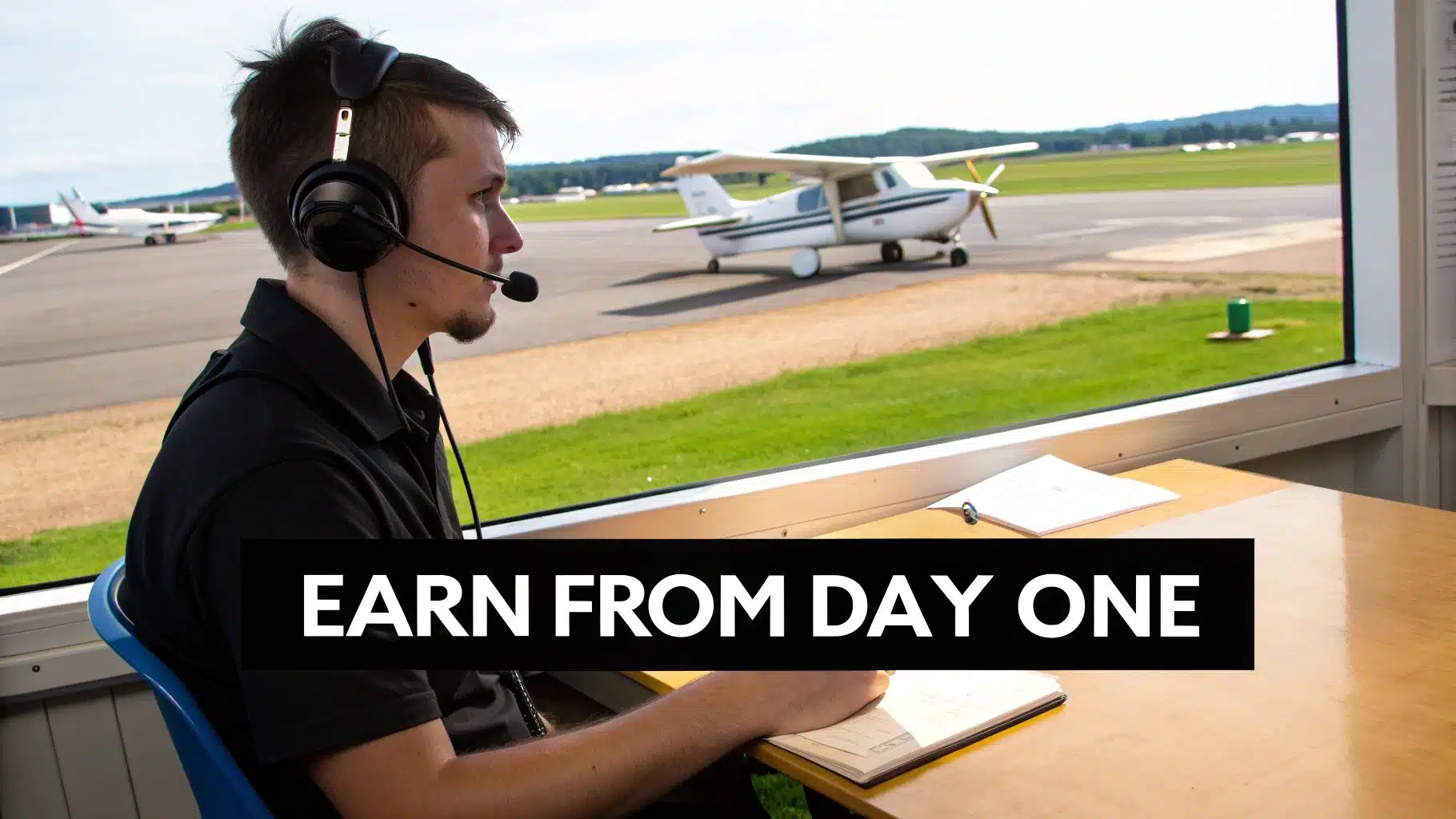
Most aspiring pilots think their earning potential begins the day they sign with an airline. That’s a common mistake. Your path to a six-figure salary really starts on day one of flight training. Every decision you make from here on out is a direct investment in your future income.
Think of your flight training as more than just a series of certificates. It’s the groundwork for your entire financial future. By choosing an efficient, proven path, you can get into a high-paying pilot job faster and position yourself as a top-tier candidate. The right roadmap, like the one we guide students through at DuBois Aviation, is a direct line to a rewarding career.
The Proven Pathway to High Earnings
There’s a clear, time-tested route that has helped countless pilots reach their salary goals quickly. It's a structured plan that focuses on building skills, logging hours, and even earning money at the same time, which is exactly what airlines want to see.
It all boils down to a few key steps:
- Step 1: Foundational Ratings: First, earn your Private Pilot License (PPL) and Instrument Rating. These are the non-negotiable building blocks for any professional pilot.
- Step 2: Go Professional: Next, secure your Commercial Pilot License (CPL). This is the certificate that legally allows you to get paid for flying.
- Step 3: Earn While You Learn: The game-changer is becoming a Certified Flight Instructor (CFI). This is hands-down the most important step for fast-tracking your career.
Why is the CFI rating so powerful? It lets you build the 1,500 flight hours needed for your Airline Transport Pilot (ATP) certificate while getting paid. Instead of paying for flight time, you're earning an income to fly. The experience you gain, especially at a busy, towered airport like our home base in Chino (KCNO), makes you an incredibly strong airline candidate.
The CFI role isn't just about building hours. It forges you into a sharper, more confident pilot. You hone your skills in a dynamic environment that teaches you to think on your feet—a skill every professional cockpit demands.
Turning Training Costs into Career Capital
Yes, flight training is a significant upfront investment. But when you look at it through the lens of return on investment (ROI), the picture changes completely. Many regional airlines are offering signing bonuses of up to $100,000, which can essentially pay back your entire training cost within your first couple of years on the job.
To make this high-value career path more attainable, it’s smart to explore all your funding options. Many students aren't aware of the help available. If you're mapping out your journey, learning about the financial aid for pilot training is a crucial first step.
Ultimately, your success comes down to being prepared. To truly maximize your earnings, you need to walk into job interviews ready to advocate for yourself. Learning how to negotiate can make a huge difference in your starting salary and long-term income. This is a professional skill, and great resources like this guide on How to Negotiate Salary Interview can give you the confidence you need. By pairing top-tier flight skills with sharp professional acumen, you set yourself up for a career where your salary truly reflects your value.
Pilot Salary FAQs: The Questions Everyone Asks
Let's be honest—when you're thinking about a career in aviation, the big question on your mind is about the money. You’re looking at a significant investment in your training, and you want to know what the payoff looks like on the other side.
Here, we'll cut through the noise and answer the most common questions we hear from aspiring pilots, giving you a realistic picture of the financial journey ahead.
How Quickly Can I Earn a Six-Figure Salary?
This is probably the number one question we get, and the answer is better than ever. A focused pilot can realistically break the six-figure barrier within just 2-4 years after finishing their initial training.
Here’s what that path usually looks like: You’ll start by building your flight hours as a Certified Flight Instructor (CFI), typically earning $35,000-$60,000 a year. From there, you'll jump to a regional airline. With the current demand, first-year pay at a regional, including signing bonuses, is often landing in the $90,000-$100,000 range right out of the gate.
What's the Pay Difference Between Cockpits?
Another great question is how pay stacks up across different types of aircraft. For instance, do helicopter pilots make as much as their fixed-wing counterparts?
While the absolute highest salaries in aviation belong to senior captains at major airlines, helicopter pilots can earn an excellent living. Top-tier jobs flying for corporate clients or Emergency Medical Services (EMS) can easily pull in over $100,000. It’s a career path with incredible variety—from tourism to law enforcement—and strong earning potential from start to finish.
Is the High Cost of Flight School Worth It?
The short answer is yes. While the upfront cost of training is significant, the return on that investment is massive. Think about it: first-year officers at major airlines can make over $200,000, and senior captains often earn more than $400,000 annually.
Thanks to the ongoing pilot shortage and strong union contracts, pilot compensation is at an all-time high and is expected to stay that way for the foreseeable future. Your investment in training pays dividends for decades.
A quick note on per diem: This is a tax-free allowance pilots receive for every hour they are away from their home base, meant to cover meals and other small expenses. In 2026, this rate is typically between $2.50 and $3.00 per hour. It might not sound like much, but it can easily add an extra $6,000 to $12,000+ to your annual income, completely tax-free.
A Quick Word on Aircraft Ownership
Some pilots dream of owning their own plane. If that's you, you might be asking how to buy an airplane safely. This process is worlds away from buying a car.
First, you need to define your mission (what you'll use the plane for) and establish a total ownership budget, which includes insurance, hangar fees, and maintenance—not just the purchase price. The most critical step is hiring a trusted A&P mechanic who specializes in your target aircraft model for a detailed pre-buy inspection. Never skip a meticulous review of the maintenance logs or a clear title search; these steps are essential to protecting your investment. Likewise, when it comes time to sell an airplane or helicopter, success comes down to smart pricing, perfect records, and good marketing to find the right buyer.
Your journey to a high-earning aviation career begins with a strong foundation. At DuBois Aviation, we provide the expert one-on-one instruction and real-world experience needed to succeed. Start your professional pilot journey with us today!