
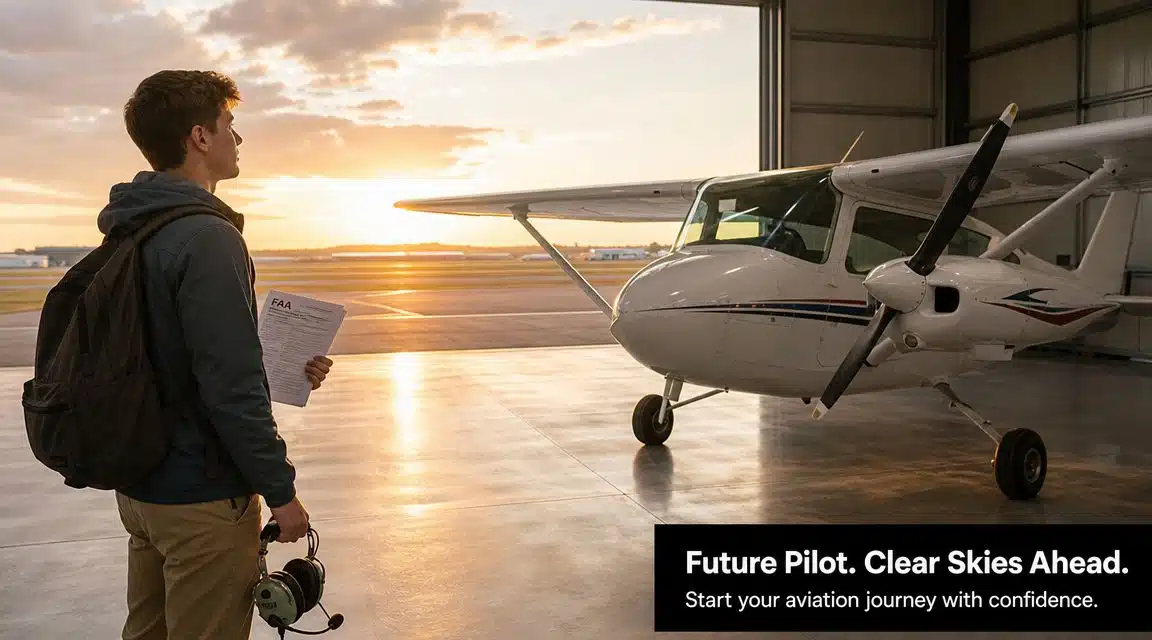
You're probably here because flying has shifted from “that would be amazing someday” to “I want to start now.” Most new students reach this point with the same mix of excitement and uncertainty. They want a straight answer to a simple question: what are the actual requirements for a student pilot license?
The FAA process looks more complicated than it is. The easiest way to understand it is as a sequence of gates. First, you must qualify as a person. Then you must clear the medical gate for solo flight in powered aircraft. Then you apply for the certificate. Then your instructor decides when you're ready to solo through endorsements and training.
That sequence matters. A lot of training delays happen because students do the right things in the wrong order.
Two practical options worth comparing
These are specific products pilots commonly compare for this type of flying. Confirm compatibility with your aircraft and instructor before ordering.
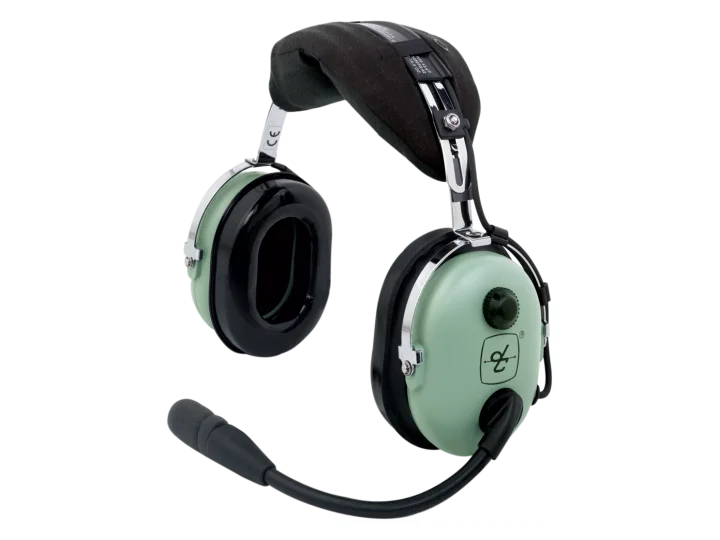 Student headsetDavid Clark H10-13.4 Aviation HeadsetCheck current availability on Amazon (paid link)
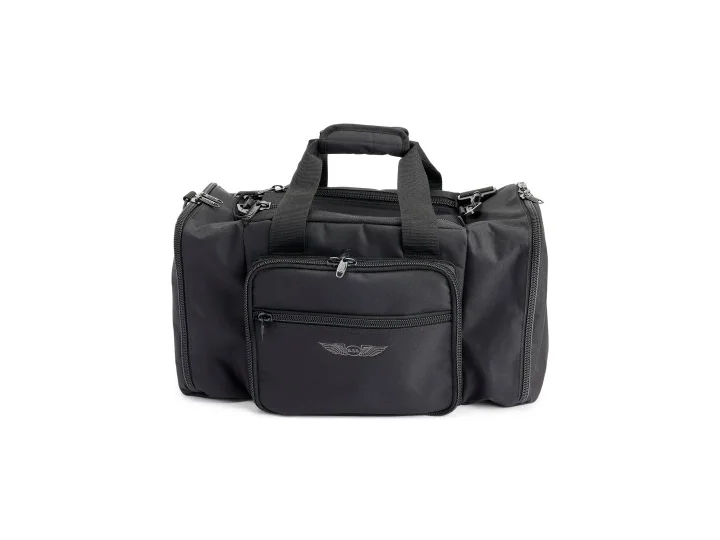 OrganizationASA Flight BagCheck current availability on Amazon (paid link)
Your First Step into the Sky
A new student usually arrives with a very normal goal. They want to take a discovery flight, learn the basics, and see whether they can picture themselves alone in the cockpit one day. They don't start by thinking about regulations. They start by thinking about the feeling of climbing out over the runway and seeing their town shrink beneath the wing.
That dream is closer than commonly perceived. The FAA student pilot system is built to give you a structured way to begin safely. Your student pilot certificate is the first official credential in that process. It doesn't mean you can immediately fly by yourself anywhere you want. It means the FAA recognizes you as someone entering formal flight training and moving toward solo privileges.
You're also joining a large training pipeline. FAA airmen data reported by Flying Magazine shows 370,286 active student pilots at the end of 2025, up from 345,495 in 2024 and 222,629 in 2020. That's about 10.3% year over year growth from 2024 to 2025 and roughly 66.4% growth from 2020 to 2025, according to Flying Magazine's summary of FAA airmen data.
What the certificate really does
Think of the certificate as your entry pass into the FAA training system. It's not the same thing as a private pilot certificate, and it's not a shortcut around instruction. You still train with a Certified Flight Instructor, and your first solo only happens after you meet specific training and endorsement requirements.
A practical example helps. If you start training in a Piper Cherokee or a Robinson helicopter, you can begin dual instruction with an instructor while paperwork is underway. But until the gates for certificate, medical, and endorsements are all cleared, you won't legally solo.
Practical rule: Don't treat the student certificate as an end goal. Treat it as one required gate on the way to your first solo.
Why new students get confused
Most confusion comes from the word “license.” People use “student pilot license” casually, but the FAA issues a student pilot certificate. The phrase is common in conversation, so you'll hear both. The key point is the same. This is your first official FAA credential on the training path.
Meeting the Foundational Eligibility Requirements
Before anyone worries about landings or radio calls, the FAA starts with two personal qualifications. These are the foundation of the requirements for a student pilot license. If you don't meet them, the rest of the process stops there.
Gate one is age
For airplane operations, the FAA says you must be at least 16 years old. For gliders and balloons, the minimum is 14 years old. The FAA also notes that student pilot certificates issued after April 1, 2016 do not expire, while older certificates had expiration periods of 24 or 60 months depending on when they were issued, as explained on the FAA student pilot certificate page.
That no-expiration rule matters more than many students realize. It gives you flexibility if life interrupts training. School, work, family, or finances may slow your pace. Your certificate itself isn't sitting there counting down toward a fixed renewal deadline if it was issued after that 2016 rule change.
Gate two is English proficiency
The FAA requires that you can read, speak, and understand English. In day-to-day flight training, that requirement is about safety.
You'll read checklists, weather information, airport signs, aircraft documents, and training materials. You'll speak on the radio. You'll listen to instructions from air traffic control and your instructor. If a student can't reliably process those communications, the risk level rises immediately.
Here's where people often stumble mentally. They assume this rule is about academics. It isn't. It's operational. Clear communication is part of safe aircraft control.
If you can't understand what you hear on the radio, the problem isn't paperwork. The problem is cockpit safety.
What this means in practice
A student who is old enough and meets the language standard can move forward with the application process. A student who doesn't yet meet one of those gates can still plan ahead, visit a school, and prepare for training, but solo privileges have to wait.
If age timing is your main question, DuBois Aviation has a useful page that breaks down pilot license age requirements in a simple way.
Here's the short version for most powered-aircraft students:
- Airplane path: You need to be 16 to qualify for the student pilot certificate used for airplane solo training.
- Glider or balloon path: The minimum is 14.
- Language standard: You must be able to function in English well enough to operate safely in training and communication.
Securing Your FAA Medical Certificate
Students often think the certificate is the big hurdle. For many, the medical is the gate that deserves earlier attention.
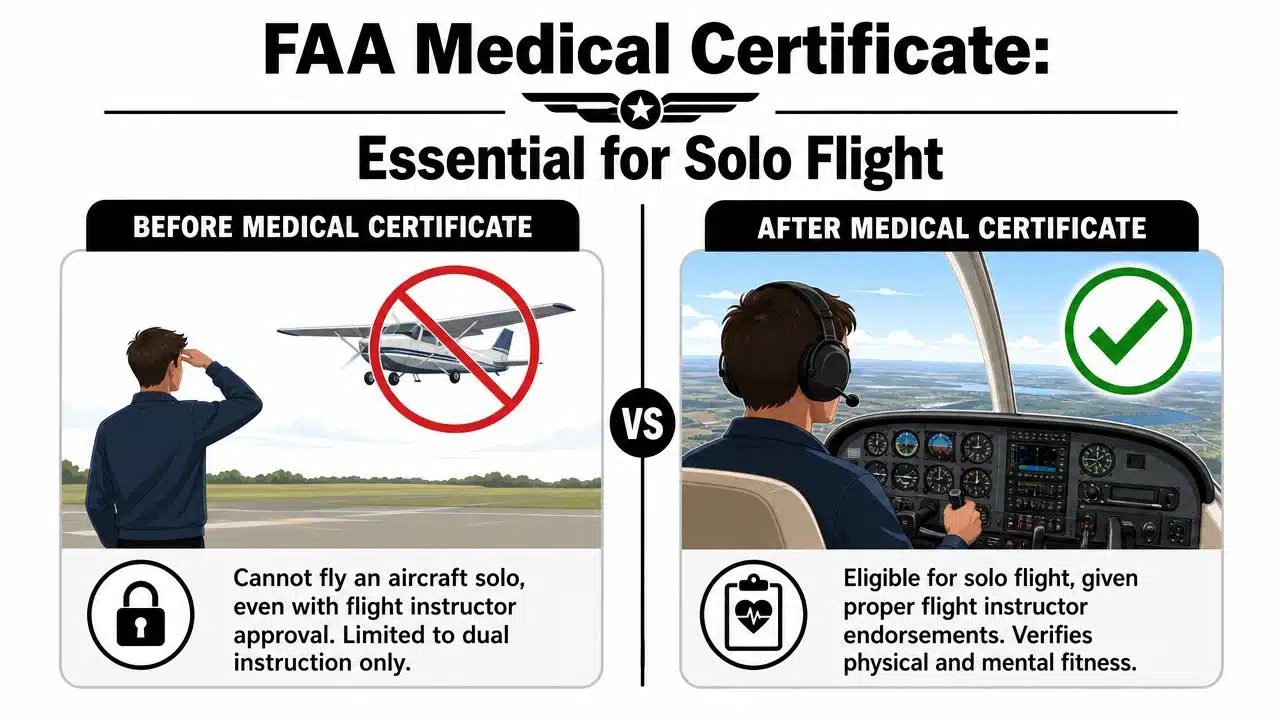
For powered-aircraft solo training, the student pilot certificate by itself isn't enough. You need at least a Third-Class FAA medical certificate before solo flight in airplanes, helicopters, and gyroplanes. That point is explained in Acron Aviation Academy's overview of the student pilot certificate process.
Why the medical gate exists
When you solo, you're no longer just manipulating the controls under direct instructor supervision. You're acting as pilot in command within the limits of your endorsements. The FAA uses the medical certificate to screen for baseline physical and mental fitness before that happens.
That's why I tell new students not to postpone the medical until they “feel close” to solo. The worst time to discover a medical issue is when your landings are ready, your instructor is happy, and your paperwork isn't.
What students should do early
Handle the medical as a parallel task, not a later chore. That means:
- Schedule an Aviation Medical Examiner early: Don't wait until your instructor starts mentioning solo.
- Finish your application steps cleanly: Bring the identification and information the examiner requires.
- Ask questions before the exam if you have concerns: If you have a health issue, medication question, or prior history you're unsure about, get clarity early instead of guessing.
A simple training reality
You can start dual instruction while medical paperwork is still pending. That's helpful because it lets you begin learning cockpit procedures, checklist use, taxi work, climbs, descents, and basic maneuvers right away.
But there's a hard line at solo. No matter how well you fly, your instructor can't legally send you alone in a powered aircraft until the medical and certificate requirements are in place and your logbook endorsements are complete.
Students don't usually get delayed because they can't learn to fly. They get delayed because one administrative gate was left until the last minute.
The practical takeaway
Don't think of the medical as “extra paperwork.” Think of it as part of training readiness. When you line up the medical early, the rest of your training can progress naturally. When you delay it, solo can arrive before your paperwork does.
The Application Process Step by Step
A common training moment goes like this. A student is flying well, handling the airplane with growing confidence, and starting to ask about solo. Then the paperwork becomes the gate that decides whether progress continues on schedule.
That is why the application matters. The student pilot certificate is not a formality. It is the FAA's way of confirming who you are, that you meet the basic eligibility rules, and that you are entering training under the proper record. For powered-aircraft solo training, the FAA requires the applicant to be at least 16 years old, able to read, speak, write, and understand English, and to apply through IACRA or FAA Form 8710-1, with review by an authorized person before issuance, as laid out in 14 CFR Part 61 Subpart C.
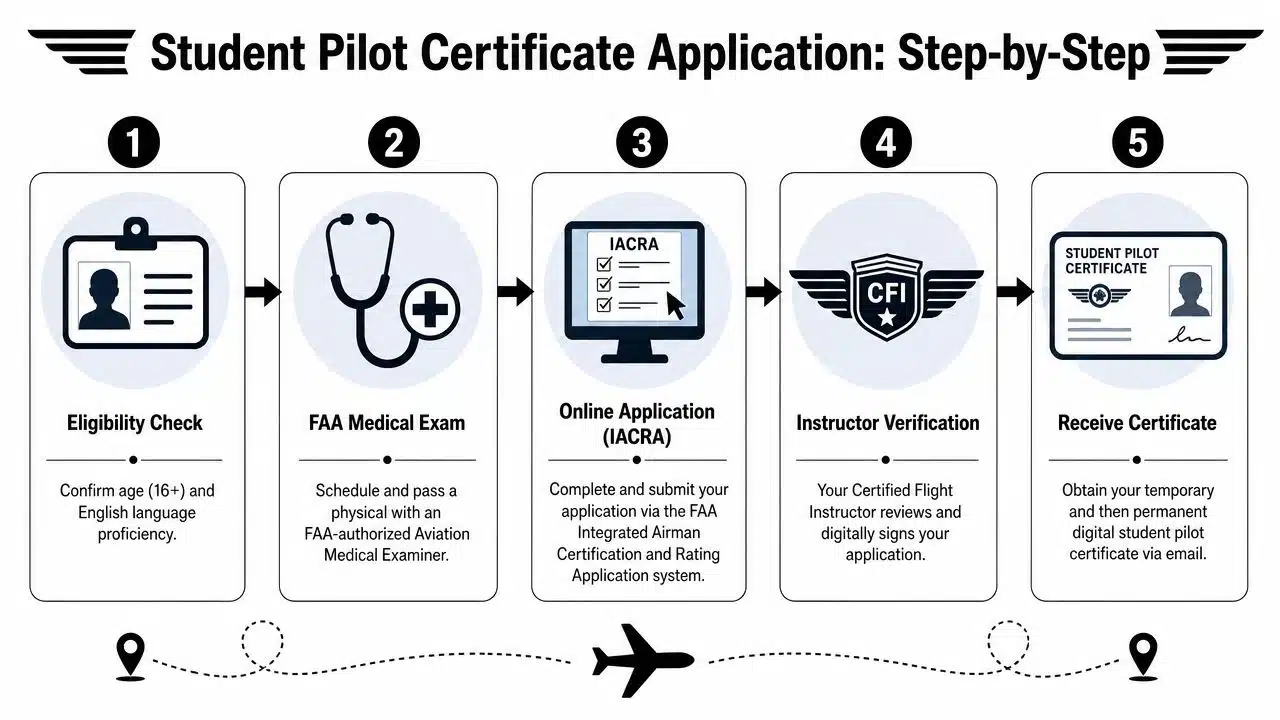
The five practical steps
The process works like a checkpoint system. You pass one gate, then move to the next.
Verify your eligibility
Before you start the application, confirm the basics. Your age, identity, and English ability need to be straightforward and supportable.Create your IACRA application
Most students use the FAA's online Integrated Airman Certification and Rating Application system. It is faster and easier to track than the paper route in most cases.Meet with an authorized reviewer
An instructor, designated pilot examiner, FAA representative, or other authorized reviewer checks your identity and reviews the application for accuracy. This step is what turns a draft application into one that can then move forward.Wait for FAA processing
Many students expect the certificate to appear immediately. Often, it does not. Processing time can vary, so this gate should be opened early.Continue training while it is pending
You do not have to stop learning. You can keep building skills with your instructor while the application moves through the system.
A short walkthrough can help if you want to see the digital flow before you begin:
Why students get stuck here
The flying side and the administrative side develop on different clocks. Your landings may improve week by week, but the FAA application process follows its own timeline.
That mismatch catches students by surprise.
A simple way to avoid that problem is to treat the certificate application as an early training task, not a last-minute errand. Open IACRA early. Complete your entries carefully. Meet your reviewer before solo starts to feel close. If something in the application needs correction, you want time to fix it without interrupting momentum.
A practical note for foreign students
Some applicants need additional security clearance or documentation before training can continue to certain stages. If that applies to you, ask about the sequence at the beginning, not after lessons are already underway. The rule itself is not confusing. The timing can be.
At DuBois Aviation, students are typically guided through this as a sequence of gates rather than a pile of forms. That helps reduce a very common problem in flight training. A student is ready in the airplane, but not yet ready on paper.
Required Endorsements Before You Fly Solo
This is the point where many students think, “I have the certificate now, so I can solo.” Not yet.
Your certificate is necessary, but it doesn't grant open-ended authority to take an aircraft and depart on your own. Your instructor endorsements are what enable solo privileges for a specific stage of training.
Certificate versus endorsement
A simple comparison makes this easier:
| Item | What it does |
|---|---|
| Student pilot certificate | Establishes your FAA status as a student pilot |
| Medical certificate | Clears the health requirement for solo in powered aircraft |
| CFI endorsements | Authorize specific solo actions based on your demonstrated proficiency |
That last line is the one students often overlook. Your CFI is making a judgment about your actual readiness, not just your paperwork status.
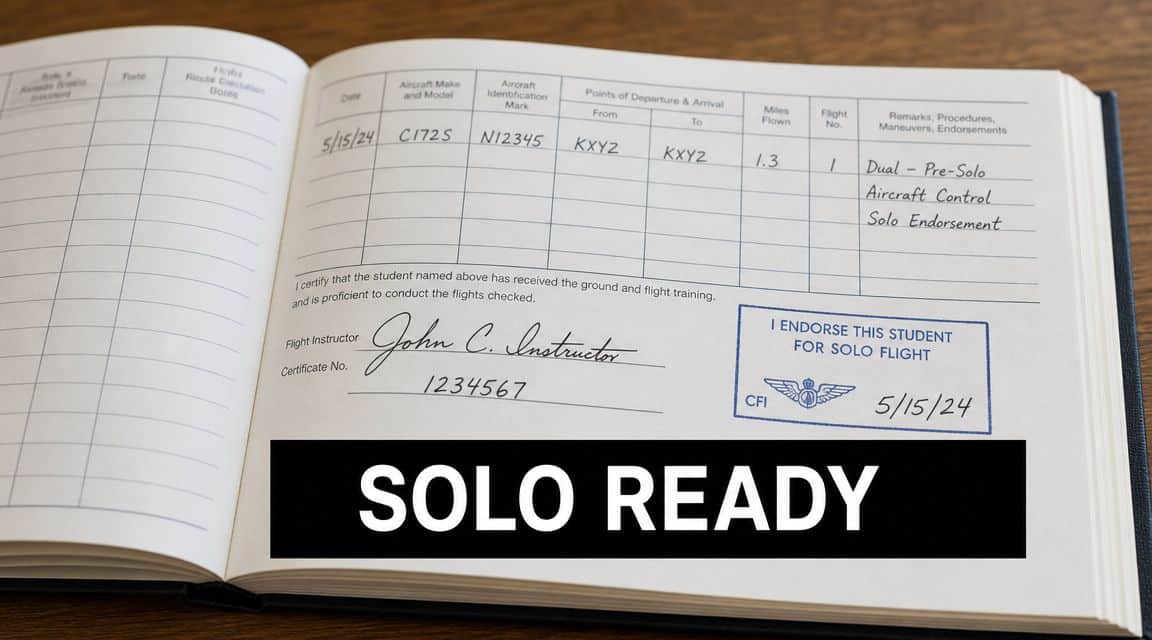
What your instructor is looking for
Before first solo, a student must usually show consistent competence in the areas that matter most close to the ground and under pressure.
That typically includes:
- Aircraft control: You can maintain heading, altitude, airspeed, and coordination reliably.
- Traffic pattern work: You can fly the pattern safely and predictably.
- Takeoffs and landings: You can handle the airplane without your instructor needing to rescue the approach every time.
- Judgment: You listen, follow limitations, and make conservative decisions.
- Knowledge: You pass the required pre-solo knowledge check your instructor gives you.
Why endorsements are aircraft-specific
A student may train in one make and model, then assume that means they can solo any similar aircraft. That's not how instructors think, and it's not how safe training works.
An airplane endorsement is tied to the make and model in which you demonstrated proficiency. The handling differences between a trainer airplane and a helicopter are obvious, but even within airplanes, each aircraft has its own sight picture, landing feel, and procedures. A Piper Cherokee won't feel exactly like a Cessna 150, and a Robinson R22 requires a very different control touch than a fixed-wing trainer.
Solo authority isn't a general compliment. It's a specific instruction decision tied to a specific aircraft and a specific student on a specific day.
The practical view from the right seat
As a CFI, I don't sign a first solo because a student wants the milestone. I sign it when the student has shown me a pattern of safe behavior. Good solo candidates aren't just talented. They're steady, coachable, and disciplined.
That matters because your first solo is exciting, but it's still a training flight. The endorsement says you're ready to handle that training flight safely within the limits your instructor sets.
Timeline Costs and Common Pitfalls
Students want a calendar answer and a price answer. The honest answer is that timing depends on how quickly you handle your documents, schedule your medical, and complete the application review without errors. The direct costs also vary by local examiner fees and how your school handles instructor time for administrative help.
I'm not going to invent exact prices or a fake timeline. What I can tell you is this: if you start the medical and application early, the process feels manageable. If you wait until solo is close, even a minor delay can disrupt your momentum.
Where delays usually happen
The trouble spots are usually predictable:
- Medical hesitation: A student keeps postponing the exam because they assume they have plenty of time.
- Application errors: A mismatch in names, identification details, or incomplete information slows processing.
- Poor timing: The student starts IACRA only after the instructor says solo is near.
- Knowledge gap: The student flies well but isn't ready for the pre-solo written knowledge review.
- Scheduling friction: The student trains inconsistently, so proficiency and paperwork readiness never line up.
How to stay ahead of the process
A clean plan looks like this:
- Start paperwork during early lessons: Don't wait for solo discussions.
- Ask medical questions early: If you're unsure about a health issue, get direction before it becomes urgent.
- Study alongside flight training: Don't treat ground knowledge as something you'll do later.
- Train consistently: Skill fades when lessons are too spread out.
If you're trying to estimate the broader training timeline beyond the student certificate stage, DuBois Aviation's article on how many years it takes to become a pilot gives a useful high-level view.
The mindset that helps most
Students who move smoothly through this stage usually do one thing well. They respect the sequence. They don't argue with the gates. They clear each one early and keep training moving.
That's the answer to most frustration in early flight training. The requirements for a student pilot license aren't hard to understand. They just need to be handled in the right order.
Beyond the License Planning for Aircraft Ownership
For some students, the first solo isn't the end goal. It's the beginning of a bigger plan that includes buying an airplane or helicopter. That can be a smart move, but only if you approach ownership carefully.
The safest way to buy an aircraft starts with defining your mission. Are you planning short local flights on weekends? Cross-country travel? Advanced training? Time building? A helicopter for local operations presents a different ownership reality than a simple fixed-wing trainer.
Start with mission, not paint color
People fall in love with an aircraft too early. They like the panel, the appearance, or the story behind it. None of that matters if the aircraft doesn't fit the job you need it to do.
Ask practical questions first:
- How will you use it most often
- What kind of runway and airspace environment will you operate in
- Will you be flying alone, with family, or with training goals in mind
- Can you support the maintenance and insurance realities of that aircraft type
Budget beyond the purchase price
The unsafe buying decision usually isn't just overpaying. It's underestimating what ownership continues to cost after closing the deal.
Think beyond the sale:
- Maintenance and inspections
- Insurance
- Hangar or tie-down fees
- Fuel
- Unexpected repairs
- Training for transition into that specific aircraft
Never skip the pre-buy inspection
If you remember one ownership rule, remember this one. Get a thorough pre-buy inspection by a trusted, independent mechanic who works for you, not for the seller.
That inspection is the best protection against buying someone else's expensive problem. A beautiful airplane with poor records or hidden maintenance issues can become a financial and safety burden very quickly. The same logic applies to helicopters, where system condition and maintenance history deserve even more scrutiny.
The safest aircraft purchase is rarely the fastest one. Slow down, define the mission, inspect carefully, and verify the records.
Start Your Flight Training with DuBois Aviation
A good flight school helps students move through the gates in the right order. That means early guidance on the certificate process, realistic advice about the medical, and training that builds toward solo without paperwork surprises.
At DuBois Aviation, students train at Chino Airport in a busy towered environment and can work in both airplanes and helicopters, including Piper, Cessna, Robinson, and Enstrom equipment described on the school's website. That setup gives new pilots exposure to real radio work and structured airport operations from the beginning, which is useful when they're building habits for safe solo flying.
The right school should also make the administrative side less confusing. A student shouldn't have to guess when to start IACRA, when to schedule the medical, or how endorsements fit into the bigger picture. Those are early training questions, not last-minute problems.
If you want help getting started, explore flight training with DuBois Aviation in the Los Angeles area.
If you're ready to move from “I've always wanted to fly” to an actual first lesson, DuBois Aviation can help you start with a discovery flight and a clear plan for your student pilot certificate, medical, and solo training path.


